Let’s be real—most of us aren’t struggling with space, we’re struggling with too much stuff in a small space. That’s why your living room can feel crowded, stressful, and never quite “done,” even when you clean it.
A small minimalist living room isn’t about having nothing. It’s about having the right things—placed well, used daily, and easy to maintain. Less visual noise, more breathing room, and a space that actually works for your life.
If you want a living room that feels calm, put together, and way easier to keep clean, this is where you start.
Why Your Living Room Feels Cluttered (Even When It’s Not That Small)
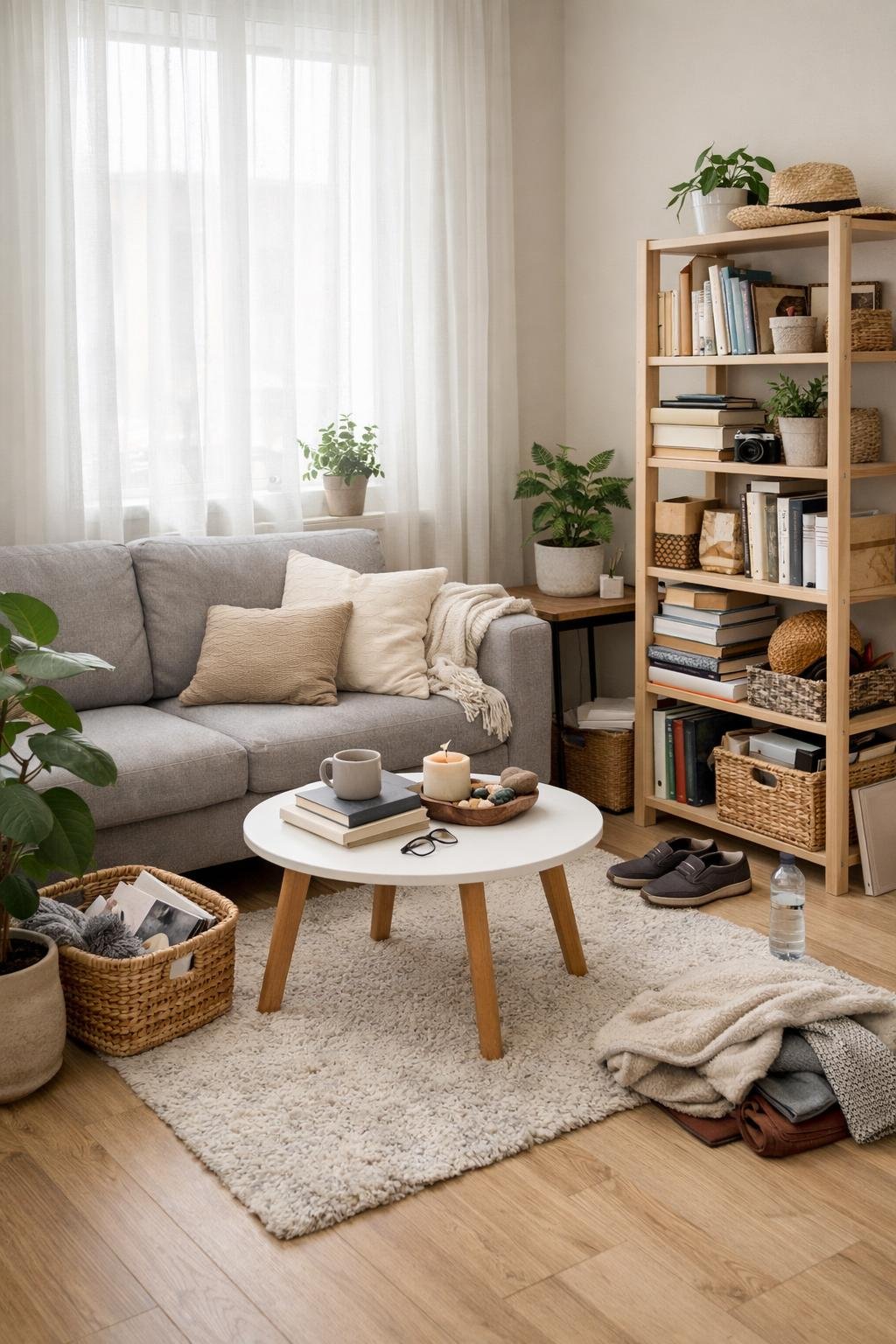
You don’t always have a space problem—you have a visual clutter problem. In a small minimalist living room, every item stands out. So even a “normal” amount of decor can make your space feel busy, tight, and stressful.
Visual Clutter vs Actual Clutter
- Too many small decor pieces = visual noise
- Mixed colors + textures with no plan = chaos
- Surfaces filled (tables, shelves) = no breathing room
This is why your small living room inspiration never looks like the photos—you’re seeing too much at once.
Why Small Spaces Amplify Everything
- One bulky sofa can dominate the room
- Extra chairs or tables kill flow
- Clutter builds faster and feels heavier
In tiny living room decor, less isn’t just aesthetic—it’s necessary. Once you reduce what’s competing for attention, your space instantly feels bigger and calmer.
What to Remove First (This Is Where Minimalist Living Rooms Actually Start)
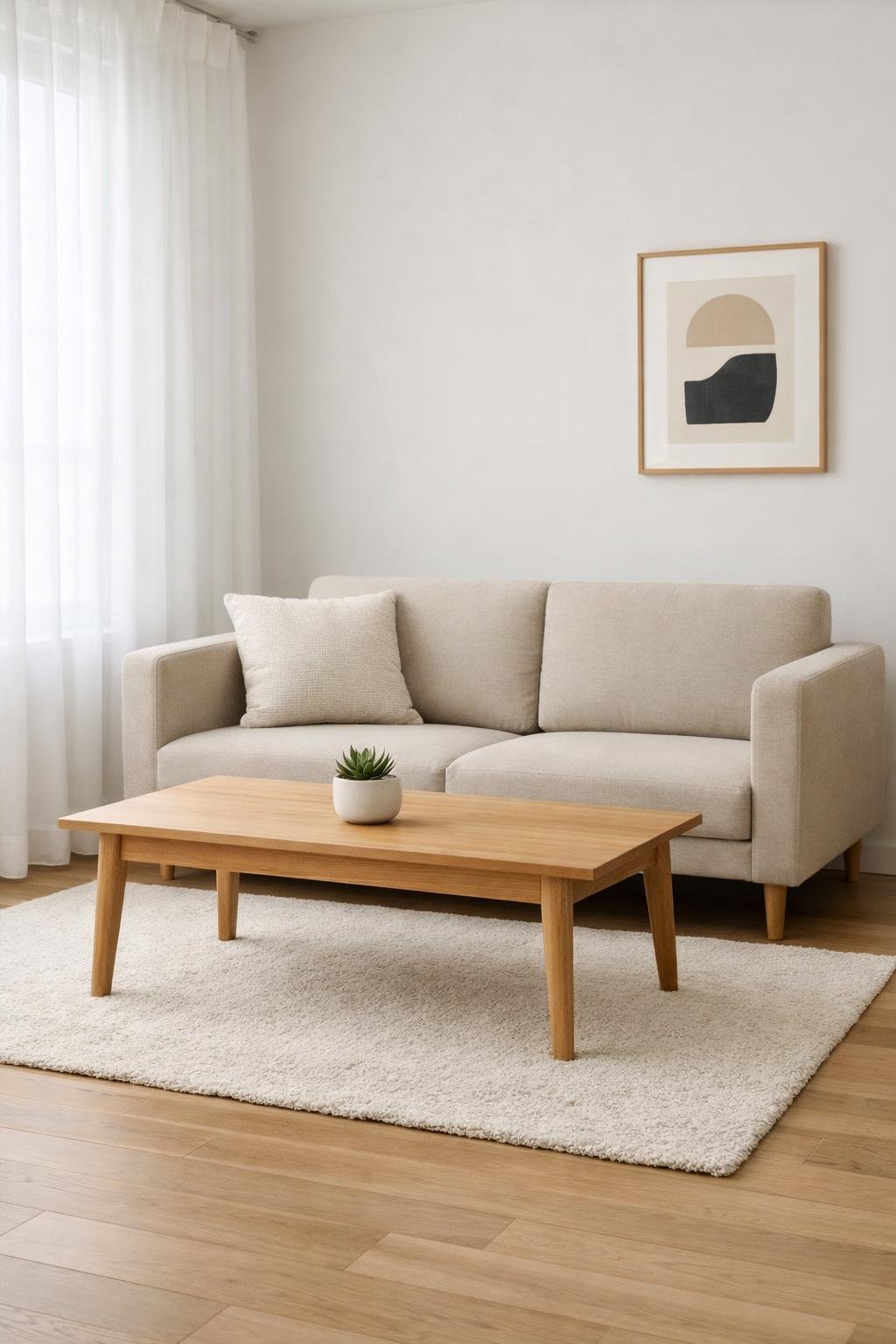
Start here before buying anything. A minimalist living room works because of what you remove—not what you add.
The “Cut It in Half” Rule
- Remove 30–50% of decor from surfaces
- Keep only pieces you actually like or use
- Clear at least one surface completely
Items That Instantly Create Visual Noise
- Too many pillows, throws, small decor
- Bulky side tables or extra seating
- Random storage baskets that don’t match
In a tiny living room decor setup, fewer items = more space and less stress.
The “Less But Better” Rule That Makes Minimalist Living Rooms Work
Once you clear things out, don’t refill it with more stuff. Upgrade what stays.
Choosing Fewer, Higher-Impact Pieces
- One larger rug instead of multiple small ones
- One statement art piece instead of a busy gallery wall
- A solid sofa that anchors the space
Why Quality Matters More Than Quantity
- Better materials look cleaner and last longer
- Fewer pieces = easier maintenance
- Your minimalist small living room feels intentional, not empty.
Minimalist Furniture For Small Living Rooms (What To Keep + What To Skip)
Keep These Essential Pieces
A linen sofa with thin arms gives you comfort without eating up floor space. Choose low-profile furniture that sits closer to the ground to make your ceiling look higher.
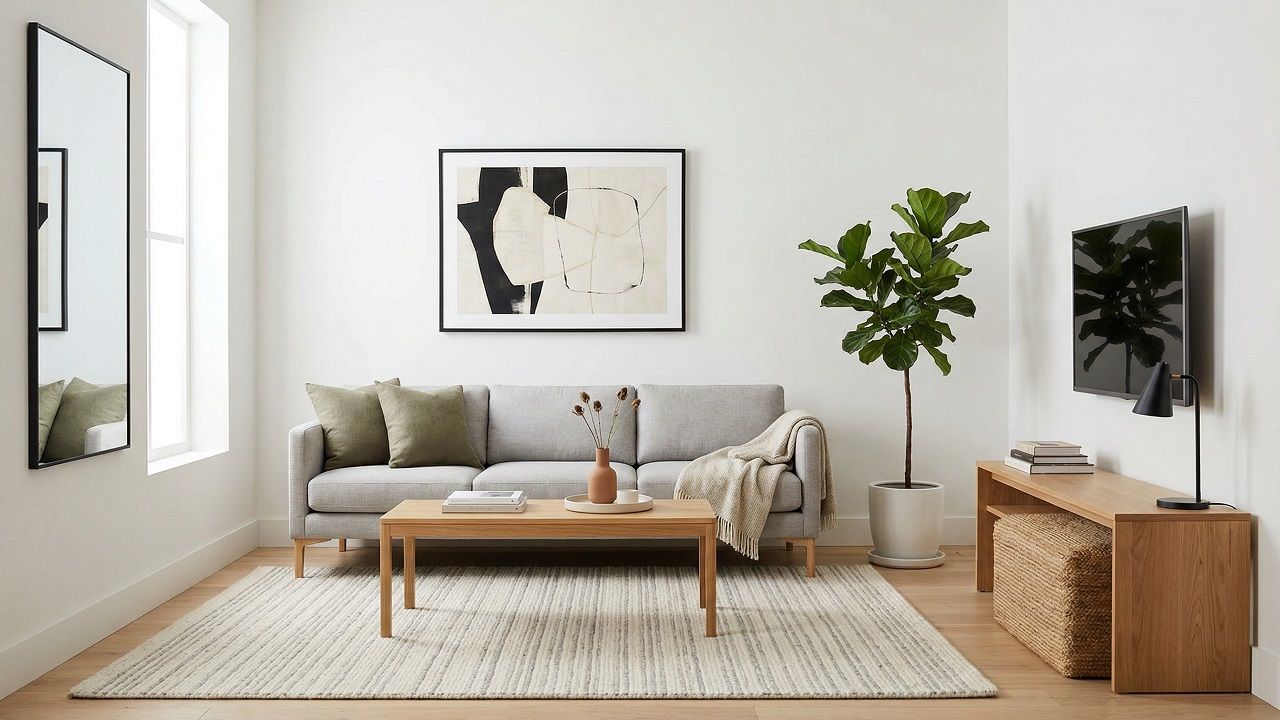
Sleek furniture with open legs lets light flow underneath, making your room feel bigger. A simple wooden coffee table with clean lines works great.
Look for one with hidden storage to keep remotes and magazines out of sight. Floating furniture like wall-mounted shelves saves valuable floor space while giving you places to display a few items you love.
Multi-functional furniture is your best friend in tight spaces. Pick a storage ottoman that doubles as seating and keeps blankets hidden. A console table that turns into a desk gives you workspace when needed.
What To Skip
Stay away from bulky recliners or oversized sectionals. They crowd small rooms fast.
Skip heavy entertainment centers and choose wall-mounted TV units instead. Avoid curved furniture with wide arms that take up extra inches you need.
Don’t buy single-purpose pieces.
That extra armchair might look nice but takes space without adding function. Skip dark wood pieces that make rooms feel smaller. Pass on furniture with solid bases that block light and sit flush against the floor.
| Keep | Skip |
|---|---|
| Open-leg sofas | Bulky recliners |
| Floating shelves | Heavy entertainment centers |
| Storage ottomans | Single-purpose chairs |
| Wall-mounted units | Solid-base furniture |
Small Minimalist Living Room Layout Ideas That Open Up Your Space
Floating your furniture away from the walls creates an open floor plan that makes your small minimalist living room feel bigger.
Place your sofa in the center of the room with a slim coffee table.
This arrangement improves traffic flow and gives you more usable space.
Smart furniture placement tips:
- Keep pathways clear and at least 18 inches wide
- Use furniture with exposed legs to show more floor
- Anchor floating arrangements with a large area rug
- Position seating to face your room’s focal point
Strategic mirror placement works wonders in tight spaces.
Hang a mirror across from windows to bounce light around the room.
Large mirrors create the illusion of depth and make walls seem to disappear.
Maximize natural light by skipping heavy drapes.
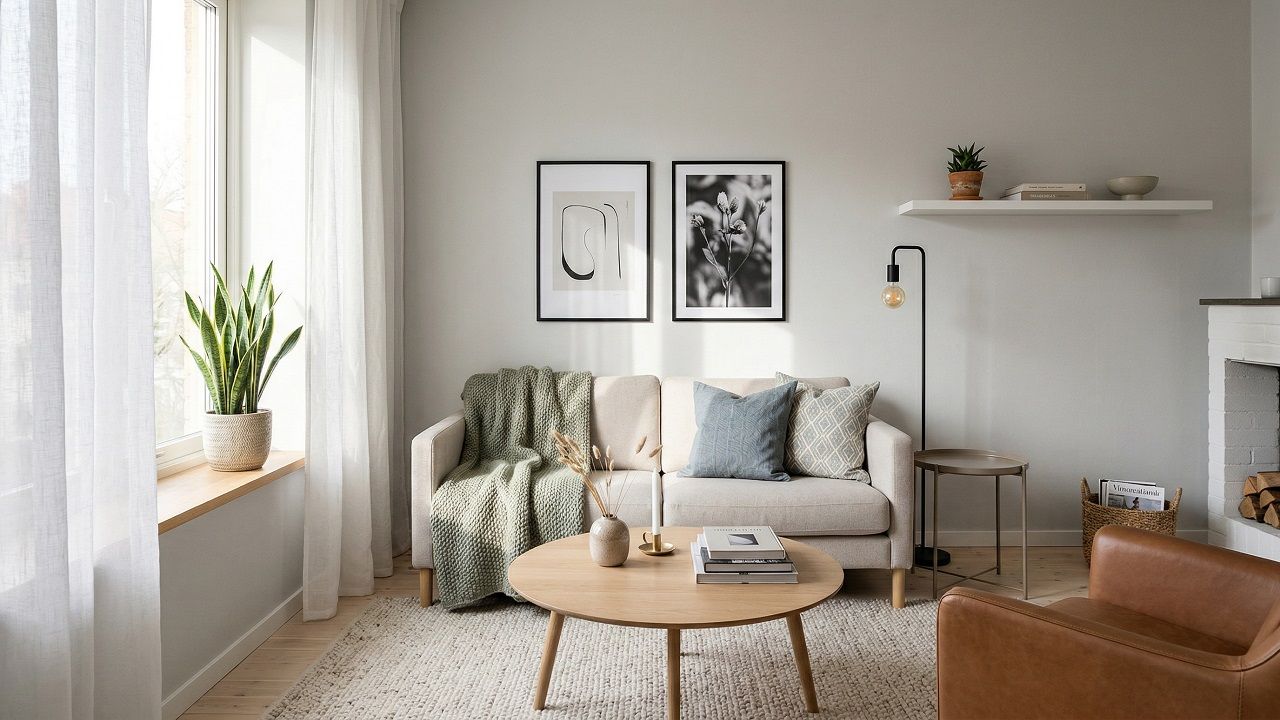
Sheer curtains let sunshine pour in while giving you privacy.
Keep window treatments simple or go without them entirely if you can.
Choose furniture with clean lines and basic shapes.
A sleek sofa and one accent chair might be all you need.
Each piece should serve a clear purpose in your layout.
Mount your TV on the wall to free up floor space.
Hide cables behind the wall or use cord covers.
This keeps your small minimalist living room looking tidy and spacious.
Neutral Color Palettes That Make Minimalist Spaces Feel Calm (Not Boring)
A neutral color palette gives your small minimalist living room a calm foundation without looking dull.
The key is layering different neutral tones instead of sticking to just one shade.
Think soft whites, warm beiges, gentle grays, and muted taupes working together.
This approach creates depth and interest while keeping the space peaceful.
Mix textures to add dimension:
- Linen curtains in cream
- Wool throw blankets in oatmeal
- Cotton pillows in light gray
- Jute or sisal rugs
A monochrome palette using various shades of one neutral color creates a sophisticated look.
Try different tones of gray or beige from light to medium-dark.
You can also work with a neutral color scheme that includes warm and cool tones.
Pair warm ivory walls with cool gray furniture for visual balance.
Don’t forget subtle pops of color to keep things interesting.
A sage green plant, terracotta vase, or blush pillow adds life without overwhelming your space.
These colorful accents should stay muted and low-saturation.
Your neutral colors become more dynamic when you include different materials.
Smooth painted walls, rough linen fabric, and natural wood grain all reflect light differently.
This variety makes your room feel rich and intentional rather than flat or boring.
Minimal But Cozy: How To Keep Your Living Room From Feeling Cold
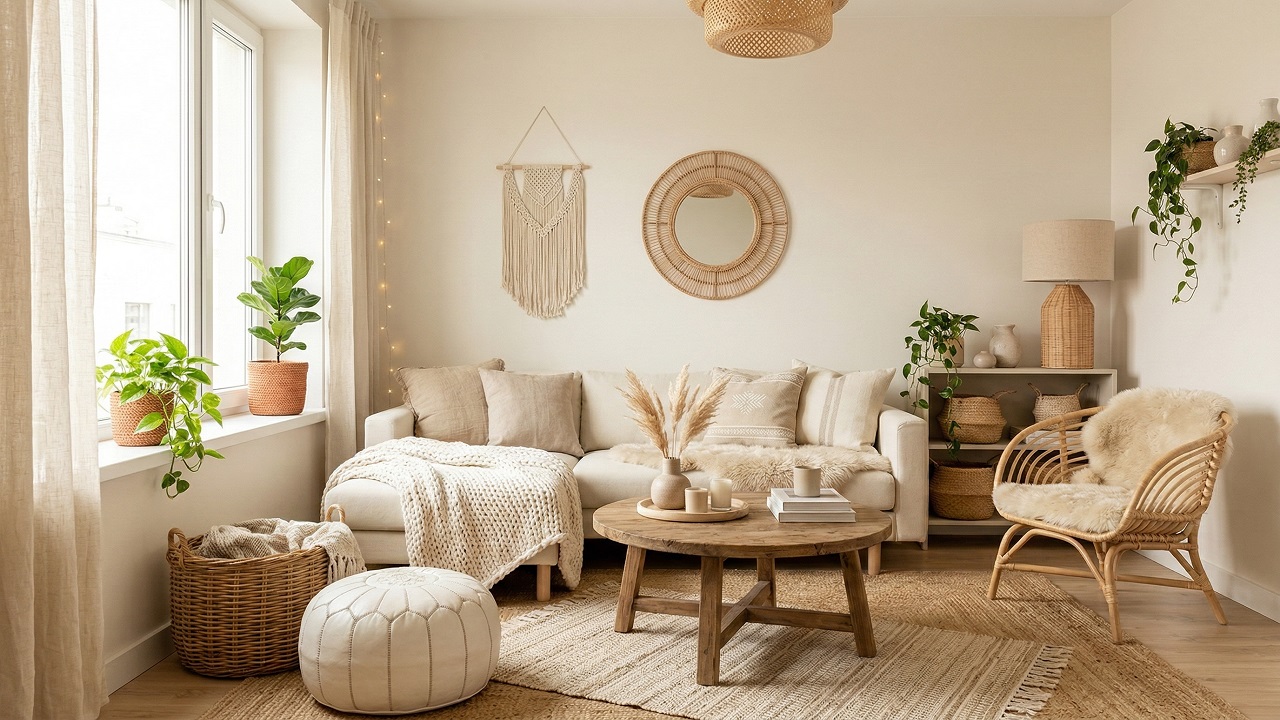
You can avoid a cold, sterile look by adding warmth through natural materials and textural elements. Start with a velvet sofa or cozy textiles like throw blankets and pillows.
These soft pieces instantly make your space feel more inviting. Natural fibers work wonders in small spaces.
Add a jute rug or woven baskets to bring in organic warmth. Natural textures like wood furniture and leather accents create depth without adding clutter.
Quick ways to add warmth:
- Layer soft blankets on your sofa
- Use wool or cotton throw pillows
- Add a chunky knit rug
- Include wooden side tables
Your lighting makes a big difference. Swap harsh overhead lights for a statement light fixture that draws the eye up.
Layered lighting from floor lamps and table lamps creates a softer glow that feels more comfortable. Layering textures is key to keeping things interesting.
Mix smooth surfaces with rough ones. Pair your sleek coffee table with a nubby textile or fuzzy rug.
This creates visual interest while maintaining your minimal aesthetic. Natural materials like stone, wood, and plants prevent your room from feeling too sterile.
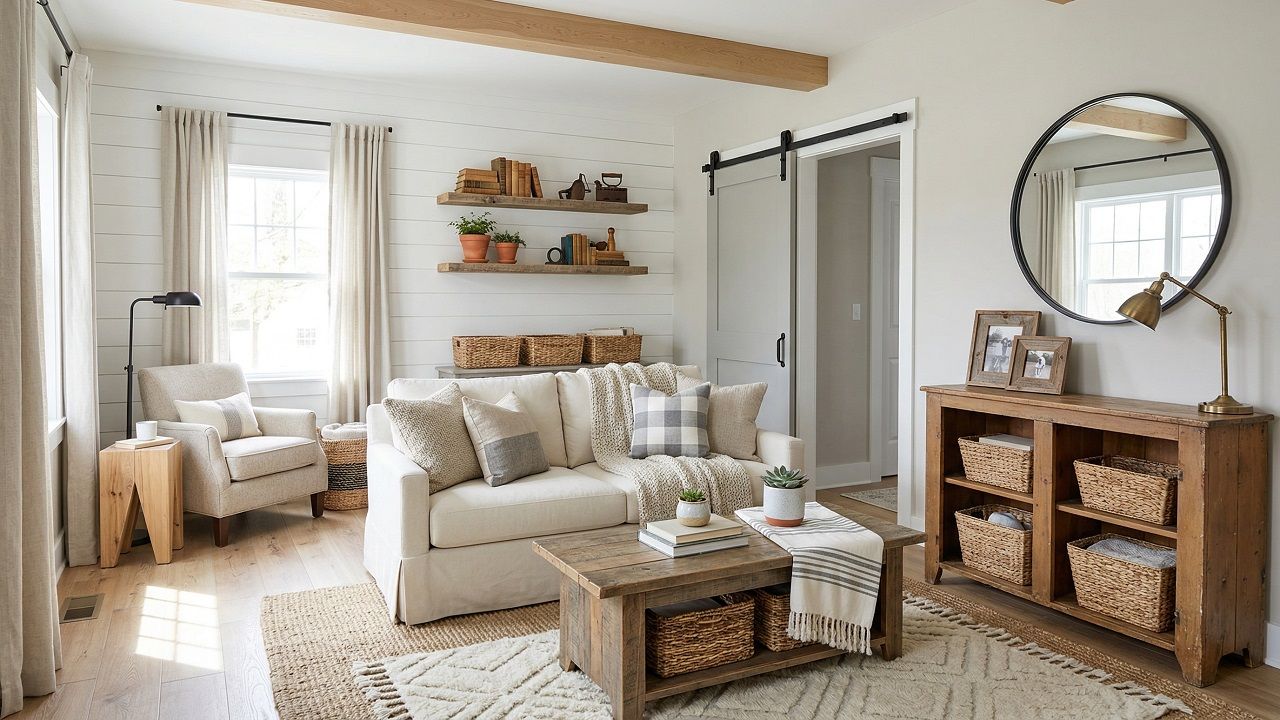
A tall potted plant in the corner or wooden beams overhead add life to the space. These elements ground your design and make it feel lived-in rather than staged.
Hidden Storage Ideas That Keep Your Living Room Clean Without Looking Busy
Storage ottomans are your best friend in a small minimalist living room. They work as extra seating while hiding blankets, books, or remote controls inside.
You get function and style without adding visual clutter. Built-in storage keeps everything tucked away behind clean lines.
Consider these smart options:
- Wall-mounted cabinets that blend with your walls
- Benches with lift-up seats near windows
- Coffee tables with hidden compartments underneath
Floating shelves give you display space without the bulk of traditional bookcases. You can store items in small boxes or baskets on these shelves to keep things hidden but accessible.
This creates vertical storage solutions that draw the eye up and make your room feel bigger. A sofa with built-in drawers underneath provides hidden storage solutions you use every day.
These drawers hold items you need close by without creating visible mess. Vertical shelving works better than floor storage in small spaces.
It uses wall space that would otherwise go to waste. Pick shelves with doors or use matching bins to hide what’s inside while maintaining your minimal look.
The key is choosing pieces that serve two purposes. Your furniture should store items while looking simple and uncluttered from the outside.
Minimal Wall Decor Ideas That Don’t Overwhelm Small Spaces
You don’t need to fill every inch of wall space to make your small living room feel complete. A single statement mirror works wonders by reflecting light and making your room appear larger.
Position it opposite a window to maximize natural light. Create a focal point with one carefully chosen piece instead of multiple items.
A simple framed print in neutral tones or a small piece of abstract art draws the eye without cluttering your space. Try these minimal options that work perfectly:
- Single large-scale artwork in black and white
- Three small frames arranged in a simple row
- Floating shelf with one plant or decorative object
- Textured wall hanging made from natural fibers
An accent wall painted in a soft neutral color adds visual interest without physical items taking up space. Stick with whites, beiges, or light grays to maintain that airy feeling.
Keep frames simple and thin. Bulky frames add unnecessary visual weight in tight spaces.
Clear acrylic frames or slim wooden ones in light colors blend seamlessly with minimalist decor while letting your artwork shine through. Remember to leave plenty of blank wall space.
This negative space is what makes minimalist design work in small rooms. Your walls should breathe, not compete for attention with your furniture.
How To Keep Your Minimalist Living Room Clean Every Day (Real Life)
Start each morning by making a quick sweep of your living room. Put items back in their designated spots before you even make coffee.
This takes about five minutes and prevents clutter from building up. Keep cleaning supplies nearby in a small basket or cabinet.
You’ll be more likely to wipe surfaces if your supplies are easy to grab. Set a daily timer for 10 minutes before bed.
Use this time to reset your space completely. Put away books, fold blankets, and clear coffee tables.
Create simple rules that work for your household:
- No dishes left on tables overnight
- Return remotes to their basket after use
- Put shoes in their designated spot immediately
- File mail and papers right away
Handle items only once instead of moving them around multiple times. If you pick up a cup, take it straight to the kitchen instead of setting it down somewhere else first.
Vacuum or sweep high-traffic areas every other day. Small living rooms show dirt faster, so frequent quick cleanings work better than weekly deep cleans.
Keep a small trash bin in your living room so you’re not tempted to leave wrappers or papers on surfaces. Empty it daily to avoid overflow.
The key is building small habits that become automatic. You won’t need to think about tidying when it’s part of your natural routine.
Budget Minimalist Living Room Ideas That Still Look Elevated
You don’t need to spend a lot to create a beautiful minimalist living room. Start by choosing furniture from affordable stores like IKEA or Target that features clean lines and simple shapes.
A neutral color palette using whites, beiges, and grays helps everything look cohesive without requiring expensive pieces. Smart Shopping Strategies:
- Focus on one quality statement piece like a sofa
- Mix high and low items throughout the room
- Choose multipurpose furniture that serves multiple functions
- Shop secondhand for unique finds at lower prices
Texture is your secret weapon for making budget spaces feel expensive. Layer different materials like linen curtains, cotton throws, and ceramic decor to add visual interest without spending much.
These tactile elements keep your room from feeling flat or cold. Hide clutter with smart storage solutions.
Floating shelves cost less than bulky bookcases and make your space feel more open. Use baskets or boxes to keep items out of sight while maintaining clean surfaces.
Skip unnecessary decorations and let empty space work for you. A few well-chosen items like plants or simple artwork create more impact than crowding surfaces with knick-knacks.
This approach saves money while looking intentional and curated. Natural light is free and makes any space feel more elevated.
Keep windows clear and use light-colored walls to bounce sunlight around your room.
Minimalism Mistakes That Make Small Living Rooms Feel Empty (Not Calm)
Going too minimal can strip your small living room of personality and warmth.
When you remove too much, the space feels cold instead of peaceful.
This happens when you focus only on emptying the room rather than choosing the right pieces.
Common mistakes that create emptiness:
- Using only white and grey without any warm tones
- Removing all decorative items and personal touches
- Choosing furniture that’s too small or sparse
- Avoiding texture completely in fabrics and materials
- Leaving walls completely bare with nothing to look at
Your small space needs intentional pieces, not just fewer pieces.
Add warm wood tones, soft textiles like throw pillows, and one or two meaningful art pieces.
Mix design styles carefully by adding small touches of warmth to your minimal base.
A cozy throw blanket, a textured rug, or plants can make your space feel lived-in and inviting.
The goal is balance between clean lines and comfort.
Think of minimalism as keeping what matters most, not removing everything.