Last summer, a hiker noticed something that changed how I think about camping mornings: the people who lingered over their coffee and moved slowly through their routines came back looking genuinely refreshed, while the early risers who packed up in a hurry seemed just as frazzled as when they’d arrived.
That observation matches what I’ve seen in my own years of camping. The restoration we’re all chasing isn’t hiding in some distant wilderness location. It lives in how we spend those first hours after waking up. These sixteen practices have changed my camp mornings from rushed preparations into something that actually recharges me, and the first one happens before you’re even conscious.
Contents
- 1 Wake With the Sun, Not an Alarm
- 2 Start Your Morning With Gentle Stretches
- 3 Take a Short Walk Around Camp
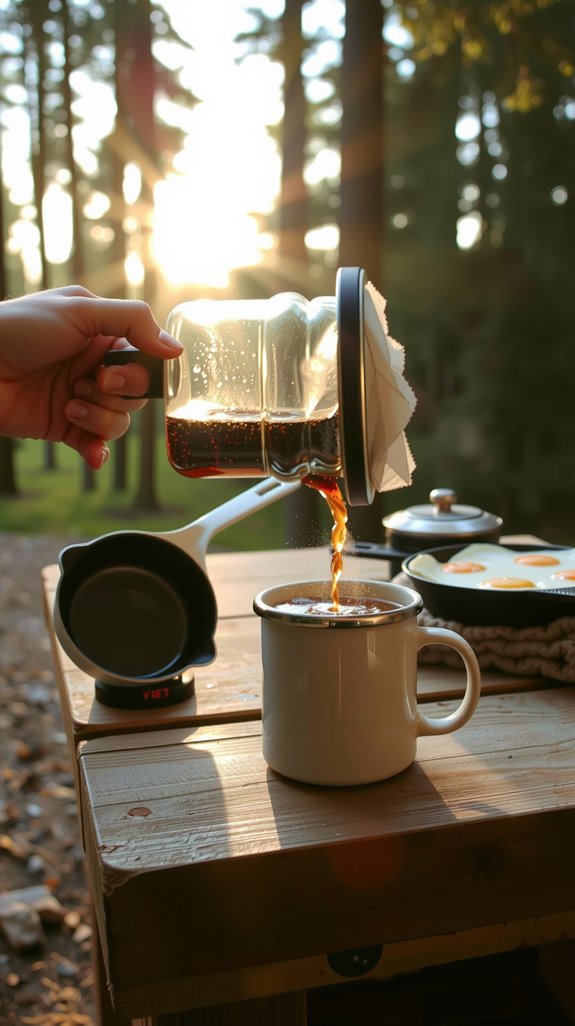
- 4 Brew Your Coffee Slowly Over the Fire
- 5 Sip Your Drink While Watching the Mist Lift
- 6 Enjoy a Silent Breakfast Outdoors
- 7 Walk Barefoot on the Dewy Ground
- 8 Listen to Birds Without Checking Your Phone
- 9 Journal Three Things You’re Grateful For
- 10 Meditate for 10 Minutes in Morning Stillness
- 11 Check In With Your Body and Mood
- 12 Set One Small Intention for the Day
- 13 Organize Your Gear With Care
- 14 Pack Your Tent Like You’re Making a Bed
- 15 Feel One Natural Element Before Leaving
- 16 Take Five Deep Breaths Before Moving On
Wake With the Sun, Not an Alarm

Your body already knows when to wake up if you let it. Natural light hitting your eyes in that first hour after dawn sets your circadian rhythm better than any app or supplement ever could.
You’ll fall asleep faster at night and wake up less during those dark hours. Morning sunlight also kicks off your cortisol response, which sounds bad but actually helps you feel alert while keeping stress manageable later in the day.
Start Your Morning With Gentle Stretches
Your muscles have been stationary for eight hours, and they need a transition period before you start hauling gear around. Stretching gets blood flowing to places that matter: your brain, your back, and your legs that’ll be hiking all day.
You’re not training for anything here, just waking up your body the same way you’d ease into cold lake water. Ten minutes of basic movement in the morning air prevents those nagging injuries that crop up on day three of a trip.
Take a Short Walk Around Camp
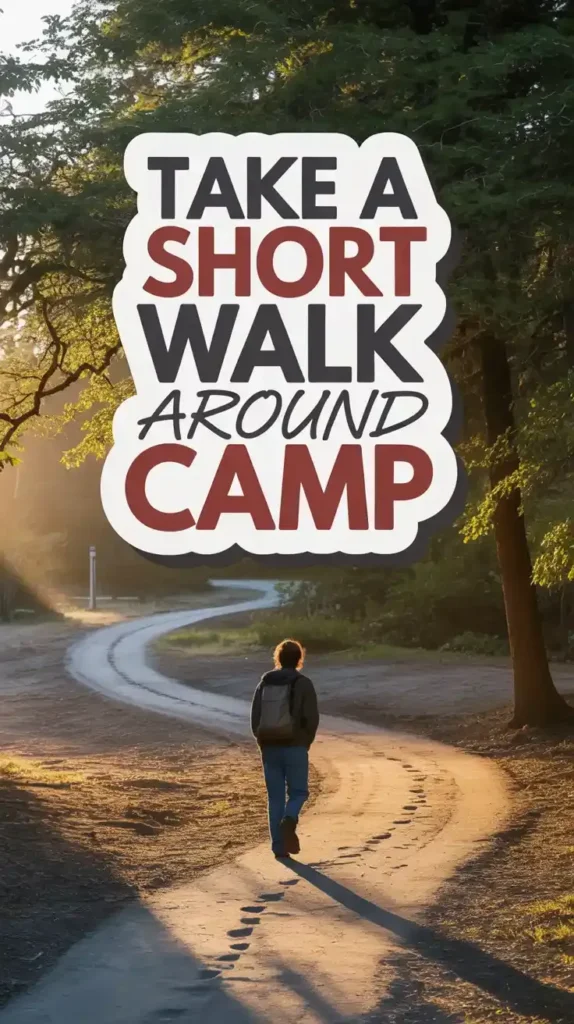
Walk your campsite perimeter before you touch the stove or check your phone. The oxygen-rich morning air clears your head better than caffeine, and the natural light continues that circadian work you started by waking with the sun.
Your cortisol drops, your endorphins rise, and your brain starts working at full capacity. Studies show this kind of nature exposure improves your memory by about 20 percent, which matters when you’re trying to remember where you stashed the water filter.
Brew Your Coffee Slowly Over the Fire

Making coffee over a fire forces you to pay attention in a way that pressing a button never will. Build your coals in a wide circle so you get steady heat instead of wild flames that’ll scorch everything.
Fill your percolator with cold water and coarse grounds, then watch that little glass dome once it starts perking. The five to ten minutes this takes aren’t wasted time; they’re the actual point.
Sip Your Drink While Watching the Mist Lift
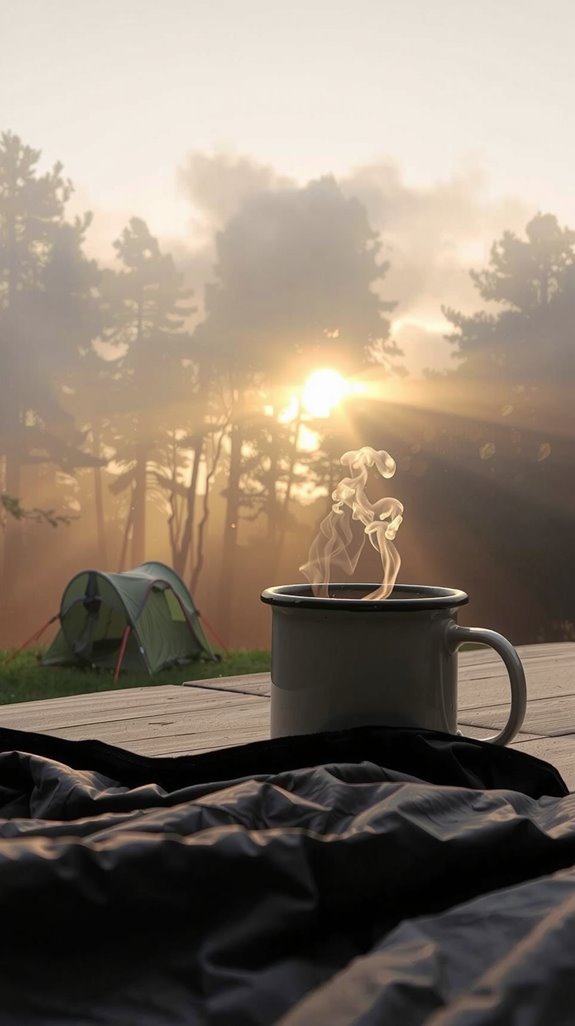
Morning mist forms when cold air from the night meets the warming ground, creating temporary landscapes that last only half an hour. You’re sitting there with something hot in your hands while cool air surrounds you, watching sunlight burn through layers of fog over the lake.
The contrast pulls you completely into the moment. Your coffee gets cold if you wait too long, and the mist disappears if you’re too slow, so you’re forced into this narrow window of present awareness.
Enjoy a Silent Breakfast Outdoors
Silence at breakfast does something that background music or conversation can’t. Overnight oats are perfect here because you made them the night before, so there’s no clanging pots or hissing stoves to break the quiet.
Mix oats, water, chia seeds, and peanut butter before bed, and they’re ready when you wake up. Cold-soaked grits work the same way if you dress them with bacon bits. You’re feeding yourself while keeping the morning’s natural soundscape intact.
Walk Barefoot on the Dewy Ground
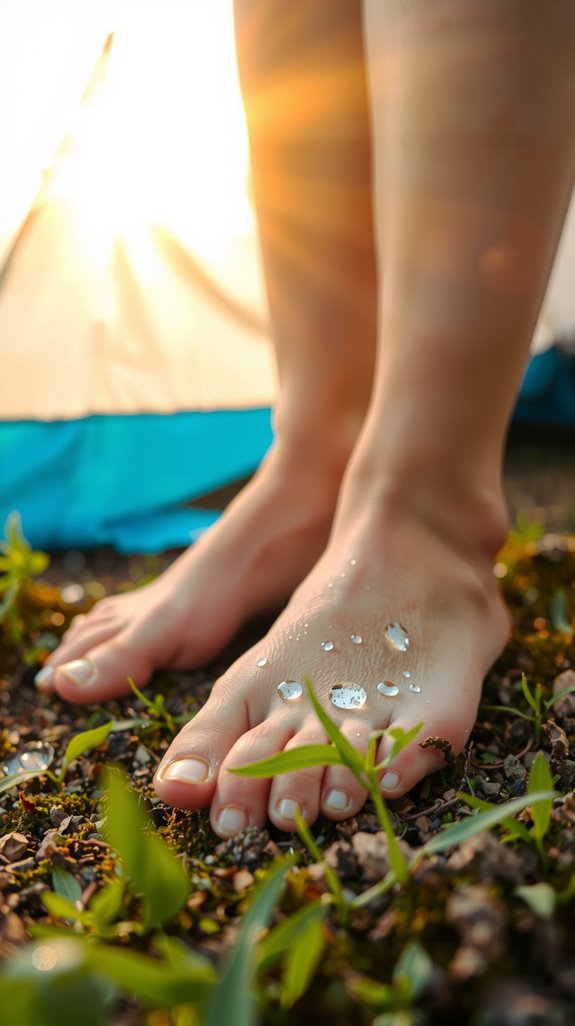
Wet grass in the morning feels uncomfortable for about thirty seconds, then your feet adjust, and something shifts. The earth’s electrons interact with free radicals in your body, your cortisol levels drop, and your heart rate variability improves in ways that scientists can actually measure.
Dew itself has compounds that support your immune system and digestion. Fifteen minutes of this strengthens the small muscles in your feet that shoes have weakened and drops your stress levels by more than half.
Listen to Birds Without Checking Your Phone
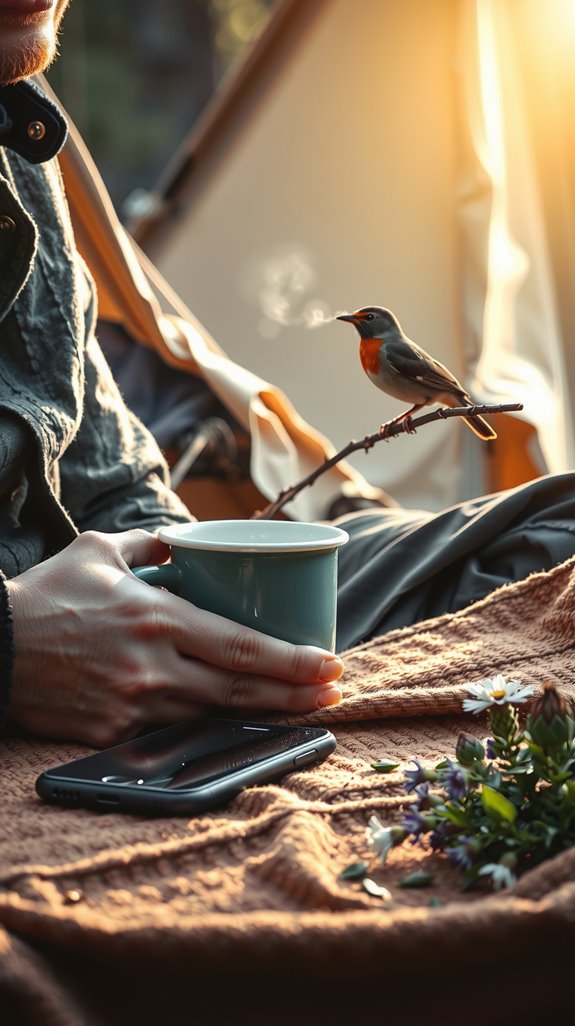
That urge to identify every bird call with an app kills what makes birdsong valuable in the first place. Just listen without naming or cataloging anything. The sounds reduce anxiety and stress for up to eight hours, which outlasts most meditation sessions.
Your blood pressure drops, your heart rate slows, and your nervous system downshifts in a way that green spaces alone don’t provide. Thirty minutes of listening each morning changes your baseline mood regardless of what mental state you brought to the campsite.
Journal Three Things You’re Grateful For

Gratitude journaling sounds like something from a wellness retreat, but the research behind it is solid. Five minutes of writing down three specific things you’re grateful for increases your happiness for six months after you stop doing it.
Sleep quality jumps by 25 percent, general well-being rises by 10 percent, and your blood pressure drops. The practice rewires how you notice your day. You start looking for good things because you know you’ll need to write them down tomorrow.
Meditate for 10 Minutes in Morning Stillness
Ten minutes of meditation in a quiet campsite works as well as twenty minutes in a noisy apartment. Your attention span lengthens, your stress drops by 14 percent, and your memory encoding improves even if this is your first time trying it.
A single morning session strengthens executive control, which is just a fancy way of saying you’ll make better decisions about small things throughout the day. The natural silence around you amplifies everything, so you don’t need guided tracks or special techniques.
Check In With Your Body and Mood
Meditation quiets your mind, but your body needs its own assessment. Stretch your neck and spine gently to work out the stiffness from sleeping on the ground. Then do a mental scan from your head down to your feet, noticing where you’re holding tension.
Release it section by section. Check your overall mood without trying to change it yet, just acknowledge what’s there and what might need attention as the day progresses.
Set One Small Intention for the Day
Pick one achievable thing you want to do before the sun sets. Maybe it’s swimming in that cold lake you’ve been eyeing, or sitting quietly for fifteen minutes after lunch, or hiking to a specific viewpoint you saw on the map.
Write it down so it becomes concrete instead of a vague idea. That single intention guides your decisions all day and gives you a sense of direction that drifting through activities never provides.
Organize Your Gear With Care
Gear chaos creates mental chaos, especially on longer trips. Sort everything into clear categories: sleep systems in one stuff sack, kitchen items in another, hydration and water treatment together, and first aid separate and accessible.
Color-coded bags let you grab what you need without dumping everything onto the ground. Store it all in ventilated bins at home so moisture doesn’t ruin expensive equipment between trips.
Pack Your Tent Like You’re Making a Bed
Load your tent last when you’re packing up so you can access it first when you arrive at your next site. This matters most when the weather turns, and you need shelter immediately.
Think of it like making a bed in reverse: tent body goes in accessible, then sleeping pads, then bags, then pillows on top. Everything layers in the order you’ll actually use it, which prevents that frantic unpacking session in the rain..
Feel One Natural Element Before Leaving
Touch something real before you break camp. Put your bare feet in the dirt, run your hand down rough bark, or dip your fingers in cold stream water.
The physical sensation cuts through mental noise better than any breathing exercise. Your stress response calms, your thoughts slow down, and you’re fully present in that spot before you return to the regular world.
Take Five Deep Breaths Before Moving On
After you’ve touched the earth or the water, stop and breathe five times slowly. Deep breathing activates your parasympathetic nervous system, which is what calms you down after stress. Your cortisol drops, oxygen flow to your brain increases, and your focus sharpens.
Try square breathing if you want structure: four seconds in, four seconds hold, four seconds out, four seconds pause. Five rounds takes less than two minutes but anchors everything you just experienced into your nervous system.