Have you ever played the ‘Midnight Tent Tripping Game’? You know, the one where you fumble for your headlamp, catch your toe on a rogue boot and nearly set off a minor gear avalanche?
Seriously, if you’ve ever felt like relaxing outdoors comes with a major space problem, you’re not wrong!
But here’s the good news: mastering tent organization is about making your space functional and totally relaxing. Conquering the clutter makes your experience better, making your temporary home feel cozy instead of crazy.
Ready to go from chaotic camper to organized outdoor guru? These genius, space-saving solutions will revolutionize how you set up camp and maximize every square inch. Let’s dive into the strategies smart campers swear by!
Contents
- 1 Maximize Tent Space With Hanging Mesh Organizers
- 2 Create DIY Tent Corner Storage Units
- 3 Master the Art of Compression Bag Packing
- 4 Transform Pool Noodles Into Gear Holders
- 5 Design a Portable Camp Kitchen Station
- 6 Utilize Vertical Space With Command Hooks
- 7 Implement the Roll-and-Stack Clothing Method
- 8 Set Up a Shoe Organization System
- 9 Build a Camping Gear Wall at Home
- 10 Pack Smart With Clear Storage Containers
- 11 Install a Tent Ceiling Storage Net
- 12 Organize Small Items in Pill Containers
- 13 Create Multi-Purpose Storage Solutions
- 14 Establish Zones in Your Tent Layout
- 15 Make a Door-Mounted Storage System
- 16 Develop an Efficient Food Storage Strategy
- 17 Design a Modular Gear Storage System
- 18 Set Up a Weather-Protected Storage Area
- 19 Arrange a Compact Toiletries Station
Maximize Tent Space With Hanging Mesh Organizers

Trying to make the most of limited tent space is a puzzle, but here’s the best cheat code: Go vertical! Hanging mesh organizers are a total game-changer because they turn all that unused wall space into prime storage.
Now, you don’t want the flimsy stuff. Look for organizers with a sturdy, double-layered canvas. That’s how you know they’re built to last through rugged camping conditions. I personally love the ones made from durable 600D Oxford fabric. They just feel reliable.
With multiple compartments and the ability to support up to 150 pounds, they’ll help you create a clutter-free camping environment.
Create DIY Tent Corner Storage Units
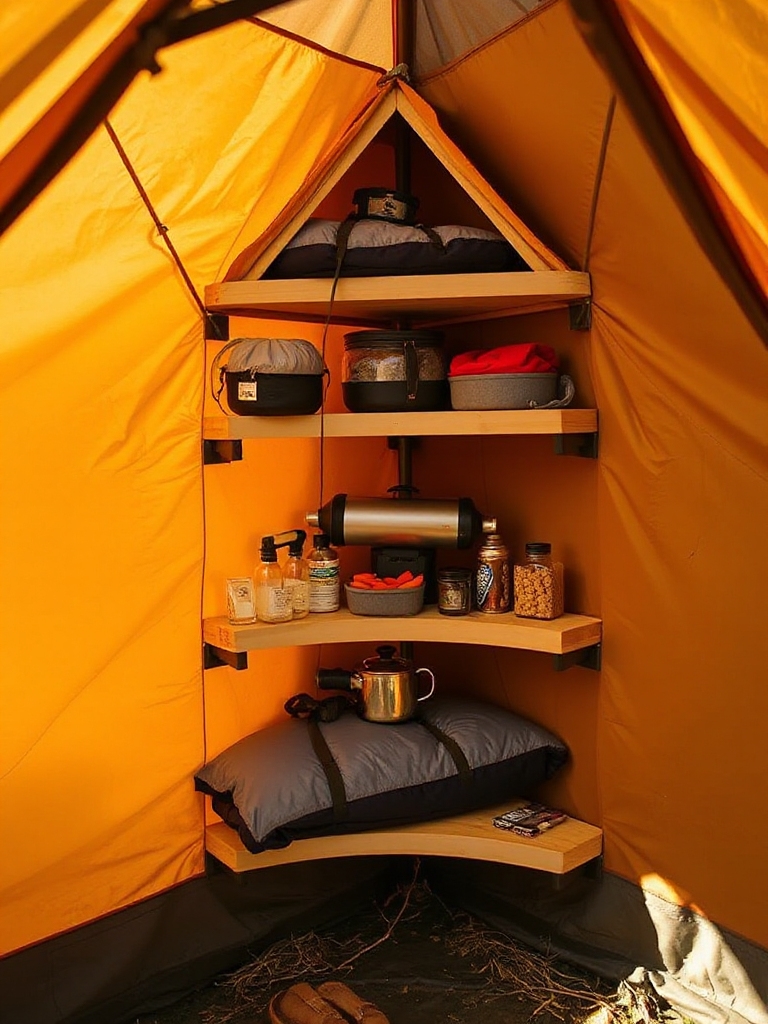
If you’re a little handy (or you know someone who is!), you can knock together a super sturdy frame using simple 2×4 lumber and plywood.
Just make sure it’s anchored securely so it won’t topple over. Seriously, you can build a whole storage system for less than fifty bucks!
Pro tip: add adjustable shelving for maximum flexibility. And since we live in Seattle where it rains, moisture protection is a non-negotiable. Labeling your compartments by gear type is a lifesaver, especially for frequently used items.
Master the Art of Compression Bag Packing
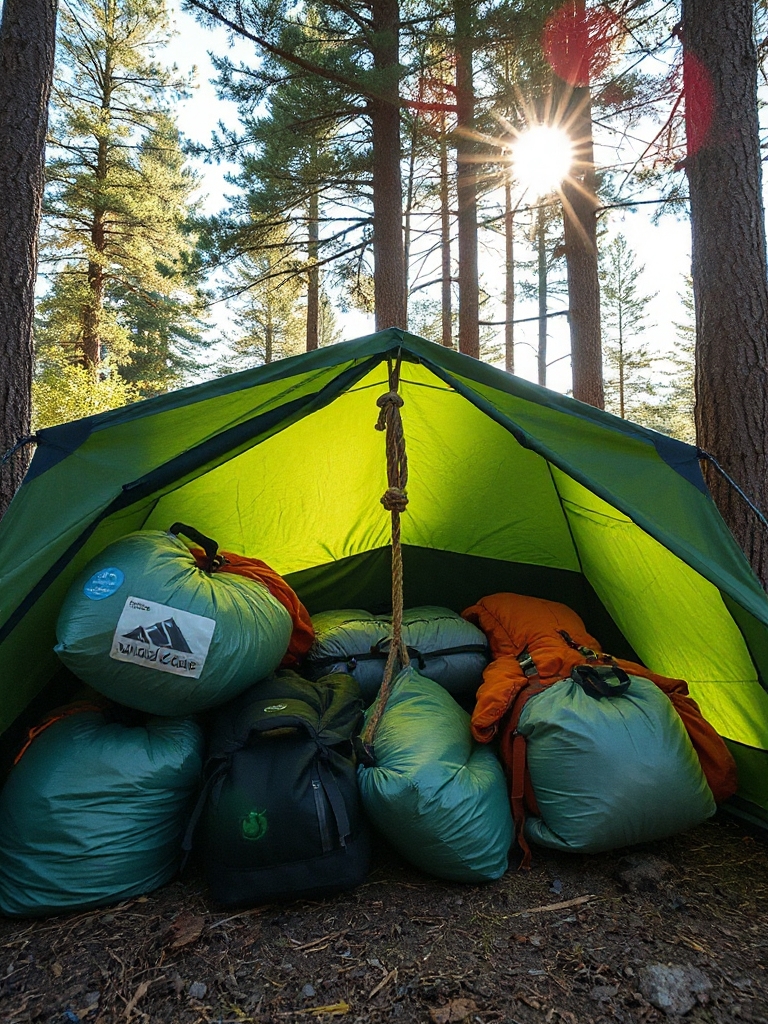
To maximize efficiency, stuff your sleeping bags in small handfuls rather than rolling them, and tighten compression straps gradually for even distribution.
I use multiple small sacks to keep different gear types separated, like one for socks, one for long-sleeve shirts, etc.
And listen up: Always press out the air before you give the final tug on the straps for the tightest compression.
Products with water-resistant fabric help to protect your tenting gear from moisture and adverse weather conditions are the best.
Transform Pool Noodles Into Gear Holders

Once you’ve discovered the versatility of pool noodles, you’ll wonder how you ever camped without them.
These cheap foam tubes are insanely versatile for camping. Here’s the trick: Just cut them to size, slice a slit down the side, and literally snap them onto your tent poles or rails. Boom, instant organizer!
I install them to securely hold fishing tackle and keep my delicate gear from getting scratched up.
Plus, they totally cut down on that annoying rummaging noise when you’re searching for something in the dark. They’re also water-resistant and cushion your gear perfectly.
Design a Portable Camp Kitchen Station

We’ve all cooked on a tiny picnic table or, worse, just a damp log. But a well-designed portable camp kitchen station is a game changer! It takes your outdoor cooking from basic survival mode to genuinely enjoyable.
Look for models with aluminum countertops and fold-out tables. They give you so much prep space! Integrated storage compartments are a must to keep your cooking gear organized and, most importantly, off the dirty ground.
Lightweight frames and modular designs are key, especially if you like to switch up your setup based on what you’re cooking.
Utilize Vertical Space With Command Hooks
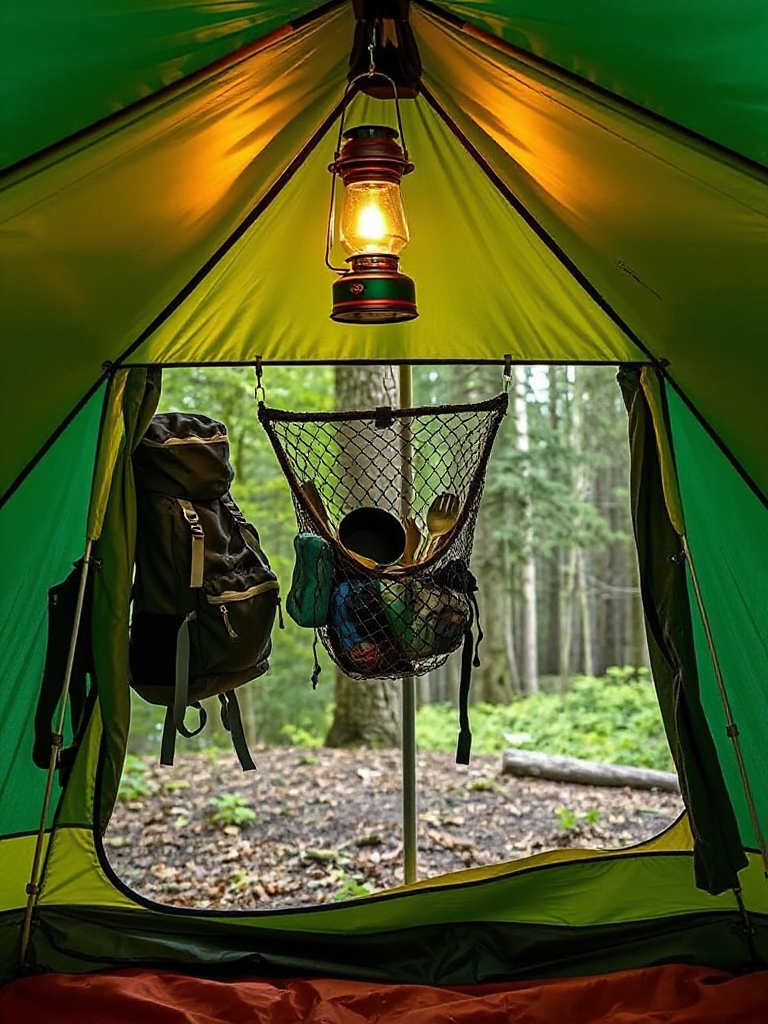
Want to turn your tent’s vertical space into functional storage without damaging anything? Hello, Command hooks! They make setting up a functional storage system ridiculously easy.
Install them on tent poles or seams where the fabric is taut. A good rule of thumb is to distribute the weight across several hooks if you’re hanging something heavier, like a wet towel or a jacket. Easy peasy!.
Implement the Roll-and-Stack Clothing Method
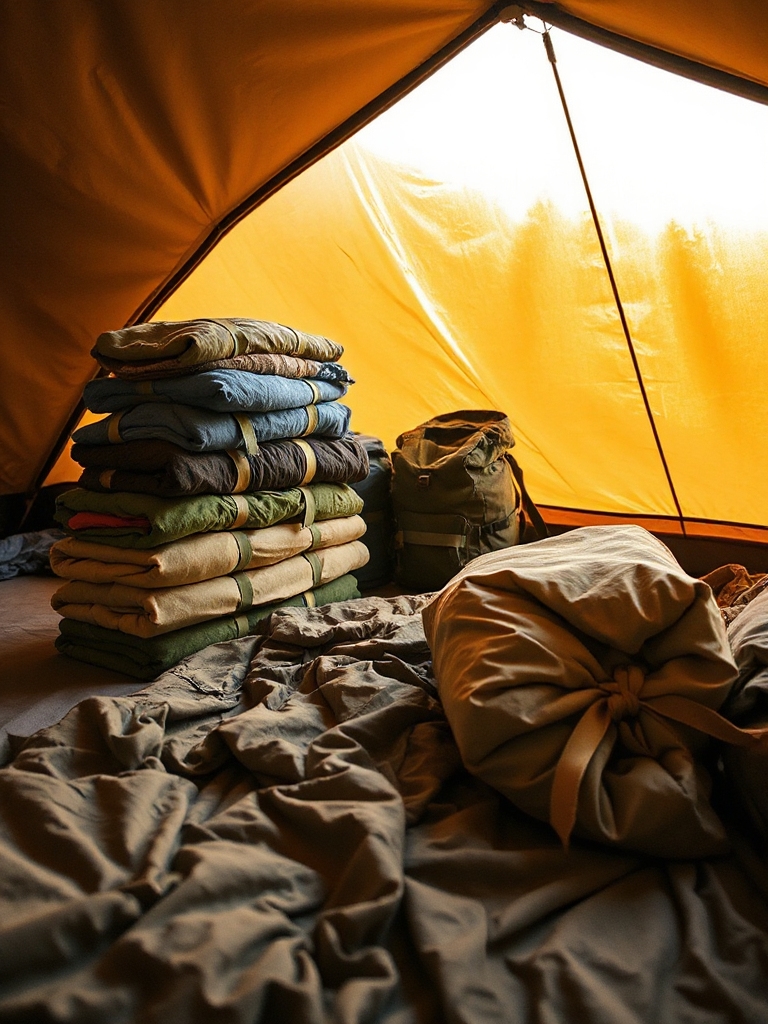
Stop digging through a messy pile of clothes! Seriously, mastering the roll-and-stack clothing method is going to revolutionize your packing life and keep your tent so much tidier.
Here’s the drill: Lay your garment flat, turn the bottom hem inside out to create a little “pocket,” and then roll tightly from top to bottom. This save tons of space and your clothes actually stay wrinkle-free and you can easily see what you have!
Set Up a Shoe Organization System
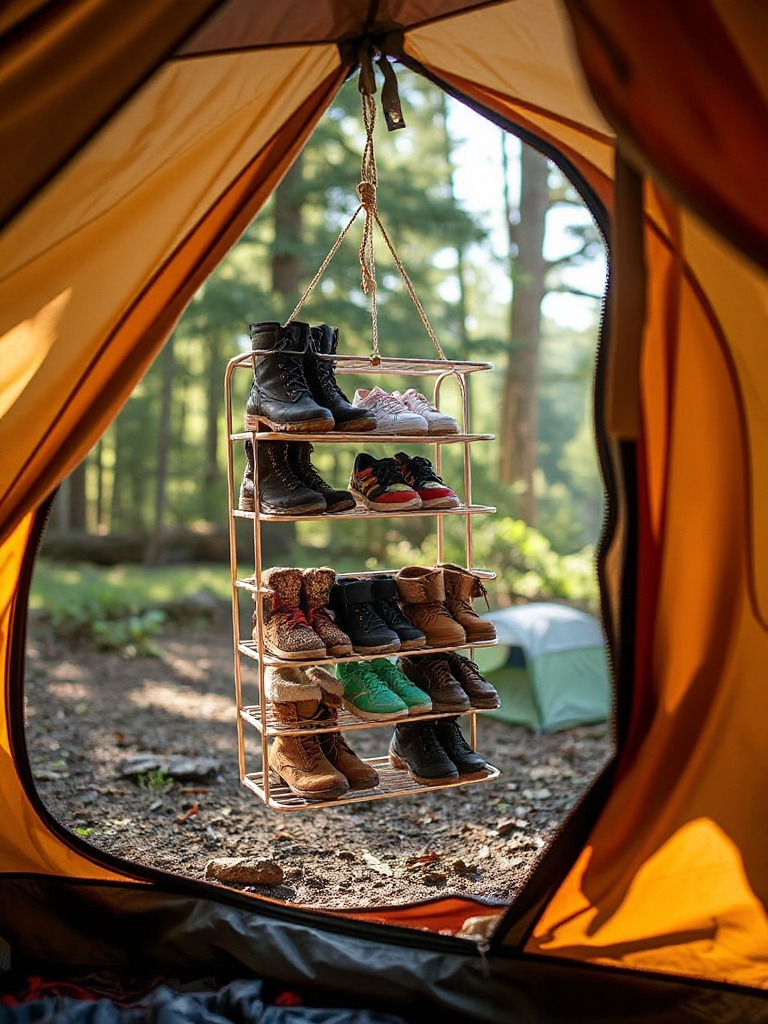
This might be my number one rule for keeping a tent clean: You need a designated shoe storage system. If you don’t, all that dirt, mud, and pine needles are coming right into your sleeping space. Hard pass!
You’ve gotta set up a specific spot outside the tent, and make sure whatever you use is weather-resistant. Think of it as a little mudroom for your tent. Use a simple plastic bin with a lid, a rubber mat, or even just a heavy-duty doormat to keep everything contained and protected from the elements.
Build a Camping Gear Wall at Home

Organization doesn’t just happen at the campsite; it starts in your garage (or storage unit, if you live in a tiny Seattle apartment like me!).
First, measure your space; don’t wing it! Then, install a sturdy pegboard with hooks and baskets. This is seriously the best way to see everything you own at a glance.
Toss in some adjustable shelving for those heavy items (like the camp stove or water jugs). And please, label everything! Having specific, labeled sections for “Cooking Gear,” “Sleeping Bags,” and “First Aid” makes packing for the next trip a total breeze.
.
Pack Smart With Clear Storage Containers

Clear storage containers represent three essential advantages for tent camping organization: visibility, protection, and efficient space utilization.
I like to sort things by function. All the coffee stuff goes together, all the towels go together, etc. Keep the boxes you use frequently right near the entrance.
Oh, and customizable dividers are a lifesaver for keeping small items from shifting around when you’re driving those bumpy forest roads.
Install a Tent Ceiling Storage Net

Want instant, out-of-the-way storage? Get a tent ceiling storage net! It instantly transforms your shelter into a more efficient, less-cluttered space.
Just remember to measure your tent’s ceiling dimensions first and grab a lightweight mesh option with secure hooks.
Position it strategically so it’s taut and easy to reach, but definitely make sure it doesn’t sag or hit your head. Nobody wants to lose valuable headroom!.
Organize Small Items in Pill Containers

This is a brilliant little hack! Repurposing pill containers for tiny items is the ultimate way to avoid those “where the heck did I put that?” moments.
They’re fantastic, waterproof compartments for things like matches, fishing hooks, tiny batteries, or emergency repair parts for your gear. Label each section clearly, and then use a little strip of Velcro to secure them right to your tent wall for super-easy access.
Create Multi-Purpose Storage Solutions
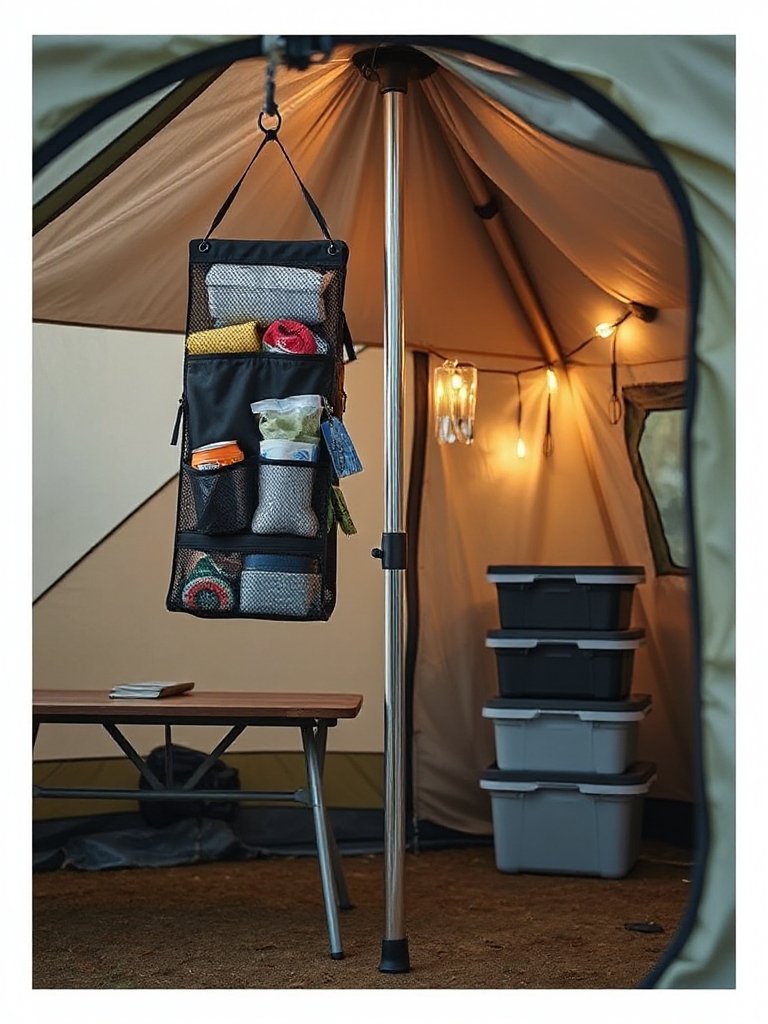
In a small space, everything needs to pull double duty. Choose containers that serve multiple functions, like coolers that double as seats or storage boxes that transform into tables.
To really optimize space, use collapsible equipment and multi-functional pouches for organizing everything from my makeup/toiletries to extra clothing layers. Less bulk is always better.
Establish Zones in Your Tent Layout

Think of your tent like a tiny apartment and establish clear zones. You need an area for sleeping, an area for gear storage, and a little spot for changing clothes (the “dressing room”).
Keep the things you use constantly (like your headlamp or water bottle) right near the entrance. Your sleeping bag and personal items should always be tucked toward the back. And for the love of God, maintain clear pathways, as doing so guarantee easy movement, especially during nighttime.
Make a Door-Mounted Storage System
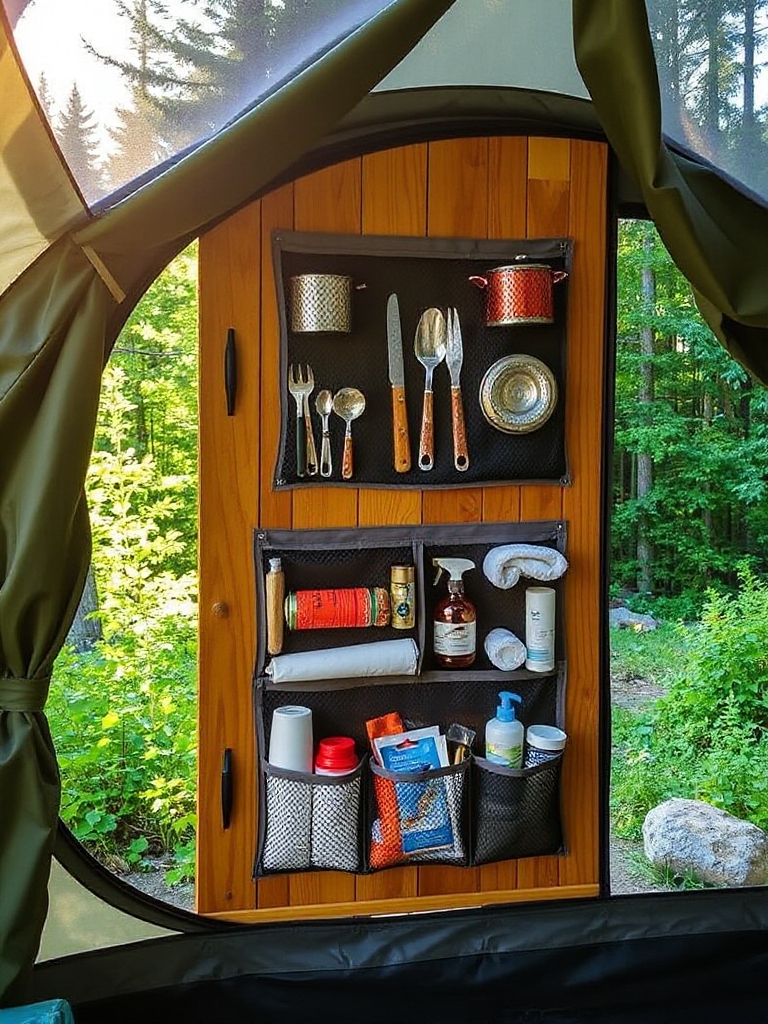
A well-designed door-mounted storage system transforms your tent’s entrance into a functional storage hub without sacrificing interior space.
Install sturdy metal hooks, compact bins, and mesh pockets to organize your gear efficiently. If you’re going for something that hangs outside, make sure you choose waterproof materials (like that 600D Oxford fabric again!) and use protective covers to shield your items..
Develop an Efficient Food Storage Strategy

Once you’ve nailed your gear storage, the next challenge is food management. Proper food storage is non-negotiable for cleanliness and safety.
Always, always store food in designated areas like bear boxes or your vehicle overnight. Keep a clean campsite. This means wiping down surfaces immediately after cooking. Just like with your gear, label your food containers clearly, and keep your cooking essentials easily accessible in the kitchen zone.
Design a Modular Gear Storage System

A modular system means everything works together and can be customized based on your trip.
Create a customizable setup using waterproof materials and collapsible bins, incorporating clear labels for quick identification.
For those of us camping in less-than-perfect weather, always include weatherproof features, like sealed storage and maybe even small ventilation systems for keeping things like ropes or gear bags from getting musty.
Set Up a Weather-Protected Storage Area

For those items that don’t fit in the tent, you need a weather-protected storage area right outside.
Use waterproof fabrics (nylon or polyester work great) and secure them to the ground with L-shaped stakes and wind ropes. Set up this hub near your campsite but away from any spot that might flood if it rains (always check the drainage!). Clear, stackable bins are your best friend here, and make sure you leave a little airflow to prevent that horrible moisture buildup.
Arrange a Compact Toiletries Station

To save counter space (which is basically non-existent in a tent), use a hanging toiletry bag with multiple compartments.
It’s a total game-changer! Choose travel-sized essentials that can do a couple of jobs (like a soap that works for body and dishes).
Label those compartments, and use transparent sections so you can see your toothbrush right away.
More tips…
According to outdoor industry research, 75% of tent campers report that poor storage organization negatively impacts their camping experience.
You’ll find that implementing these space-saving hacks transforms your tent from a cluttered mess into an efficient living space.
By utilizing vertical storage, compression techniques, and modular systems, you’re not just maximizing space—you’re creating a more enjoyable outdoor adventure that’ll keep you coming back for more.