Planning a campsite layout is genuinely one of the best parts of any trip. I’ve spent years refining my setups through trial, error, and a few soggy disasters that taught me more than any gear guide ever could.
Whether you’re headed to a windswept beach, a misty UK forest, or your own backyard with a kid who refuses to sleep indoors, the difference between a great campsite and a miserable one usually comes down to a handful of smart decisions. These ideas come from real experience, not a Pinterest board.
Contents
- 1 Dreamy Beach Tent Camping Set Up Ideas
- 2 Whimsical Tent Camping Set Up Ideas for Birthday Celebrations
- 3 Glamping-Inspired Tent Camping Set Up Ideas
- 4 Family-Friendly Tent Camping Set Up Ideas with Kids
- 5 Car Tent Camping Set Up Ideas for Quick Getaways
- 6 Cozy Indoor Tent Camping Set Up Ideas
- 7 Minimalist Tent Camping Set Up Ideas for Light Packers
- 8 Practical Campsite Tent Camping Set Up Ideas
- 9 Aesthetic Tent Camping Set Up Ideas for Instagram-Worthy Campsites
- 10 Easy and Organized Tent Camping Food Set Up Ideas
- 11 Tent Camping Set Up Ideas for UK Weather and Campsites
- 12 Budget-Friendly DIY Tent Camping Set Up Ideas
- 13 Romantic Tent Camping Set Up Ideas for Couples
- 14 Tent Camping Set Up Safety Tips and Essentials
Dreamy Beach Tent Camping Set Up Ideas
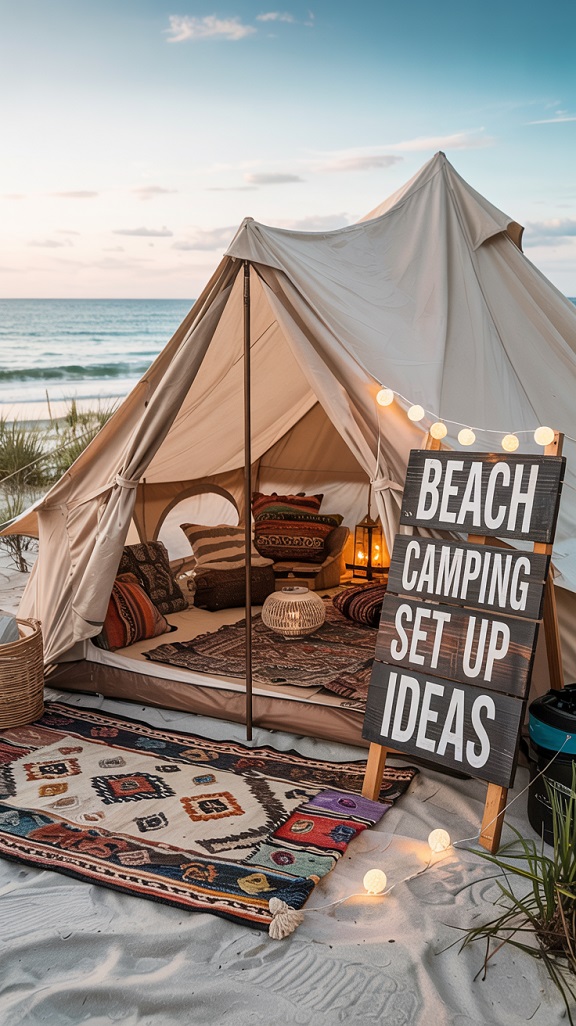
Beach camping looks romantic until the wind rips your tent stake out of the ground at 2 a.m. Use sand-specific auger stakes and run a heavy tarp underneath your tent as a moisture barrier, because coastal ground stays damp even when it hasn’t rained.
String solar fairy lights along the guy lines so you can find the entrance without a headlamp after a late swim. Rattan mats, a driftwood centerpiece, and a cotton throw over your camp chair pull the whole setup together without weighing down your pack.
Choosing the Right Tent for Sandy Conditions
Sand gets into everything, and a tent with poor ventilation turns into a sauna by mid-morning. Look for a double-walled design with mesh inner panels and a full-coverage rain fly that still allows airflow, because coastal heat and humidity are relentless.
A built-in bathtub floor is non-negotiable; it keeps sand from sifting in at the seams during breezy nights. Freestanding designs are worth the extra weight here, since finding solid anchor points in soft sand is never guaranteed.
Beach-Friendly Ground Coverings and Rugs
A woven outdoor rug just outside the tent door is one of those small decisions that pays off every single time. It gives you somewhere to knock the sand off your feet before you step inside, which sounds minor until you’ve spent a night sleeping on a fine grit layer inside your sleeping bag.
Choose a flat-weave rug in a natural fiber or quick-dry synthetic so it shakes clean easily and dries fast after a wave catches it. Layering a second mat inside the vestibule catches whatever the outer rug misses.
Creating Shade and Wind Protection
A pop-up canopy staked firmly into the sand gives you a shaded common area that makes the difference between a pleasant afternoon and a sunburned retreat into your tent. Position it upwind of your seating area so it acts as a windbreak and keep the open side facing away from the prevailing breeze.
A beach umbrella angled into the wind adds a secondary layer of protection for the cooking zone without taking up much real estate. If the wind picks up seriously, get low, weight the canopy corners with sand bags, and know when to fold it before it becomes a sail.
Beach Camp Aesthetic Decor Ideas
Driftwood is free, looks great, and weighs almost nothing once it’s dry. A few pieces arranged on your camp table alongside a jar of wildflowers or shells makes the site feel intentional rather than just functional.
Linen blankets in natural tones drape well over camp chairs and photograph beautifully in the golden hour light that beach campsites tend to deliver. Shell garlands and a length of jute rope strung between two stakes round out the coastal look without any of it feeling forced.
Whimsical Tent Camping Set Up Ideas for Birthday Celebrations
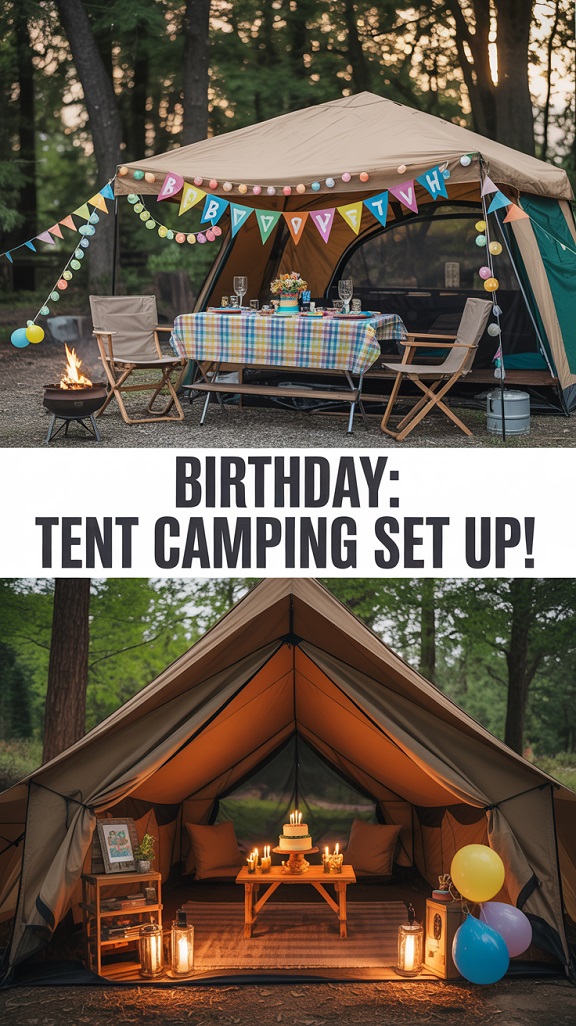
Camping birthdays work best when you resist overcomplicating them. Hang bunting between two trees, throw a gingham cloth over a folding table, and let the setting do most of the work. Cupcakes travel better than cake, and a store-bought option avoids the melted icing disaster you’d otherwise spend the morning cleaning out of your cooler.
A post-dark glow stick dance party or a quick scavenger hunt around the site lands better with kids than any elaborate decoration ever could.
Decorating Your Tent for a Birthday
String lights framing the tent entrance set the tone before anyone even unzips the door. Themed paper banners are lightweight, pack flat, and make the site feel genuinely festive without requiring any real effort to hang.
Balloon clusters tied to tent stakes or nearby branches add color and movement, though keep them away from the fire and check local rules before you release anything into the sky. A few yards of ribbon woven through the guy lines is the kind of small touch that gets noticed and costs almost nothing.
Easy Camping Birthday Food and Cake Ideas
Cupcakes in a hard-sided carrier survive the drive in better shape than any layer cake ever will. Donuts from a bakery box are even easier and require zero plates, which matters more than you’d think when you’re washing up with a single water jug.
If you want something homemade, a no-bake cheesecake set in a cooler overnight travels surprisingly well and feels special. Keep the icing simple and the portions generous, because camp air and outdoor activity make everyone hungrier than usual.
Fun Birthday Activities at Campsite
A nature scavenger hunt costs nothing to set up and keeps kids genuinely occupied for longer than you’d expect. Write a list of things to find around the site, specific enough to be a real challenge, and watch them disappear into the trees with real purpose.
Nature bingo works the same way and packs into a single ziplock bag. After dark, a glow stick dance party needs no explanation and no setup, just hand them out and step back.
Glamping-Inspired Tent Camping Set Up Ideas
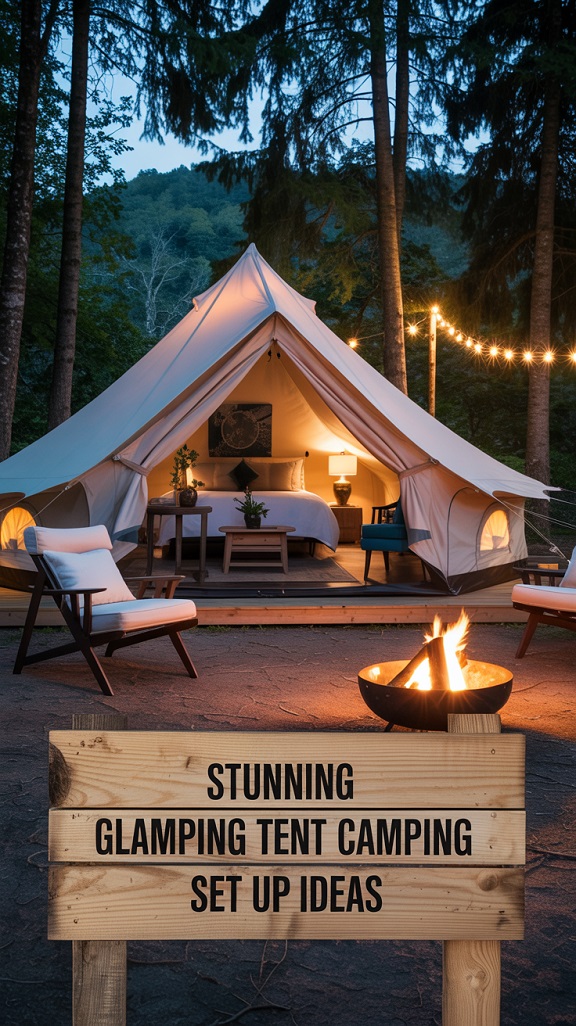
A $400-a-night bell tent and a $40 blow-up mattress from a discount store can feel surprisingly similar if you focus on layers and light. Stack a faux sheepskin throw over a fleece blanket, add a couple of scatter cushions, and suddenly your three-season tent feels like somewhere you’d actually want to linger in the morning.
Toss a macrame hanging near the entrance and a small bamboo folding table inside for your coffee mug and book, and you’ve nailed the aesthetic without the resort bill. Battery-powered fairy lights and a couple of flameless pillar candles do more for atmosphere than any overhead lantern.
Essential Glamping Gear to Pack
A quality blow-up mattress with a built-in pump changes everything about how you feel on day two. Soft linens over a sleeping bag add warmth and comfort without much bulk if you roll them tightly.
Folding chairs with cushioned seats are worth the extra weight because camp chairs you actually want to sit in for hours make a real difference to how relaxed the trip feels. A small battery-powered lantern with a warm bulb color rather than a harsh white rounds out the kit without taking up meaningful space.
Creating Cozy Layers and Bedding
Start with a sleeping pad rated for the conditions, because no amount of blankets compensates for cold radiating up from the ground. A fleece liner inside your sleeping bag adds warmth and feels softer against your skin than the bag lining alone.
Layer a throw blanket on top for the hours after midnight when temperatures drop faster than expected, and keep a second one within reach rather than buried at the bottom of a bag. Extra pillows are worth the car space if you’re car camping; there’s no glamping without a decent pillow.
Lighting Ideas for a Luxurious Ambience
Warm-toned fairy lights strung along the tent ridgeline and around the entrance do more work than any single lantern. Flameless candles inside the tent give you the visual warmth of a real flame without any of the carbon monoxide risk that makes actual candles inside a tent a bad idea.
A battery lantern set to its lowest setting on the camp table creates a soft pool of light that’s easy on the eyes after dark. Layering two or three light sources at different heights always looks better than one bright overhead option.
Family-Friendly Tent Camping Set Up Ideas with Kids
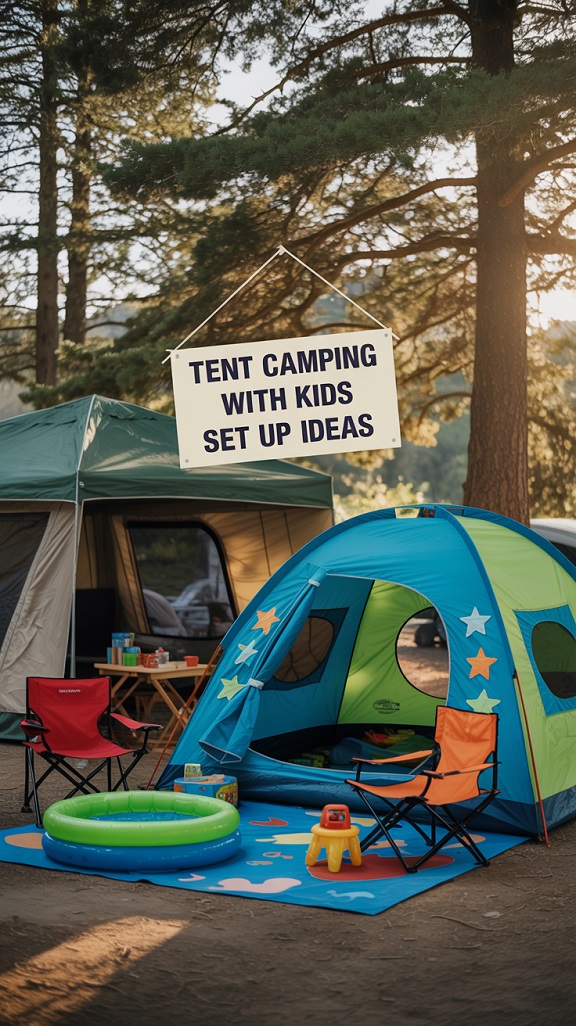
Give kids their own mini pop-up tent beside yours and watch them stop asking to sleep in your sleeping bag. Keep their sleeping area near the tent door for those inevitable 3 a.m. bathroom emergencies, and line the floor with a washable, brightly colored rug that doubles as a play surface during the day.
Collapsible storage bins are worth every ounce they weigh, because the fastest way to ruin a camping morning is hunting for socks in a dark tent. Pack nature journals, a magnifying glass, and a couple of glow sticks, and you’ve covered both daylight hours and the post-dinner chaos.
Kid-Friendly Tent Layout and Sleeping Arrangements
Position kids’ sleeping bags near the tent door so nighttime bathroom trips don’t require climbing over everyone else in the dark. A small clip-on light attached to their sleeping bag gives them independence without needing to find a headlamp at 2 a.m.
Keep a pair of shoes right inside the door flap where they can find them without waking you up. A dedicated spot for each child’s gear, even just a labeled stuff sack, reduces the morning chaos considerably.
Activities to Keep Kids Entertained
Nature journals with a handful of colored pencils give kids a reason to look closely at their surroundings rather than asking when you’re leaving. A magnifying glass is cheap, weighs almost nothing, and becomes the most-used item in the bag for kids who’ve never really looked at a beetle up close.
Glow sticks after dark buy you at least an hour of independent play while you actually sit by the fire. Pack a deck of cards and a simple field guide to local birds or insects as backup for the inevitable rainy afternoon.
Easy Food Prep for Kids While Camping
Pre-packed individual snack boxes are the single best thing you can do for camp sanity with kids. Fill each one with fruit, granola bars, trail mix, and something small and sweet, then let them access it freely during the day so you’re not the snack vending machine every twenty minutes.
For meals, keep it simple and familiar, because a camping trip is not the moment to introduce a kid to new foods. Wraps, pasta, and anything that can be eaten without much fuss will always beat an ambitious camp recipe that falls apart when you’re tired and the light is fading.
Car Tent Camping Set Up Ideas for Quick Getaways
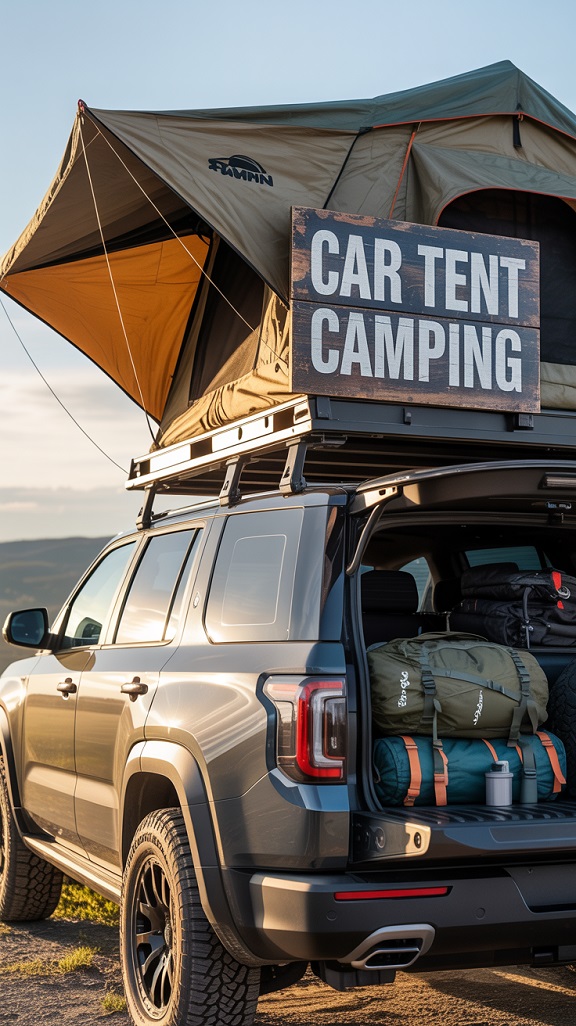
Rooftop tents have changed how I approach spontaneous overnight stops. They deploy in minutes, keep you off wet and rocky ground, and the view from six feet up is almost always worth it.
A foam mattress topper inside your SUV is the budget version, and it works well if you park nose-up on a slight incline to keep blood from pooling in your head. Use clear, labeled bins for kitchen, sleep, and clothing gear so you’re not unpacking everything to find your headlamp.
Car Roof Tents vs Ground Tents
Rooftop tents win on speed and ground clearance, and if you’ve ever tried to pitch a ground tent on a rocky roadside pullout in the dark, you understand why that matters. Ground tents give you significantly more interior space and don’t require you to climb a ladder every time you need something from your sleeping bag.
Rooftop options also mean your car is committed to that spot for the night, which limits flexibility if plans change. For true spontaneous travel, a ground tent that pitches in under five minutes is often the more practical call.
Organizing Gear Efficiently in Your Car
Clear bins with lids labeled by category are the system that actually holds up over multiple trips. Kitchen gear in one, sleep gear in another, layers and clothing in a third, and you’ll never empty the entire boot looking for a headlamp again.
Stack them so the bins you need first at camp are on top and accessible without moving everything else. A soft duffel for dirty or wet gear kept separate from the rest saves you from that musty car smell by the end of a weekend trip.
Quick Set Up Tips for Overnight Stops
Park facing the direction you want to wake up looking at, because it costs nothing and makes the morning dramatically better. Keep your sleep kit in a single stuff sack that you can pull out of the car in one grab so setup takes minutes rather than half an hour of unloading.
A headlamp clipped to your door handle is the overnight stop habit that eliminates the fumbling-in-the-dark tax you’d otherwise pay every single time. Know your tent pitch cold before you rely on it in the dark at an unfamiliar pullout.
Cozy Indoor Tent Camping Set Up Ideas
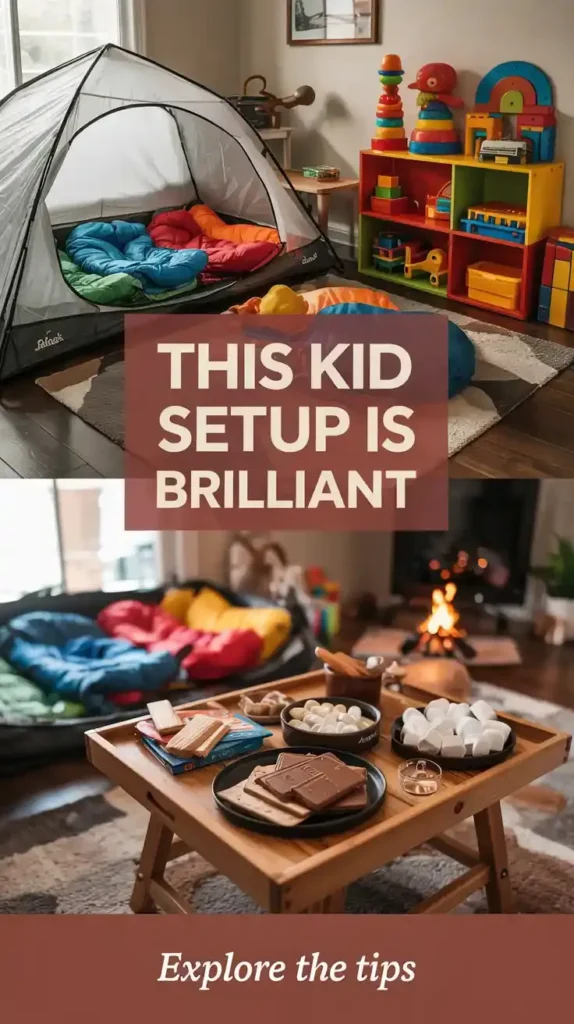
A pop-up tent in the living room with picnic blankets, fairy lights, and a tablet propped up for a camping movie is a genuinely good rainy day solution. Layer in quilts and plush toys, break out the enamel mugs for hot chocolate, and make a s’mores dip on the stove to serve in a cast iron pan.
Kids who have been cooped up all day need the ritual of it as much as the novelty. It works better than you’d think, and you won’t have to dry anything out afterward.
Setting Up an Indoor Tent for Kids
A teepee-style tent works better indoors than a dome because it takes up less floor space and feels more like a dedicated hideout. Layer the inside with quilts, a sleeping bag if you have one to spare, and enough plush toys to make it feel genuinely lived-in rather than just pitched.
Clip a small battery light to the top of the tent interior so they have their own controllable light source. A low folding table just outside the tent door gives them a surface for snacks, cards, and activities without cluttering the sleeping space.
Creating a Movie Night Camping Vibe
Dim the room lights completely and use only the fairy lights and a small lantern to set the atmosphere before the movie starts. A projector pointed at a light-colored wall makes the whole thing feel like an event rather than just watching TV on the floor.
Choose films that lean into the outdoor theme, classic adventure movies or nature documentaries work well, and queue them up before the kids settle in so you’re not fiddling with a remote in the dark. Popcorn in a camp bowl and hot chocolate in enamel mugs complete the illusion without any real effort.
Indoor Camping Snacks and Drinks
S’mores dip made in a cast iron pan on the stovetop delivers everything the campfire version promises without the smoke. Scoop it with graham crackers and serve it while it’s still warm and bubbling, and it will disappear faster than you expect.
Hot chocolate in enamel camping mugs is the kind of small detail that makes the whole setup feel intentional rather than accidental. Popcorn, dried fruit, and a handful of chocolate chips in a camp bowl round out the snack spread without requiring any real cooking.
Minimalist Tent Camping Set Up Ideas for Light Packers
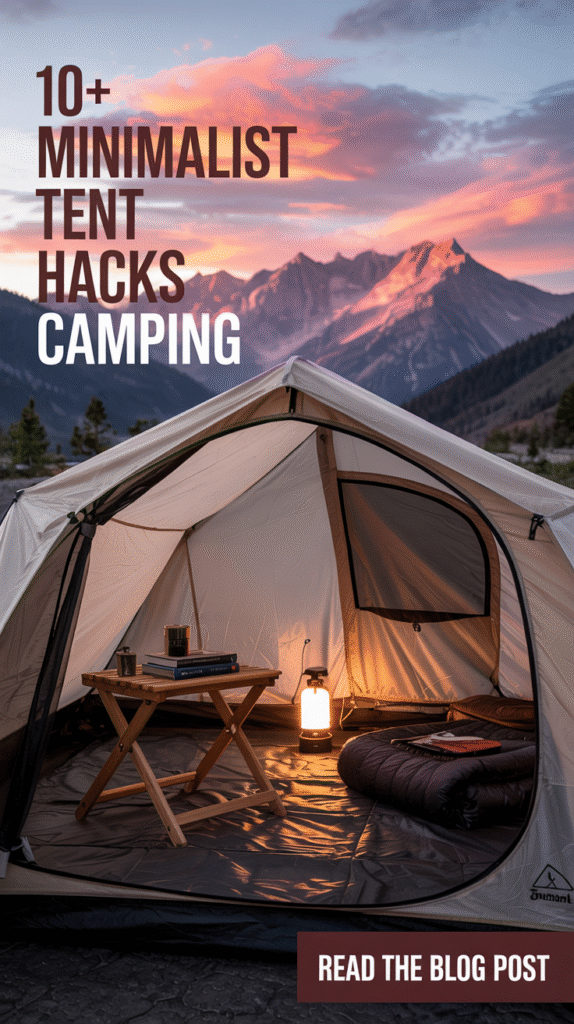
Lay everything out on your living room floor before it goes in the pack, then start removing things. A good spork, a bandana, nesting lightweight pots, a water filter, and a single-burner stove cover ninety percent of what you actually need in the field.
Multi-use gear isn’t just a weight saver; it means fewer decisions when you’re tired and it’s raining. Practice pitching your tent in the backyard before the trip, because the first time you struggle with the pole configuration should not be at dusk in the wind.
Packing Only the Essentials
The honest test for any piece of gear is whether you’ve actually reached for it on the last three trips. If the answer is no, it stays home.
Clothing follows the same rule: one base layer, one mid layer, one shell, and one change of everything else covers most conditions without the weight penalty of packing for every scenario. Leave the camp chair if you’re going ultralight; a sleeping pad doubles as seating and costs you nothing extra.
Choosing Multi-Use Gear
A buff works as a hat, a neck warmer, a dust mask, and a light filter over a headlamp. A bandana covers even more ground. Trekking poles that convert to tent poles cut the weight of your shelter system significantly and are worth investigating if you’re serious about going light.
A titanium pot that doubles as a mug, a spork that covers fork and spoon duties, and a lightweight rain jacket that serves as a wind layer too; these are the swaps that add up to a pack you can actually carry comfortably for a full day.
Setting Up Quickly and Efficiently
Pitch your tent at home at least once before any trip where the conditions might be difficult. Knowing exactly which pole goes where and how the clips attach in which order saves real time and real frustration when you’re doing it in the rain with numb fingers.
Pack your shelter and sleep system at the top of your bag so they’re always the first things out when you reach camp. A system you can run from memory is worth more than the best gear that takes you twenty minutes to figure out every time.
Practical Campsite Tent Camping Set Up Ideas
Point your tent entrance toward the east if you can, and you’ll wake up to natural light instead of fumbling for a headlamp. Keep your cooking area downwind of the sleeping zone, at least ten feet away, and set your food storage even further out from both.
Arrange camp chairs in a loose semi-circle around the fire rather than in a row, which sounds obvious but makes conversation and marshmallow reach infinitely easier. Flat, dry ground with no hidden roots underneath is worth walking the whole site for before you commit to a spot.
Planning Your Tent Layout
Walk the entire site before you stake anything down and look for roots, rocks, and low spots that collect water before you find out the hard way. The flattest ground isn’t always the most obvious ground; sometimes it’s ten feet from where you first dropped your pack.
Keep the tent door accessible from your cooking and seating area without requiring a long walk in the dark. Orient everything so the natural flow between sleeping, eating, and relaxing feels logical rather than something you’re constantly working against.
Setting Up a Comfortable Cooking Area
A foldable camp kitchen table keeps your stove, cutting board, and prep gear off the ground, which matters more than aesthetics when you’re actually cooking. Position it where smoke won’t blow directly into your seating area, and keep the whole cooking zone a safe distance downwind from the tent.
A small basket or bin for utensils, spices, and frequently used items means you’re not rummaging through a bag every time you need a spoon. Good camp cooking is mostly about organization, not equipment.
Creating a Relaxing Seating Zone
Camp chairs you actually want to sit in for more than thirty minutes are worth paying for. A hammock strung between two trees adds a secondary lounging option that requires almost no setup and folds down to almost nothing in your pack.
Position your seating to face whatever view the site offers, whether that’s a fire, water, or just the treeline, because the orientation of your chairs shapes how the whole camp feels. A small rug under the seating area defines the space and keeps mud and debris from migrating constantly into your shoes.
Aesthetic Tent Camping Set Up Ideas for Instagram-Worthy Campsites
Neutral and earthy toned tents and gear photograph better in natural settings than bright primaries, which tend to compete with the landscape rather than complement it. Turkish towels draped over camp chairs, bamboo plates on the table, and a small jar of wildflowers are all the styling you need to make a site look intentional.
Soft lantern and fairy light glow in the evening creates the kind of warm, inviting images that perform well without any filters. The best campsite photos are almost always taken at golden hour, so know what time the light goes warm and have your setup ready before it does.
Choosing a Color Theme for Your Campsite
Whites, warm browns, and muted greens work in almost every outdoor setting because they sit comfortably in the natural palette rather than fighting it. A single accent color, a rust orange throw or a dusty blue rug, adds interest without tipping into chaos.
Matching your tent color to the terrain sounds like overthinking until you see how much cleaner a khaki or olive tent looks against forest or sand than a neon orange one. Consistency across your gear choices reads as intentional even when the campsite itself is far from perfect.
Styling With Boho and Minimalist Decor
Macrame hangers, woven baskets, and natural fiber rugs pull together a boho camp aesthetic without requiring much gear or effort. The key is texture layering: rough weave against smooth linen, wood against ceramic, soft throw against a hard camp table.
Keep the palette cohesive and the objects few; three well-chosen pieces always look better than a cluttered table full of decorative items that have to be packed back up. A single good piece, a quality lantern, a handmade ceramic mug, or a woven wall hanging near the tent entrance, anchors the whole look.
Photography Tips for Your Camping Setup
Golden hour gives you roughly thirty minutes of genuinely beautiful light, so have your setup styled and your camera ready before the sun gets low. Shoot from a low angle looking up through the tent entrance to get fairy lights, trees, and sky all in the same frame.
A wide aperture on a phone portrait mode or a real camera blurs the background and makes your gear the clear subject without any post-processing needed. Capture the small details too: a coffee mug steaming in the morning, boots by the tent door, a book open on a camp chair. Those images tend to resonate more than the wide establishing shots.
Easy and Organized Tent Camping Food Set Up Ideas
Your food system matters as much as your sleeping system, and most people underinvest in it. A foldable camp kitchen table keeps everything off the ground, spices stored in small labeled tins stay organized without taking up real space, and wooden utensils and enamel plates hold up in ways that plastic never quite does.
Overnight oats in mason jars are the single best camp breakfast I’ve found, because you prep them before bed and eat them without cooking anything in the morning. Keep perishables in a hard-sided cooler with ice, and store dry goods in a separate wicker basket so you’re not rooting through cold water for your crackers.
Packing an Aesthetic Camp Kitchen Kit
Wooden utensils, enamel plates, and small spice tins photographed well before they ever hit a campsite, but they also just work better than the plastic alternatives that crack and stain after a season. A canvas roll-up utensil holder keeps everything together and doubles as a cutting surface when unrolled on the camp table.
Ceramic or enamel mugs hold heat longer than metal and feel better in cold hands first thing in the morning. Pack one good knife, a small cutting board, and a lightweight pot that nests inside your pan, and you’ve covered the actual cooking without unnecessary bulk.
DIY Camping Charcuterie Boards
A bamboo cutting board doubles as a serving surface, and a well-assembled grazing spread on it requires no cooking, no fire, and almost no cleanup. Hard cheeses travel better than soft ones over a day in a cooler, and cured meats in vacuum packs don’t need ice to stay safe for the first day out.
Add crackers, dried fruit, nuts, and a small jar of honey, and you have something that looks genuinely impressive with minimal effort. This is also the meal that people always remember from a trip, far more than the camp stew that took forty-five minutes and tasted fine.
Organizing Food for Quick Access
Separate your dry goods from your cold goods from the start and never mix them. A wicker or canvas basket for bread, crackers, nuts, and snacks sits outside the cooler and stays accessible all day without anyone lifting a lid and letting the cold out.
Label everything clearly, because asking four people to dig through a cooler looking for the butter is how arguments start on day two of a trip. Pack meals in the order you’ll eat them, with the first night’s dinner on top and the last day’s food at the bottom, and you’ll save yourself the full unpack every time you need something.
Tent Camping Set Up Ideas for UK Weather and Campsites
British weather doesn’t negotiate. A quality waterproof tent with a proper vestibule is non-negotiable, because that covered porch space is where your muddy boots, wet coats, and damp dog live so your sleeping area stays dry.
Seam-seal your tent before the season starts, run a heavy-duty tarp underneath as a second line of defense, and keep a hot water bottle and thermos in your kit for the mornings when it simply will not stop raining. Cornwall, the Lake District, and the Scottish Highlands each offer something genuinely different, but they all share the same weather rule: pack for rain regardless of the forecast.
Waterproofing Tips for Rainy Campsites
Seam sealer applied at the start of the season takes twenty minutes and saves you from a wet sleeping bag at midnight. A rain fly that extends low to the ground keeps wind-driven rain from getting under the tent, which a fly that stops at the midpoint of the tent wall simply won’t do in a proper British downpour.
Tarp placement matters too: pitch it with a slight angle so water runs off rather than pooling in the center and eventually finding its way through. Check your tent’s hydrostatic head rating before you buy; anything under 2000mm is going to struggle in sustained rain.
Staying Warm on Chilly UK Nights
A hot water bottle filled just before bed and tucked into the foot of your sleeping bag is one of those old-fashioned solutions that outperforms most modern alternatives. Wool socks are warmer than synthetic when they get damp, which they will on a British camping trip, and they dry faster than you’d expect when hung in the vestibule overnight.
A thermal sleeping bag liner adds several degrees of warmth without the cost or weight of a new sleeping bag. Eat something calorie-dense before bed; your body generates heat from digestion, and it makes a genuine difference to how warm you feel through the night.
Best Campsite Locations in the UK
Cornwall delivers dramatic coastline, reliable surf, and some of the best cliff-top pitches in the country, though summer weekends require booking months in advance. The Lake District offers mountain backdrops, proper walking from the tent door, and that particular quality of light on water that makes you understand why painters kept coming back.
Scotland’s Highlands give you genuine wildness, open wild camping under the Land Reform Act, and midges from May through September that will test your commitment to the outdoor life. Each region rewards a different kind of camper, and all three are worth the drive.
Budget-Friendly DIY Tent Camping Set Up Ideas
Wooden crates become stools or side tables with a folded blanket on top and cost almost nothing from a hardware store. LED tea lights inside glass jars make lanterns that won’t start a fire, and old bed sheets folded over a tarp make a perfectly functional picnic rug.
Sew a simple fabric bunting from scrap material and it will outlast anything you’d buy at a camping boutique. The DIY stuff always photographs better anyway, because it actually looks like someone lives there.
DIY Tent Decor Projects
Macrame is easier than it looks and requires only cotton rope and an afternoon of watching tutorial videos. A simple plant hanger takes about an hour and adds something genuinely handmade to your campsite that nobody else will have.
Banner garlands cut from fabric scraps and threaded onto jute twine cost almost nothing and can be scaled to any length you need. Hang them between two tent poles or from a low branch and they immediately make the site feel finished rather than functional.
Homemade Camping Furniture and Hacks
Wooden crates stacked and stabilized make a solid side table that also doubles as storage, which no purchased camp furniture can claim at the same price point. A cushion cut from closed-cell foam and covered in outdoor fabric turns any crate into a stool that you’ll actually want to sit on.
Rope strung between two trees at different heights gives you a drying line, a gear organizer, and a lantern hang point all at once. These solutions take an hour to build and outlast most gear you’d buy at a camping retailer.
Upcycling Household Items for Camping
Old bed sheets in natural tones make excellent picnic rugs when layered over a waterproof tarp, and they wash and pack easily. Mason jars become drinking glasses, lanterns, or spice containers depending on the lid and what you put inside them.
A worn canvas tote bag becomes a perfect camp organizer for small items that would otherwise scatter across your table. Before buying anything new for a trip, it’s worth walking through your house with the question of what already exists that could do the job.
Romantic Tent Camping Set Up Ideas for Couples
A couples’ camping trip doesn’t need an elaborate setup to feel special, though a little intention goes a long way. Zip two sleeping bags together over a double sleeping pad, and that alone sets the tone for the night.
Bring a small picnic basket with a foil packet dinner prepped at home, drop it directly on the coals with zero cleanup, and the meal becomes part of the experience rather than an obligation. A few small lanterns hung around the tent entrance and one good flameless candle inside handles the ambiance without any risk.
Creating a Cozy Sleeping Space for Two
A double sleeping pad rated for the expected temperatures is the foundation everything else rests on. Zip two three-season bags together or invest in a dedicated double sleeping bag, because being genuinely warm and comfortable together changes the whole dynamic of the trip.
A couple of real pillows from home, not the compressed camp versions, make a surprising difference to how well you actually sleep. Layer a soft throw on top of the sleeping bags for the post-midnight cold, and keep it within reach rather than buried at the bottom of a dry bag.
Lighting and Decor for Romantic Vibes
Small battery lanterns hung at varying heights around the tent entrance create the kind of warm, layered light that makes a campsite feel genuinely inviting after dark. A flameless pillar candle inside the tent gives you the visual warmth of a real flame without the carbon monoxide concern that makes actual candles inside a tent a legitimate safety issue.
A length of warm-toned fairy lights draped along the ridge of the tent or through nearby low branches completes the look without requiring any real effort. Keep it simple; two or three light sources chosen carefully always outperforms a complicated setup.
Easy Campfire Meal Ideas for Couples
Foil packet dinners prepped at home are the approach that consistently delivers without requiring camp cooking skill or elaborate equipment. Salmon with asparagus, lemon, and a knob of butter sealed in a double layer of foil goes directly onto coals for twelve minutes and comes out genuinely impressive.
Roasted marshmallows over the fire after dinner require no explanation and no cleanup, and they scale perfectly for two people who don’t want to manage a complicated dessert in the dark. A good bottle of wine carried in a soft-sided flask and two enamel cups round out the meal without any of the weight of glass.
Tent Camping Set Up Safety Tips and Essentials
None of the aesthetic decisions matter if your campsite is poorly placed or your fire setup is careless. Look for elevated, flat ground well away from dead standing trees, and scout the area for signs of flooding before you stake anything down.
Keep your fire at least fifteen feet from the tent, extinguish it completely before sleeping, and store all food in sealed containers or locked in your vehicle overnight. A solid first aid kit, insect repellent, and more water than you think you need round out the essentials that experienced campers never skip.
Choosing a Safe Campsite Location
Elevated ground drains faster and sits above the cold air that pools in valleys and low-lying areas overnight. Scan the canopy above any potential pitch for dead branches, because what looks stable in daylight can come down in wind or rain.
Avoid dry riverbeds and any flat area that shows signs of previous water flow, because flash flooding can arrive faster than you’d expect even in seemingly stable weather. A campsite that takes five extra minutes to find is almost always worth it over one that looked convenient from the car park.
Fire Safety Around Your Tent
Fifteen feet is the minimum distance between your fire ring and your tent, and more is always better. Clear a perimeter of dry leaves and debris around the fire before you light it, because embers travel further than you’d think on a light breeze.
Keep a bucket of water or a water carrier within arm’s reach while the fire is burning, not back at the car or across the site. Drown the coals completely before you sleep, stir them, drown them again, and check them with the back of your hand close to the ash before you’re satisfied it’s truly out.
Keeping Food Safe from Wildlife
Every scrap of food, every wrapper, every piece of cookware that held food needs to be out of your tent and out of reach before you sleep. A hard-sided cooler with a proper latch in the car is the most reliable solution, though bear canisters are required in some areas and worth using wherever wildlife pressure is high.
Don’t forget the small things: lip balm, toothpaste, and sunscreen all carry scent that attracts animals, and they belong in the food storage container too. A clean camp isn’t just tidy; it’s the difference between an undisturbed night and a wildlife encounter you weren’t prepared for.
Conclusion
Good camping comes down to the same thing every time: a little preparation and a willingness to adapt when things don’t go to plan. Whether you’re stringing fairy lights on a Cornish beach, keeping kids entertained through a rainy afternoon in a living room teepee, or cooking foil packets over coals for two, the setup matters far less than the intention behind it.
The trips I remember most weren’t the ones with the most gear or the prettiest Instagram shots. They were the ones where something about the place, the light, or the company made me stop and actually be there. Save what’s useful from this guide, leave what isn’t, and get outside.