Yellowstone is one of the most rewarding places you can take a camper in the entire country, and it is also one of the least forgiving if you are not prepared. Rangers deal with more than fifty bear-related incidents every single year in the park, and a big chunk of those come down to campers who did not store their food and gear properly.
This is not a place where you can improvise your way through a weekend and hope for the best. The good news is that smart storage in bear country is not actually that complicated once you understand why it matters and what the park actually requires. This guide will walk you through everything from the gear you need before you leave home to the daily habits that will keep your trip running smoothly from start to finish. Follow these steps, and Yellowstone will be exactly the trip it is supposed to be.
Contents
- 1 Essential Storage Equipment for Your Yellowstone Adventure
- 2 Bear-Safe Food Storage Techniques
- 3 Maximizing Limited Space in Your Camper
- 4 Organizing Camping Gear by Priority
- 5 Weather-Proof Storage Solutions
- 6 Smart Storage for Outdoor Cooking Equipment
- 7 Strategic Packing Tips for Extended Stays
- 8 Safety Equipment Storage and Access
- 9 Efficient Storage Systems for Daily Items
- 10 Exterior Storage Optimization Methods
Essential Storage Equipment for Your Yellowstone Adventure
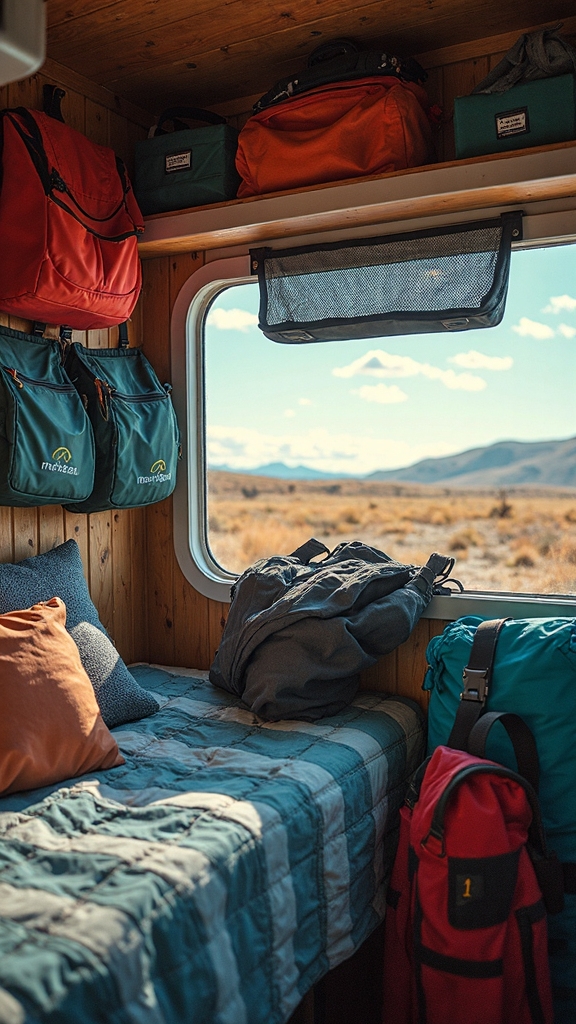
Before you hitch up and head out, you need to get your storage situation sorted, and that starts with the right containers. Bear-proof containers are not a suggestion in Yellowstone. They are the single most important piece of gear you will bring on this trip, and they need to hold every piece of food and anything else with a scent. Under-bed storage bins work well for clothing and bedding, and lightweight plastic bins keep the rest of your supplies organized without adding too much weight to the rig.
Wire-framed net organizers are worth picking up if you want quick access to the things you reach for every day. The whole point of setting up your storage before you go is so that you are not reinventing the wheel every time you stop for the night. A little investment in the right containers and organizers at home will save you a lot of frustration once you are sitting in a campground at the edge of Yellowstone with the sun going down.
SEE THIS: 12 Space-Saving Camper Storage Hacks for Snowbird RVers in Naples, Florida!
Bear-Safe Food Storage Techniques
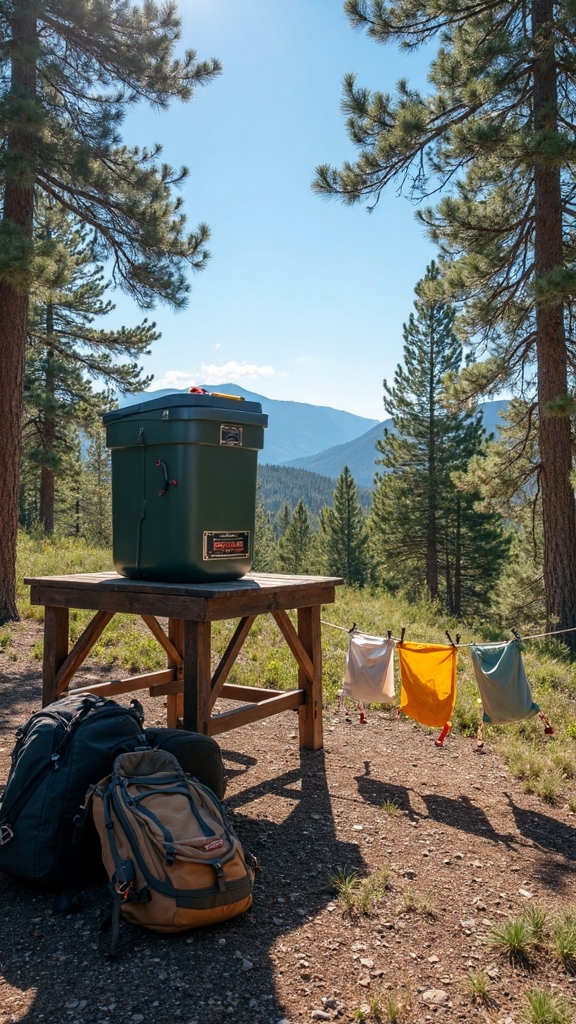
A bear can smell food from miles away, and Yellowstone’s bear population is healthy, active, and not shy about investigating anything that smells interesting. Your bear-resistant container needs to sit at least 100 feet from your campsite on flat, stable ground, and it needs to stay locked at all times. Do not attach ropes or straps to it. The container is designed to work on its own, and adding extra hardware just gives a bear something to grab onto.
One old trick that actually works is setting a couple of pots and pans on top of the container before you turn in for the night. If anything bumps it, the noise will alert you.
SEE THIS: 10 Must-Try Camper Storage Ideas for Vintage Trailers in Sedona, Arizona!
Maximizing Limited Space in Your Camper
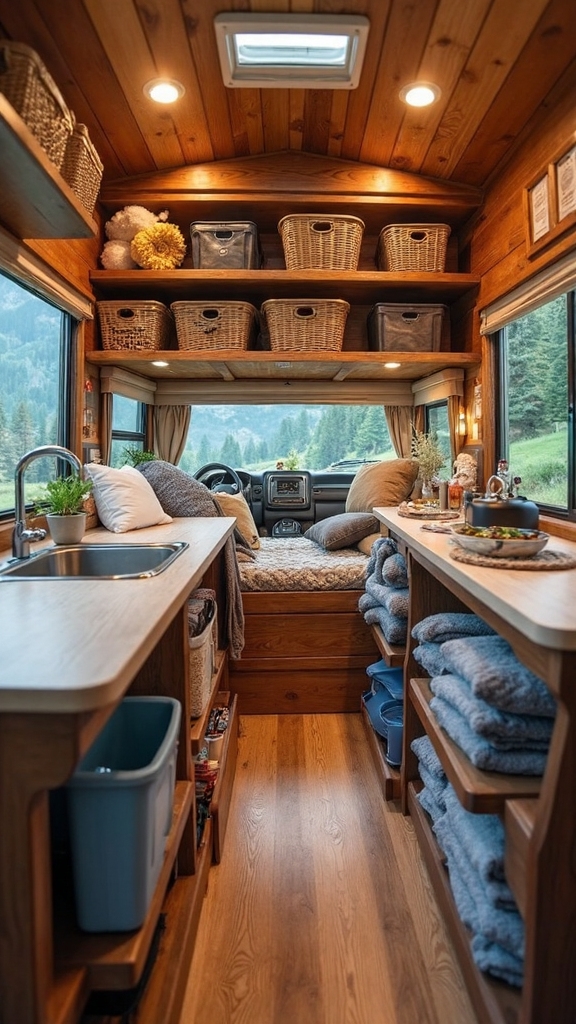
A camper is a small space, and in Yellowstone, you are going to be living in it for a while, so making the most of every inch matters more than it does on a backyard weekend trip. Wall-mounted hooks and magnetic strips for utensils keep your kitchen from turning into a junk drawer, and stackable bins do the same job for clothing and gear.
The thing most people overlook is what happens to their stuff while they are driving. Bins and loose gear will slide around inside cabinets on every curve and bump, and in the mountains, there are plenty of both. Line your drawers and cabinets with grip material so nothing shifts while you are on the road. .
SEE THIS: 15 Cozy Camper Interior Ideas Inspired by Austin, Texas Boho Vibes!
Organizing Camping Gear by Priority
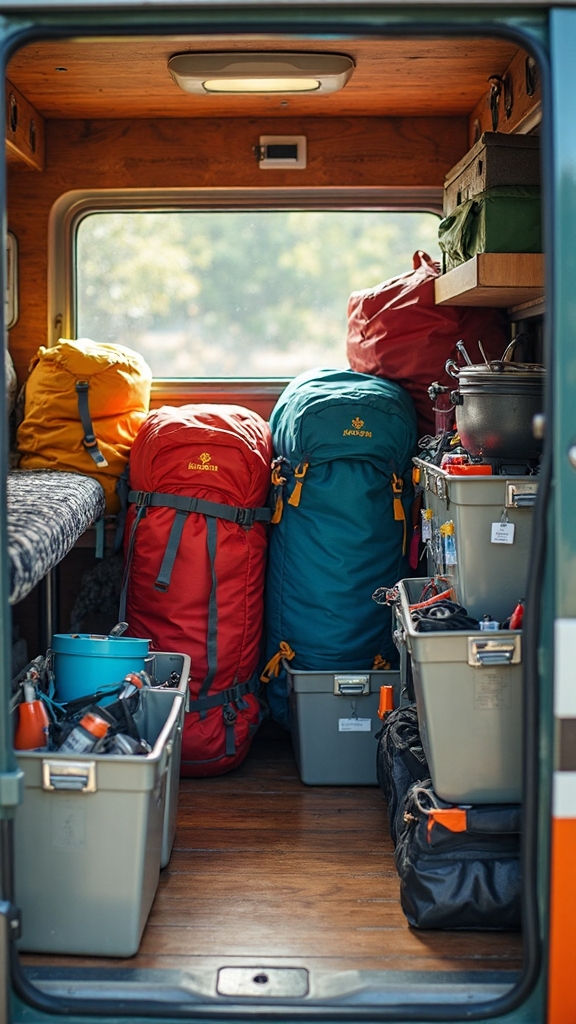
Not everything in your camper needs to be equally easy to get to, and organizing by how often you actually use something will make your days a lot smoother. Cooking supplies and sleeping gear should live near the entrance, where you can grab them without climbing over anything. Transparent containers are your friend here because you can see what is inside without pulling the lid off every single one.
First aid kits, navigation tools, and anything else you might need in a hurry should be in clearly labeled, color-coded bins so that anyone in your group can find them fast without asking. You do not want to be hunting for a first aid kit in the dark while someone is hurt.
SEE THIS: 12 Modern Camper Interior Makeover Ideas for Seattle, Washington Explorers!
Weather-Proof Storage Solutions
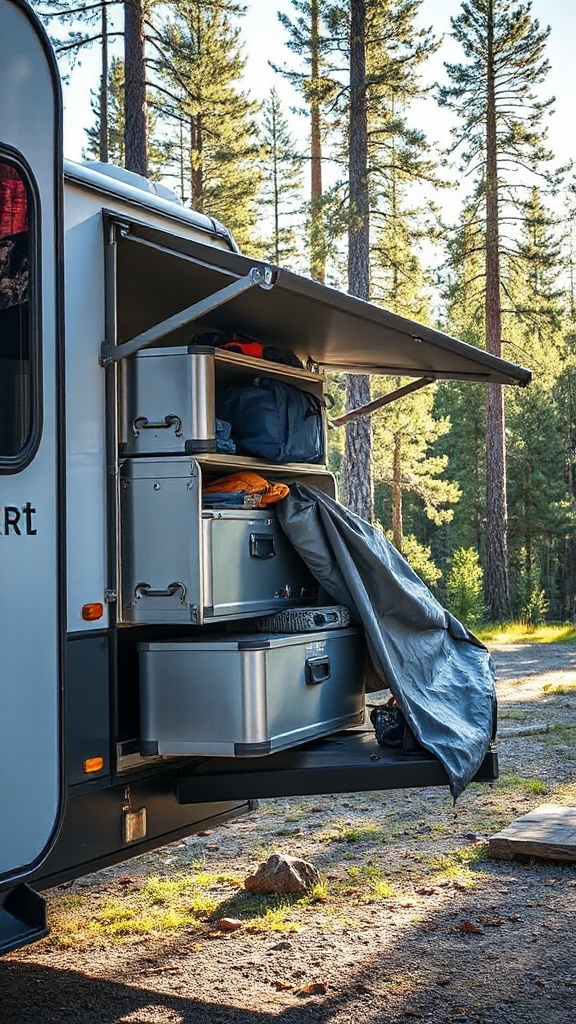
Yellowstone weather can turn fast, and when it does, anything left unprotected is going to pay the price. RV covers and anchored tarp systems keep your outside gear dry when the rain rolls in, and collapsible containers are worth having around because they compress flat when you do not need them.
UV damage is a slower threat but a real one, especially during the long summer days at elevation. Gear left in direct sun for weeks on end will degrade faster than you think, and fabric in particular takes a beating.
Smart Storage for Outdoor Cooking Equipment
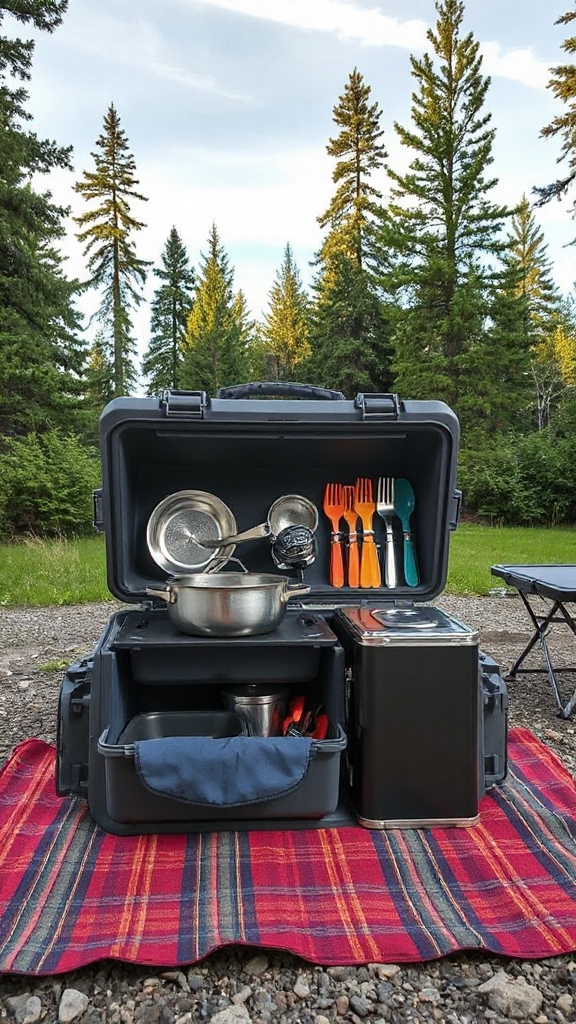
Your cooking gear needs to survive more than just a few nights at a campground. It needs to survive the drive, the weather, and the fact that you are going to be pulling it out and putting it away every single day. Waterproof containers with multiple compartments keep everything dry and organized at the same time, and heavy-duty materials mean you are not replacing a cheap bin halfway through your trip because it cracked in the cold.
Collapsible cookware and nesting utensils are the two biggest space-savers you can bring for the kitchen. A roto-molded camp kitchen is worth the investment if you are planning to spend real time in Yellowstone, because it holds up in rough conditions and keeps everything in one place, whether you are set up at the campground or breaking camp to move on.
Strategic Packing Tips for Extended Stays
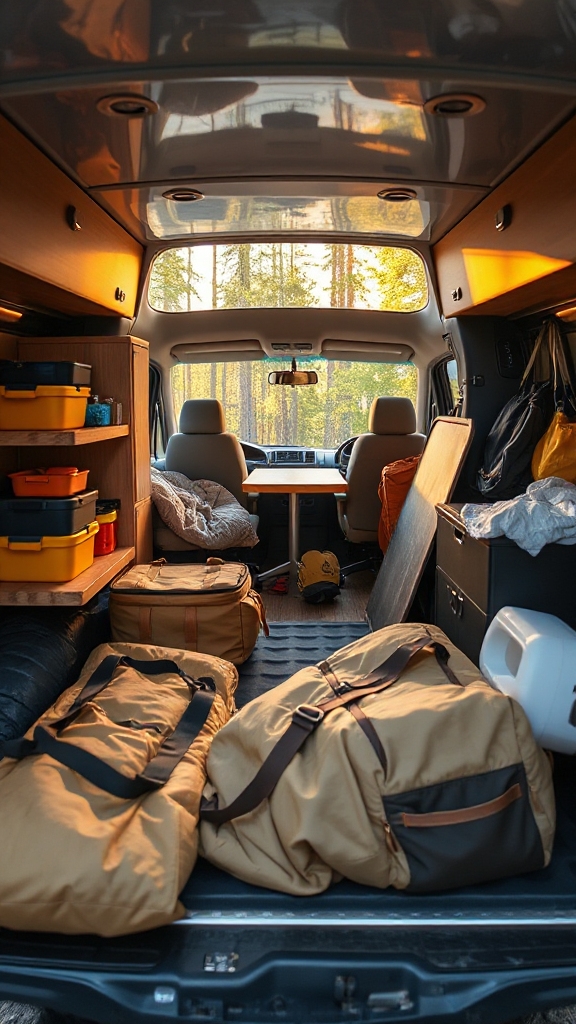
If you are staying in Yellowstone for more than a few days, how you pack at home is going to determine how comfortable you are out there. Compression bags are worth using for anything soft, clothing, and sleeping gear, especially because they cut the bulk down to almost nothing and keep things tight and dry at the same time.
Keep your daypack packed and ready to grab on a whim. You never know when you are going to spot something worth hiking toward, and fumbling around looking for your water bottle and trail snacks wastes the exact kind of time you came here to enjoy.
Safety Equipment Storage and Access
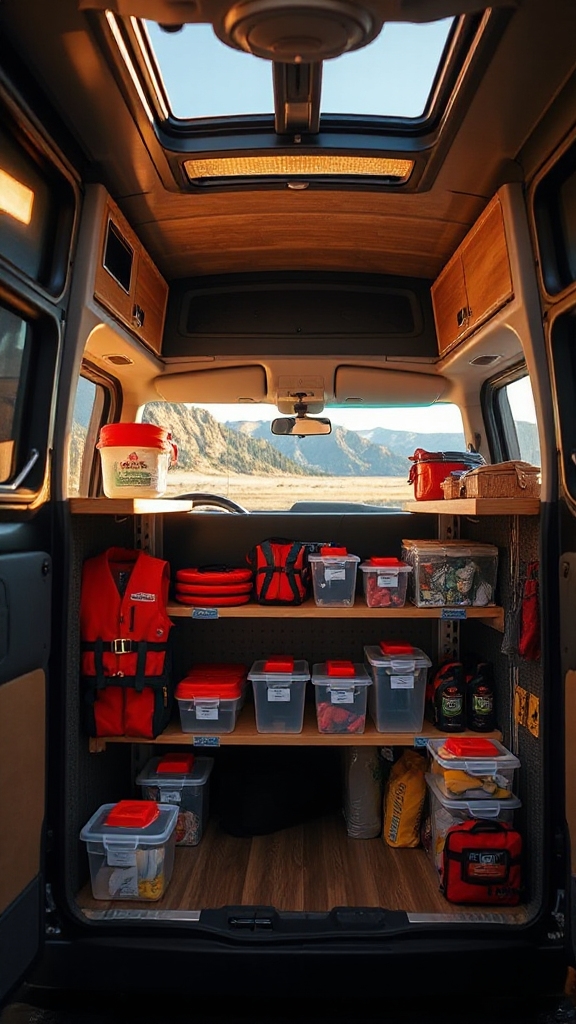
Safety gear is the one category where accessibility trumps everything else. Bear spray, fire extinguishers, and first aid kits all need to be somewhere you can reach them in seconds. Exterior compartments work well for this, and straps keep everything secure while you are driving between stops.
Label everything clearly, and ensure every person in your group knows where the safety equipment is located before you leave the parking lot. It takes two minutes to walk through it when you arrive at your first campsite, and those two minutes could matter more than almost anything else you do to prepare for this trip.
Efficient Storage Systems for Daily Items
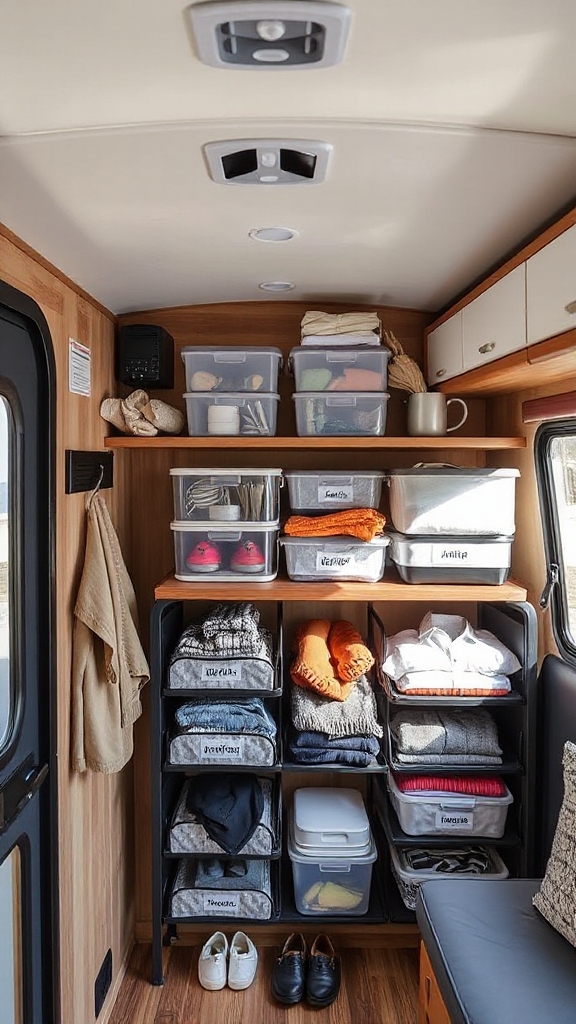
The stuff you use every day needs to be organized like it matters, because in a small camper, it does. Pull-out drawers make the most of vertical cabinet space, and clear bins keep your meals sorted by type so you are not opening three containers to find the pasta.
Collapsible dish racks that double as drying stations are one of those small upgrades that seem minor until you use them every night and wonder how you ever managed without one. Nesting cookware with detachable handles is another. The pattern here is to buy gear that does more than one thing, because in a camper, every piece of equipment that has only one job is probably taking up space you need for something else.
Exterior Storage Optimization Methods
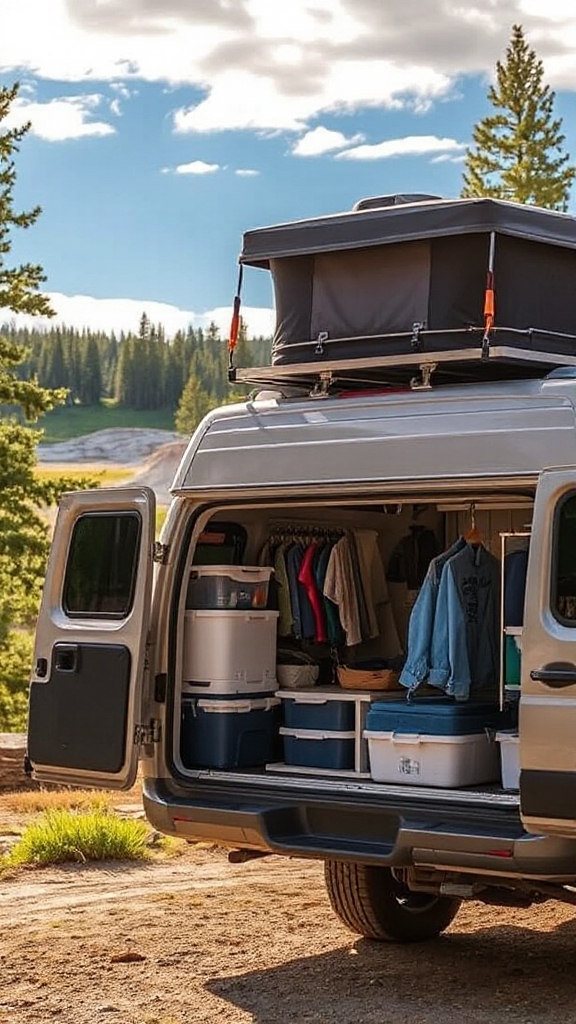
Your truck bed and any exterior compartments are prime real estate, and in Yellowstone, you need to use them without cutting corners on security. Marine-grade plastic bins are the right call for anything that is going to sit outside, because the weather in this part of Wyoming does not care what brand name is on your container.
The one rule that applies to everything stored outside is that nothing with a scent stays out in the open. Bears are not picky, and they are persistent, and an unsecured cooler or a bag of garbage left by the bumper overnight is an invitation you do not want to extend. Lock it up, seal it tight, and keep your campsite clean.
My take…
With over 4.1 million visitors to Yellowstone in 2022, you’ll want your camper storage system to be efficient and bear-proof. By implementing these smart storage solutions, you’re not just organizing gear; you’re creating a safer, more enjoyable camping experience.
Remember to regularly inspect your storage systems, maintain bear-safe protocols, and adapt your setup based on seasonal needs. Your well-planned storage strategy will make wilderness exploration both comfortable and secure.