Full-time camper life looks romantic from the outside. The reality is that it runs on systems, and when those systems fail, everything falls apart fast. I’ve watched people quit the lifestyle not because they didn’t love it, but because they never got their water, power, or waste figured out.
Get the fundamentals right, and the road opens up in ways that are hard to explain to someone who hasn’t lived it. This guide is built on what actually works.
Contents
- 1 Essential Water Management Systems
- 2 Efficient Waste Management Solutions
- 3 Reliable Power Supply Options
- 4 Solar Energy Integration
- 5 Battery Storage Systems
- 6 Propane Systems for Heating and Cooking
- 7 Satellite Internet Options
- 8 GPS and Navigation Tools
- 9 Cell Signal Enhancement Devices
- 10 Climate Control Systems
- 11 Security and Safety Measures
- 12 Comfortable Living Space Solutions
- 13 Compact Furniture and Organization
- 14 Efficient Storage Solutions
- 15 Maintenance and Repair Systems
- 16 Off-Grid Capabilities
- 17 Energy-Efficient Appliances
- 18 Routine Planning for Daily Living
- 19 Backup Power Solutions
- 20 Mobile Internet Connectivity
- 21 Communication Systems for Safety
Essential Water Management Systems
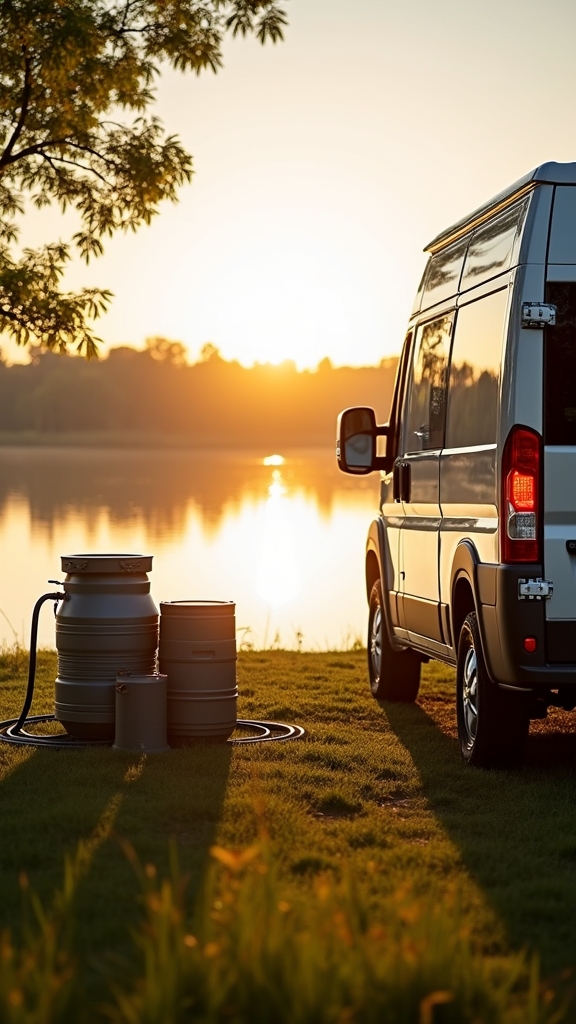
Your freshwater tank is your lifeline, and most people underestimate how quickly it disappears. A quality inline filter keeps sediment and taste issues from ruining your coffee and, more importantly, your health.
When you’re parked with hookups, a city water inlet takes the pressure off your tank, but always run a regulator or you’ll blow a fitting at 2 a.m. Water-saving showerheads and faucet aerators sound like small details until you’re rationing gallons somewhere without a spigot for fifty miles.
SEE THIS: 19 Things I Do Weekly to Stay Organized on the Road.
Efficient Waste Management Solutions
Black and grey tanks demand more attention than anything else in the rig, and neglecting them is a mistake you only make once.
A system like Waste Master makes dump station runs far less miserable, and a macerator pump gives you flexibility when gravity isn’t working in your favor.
Keep enzyme treatments going in both tanks consistently, not just when things start smelling wrong. If you’re spending time in remote spots, a portable waste tank buys you extra days before you need to find a dump station.
SEE THIS: How to Stay Organized in a Camper Under 20ft.
Reliable Power Supply Options
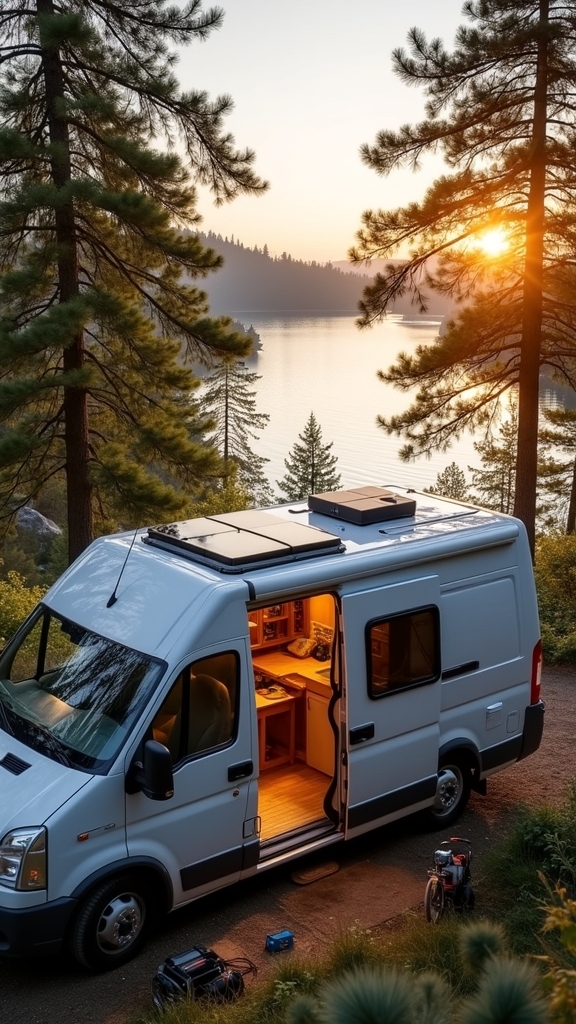
Lithium iron phosphate batteries have changed things dramatically for people living off-grid, and if you’re boondocking regularly, they’re worth every penny over lead-acid.
You get deeper discharge cycles, faster charging, and they last years longer under hard use.
Pair your bank with a pure sine wave inverter so sensitive electronics like laptops and CPAP machines don’t take a hit from dirty power. Shore power hookups handle recharging when you’re at a campground, and a quality generator covers the gaps during stretches of bad weather.
Solar Energy Integration
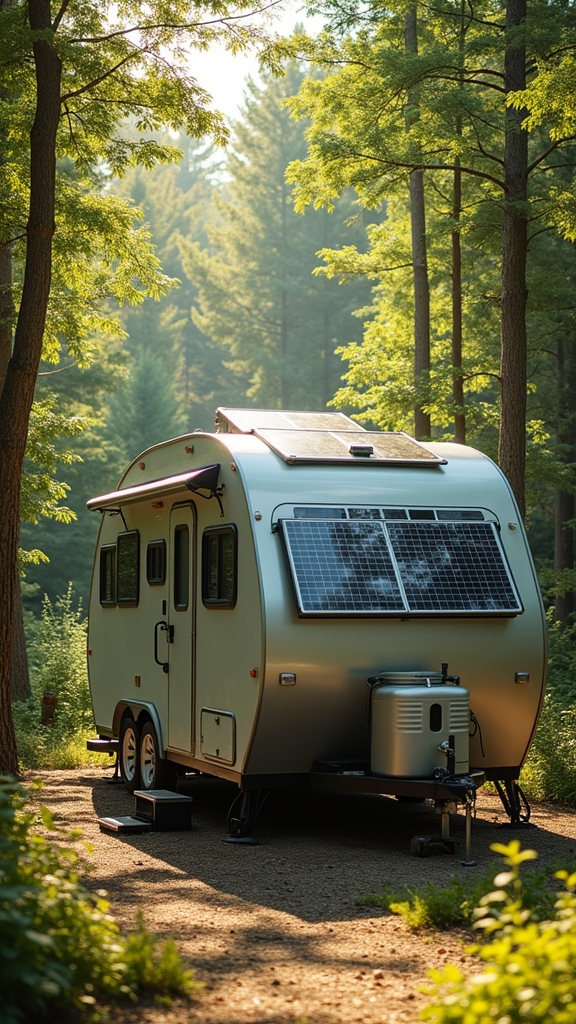
Monocrystalline panels are the standard for a reason: they produce more power per square foot than cheaper alternatives, which matters when roof space is limited.
Before you buy anything, calculate your actual daily consumption in watt-hours, then build the system around that real number rather than a guess.
A good charge controller protects your battery bank and keeps charging efficiently across varying conditions throughout the day. Panels need occasional cleaning and connection checks, but a well-installed system otherwise runs quietly in the background for years.
Battery Storage Systems
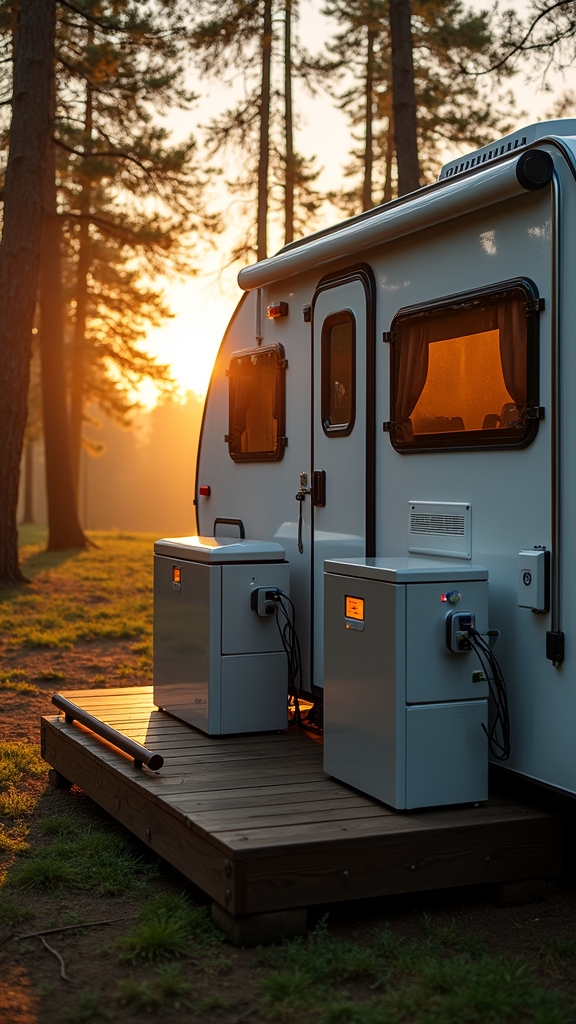
Lithium-ion batteries have earned their popularity among full-timers who actually stress their systems, not just weekend warriors plugged into a campground pedestal. The longer cycle life and tighter voltage curve mean your appliances run more consistently as the bank drains.
If your setup relies heavily on shore power and you rarely boondock, lead-acid batteries can still do the job at a fraction of the upfront cost. Know your actual usage patterns before spending money, because the right battery is the one that matches how you genuinely live, not how you imagine you will.
Propane Systems for Heating and Cooking
Propane handles the heavy lifting that solar can’t: cooking, water heating, and warmth on cold nights when electric heat would drain your bank by morning. Check every connection with soapy water at least a few times a year, and never ignore the smell of gas inside the rig.
Keep a spare tank when you’re heading somewhere remote, because running out mid-shower in January is a miserable and entirely avoidable experience. A quality regulator and proper appliance ventilation aren’t optional safety features; they’re what separates a well-built system from a dangerous one.
Satellite Internet Options
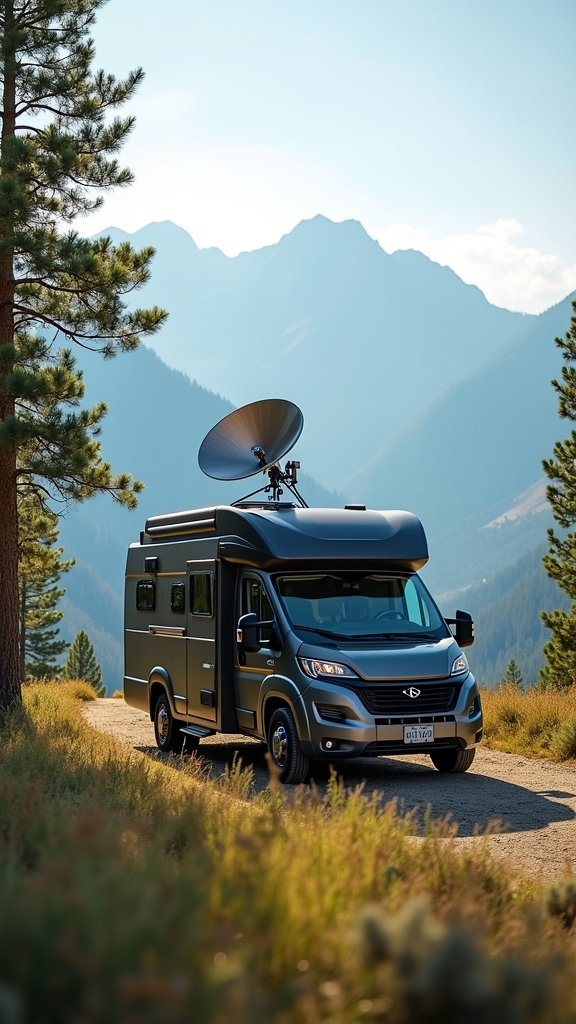
Starlink Roam has been a genuine shift for remote workers who need reliable connectivity far from cell towers. It pulls speeds that would have seemed impossible a few years ago, and in truly dead zones it’s often the only option that holds up.
The hardware and subscription costs are real, but for someone running a business or managing client work from the road, the math usually works out. If your remote work depends on a stable connection, satellite coverage gives you location freedom that cellular alone simply cannot match.
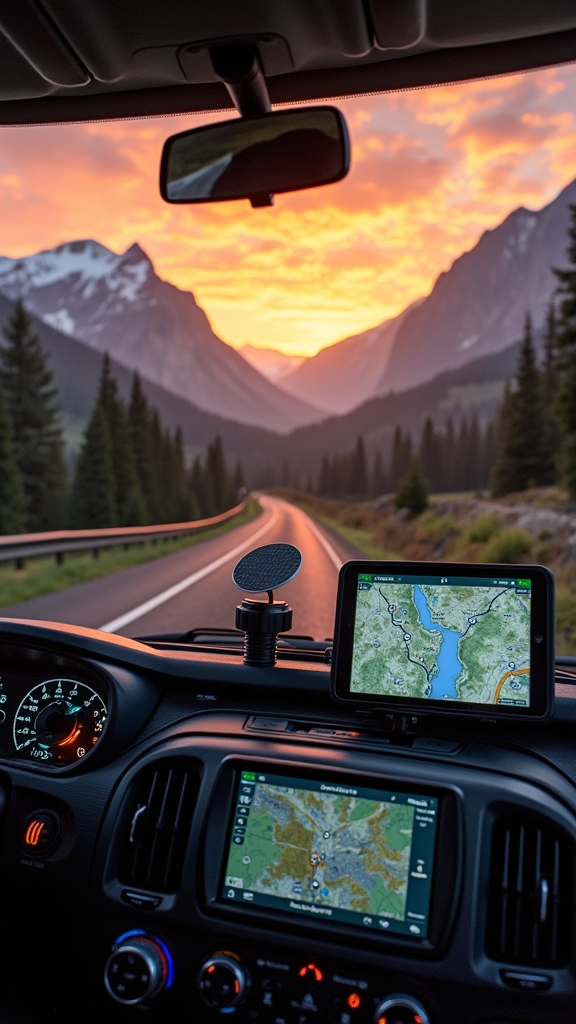
A dedicated RV GPS is worth carrying even if you trust your phone, because it accounts for bridge heights, weight limits, and propane restrictions that standard apps ignore entirely. The Garmin RV 890 has been a reliable workhorse for years, with a screen large enough to read while driving and routing built specifically around rig dimensions.
Download offline maps before heading into areas with spotty coverage, because the moment you need navigation most is usually when data disappears completely. Keep your phone as a backup, not your primary tool, and you’ll avoid the kind of routing mistakes that end with a low bridge and a very bad afternoon.
Cell Signal Enhancement Devices
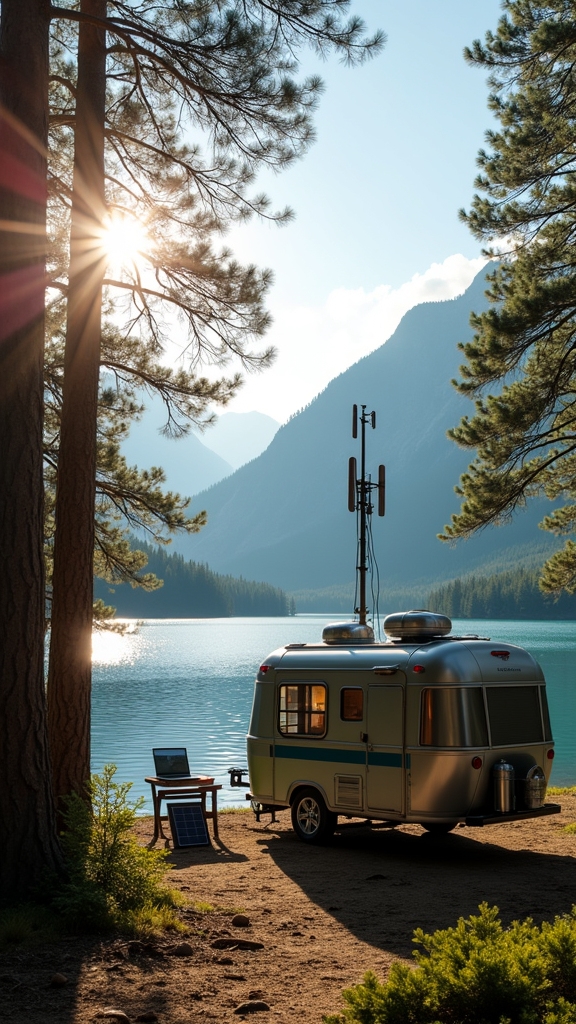
A cellular booster from WeBoost or Cel-Fi can mean the difference between a usable connection and a spinning loading screen in marginal coverage areas. These devices amplify weak signals passively, without eating into your data plan or adding monthly costs beyond the hardware itself.
Fixed rooftop installations outperform portable units in most conditions, but a portable booster still earns its place if you move frequently between different rigs or vehicles. Combine a booster with a dedicated hotspot on the strongest available carrier and you’ll cover the vast majority of situations the road throws at you.
Climate Control Systems
A diesel heater is the single best upgrade for cold-weather camping because it runs off your fuel tank, produces consistent heat, and doesn’t drain your propane reserves on the nights you need them most. For summer, a rooftop air conditioner handles serious heat, but a quality fan system like a MaxxAir vent makes mild days manageable without burning the power needed to run the AC.
Ventilation matters year-round for moisture control, especially if you’re cooking or showering inside regularly in a tight space. Damp air destroys wood, fabrics, and electronics faster than almost anything else a small living space will throw at your gear.
Security and Safety Measures
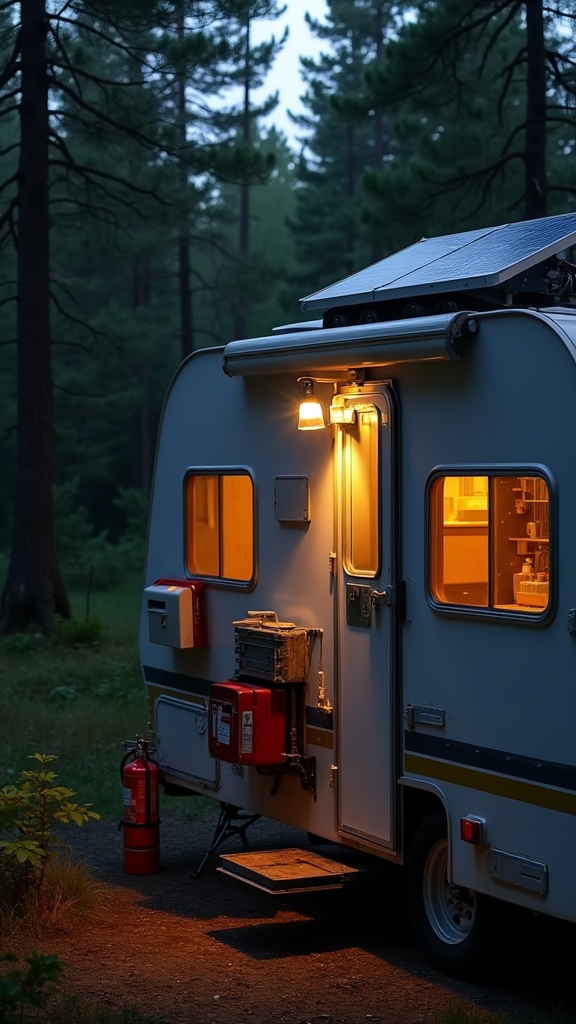
High-quality deadbolts and door reinforcement plates are cheap insurance against the rare but real risk of break-ins. Choose campsites with good sight lines, stay aware of who’s coming and going around you, and build a habit of locking up even for short walks away from the rig.
Getting to know neighboring campers matters too, because a community that watches out for each other is a more effective deterrent than any lock. Report anything suspicious to site management or local authorities rather than trying to handle it yourself; your job is to stay safe, not to be a one-person security detail.
Comfortable Living Space Solutions
Comfort in a small space comes down to air quality, temperature, and water, and getting all three right requires intentional investment. A MaxxAir fan moves stale air out and fresh air in, which matters more than most new full-timers expect until they’ve spent a week in a stuffy rig.
A quality dehumidifier keeps moisture from building up on surfaces and in fabrics, which becomes critical in humid climates or rainy stretches. Clean, filtered water from a system like Clearsource makes cooking and drinking genuinely pleasant rather than something you tolerate.
Compact Furniture and Organization
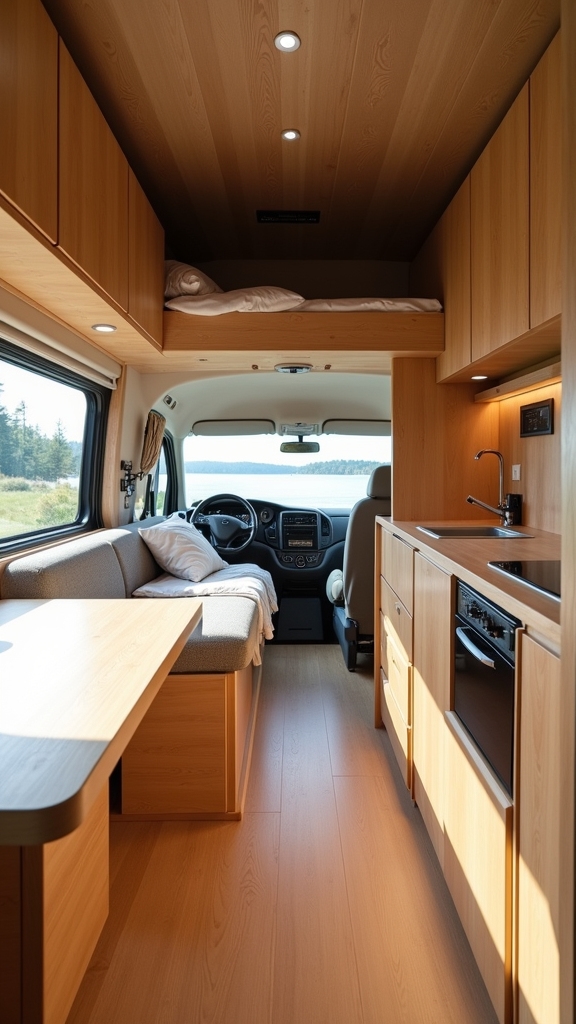
Small spaces punish clutter faster than any apartment ever could, so everything needs a home and a clear reason to take up real estate. Convertible sofa beds and folding tables do the work of full-sized furniture without eating the floor space you actually need to move around in.
Storage ottomans pull double duty as seating and hidden organization, which is exactly the kind of thinking that keeps a small rig livable long-term. Minimalist furniture choices keep sightlines open and the space feeling larger than it actually measures on a floor plan.
Efficient Storage Solutions
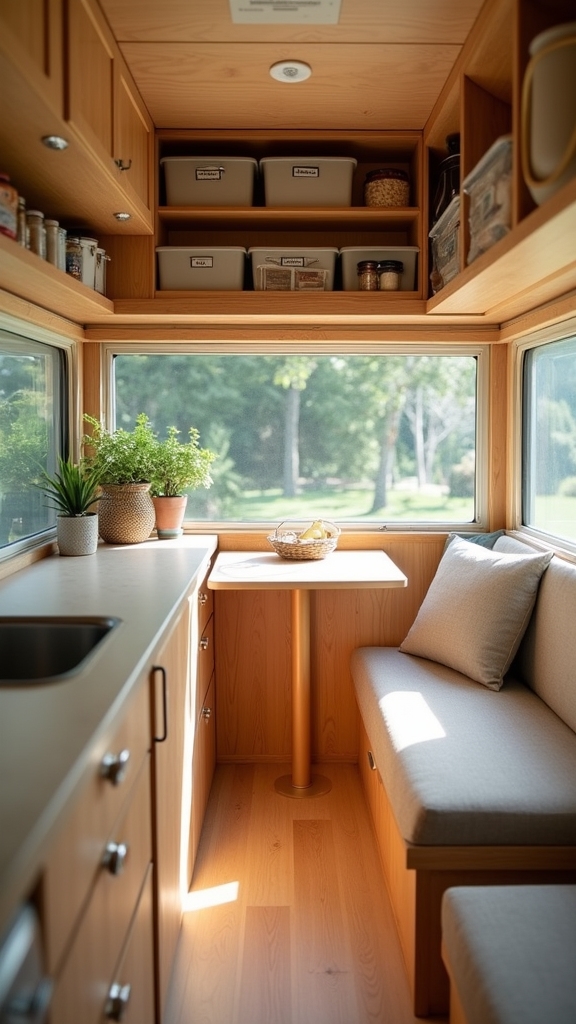
Packing cubes and hanging organizers turn chaotic closets into systems you can actually maintain while moving between locations. Under-bed storage bins and cabinet risers unlock vertical space that most people waste completely in the first weeks of rig life.
Wall-mounted hooks and tension rods free up counter space, and in a galley kitchen, every inch of counter is worth protecting. The goal is to build a system that lets you find what you need without tearing the whole rig apart.
Maintenance and Repair Systems
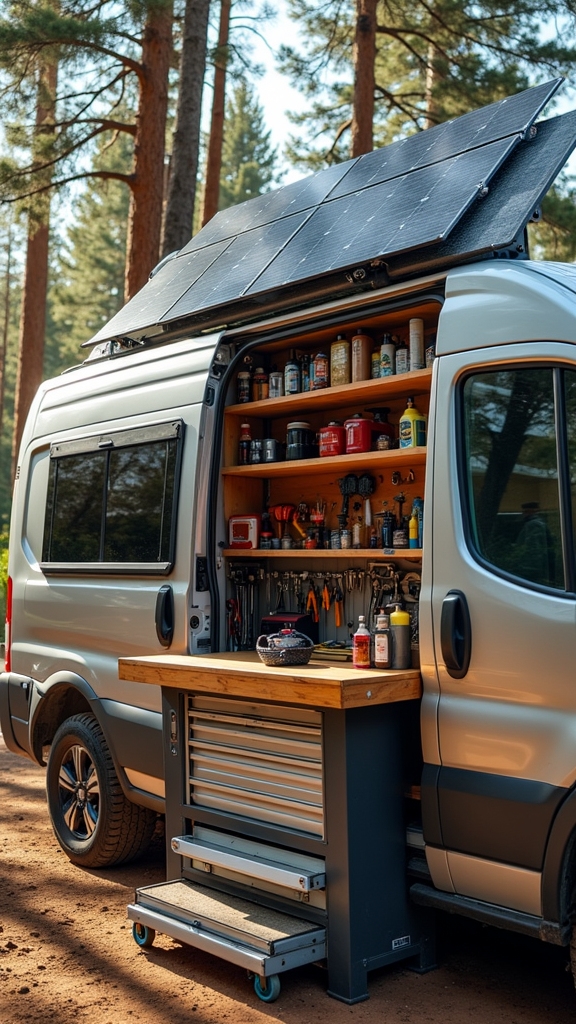
The campers who stay out longest treat maintenance like a standing appointment rather than an emergency response. Regular oil changes, tire inspections, and brake checks keep mechanical problems from ending a trip early and expensively somewhere inconvenient.
Clean battery terminals, test your connections, and walk your roof seams after hard weather to catch water intrusion before it becomes a rot problem that costs thousands. A simple weekly checklist sounds tedious until the one time it catches something that would have sidelined you for a week at a repair shop.
Off-Grid Capabilities
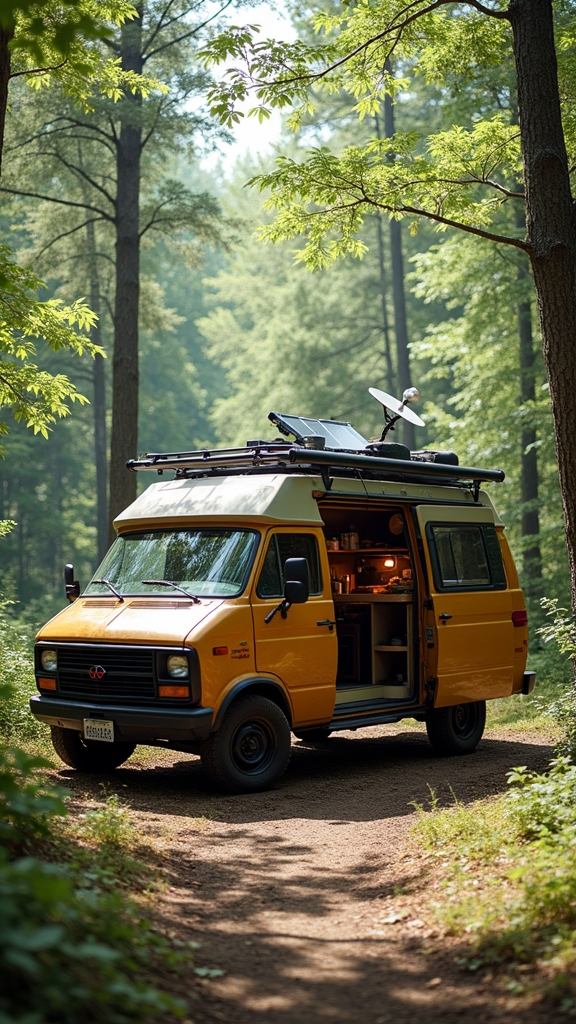
Real off-grid freedom comes from redundancy: solar backed by a generator, a water tank supplemented by a filtration system that can pull from a stream or lake when needed. Composting toilets eliminate black tank management entirely if you’re willing to adjust your habits, and many full-timers swear by them after making the switch.
Rainwater collection and greywater recycling extend your range significantly in wet climates where water is abundant but dump stations are not. The more independent your systems are from external infrastructure, the farther and longer you can actually travel without planning around civilization.
Energy-Efficient Appliances
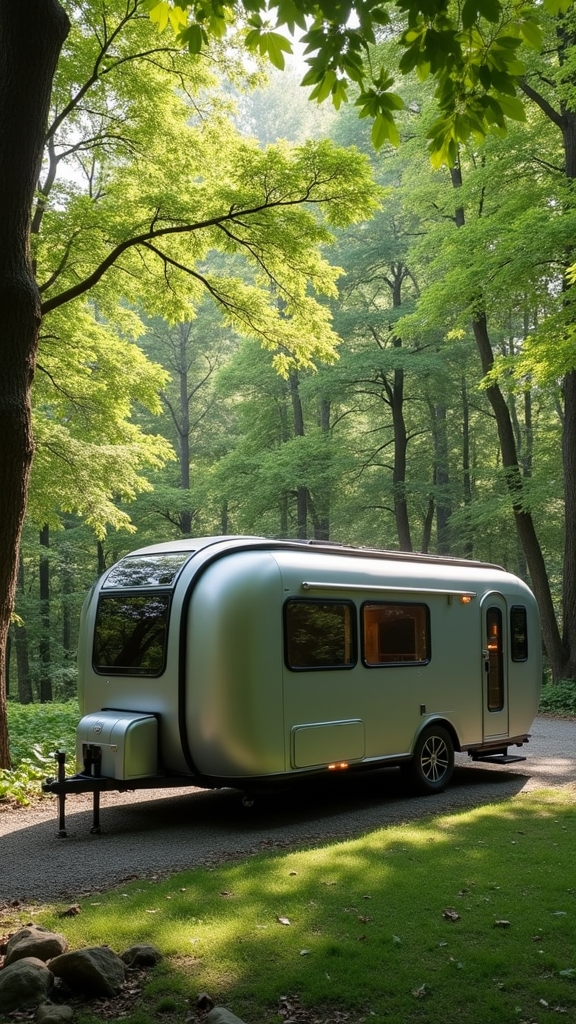
Every watt you waste is a watt your battery bank has to replace, which makes appliance selection genuinely important rather than just aspirational. Energy Star refrigerators and LED lighting are the low-hanging fruit, but low-draw induction cooktops and efficient climate control devices add up quickly across a full day of use.
Match appliance loads to what your system can realistically handle, and you’ll stop the constant anxiety of watching your battery percentage drop through the afternoon. The most sustainable choice is always the one that fits your actual power budget, not the one with the most impressive spec sheet.
Routine Planning for Daily Living
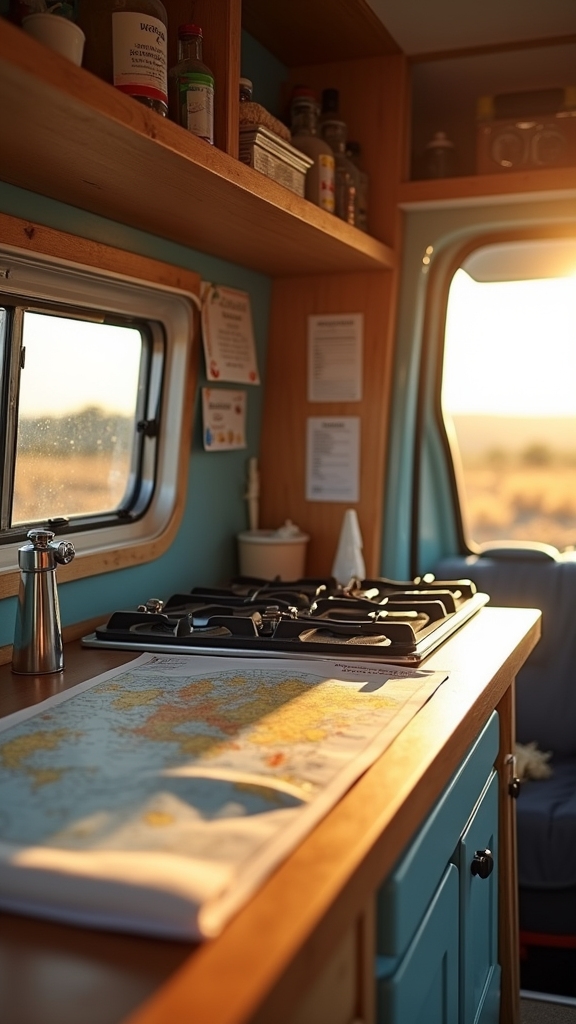
Structure sounds like the opposite of the free-wheeling van life image, but without it, small-space living slides into chaos fast. A consistent morning routine, even something as simple as coffee and a short walk before the day starts, anchors everything that follows.
Blocking time for chores, work, and rest keeps the rig clean and your head clear, because clutter and mental fog compound each other in tight quarters. Alternating travel weeks with stationary weeks gives you time to actually explore a place rather than just passing through it on the way to the next pin on the map.
Backup Power Solutions
Even a well-designed solar system has its limits, and a stretch of overcast days or a high-demand period will test your setup in ways you didn’t plan for. Portable solar power stations like a Jackery or EcoFlow give you a self-contained backup that charges from panels, shore power, or a vehicle outlet.
A quality inverter generator handles the heavy loads when battery reserves run low and the sun isn’t cooperating. Layering your backup options rather than relying on a single fallback is what keeps the lights on when conditions don’t go your way.
Mobile Internet Connectivity
Staying connected full-time takes a layered approach, and no single solution works everywhere you’ll end up. Cellular data plans from major carriers are the backbone for most people, and a dedicated mobile router manages the connection more reliably than a phone hotspot running all day.
Public Wi-Fi at libraries and campground offices can supplement your data when you’re stationary, though it’s rarely dependable enough to count on for work. A signal booster tied into your cellular setup pulls the most out of whatever coverage exists and keeps your connection stable in the fringe areas where bars come and go.
Communication Systems for Safety
Cell service disappears exactly when you need it most, which is why backup communication systems aren’t optional for serious off-grid travel. Two-way radios keep a group in contact on trails or across a remote campsite without burning through phone batteries or requiring a tower.
A NOAA weather alert radio has woken me up to tornado warnings that my phone never caught, and that alone makes it worth carrying. For solo travelers pushing into genuinely remote territory, a satellite communicator like a Garmin inReach gives you two-way messaging and an SOS function that works anywhere on earth.