Opening your utility closet shouldn’t feel like defusing a bomb. You know the drill: avalanche of spray bottles, that mop you swear you put away properly, and absolutely no idea where you stashed the wood polish. Most people treat this space like a junk drawer with a door, but it doesn’t have to stay that way.
What separates a functional utility closet from a disaster zone isn’t the size of the space or how much money you throw at fancy containers. It comes down to creating systems that actually match how you live and what you need to grab in a hurry. These 17 ideas make that a lot easier to pull off.
Contents
- 1 Maximize Vertical Space With Floor-To-Ceiling Shelving
- 2 Install Wall-Mounted Mop Holders and Hooks
- 3 Add Door Organizers for Small Essentials
- 4 Use Labeled Bins to Create Clear Zones
- 5 Store Bulky Items on Higher Shelves
- 6 Designate Separate Zones by Category
- 7 Keep Frequently Used Items in the Prime Zone
- 8 Install Pullout Shelves for Deep Storage Areas
- 9 Switch to Clear Storage Containers
- 10 Implement Lazy Susans for Small Item Storage
- 11 Schedule Regular Decluttering Sessions
- 12 Create Grab-and-Go Bins for Common Supplies
- 13 Rotate Inventory to Use Older Items First
- 14 Group Tools and Supplies by Task
- 15 Maintain Clear Floor Space for Easy Movement
- 16 Establish a Labeling System Throughout
- 17 Monitor Stock Levels to Prevent Shortages
Maximize Vertical Space With Floor-To-Ceiling Shelving
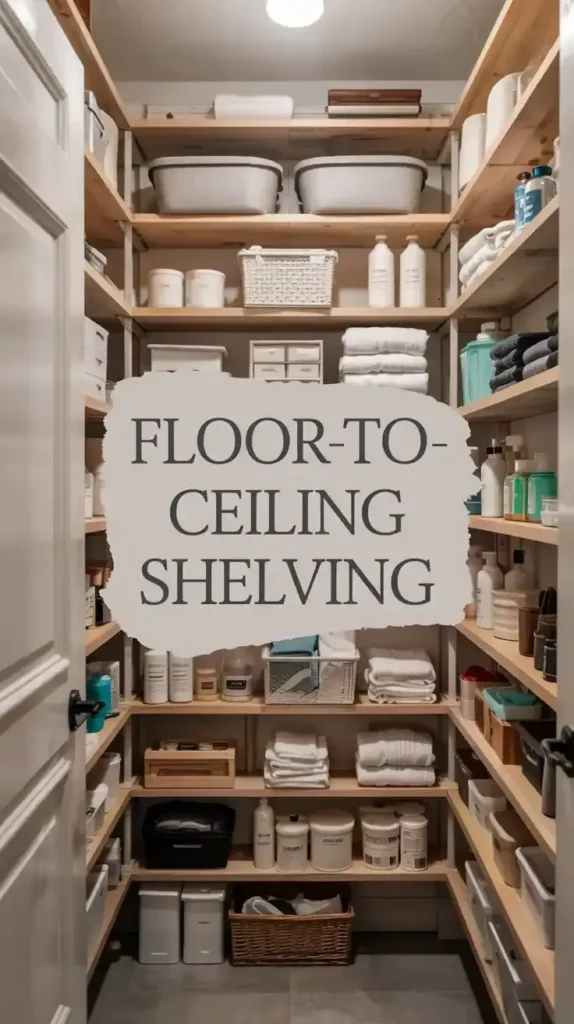
Most utility closets waste about two-thirds of their potential storage by leaving the upper reaches completely bare. Installing shelving that runs from floor to ceiling can genuinely triple what you can store without sacrificing a single inch of floor space.
The beauty of going vertical is that you’re finally using the space you’re already paying for instead of letting it collect dust. Put your everyday cleaning supplies at eye level where you can actually see them, and reserve those upper shelves for the stuff you only need quarterly.
Install Wall-Mounted Mop Holders and Hooks
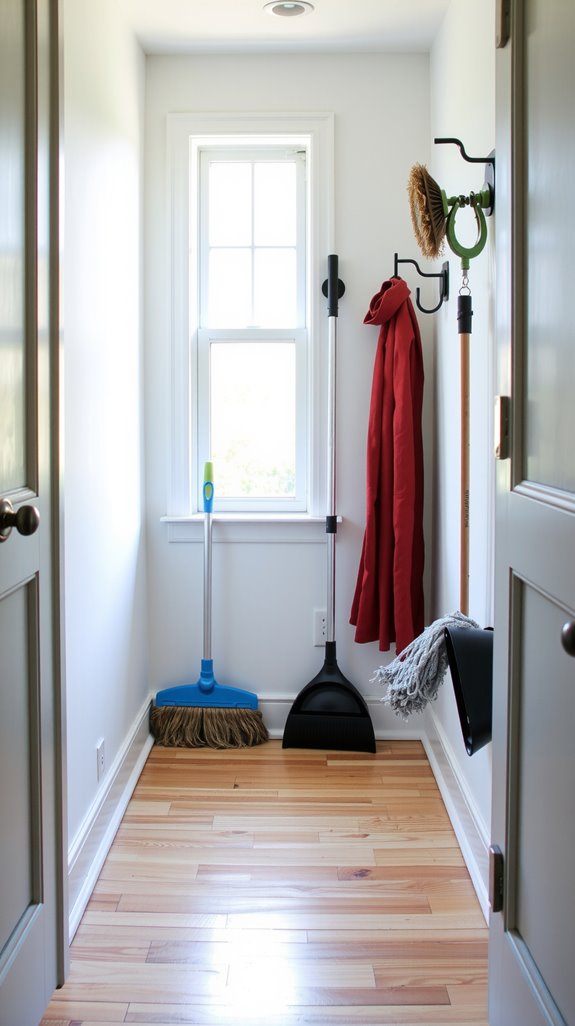
Mops and brooms leaning against the wall will fall over at the most inconvenient moment, usually when you’re already running late. Wall-mounted holders with spring-loaded grips keep these long-handled tools secure and off the floor where they belong.
Look for models that handle various diameters since not all mop handles are created equal. Most good holders include a few extra hooks underneath for dustpans or microfiber cloths, which keeps related items together where you’ll actually remember them.
Add Door Organizers for Small Essentials
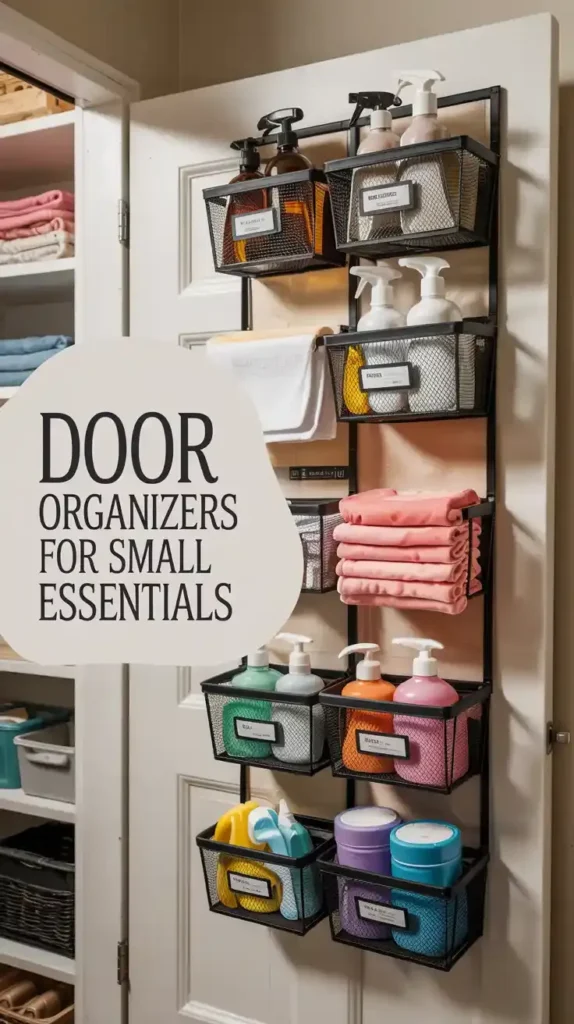
The back of your closet door is prime real estate that most people completely ignore. Over-the-door organizers with a mix of pockets and hooks turn this dead space into a home for all those small items that usually get lost on shelves.
Spray bottles, sponges, and cleaning gloves finally have a visible spot instead of getting shoved to the back, where you forget they exist. Mesh versions work particularly well because you can see exactly what’s in each pocket without digging around.
Use Labeled Bins to Create Clear Zones

Tossing everything loose on a shelf means you’ll spend half your cleaning time just looking for supplies. Bins with clear labels create boundaries that your brain can process instantly, no hunting required.
When you know exactly where the wood polish lives versus the bathroom cleaner, putting things back becomes automatic instead of a chore. This also stops you from buying duplicates of things you already own but can’t locate in the chaos.
Store Bulky Items on Higher Shelves
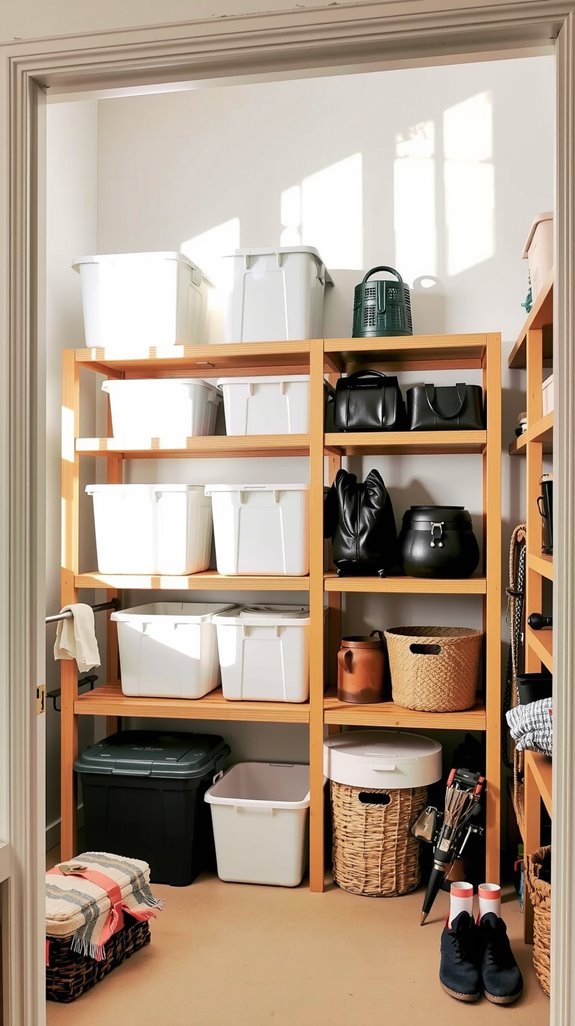
Paper towel bulk packs and that enormous bottle of laundry detergent from the warehouse store shouldn’t be taking up your most accessible space. Higher shelves are perfect for these occasional-use items that you don’t need to grab daily.
Just make sure you can still reach them safely with a step stool and that the shelves themselves can handle the weight. Stick a label on the front of bins so you’re not playing guessing games from ground level.
Designate Separate Zones by Category
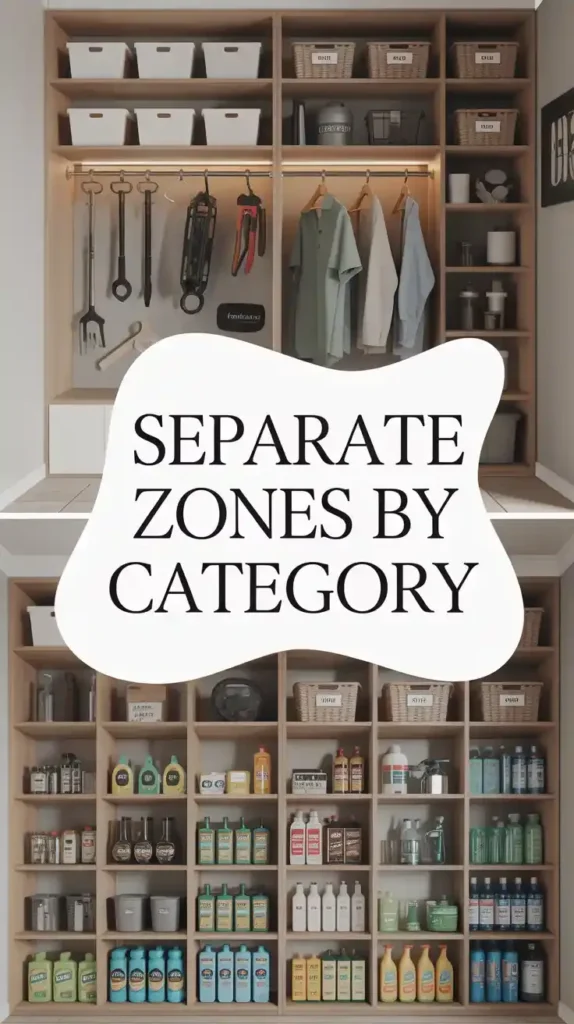
Mixing your screwdrivers with your sponges is a recipe for frustration every time you need either one. Creating distinct zones for cleaning supplies, tools, paper products, and seasonal items means your hand knows where to go automatically.
Physical separation through bins or shelf dividers reinforces these boundaries and keeps categories from bleeding into each other. The goal is to eliminate that moment of “where did I put that thing” before it even happens.
Keep Frequently Used Items in the Prime Zone
The sweet spot in any closet runs from about waist height to eye level, roughly where your hand naturally falls. This is where your daily workhorses should live: the all-purpose cleaner, dish soap refills, and whatever you grab at least twice a week.
Forcing yourself to bend down or stretch up for items adds unnecessary friction to tasks you’re already trying to finish quickly. Save the upper and lower shelves for the stuff you can afford to reach for occasionally.
Install Pullout Shelves for Deep Storage Areas
Deep closets seem great until you realize you can’t see or reach anything past the first six inches. Pullout shelves on full-extension slides bring everything to you instead of making you excavate half the closet for one item.
The installation takes maybe an hour and just requires mounting the slides level on your existing shelves. Suddenly, that back corner becomes just as useful as the front, and you’re not knocking over three things to grab the fourth.
Switch to Clear Storage Containers
Opaque bins turn your closet into a memory test you didn’t sign up for. Clear containers let you see inventory at a glance, which means no more opening five boxes to find the one with trash bags.
They also protect your supplies from dust and spills while stacking neatly to use vertical space efficiently. The transparency keeps you honest about what you actually have, which cuts down on buying duplicates you don’t need.
Implement Lazy Susans for Small Item Storage
Corner spaces and deep shelves create these annoying dead zones where small bottles disappear forever. A lazy susan turns that wasted space into accessible storage with a simple spin.
Group similar items together on each turntable so you’re not hunting through a random assortment every time. This works brilliantly for things like spray bottles, shoe polish, or any collection of small containers that tend to multiply.
Schedule Regular Decluttering Sessions
Even the best organizational system slowly degrades without maintenance, like a garden that needs weeding. Blocking out an hour every month to reassess what’s in your closet keeps things from sliding back into chaos.
During these sessions, toss expired products, consolidate partially used items, and return anything that migrated from its proper home. Consistency matters more than perfection, so pick a recurring calendar date and actually stick to it.
Create Grab-and-Go Bins for Common Supplies
Gathering supplies for specific tasks shouldn’t require multiple trips or a mental checklist. Setting up task-based bins means everything you need for bathroom cleaning or floor care lives together in one portable container.
Use open-top bins or handled caddies so you can literally grab and go without fumbling with lids. When you’re done, everything goes back in its designated bin rather than getting scattered across shelves.
Rotate Inventory to Use Older Items First
Cleaning products do expire, and there’s nothing more annoying than finding a half-dried bottle of something you bought two years ago. When you bring new supplies home, push them to the back and pull older stock forward.
This simple rotation prevents waste and ensures you’re actually using what you buy. Writing purchase dates on containers with a marker takes five seconds and saves you from guessing which bottle to grab first.
Group Tools and Supplies by Task
Mixing your electrical supplies with your plumbing supplies with your painting supplies creates unnecessary decision points. Dedicating separate bins or shelf sections to each category means you know exactly where to look for whatever you need.
Pegboards work great for tools you use regularly since you can see everything at once and grab them without moving other items. Keep the most frequently used categories at the most accessible height and bump seasonal stuff higher.
Maintain Clear Floor Space for Easy Movement
A floor covered in bins and bottles turns your closet into an obstacle course. Keeping the floor clear means you can actually step inside, turn around, and access shelves without doing an awkward dance.
Wall-mounted solutions and vertical storage make this possible without sacrificing capacity. Think of floor space as your working area, not as bonus storage that makes everything harder to reach.
Establish a Labeling System Throughout
Labels aren’t just for people with label makers and too much time on their hands. They’re the difference between a system you’ll actually maintain and one that falls apart in three weeks.
Put labels where you’ll see them easily, usually on the top third of bins or the front edge of shelves. Skip the elaborate descriptions and stick to simple, obvious names that anyone in your household would understand immediately.
Monitor Stock Levels to Prevent Shortages
Running out of trash bags or paper towels at the worst possible moment is entirely preventable. A quick monthly scan of your supplies tells you what’s running low before you’re completely out.
Notice patterns in what you use quickly versus what lasts months, and adjust your shopping accordingly. Setting mental or written reorder points for essentials means you’re restocking proactively instead of reactively scrambling to the store.