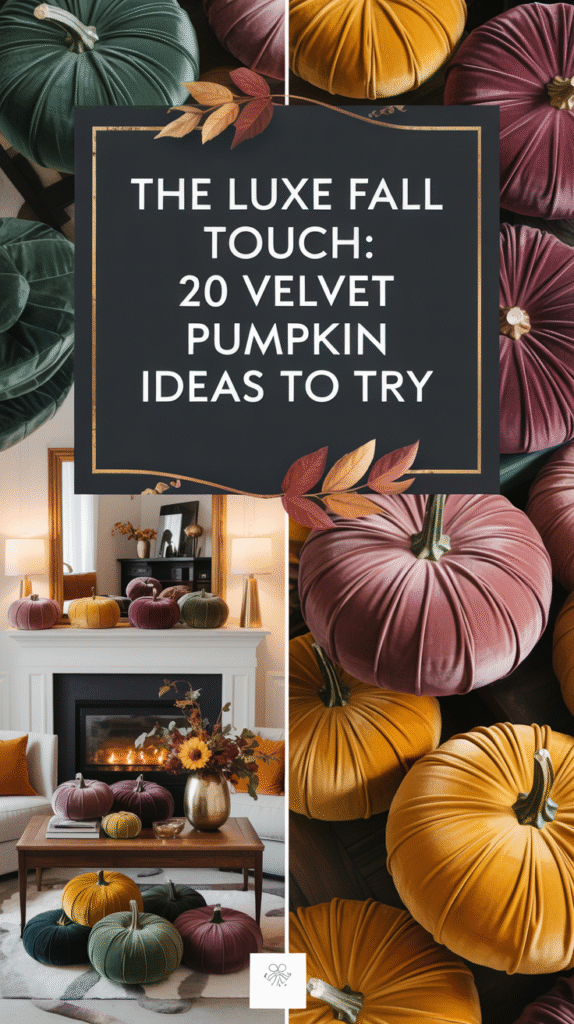
Velvet pumpkins have moved from craft fair oddity to a genuine fall decor staple, and the numbers back that up. There’s a reason they caught on so fast. The soft texture triggers the same October instinct as pulling out a wool blanket during the first cold week of the season.
Unlike ceramic or foam options, velvet rewards being touched and looks better the longer it sits in a room. The real challenge is knowing how to arrange them well, and that’s exactly what these 20 ideas break down.
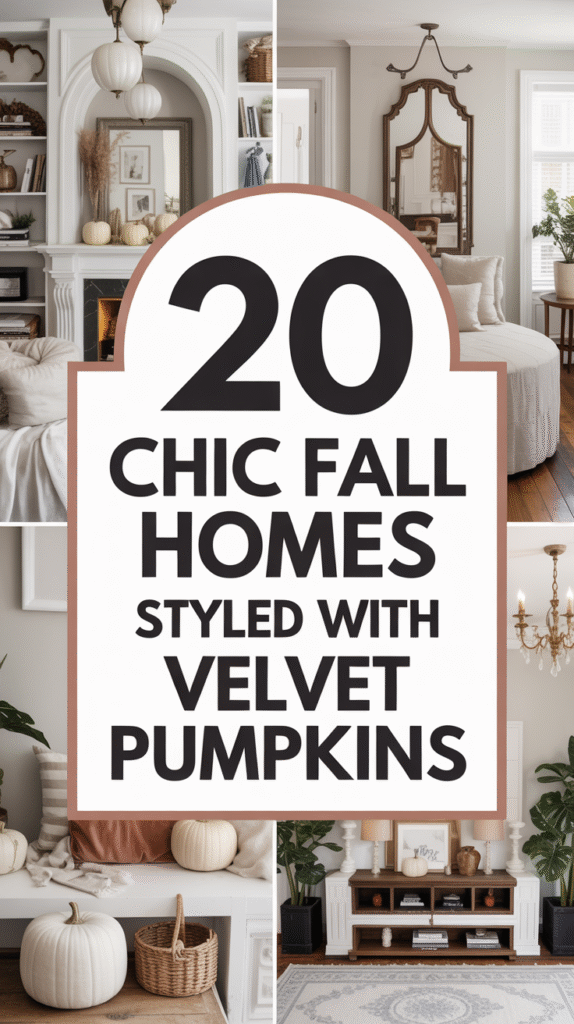
Contents
- 1 Embracing Velvet’s Soft Texture
- 2 Choosing Rich Fall Colors
- 3 Mixing Modern and Vintage Styles
- 4 Displaying on Unexpected Surfaces
- 5 Incorporating Natural Elements
- 6 Creating Layered Visual Interest
- 7 Styling With Cozy Textiles
- 8 Highlighting With Natural Light
- 9 Balancing With Rustic Accents
- 10 Pairing With Block Print Textiles
- 11 Enhancing With Pre-Lit Elements
- 12 Grouping in Complementary Hues
- 13 Adding Dimension With Garlands
- 14 Personalizing With DIY Projects
- 15 Selecting Ready-made Options
- 16 Using Velvet in Transitional Spaces
- 17 Coordinating With Seasonal Wreaths
- 18 Blending With Vintage Heirlooms
- 19 Integrating Into Built-Ins and Entryways
- 20 Exploring Customization Options
Embracing Velvet’s Soft Texture
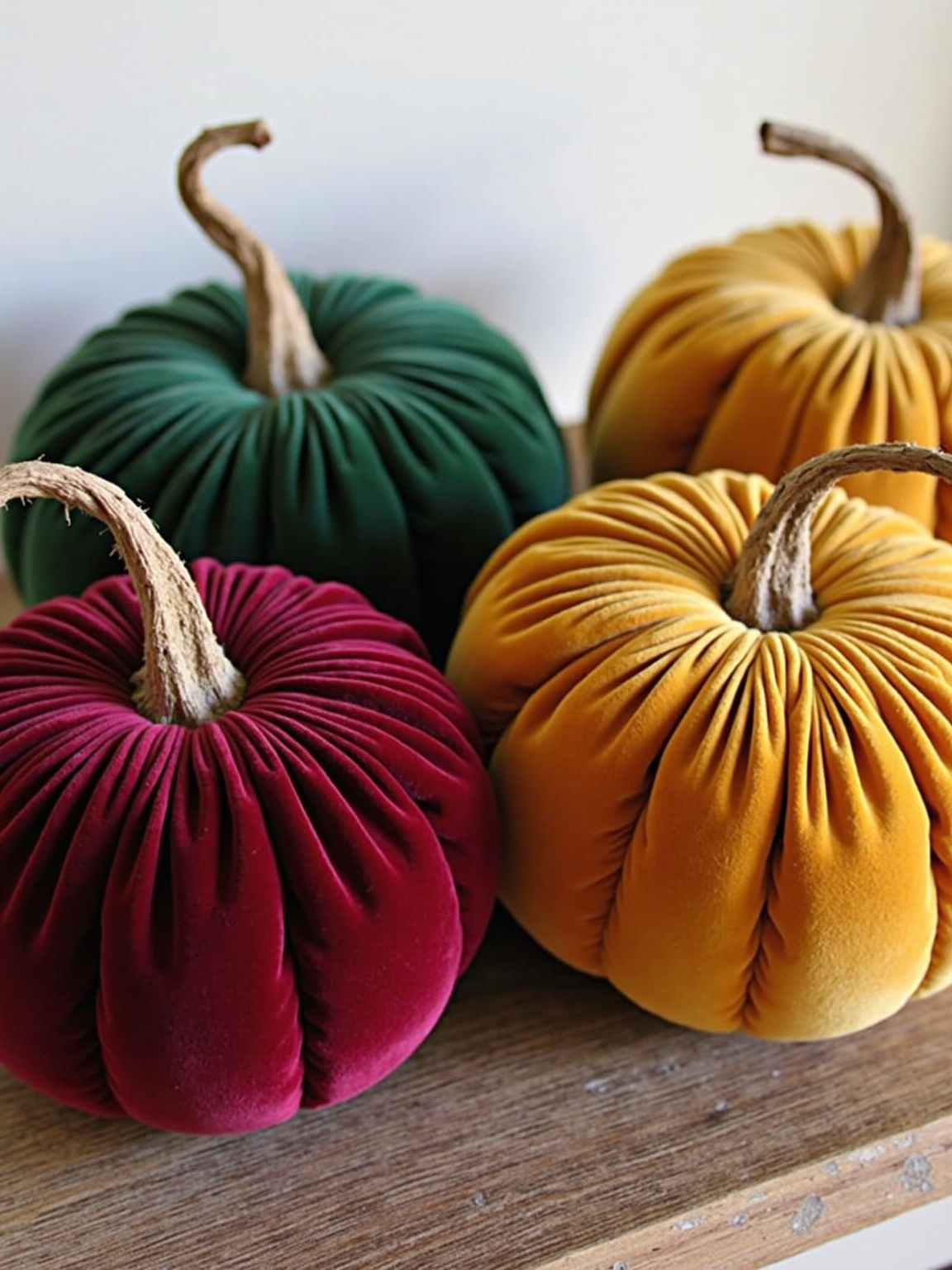
Run your hand one way across a velvet pumpkin and the surface deepens; go the other direction and it practically glows. That shifting quality is what separates this material from every other faux pumpkin on the market.
Place one next to something matte or rough, a piece of burlap, a linen pillow, a clay pot, and the contrast makes the whole arrangement more interesting. The tactile pull is half the reason guests always reach out to touch them, which is exactly what good decor is supposed to do.
SEE THIS: 20 Ways to Layer Rugs for a Cozy & Stylish Fall Look.
Choosing Rich Fall Colors
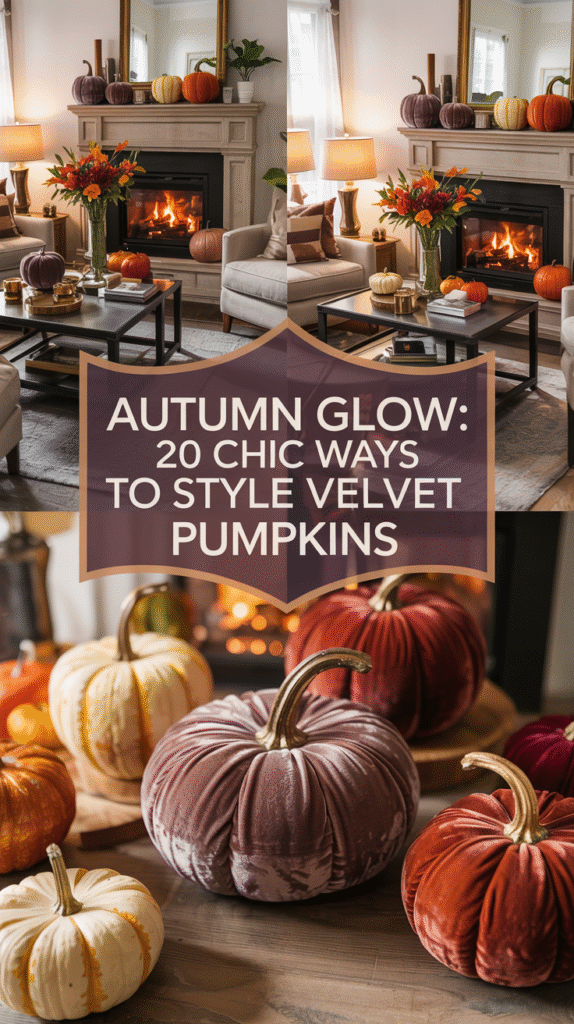
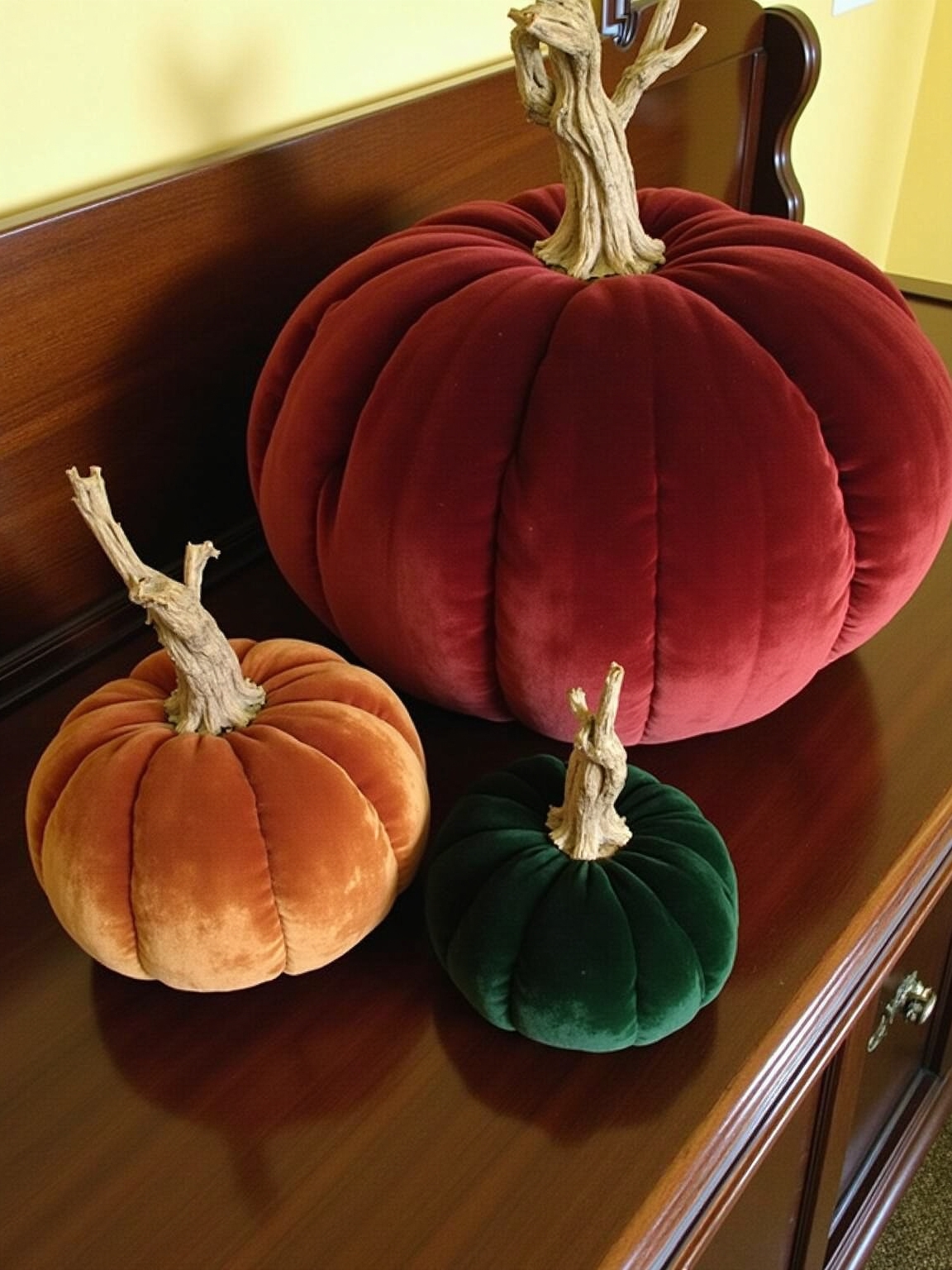
Terracotta, oxblood, forest green, and deep plum form the backbone of any strong fall palette. They’re moody without feeling heavy, and they layer easily against each other without fighting for attention.
Going too dark throughout is the most common mistake people make with this look, and it leaves the arrangement feeling airless. Bring in one or two lighter anchors, creamy stone or warm white, and the whole display starts to breathe.
SEE THIS: 19 Amber Glass Fall Decor Ideas That Glow in Golden Light.
Mixing Modern and Vintage Styles
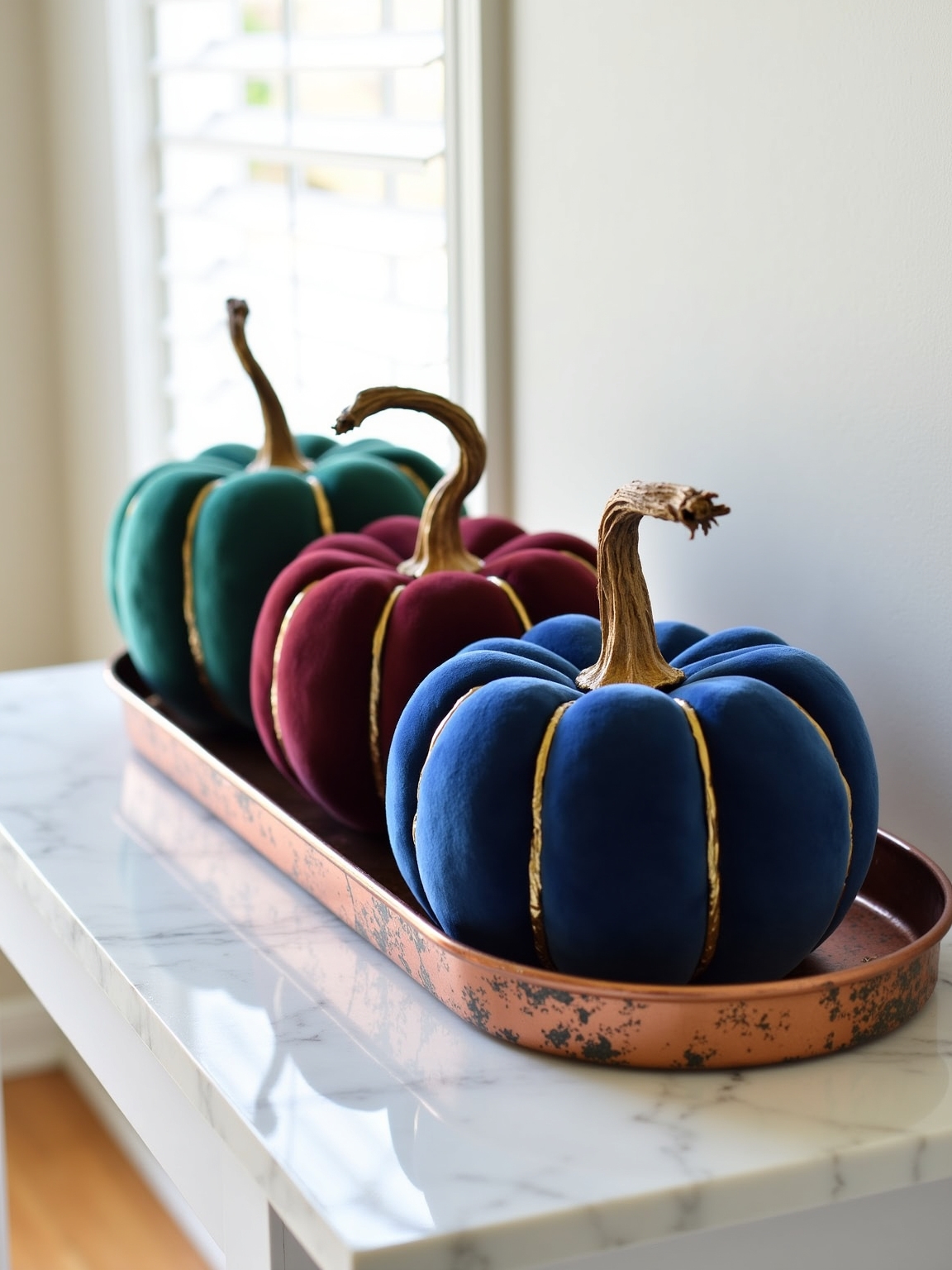
Velvet pumpkins look their best when they’re surrounded by objects with some age to them. Set a few on a chipped antique tray or nestle them into a worn ceramic bowl you picked up at an estate sale.
Old lace, weathered linen, and distressed wood give the velvet something to push against visually. The arrangement earns its character from that tension between old and new, not from the pumpkins alone.
SEE THIS: 19 DIY Dried Citrus Garlands That Make Your Fall Home Smell Amazing.
Displaying on Unexpected Surfaces
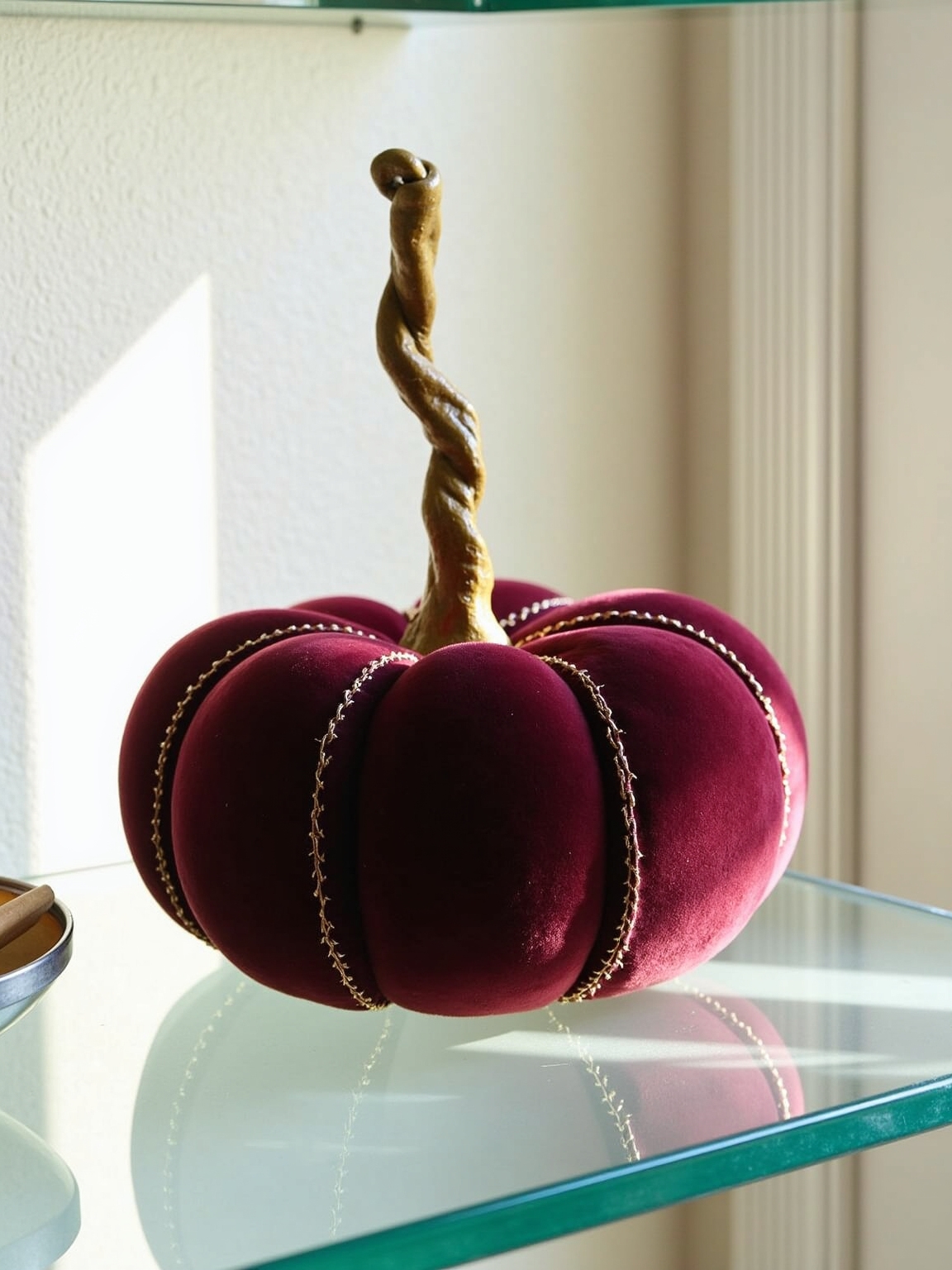
The coffee table bowl is the easy answer, and it’s also the most forgettable one. Stack a few hardcover books on a shelf and place a velvet pumpkin on top for an instant vignette that takes about thirty seconds.
Mirrors behind an arrangement multiply the visual weight and make even a modest grouping look considered. A foyer surface catches morning light beautifully, and that directional glow does more for velvet than any overhead fixture will.
SEE THIS: 17 Fall-Inspired Terrarium Ideas That Double as Whimsical Centerpieces.
Incorporating Natural Elements
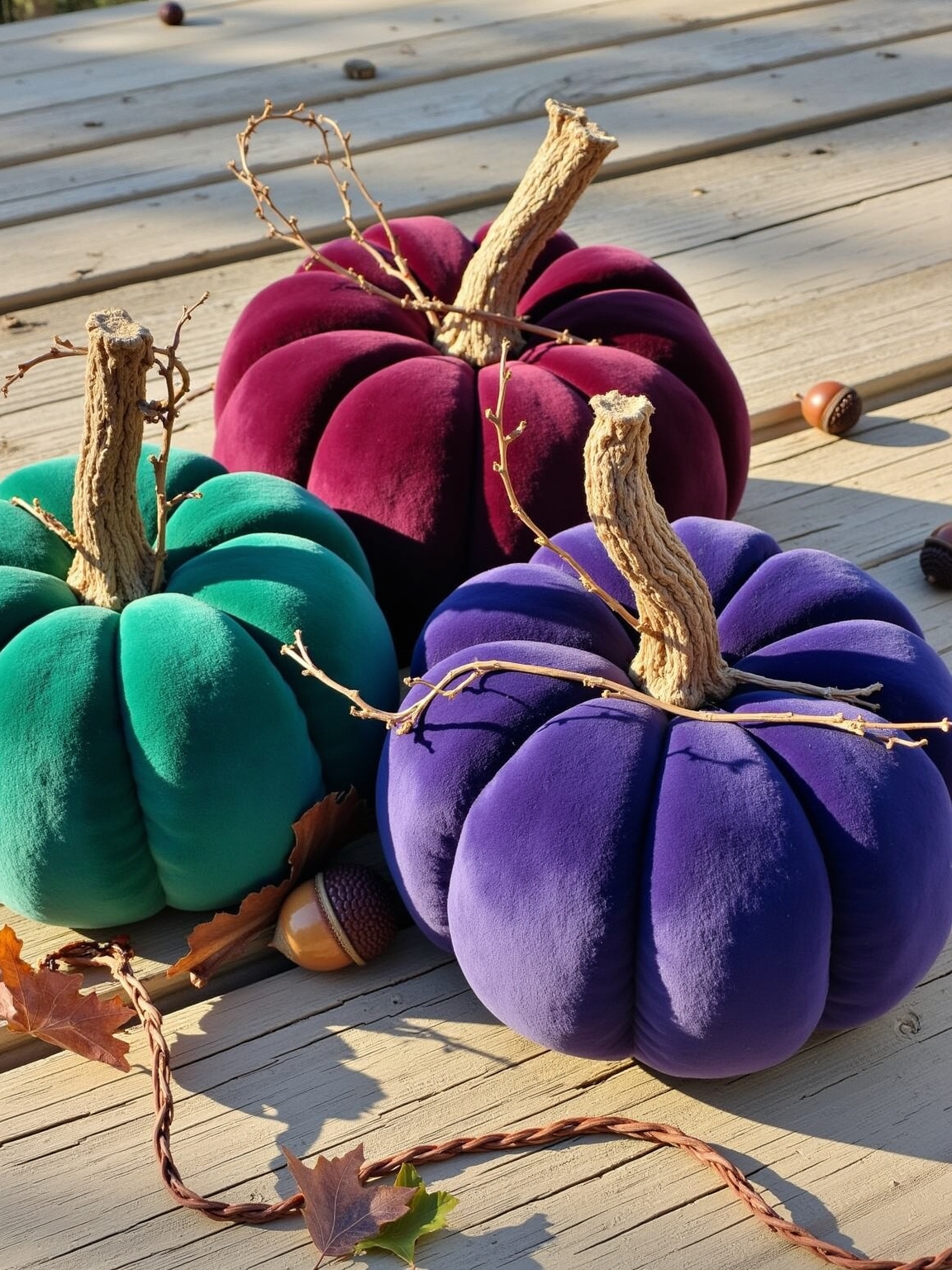
Dried twigs, real pumpkin stems, grapevine, acorns, and shed antlers all mix naturally with velvet without the arrangement looking contrived. Anything foraged should be checked for pests before it comes indoors, which is advice that applies every single season.
Preserved foliage outlasts fresh-cut by weeks and holds its earth tones well past Halloween. That combination of found materials and plush velvet is what makes the display feel collected rather than purchased as a set.
Creating Layered Visual Interest
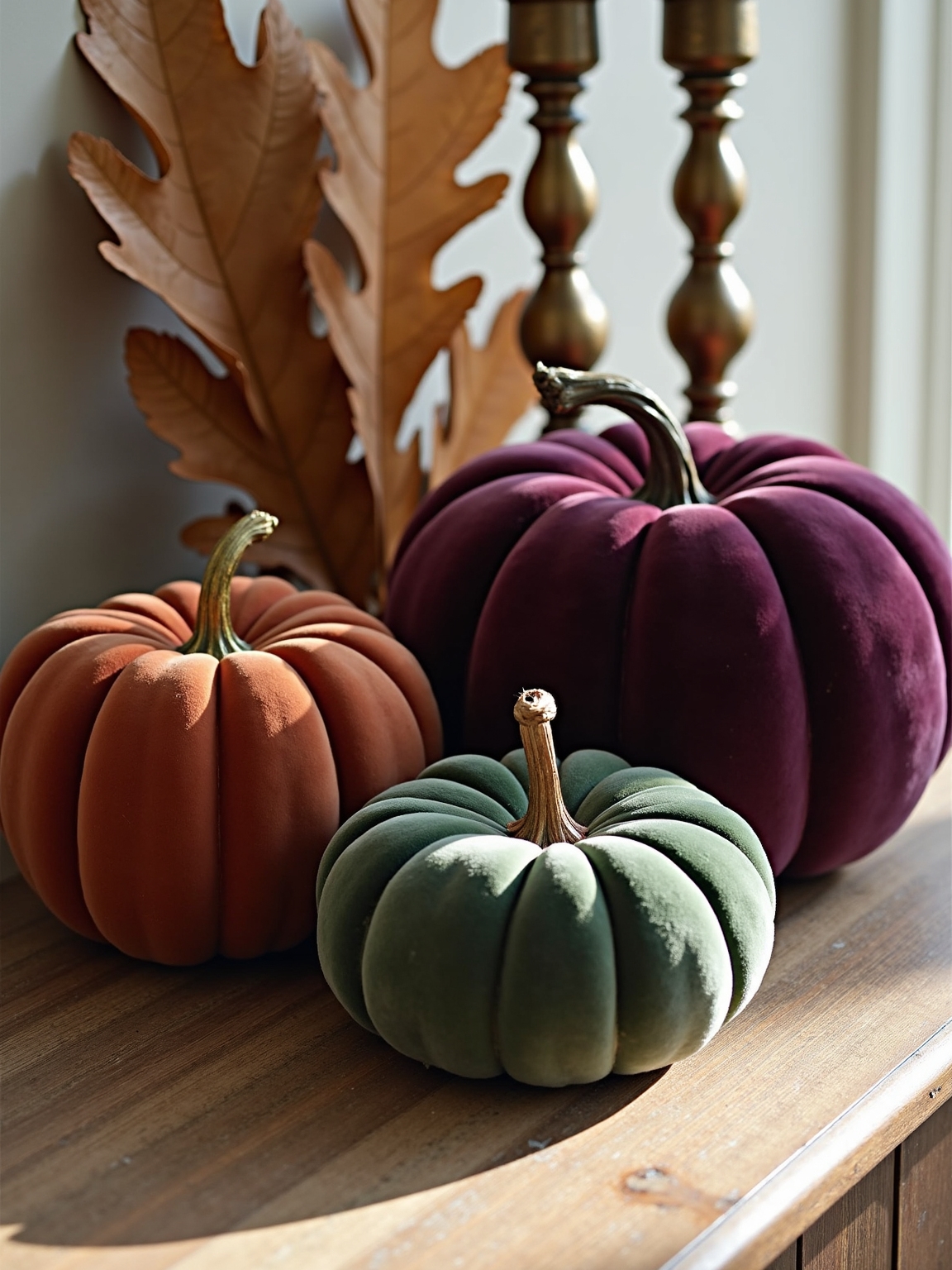
Flat arrangements fall flat, almost literally, and a single row of same-sized pumpkins confirms it. Spread them across different heights using cake plates, pillar candle stands, or tiered trays to give the eye somewhere to travel.
Tuck moss, pinecones, or rough natural filler between pumpkins so the display looks grown rather than placed. Varied elevation is the single adjustment that moves an arrangement from ordinary to something people actually comment on.
Styling With Cozy Textiles
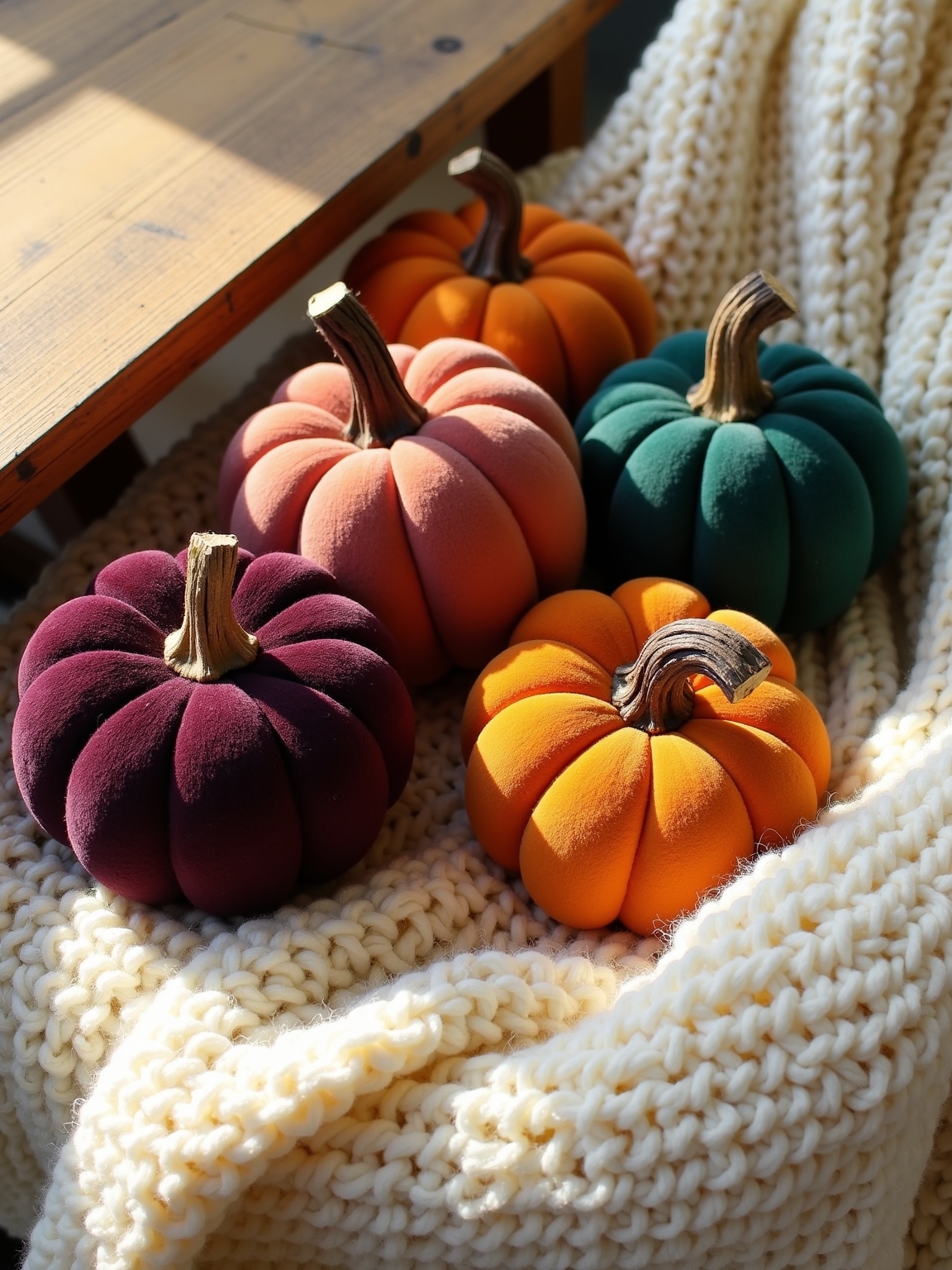
Chunky knit throws, boucle cushions, and linen pillows in terracotta share the same sensory register as velvet pumpkins and make the room feel like a single coherent thought.
Wool adds warmth in the literal sense, and pairing it alongside velvet textures reinforces the seasonal mood without any extra effort. Keep the color palette consistent across your textiles so the room reads as intentional rather than accumulated. Vary the textures freely, but let the shared colors hold everything together.
Highlighting With Natural Light
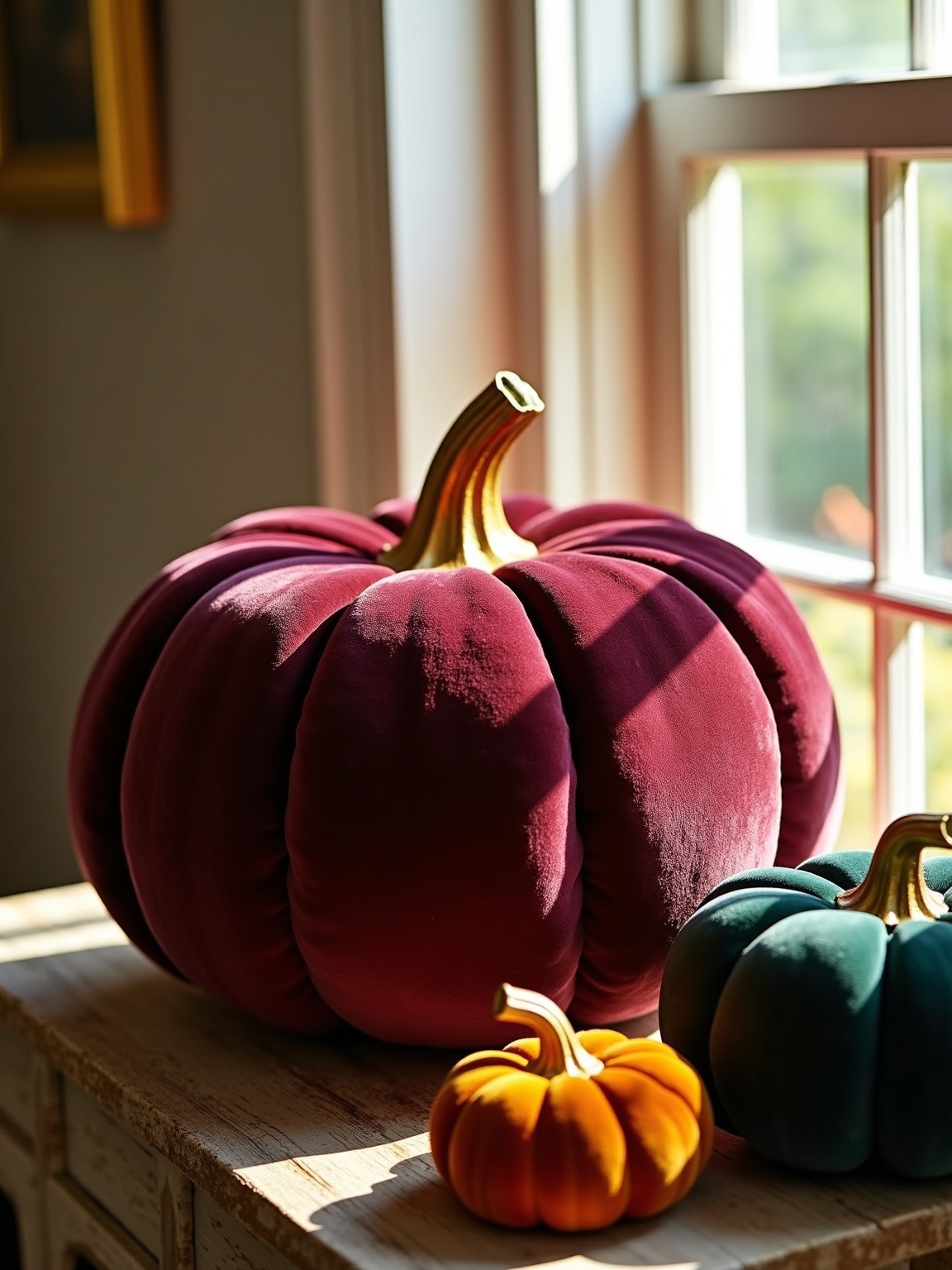
Morning window light does more for velvet pumpkins than most people ever realize until they try it. The pile catches directional sun in a way that makes colors look richer and more saturated than they do under overhead lighting.
Positioning an arrangement near a window is a free upgrade, and it costs nothing to rearrange. A silver tray or angled mirror placed nearby bounces that natural light deeper into the display and adds a layer of visual complexity.
Balancing With Rustic Accents
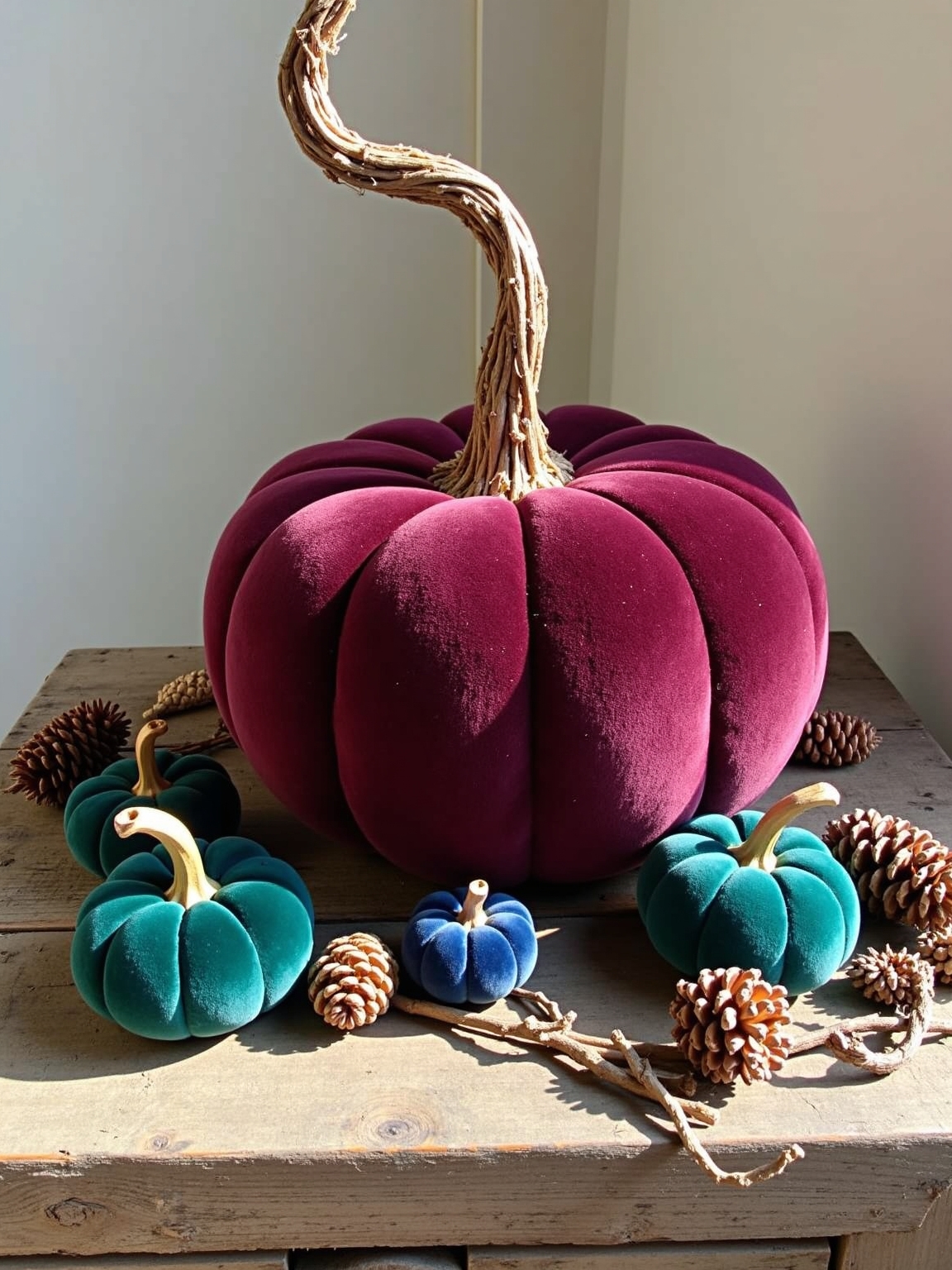
Velvet reads as inherently luxurious, so the materials around it need some roughness to keep the display grounded. Dried wheat bundles, burlap ribbon, and wood slices pulled from a craft store all push back against the plushness in exactly the right way.
Distressed metals, raw twigs, and aged iron candleholders serve the same purpose while adding height and weight to the arrangement. That rustic-luxe balance is what keeps the display from looking too precious to actually live with.
Pairing With Block Print Textiles
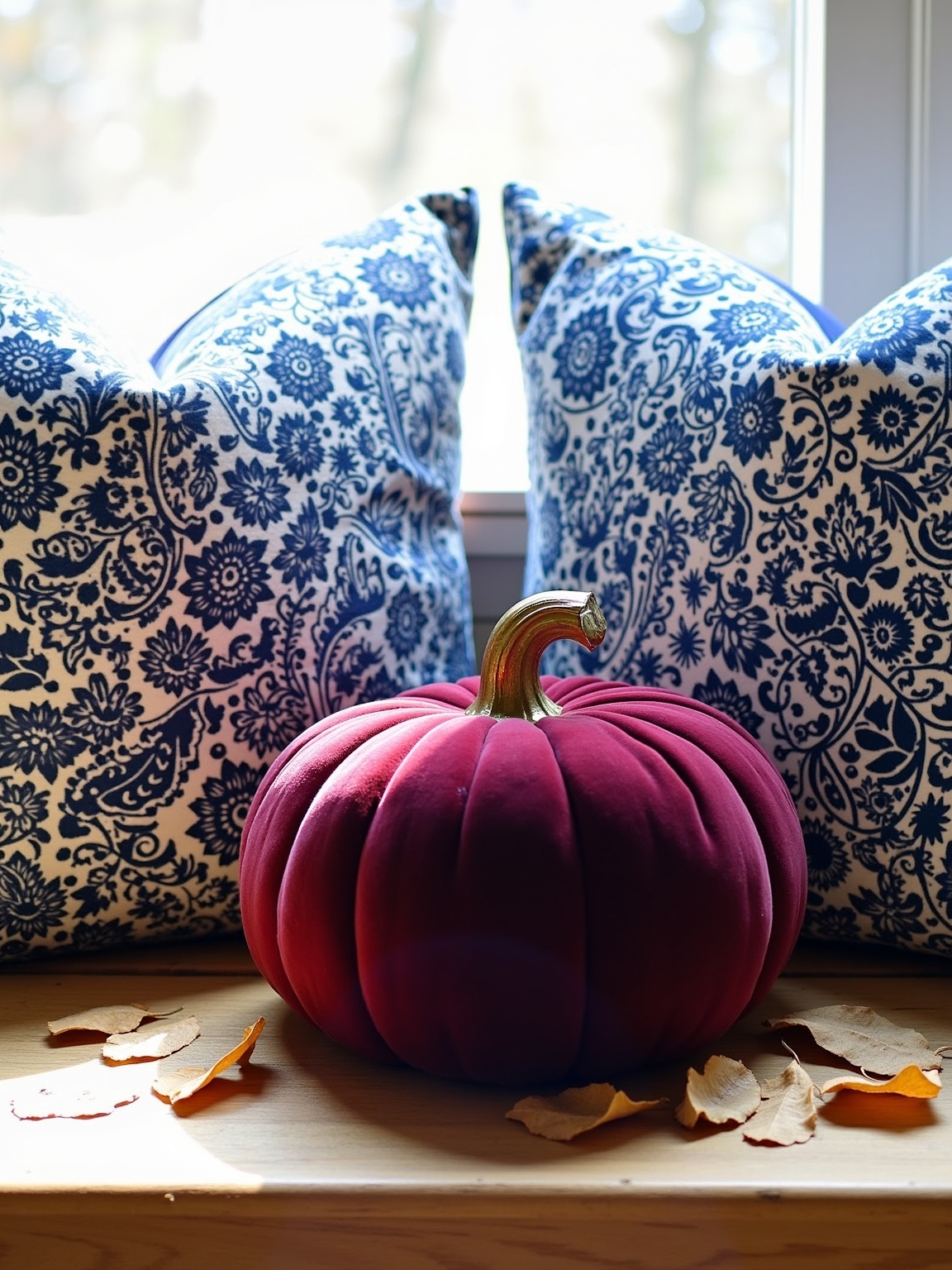
Block print fabrics bring a handmade quality that velvet pumpkins respond to well. The matte ink surface against velvet’s sheen creates a contrast that feels artisanal rather than accidental.
Use block print as a table runner beneath your arrangement or as a cushion cover nearby, keeping the warm tones aligned, rust, ochre, and brick red all work. The result feels curated without requiring any real effort to pull off.
Enhancing With Pre-Lit Elements

Evening is where a lot of fall displays lose their impact, and pre-lit elements are the fix most people overlook. LED string lights wound beneath or around a velvet pumpkin grouping cast a warm amber glow that photographs beautifully and looks even better in person.
These battery-operated options are fire-safe and easy to tuck out of sight during the day. A single strand threaded through a garland or clustered arrangement extends the whole display into nighttime without any candle risk.
Grouping in Complementary Hues
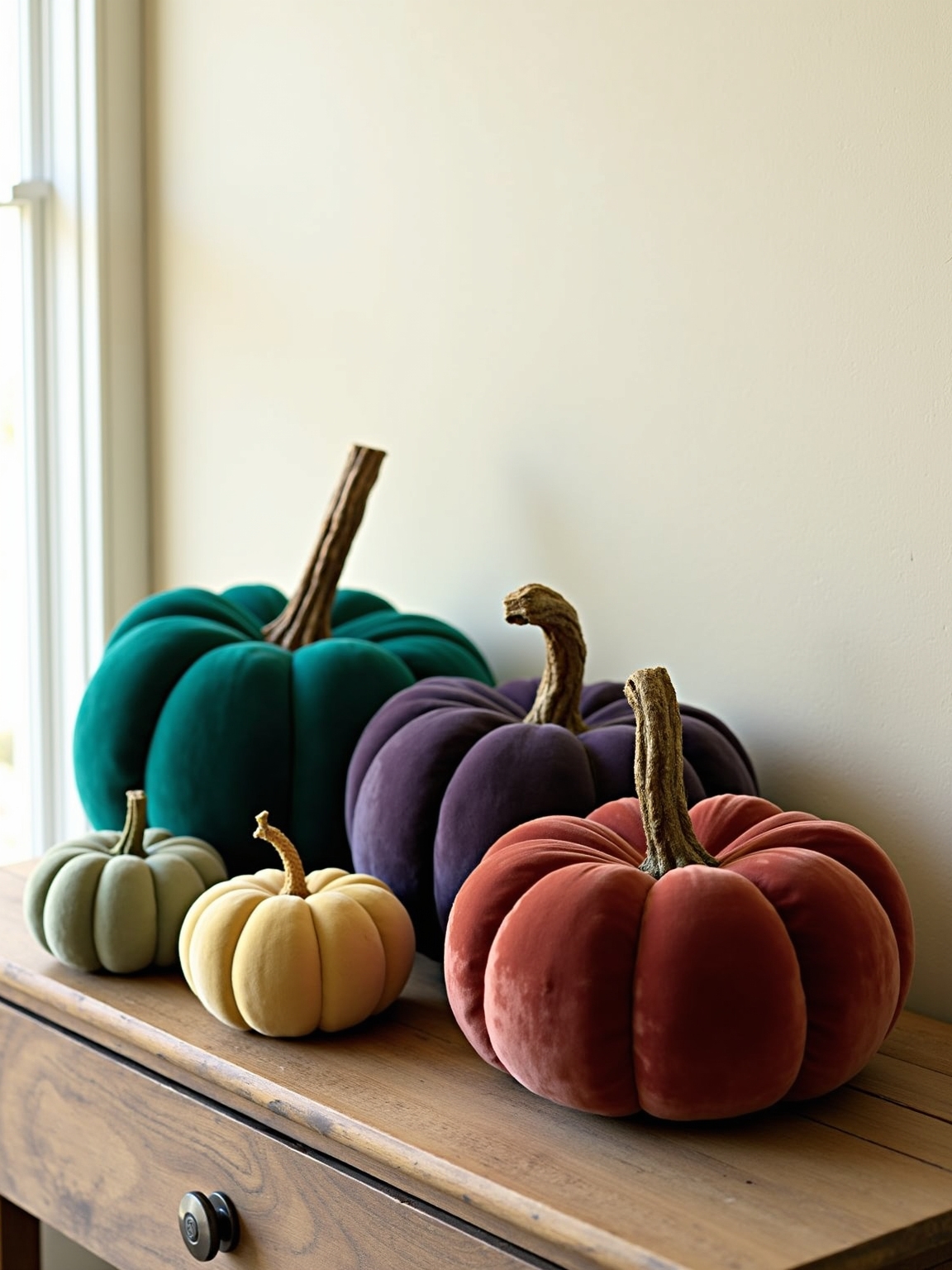
Odd numbers beat even numbers in any pumpkin arrangement, and three or five velvet pumpkins will always outperform two or four. A monochromatic grouping, say blush through deep brick within a single color family, reads as intentional even when it required almost no planning.
Add one earthy neutral as a backdrop so the colors have something quiet to rest against. One metallic accent pumpkin placed into the cluster adds a bit of shimmer without pulling the arrangement away from its fall grounding.
Adding Dimension With Garlands
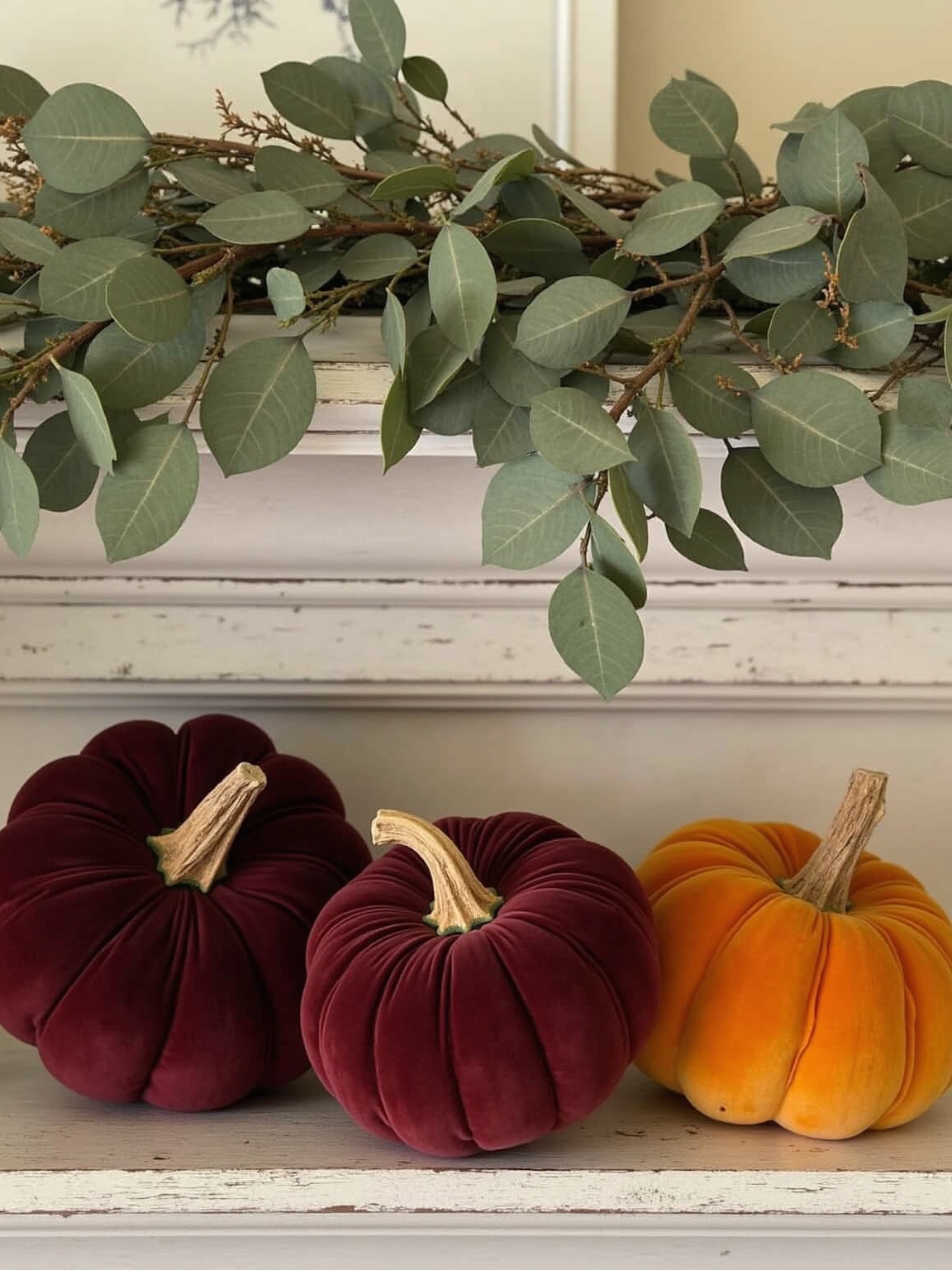
A faux foliage garland in natural green and brown gives you an instant base worth building on. Wire velvet pumpkins into the garland at irregular intervals so they look tucked in rather than attached, which makes a significant difference in how finished the piece reads.
Add pinecones, dried eucalyptus, and a strand of warm fairy lights and the mantel arrangement holds its own through Thanksgiving. Avoid packing it too tight; breathing room between elements is what keeps a garland looking lush rather than crowded.
Personalizing With DIY Projects
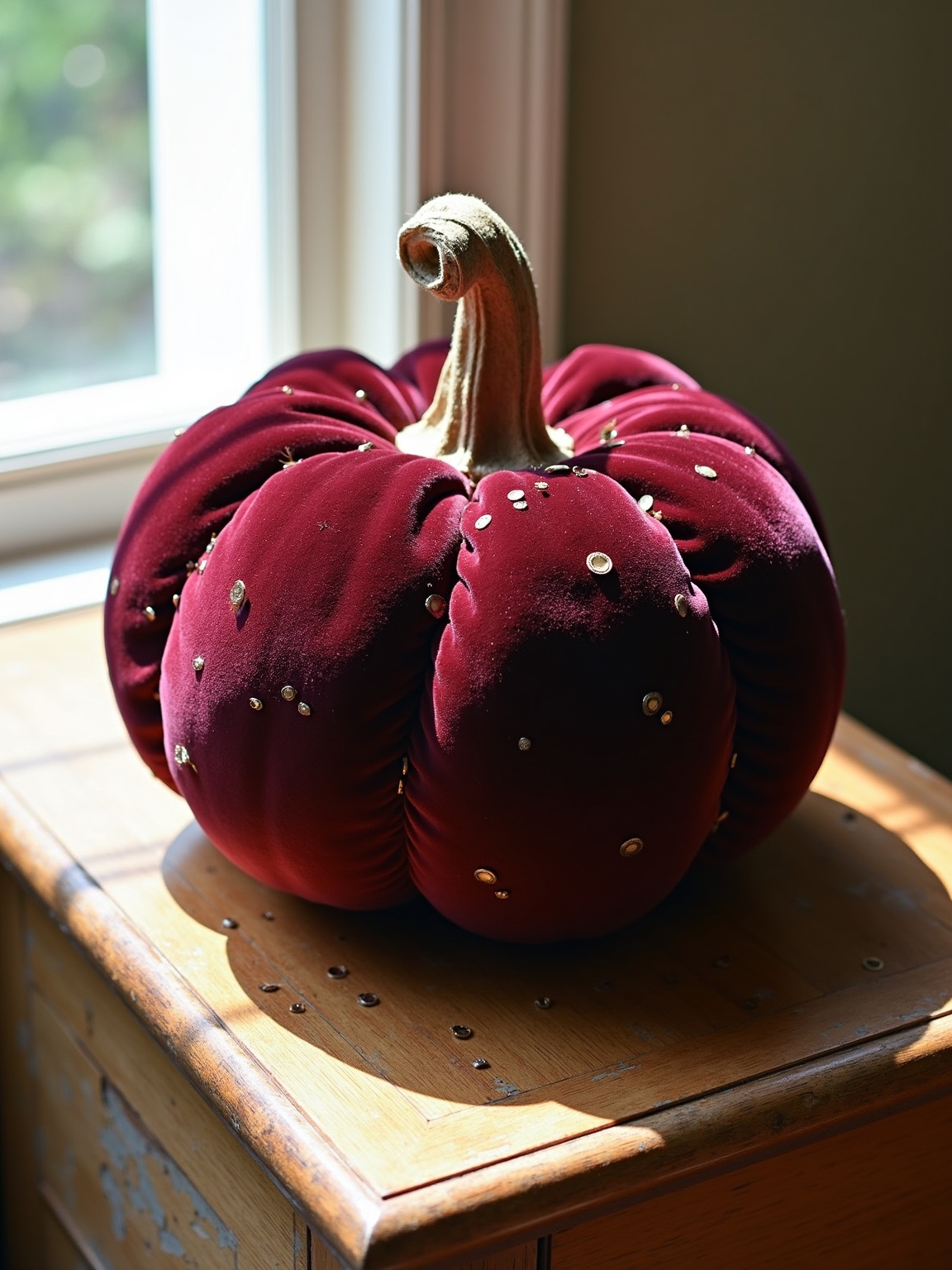
A hot glue gun, a yard of velvet fabric, and a bag of polyester fiberfill are genuinely all it takes to make a velvet pumpkin worth keeping. Cut your fabric into panels, glue the seams, stuff it firmly, and press a dried twig into the top for a stem that looks more authentic than most store-bought versions.
Burgundy, blush, and deep sage are the colors that translate best in velvet at this scale. Add a few stitches of embroidery or a wrapped ribbon base if you want to make them gift-worthy, and they absolutely are.
Selecting Ready-made Options
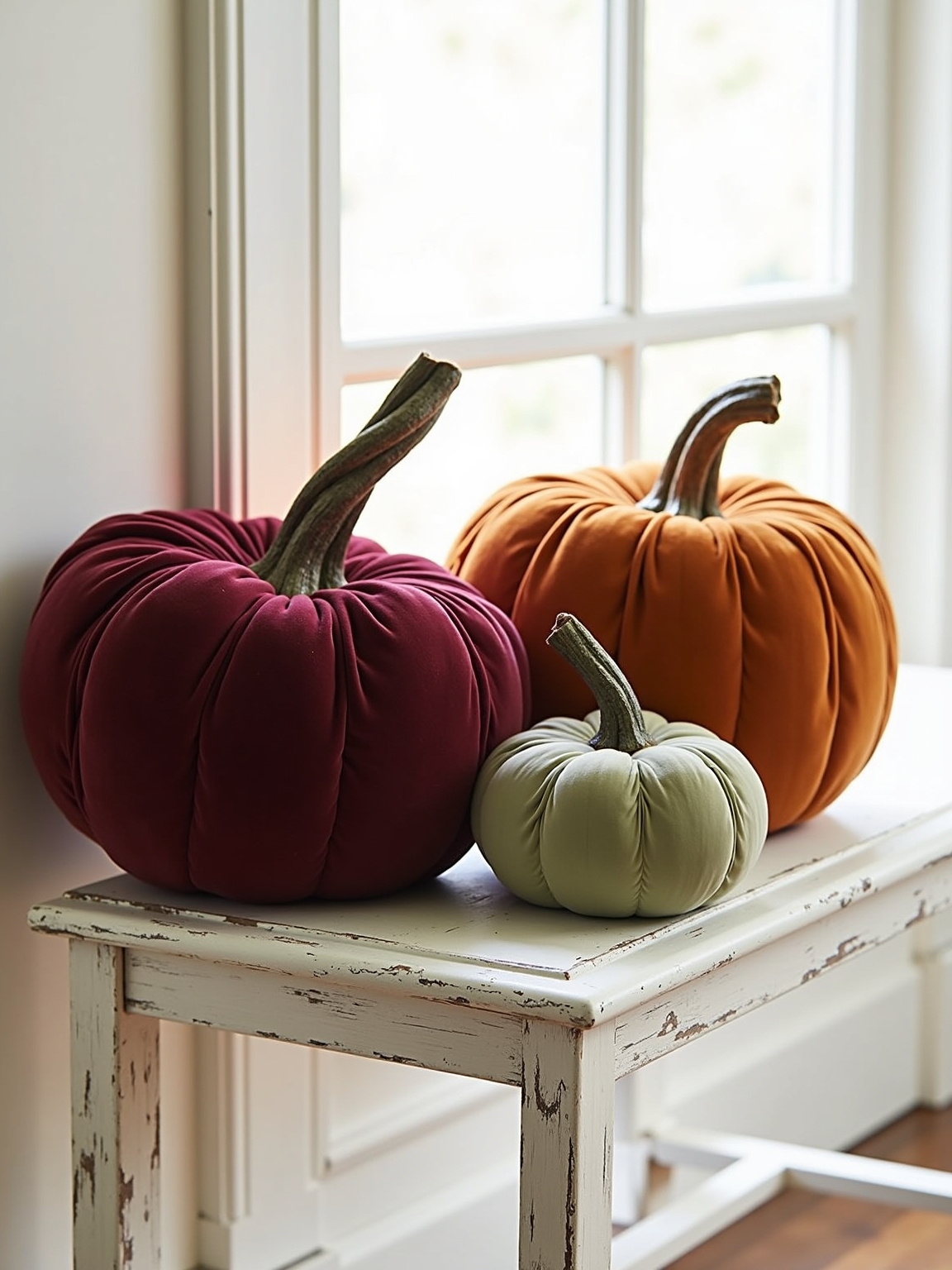
Buying well beats buying cheap every time with velvet pumpkins, and the difference is easy to spot in person. Look for silk velvet or Italian lambskin finishes with real pumpkin stems or quality resin alternatives that hold their shape after handling.
The sizing range now spans from palm-sized accent pieces to substantial statement pumpkins that anchor a whole arrangement. A well-made velvet pumpkin bought now will still look good pulled out of storage three autumns from now, which is the actual measure of value.
Using Velvet in Transitional Spaces
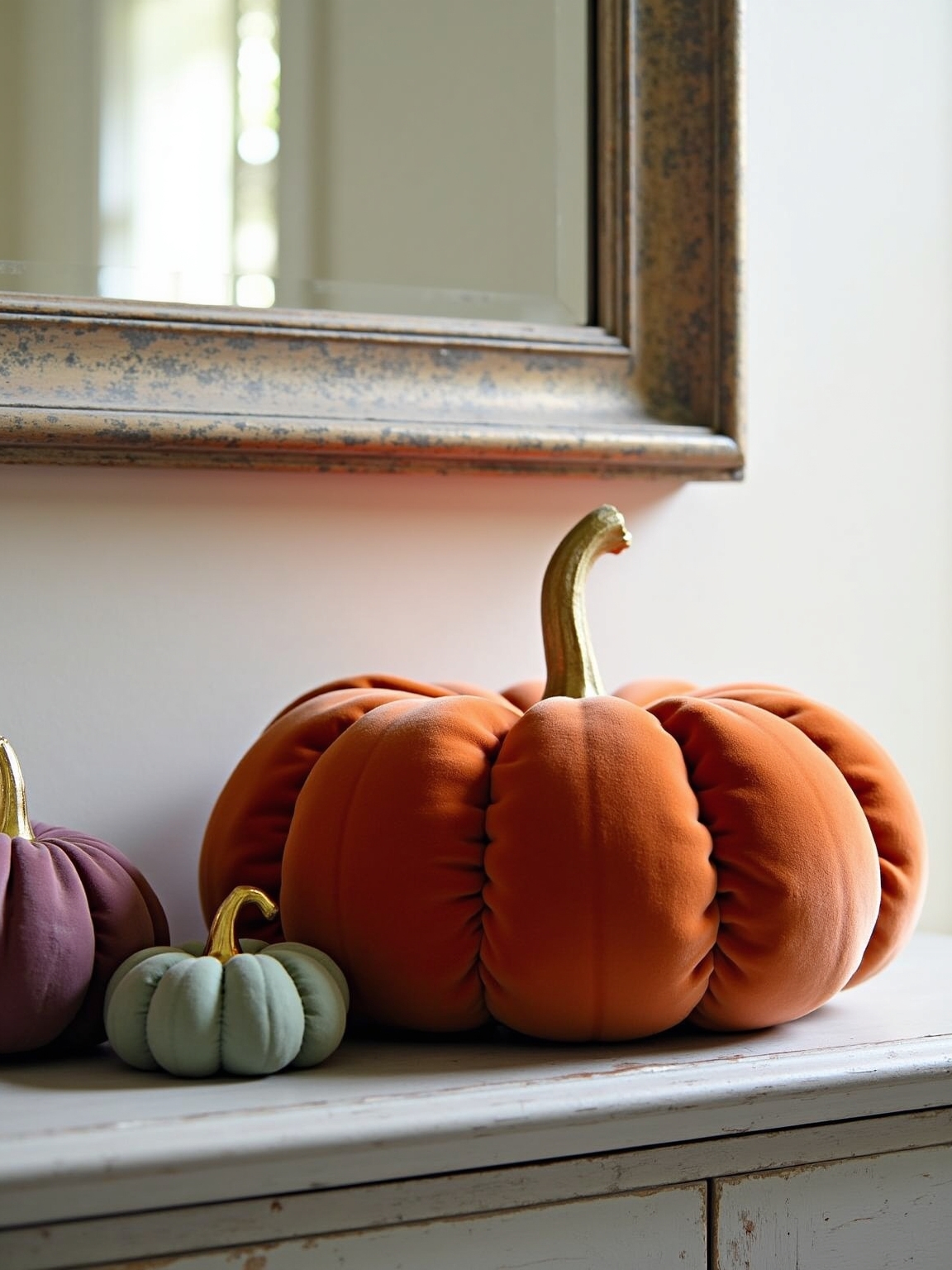
Hallways, sunrooms, and reading nooks are often left out of seasonal decorating, and they shouldn’t be. Velvet upholstery and throw pillows in fall tones shift these in-between spaces into the season without a major overhaul.
Layer velvet alongside wood, metal, or woven materials so the room gains depth rather than just gaining softness. These transitional spaces often have better natural light than main living areas, which means velvet in them tends to look even better than it does elsewhere in the house.
Coordinating With Seasonal Wreaths
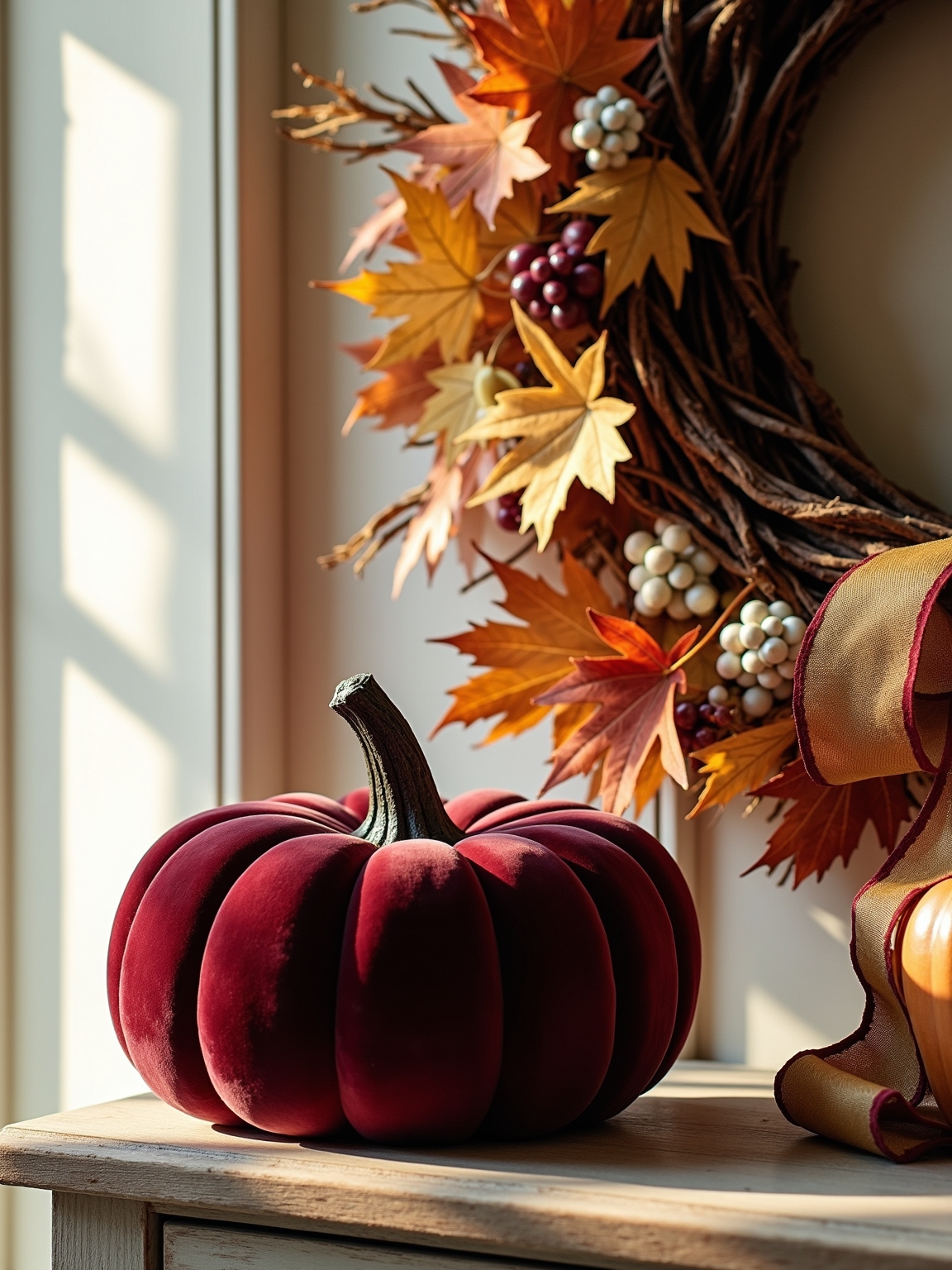
A front door wreath and a few velvet pumpkins placed at the base create an entry display that reads as a unified statement rather than two separate decorating decisions. The soft pile of velvet against dried pinecones, seed pods, or preserved foliage in the wreath builds exactly the kind of textural contrast that makes people stop on the porch.
Pull one or two colors from the wreath into your pumpkin selection so the palette flows from outside to in. That connection between the door and the interior is what makes a home feel genuinely decorated rather than seasonally furnished.
Blending With Vintage Heirlooms
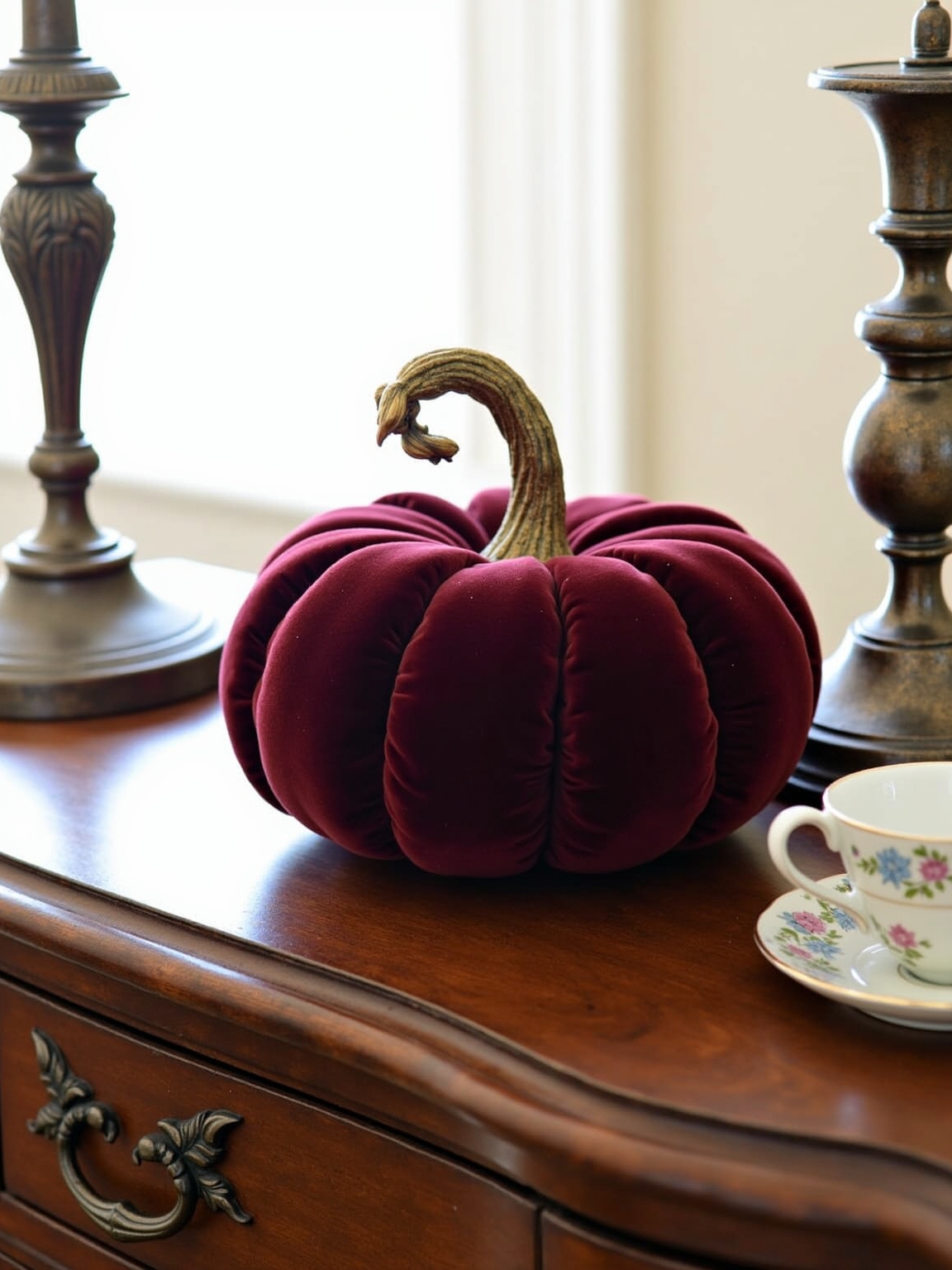
A velvet pumpkin sitting on a great-grandmother’s lace cloth earns its place in a way that a styled shelf never quite does. Vintage ceramics, worn glass bottles, and antique textiles give velvet something old to react against, and the result feels layered in the best possible sense.
Position pumpkins on heirloom pieces carefully so the arrangements feel discovered rather than arranged by a decorator. Wood furniture and aged glassware ground the velvet’s softness in history, which is a quality no new purchase can replicate.
Integrating Into Built-Ins and Entryways
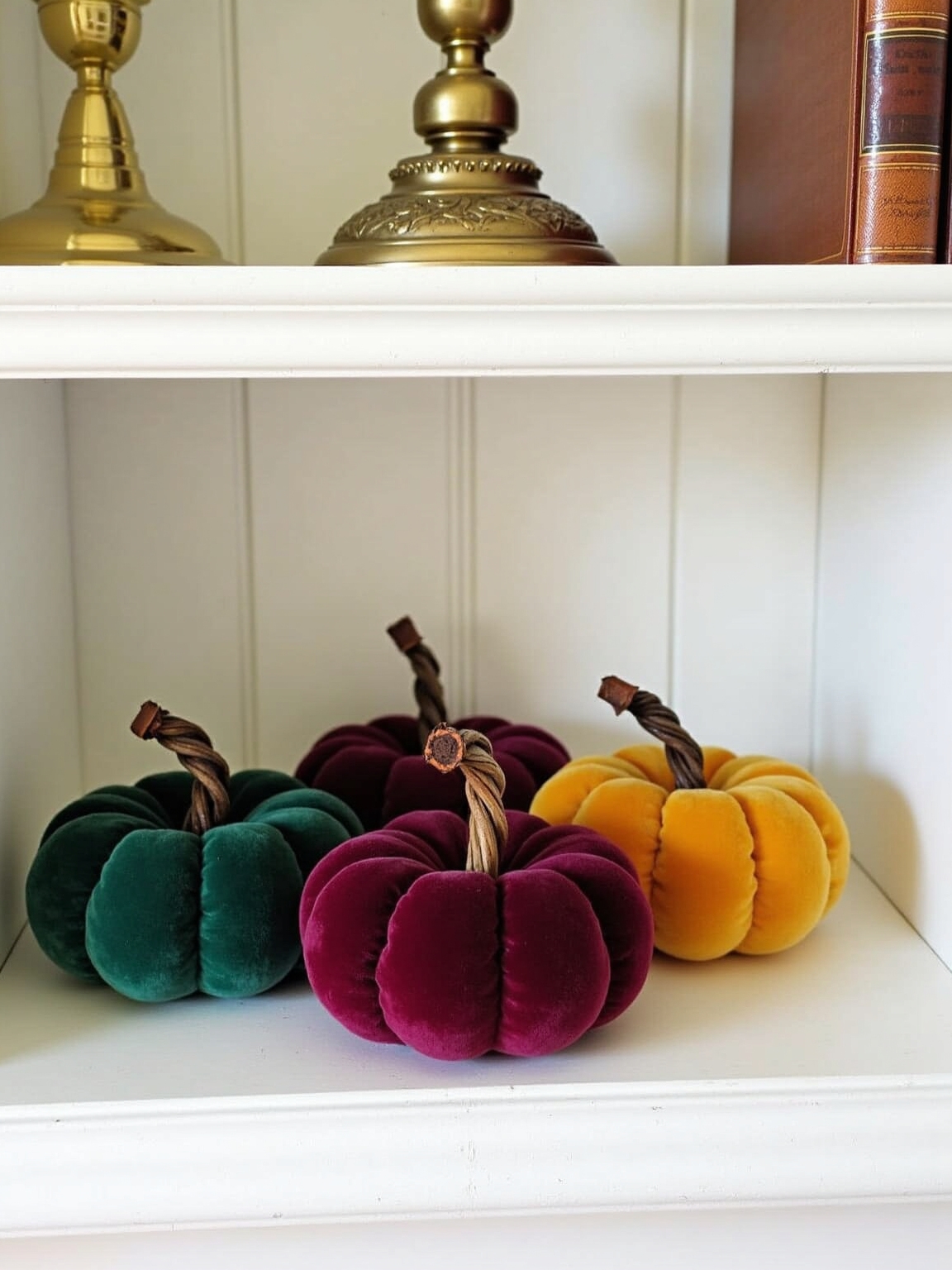
Built-in shelves are one of the strongest spots in any home for seasonal displays, and velvet pumpkins work particularly well there.
Cluster them at different shelf heights, mixing in a few books, a candle, and a small tray to break up the line and give the arrangement visual movement.
Console tables in entryways are just as strong, especially when a tray corrals the grouping so it reads as deliberate. Choose pumpkin colors that either contrast sharply or blend closely with your wall color, since the middle ground tends to disappear.
Exploring Customization Options
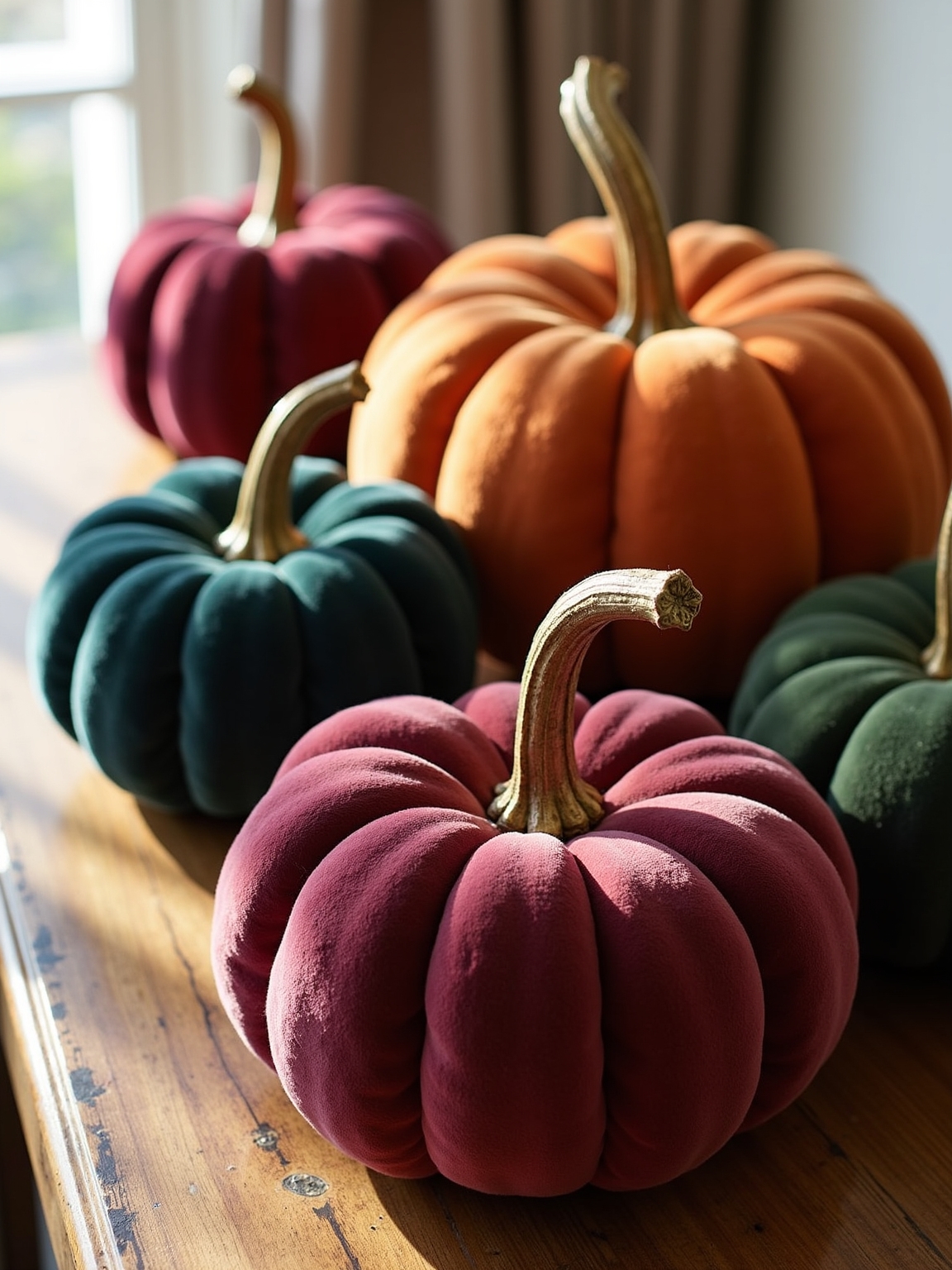
Velvet pumpkins are one of the few seasonal decor items where material choice genuinely changes the final look. Silk velvet reads formal and rich, metallic linen catches light in a completely different way, and Italian lambskin has a softness that’s difficult to replicate with anything else.
Size and shape variation within a single arrangement, some squat and wide, others tall and narrow, adds personality that a matched set simply cannot. Choosing deliberately across fabric, color, and scale is the difference between a display that looks purchased and one that looks personal.