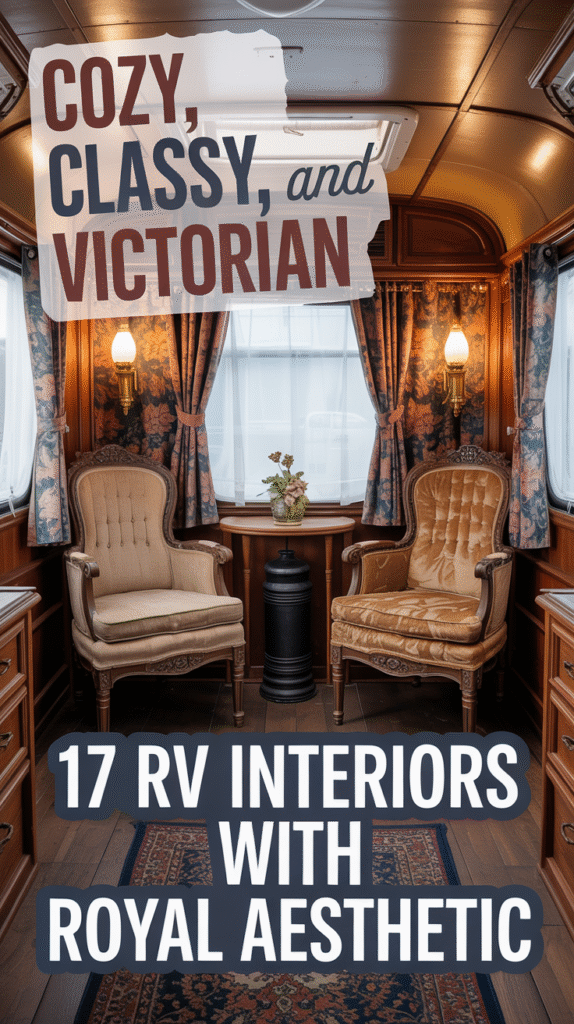
Something interesting has happened in the past three years. More people are searching for Victorian design ideas than ever before. What started as a trend in stationary homes has rolled right into the world of campers and RVs, where people are now recreating entire 19th-century drawing rooms inside spaces barely bigger than a walk-in closet.
What started as a handful of quirky builds has grown into a genuine design category, and the results keep getting more impressive. The question is no longer whether it works in a small space. It’s how you balance authentic period details with the realities of life on the road. The 17 interiors ahead answer that question beautifully.
Contents
- 1 Mahogany Wardrobes and Linen Presses Set the Victorian Tone
- 2 Herringbone Flooring With Reclaimed Wood Creates Authentic Character
- 3 Tapestry Wallpaper Brings Period-Appropriate Elegance to Compact Spaces
- 4 Wood-Burning Stoves Housed in Ornate Mantlepieces Serve as Focal Points
- 5 Vintage Writing Bureaux With Glass-Fronted Cabinets Blend Function and Style
- 6 Rich Burgundy Fabrics and Deep Color Palettes Evoke 19th-Century Luxury
- 7 Antique Carved Wood Furniture Maintains Victorian Grandeur on the Road
- 8 Vibrant Floral and Tapestry Designs Add Visual Depth to Walls
- 9 Brass and Antique-Finish Lighting Fixtures Emphasize Period Charm
- 10 Textured Embroideries and Throws Enhance Cozy Victorian Atmosphere
- 11 Symmetrical Layouts Reflect Classic Victorian Interior Design Principles
- 12 Lace and Crochet Textiles Create Romantic Vintage Touches
- 13 Oriental and Patterned Area Rugs Ground Spaces With Warmth
- 14 Vintage Mirrors and Antique Picture Frames Reinforce 19th-Century Ambiance
- 15 Macramé and Wicker Elements Introduce Tactile Victorian Elegance
- 16 Repurposed Historical Pieces Maintain Authenticity in Compact Quarters
- 17 Fold-Down Desks Preserve Historic Aesthetics While Offering Practical Workspaces
Mahogany Wardrobes and Linen Presses Set the Victorian Tone
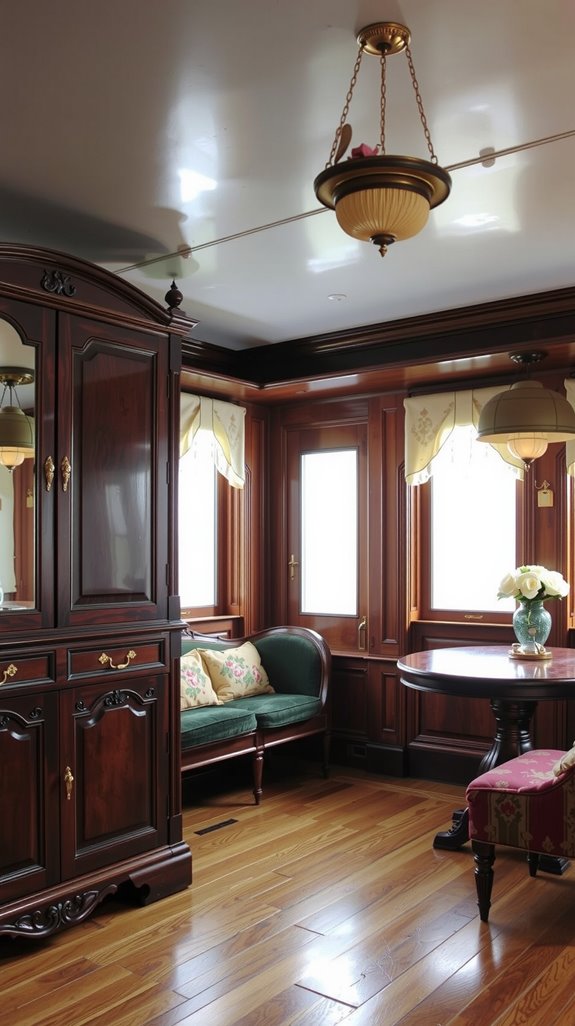
Walk into any well-executed Victorian camper and you’ll immediately notice the mahogany. These rich, reddish-brown wardrobes and linen presses do the heavy lifting both literally and aesthetically, providing storage while setting the entire tone of the interior.
The wood itself was prized in the Victorian era for good reason, with a tight grain that holds up beautifully to the vibrations and movement of travel. I’ve seen conversions with five separate wardrobes paired with a linen press, which might sound excessive until you realize they’re solving the eternal camper problem of where to put your stuff while looking absolutely stunning.
Herringbone Flooring With Reclaimed Wood Creates Authentic Character
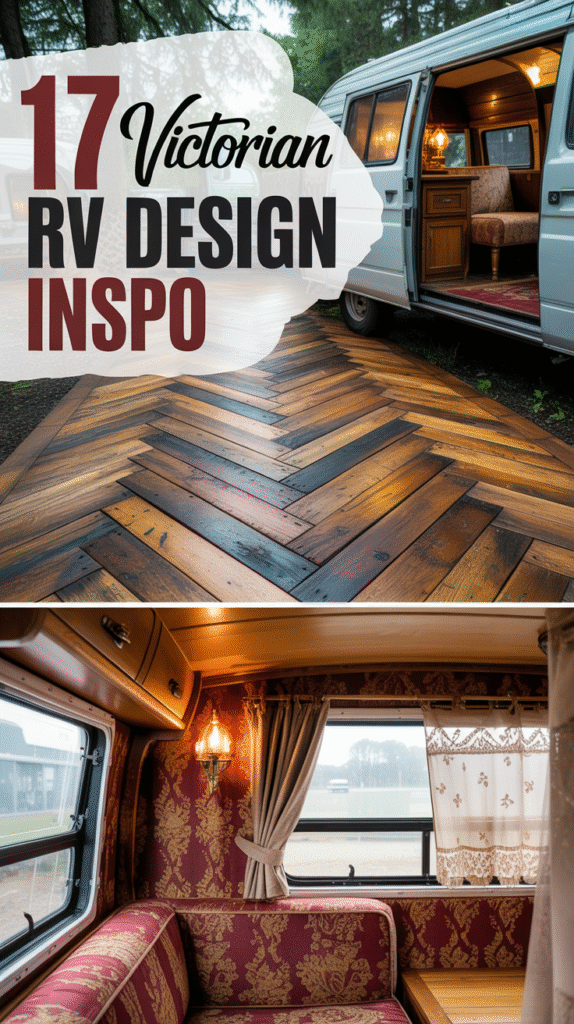
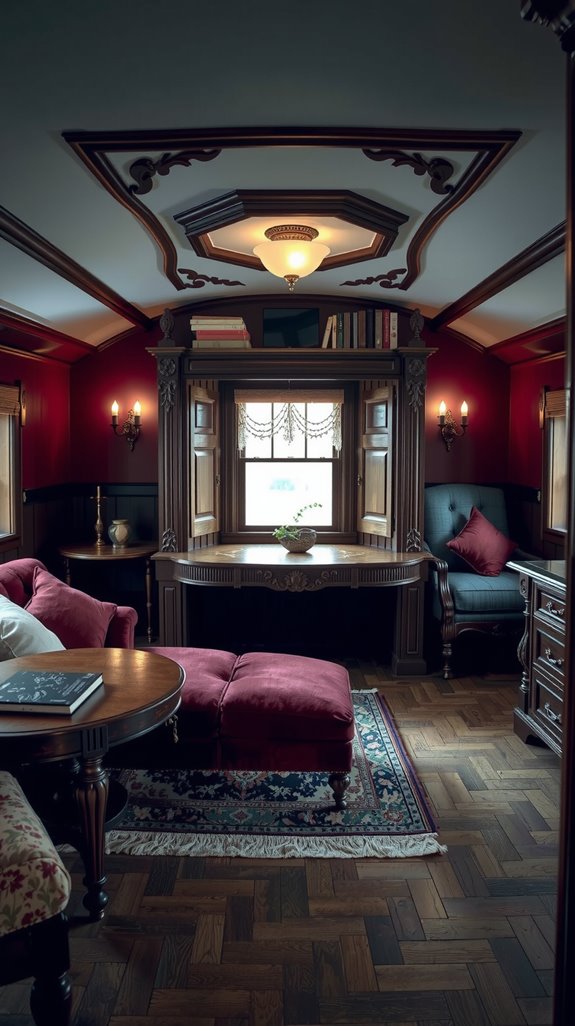
Reclaimed oak laid in a herringbone pattern brings something no new material can match. The zigzag layout itself dates back to the 1500s, making it genuinely period-appropriate rather than just Victorian-inspired.
What really sells the look are those imperfections: old nail holes, saw marks, and the worn patina that comes from decades in a barn or factory. You’re literally walking on history, and that authenticity makes the entire space feel grounded in a way that fresh lumber never could.
Tapestry Wallpaper Brings Period-Appropriate Elegance to Compact Spaces
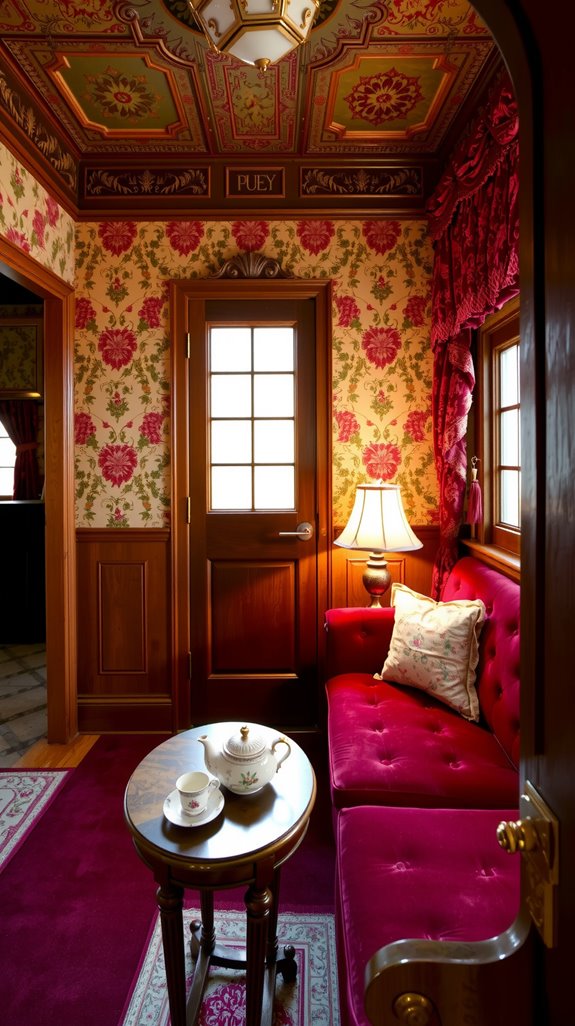
The right tapestry wallpaper can transform your camper walls from boring panels into something that looks like it belongs in a London townhouse. Modern reproductions are scaled down for smaller spaces, which matters more than you’d think when you’re working with walls that might only be four feet wide.
Deep burgundy, forest green, and gold patterns work best, especially those with damask or exotic motifs that Victorians loved to collect from their travels. The newer digital prints give you that authentic look while actually standing up to the humidity and temperature swings that come with camper life.
Wood-Burning Stoves Housed in Ornate Mantlepieces Serve as Focal Points
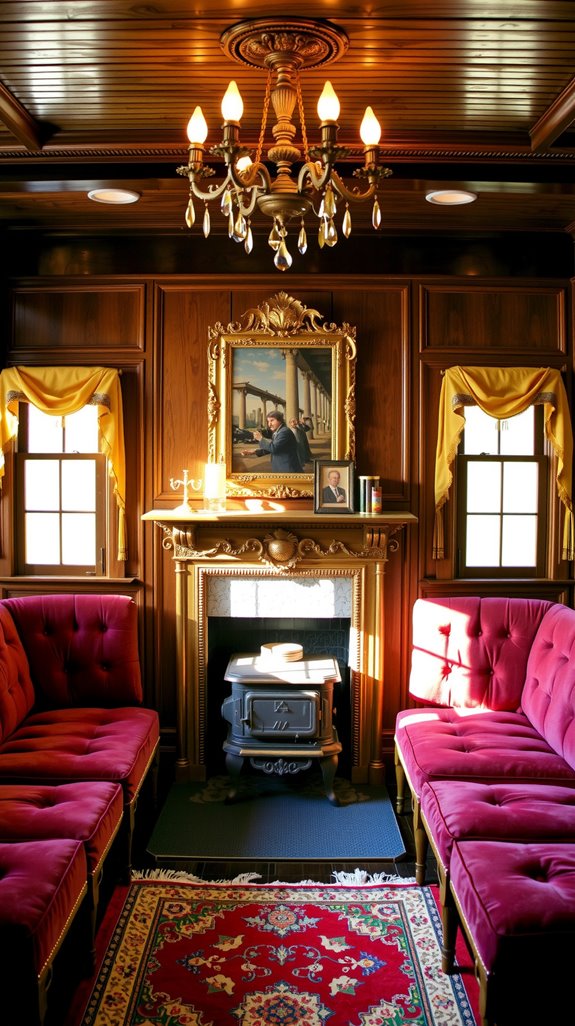
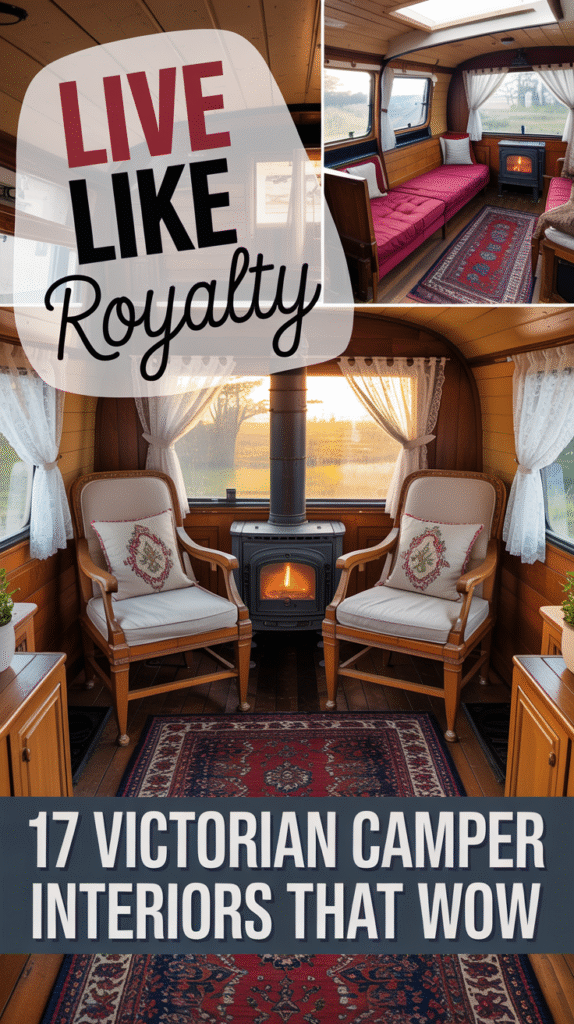
Every Victorian drawing room had a fireplace, and your camper needs one too. Compact cast iron stoves like the Hobbit model fit surprisingly well in tight quarters, especially when you surround them with a salvaged mahogany mantelpiece or an old dresser top from a demolished pub.
The combination gives you both a visual anchor and actual heat, which matters during those shoulder-season camping trips. Sourcing these pieces from architectural salvage yards keeps costs reasonable while delivering genuine 19th-century character that you simply can’t buy new.
Vintage Writing Bureaux With Glass-Fronted Cabinets Blend Function and Style
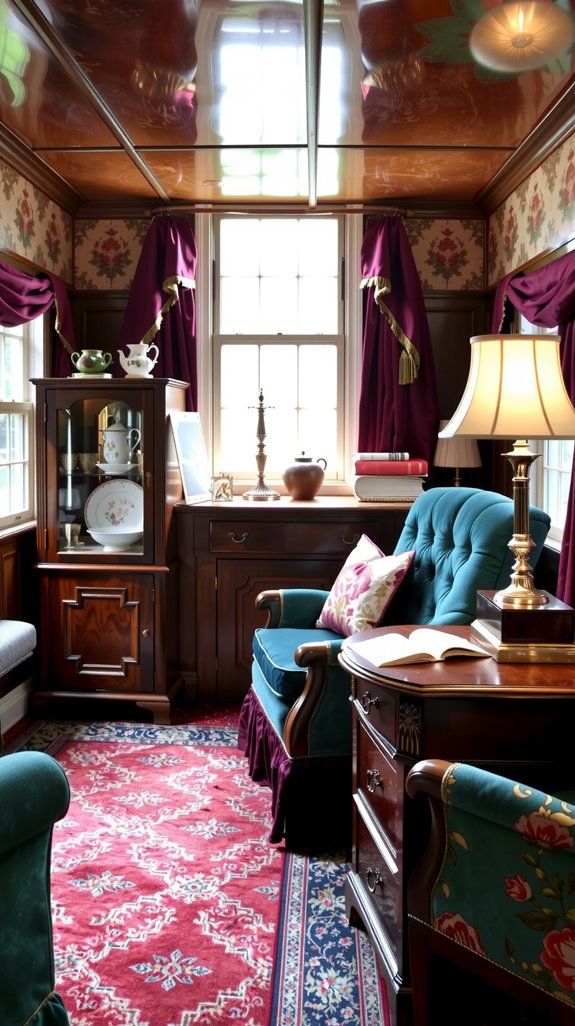
A Victorian drawing room wasn’t complete without a proper writing desk, and neither is your camper. These compact bureaux feature drop-front surfaces that reveal cubbies and drawers, with glass-fronted cabinets above showing off your collection of leather-bound books or vintage curiosities.
The craftsmanship tells the whole story: dovetail joints, working brass locks, and wood that’s developed a proper patina over a century or more. You get a functional workspace that disappears when you’re done, leaving behind a piece of furniture beautiful enough to anchor an entire wall.
Rich Burgundy Fabrics and Deep Color Palettes Evoke 19th-Century Luxury
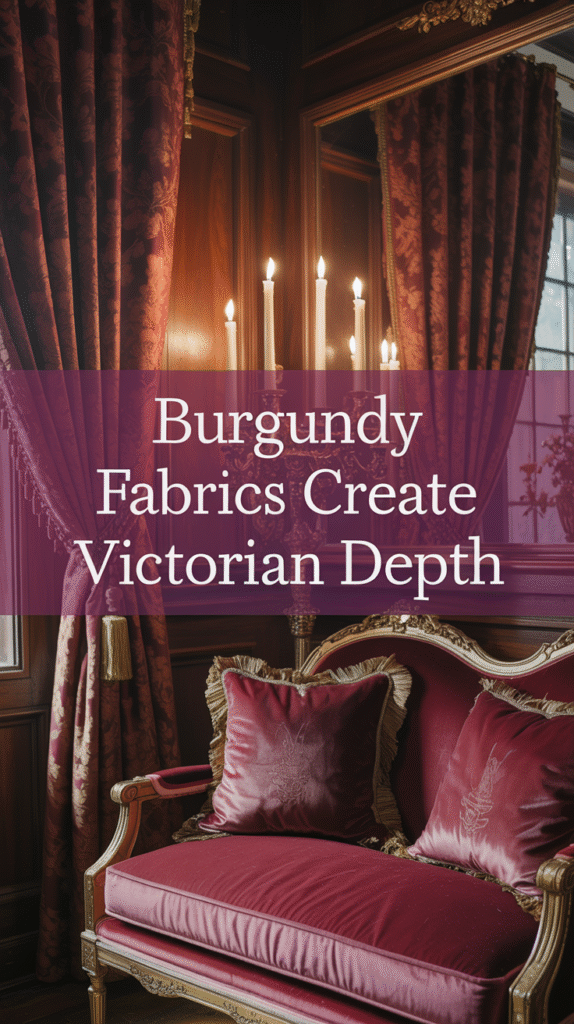
Victorians understood something about color that we’ve mostly forgotten. They layered deep burgundy velvet with forest green brocade and punctuated everything with touches of gold, creating spaces that felt both intimate and luxurious.
These aren’t background colors that fade away, they demand attention and set an emotional tone the moment you step inside. Pair those rich fabrics with dark mahogany trim and jewel-toned tapestry wallpaper, and you’ve got the sumptuous depth that made 19th-century interiors so memorable.
Antique Carved Wood Furniture Maintains Victorian Grandeur on the Road
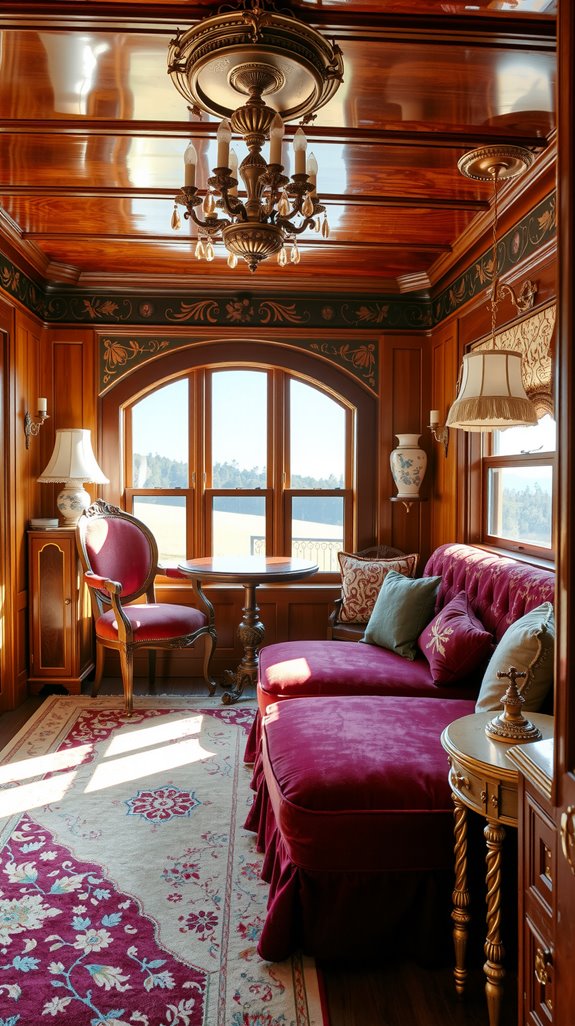
The antique furniture you choose needs to earn its place through genuine craftsmanship. Salvaged mantels with hand-carved grape clusters, fretwork columns from old estates, and chairs with dovetailed frames all carry visible evidence of someone’s skilled handwork.
These pieces require hunting through flea markets and antique stores, plus careful restoration to repair what time and neglect have damaged. Once you’ve bolted them down securely for travel, they bring an authenticity that reproduction furniture just can’t touch.
Vibrant Floral and Tapestry Designs Add Visual Depth to Walls
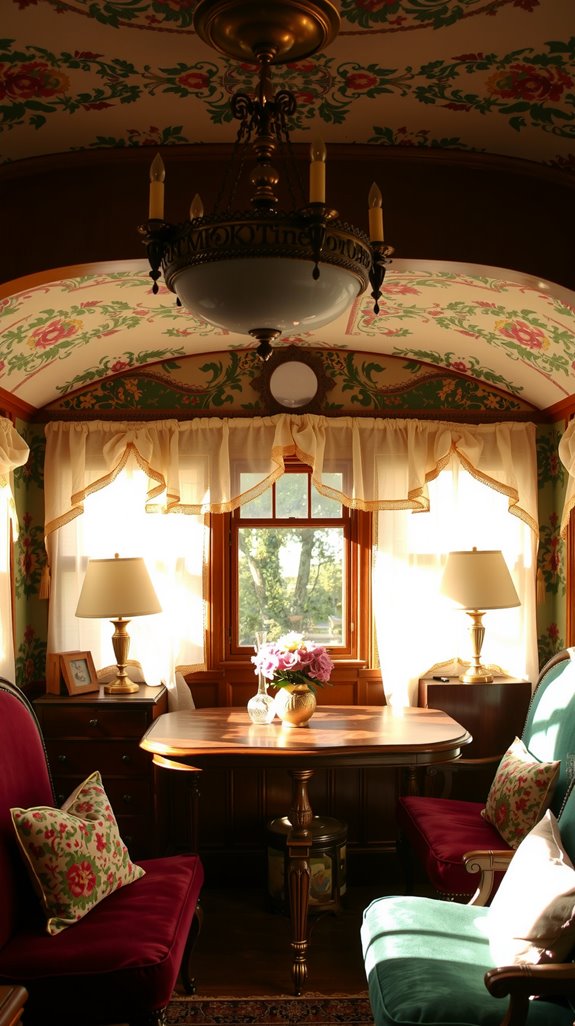
Flat camper walls cry out for visual depth, and fabric tapestries deliver it better than paint ever could. William Morris patterns work particularly well, with their intertwined roses, lilies, and foliage creating movement across the surface.
Beyond looking gorgeous, these hangings serve practical purposes by adding insulation and dampening road noise. Pastel backgrounds let the reds, greens, and golds really pop, giving you that authentic Victorian color story while making the space feel larger than it actually is.
Brass and Antique-Finish Lighting Fixtures Emphasize Period Charm
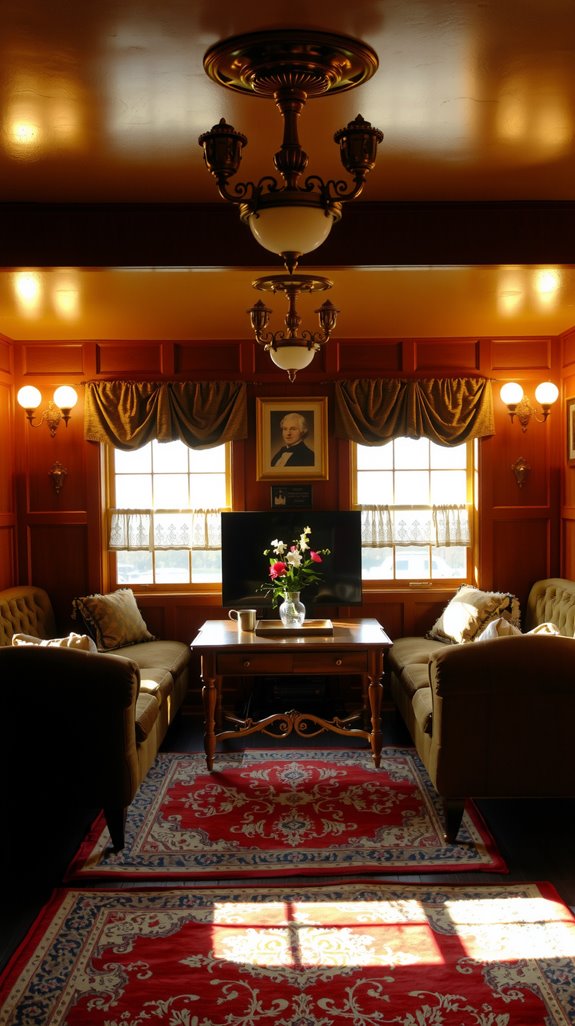
Your lighting choices can make or break the Victorian illusion once the sun goes down. Brass wall sconces with swing arms give you adjustable light without looking modern, especially when paired with frosted glass shades that have geometric patterns etched into them.
The warm glow from these fixtures plays beautifully off mahogany wood and floral fabrics, creating exactly the kind of intimate atmosphere Victorians cultivated in their parlors. Skip anything that looks too contemporary, even if it’s more practical, because the wrong light fixture will destroy your carefully built aesthetic faster than anything else.
Textured Embroideries and Throws Enhance Cozy Victorian Atmosphere
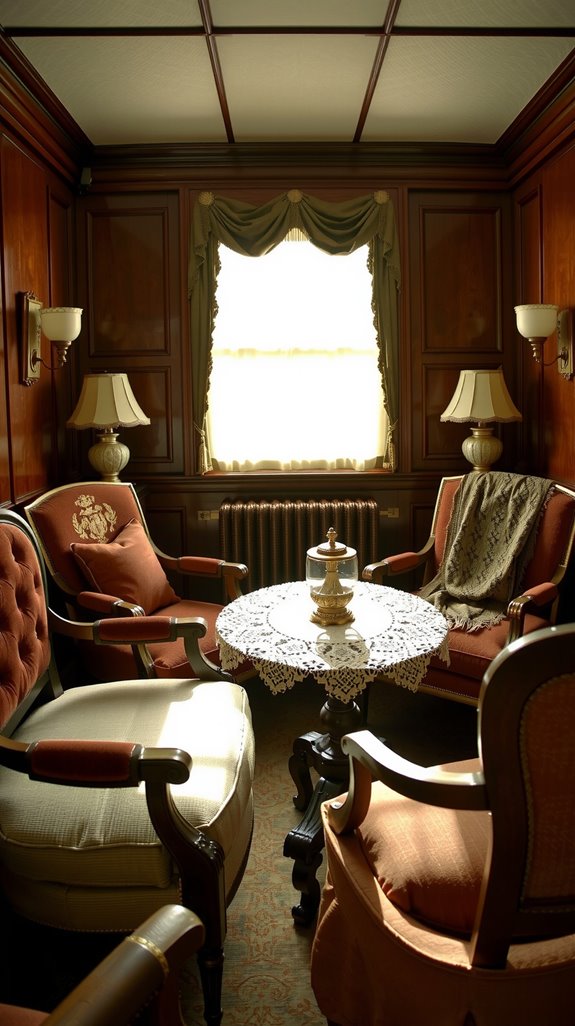
Victorians never met a surface they didn’t want to cover with fabric, and you shouldn’t either. Pile velvet cushions on damask upholstery, drape brocade throws over chair backs, and add wool blankets with long fringe for actual warmth on cold nights.
The floral embroidery should be intricate enough to reward close inspection, with burgundy, green, and gold threads creating patterns complex enough to get lost in. This layering does double duty by adding visual richness while making hard camper surfaces genuinely comfortable to live with.
Symmetrical Layouts Reflect Classic Victorian Interior Design Principles
The Victorians believed symmetry reflected moral order, and they arranged their rooms accordingly. Place matching chairs on either side of your stove, position identical lamps at both ends of your settee, and display paired accessories on your shelves.
This balanced approach transforms what could feel like a cluttered camper interior into something that reads as intentional and refined. The psychological effect is real, creating a sense of calm and respectability that makes the space feel more like a proper home.
Lace and Crochet Textiles Create Romantic Vintage Touches
Crochet lace curtains diffuse harsh sunlight while maintaining your privacy, creating that filtered drawing room glow Victorians prized so highly. The handmade quality matters here, with irregular stitches and slightly imperfect patterns that prove someone actually made them rather than a machine.
Add lace edging to your pillow covers and throws, choosing floral patterns that echo the motifs in your wallpaper and upholstery. These delicate textiles bring a feminine touch that balances all the heavy wood and dark colors filling the rest of your space.
Oriental and Patterned Area Rugs Ground Spaces With Warmth
Don’t neglect the floor when you’re pulling together your Victorian aesthetic. Oriental-style area rugs with elaborate patterns in deep reds, blues, and golds tie together all the colors you’ve used elsewhere while defining specific zones within your camper.
These aren’t just functional floor coverings, they’re decorative statements that would have cost a Victorian family serious money. Choose patterns complex enough to hide the inevitable dirt from camping while adding one more layer of visual richness to your rolling drawing room.
Vintage Mirrors and Antique Picture Frames Reinforce 19th-Century Ambiance
Gilded mirrors with ornate frames do more than just look pretty on your walls. Position them across from windows and they’ll bounce natural light deeper into your camper, making the whole space feel larger and brighter.
The baroque carvings and floral motifs on antique frames complement your other Victorian details while creating focal points that draw the eye upward. These mirrors were status symbols in the 19th century, expensive enough that owning several proved you had money, and they still carry that weight today.
Macramé and Wicker Elements Introduce Tactile Victorian Elegance
Macramé wall hangings and wicker furniture bring handcrafted texture without eating up your limited square footage. The knotted cotton in macramé curtain tie-backs echoes Victorian lace-making traditions, while lightweight wicker chairs and side tables provide authentic period style that won’t weigh down your rig.
Natural materials like rattan and jute add warmth that plastic and metal can’t match, creating those layered surfaces Victorians loved. These elements prove you can have elaborate decoration in a small space if you choose pieces that work three-dimensionally rather than just taking up floor area.
Repurposed Historical Pieces Maintain Authenticity in Compact Quarters
There’s no substitute for genuine Victorian furniture when you’re trying to create an authentic interior. Real settees, upholstered armchairs, and delicate side tables carry a patina and construction quality that modern copies never quite capture.
Antique wooden cabinets solve your storage needs while displaying the kind of joinery and hardware that mark genuine 19th-century craftsmanship. Hunt for period-appropriate textiles like original brocade upholstery, vintage mirrors with silvering that’s started to age, and actual Victorian lamps that still work.
Fold-Down Desks Preserve Historic Aesthetics While Offering Practical Workspaces
You need workspace in your camper, but you can’t afford to give up floor space to a permanent desk. Victorian-style fold-down desks solve this perfectly by mounting to walls between doors or above dressers, then disappearing completely when you’re done working.
Look for designs with decorative molding, dark wood finishes, and brass hardware that match your other period details. When the desk is folded up, your drawing room aesthetic stays intact, and when you need it, you’ve got a legitimate writing surface that would have made sense in any 19th-century home.