You’ll find something unexpected tucked into Fort Tryon Park this winter, and it has nothing to do with the usual Manhattan experience. The Cloisters sits on a hilltop like it’s been there since the 12th century, even though it only arrived in the 1930s.
When December rolls around, and the first snow dusts those Gothic arches, the museum stops being just another place to look at old things.
Walking through those stone corridors feels less like visiting a museum and more like you’ve somehow slipped sideways into a medieval monastery during the holidays. And these 19 moments capture exactly why that feeling is worth seeking out.
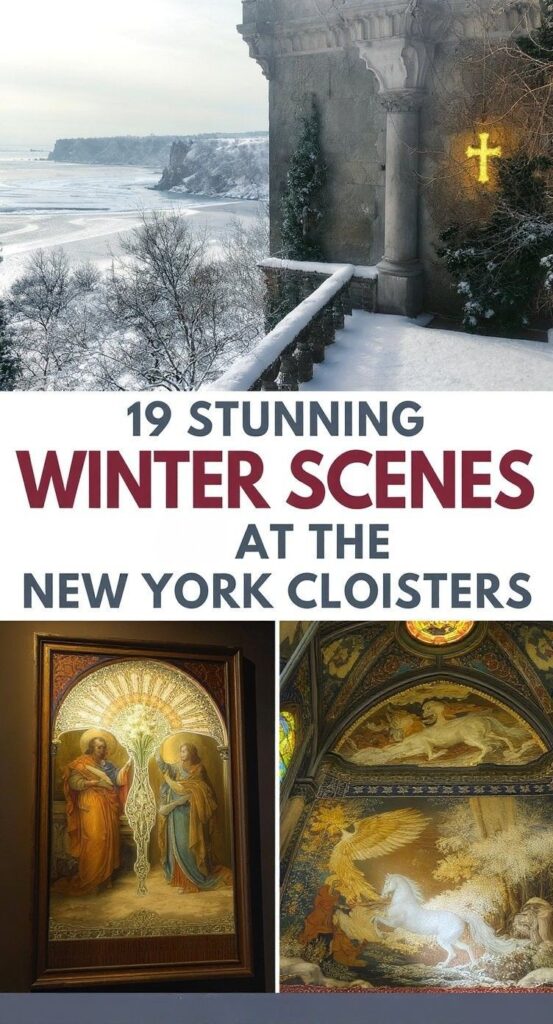
Contents
- 1 Holly Boughs Adorning the Ancient Stone Archways
- 2 Fresh Ivy Cascading Through Medieval Corridors
- 3 Polished Lady Apples Glistening in Treasury Displays
- 4 Pine Cones and Rose Hips Creating Rustic Winter Scenes
- 5 Daily Holiday Tours Revealing Medieval Celebration Secrets
- 6 Saturnalia Traditions Echoing Through Gothic Halls
- 7 Christmastide Customs in the Fuentidueña Chapel
- 8 Medieval Hanukkah Stories Illuminated by Candlelight
- 9 Five French Cloisters United Under Winter Skies
- 10 Saint-Michel-de-Cuxa Gardens Blanketed in Seasonal Beauty
- 11 Medieval Herbals Coming Alive in Winter Plantings
- 12 Hudson River Views Framing European Winter Landscapes
- 13 Treasury’s 12th-Century Ivory Cross Glowing in Winter Light
- 14 Hours of Jeanne D’evreux Revealing Seasonal Devotions
- 15 Merode Triptych Capturing the Spirit of European Winters
- 16 Late Gothic Hall Transformed Into a Winter Cathedral
- 17 Hunt of the Unicorn Tapestries Telling Winter Tales
- 18 Centennial Symposium Celebrating Medieval Art Heritage
- 19 Multisensory Winter Journey Through Four Centuries of European Culture
Holly Boughs Adorning the Ancient Stone Archways
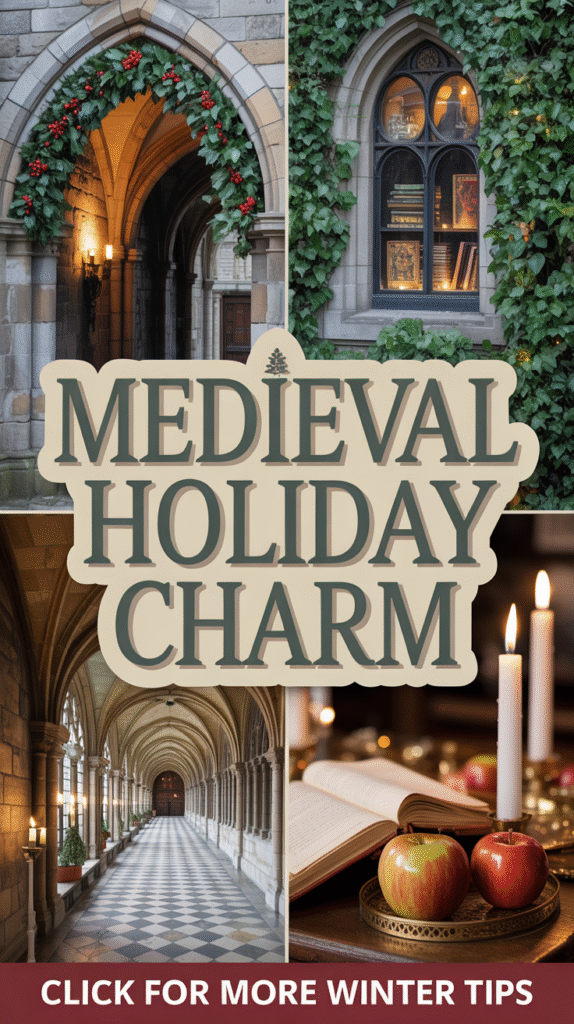
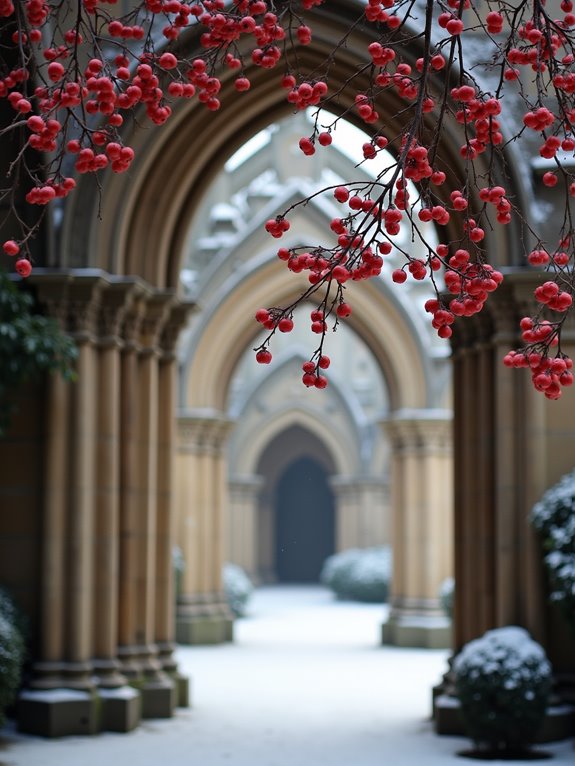
Walk through any of the seventeen archways during winter and you’ll see why the staff here takes their decorating seriously. Fresh holly branches heavy with red berries hang against carved stone from Saint-Michel-de-Cuxa, and the contrast makes both the greenery and the centuries-old marble look more vivid than they have any right to.
Nobody’s just tossing up some holiday decorations here. The arrangements include nuts, fruits, and winter greenery positioned exactly how medieval monks would have done it, because authenticity matters when you’re trying to recreate Christmas in the 1400s.
SEE THIS: 15 Snowy Mountain Hot Springs You Won’t Believe Exist.
Fresh Ivy Cascading Through Medieval Corridors

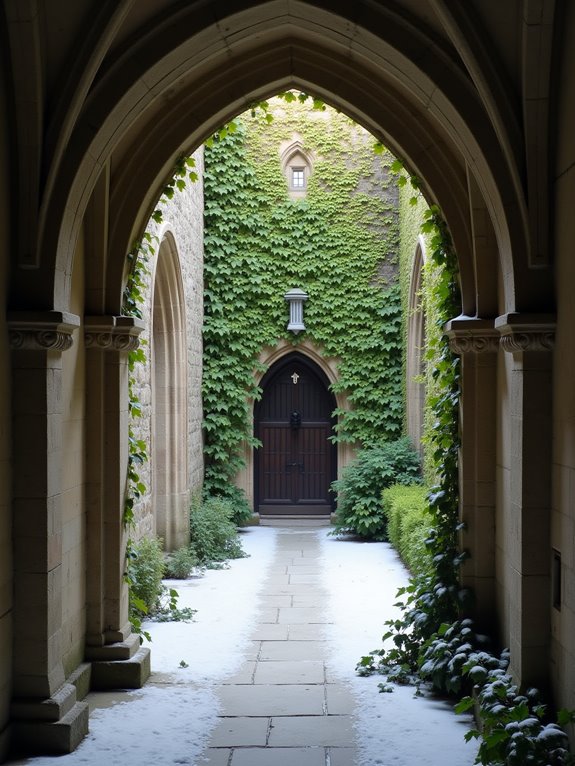
English ivy climbs the travertine walls year-round, but winter brings out something different in these green corridors. The glossy leaves catch what little light makes it through the windows and throw it back against the Connecticut granite and carved capitals.
This isn’t landscaping for decoration’s sake. Monks actually lived with ivy growing through their cloisters, softening all that hard stone and making contemplative spaces feel a bit more alive.
SEE THIS: 21 Snowy Mountain Villages That Feel Straight Out of a Fairytale.
Polished Lady Apples Glistening in Treasury Displays

These small, polished apples show up in the Treasury displays every winter, sitting next to medieval manuscripts as they belong there. Their glossy red and yellow skins reflect the museum lighting in ways that make you understand why medieval people saw them as precious.
Rose hips, hazelnuts, and pinecones join them in arrangements that look lifted straight from a 15th-century monastery. The symbolism runs deep here, fertility and abundance and new life, all the things people desperately hoped for when winter felt endless.
SEE THIS: Escape the Chill: 17 Cozy Indoor Experiences for a New York Winter Day.
Pine Cones and Rose Hips Creating Rustic Winter Scenes
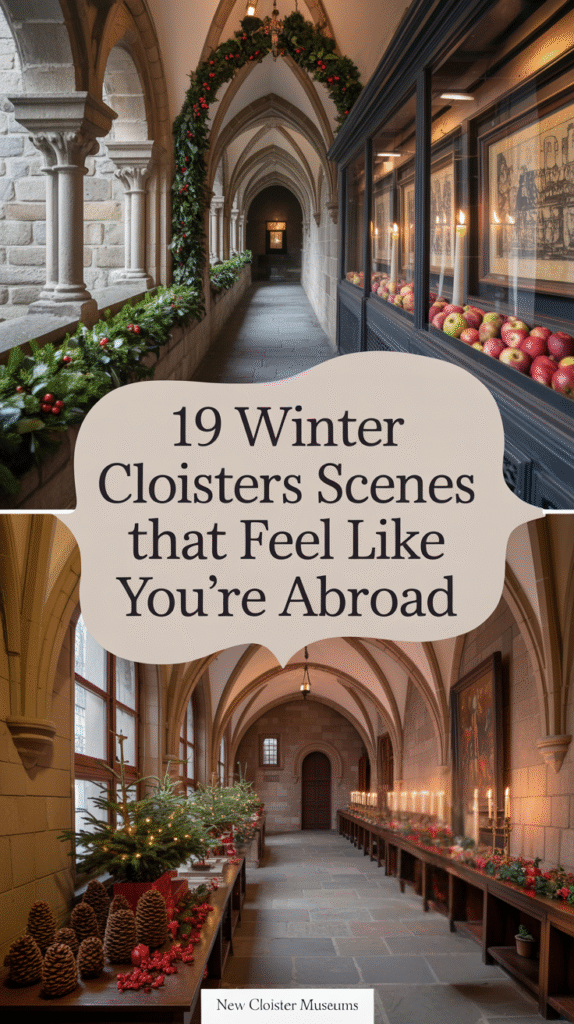

Pine cones and rose hips dominate the rustic displays throughout the museum, and there’s nothing random about the combinations. The staff sources these materials locally, just like medieval communities would have gathered what grew nearby.
Bright red rose hips pop against the muted browns of pine cones and evergreen branches, creating scenes that would feel familiar to anyone who celebrated winter in medieval Europe. These arrangements weren’t just pretty; they were practical symbols of warmth and continuity when the world outside turned brutal.
Daily Holiday Tours Revealing Medieval Celebration Secrets
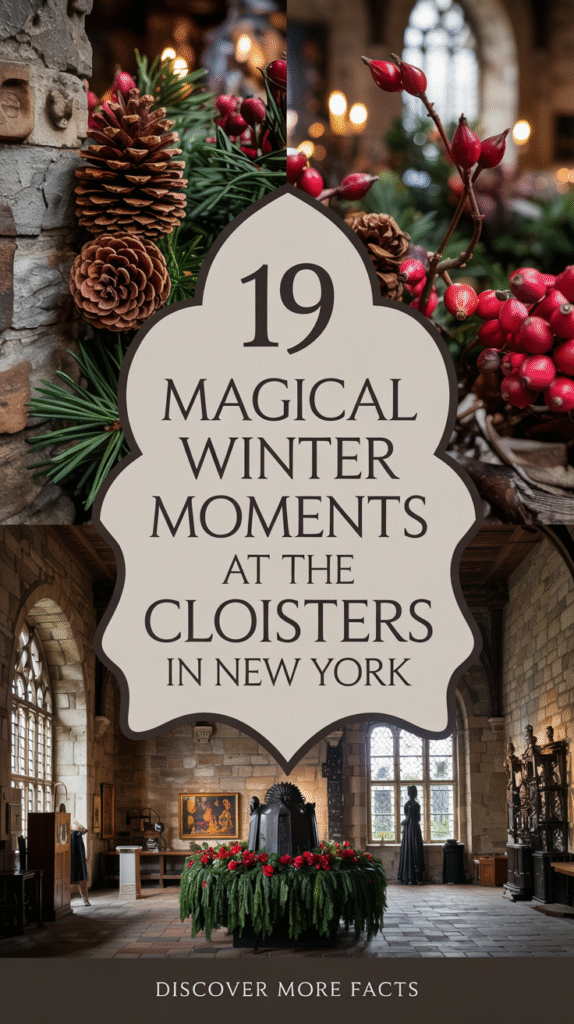

Sign up for one of the daily holiday tours and you’ll get more than the usual museum walkthrough. Guides explain St. Nicholas Day traditions that predate our modern Santa Claus by centuries, dive into wassailing customs that involved way more communal drinking than you’d expect, and break down the religious significance behind solstice rituals.
The tours connect medieval feast days to their actual cultural meanings instead of just pointing at objects behind glass. Something about learning these stories while standing in actual Gothic halls makes them stick in ways reading about them never could.
Saturnalia Traditions Echoing Through Gothic Halls

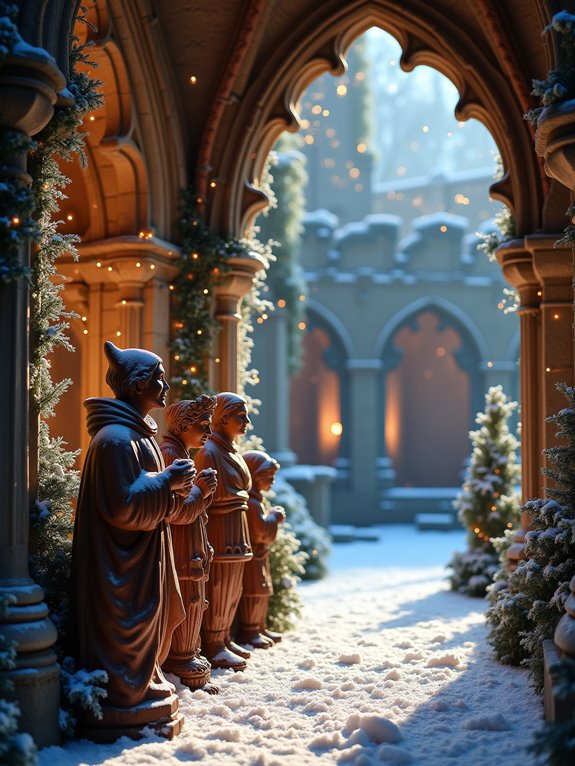
Saturnalia traditions echo through these halls even though they predate Christianity by centuries. Romans celebrated Saturn’s festival with gift-giving, role reversals, and massive communal feasts, and medieval monks basically kept the party going under new management.
Lords of Misrule actually presided over festive chaos within monastery walls during Christmas, which tells you everything you need to understand about how these supposedly austere religious communities actually celebrated. The Cloisters manages to show you how one culture’s winter celebration morphed into another’s without losing the essential spirit.
Christmastide Customs in the Fuentidueña Chapel
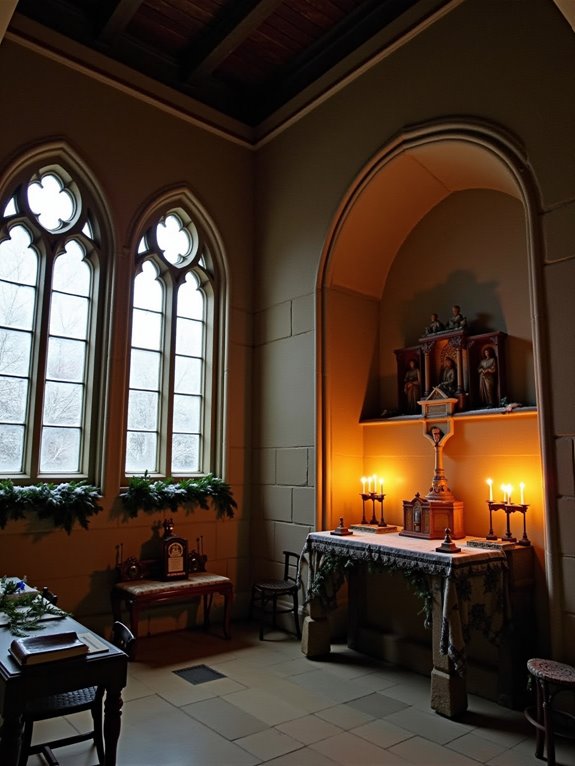
Standing in the Fuentidueña Chapel puts you in the same physical space where 12th-century Spanish communities gathered for Christmas masses. The carved stonework and Romanesque arches created acoustic spaces perfect for candlelit processions and seasonal liturgy.
You can almost hear the chants bouncing off these walls. The chapel doesn’t try to recreate specific decorations from centuries ago, it just lets the architecture speak for itself about how people marked Christ’s birth when stone and candlelight were all you had.
Medieval Hanukkah Stories Illuminated by Candlelight

Medieval menorahs and illuminated Hebrew manuscripts get their moment in the winter displays, showing you a side of medieval religious life that often gets overlooked. Jewish scribes working in medieval Europe merged their traditional themes with the artistic styles around them, creating luminous depictions of the oil miracle and Temple rededication.
These manuscripts tell Hanukkah stories through visual storytelling that reinforced faith when reading might not have been an option for everyone. Candlelight makes the gold leaf and careful brushwork come alive in ways electric lighting never quite manages.
Five French Cloisters United Under Winter Skies

The whole museum is built around five separate monastic complexes shipped over from France and reassembled in northern Manhattan. Saint-Michel-de-Cuxa, Saint-Guilhem-le-Désert, Trie-sur-Baïse, Froville, and Bonnefont-en-Comminges all stand together now, their carved capitals and columns creating spaces that feel genuinely medieval.
Winter makes the connection even stronger somehow, when the quiet settles in and the crowds thin out. These weren’t just pretty buildings, they were places where people prayed and worked and lived for centuries before anyone thought to move them across an ocean.
Saint-Michel-de-Cuxa Gardens Blanketed in Seasonal Beauty

Winter strips the Saint-Michel-de-Cuxa gardens down to their bones, and that’s when the Romanesque architecture really takes over. Bronze and glass panels enclose the arcade passageways, turning them into a conservatory that protects visitors from the worst of the cold.
Dormant crabapple trees show off their skeletal structure without leaves getting in the way. The medieval pink and white marble columns stand out sharply against winter’s muted palette, proving that good design doesn’t need flowers to make an impact.
Medieval Herbals Coming Alive in Winter Plantings

Most gardens just give up when cold weather hits, but the Bonnefont Cloister Herb Garden keeps its medieval character alive through careful winter planning. Tender tropical herbs like turmeric and frankincense get sheltered in terracotta pots, following traditions from late medieval northern Europe where monks protected valuable plants.
Evergreen rosemary and myrtle keep their fragrance going all winter, connecting you directly to how monastic gardens actually functioned. These weren’t ornamental spaces; they were practical medicine cabinets and kitchen suppliers that had to produce year-round.
Hudson River Views Framing European Winter Landscapes

Look out from the elevated stone terraces and you’ll see something strange happen. The Hudson River and snow-dusted Palisades cliffs somehow start looking like they belong to a European monastery landscape.
The George Washington Bridge anchors winter panoramas in ways that should feel jarring but don’t, maybe because the viewing spaces were oriented so carefully. These vistas prove that context matters more than geography when it comes to creating a sense of place.
Treasury’s 12th-Century Ivory Cross Glowing in Winter Light
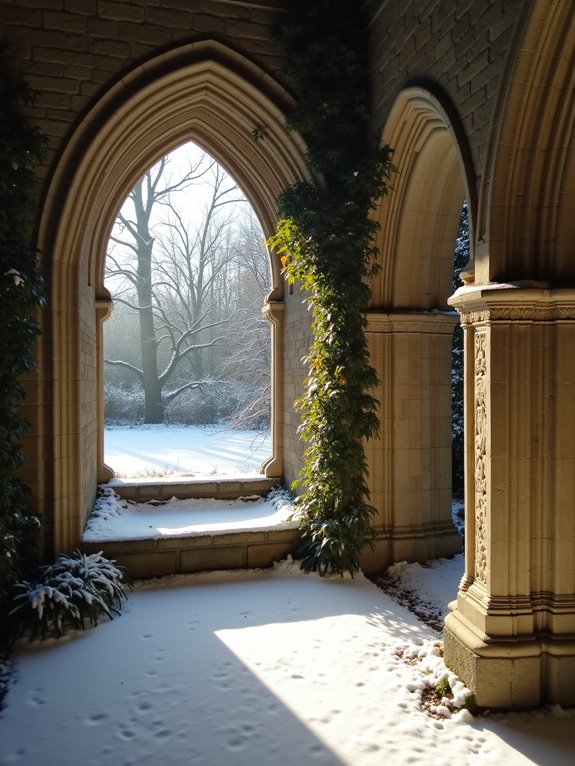
Natural winter light does something special to the Cloisters Cross in the Medieval Treasury. This walrus ivory carving from around 1150-1160 features ninety-two intricate figures depicting biblical scenes, and winter’s filtered illumination makes the whole thing seem to glow from within.
The ivory has aged over nearly nine centuries, developing a patina that catches light differently than it would have when first carved. Climate control keeps the piece safe, but the seasonal changes in natural light still transform how you see it.
Hours of Jeanne D’evreux Revealing Seasonal Devotions
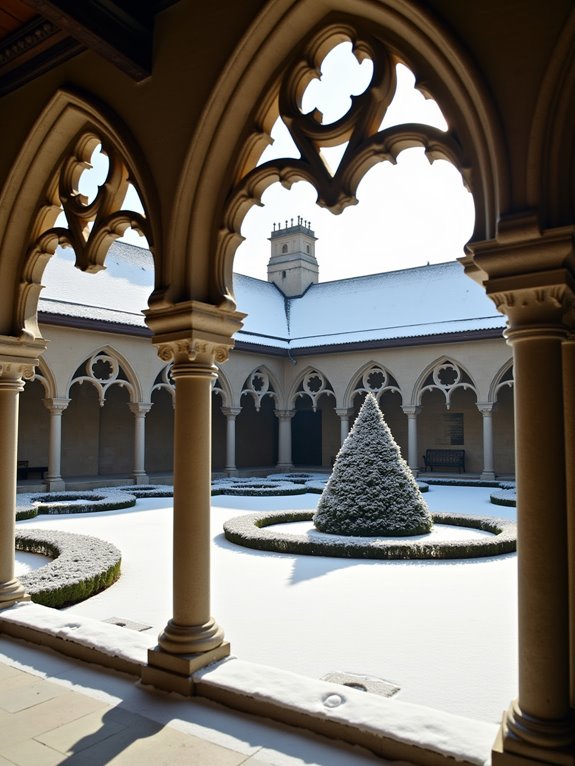
The Hours of Jeanne d’Evreux sits in the manuscript collection like a window into 14th-century noble devotional life. Delicate grisaille paintings show scenes from the Virgin Mary’s life, while calendar pages mark winter feasts and saints’ days that structured when and how Queen Jeanne prayed.
This wasn’t a showpiece, it was a working prayer book that someone used daily. The intimacy of that personal religious practice comes through in ways that larger, more public religious art sometimes misses.
Merode Triptych Capturing the Spirit of European Winters

Robert Campin revolutionized religious painting when he moved the Annunciation into what looks like a regular Flemish home. Divine light streams through winter windows in the Merode Triptych while symbolic lilies represent Mary’s purity and winter plants in the garden suggest spiritual renewal.
The whole scene captures northern European winter life in ways that grand cathedral settings never could. Sacred moments happened in ordinary spaces, and Campin understood that better than most of his contemporaries.
Late Gothic Hall Transformed Into a Winter Cathedral

Fourteenth-century stained glass from French monasteries filters muted winter light through the Late Gothic Hall’s authentic Gothic windows. Stone arches disappear into shadows overhead while heavy stonework and vaulted ceilings create the exact somber atmosphere you’d find in medieval French cathedrals.
Winter’s sacred stillness becomes something you can almost touch in here. The hall doesn’t just look like a cathedral, it feels like one, especially on those gray December afternoons when barely any light makes it through the windows.
Hunt of the Unicorn Tapestries Telling Winter Tales
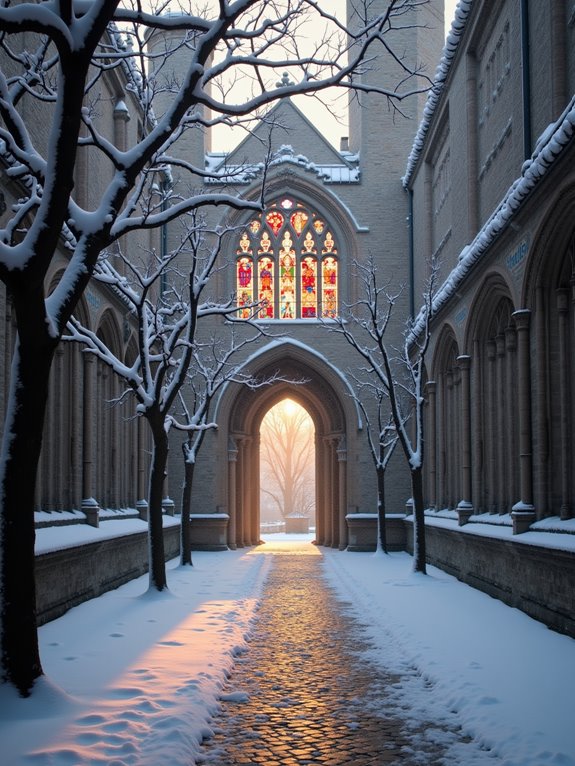
Seven massive tapestries turn a medieval hunting story into something much deeper and stranger. Noblemen pursue a unicorn through frost-kissed landscapes in these Brussels masterpieces from 1495-1505, and every wool and silk thread carries layers of meaning about love, sacrifice, and resurrection.
The winter settings aren’t accidental, they reinforce themes of death and rebirth that run through the whole series. Secular romance and sacred symbolism weave together so tightly you can’t really separate them, which is exactly how medieval people saw the world.
Centennial Symposium Celebrating Medieval Art Heritage
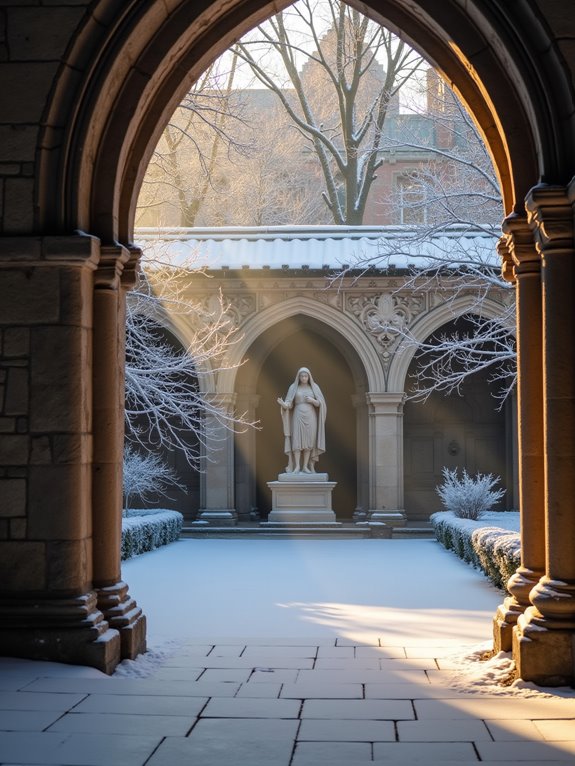
International medieval art scholars will convene at The Cloisters on June 12, 2025, marking a hundred years since George Grey Barnard’s collection found its permanent home. Expert discussions will examine collecting practices and ethical considerations that still matter today.
The symposium will also explore how this acquisition shaped American medieval scholarship and changed museum practices. These conversations matter because how we got these objects affects how we understand and display them.
Multisensory Winter Journey Through Four Centuries of European Culture

The museum orchestrates winter experiences that engage more than just your eyes. Fresh ivy, polished lady apples, and holly boughs bring authentic botanical symbolism into the spaces while medieval music fills the architectural voids.
Curator-led tours add plant-based scents and tactile experiences that connect you to how people actually lived through four centuries of European winters. Roman Saturnalia flows into medieval Christmastide and beyond, all experienced through carefully chosen sensory details that make the past feel immediate instead of distant.