Look, I get it. Traditional homes have that solid, “stuck in the dirt” sense of permanence, but there’s nothing quite like the freedom of a campervan.
But here’s the thing: choosing a life on the road doesn’t mean you have to sign up for a life of “roughing it.” As a designer, I’m a firm believer that you can turn a rolling metal box into a sanctuary that’s just as cozy and curated as any house in the suburbs.
The secret sauce is all about those smart, strategic design choices that marry heavy-duty functionality with a sense of genuine warmth.
Whether we’re talking about the tactile feel of your materials or the flow of your floor plan, I’ve pulled together 20 interior ideas that will help you craft a mobile home that feels like your own personal haven no matter where you decide to pull over and call home for the night.
Key Takeaways
- Add potted plants like succulents and snake plants to purify air and create a calming, home-like sanctuary in compact spaces.
- Layer machine-washable rugs and seasonal throw blankets on seating areas for warmth, texture, and easy interior refreshment without clutter.
- Install skylights and use earth tone palettes with light colors to flood interiors with natural light and make spaces feel larger.
- Incorporate convertible furniture like Murphy beds, fold-down tables, and lofted beds with storage to maximize limited square footage efficiently.
- Use LED lighting with dimmers and solar panels for energy-efficient, mood-enhancing illumination that reduces reliance on shore power.
Bring Nature Indoors With Lush Greenery and Potted Plants

Even though we’re out here traveling to see the world, sometimes the inside of a van can start to feel a little bit disconnected or even a bit tight. Bringing in some “living” decor is my favorite way to fix that.
Succulents like Aloe Vera or those nearly indestructible ZZ plants are perfect because they don’t demand much of your precious water supply.
If you want a bit of drama, English Ivy creates these gorgeous trailing accents that make the place feel so much more established. Beyond just looking pretty, these plants are tiny powerhouses.
Snake plants, for instance, are amazing at filtering out things like benzene and formaldehyde, which can sometimes linger in van building materials. It’s like having a natural air purifier that also happens to make your morning coffee view a whole lot better..
Warm up Your Space With Natural Wood Finishes
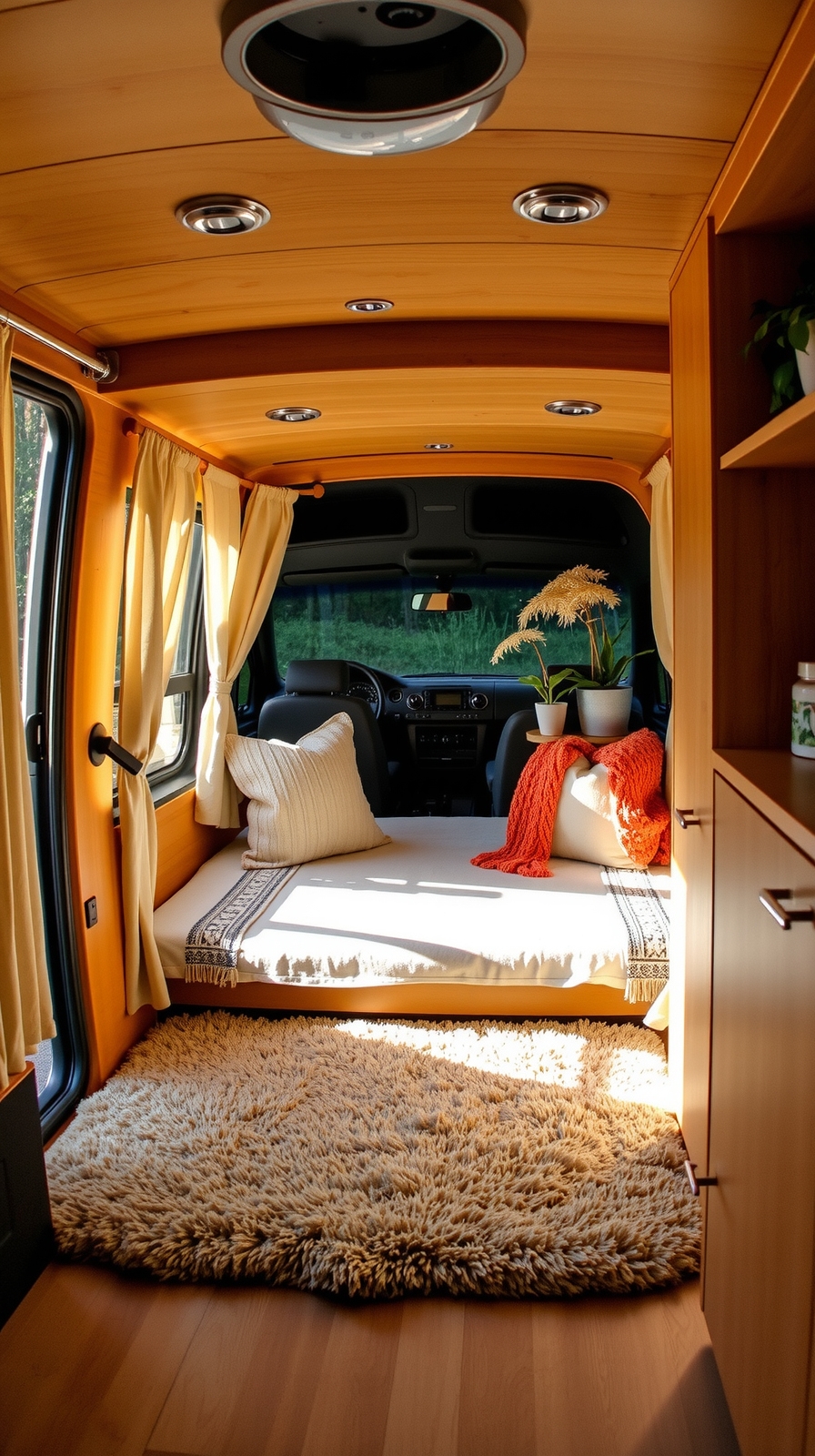
As a designer, I always tell people that the materials you pick are what really dictate the “soul” of the space. To avoid that cold, industrial vehicle feel, natural wood is your best friend.
It adds this instant layer of warmth that softens all those sharp metal angles. I’m a huge fan of bamboo for van builds; it’s incredibly durable, handles moisture like a pro, and it’s lightweight, which is a huge deal when you’re watching your GVWR (Gross Vehicle Weight Rating).
If you take the time to stain and varnish your surfaces, you aren’t just making the grain pop; you’re protecting your home from the inevitable humidity and road vibrations.
There’s just something about bamboo cabinetry that elevates the whole interior aesthetic, making it feel less like a DIY project and more like a custom tiny home.
Choose Organic Textiles for a Softer, Homier Feel
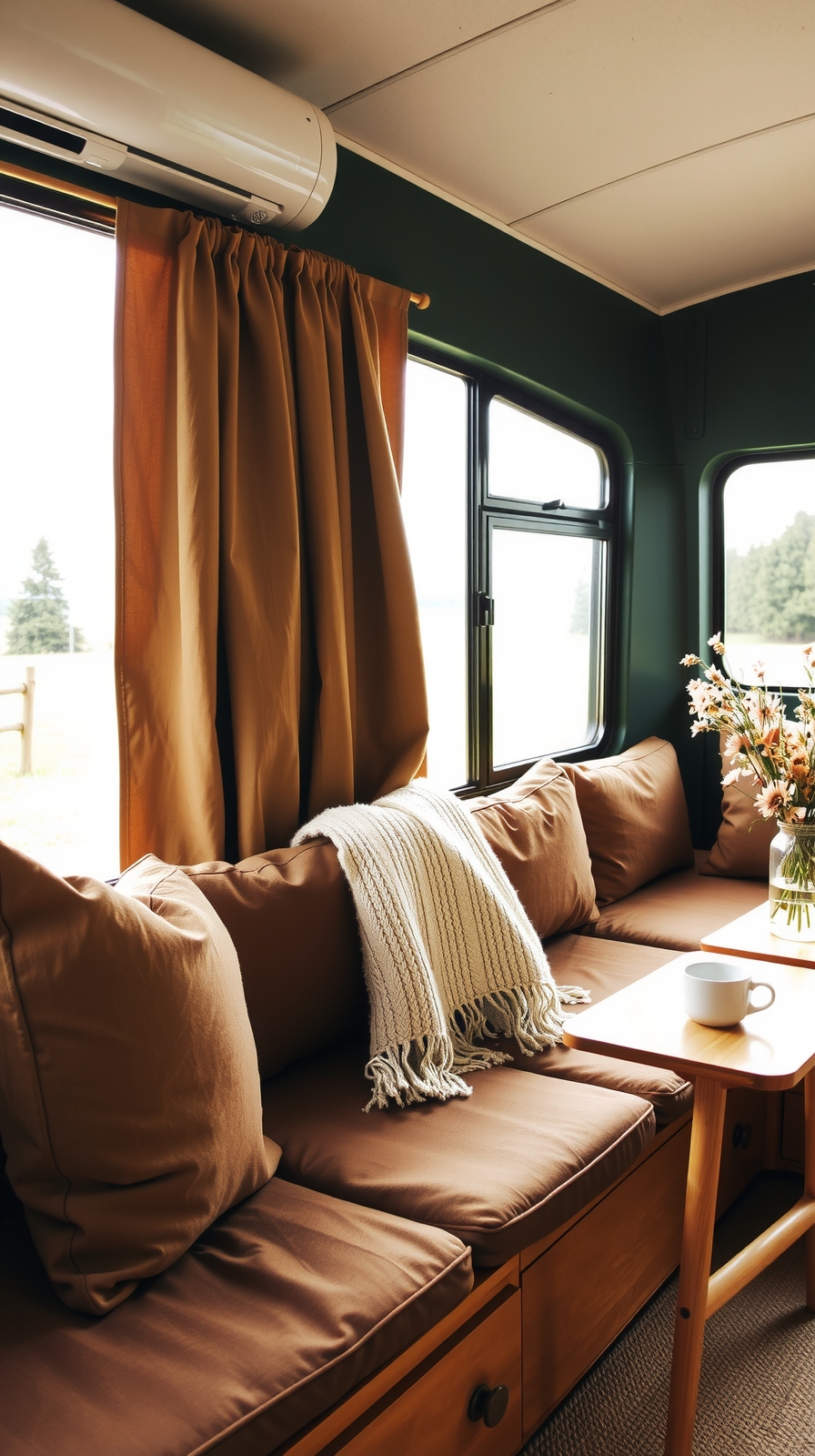
Once you’ve got your “hard” surfaces sorted, you need to think about what I call the “touch points.” This is where you turn a utility vehicle into a sanctuary.
I always reach for organic cotton for upholstery because it’s soft but can handle the wear and tear of life on the trail.
Bamboo textiles are another secret weapon; they’re naturally antibacterial, which is a total lifesaver when you’re in a confined space and can’t do laundry every day.
For bedding, linen is the gold standard because it breathes so well, keeping you cool in the desert and warm in the mountains.
Plus, using recycled polyester for high-traffic spots is a great way to stay sustainable while keeping things tough enough for a muddy dog or a pair of hiking boots.
Maximize Natural Light With Skylights and Larger Windows
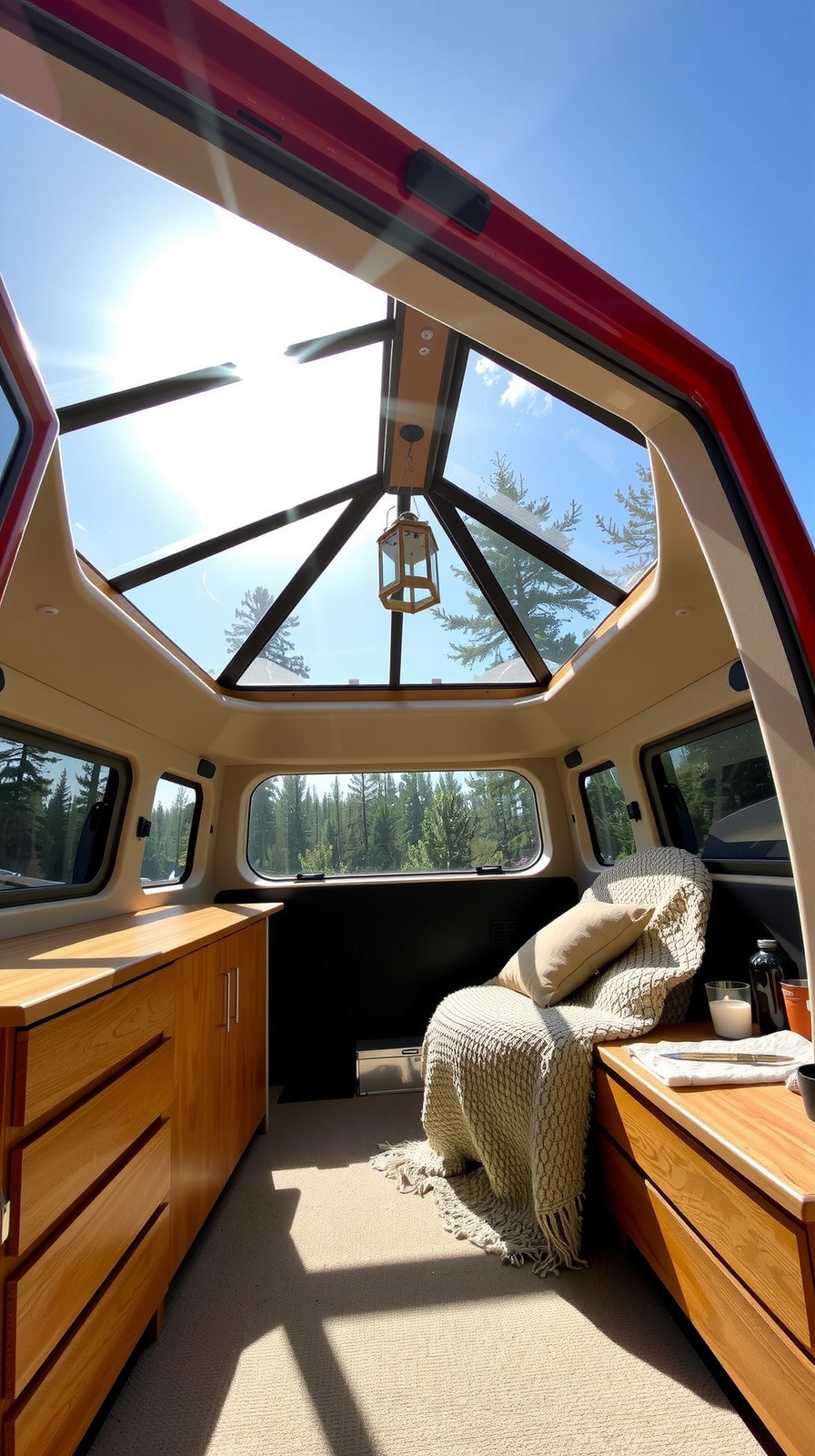
We’ve talked about textiles for comfort, but light is what really determines the “vibe” of your home. Without enough of it, a van can feel like a cramped box pretty quickly. Installing a skylight is a total game-changer.
It floods the interior with sunshine, which means you aren’t constantly flicking on your battery-draining LEDs. If you go with a venting model, you get the added bonus of airflow to keep things from getting stuffy.
One of my favorite design tricks is placing a skylight right over the bed; there is nothing quite like stargazing from your duvet while you’re tucked away in a dark-sky park.
Plus, modern low-profile designs mean you don’t have to worry about extra wind drag or noisy whistling when you’re cruising down the interstate.
Create Ambiance With Earth Tone Color Palettes
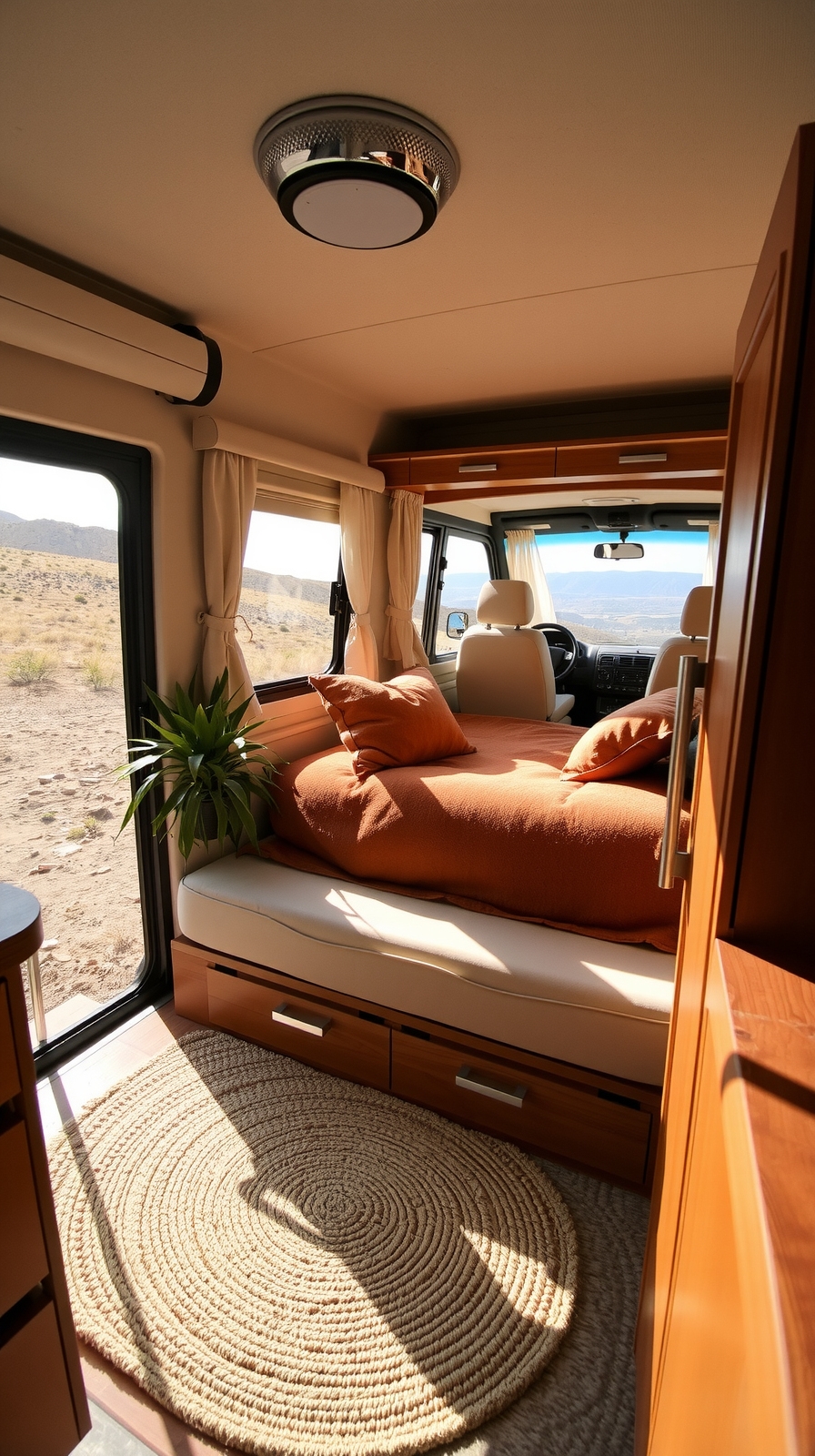
Lighting does a lot of the heavy lifting when it comes to making a space feel open, but your color choices are what really dictate the “mood” of your home on wheels.
For a campervan, I almost always point people toward an earth-toned palette. Think of those gorgeous desert terracottas, muted sage greens, and rich, chocolatey mochas.
These nature-inspired hues have this incredible way of making a small space feel grounded and tranquil rather than boxed-in.
To really bring the look to life, I love layering these colors with organic textures like linen, rattan, and wool to give the interior a tactile, high-end feel.
It’s all about depth; by mixing different shades and materials, you prevent the design from feeling one-note and instead create a sophisticated, calming sanctuary that feels intentional and curated.
Install Energy-Efficient LED Lighting Throughout
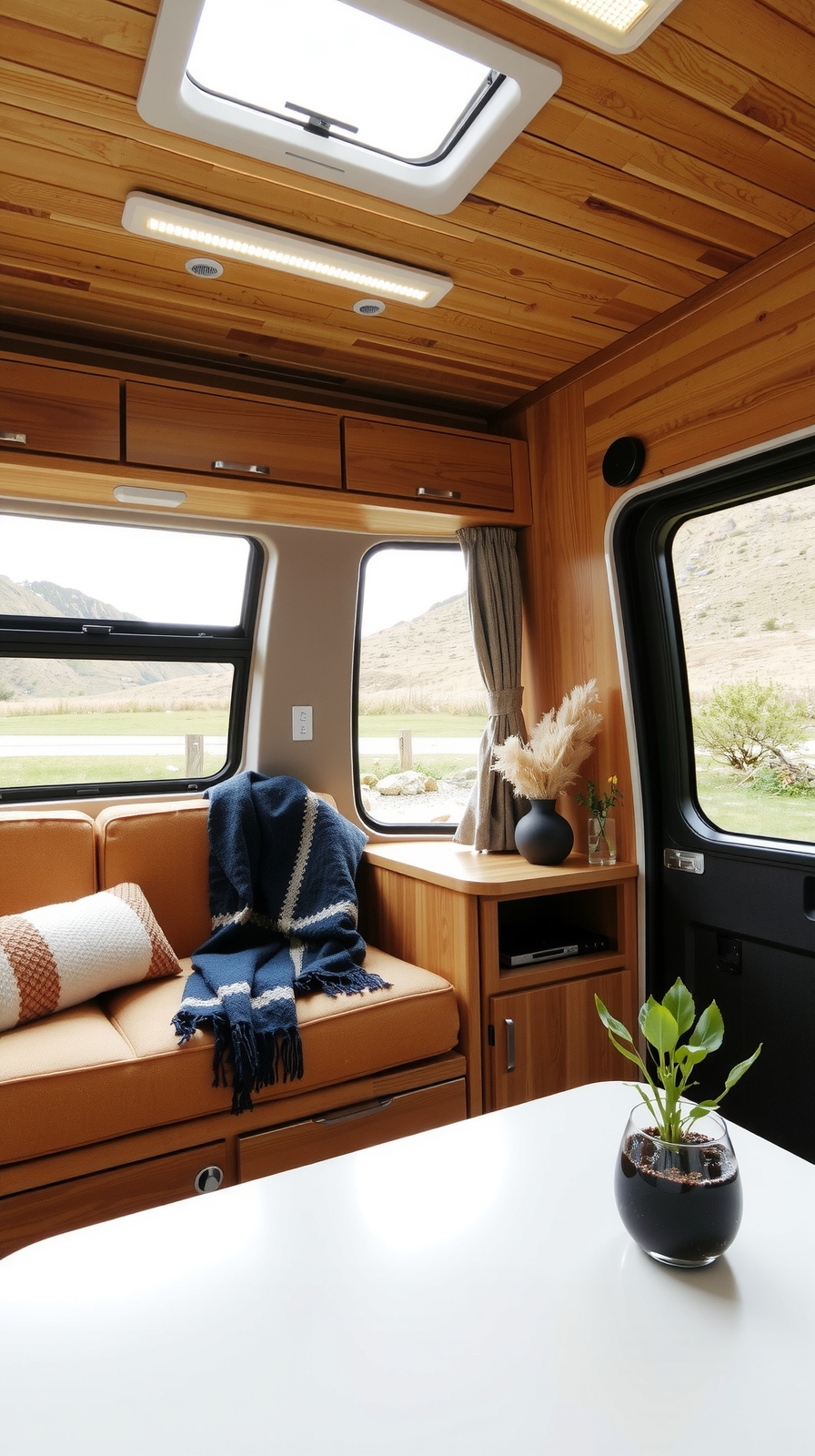
Once you’ve picked those perfect colors, you’ve got to light them right! But since we aren’t plugged into a city grid, we have to be smart. LEDs are the absolute MVP of van life because they sip power (literally 75% to 90% less than old-school bulbs).
I usually recommend a mix: LED strips for that soft ambient glow, puck lights tucked under cabinets so you can see what you’re chopping for dinner, and dedicated reading lamps. Just make sure you hook them up to your 12V system with the right fuses.
Add Dimmable Lights for Versatile Mood Setting
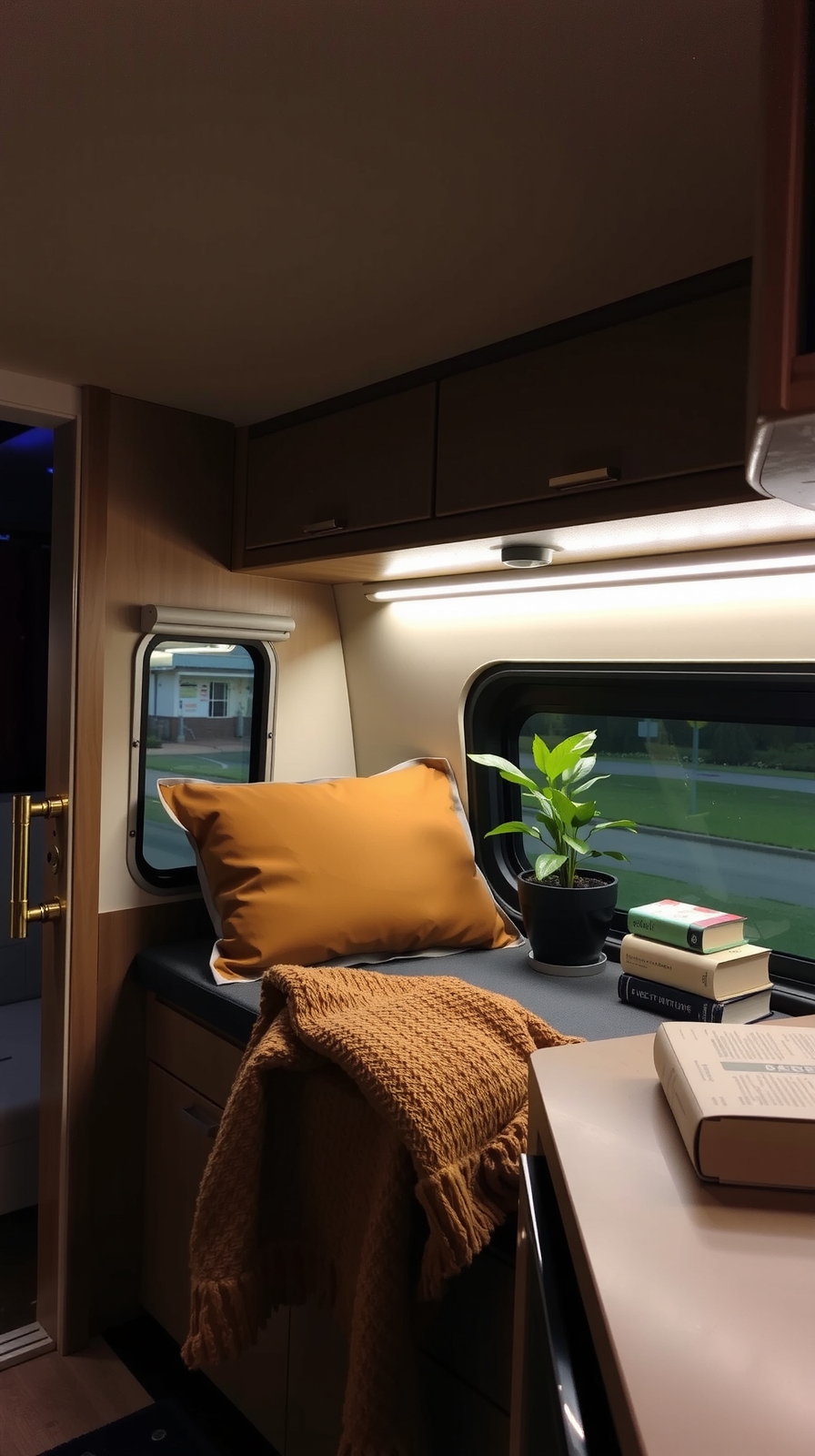
Here is a pro-tip from my design handbook: never, ever install lights without dimmers. Being able to adjust the brightness transforms your van from a bright “workspace” into a cozy evening retreat.
It’s not just for the “vibes,” though; it’s about practicality.
Dimming your lights saves precious battery juice. When you’re winding down after a long hike, you don’t want a surgical suite; you want a soft, homelike glow.
Using 12V LED strips with a compatible dimmer switch gives you total control over the atmosphere, and honestly, it makes a world of difference for your circadian rhythm.
Harness Solar Power for Sustainable Lighting Solutions
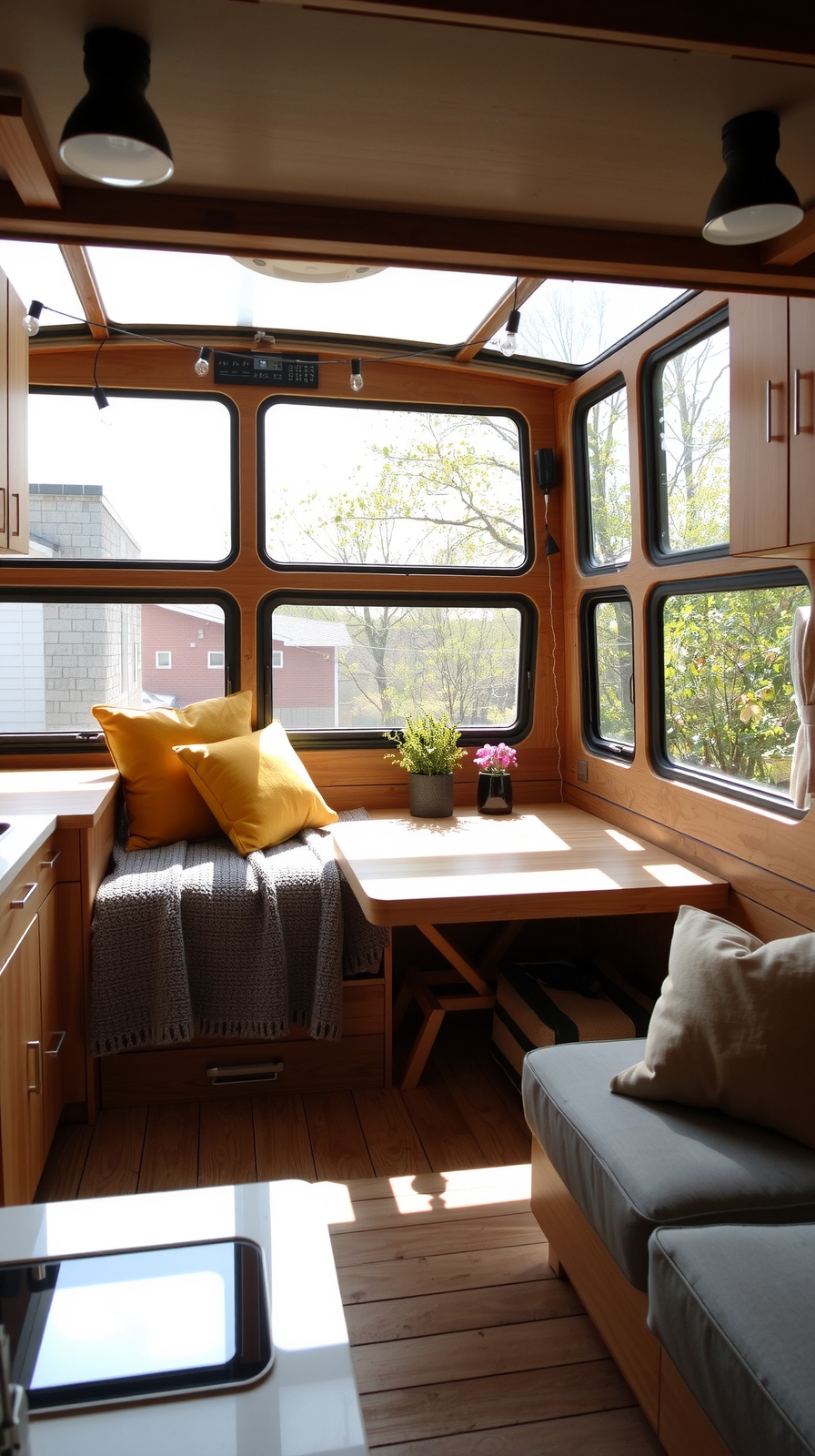
To really live that off-grid dream, you’ve got to look at the roof. Solar panels turn your lighting from a “power worry” into a self-sustaining system.
If you’re tight on roof real estate (and who isn’t?), monocrystalline panels are the way to go because they’re more efficient.
Pair those with some Lithium Iron Phosphate (LiFePO4) batteries and an MPPT controller, and you’re golden. It’s such a relief to know your lights are being powered by the sun you spent all day hiking under. Plus, it beats having to idle your engine just to read a book at night.
Mount Strategic Reading Lights for Nighttime Comfort
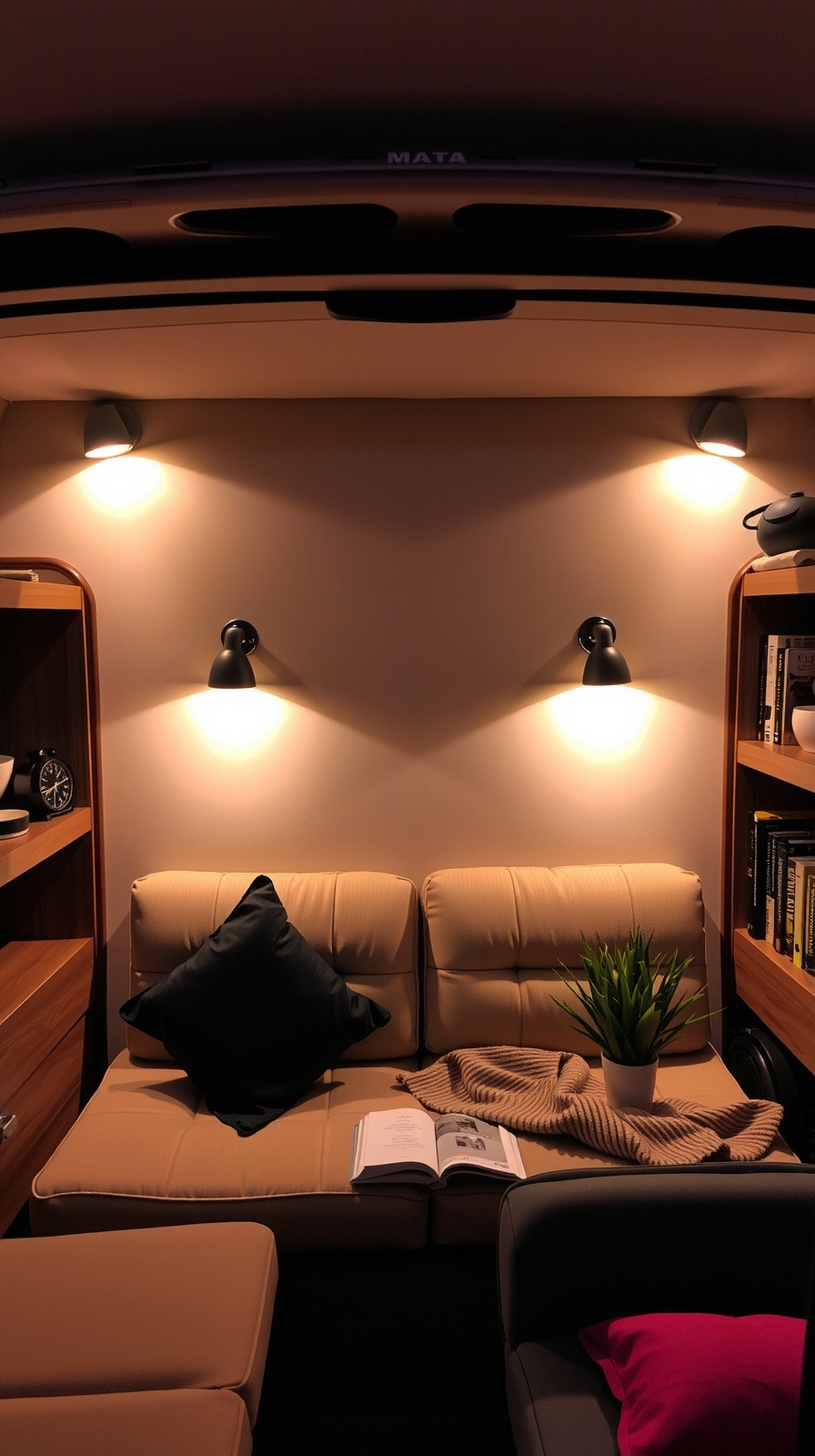
When the sun goes down in a place like Moab, it gets dark. Having properly placed reading lights lets you carve out a little personal nook without blinding whoever else is in the van with you.
I love using directional lamps or puck lights with bendable “gooseneck” arms near the bed.
If you can find fixtures with built-in USB ports, grab them! It’s the ultimate convenience for charging your phone while you’re tucked in.
Wiring these in parallel on your 12V system ensures that if one goes out, you aren’t left sitting in the dark.
Use Light Colors to Make Your Space Feel Larger
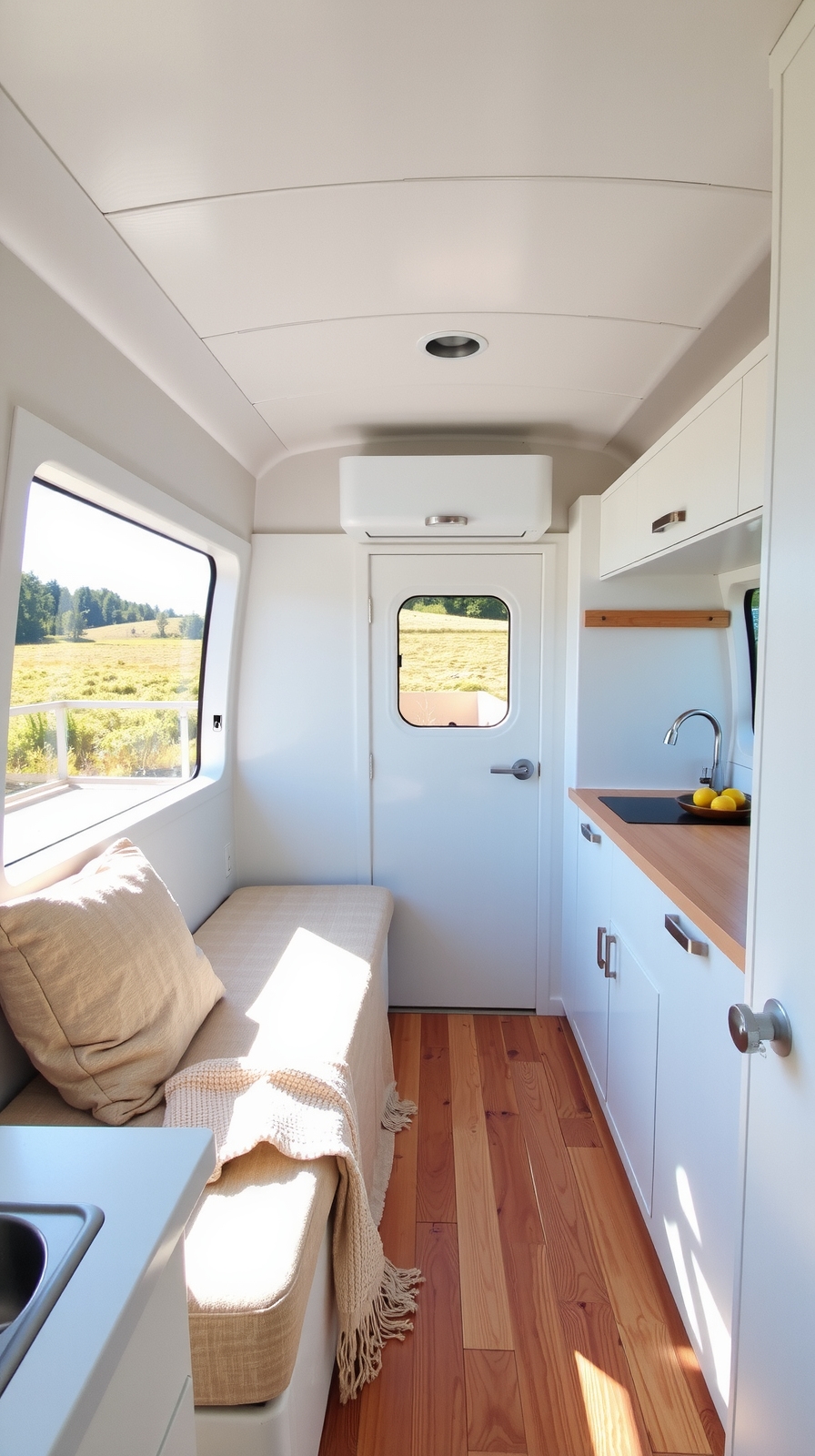
Smart lighting is great for setting the scene after dark, but the colors you pick for your walls and cabinets are what really determine if your van feels like a breezy retreat or a tiny closet during the day.
It’s a classic designer trick: light colors reflect significantly more light, both the sunshine coming through the windows and your interior lamps, which tricks the eye into seeing a much larger, brighter space.
Going with white or off-white for the big surfaces like your ceiling and cabinetry is the best way to maximize this effect. It creates this lovely, airy atmosphere that visually pushes the walls back, giving you some much-needed “breathing room.”
Beyond just looking good, a bright interior helps keep you feeling calm and refreshed, which is a total game-changer for your mental well-being when you’re living in a few dozen square feet.
Invest in Multifunctional Space-Saving Furniture
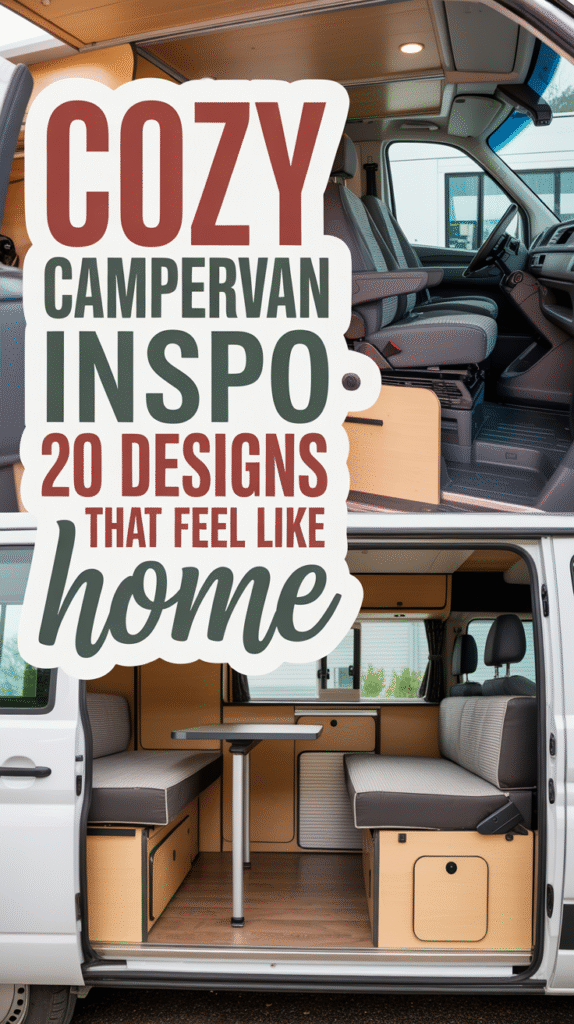
In a van, every single inch has to earn its keep. This is where furniture has to get creative!
I’m talking about sofa beds that flip out in seconds, fold-out tables for your “office,” and benches that double as a place to hide your muddy boots.
Modular systems are great because your needs on day one of a trip might be totally different by day ten.
Just make sure you’re picking lightweight but sturdy materials; standard household furniture usually isn’t built to handle the constant “earthquake” of driving down a washboard dirt road.
Design a Lofted Bed With Built-In Storage Underneath
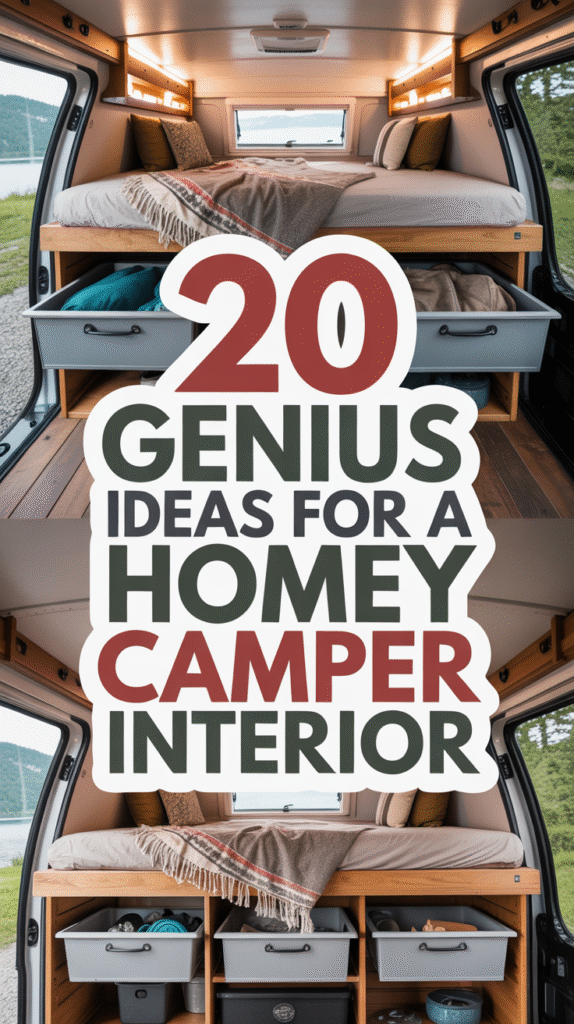
Vertical space is the most underrated asset in any small build. By lofting your bed, you’re essentially creating a “garage” underneath for all your big gear like bikes, climbing racks, or extra water jugs.
To do it right, you’ll want to secure the platform to the wall studs with metal supports so it stays put while you’re cruising.
I always suggest adding plywood slats under the mattress for ventilation (nobody wants a moldy mattress!) and maybe some 14-inch guardrails.
It’s basically the adult version of a bunk bed, and it’s the best way to maximize your square footage without sacrificing a good night’s sleep.
Create a Compact Kitchen With Foldable Features
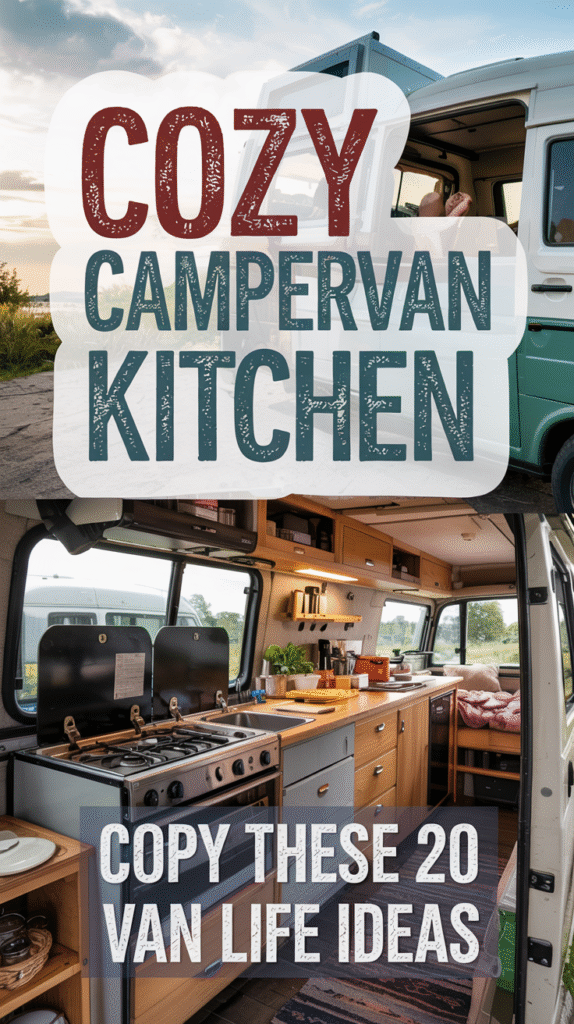
When you’re designing a campervan kitchen, you really have to think like a magician. Foldable features are the secret to turning a cramped corner into a workspace that works for a home chef.
I’m a huge fan of installing fold-down countertop extensions with collapsible legs.
They give you that extra prep space for chopping veggies, but they tuck away the second you’re done so you aren’t bumping hips with the cabinets. You can also sneak pull-out pantries into those weird narrow gaps between fixtures to reclaim vertical storage.
And here’s a designer favorite: choose a sink or stovetop with a flush-mount fold-up cover. When you aren’t cooking, it instantly doubles your usable counter real estate.
Add Personal Touches With Sentimental Decor Items
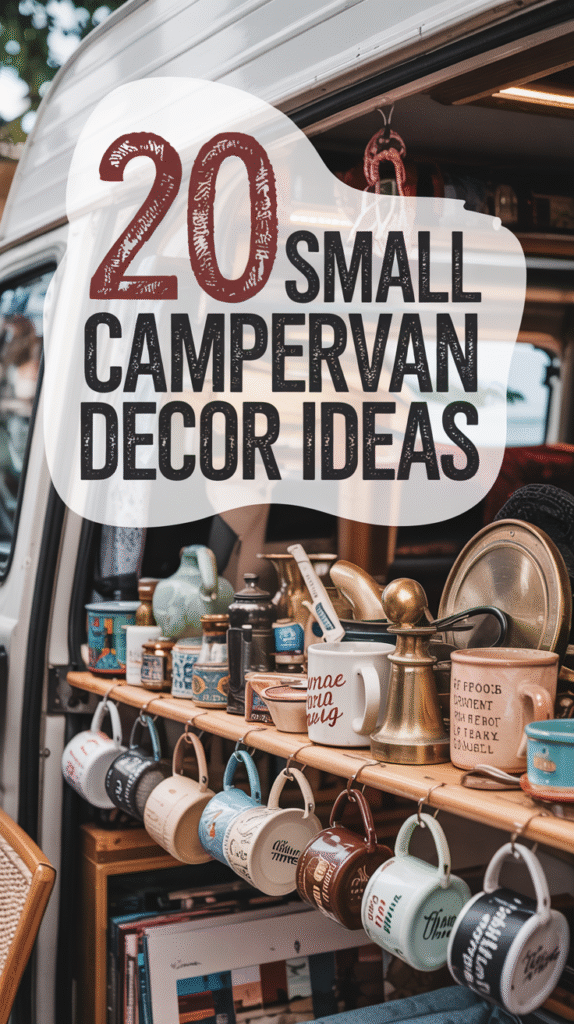
To make a van feel like your home and not just a rental. You’ve got to inject some soul into it. This is where you move beyond the “catalog look” and bring in pieces that have a story.
I like displaying a few travel souvenirs or even a handcrafted pottery mug I picked up at a roadside stand in Southern Utah.
Maybe it’s a vintage accessory that reminds you of your grandmother or a small heirloom that fits in a nook. These items carry emotional weight and make the space feel lived-in and loved. After all, if you don’t surround yourself with things that spark a memory, it’s just a vehicle..
Layer Cozy Rugs and Favorite Throw Blankets
Although campervan floors often consist of cold, hard laminate or vinyl that can make your space feel sterile and uninviting, layering cozy rugs and favorite throw blankets instantly transforms the atmosphere into a warm, personalized retreat.
Just ensure you’re picking machine-washable, quick-drying rugs with a solid rubber backing so they don’t slide around while you’re driving.
Then, toss your favorite throw blankets over the bench seats. Not only does this add a pop of texture and color, but you can swap them out seasonally to freshen up the look without having to do a full-on renovation. It’s the easiest way to make a tiny space feel like a plush retreat.
Choose Quality Bedding for Restful Sleep
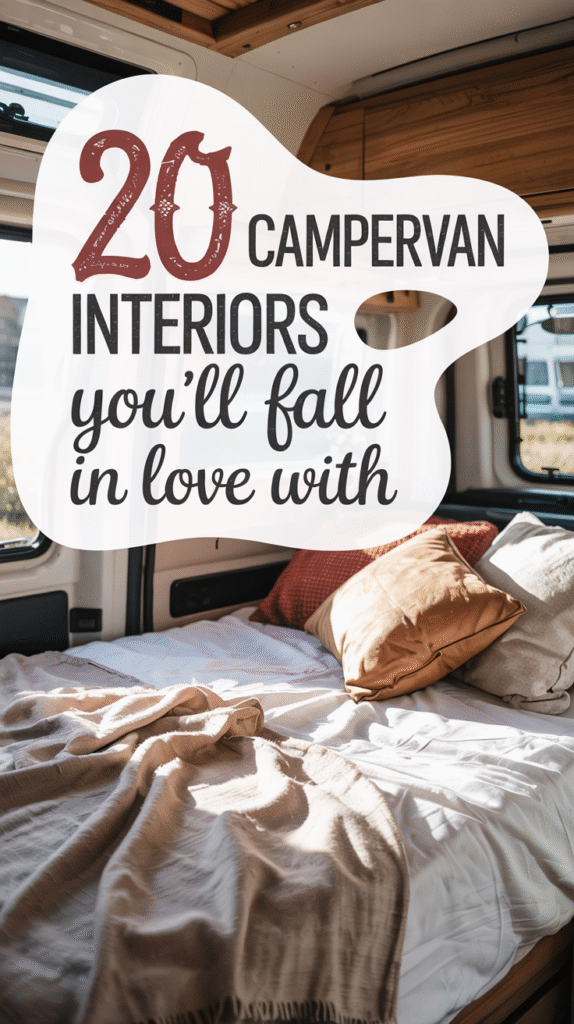
You’re going to be doing a lot of hiking and exploring, so your bed needs to be a sacred space for recharging.
Since van mattresses are often custom shapes, make sure your fitted sheets have deep pockets or even suspenders to keep them from popping off in the middle of the night.
Stick with those breathable materials we love, such as cotton, bamboo, or linen, to help regulate your temperature when the mountain air gets crisp. Pro-tip: Look for quick-drying and wrinkle-resistant fabrics.
You want bedding that can handle a trip to the laundromat and still look intentional and inviting without needing a steamer.
Install Smart Storage Solutions to Stay Organized
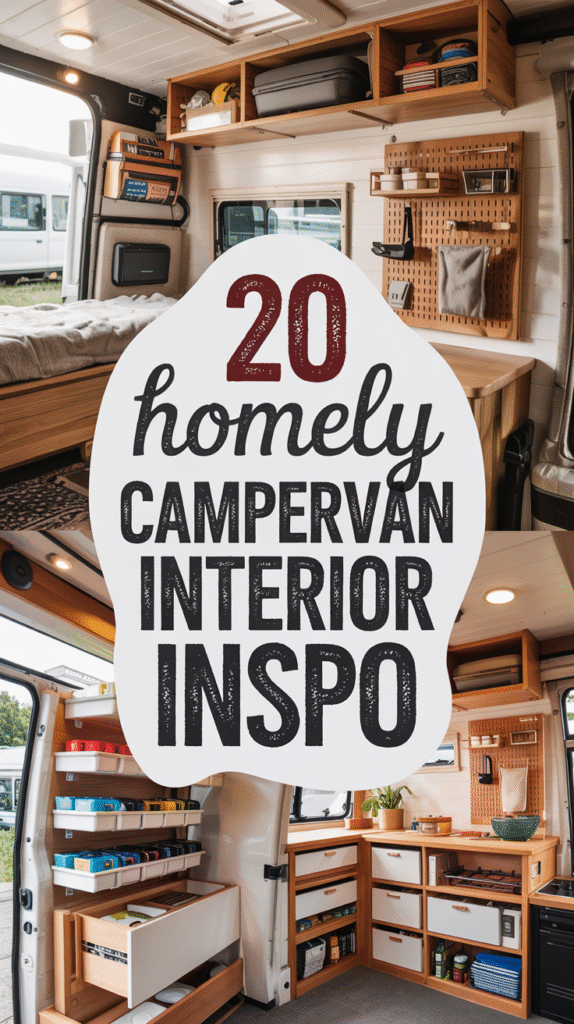
If a van isn’t well organized, it feels small fast. The key here is precision—measure your cabinets three times before you buy a single bin or container to ensure you aren’t wasting a millimeter of space.
I’m obsessed with using aluminum pegboards on the walls; they’re perfect for hanging kitchen utensils or gear so everything stays secure while you’re on the move.
Use overhead shelving for your lighter stuff and definitely take advantage of that platform bed “garage” we talked about for the bulky items. When everything has a dedicated home, the “clutter-induced” stress just melts away.
Design a Flexible Layout That Adapts to Your Needs
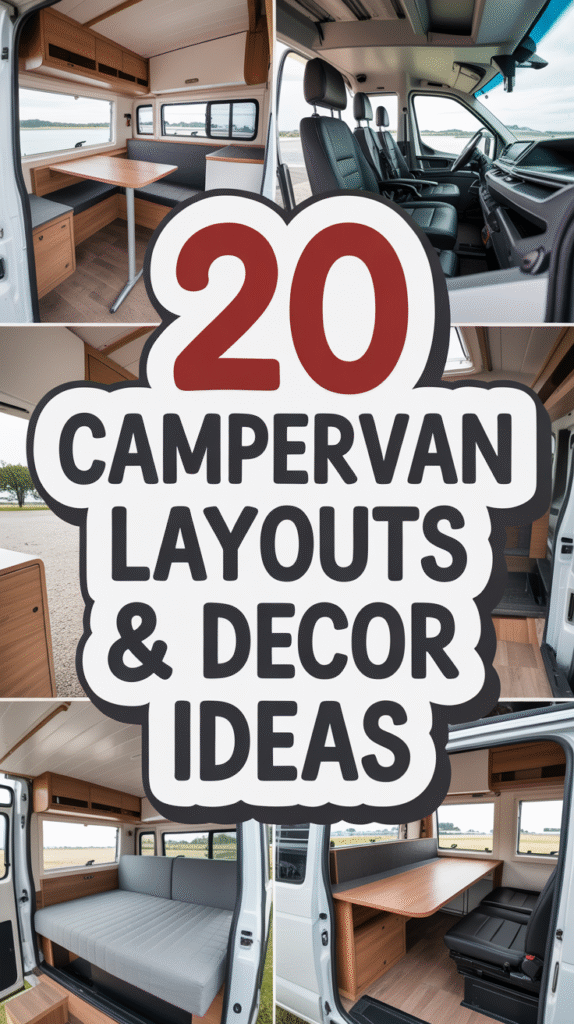
Storage is great, but a layout that fights against your daily routine is a nightmare.
I always recommend dividing the interior into “zones”: one for sleeping, one for cooking, and a dedicated spot for working or eating. This creates a logical flow so you aren’t constantly stepping over each other.
Convertible furniture is your best friend here; whether it’s a Murphy bed that hides away during the day or a pedestal table that drops down to become part of the lounge, flexibility is the name of the game.
Keep the floors as clear as possible by pushing your storage vertical, and you’ll find the van feels way more spacious than the square footage suggests.
Incorporate Bold Accent Colors for Personality
While those light base colors we discussed create a great foundation, don’t be afraid to have a little fun! Bold accents are what turn a “nice” van into a “wow” van.
Maybe you paint your lower cabinets a vibrant turquoise or a deep forest green, or perhaps you powder-coat your metal fixtures in a matte black or a sunny yellow.
Even a small section of patterned wallpaper can act as a gorgeous focal point. These strategic pops of color inject energy and personality into the space, making it feel like a reflection of your own style rather than just a white box on wheels.
Display Family Photos and Cherished Artwork
It’s not truly home until there are faces you love on the walls. In a van, you have to be careful with glass, so I always suggest lightweight, shatterproof frames or even just clip-based systems.
Command strips and magnetic strips are a lifesaver. They keep your art secure without rattling or damaging your walls.
I’ve even seen people use washi tape for a rotating gallery of polaroids from their trip! Just make sure to use waterproof prints if you’re hanging things near the kitchen or door, since humidity and rain can be a factor.
Seeing a photo of your family or a favorite piece of art the moment you wake up? That’s the dream.