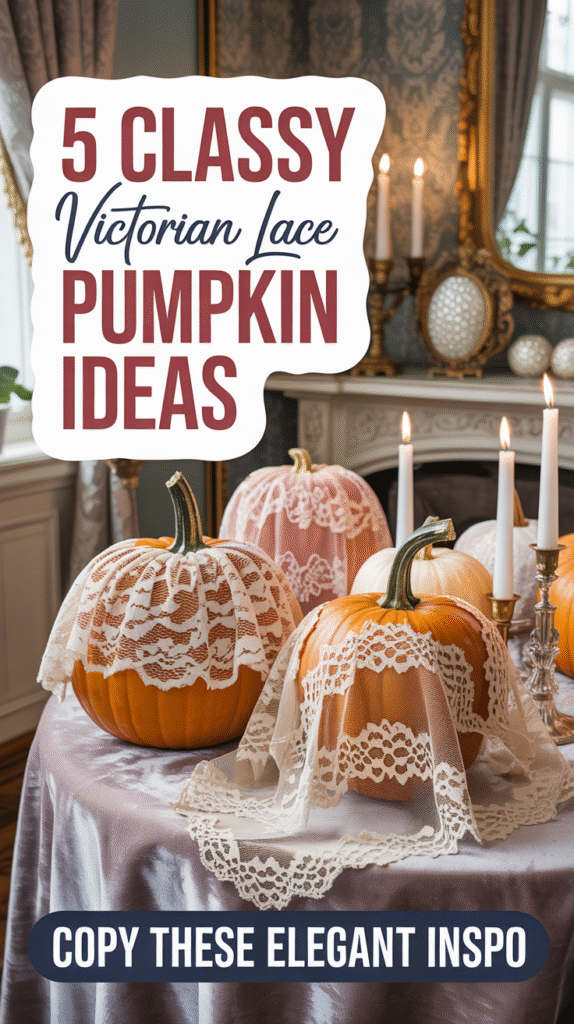
Forget the plastic skeletons and fake cobwebs for a moment. There’s something deeply satisfying about Halloween decorations that feel more drawing room than haunted house, and Victorian lace pumpkins nail that aesthetic perfectly. I’ve been creating these for years, and they never fail to stop guests in their tracks.
The technique itself isn’t complicated, but getting the details right makes all the difference between something that looks craft-fair generic and something that could’ve sat on a Victorian mantelpiece.
What you’re really doing is treating your pumpkins like textile art, which means the materials you choose and how you layer them actually matter. We explain how to get it right here.
Selecting and Preparing Authentic Victorian Lace Materials
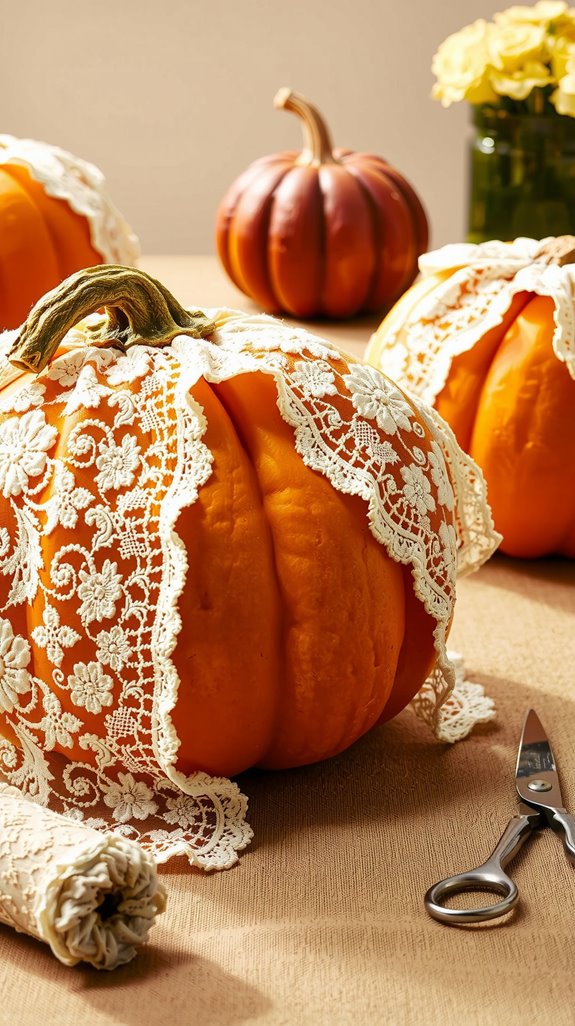
Your lace choice sets the entire tone, so skip the polyester stuff from the big box craft stores. Cotton, silk, or linen lace has a weight and drape that synthetic versions can’t replicate, and when you’re going for period authenticity, that difference shows.
I always pre-wash my lace in lukewarm water with a gentle detergent because you’d be surprised how much sizing and factory residue comes off even new pieces. If you can find handmade bobbin lace or needle lace at estate sales or antique shops, grab it, those pieces have irregularities and character that make your finished pumpkin look genuinely vintage rather than costume-y.
Layering Techniques for Rich Textural Dimension
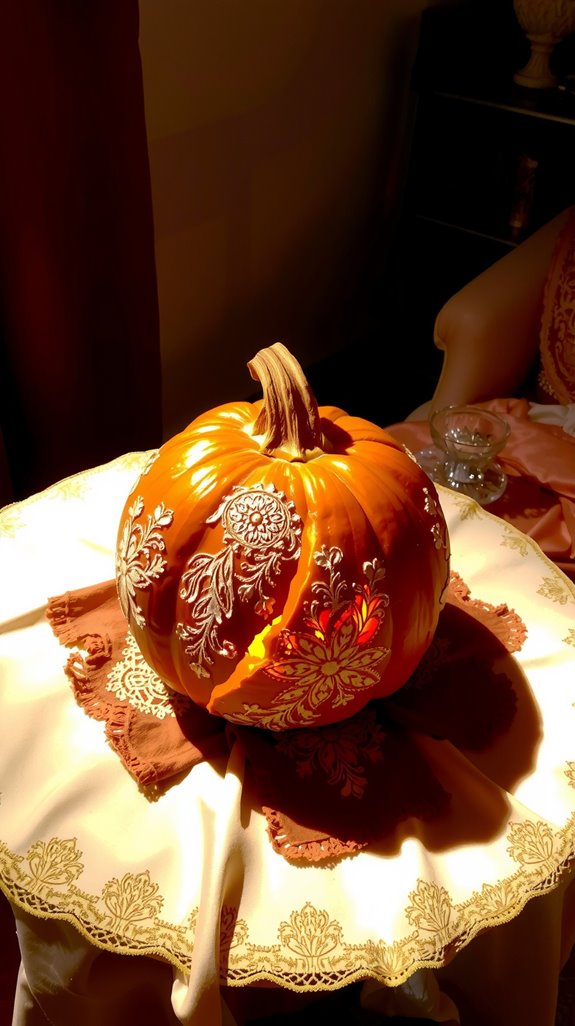
Prime your pumpkin white first because it gives you a clean canvas and makes whatever lace you apply really pop. The magic happens when you start overlapping different patterns—maybe a wide floral piece as your base layer, then crochet details, then some delicate eyelet trim around the curves.
Mod Podge works as both your adhesive and your sealant, so brush it on generously beneath each layer and then again on top once everything’s positioned. I like concentrating the most intricate patterns near the stem and keeping the bottom third cleaner, which gives the eye somewhere to rest and prevents the whole thing from looking cluttered.
Period-Appropriate Color Schemes and Finishing Touches
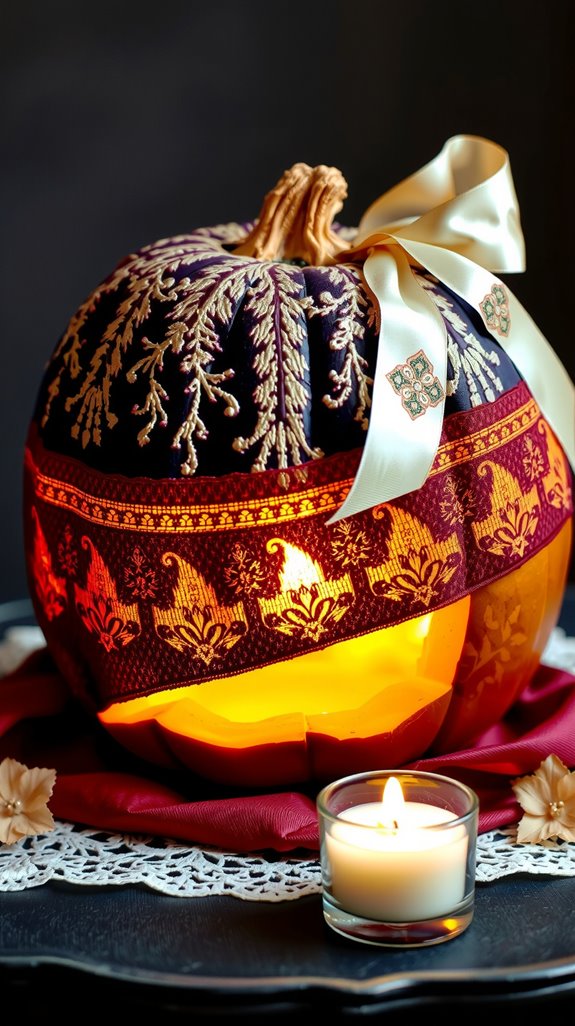
Here’s where most people go wrong by defaulting to orange and calling it Halloween. Victorian color palettes ran deep and moody, think burgundy, forest green, plum, and that inky midnight blue that looks almost black in low light. Black lace over a cream or ivory pumpkin channels Victorian mourning jewelry in the best way, creating something elegant and slightly gothic.
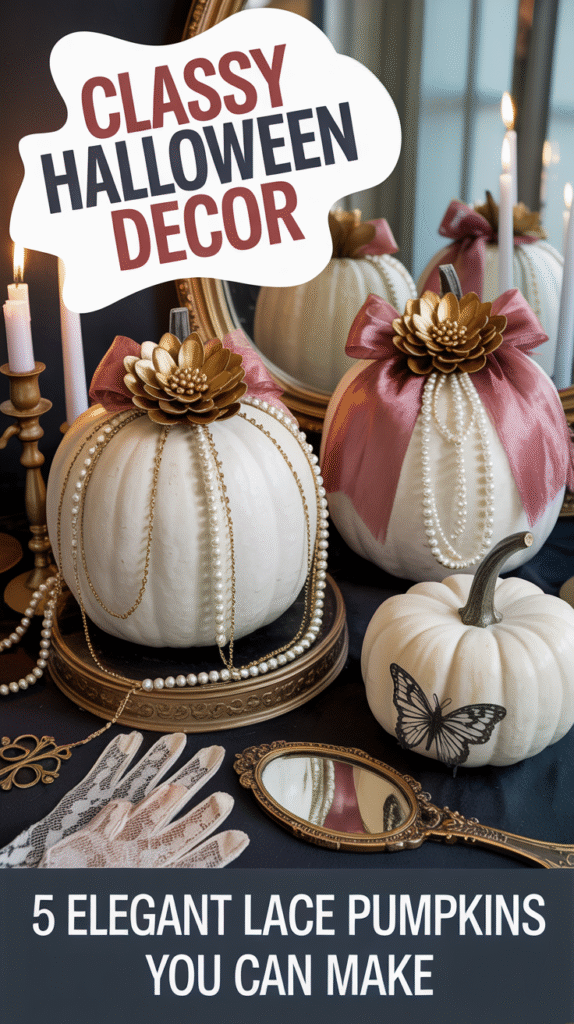
If you want to nod toward Halloween without going full bright orange, try pairing a burnt orange silk pumpkin with charcoal or black lace instead. Finish with velvet ribbon wound around the stem, maybe some small brass findings, or a scattering of tiny pearl beads pressed into the Mod Podge while it’s still tacky.
Adding Opulent Embellishments and Decorative Accents
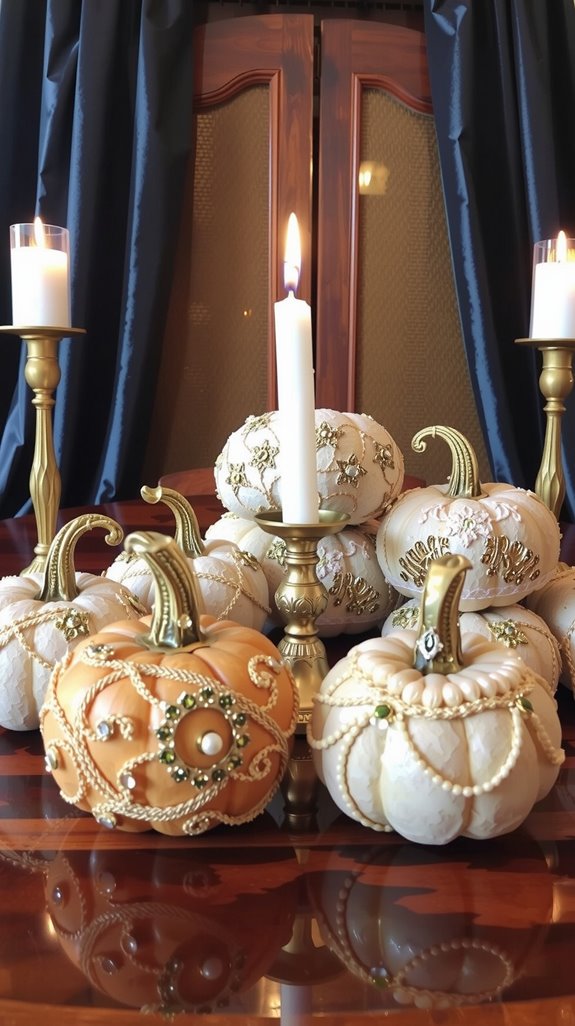
Once your lace foundation is dry, you can really play. I drill small holes near the stem to insert gilded wooden flowers or vintage millinery leaves, securing everything with straight pins hidden under the arrangements so nothing looks obviously attached.
Layering is your friend here, too. Tuck vintage seam binding under your flowers, add some small resin butterfly wings, or nestle in clusters of pearl sprays. A light coat of tinted wax glaze over the entire surface gives everything an aged patina that ties all your elements together. The goal is to make each pumpkin look like it was assembled from treasures found in different corners of an attic, not purchased as a kit.
Styling Your Lace Pumpkins for Maximum Victorian Elegance

How you display these makes as much difference as how you make them. I group mine on weathered wooden trays or stack them on vintage books with cracked leather spines because the surrounding context reinforces the whole aesthetic.
A lace doily underneath never hurts, especially if it’s genuine vintage with a bit of age-appropriate discoloration. Clustering three pumpkins of varying sizes together reads more intentional than scattering them around randomly, and keeping them away from plastic Halloween tchotchkes lets them shine as the sophisticated pieces they are.
Conclusion
Victorian households didn’t decorate on a whim—they spent months preparing seasonal displays because craftsmanship meant something. When you create lace pumpkins using actual quality materials and techniques that respect the original aesthetic, you’re participating in that same tradition of valuing beauty over convenience.
These aren’t decorations you’ll toss after one season. They become pieces you carefully pack away and look forward to unpacking each fall, maybe even adding to your collection as you find new lace or discover better embellishments.