A false ceiling can completely change how your living room looks and feels. You don’t actually need wild patterns or dramatic drops to make a real impact.
The best minimal false ceiling designs focus on clean lines, thoughtful lighting, and simple geometry. These details quietly elevate your space, and honestly, they never overwhelm it.
The trick is figuring out what makes a ceiling look intentionally minimal rather than unfinished or bland. I mean, getting that balance right? It really comes down to choosing materials that add warmth and using hidden lighting for a softer ambiance.
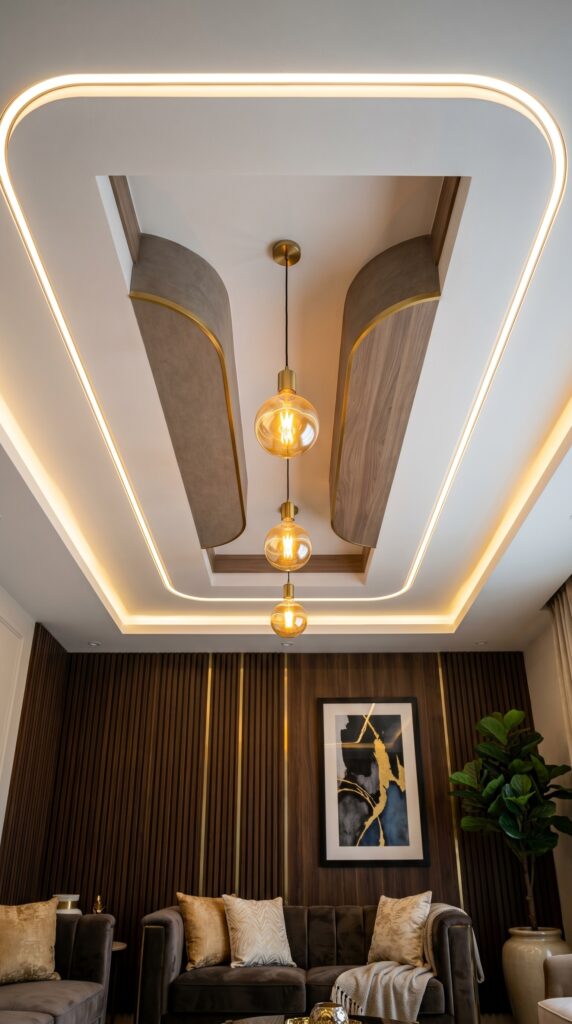
It’s also important to avoid those design mistakes that can break the calm, modern vibe you’re after. Whether you’re working with a compact room or planning a full-on redesign, these ten ideas will help you keep your ceiling simple, functional, and honestly, just effortlessly stylish.
You’ll get a sense of which layouts actually work best and what colors support a minimal look. Plus, there’s some guidance on how to align your ceiling design with the rest of your living room, so everything feels intentional.
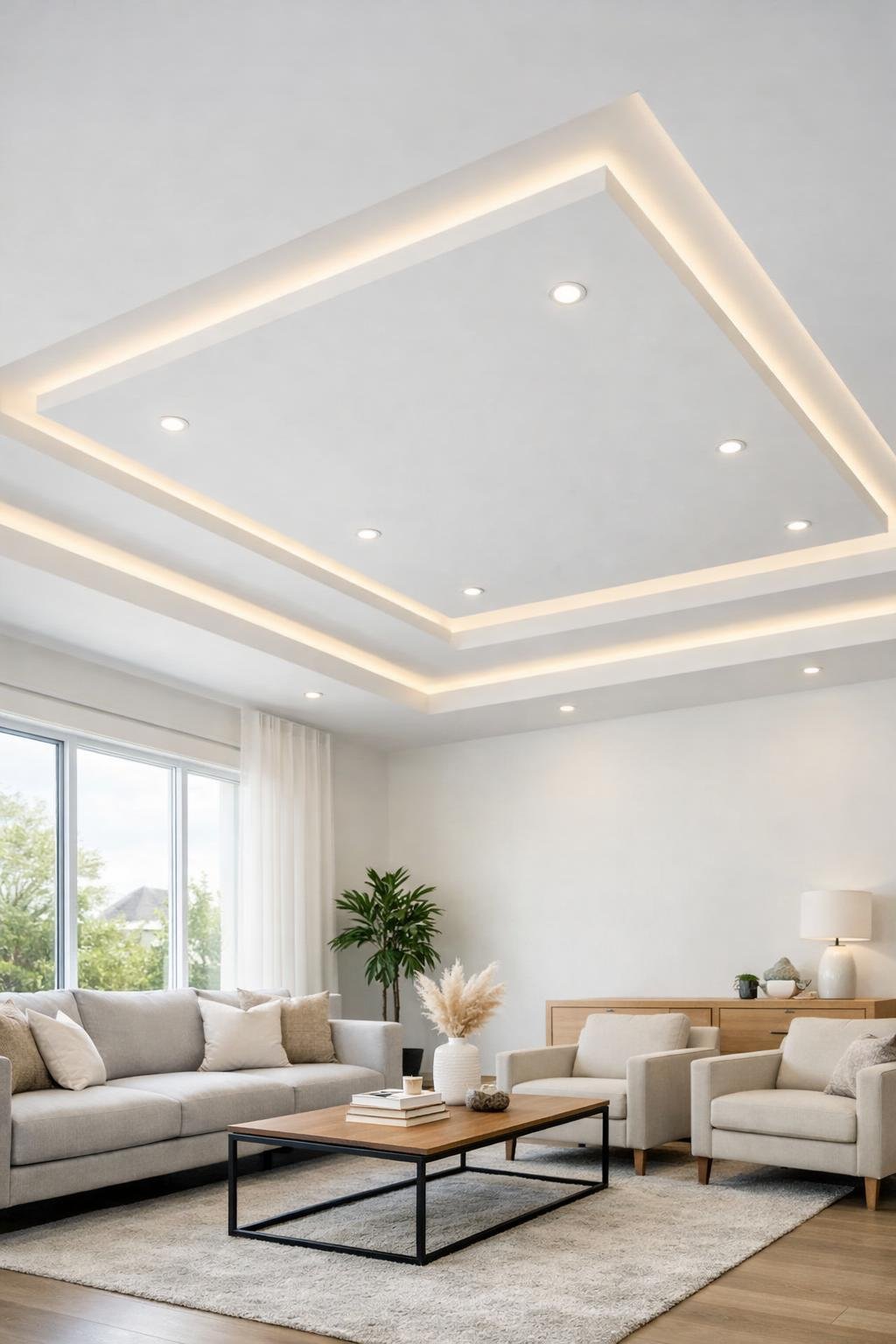
What Makes a False Ceiling Look Clean and Minimal (Not Basic)

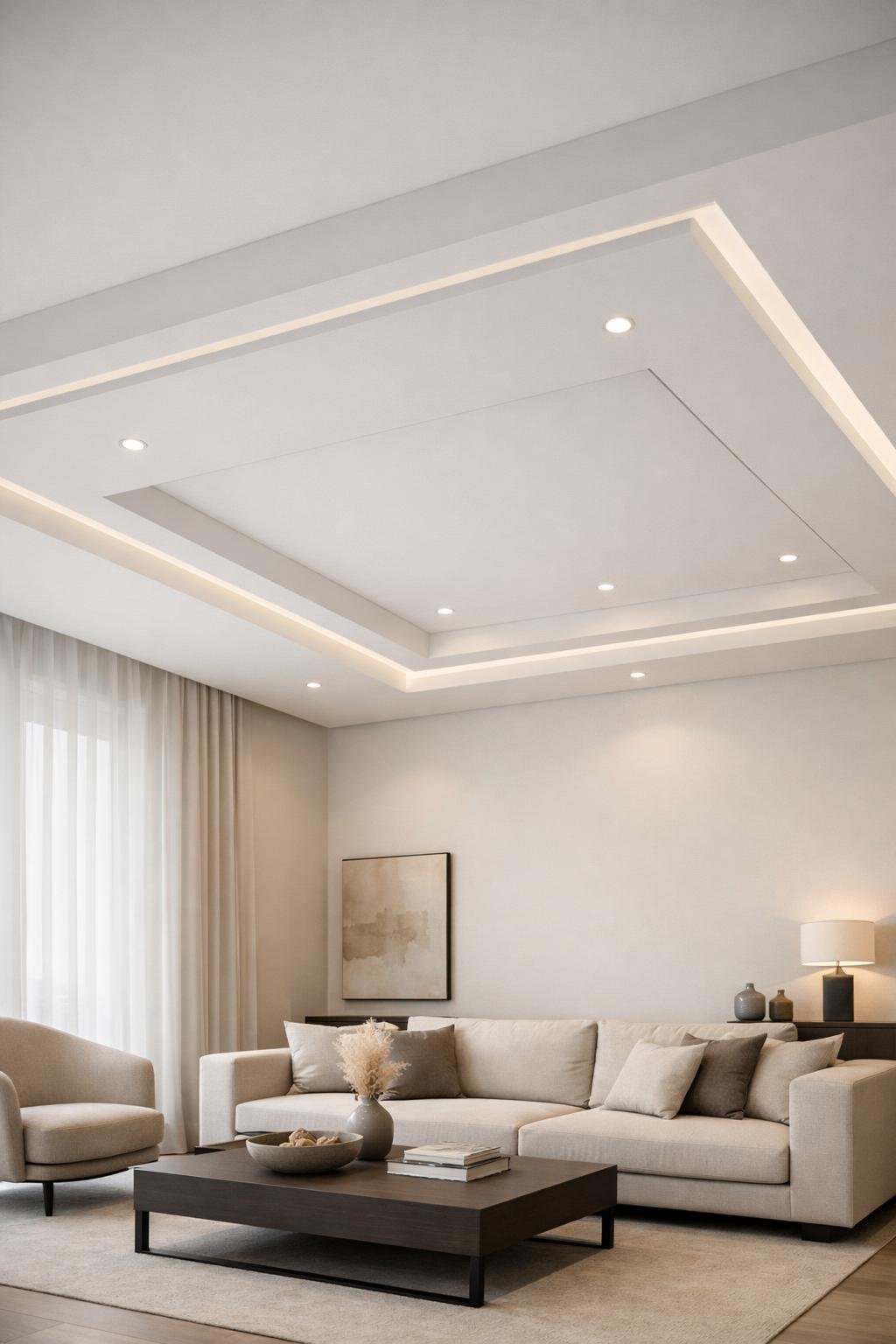
A minimalist false ceiling succeeds through intentional design choices. You need clean lines, a single-color palette, and simple geometry to achieve that minimalist aesthetic.
The difference between minimal and basic comes down to thoughtful details. Consider these elements:
- Subtle lighting integration like recessed LEDs or cove lighting
- Quality materials such as smooth gypsum or light-toned wood
- Strategic layers that add depth without complexity
- Precise proportions with balanced negative space
Your minimalist false ceiling should enhance the room without demanding attention. Think sleek wooden accents or simple geometric patterns rather than ornate decorations.
The key is restraint. Each element serves a purpose while maintaining visual calm.
Best Color Palettes for Minimal False Ceilings
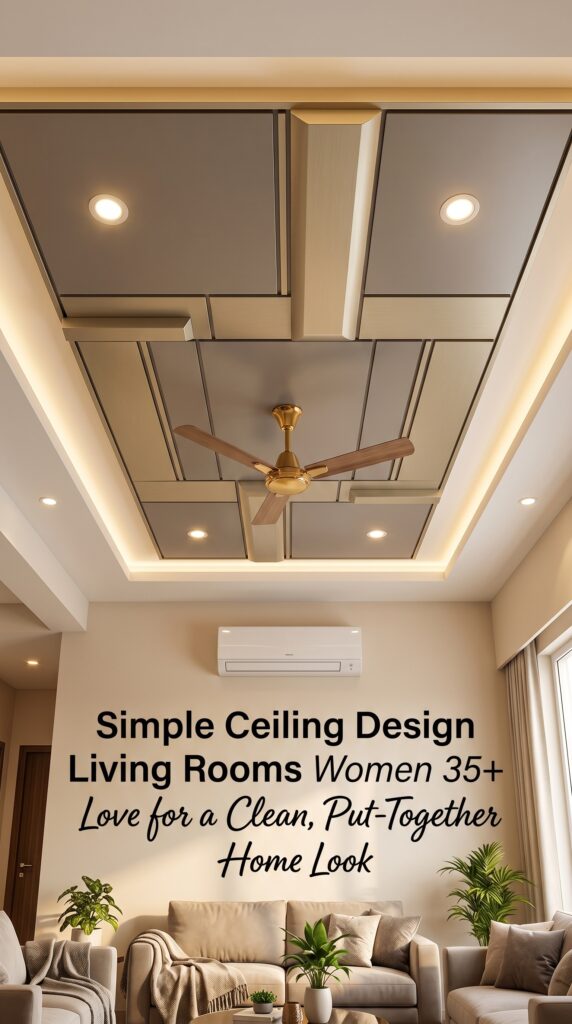
White remains the top choice for minimal false ceilings. It reflects light well and makes your living room feel more open and spacious.
Popular minimal color options:
- Pure white or off-white
- Soft gray tones
- Light beige or cream
- Pale taupe
You can add visual interest by pairing white with natural wood panels. This combination brings warmth without cluttering the design.
Monochromatic schemes work beautifully too. Try matching your ceiling to a lighter shade of your wall color for a cohesive look that feels intentional and calm.
| SEE MORE IDEAS: 28 Latest False Ceiling Designs That Make Every Room Look Custom-Built (Living Room, Bedroom, Kitchen & More). |
Simple False Ceiling Designs with Hidden Lighting
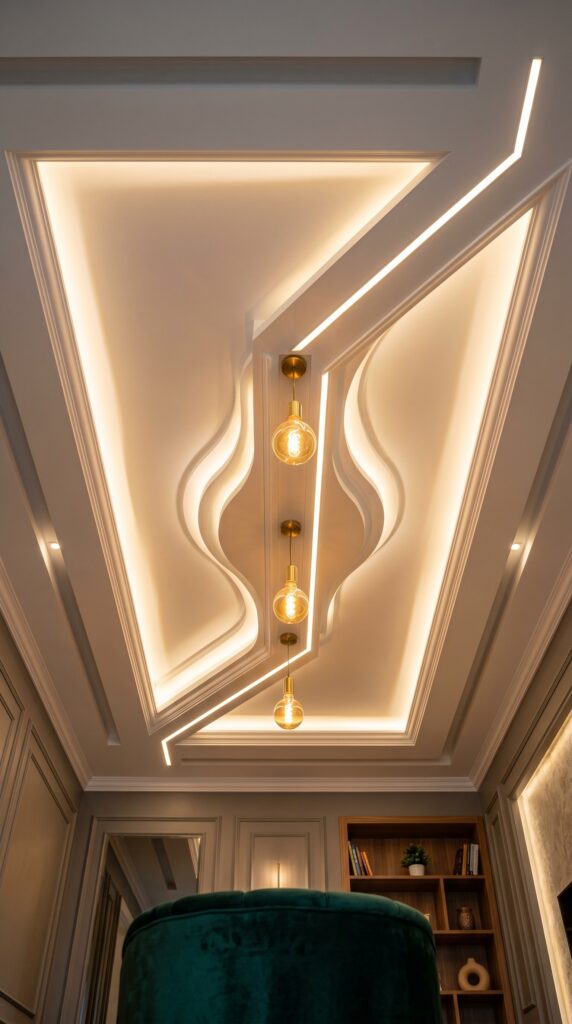
Hidden lighting can make your ceiling feel modern without adding visual clutter. LED strip lighting tucked into recessed areas creates a soft glow that adds warmth to your space.
Popular Hidden Lighting Options:
- Cove lighting – Installed along ceiling edges for indirect light
- Recessed lights – Built into the ceiling surface for a clean look
- LED strips – Flexible and energy-efficient for custom placement
A cove ceiling with hidden LED strips gives you that floating effect while keeping things minimal. The light bounces off surfaces instead of shining directly down.
Recessed lighting works well in simple designs because it sits flush with your ceiling. You get function without sacrificing your clean aesthetic.
Minimal Single-Layer False Ceiling Designs
A single-layer false ceiling is the simplest way to give your living room a clean, modern update. It creates one smooth level below your original ceiling, hiding wires and pipes while keeping things simple.
This design works great in rooms with normal ceiling heights. You can paint it white or a soft neutral color to match your walls. The beauty is in its simplicity.
Key benefits of single-layer designs:
- Takes up less vertical space than multi-level options
- Costs less to install and maintain
- Creates a clean backdrop for your furniture
- Easy to add recessed lighting
You can make your single-layer ceiling more interesting by adding wooden strips along the edges or installing LED lights around the border for a floating ceiling effect.
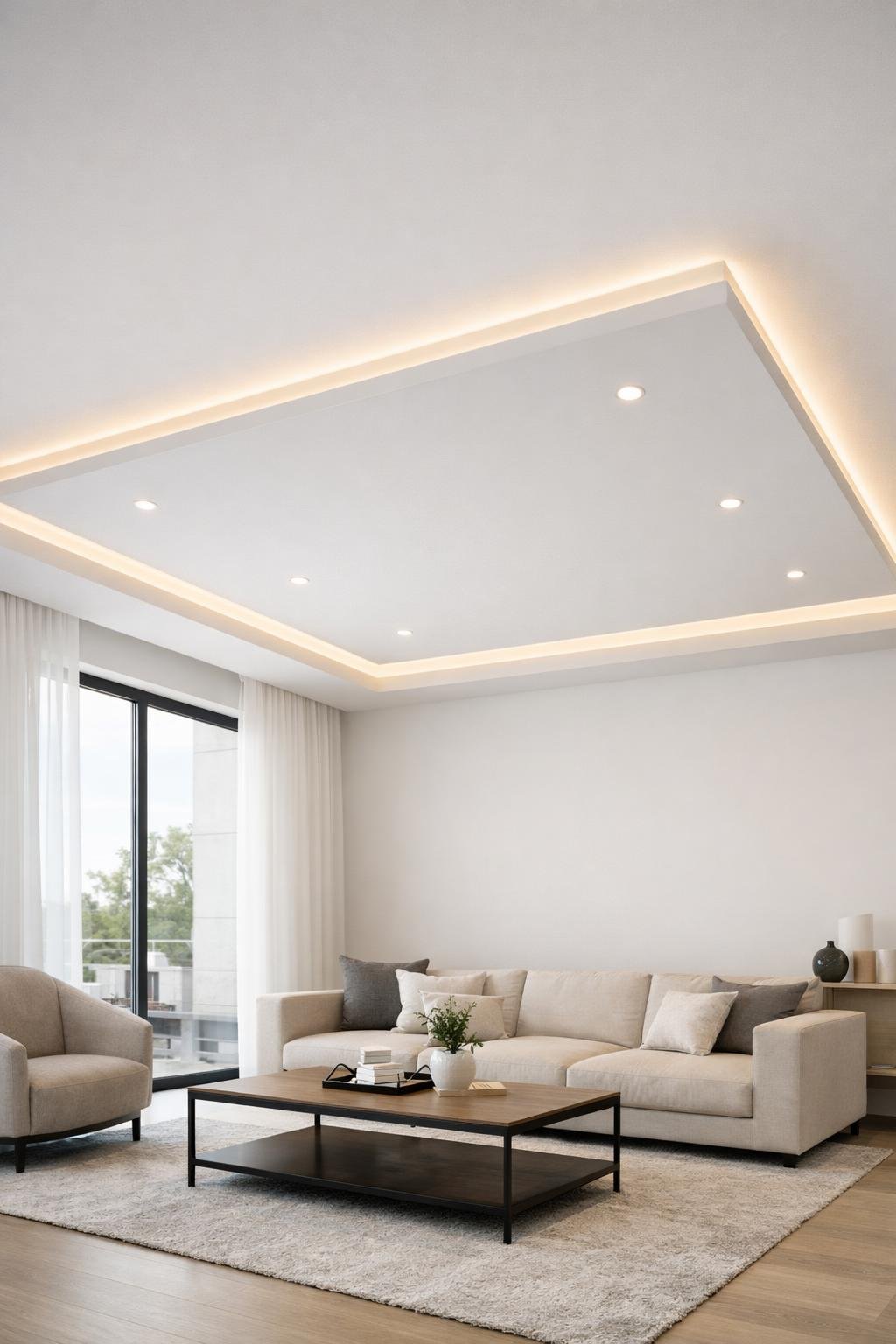
Simple Geometric Ceiling Designs That Stay Minimal
Geometric patterns add visual interest without overwhelming your living room. You can use simple shapes like squares, rectangles, or triangles to create a clean ceiling design that looks modern.
Popular geometric options include:
- Coffered ceilings with recessed square or rectangular panels
- Linear patterns using thin gypsum strips
- Simple grid designs in single colors
Coffered ceilings work especially well when you keep them subtle. Choose shallow depths and neutral colors to maintain that minimal feel.
The key is picking one geometric pattern and sticking with it. A single-level design with clean edges gives you sophistication without the fuss. You can enhance the look with recessed lighting placed within the geometric shapes.
These designs work great with gypsum board or wooden panels in light hues. Keep the color palette monochromatic for the cleanest effect.
False Ceiling Ideas for Small Living Rooms
Small living rooms need smart ceiling choices. You want designs that make the space feel bigger, not cramped.
Cove lighting works perfectly for tight spaces. The LED strips run along the edges of your ceiling and create a soft glow. This tricks your eye into thinking the room is taller than it actually is.
A single rectangular drop panel in the center keeps things simple. You can add a few recessed lights in the panel for focused lighting. This design adds dimension without taking up visual space.
Light colors are your friend. Stick with white, cream, or soft gray for your false ceiling. Dark colors make small rooms feel smaller.
Try a floating ceiling panel if you want something modern. The gap between the main ceiling and the panel gets lit with hidden LEDs. This creates depth and makes your ceiling look higher.
Aligning Simple Ceiling Designs with Living Room Layout
Your living room false ceiling should work with your space, not against it. Think about how your furniture is arranged and where people naturally gather.
Match your ceiling to your room zones:
- Seating area: Frame it with a subtle recessed panel or cove lighting
- Dining zone: Use a simple border to define the space
- Entertainment wall: Keep the ceiling flat to draw eyes forward
For open-plan living rooms, a false ceiling can act as a gentle divider. A clean rectangular drop above your sofa area helps separate it from the dining space without building walls.
Small rooms need simple, flat designs that don’t crowd the space. Larger rooms can handle layered designs or wider borders that add visual interest.
Materials That Work Best for Minimal False Ceilings
Gypsum boards are your best choice for clean, modern spaces. They create smooth surfaces and can be shaped into simple geometric patterns. These boards work well for both suspended ceilings and drop ceiling designs.
POP (Plaster of Paris) ceilings offer flexibility for curved edges and basic designs. However, gypsum is lighter and easier to install.
Quick Material Comparison:
- Gypsum boards – smooth finish, easy to paint, affordable
- POP – good for curves, heavier than gypsum
- Metal panels – sleek look, very durable
- Wood panels – adds warmth, works for minimal styles
For the cleanest look, stick with white or light-colored gypsum. You can paint it any shade later to match your room.
Minimal Ceiling Designs That Still Feel Warm and Inviting
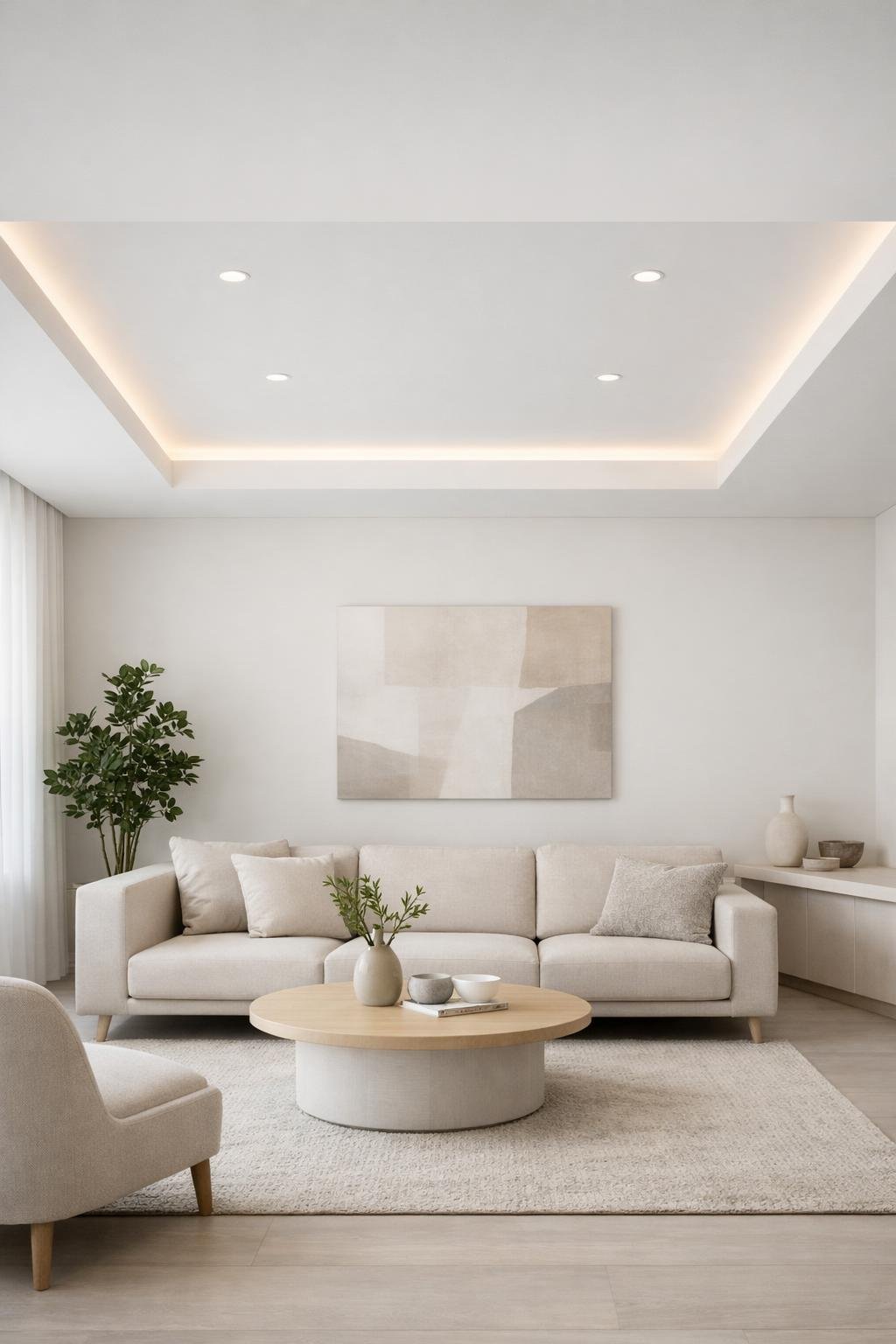
You can keep things simple without making your space feel cold. A wooden panel false ceiling adds natural warmth while staying clean and modern. Light wood tones work especially well in minimal designs.
Ceiling beams bring texture without clutter. Even one or two exposed beams can make your living room feel more grounded and cozy.
Pair your minimal ceiling with warm LED strips along the edges. The soft glow creates a welcoming atmosphere that complements simple designs perfectly. You get a space that feels both calm and inviting.
Common Mistakes That Ruin a Minimal Ceiling Look
Overcomplicating the design is the biggest mistake you can make. Adding too many layers, shapes, or textures defeats the purpose of a minimal ceiling. A layered false ceiling works best when it’s simple—stick to one or two clean levels instead of creating multiple drops.
Poor planning during false ceiling installation leads to visible gaps and uneven surfaces. These flaws stand out in minimal designs where every detail matters. Make sure your contractor seals all joints properly and ensures smooth finishes.
Choosing the wrong proportions for your room height can make the space feel cramped. If your ceiling is already low, avoid deep drops or a curved false ceiling that takes up too much vertical space.
Ignoring lighting placement ruins the clean look you’re trying to achieve. Don’t randomly place lights—plan them carefully to maintain balance and avoid cluttered appearances.
Using too many materials or colors breaks the minimal aesthetic. Stick to neutral tones and one primary material for a cohesive look.