Your living room ceiling and TV unit work better when you design them as a pair. A well-planned false ceiling design frames your TV unit, adds depth to your space, and creates a polished look that ties your entire living room together.
Many homeowners miss this connection and end up with a TV that feels awkward or out of place.
The right suspended ceiling design can highlight your entertainment area with smart lighting, geometric patterns, and materials that match your style.
Whether you have a small living room or a spacious hall, you’ll discover practical ceiling layouts that make your TV unit the star of the room without overwhelming your space.
This guide walks you through proven design combinations and shows you exactly how to avoid common mistakes that make living room false ceiling projects fall flat.
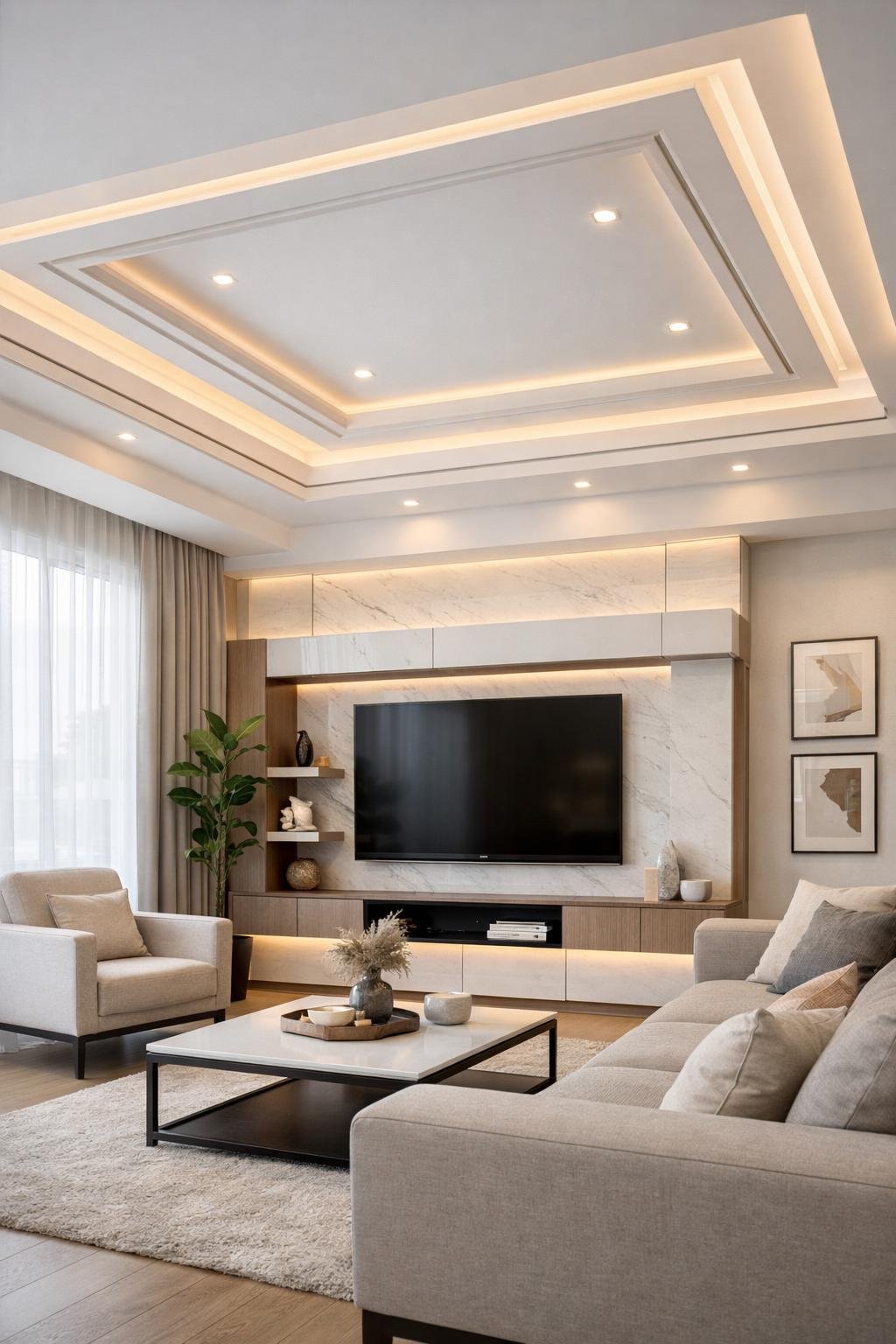
Why TV Unit and False Ceiling Should Be Designed Together
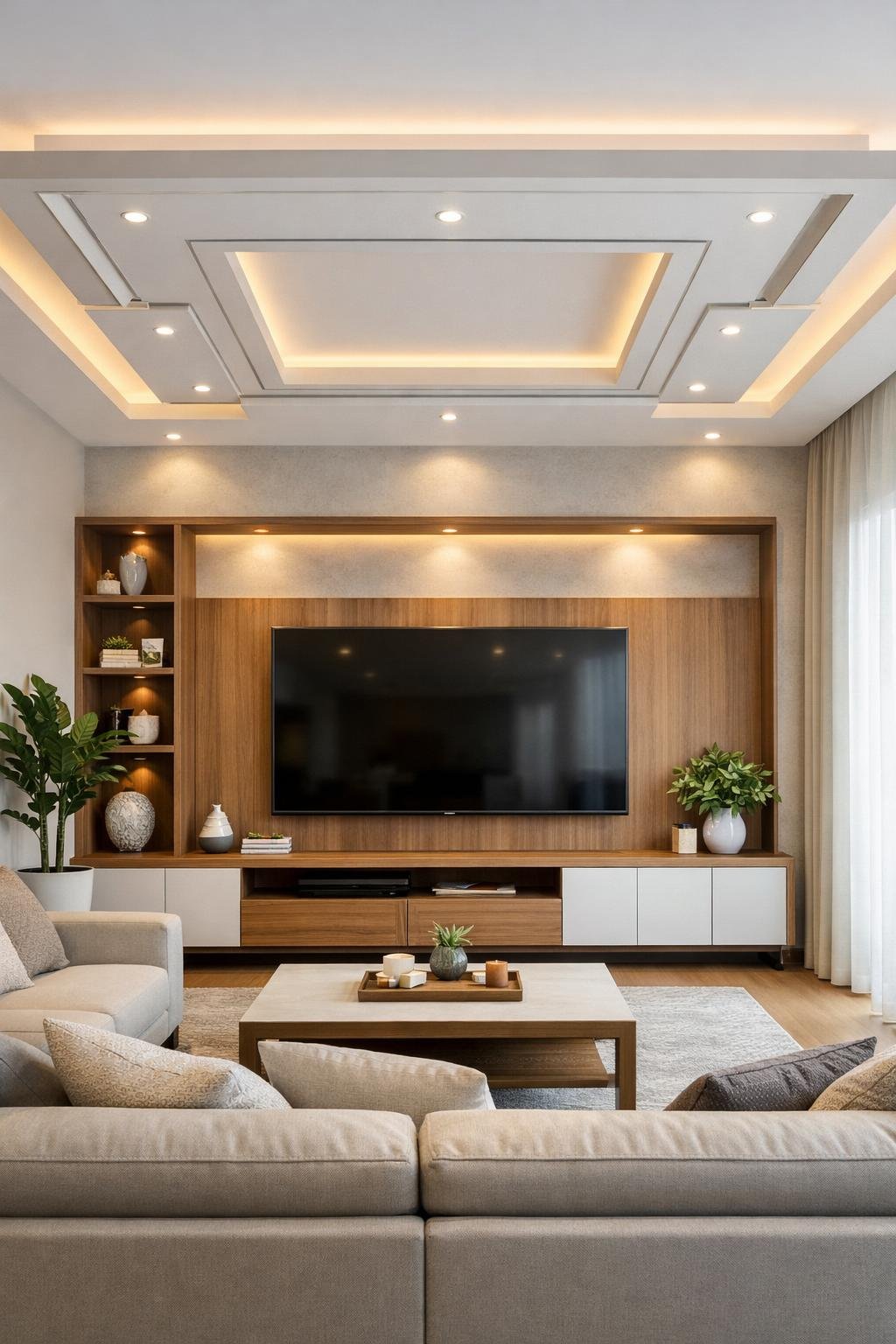
Your TV wall needs proper planning. When you design the ceiling and TV unit separately, they often clash instead of working together. The ceiling affects how light falls on your screen. The TV unit size determines where you can place recessed lights.
Planning both together helps you:
- Avoid shadows on the TV screen
- Hide cables and AC vents neatly
- Create a balanced look
- Place spotlights correctly
- Make the TV area a focal point
The ceiling above your TV can include backlit panels or cove lighting that frames the unit. This makes your entertainment zone feel complete. When lighting, materials and proportions match, your living room looks intentional instead of patched together.
Think of them as one design zone, not two separate projects.
SEE THIS: 11 Living Room False Ceiling Designs with Profile Lighting (Soft Glow Effect).
Centered False Ceiling Designs for TV Unit Walls
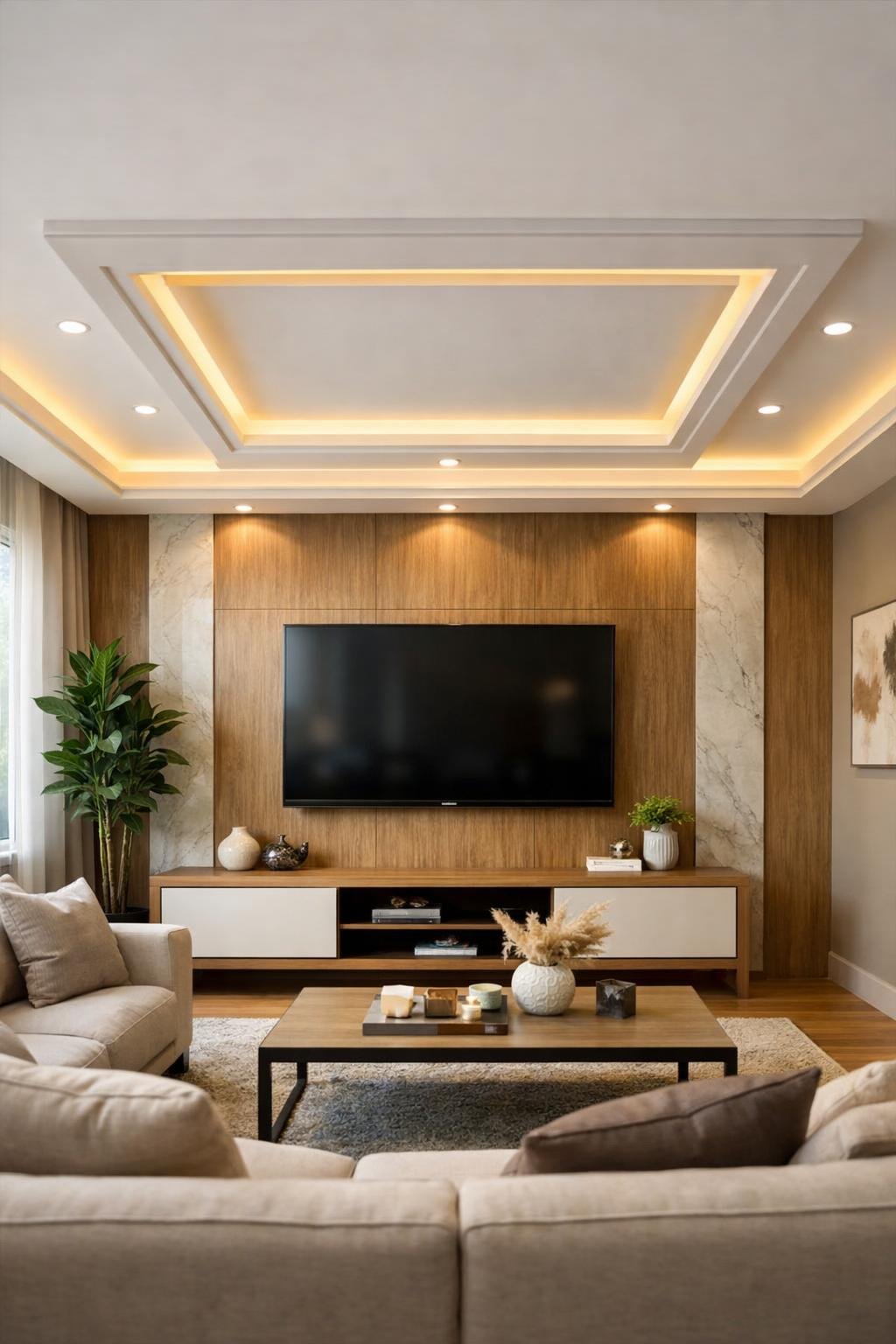
A centered design creates a focal point that draws your eye directly to the TV unit. This approach works well because it balances the room and makes your entertainment area feel intentional.
Tray ceiling designs work perfectly for this setup. You can create a recessed panel directly above and behind your TV unit. Add LED strip lights around the edges to highlight the area. This creates depth without overwhelming your space.
A coffered ceiling adds a classic touch. The grid pattern frames your TV wall beautifully. You can align one of the coffered sections with your TV unit for a clean, symmetrical look.
Consider these centered design elements:
- Circular or rectangular recessed panels above the TV
- LED backlighting that matches your TV unit width
- Geometric patterns that mirror your TV console shape
- Subtle color accents in the ceiling recess
The key is keeping the ceiling design proportional to your TV unit size. A small TV needs a smaller ceiling feature. A large entertainment wall can handle bolder ceiling treatments.
| SEE MORE IDEAS: 28 Latest False Ceiling Designs That Make Every Room Look Custom-Built. |
Minimal False Ceiling Designs That Frame the TV Unit
A minimal false ceiling creates a clean backdrop for your TV unit without overwhelming your space. This design uses simple lines and subtle layers to draw attention to your entertainment area.
Key Features to Consider:
- Floating ceiling panels that sit just above the TV wall
- Recessed lighting along the edges for soft illumination
- Single-layer gypsum boards for a smooth finish
You can add LED strip lights behind the floating panel to create a gentle glow. This makes your TV unit stand out while keeping the overall look simple and uncluttered.
Modern false ceiling designs work well in smaller living rooms where you want to avoid heavy or layered looks. A contemporary false ceiling with straight edges gives your space a fresh feel.
Materials That Work Best:
| Material | Benefits |
|---|---|
| Gypsum | Light and easy to shape |
| POP | Budget-friendly option |
| Wood accents | Adds warmth |
Keep the design focused on a rectangular border around your TV wall. This frames the unit perfectly and helps separate your entertainment zone from the rest of the room.
Ceiling Designs with Hidden Lighting Around TV Units
Hidden lighting transforms your TV area into a stunning focal point. You can install recessed lights around the perimeter of your TV unit to create a soft glow that reduces eye strain while watching movies.
Cove lighting works beautifully with layered false ceilings. This indirect lighting technique conceals LED strips in grooves, casting gentle ambient lighting upward. The effect makes your ceiling appear to float.
Consider these popular hidden lighting options:
- Recessed lighting – Clean, flush-mounted fixtures
- LED strips – Flexible color-changing options
- Track lights – Adjustable directional lighting
- Indirect lighting – Bounces light off surfaces
A layered ceiling design lets you combine multiple lighting types for the best results.
SEE THIS: 8 Symmetrical & Modern False Ceiling Designs for a Square Hall: Stylish Ideas & Tips.
POP False Ceiling Designs for Living Rooms with TV Units
POP false ceilings work great when you want to highlight your TV unit area. You can create a recessed panel above or around your TV wall that draws attention to your entertainment zone.
Popular POP design options include:
- Geometric patterns framing the TV unit
- Curved or circular designs creating a focal point
- Layered ceilings with built-in LED strip lighting
- Textured finishes that add depth
POP is easy to shape and mold, which makes it perfect for custom designs around your TV space. You can add cove lighting to create a soft glow behind your television.
Many homeowners combine POP with gypsum false ceiling panels for a mixed-material look. This blend gives you the strength of gypsum and the design flexibility of POP in one ceiling.
Ceiling Layout Ideas Based on Living Room Size
Your living room size shapes which ceiling design will work best. Small rooms need different approaches than larger spaces.
For Small Living Rooms (10×10 to 12×12 feet)
Keep things simple with single-level designs. A basic perimeter ceiling with recessed lights makes your room feel bigger. Avoid heavy patterns or dark colors that close in the space.
For Medium Living Rooms (12×15 to 15×18 feet)
You can try multi-level ceiling designs here. A stepped ceiling around your TV unit adds depth without overwhelming the room. Use two levels maximum to maintain balance.
For Large Living Rooms (18×20 feet or more)
Go bold with your living room ceiling design. Multi-level layouts with three tiers work great. Create zones for your TV area, seating space, and dining corner using different ceiling heights and lighting patterns.
Geometric Ceiling Designs That Align with TV Walls
Geometric false ceiling patterns add visual interest to your TV wall area. You can create squares, rectangles, or hexagonal shapes that frame your entertainment unit. These clean lines give your living room a modern look.
Popular geometric patterns include:
- Square panels arranged in a grid above the TV
- Rectangular coffered designs that follow wall dimensions
- Angular patterns pointing toward the screen
A curved false ceiling works well if you want softer edges. You can blend gentle curves with straight geometric lines around your TV unit. This mix creates balance in your room.
The ceiling shapes should match your TV wall layout. If your unit is wide and horizontal, use rectangular patterns. For tall TV walls, vertical geometric designs work better.
You can paint different sections in contrasting colors to highlight the geometric shapes. White and gray combinations are popular choices that don’t distract from your screen.
Materials and Finishes That Elevate TV Unit Integration
Choosing the right false ceiling materials can transform your TV wall into a stunning focal point. Gypsum remains popular for its smooth finish and versatility. It pairs beautifully with modern TV units and allows for clean, sharp lines.
Wooden false ceiling panels bring natural warmth to your space. You can match them with wooden TV units for a cohesive look. Lighter woods like oak create an airy feel, while darker options add drama.
Textured ceiling finishes add visual interest without overwhelming your room. Consider these options:
- Wood paneling with horizontal or vertical grooves
- Fabric-wrapped panels for sound absorption
- POP (Plaster of Paris) with geometric patterns
Metal finishes work well in contemporary spaces. They complement sleek TV units and create an industrial vibe. Just remember to balance reflective surfaces with softer materials elsewhere in your room.
Creating a Focal Point with Ceiling and TV Unit Design
A focal point is what your eyes see first when you enter a room. Your TV unit and false ceiling can work together to create this important design element.
Align your false ceiling with your TV wall. This creates a visual frame that draws attention to your entertainment area. You can use geometric patterns or recessed designs that point toward the TV.
Accent lighting makes a big difference. LED strips behind your TV create a soft glow that highlights the unit. You can also add recessed lights in the ceiling that shine down on the TV wall.
Consider these lighting options:
- Dimmable lights to adjust the mood
- Backlit panels behind the TV for drama
- Strip lights along ceiling edges
Your ceiling design should enhance the TV unit without competing with it. Simple patterns work better than busy designs. You want people to notice the whole area, not just one part.
Common Mistakes in TV Unit and Ceiling Integration
Planning a false ceiling around your TV unit needs careful thought. Many homeowners rush into the design without considering how everything works together.
Ignoring room height is a major problem. You might install a false ceiling that’s too low, making your living room feel cramped and uncomfortable. Always measure twice before starting work.
Poor lighting placement around the TV creates glare and shadows. Your lights should highlight the TV unit without reflecting on the screen. Plan where each light goes before installation begins.
Using the wrong materials causes problems later. Some materials don’t support the weight of your TV or electrical components. Check the load capacity with your contractor.
Skipping proper wiring access makes future repairs difficult. You need easy access to cables and wires behind your TV. Include access panels in your ceiling design.
Overlooking proportions between the ceiling design and TV unit creates an unbalanced look. Your ceiling features should match the size of your entertainment area, not overpower it.
The Easiest TV Unit + Ceiling Design Formula You Can Copy
A simple formula works best: place your TV in the center, frame it with a basic ceiling shape, and add soft lighting around the edges. This approach keeps costs down and makes installation straightforward.
Centered Layout + Clean Ceiling Frame
Place your TV on the main wall where you naturally look when sitting. Build a rectangular frame in the ceiling directly above and around the TV unit using gypsum board.
The frame should extend 6-12 inches beyond each side of your TV unit. This creates balance without overwhelming the space. Keep the dropped ceiling section 8-10 inches lower than your main ceiling.
Basic measurements:
- Frame width: TV unit width + 12-24 inches total
- Frame depth: 24-36 inches from wall
- Drop height: 8-10 inches
Paint the frame the same color as your walls or choose white for a clean look. This simple box design costs between $10-15 per square foot for materials and installation.
Hidden Lighting + Minimal Layers
Add LED strip lights inside the ceiling frame perimeter. These strips sit in a small groove that hides them from direct view but lets light spread across the ceiling.
Use warm white LED strips (3000K) for a cozy feel or cool white (5000K) for modern spaces. Install them on a dimmer switch so you can adjust brightness while watching TV.
Skip multiple ceiling layers and stick to one dropped section. Multiple levels add cost and make the room feel busy. A single layer with edge lighting gives you 80% of the visual impact at half the price.
One Focal Wall, Everything Else Simple
Design your TV wall with texture, color, or wood panels. Let the ceiling frame stay plain and neutral. This split keeps your eye moving between two points instead of competing elements.
Your other three walls should have flat ceilings with basic lighting. Only the TV wall gets the ceiling treatment. This saves money on materials and labor while creating clear visual focus.
Use the same flooring throughout and keep furniture simple. When you limit design emphasis to the TV wall and its ceiling frame, each element stands out more. Your room feels intentional rather than cluttered.