Your master bedroom ceiling is doing nothing for you right now, and that’s a fixable problem.
POP, short for Plaster of Paris, is a lightweight material that lets you add layers, curves, and recessed lighting without a major renovation.
Its surprisingly affordable, drying in under 24 hours and weighing almost nothing compared to concrete alternatives.
Eleven specific designs can completely change how this room feels for two people sharing it, and the differences between them matter more than you’d expect.
POP Tray Ceiling With Cove Lighting for a Soft Glow
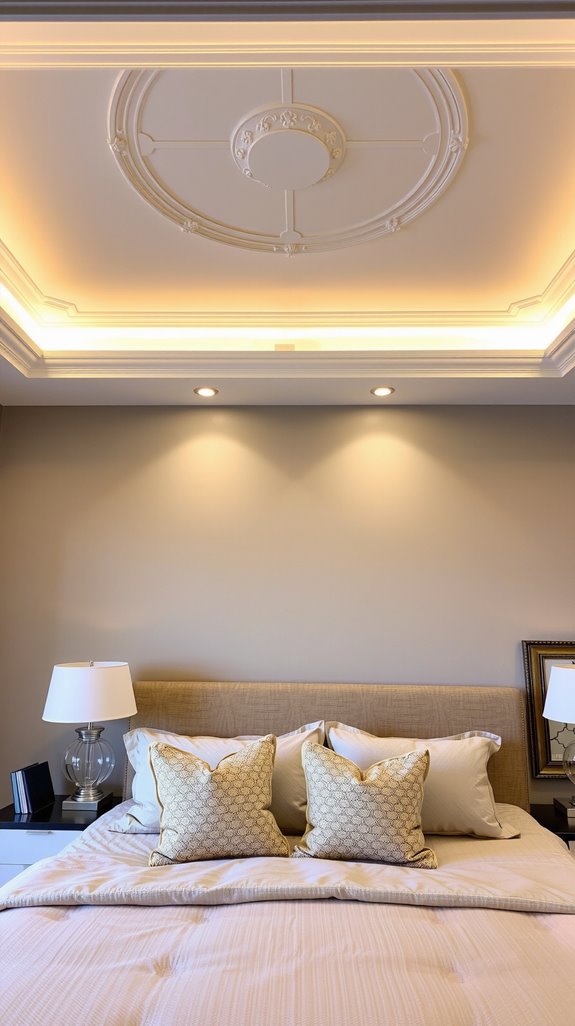
A POP tray ceiling is basically a recessed center panel with raised borders built from Plaster of Paris, and it makes your master bedroom ceiling look taller without touching the walls.
The recess typically runs 3,12 inches deep. Bigger rooms handle multi-level trays well.
Here’s where it gets useful: POP’s edges hide LED cove channels completely. Cove lighting is just LED strips tucked into a ledge, pointing light upward toward the ceiling.
Use 2700K, 3000K warm white strips at 60, 120 LEDs per meter with a frosted aluminum channel diffuser.
That combo kills dotting and produces one smooth continuous glow. For tray ceiling applications, aluminum LED channels like the ALP205 feature a 30° upward incline specifically designed to direct light optimally toward the ceiling surface.
Geometric POP Designs That Feel Modern and Calm
Tray ceilings with cove lighting handle the mood lighting side well, but they won’t do much for a bedroom that feels visually flat or directionless.
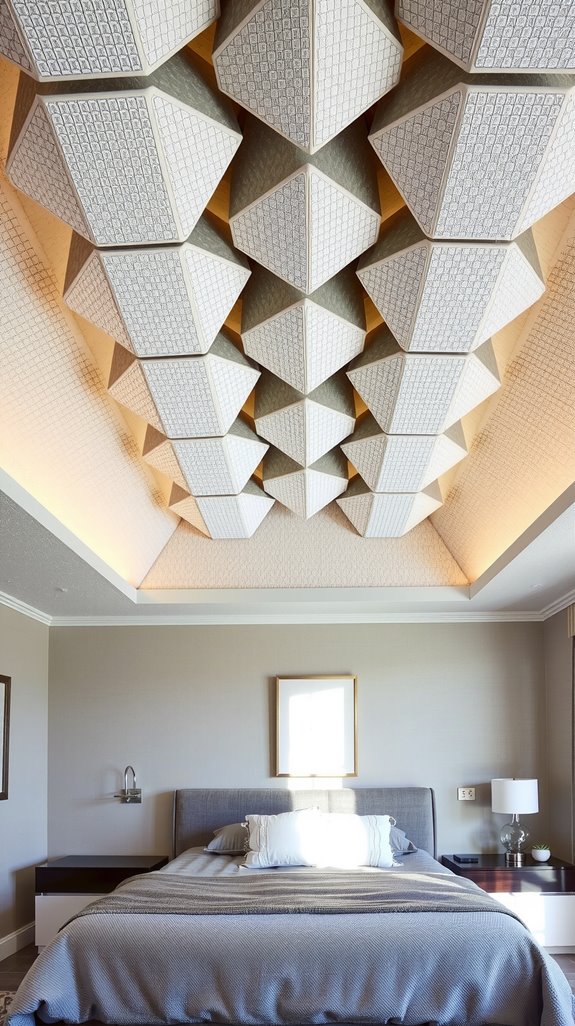
Geometric POP designs fix that with straight lines, grid patterns, or shallow rectangular coffers, recesses cut 2, 4 inches deep. Align those lines with your bed wall or wardrobe run, and the ceiling suddenly gives the room a clear visual backbone.
Pop ceiling ideas for small spaces can transform the ambiance and functionality of a room. By incorporating innovative lighting solutions into those designs, you can create a stunning visual effect that enhances the height of the space. Additionally, choosing lighter colors for the ceilings can further elevate the atmosphere, making even the coziest areas feel more open and inviting.
Creative pop ceiling ideas for kids can transform their space into a playful haven. By incorporating vibrant colors and whimsical shapes, you can create an engaging environment that sparks imagination. Consider elements like glow-in-the-dark stars or colorful clouds to add a touch of magic to their room.
Stick to warm whites or greige in matte finish. Skip sharp 90-degree corners over the bed; chamfered or radius edges keep things restful rather than clinical.
Simple geometry, done right, reads effortlessly modern. Geometric shapes define zones and guide furniture layout, making them as functional as they are visually grounded.
Central POP Panel Above the Bed as a Focal Point
One blank wall can quietly undermine a master bedroom that otherwise works well, and the wall above the bed is the most common offender.
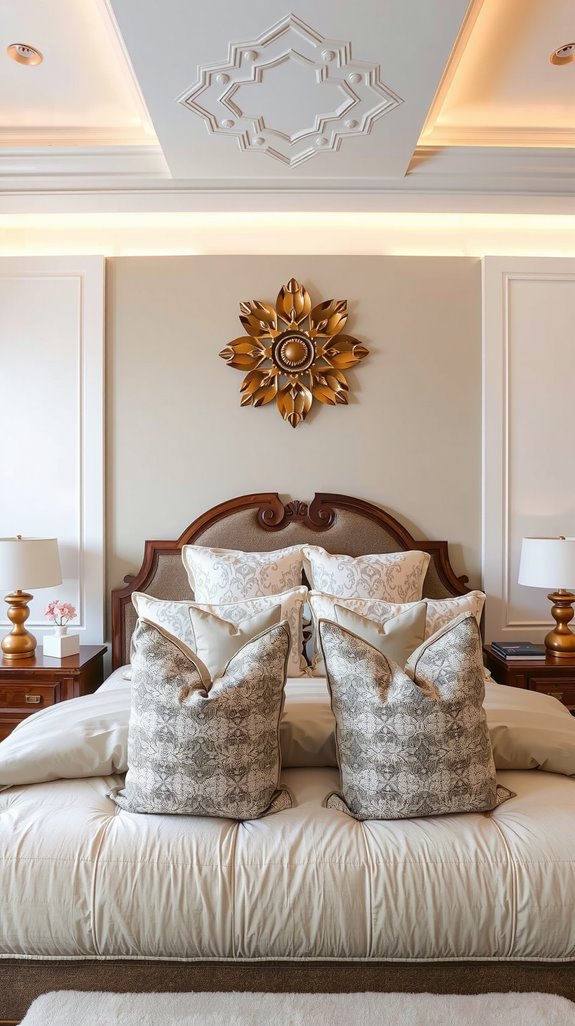
A central POP panel, that’s a custom plaster or gypsum feature with molded edges, fixes this by giving the wall a finished, intentional look.
Match the panel’s width to your headboard span, usually 60 to 76 inches for a queen. Keep edges stepped, not ornate.
Pair it with two wall sconces to frame the zone. The result is structure without noise, which is exactly what a retreat needs.
Layered POP Perimeter Ceilings for a Richer Look
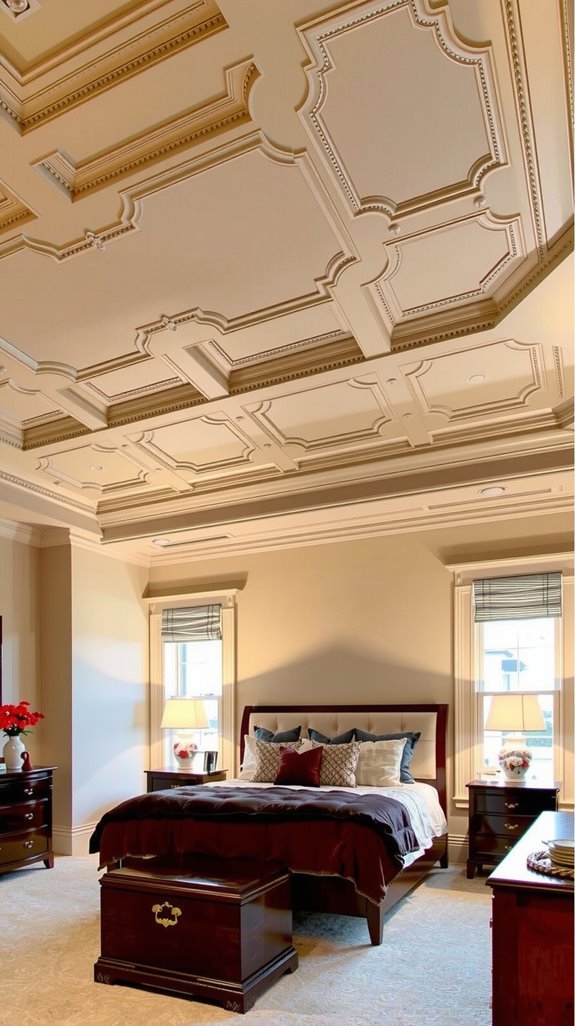
When a flat ceiling does nothing for a room, layered POP perimeter designs are your fix. You run two or three stepped bands around the ceiling’s edge, each dropping 2, 4 inches, creating shadow lines that make your walls look taller.
Keep the center at full height so the room doesn’t feel crushed. Tuck warm white LED strips, around 2700K, 3000K, into the cove channels for soft, indirect light that avoids harsh glare.
Add a slightly darker matte paint on the vertical step faces to sharpen the depth; it’s structured, practical, and honestly makes an 8-foot ceiling punch above its weight. You can also install decorative crown molding along the perimeter edges to add a classic, polished finish that complements the stepped layers.
Curved POP Borders That Soften Sharp Ceiling Lines
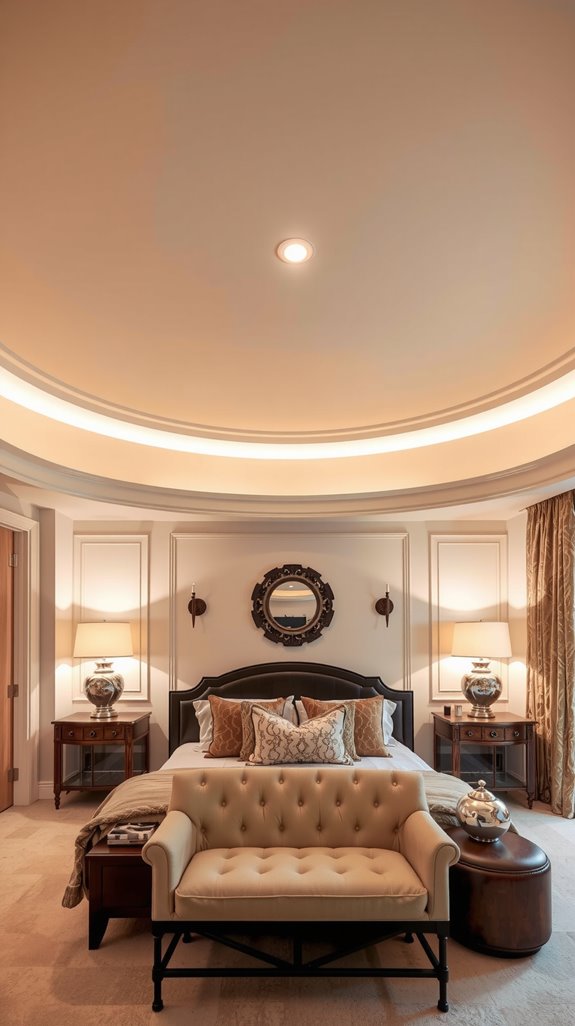
Sharp 90° corners where your walls meet the ceiling aren’t doing your master bedroom any favors. They create visual tension that’s surprisingly hard to ignore when you’re lying in bed staring upward.
Curved POP borders, basically soft cove profiles shaped with flexible metal channels and fiberglass-backed plaster, replace those harsh angles with a continuous flowing line.
Keep your border depth between 4 and 8 inches and your POP thickness around 10 to 20 mm for clean shadow lines.
Add a 2700K LED strip inside the cove and suddenly your ceiling stops feeling like a deadline and starts feeling like a retreat. For the border material itself, gypsum, plaster, or PVC are the most widely used options, each offering a different balance of weight, workability, and finish quality.
Minimalist POP Edge Details That Keep It Clean
Less is genuinely harder to pull off than more, especially when it comes to POP ceiling edges in a master bedroom. A slim 2,4 inch perimeter border frames your ceiling without crowding it.
Keep the edge thickness at 1,1.5 inches to protect ceiling height in standard 9,10 foot rooms. Add a 6,12 mm shadow gap between the POP edge and wall; that tiny slot creates a floating effect and actually reduces cracking over time.
Run LED strips inside shallow 1,2 inch POP channels, match your wall paint within two shades, and you’re done.
Wood-Finish POP Ceilings That Add Warmth and Texture
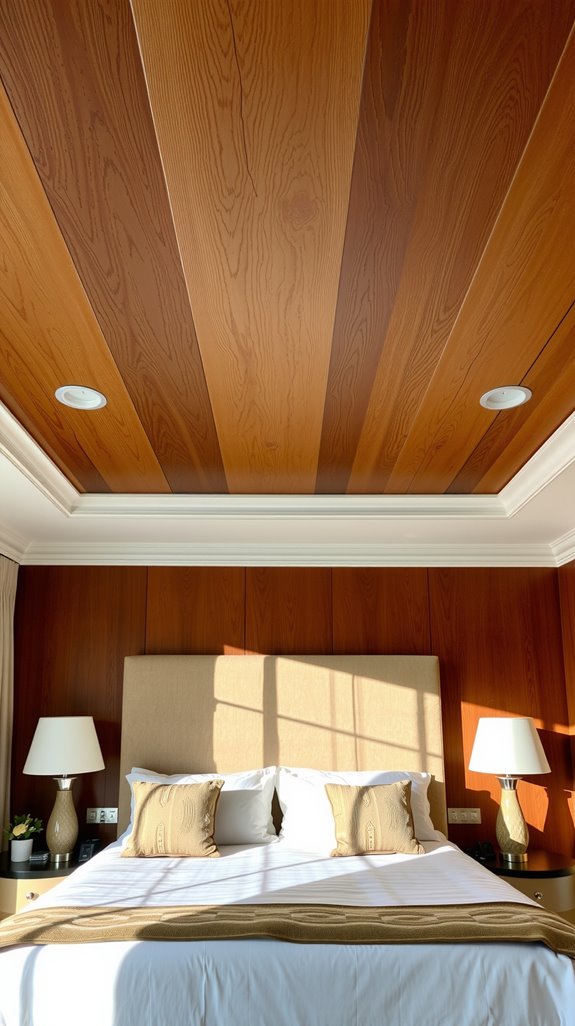
Though tile, metal, and glass look sharp in a bedroom, they push the room toward cold and clinical fast. A wood-finish POP ceiling fixes that without touching your floors or walls.
POP, plaster of Paris, gets painted with acrylic or enamel glazes, or wrapped in printed PVC laminate film that mimics real grain convincingly. Go mid, to dark-toned for coziness, or lighter oak and ash tones if you want airiness.
Pair it with 2700K, 3000K warm white lighting. You get the timber look, zero fire risk, and a ceiling your budget won’t resent.
The Floating POP Ceiling Effect and How It Works
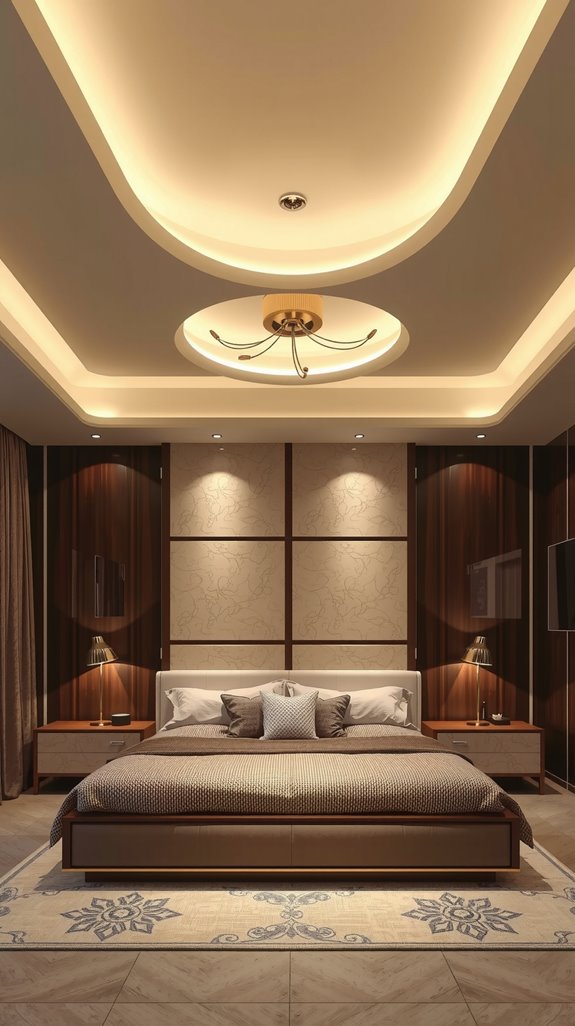
When a POP ceiling appears to float, it’s not magic. A 1-to-4-inch recessed gap runs along the perimeter where the ceiling panel pulls away from the wall.
LED strips sit hidden inside that gap, mounted on aluminum profiles to keep edges crisp. You choose warm white LEDs between 2700K and 3000K, and the light bounces off the wall, creating a soft glow.
Pick strips with diffusers to avoid hotspots. The result is a halo effect that makes your ceiling look suspended, surprisingly relaxing for a master bedroom, and surprisingly straightforward to build.
Star and Spotlight POP Ceilings for a Romantic Mood
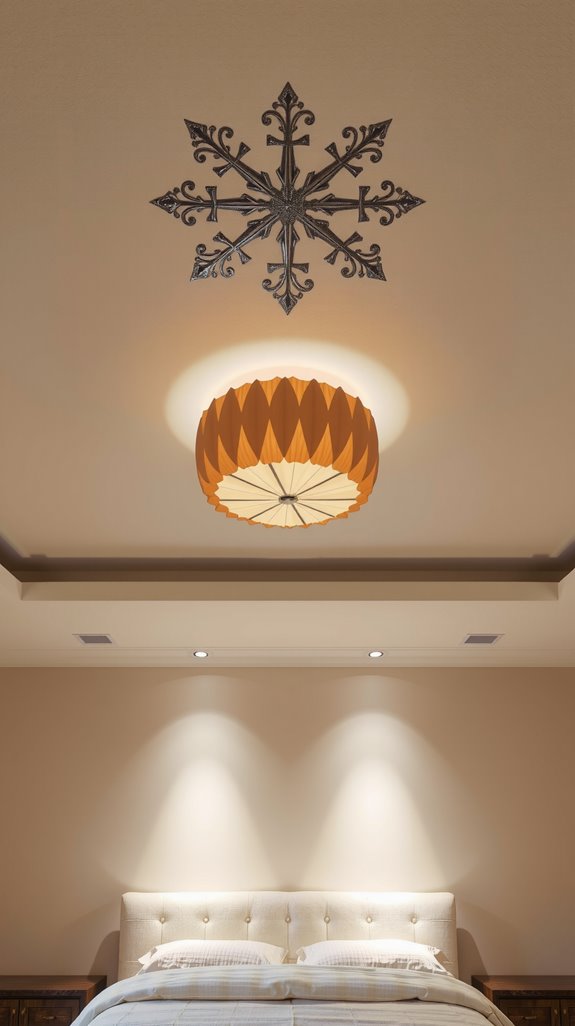
The floating halo effect is subtle and calm, but if you want a ceiling that actually stops people mid-sentence, a star and spotlight POP design does that job.
Fiber optic systems run light through thin bundles, placing hundreds of tiny glowing points in your POP panel with zero heat above your head. One LED engine outside the room powers 200,600 stars.
Mix micro “dust” points with a few larger accent points for a realistic sky. Add two or three 2W dimmable pin spotlights per zone for reading.
Keep color temperature at 2200,2700K. Romance confirmed, no mood-killing overhead glare required.
Subtle Floral POP Accents for a Touch of Elegance
Floral POP accents work best when they’re quiet, present enough to notice, subtle enough to forget. A single lotus or abstract petal medallion around your ceiling fan gives the eye somewhere to land without turning your ceiling into a garden.
Stick to one motif. Tone-on-tone works well here, carve the floral detail slightly deeper than the base layer so it reads as texture, not decoration.
Place a soft U-shaped floral frame above the bed zone to anchor the sleeping area. Use matte paint on the relief to kill glare and keep the mood genuinely restful.
How to Light a POP Ceiling in a Master Bedroom
Subtle floral relief looks flat in bad light, so once the plasterwork’s sorted, lighting becomes the next decision that actually matters.
Layer three types: ambient, task, and accent.
Ambient lighting, meaning your general room brightness, usually comes from recessed LED downlights or cove strips tucked inside the POP tray.
Stick to 2700, 3000K warm white LEDs; anything cooler feels like a dentist’s waiting room.
Space four recessed cans in a quadrant pattern, keep them off pillows to avoid glare, and wire everything to dimmers.
CRI 90+ LEDs let your textiles and wall colors actually look the way you chose them.
Conclusion
Your ceiling’s doing a lot of the heavy lifting in this room. A well-placed tray, a cove light tucked 6 inches from the edge, or a central POP panel above the bed can quietly transform how the space feels without a single piece of new furniture.
You’ve got nine solid directions to explore, pick one that fits your budget and ceiling height, then let the plaster do its thing.