Your bedroom should feel like a retreat, not another source of stress. If you’re a busy woman juggling a packed schedule, clutter isn’t just an eyesore, it’s quietly draining your energy.
The good news? Small, intentional changes can transform your space into somewhere you actually want to unwind. These 12 minimalist bedroom ideas are practical, realistic, and designed specifically for women who need their space to work harder for them.
Keep going, your most restful nights start here.
Key Takeaways
- A neutral color palette of warm whites, taupes, and soft grays creates a calming base that reduces visual noise and mental overwhelm.
- Positioning the bed symmetrically on the longest wall with matching nightstands and lamps promotes visual calm and organized energy.
- Multi-functional furniture like storage beds and ottomans with hidden compartments eliminates clutter without sacrificing style or space.
- Limiting nightstand surfaces to one to three essentials—lamp, book, hand cream—keeps the space intentional and sleep-focused.
- A five to fifteen minute daily reset routine prevents clutter buildup and consistently maintains a peaceful, minimalist environment.
A Neutral Color Palette That Calms Your Minimalist Bedroom Instantly
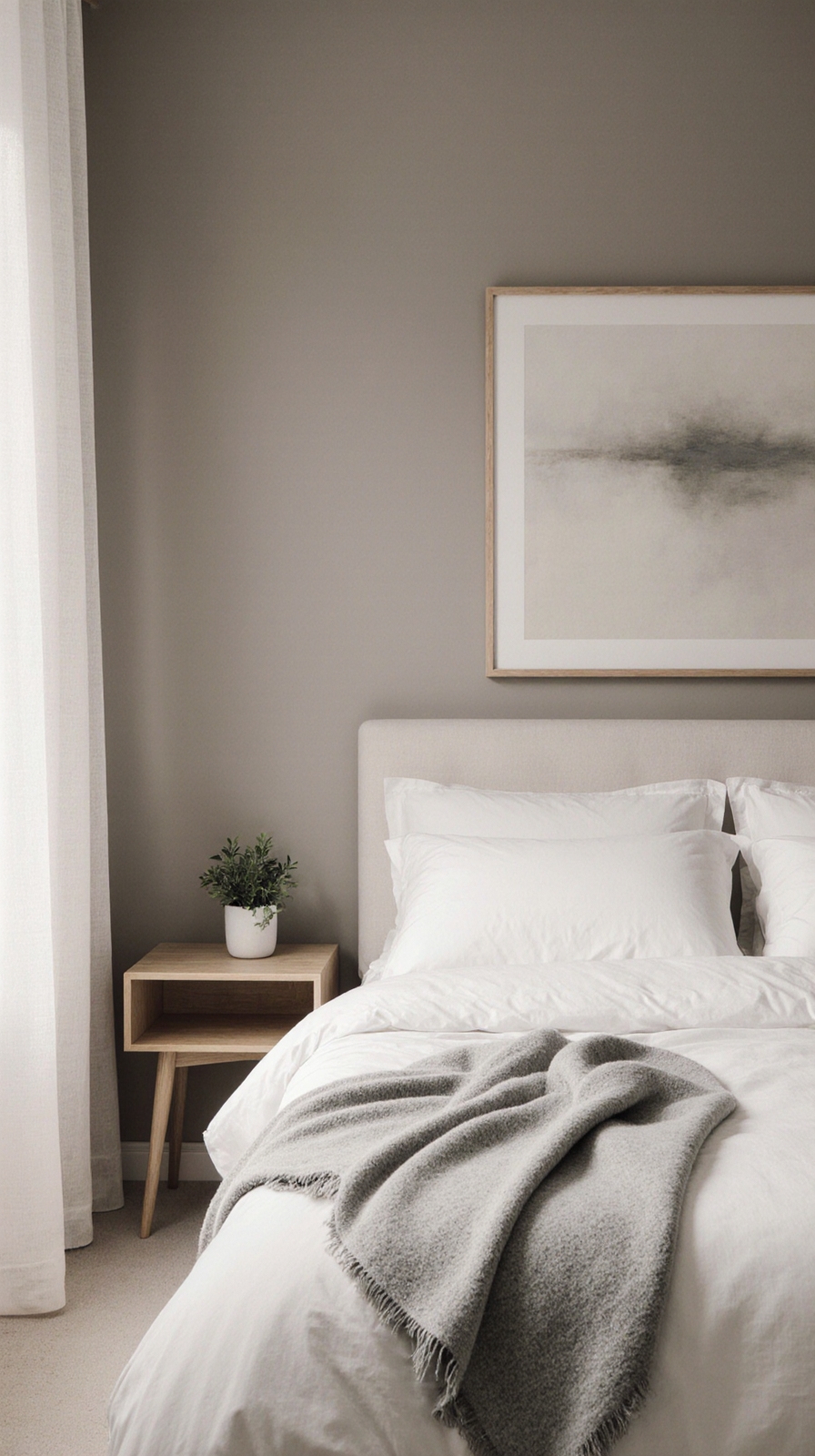
The right neutral palette can transform your bedroom from just another room into a genuinely restful retreat. Start with warm whites, soft creams, or greige on your walls to build a calm, cohesive base.
From there, layer in medium neutrals like taupe or warm gray for bedding and larger furniture. Then add just a touch of dark contrast, think a black-framed mirror or a wood-toned lamp, to keep things feeling intentional.
Always check your paints undertones before committing, because warm and cool neutrals can clash unexpectedly.
Warm and cool neutrals can clash — always test your paint’s undertones before committing to a full room.
Limit yourself to three neutral shades maximum, and your room will instantly feel more peaceful. Soft accent colors like dusty pink or muddy gray-green can add quiet character to your neutral base without disrupting the overall calm.
Cut Your Minimalist Bedroom Down to Essential Furniture Only
Once your color palette is locked in, the next big move is deciding what furniture actually belongs in the room.
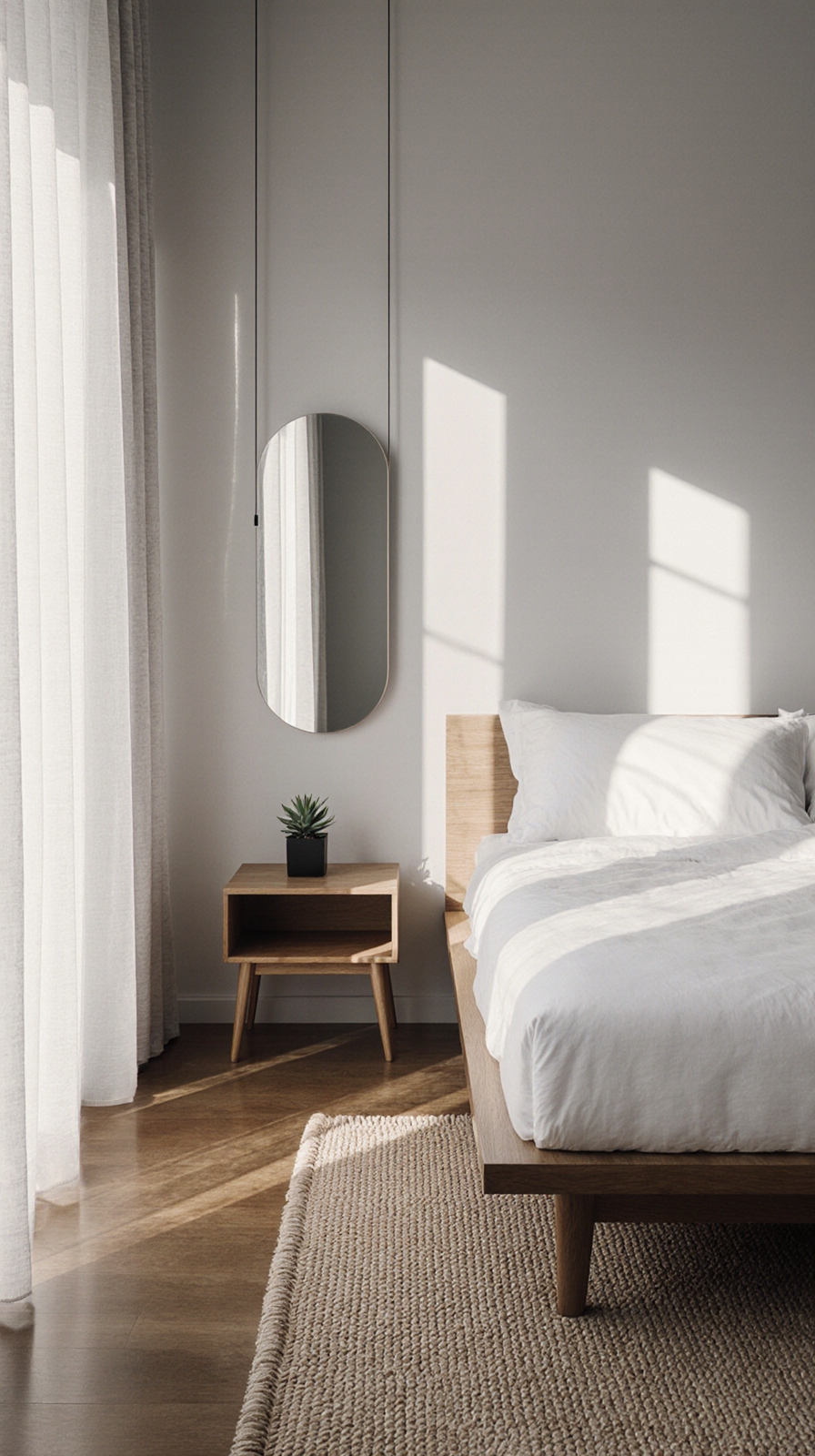
Start with three essentials: a bed, clothing storage, and one small surface for daily items. That’s genuinely all you need.
Place your bed on the longest uninterrupted wall to anchor the space, then leave 24-30 inches of walkway on each side. Choose storage pieces with drawers to keep belongings hidden and surfaces clear.
If something doesn’t serve a clear daily purpose, it doesn’t earn a spot. Build slowly, starting with must-haves before adding anything optional.
Opt for low-profile furniture with clean lines to maintain a streamlined, uncluttered aesthetic that feels open and intentional.
Pick Furniture That Pulls Double Duty
Every piece of furniture in a minimalist bedroom needs to earn its place, and the smartest way to do that’s by choosing pieces that pull double duty.
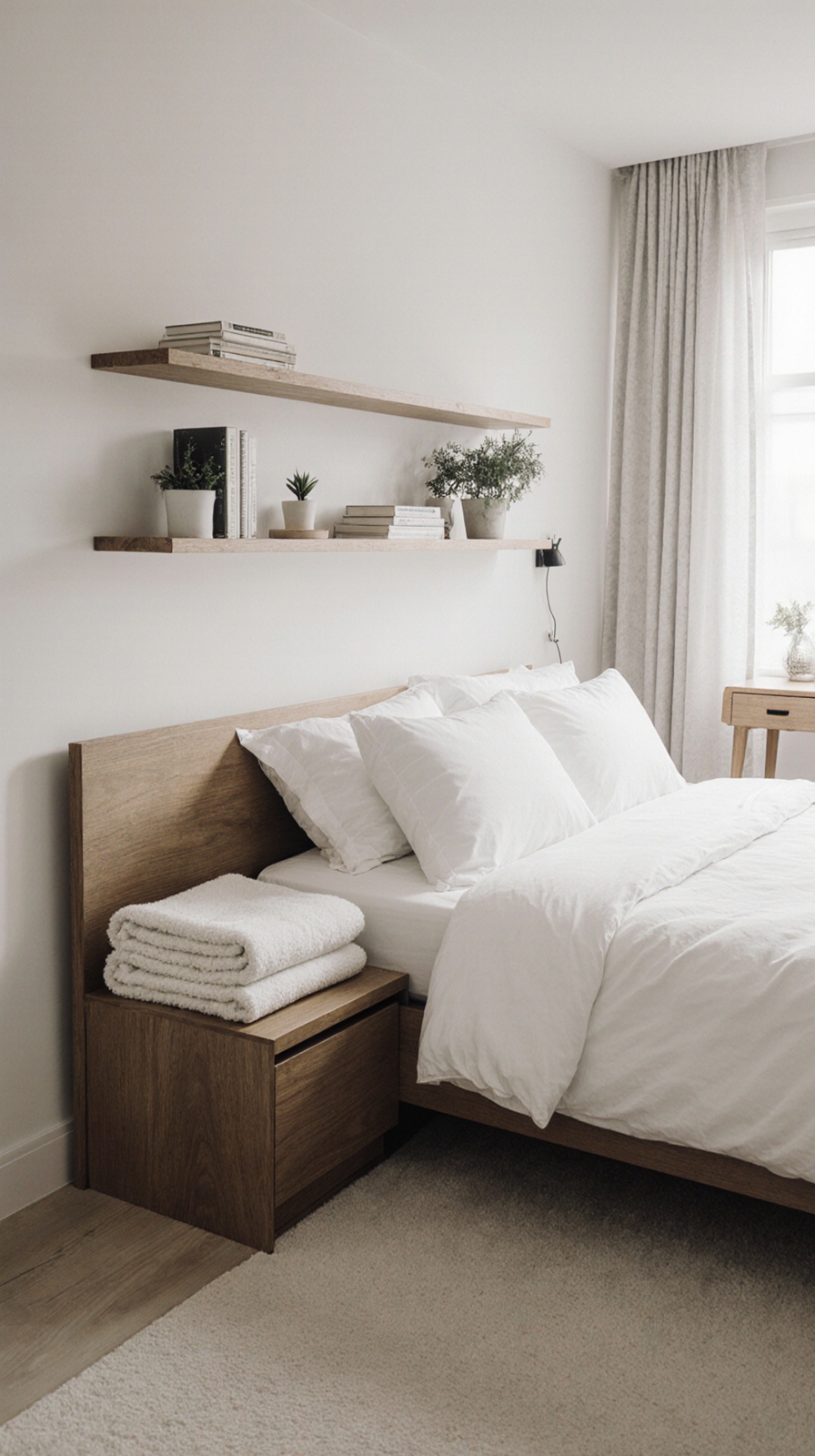
A storage bed with built-in drawers replaces your dresser entirely. A nightstand with shelves and cabinets keeps books and chargers hidden without cluttering your surface. Try a storage bench at the foot of your bed for seating, extra blankets, and visual balance all at once.
A sleeper sofa or daybed handles guests without demanding a separate guest room. When every furniture piece works harder your bedroom stays calmer and more intentional.
Ottomans with hidden compartments offer flexible storage while seamlessly blending function with the clean aesthetic a minimalist space demands.
Hide What You Need With Built-In Storage
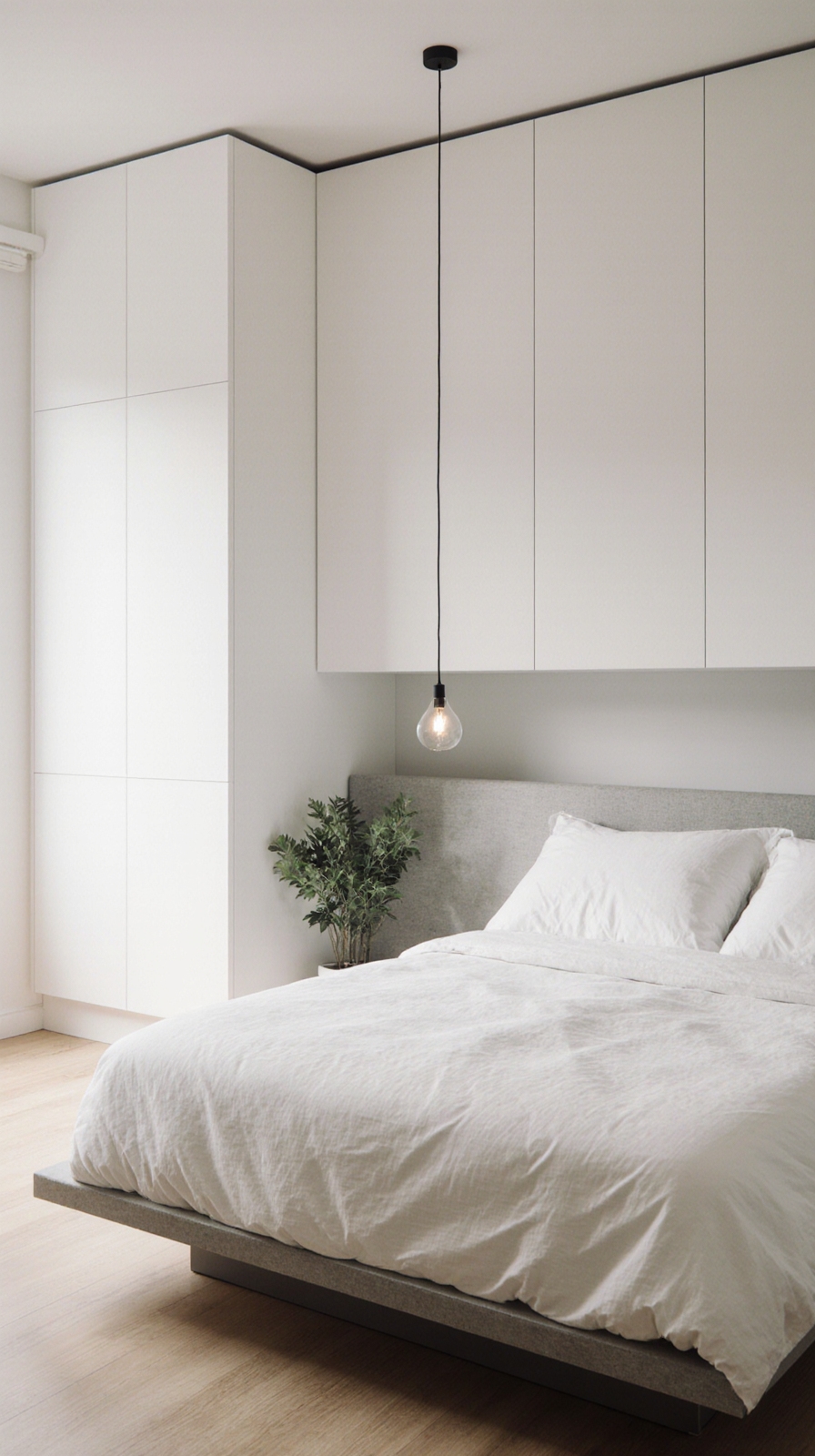
Built-in storage is one of the most powerful tools you can bring into a minimalist bedroom because it hides everything you need without adding visual noise to the room.
A platform bed with integrated drawers can replace an entire dresser, freeing up real floor space.
Floor-to-ceiling built-in wardrobes use vertical space efficiently and keep clothing completely out of sight behind closed doors.
A built-in headboard with hidden compartments removes the need for a nightstand entirely.
These solutions work together to clear surfaces, reduce visual clutter, and create the calm, restful environment you’re actually trying to live in. Elegant built-in closets can also integrate seamlessly with the room’s design, adding depth and brightness through mirrored accents while maintaining a polished, uncluttered look.
Apply the One-In-One-Out Rule to Stay Clutter-Free
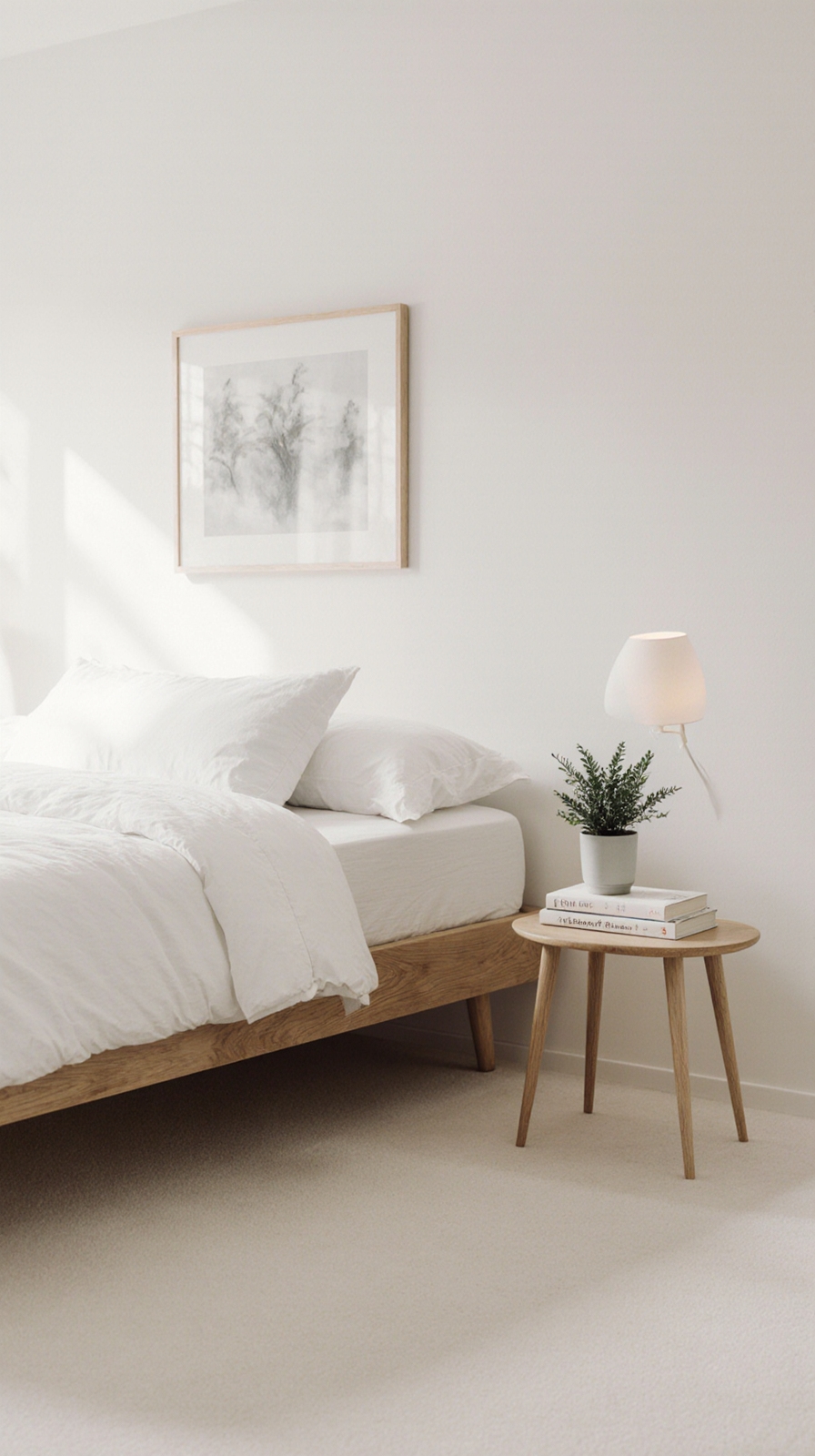
Adopting 3 simple habits around the one-in-one-out rule can do more to keep your bedroom clutter-free than any single declutter session ever will.
First, place a small donation bin near your closet so removing items feels effortless.
Second, ask yourself “what will this replace?” before every purchase, which naturally slows impulse buying.
Third, use your physical storage limits as signals; if a drawer won’t close, something leaves before anything new enters.
These habits shift your mindset from accumulation to curation, making your bedroom feel consistently calm without requiring another overwhelming weekend spent sorting through everything you own.
For an even faster path to minimalism, try a one-in, two-out approach, where every new item you bring in means two similar items leave your space.
Use Windows and Mirrors to Make Any Minimalist Bedroom Feel Bigger
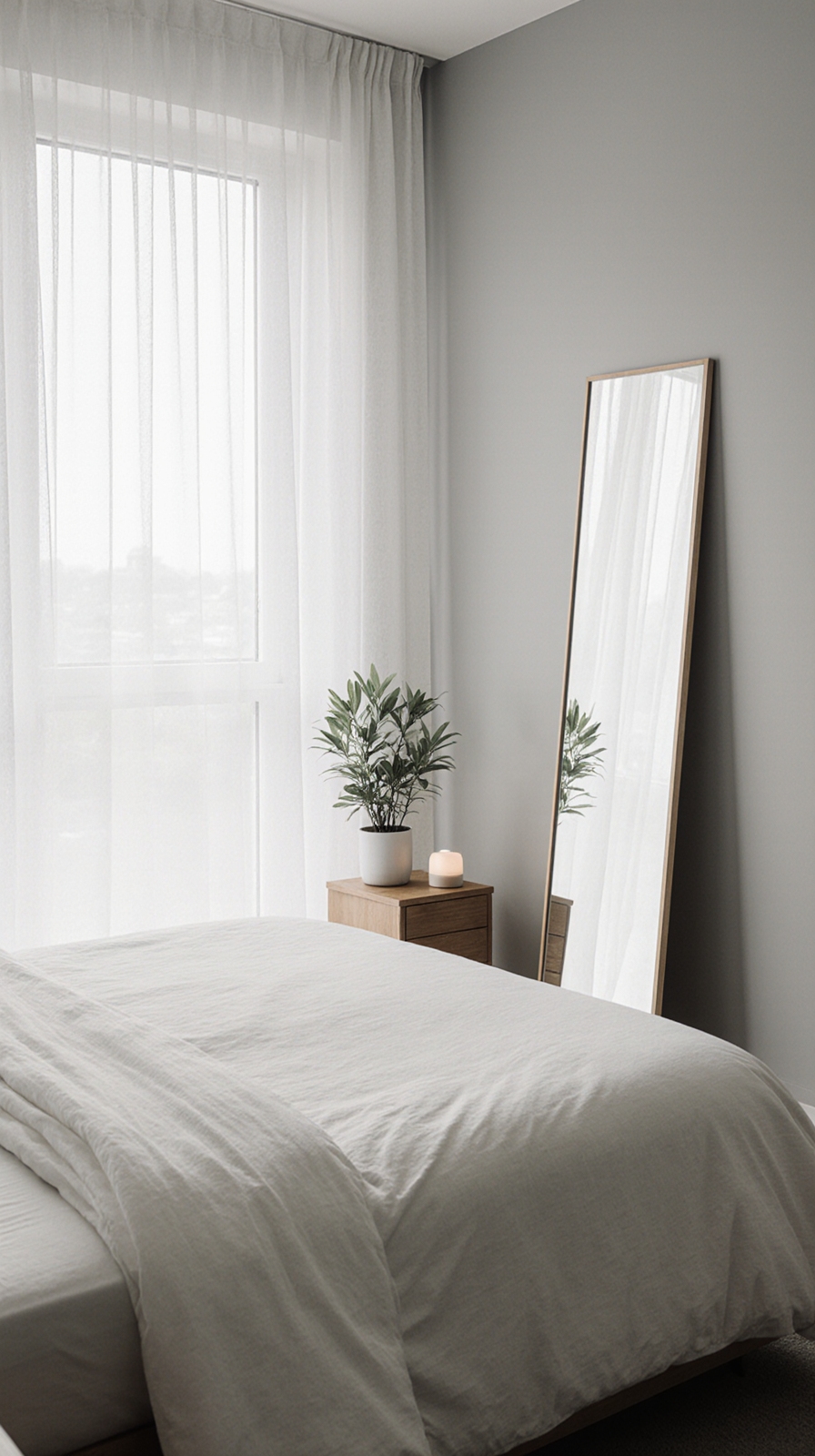
When it comes to making a minimalist bedroom feel larger, windows and mirrors are two of the most powerful tools you’ve got. Used strategically, they trick the eye into seeing more space than actually exists.
Try these three simple moves:
- Place a mirror directly opposite your window to visually double the natural light and depth.
- Choose one oversized or floor-length mirror instead of several small ones, to reduce visual noise.
- Hang curtains higher and wider than your window frame to make ceilings appear taller and windows grander.
These changes cost little but deliver big results.
Layer Textures So Your Minimalist Bedroom Doesn’t Feel Cold
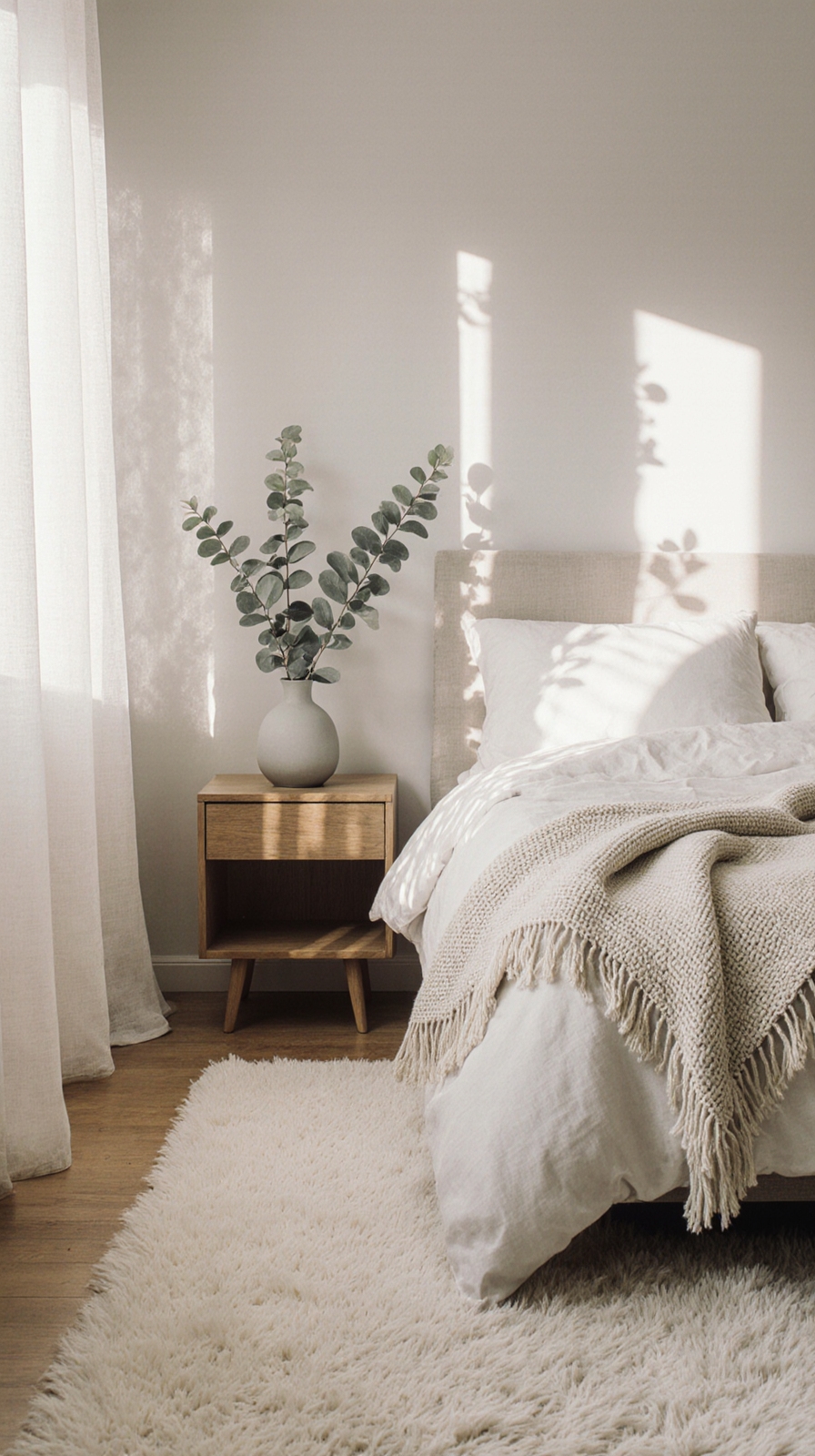
Mirrors and smart window placement can make your bedroom look bigger, but size isn’t the only thing that makes a room feel good to be in. Texture is what makes a minimalist bedroom feel warm instead of cold and empty.
Layer smooth percale sheets with a linen duvet, then add a chunky knit throw. Place a wool rug underfoot. Mix wood nightstands with soft fabric lampshades, the contrast between hard and soft surfaces is what gives the space its depth.
| Layer | Material | Effect |
|---|---|---|
| Smooth | Percale sheets | Clean, calm base |
| Nubby | Linen duvet | Organic warmth |
| Plush | Wool throw | Cozy softness |
| Accent | Wood nightstand | Grounded contrast |
Choose Bedding That Instantly Simplifies the Room
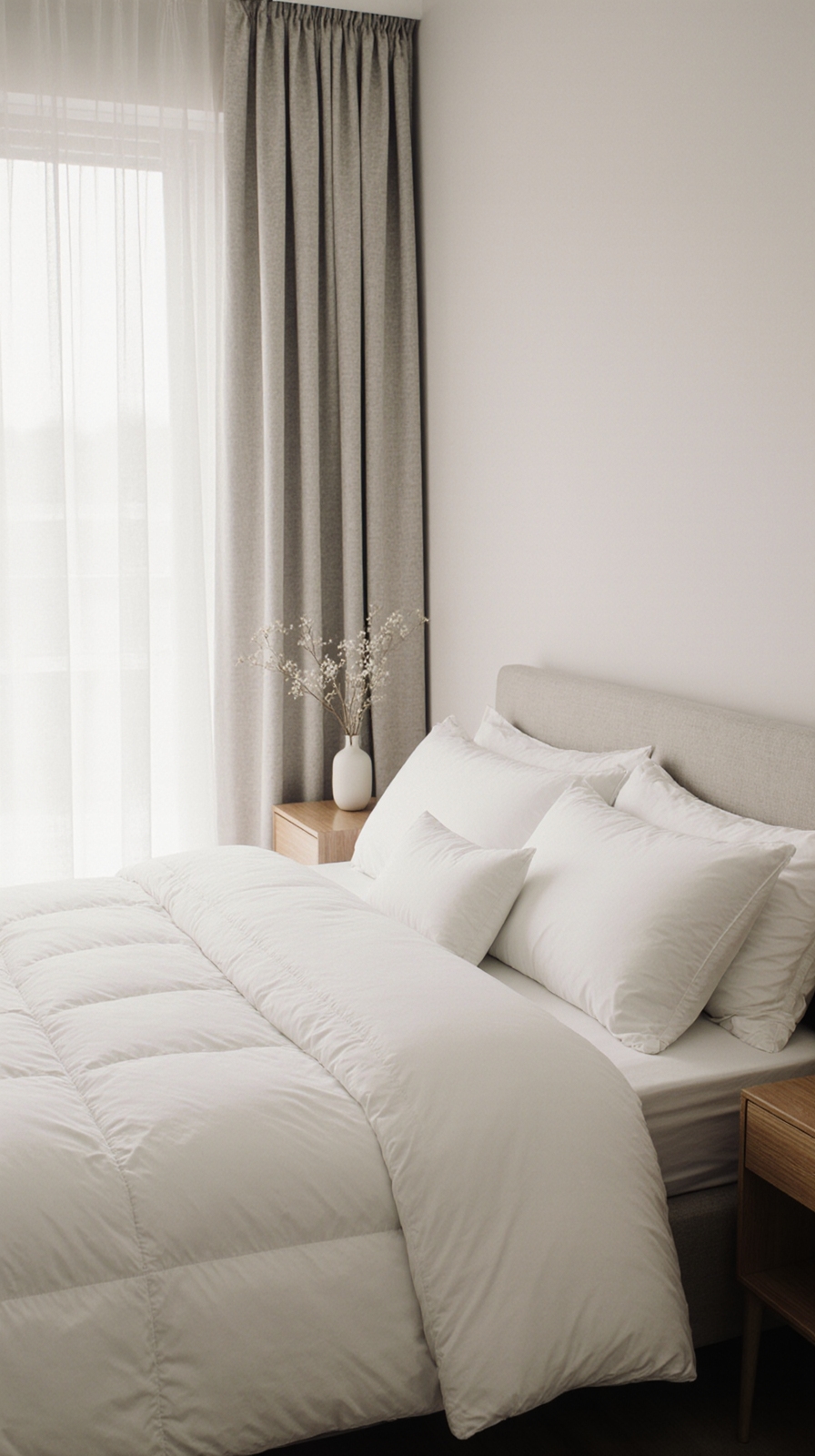
The bed is the first thing your eye lands on when you walk into a bedroom, so what you put on it matters more than almost any other design choice in the space.
Keep it simple with these three choices:
- Pick natural fabrics like linen, cotton, or bamboo in solid, neutral tones such as warm beige, taupe, or pale gray.
- Limit your layers to sheets, one main cover, and an optional throw.
- Keep pillows purposeful, two sleeping pillows per person, plus one lumbar pillow if needed.
Simple bedding instantly makes the whole room feel calmer.
Choose Accent Pieces Without Creating Clutter
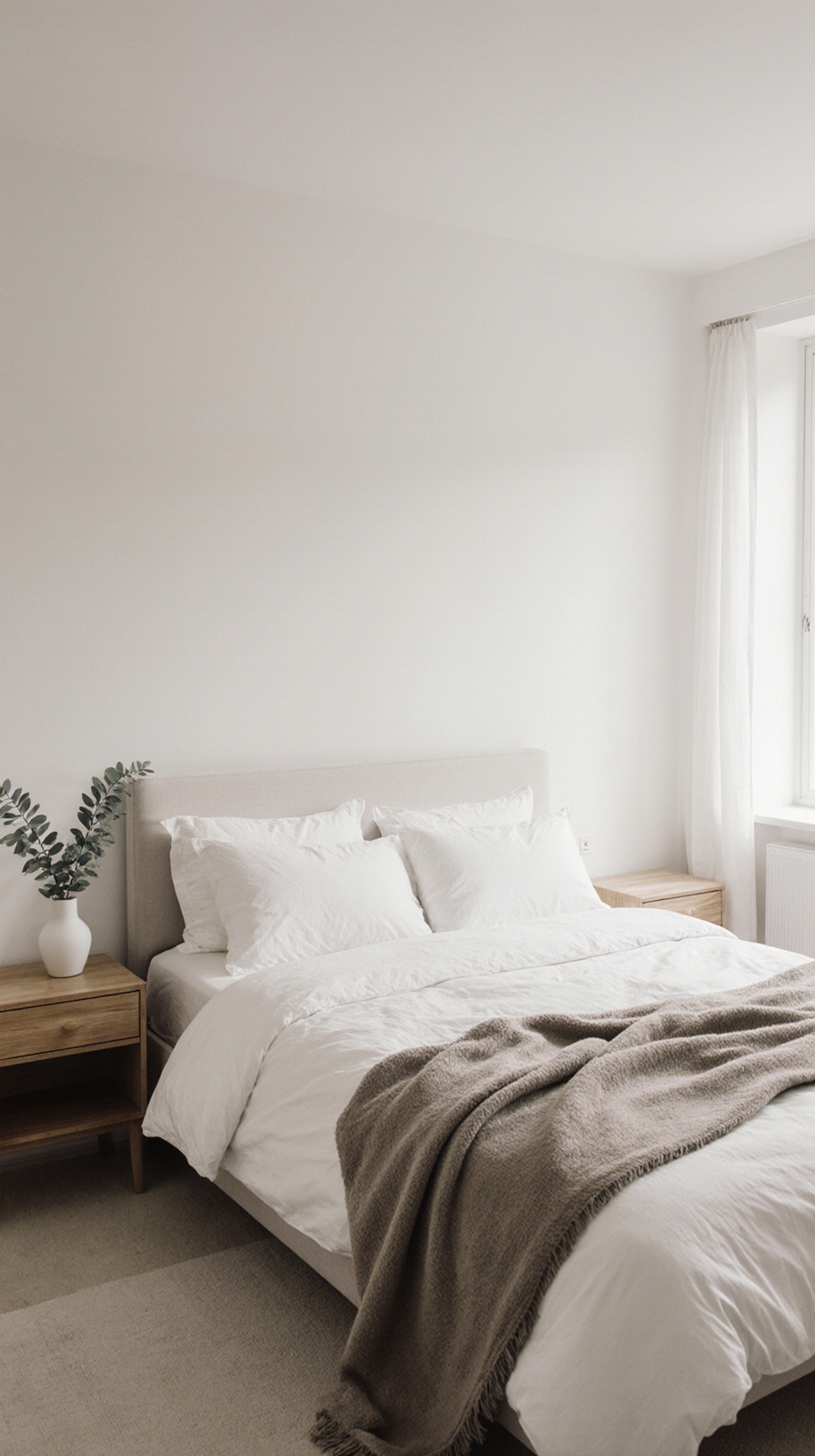
Once your bedding is sorted, accent pieces are where minimalism gets tested. Stick to three to five decorative items total, and choose ones that actually *do* something. A lamp, a mirror, a woven basket, these add warmth while staying functional.
Pick one strong focal point, like a single piece of wall art, and let everything else stay quiet. Keep nightstands and dressers mostly clear with just one carefully chosen object per surface.
Use natural materials like wood, linen, or cotton to add texture without visual noise. Remember, empty space isn’t boring, it’s the whole point.
Create Symmetry Around the Bed for Instant Visual Calm
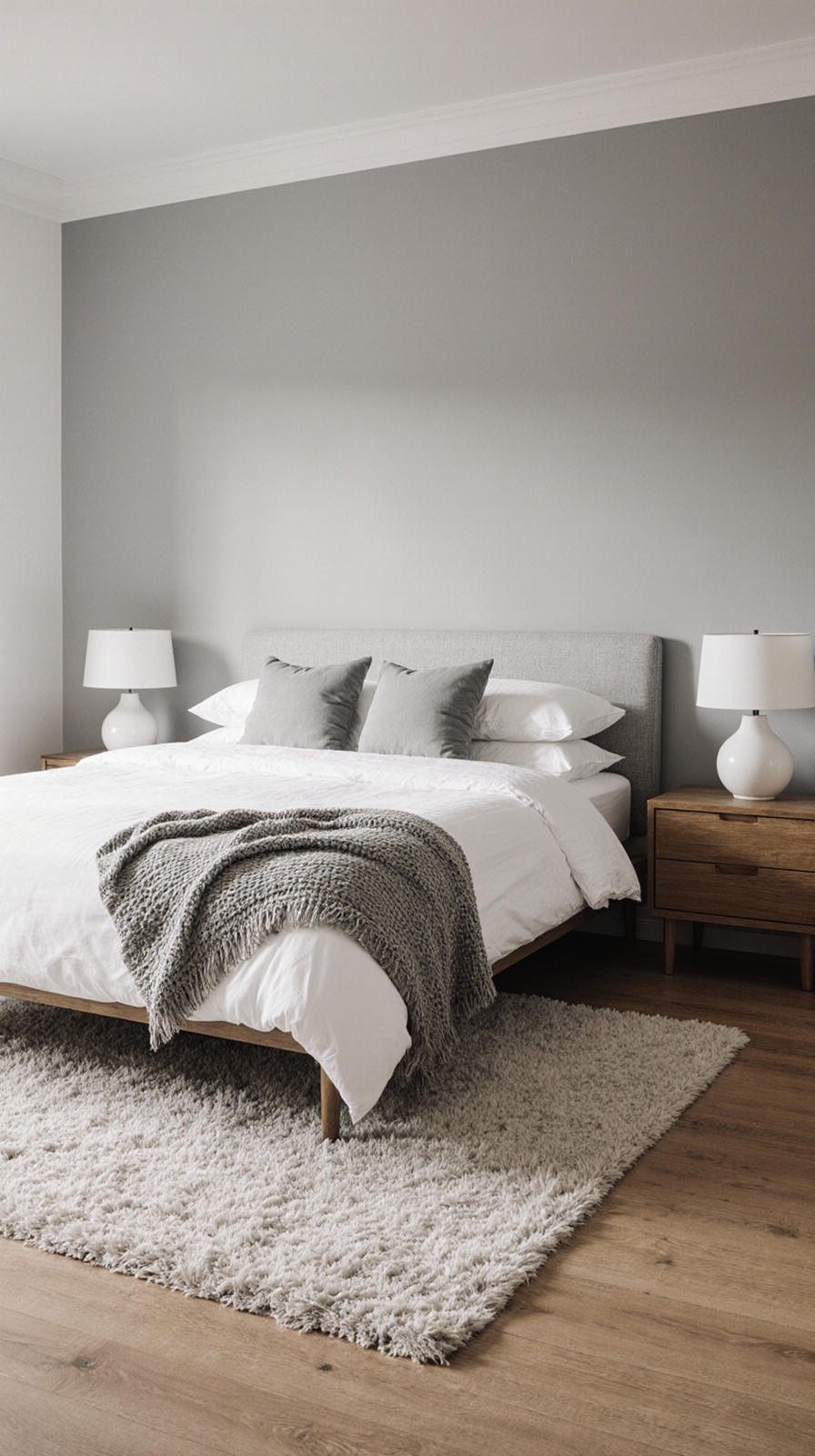
Symmetry is one of the simplest tools you can use to make a bedroom feel instantly calm and put-together.
When both sides of your bed match, your brain processes the space faster and with less effort, which actually reduces mental fatigue.
Try these three symmetry moves:
- Center your bed on the main wall with equal clearance on both sides
- Match your nightstands and lamps at identical heights on each side
- Hang centered artwork above your headboard as a visual anchor
Small mirrored details create big peace, without adding clutter.
Keep Your Nightstand Clear for a Calmer Minimalist Bedroom
Matching nightstands and centered lamps go a long way toward visual calm, but what’s *on* those nightstands matters just as much as how they’re arranged.
Limit your surface to one to three items that directly support sleep, like a lamp, a book, or hand cream. Everything else belongs in a drawer, basket, or caddie.
Keep only one to three sleep-supporting items on your nightstand. Everything else finds a home out of sight.
Use a small tray to corral jewelry or tiny items so they look intentional rather than scattered.
Do a quick nightly reset, returning things to their designated spots. That one habit alone keeps clutter from quietly rebuilding while you sleep.
Daily Resets That Stop Clutter From Creeping Back
Even the tidiest minimalist bedroom can quietly drift back into chaos without a consistent reset habit holding it together. A short daily reset of five to fifteen minutes keeps clutter from stacking up and becoming overwhelming.
Try these three focused actions:
- Clear every visible surface, and return only your essentials.
- Sort stray clothes immediately into laundry, hang, or fold categories.
- Scan the floor and remove anything that doesn’t belong.
Pick a set time, either morning or night and stick with it. Consistency beats perfection every single time.