Neutral bedrooms fail for one simple reason, beige without texture is just a waiting room.
You’ve probably played it safe with white walls and a gray duvet, and the result feels flat, not calm. The fix isn’t more color. It’s layering the right materials, lighting, and proportions in a specific order.
Stick around, because the difference between boring and beautiful is closer than you think.
Key Takeaways
- Layer linen, velvet, and wool textiles to add tactile richness that prevents neutral bedrooms from feeling flat or monotonous.
- Build a palette using at least three neutral values with 80% warm undertones to create depth without disrupting calmness.
- Use warm bulbs between 2700K–3000K to generate ambient warmth that makes neutral tones feel inviting rather than cold.
- Incorporate earthy tones like taupe, muted greens, and cream to add sophistication while maintaining a soft, restful atmosphere.
- Choose floor-length curtains, warm metallics, and matte finishes to add elegance and visual interest without overwhelming the space.
Why Neutral Bedrooms Feel Boring (And How to Fix That)
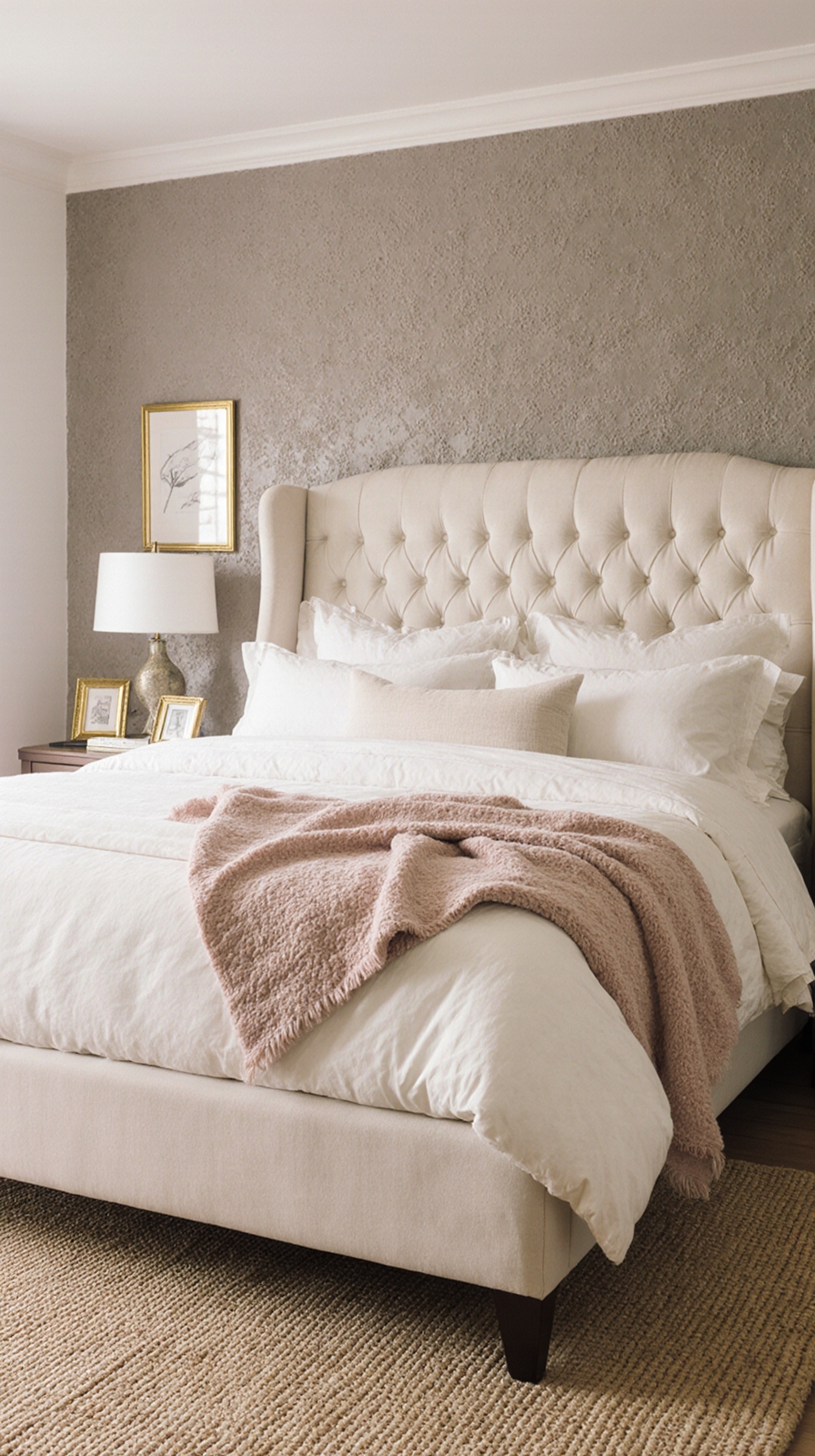
Neutral bedrooms don’t fail because of the colors you chose — they fail because beige on beige on beige with zero variation is basically wallpaper for napping.
The real problem is usually three things: no texture contrast, no color depth, and flat lighting.
You’re mixing smooth cotton sheets with smooth linen pillows on a smooth painted wall. Nothing pushes against anything else.
Fix it by adding one rough element, like a woven basket or wool throw, one dark anchor like a black frame, and swap your bright white bulbs for 2700K warm ones.
Neutral tones are actually easier for your brain to process, which means less mental stimulation and a faster path to genuine rest.
Which Neutral Bedroom Style Actually Suits You?
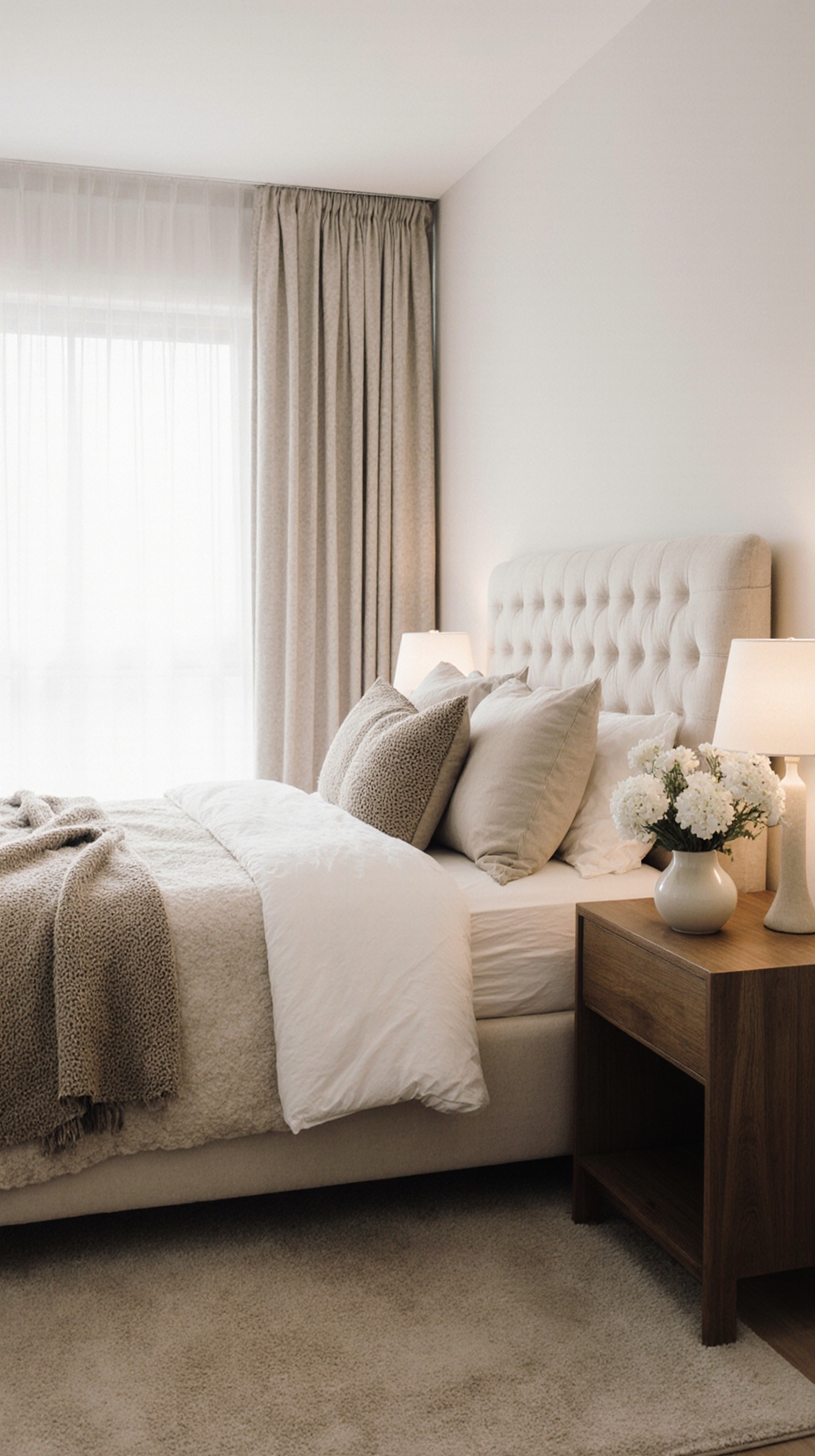
Picking a neutral bedroom style isn’t about copying a Pinterest board — it’s about matching the room’s mood to how you actually use it. Do you want calm or character?
Warmth or airiness?
Your answers point directly to a style. Neutral does not solely mean white — earthy tones like taupe, muted greens, and browns can bring just as much quiet sophistication to a bedroom.
| Your Priority | Best Style Match | Key Element |
|---|---|---|
| Cozy, tactile comfort | Textural Layering | Chunky knit throws, velvet |
| Clean, uncluttered space | Monochromatic Minimalism | Single hue, pale wood |
| Natural, grounded feeling | Earthy Neutrals | Rattan, jute, terracotta |
| Light, airy, serene room | Cool Neutrals | Crisp white, linen, sheer curtains |
Start With a Warm, Layered Neutral Bedroom Color Palette
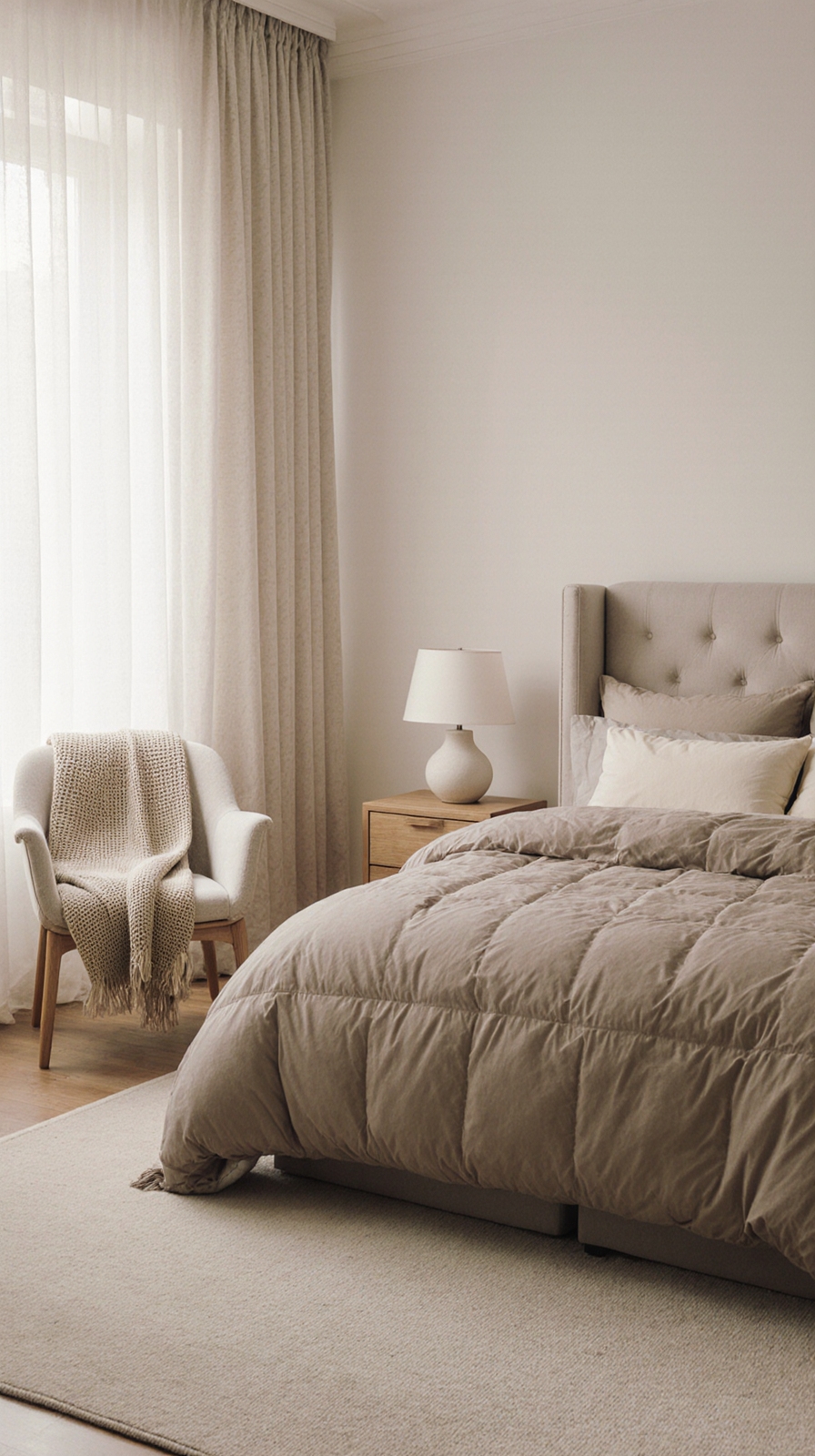
Once you’ve figured out your style direction, the next step is building your color palette — and warm neutrals are the most forgiving place to start.
Choose a wall color with a Light Reflectance Value between 50 and 70 — think soft beige, creamy ivory, or warm taupe. These shades stay bright without feeling clinical.
Then layer at least three neutral values: light walls, mid-tone bedding, and a darker throw or rug.
Keep your mix roughly 80% warm undertones, 20% cool. That small dose of cool prevents the room from feeling like a butter commercial.
Pairing your warm wall color with crisp white bedding and a chocolate-brown rug creates subtle contrast that adds dimension without disrupting the calm.
Choose an Upholstered Bed Frame That Feels Luxe, Not Bland
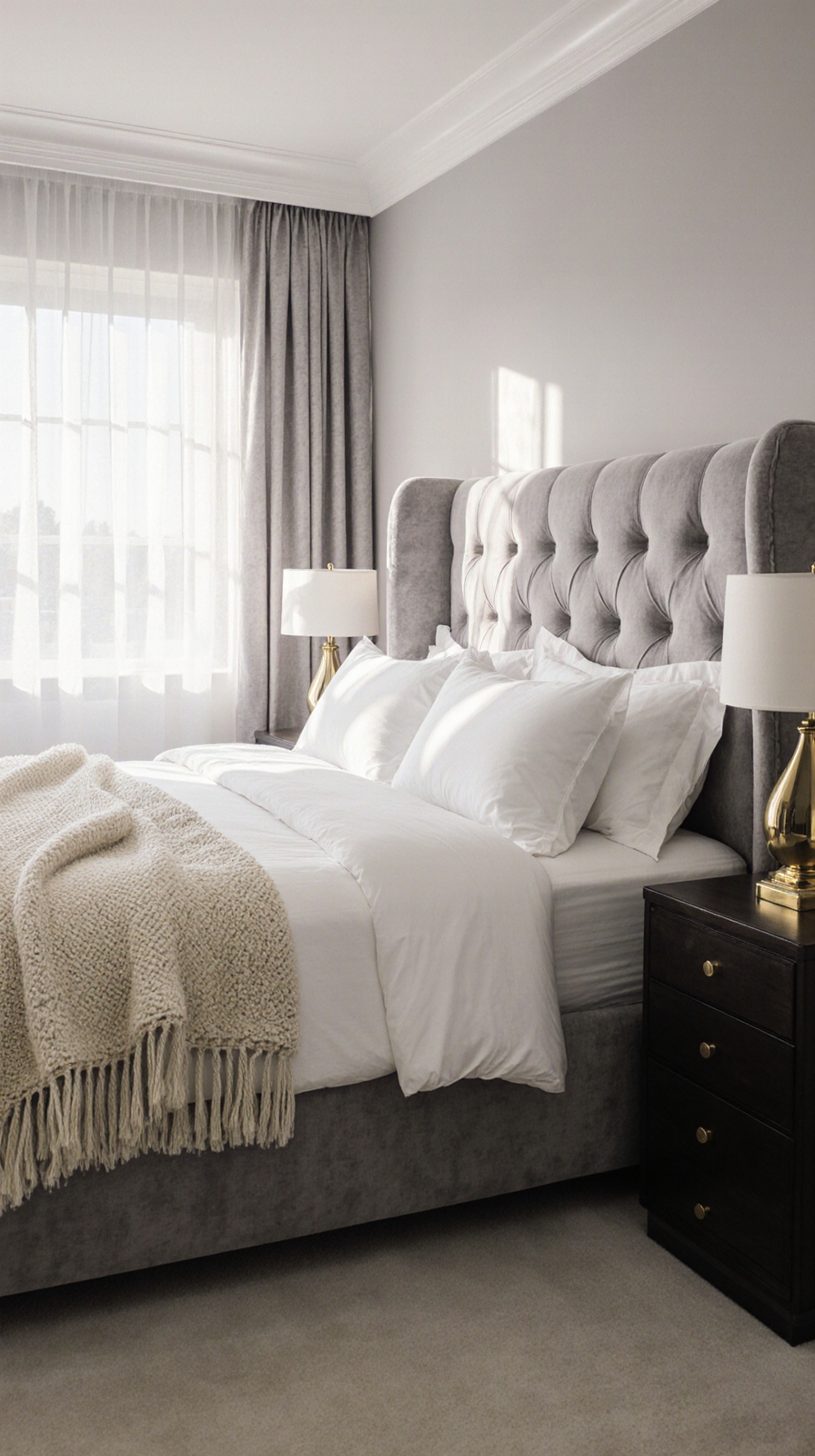
The bed frame does most of the heavy lifting in a neutral bedroom, so getting it wrong is expensive in every sense.
Velvet upholstery gives you depth and texture that flat painted wood simply can’t match. Bouclé runs a close second, adding warmth without trying too hard.
Velvet pulls a room together the way no painted surface ever could — texture does the talking.
You’ll want high-density foam padding inside the headboard because thin padding collapses fast and looks cheap within months.
Go oversized if your room allows it. A gas lift base hides storage underneath without breaking the visual calm.
Layered headboards add architectural weight. Pick one fabric, commit, and let the color palette do the rest.
Muted greys and warm metallics work especially well here because they create a calm, restful atmosphere that feels intentional rather than accidental.
Layer Linen, Velvet, and Wool So Every Surface Has Tactile Depth
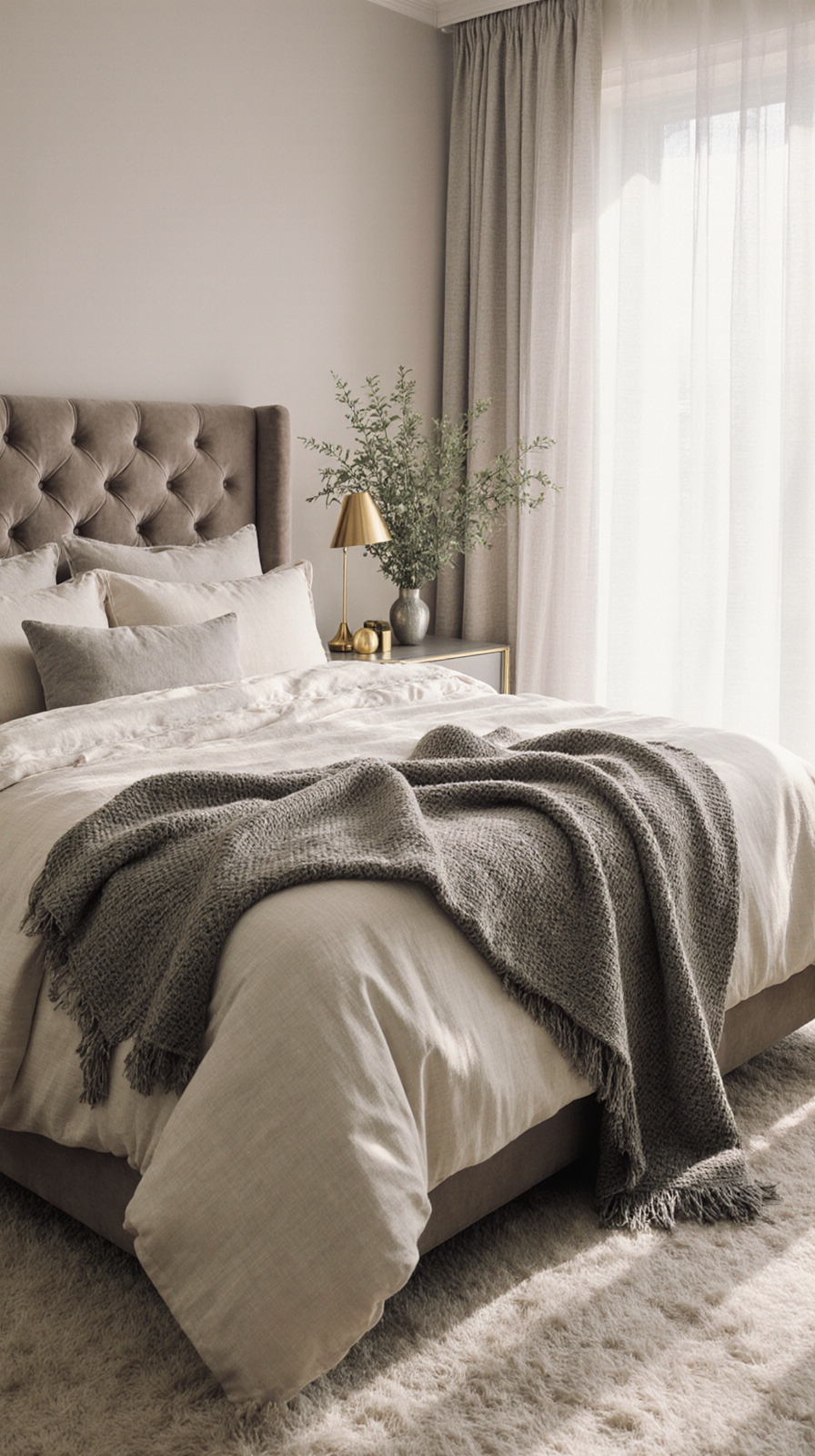
Your bed frame sets the visual anchor, but fabric is what makes a neutral bedroom feel like something you’d actually want to sleep in.
Three textures do the work here: linen, velvet, and wool.
- Start with a linen duvet cover as your base layer — it’s breathable and softens after a few washes.
- Add velvet lumbar pillows in front of your sleeping pillows for depth.
- Drop a wool throw at the foot of the bed to anchor everything.
- Layer a wool rug over jute for underfoot contrast.
Three textures. One calm room. No boredom.
A woven bench accent at the foot of the bed adds warmth and contrast that keeps the whole look grounded.
Mix Wood Tones for Organic, Effortless Depth in a Neutral Bedroom
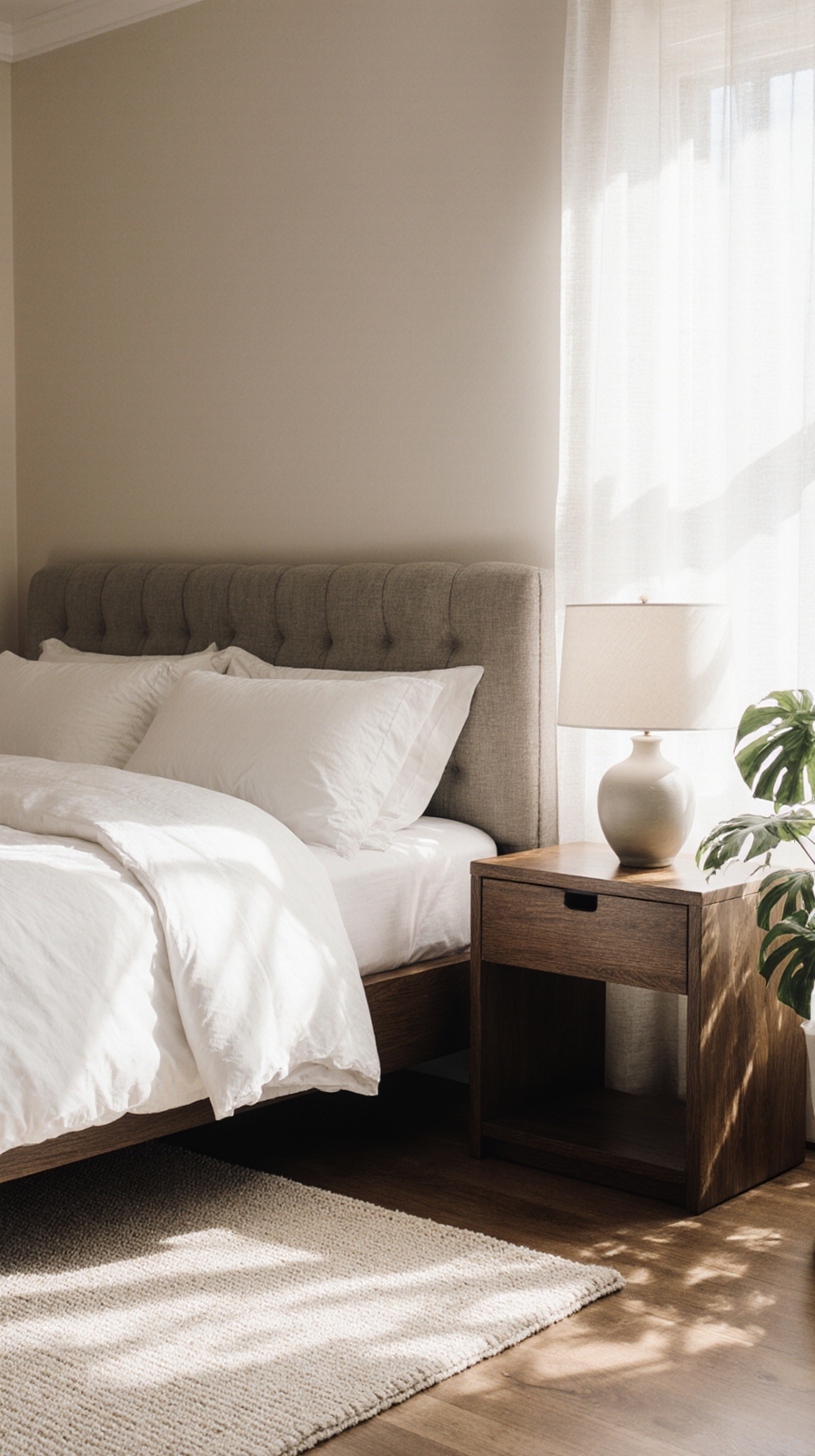
Matching every wood tone in a neutral bedroom is the design equivalent of wearing a full tracksuit — technically fine, but forgettable.
Mixing two to three wood tones creates organic depth without chaos.
Anchor the room with one dominant tone, like a walnut bed frame, then layer in lighter woods on shelving or mirrors.
| Wood Placement | Tone Strategy |
|---|---|
| Bed frame | Darkest tone |
| Dresser | Medium tone |
| Shelving | Lightest tone |
| Frames/lamp bases | Repeat dominant |
| Accent decor | 10% contrast tone |
Follow the 60/30/10 rule. Keep undertones consistent — warm with warm. To avoid a flat, one-dimensional look, introduce different textures or finishes across your wood pieces even when the tones are similar.
Use Warm Metallics to Keep Your Neutral Bedroom From Feeling Flat
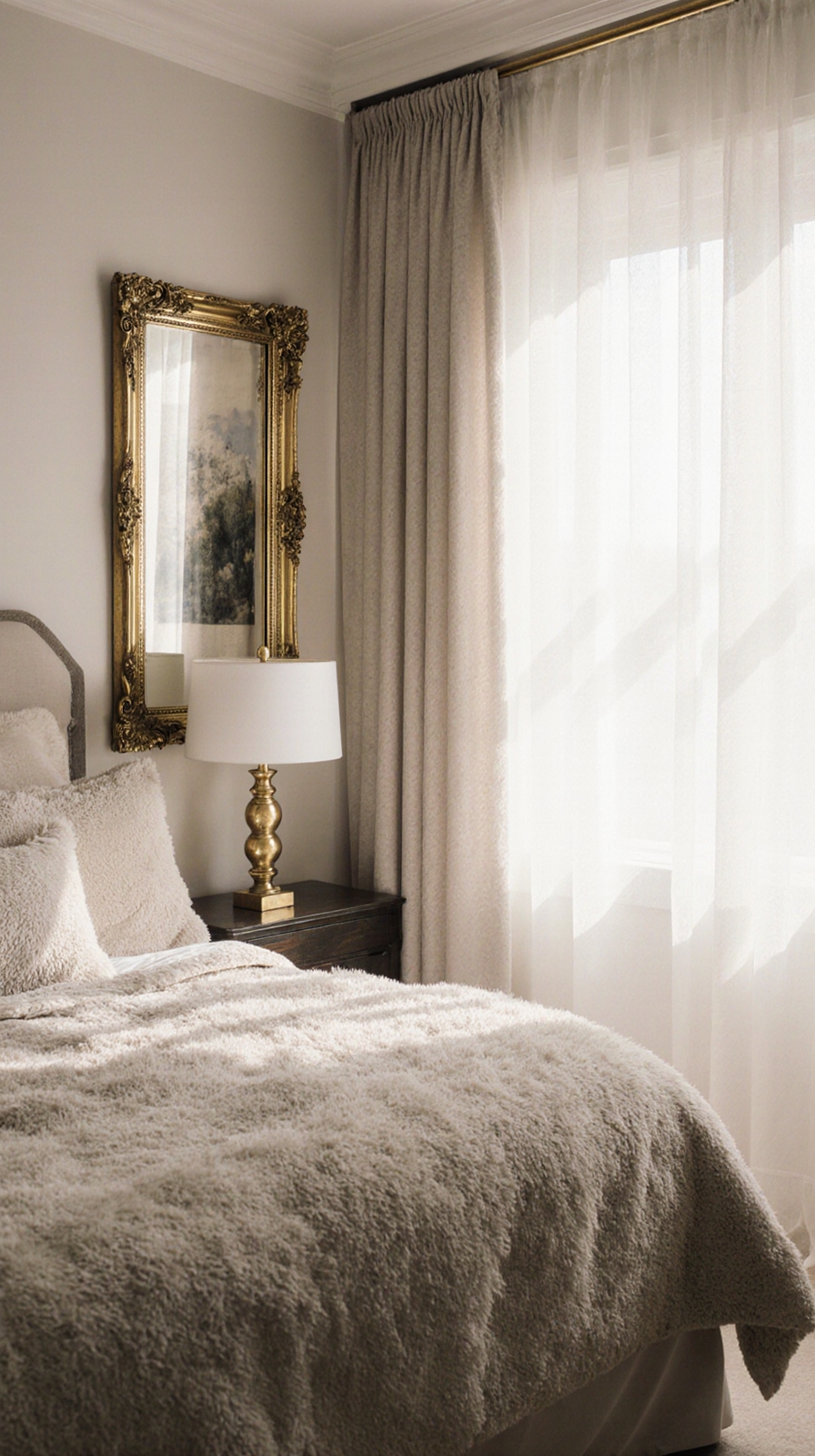
A neutral bedroom without metallics is just beige with ambition. Warm metallics — gold, brass, copper — add light reflection and visual weight without introducing color.
Match your metal tone to your neutral’s temperature. Cream and taupe walls pair with antique brass. Gray and greige walls want silver or chrome instead.
Warm walls call for warm metals. Cool walls call for cool ones. Temperature matching is non-negotiable.
- Stick to one primary finish and repeat it
- Use warm bulbs (2700K–3000K) to enhance brass and gold glow
- Mix brushed and polished finishes for subtle contrast
- Place metallic mirrors near windows to bounce natural light
Pick your finish. Commit to it. Done.
Build Your Bedding Like a Designer Would
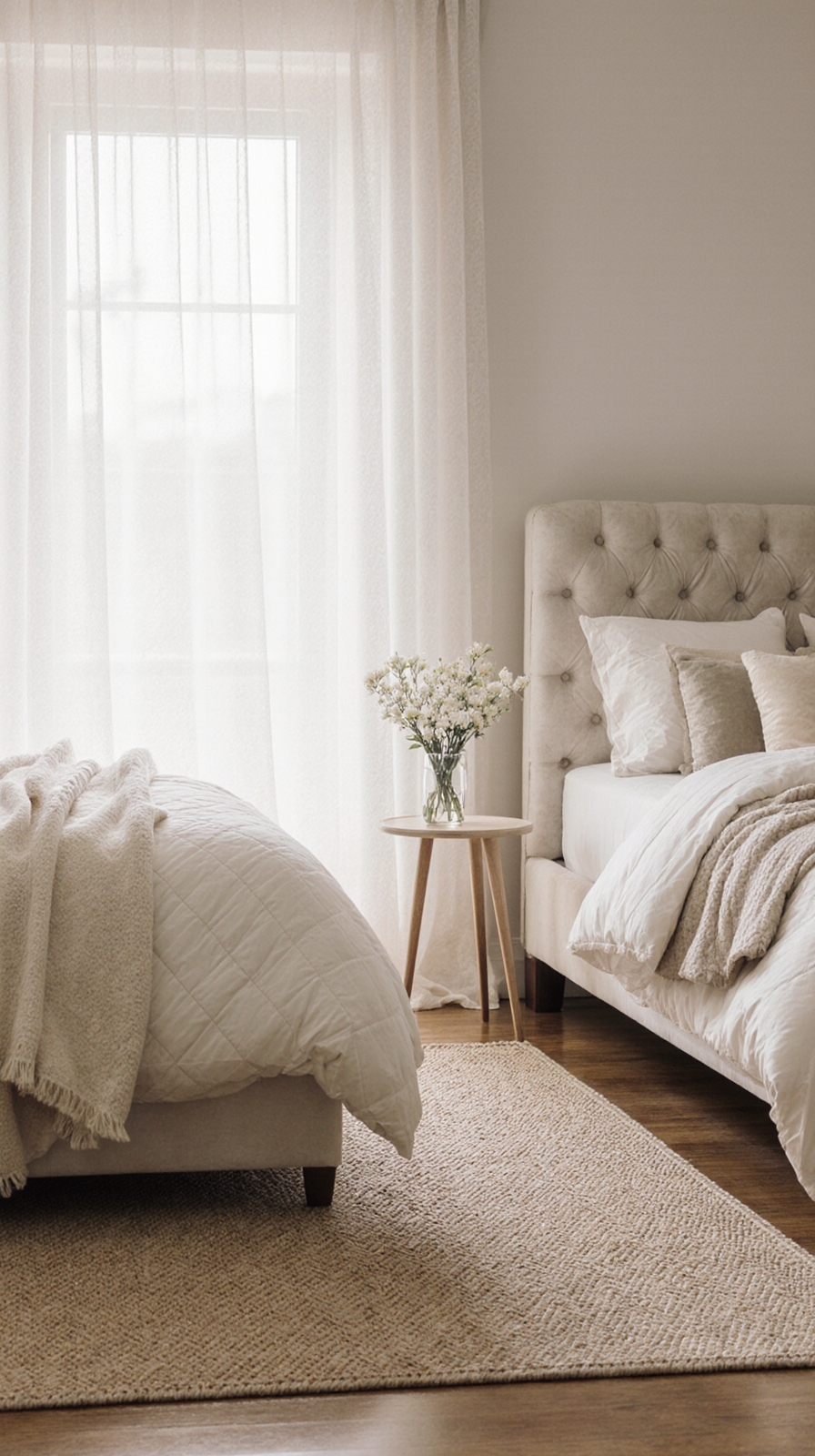
Bedding a designer would approve of starts with your sheets — fitted cotton or silk in white, cream, or beige — pulled taut and aligned corner to corner with the mattress edge.
Tuck the excess under so nothing bunches. Pull your duvet to the top, then fold it back twice so the crease lands just in front of your pillows.
Add a quilt folded into thirds, draped evenly on both sides. Arrange pillows back to front, largest Euro shams first, smallest accent cushions last.
Follow the 60-30-10 color rule: 60% base, 30% complementary, 10% accent. Every layer earns its place.
Pick Curtains That Add Softness Without Overpowering the Room
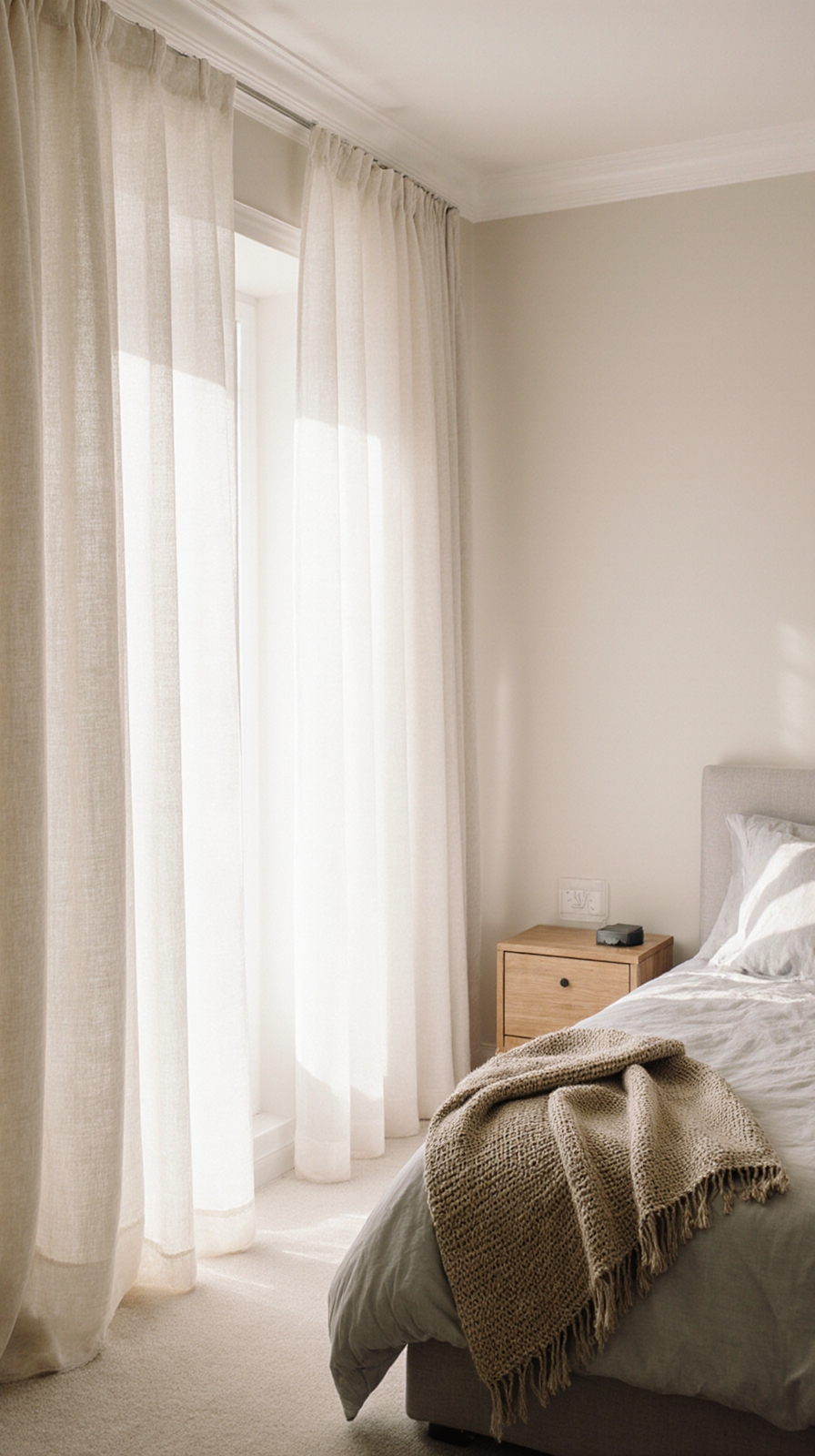
Curtains do a lot of heavy lifting in a neutral bedroom, but the wrong ones can flatten the whole room or turn it into a cave.
Here’s what actually works:
- Stick to soft, muted tones like warm ivory or dusty sage
- Go darker only if your room runs larger than 200 square feet
- Choose velvet or lined linen for texture that reads rich, not loud
- Keep patterns subtle and hang panels floor-length, around 84–96 inches
Natural fabrics like linen and cotton let the room breathe.
You want softness, not suffocation.
How to Light a Neutral Bedroom for Warmth and Mood
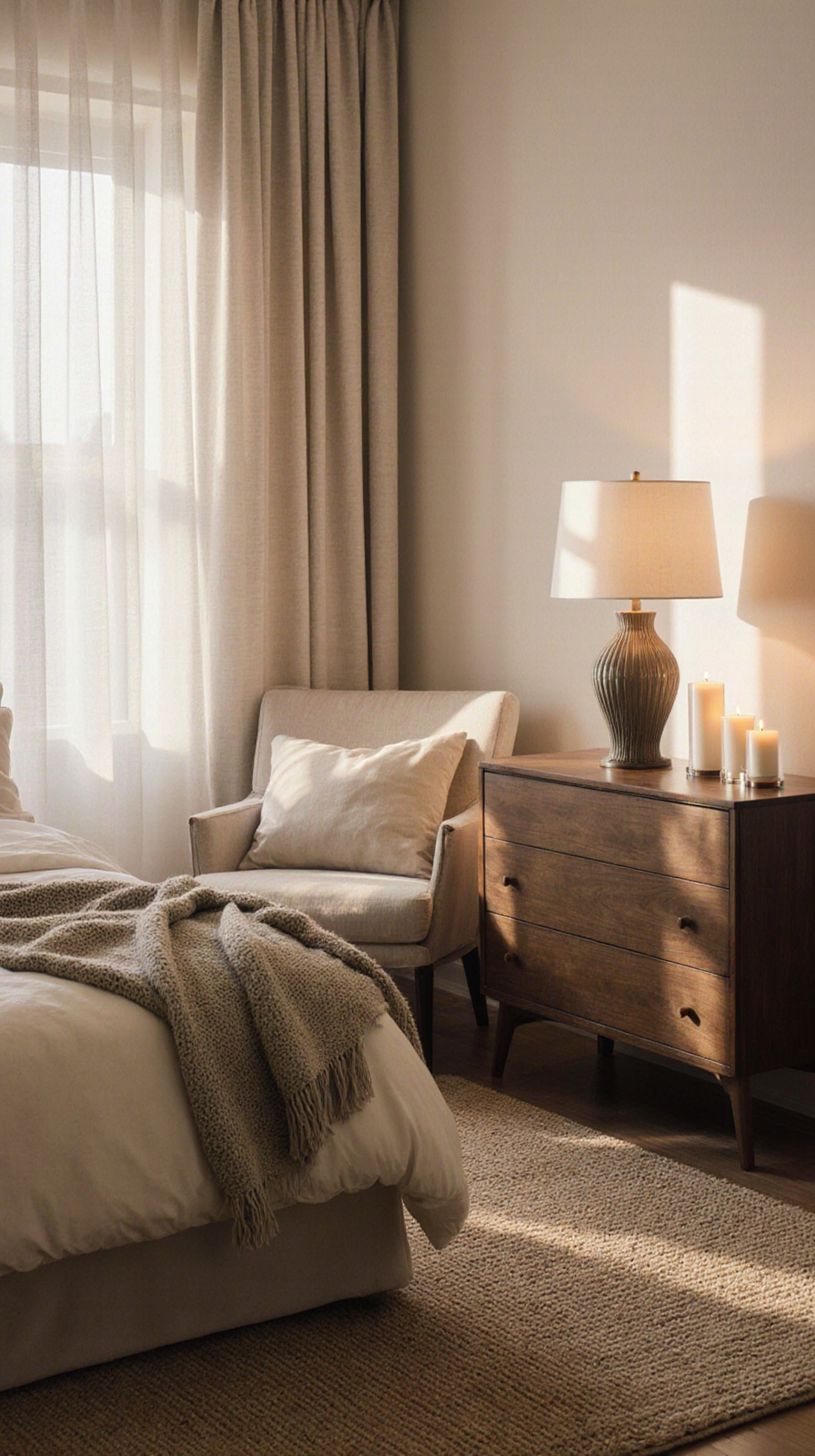
Once your curtains are sorted, lighting is the next thing that can quietly make or break a neutral bedroom.
Stick to bulbs between 2,700K and 3,000K. That range gives you warm white light without making the room feel like a dentist’s office. Use 2,400K for bedside lamps specifically.
Layer your sources: a ceiling pendant, wall sconces, and a small table lamp. Put them at different heights.
Install dimmers so you can drop brightness as the night moves along. Keep ceiling lights off the bed directly. A 60W LED equivalent is plenty.
Add Natural Elements That Ground the Whole Neutral Bedroom
Lighting handles mood, but natural elements handle something deeper — they make a neutral bedroom feel like it actually belongs to a living person.
Lighting sets the mood. But natural elements make a room feel like someone actually lives there.
A few well-placed materials do the heavy lifting:
- A snake plant removes formaldehyde and needs almost no sunlight
- A terracotta pot adds warm reddish tones without fighting your neutrals
- A wool rug in oatmeal grounds the floor with actual thickness
- A ceramic vase with rough texture adds 40% more tactile interest than smooth glass
One plant, one stone piece, one fiber. That’s enough.
Finishing Touches: Ceramics, Trays, and Objects That Tie It Together
Natural elements set the foundation, but small objects seal the deal. A ceramic trinket dish corrals your rings, earbuds, and hair clips into one defined spot — cap it at 3–5 items. A matte tray in off-white or sage groups your remote, candle, and coaster into one visual block.
| Object | What It Does |
|---|---|
| Ceramic dish | Catches small daily items |
| Decorative tray | Unifies surface clutter |
| Ceramic lamp | Softens harsh room lighting |
| Carafe set | Replaces plastic water bottles |
Skip glossy finishes. Matte, chalky surfaces keep the room calm without looking unfinished.
Neutral Bedroom Mistakes to Avoid (And Easy Fixes)
Even a carefully chosen palette falls apart when the small decisions go wrong. Warm neutrals like beige, taupe, and cream work better than stark white, which reads cold under most lighting.
Keep three feet of clearance around your bed so the room feels open, not crowded. Swap cool-toned bulbs for warm ones immediately.
Watch for these common mistakes:
- Blocking windows with tall dressers
- Skipping floor-length curtains for short ones
- Choosing nightstands too small for a lamp plus a glass of water
- Mismatching storage baskets that visually fragment the room
Fix one thing at a time. It adds up fast.