Like Marie Kondo always says, your space should spark joy, and that’s especially true when you’re working with a small bedroom.
You don’t need a mansion to create a cute, functional space that feels completely yours. From clever storage hacks to furniture that pulls double duty, there are simple strategies that can transform even the tiniest room.
Keep going, because the ideas ahead might just change how you see your space entirely.
Key Takeaways
- A Murphy bed or daybed doubles as seating, freeing valuable floor space while keeping the room functional and visually open.
- Light neutral tones and monochromatic palettes reflect more light, making a small bedroom feel significantly larger and more cohesive.
- Wall sconces and layered lighting replace bulky bedside lamps, creating ambiance without sacrificing precious surface or floor space.
- Under-bed storage using clear bins or vacuum-seal bags maximizes hidden space for seasonal clothing and linens efficiently.
- Floating shelves, bold curtains hung floor-to-ceiling, and plants add personality and vertical interest without overcrowding limited square footage.
A Bed That Works Harder in a Small Bedroom
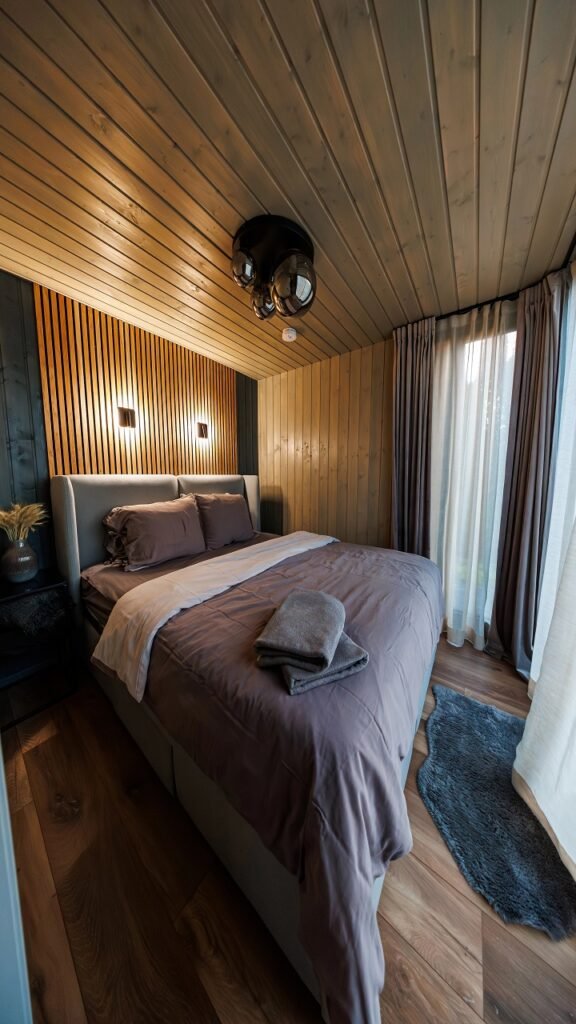
When your bedroom is small, the bed can’t just be a place to sleep — it needs to pull its weight. A Murphy bed folds flat against the wall, instantly freeing your floor during the day.
A loft bed raises your sleeping space and creates a desk or storage zone underneath. A platform bed with built-in drawers replaces your dresser entirely.
Even a daybed doubles as seating, so you’re not cramming in extra furniture. Whichever style you choose, measure carefully — account for drawer clearance, door swings, and walking space before you buy anything.
A platform storage bed can gain you 6-10 cubic feet of hidden storage for seasonal items without adding a single extra piece of furniture to your room.
Under-Bed Storage Ideas Worth Actually Using
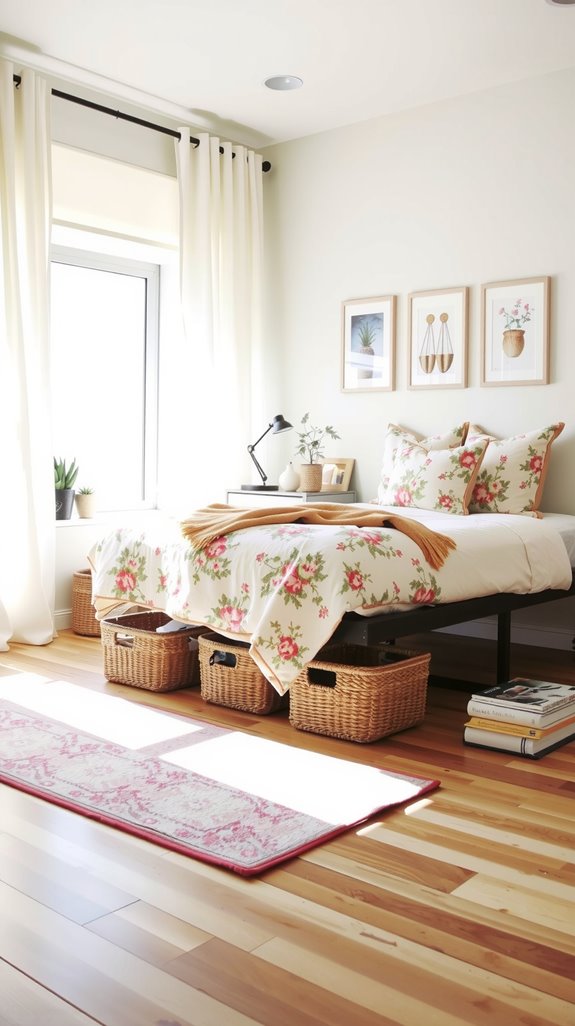
Most beds sit on a goldmine of wasted space, and a few smart choices can turn that dead zone into genuinely useful storage.
Aim for shallow, lidded bins around 6–7 inches tall to fit standard clearance without scraping. Use clear containers so you can spot what you need instantly.
Shallow, lidded bins around 6–7 inches tall slide right under without scraping — clear sides mean no guessing.
Vacuum-seal bags compress bulky duvets and sweaters dramatically, freeing up serious room. Wheels on your bins make pulling things out effortless.
Store seasonal clothes, spare linens, and backup blankets here since you won’t need them daily. Tuck a bed skirt over everything to keep the look clean and intentional.
If your current bed frame sits too low, bed risers can increase underbed clearance to accommodate larger bins without replacing your entire frame.
Why Low-Profile Furniture Makes Small Bedrooms Feel Bigger
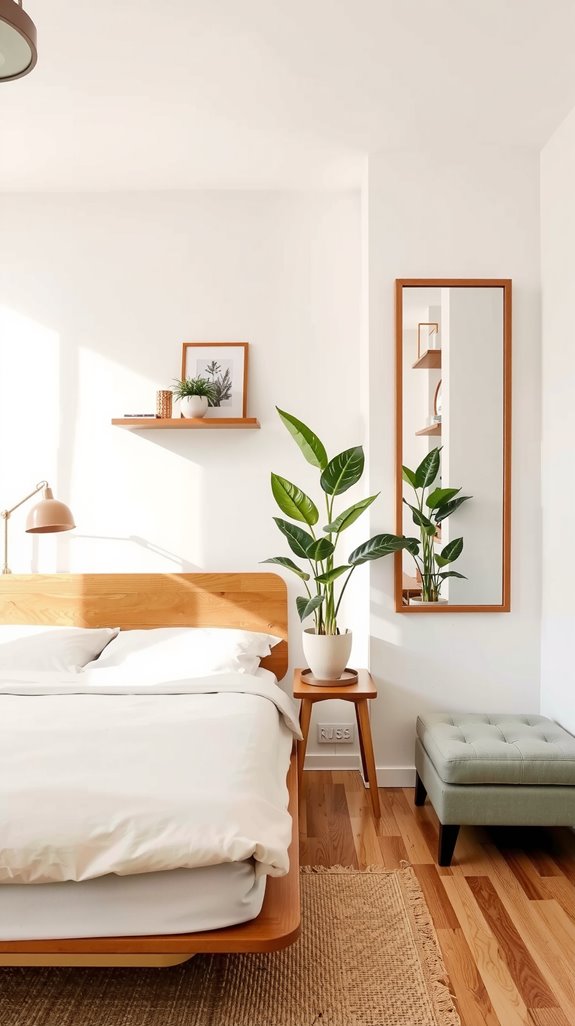
Choosing low-profile furniture might be the single smartest move you can make in a small bedroom.
Lower beds and streamlined frames expose more floor, push the eye upward, and reduce visual clutter — all at once. You’ll instantly notice how much taller and airier your room feels.
| Furniture Type | Standard Height | Low-Profile Height |
|---|---|---|
| Bed Frame | 25–30 inches | 14–18 inches |
| Sofa/Chair | 18–20 inches | 14–17 inches |
| Nightstand | 24–28 inches | 18–22 inches |
Keep furniture heights within 2–4 inches of each other, and your room reads as one open, cohesive space rather than a cluttered maze.
Standard bed frames typically sit between 35cm and 45cm high, which can feel visually heavy in compact rooms — while low-profile beds sit closer to 20–30cm, revealing more wall space and creating a lighter, more open feel.
Multifunctional Furniture Every Small Bedroom Needs
The right multifunctional furniture can completely transform a small bedroom — turning one cramped space into something that actually works for your whole life.
A hydraulic lift-up bed hides storage beneath your mattress, while a platform bed with built-in drawers replaces your dresser entirely.
A Murphy bed with an attached sofa gives you seating and open floor space during the day.
Wall-mounted fold-down desks disappear when you’re done working. A loft bed creates a whole zone underneath for your desk or seating.
We suggest the UTÅKER because they converts effortlessly into a single bed, double bed, or sofa — making it one of the smartest space-saving investments for a small bedroom.
Every piece should pull double duty — that’s how you make a tiny room genuinely functional and cute.
Where to Hide Storage in a Small Bedroom Without Sacrificing Style
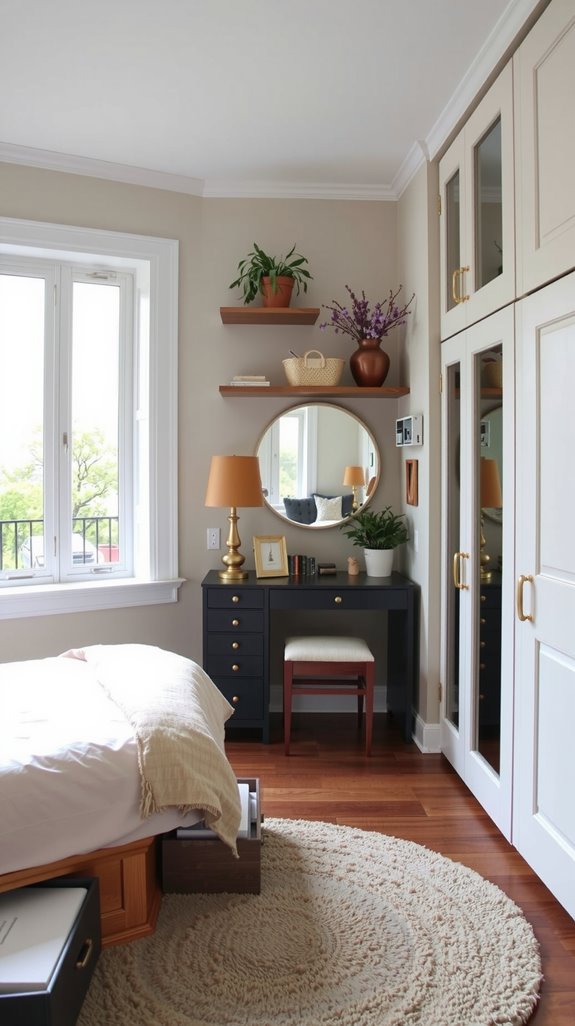
Hidden storage is one of the smartest tools you have in a small bedroom — and when it’s done right, it actually makes your space look more intentional, not more cluttered.
Tuck slim rolling bins or vacuum bags under your bed, then hide them completely with a bed skirt or extended duvet. Use lidded baskets and decorative boxes on your dresser to conceal smaller items while reading as styled decor.
Try push-to-open built-in drawers blended into wall panels for a seamless look. A storage bench at your bed’s foot adds seating while hiding linens or off-season clothing beautifully.
Chic poufs and ottomans serve as decorative dual-purpose accents that secretly store smaller items like blankets, pillows, and accessories without overwhelming your space.
Floating Shelves and Wall-Mounted Storage That Open Up Your Floor
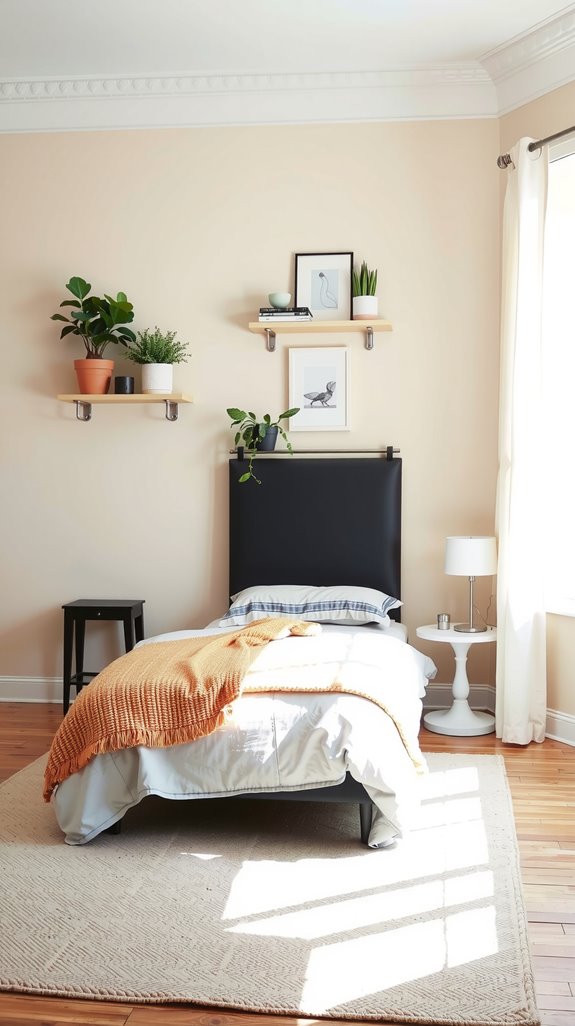
When floor space is tight, floating shelves are one of the smartest moves you can make — they give you real, usable storage without eating up a single square foot of walking room.
Mount them above your bed, desk, or dresser to use vertical space you’re already working with. Choose depths based on what you’re storing: 6–8″ for decor, 10–11″ for books, and 12″ for heavier items.
Keep colors to two or three tones so things stay cohesive. Always anchor into studs or proper wall plugs — a sagging shelf isn’t cute or safe.
Corner spaces are often the most overlooked areas in a small bedroom, but floating shelves can transform them into functional storage for books, plants, or small decorative pieces.
How to Use Vertical Space for Storage in a Small Bedroom
Most small bedrooms have a secret weapon hiding in plain sight — vertical space. Instead of spreading storage across your floor, think upward.
Floor-to-ceiling wardrobes, tall dressers, and narrow shelving towers use your wall height without eating up precious square footage. Add double hanging rods inside your closet to instantly multiply your hanging space.
Over-door organizers keep shoes and accessories off the floor completely. Hooks and peg rails on empty wall sections handle bags, scarves, and jewelry beautifully.
Even the space beside your bed works — slim vertical cubbies stack storage neatly without crowding the room.
The Color Palette That Opens Up a Tiny Bedroom
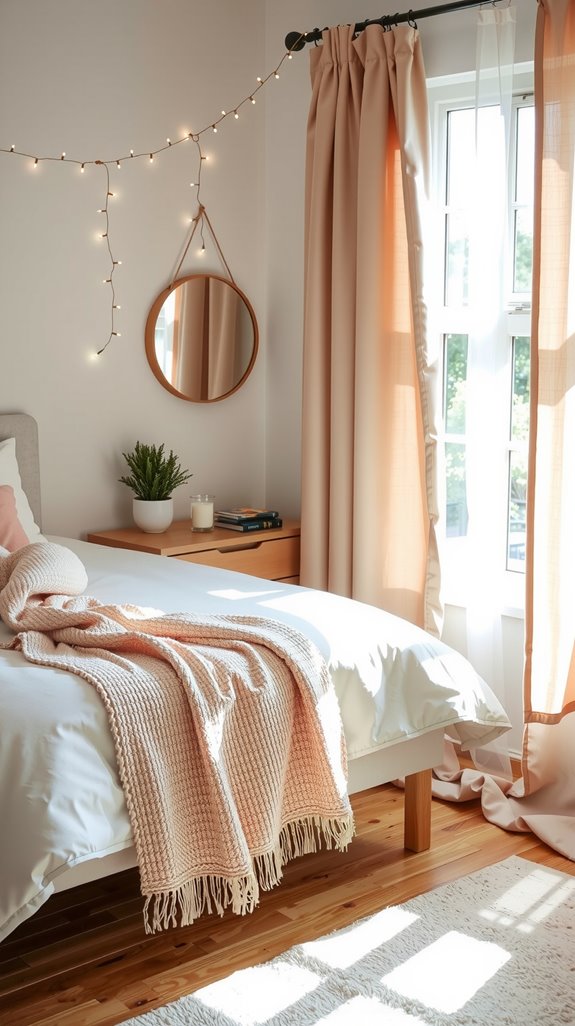
Your color choices can completely transform how big or small your bedroom feels, so starting with light neutrals like warm white, cream, or soft beige on both your walls and ceiling is one of the smartest moves you can make.
Building on that foundation, a monochromatic palette, layering one hue in varying tones across your walls, bedding, and accessories, creates visual continuity that makes the room feel more expansive and far less cluttered.
Once you’ve got your base tones locked in, you can strategically place a soft accent color, like a slightly deeper shade on your window wall or a painted zone behind your headboard, to draw the eye outward and add depth without making the space feel boxed in.
Light Neutrals Create Openness
Color is one of the most powerful tools you have in a small bedroom, and light neutrals are where most designers start. Off-white, soft beige, pale greige, and light gray all reflect more light than darker shades, which makes your walls feel like they’re pushing outward instead of closing in.
Look for colors with a Light Reflectance Value between 70 and 85 — that sweet spot keeps things bright without feeling sterile. Warm undertones help too, adding softness without visual weight.
Finish with crisp white trim and ceilings to sharpen edges and give the room a polished, open feel.
Monochromatic Palettes Expand Space
When you stick to a single hue throughout your bedroom, something almost magical happens — the room starts to feel bigger without you moving a single piece of furniture.
A monochromatic palette removes competing colors, so your eye travels smoothly around the space instead of jumping between distractions.
| Element | Monochromatic Tip |
|---|---|
| Walls & Ceiling | Match hues to blur boundaries |
| Bedding | Use lighter tints for airiness |
| Rugs & Floors | Go slightly deeper for grounding |
| Trim & Doors | Drench in same tone to expand |
Try varying textures — velvet, linen, wood — to keep things visually interesting.
Strategic Accent Color Placement
While a monochromatic palette quietly expands your space by eliminating color competition, strategic accent colors take things a step further — they actively direct where your eye travels and how large the room feels.
Stick to the 60-30-10 rule: light neutrals cover 60% of your room, a secondary tone fills 30%, and your accent color claims just 10%.
Choose soft blues, pale greens, or light grays — cool tones reflect light and make walls feel farther apart.
Place those accents opposite windows so daylight bounces back into the room, instantly brightening everything and making your small bedroom feel noticeably more open.
Mirrors That Double Your Space Without the Drama
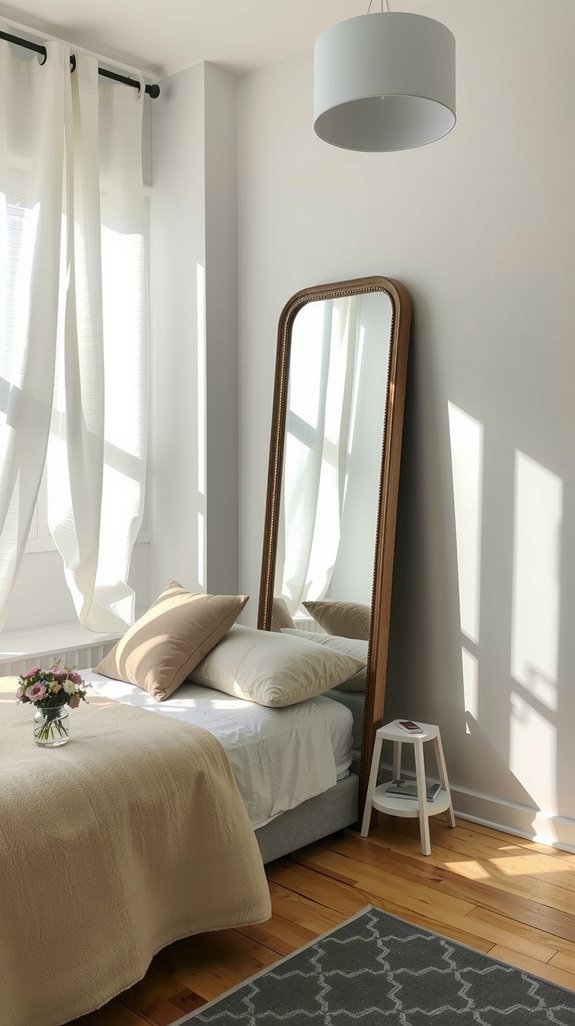
Mirrors are one of the smartest tools you can use in a small bedroom, and placement makes all the difference. Position a large mirror on a wall adjacent to or opposite a window, and it’ll reflect natural light and outdoor views, instantly making your room feel bigger.
Lean a full-length mirror against a wall to add vertical height, especially if your ceilings feel low. Mirrored closet doors do double duty by expanding the room visually while eliminating the need for a separate dressing mirror.
Keep frames slim and consistent in color to maintain a clean, cohesive look throughout.
Small Bedroom Lighting That Sets a Mood Without Taking Up Space
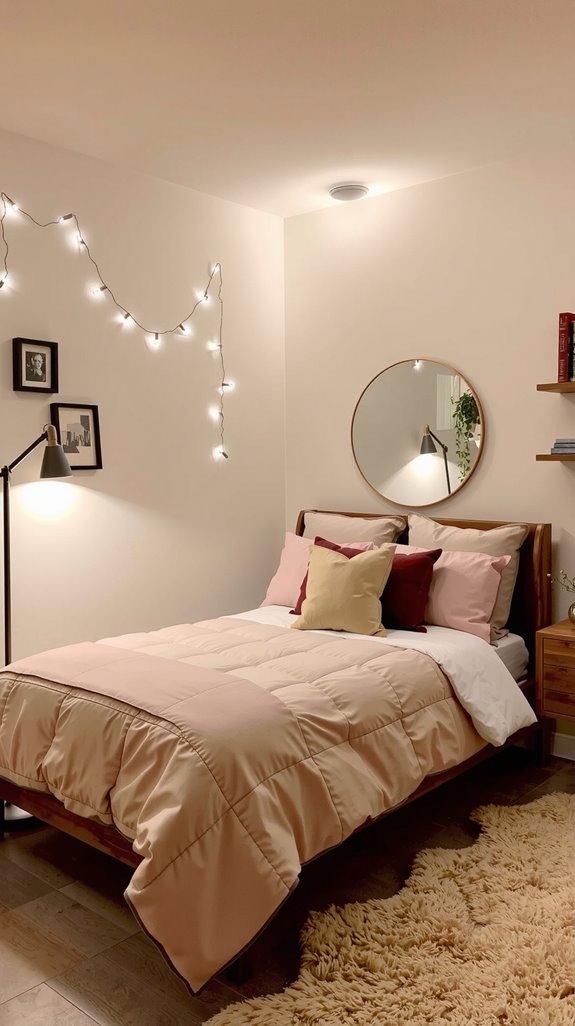
Swapping out your bedside table lamps for wall sconces is one of the smartest moves you can make in a small bedroom, because it instantly frees up surface space on your nightstand while keeping the room feeling open and intentional.
Mount them at eye level when you’re sitting up in bed, and you’ve got perfectly positioned reading light without a single lamp base eating into your limited square footage.
From there, layer in a few other light sources, a soft overhead fixture, maybe a small accent light near a shelf or headboard, so you can dial the mood up or down depending on whether you’re getting ready in the morning or winding down at night.
Wall Sconces Save Space
When floor space is already tight, wall sconces are one of the smartest lighting upgrades you can make in a small bedroom. They mount directly to the wall, so your nightstand stays clear for books, your phone, or a glass of water.
Look for narrow sconces under six inches wide if your walls are limited. Dimmable options let you switch from reading brightness to a soft, cozy glow at night. Before buying, mark the fixture’s dimensions on your wall to check the fit.
Sconces also double as décor, giving your room a polished, intentional look without adding visual clutter.
Layer Your Lighting Sources
One lighting source is rarely enough to make a small bedroom feel both functional and inviting. Aim for three to four distinct light sources that each serve a purpose.
Use a compact flush-mount ceiling fixture for ambient light, add a mini pendant or wall sconce beside the bed for reading, and tuck LED strip lights behind your headboard or shelves for soft accent glow.
Make everything dimmable so you can shift from bright and productive to calm and cozy instantly. Layering your lighting this way creates depth, mood, and flexibility without adding a single piece of extra furniture.
Cozy Textures That Won’t Make a Small Bedroom Feel Cramped
Adding cozy textures to a small bedroom doesn’t have to mean sacrificing space or making the room feel cluttered.
Stick to a three-texture formula — think a linen duvet, a knit throw, and one boucle or velvet accent pillow. This layered approach creates warmth without bulk.
Three textures — linen, knit, and boucle — layer warmth into a small bedroom without adding visual bulk.
Choose light-to-medium weight bedding in soft neutrals so the bed doesn’t visually dominate the room.
For the floor, a low-pile area rug with a light tone anchors the space without shrinking it.
Repeat just two or three fabrics throughout the room to keep everything cohesive and visually calm rather than chaotic.
Bold Curtains and Accent Walls That Add Color Without Commitment
You don’t need to repaint every wall or sign a lease-breaking renovation contract to make your small bedroom feel bold and personal. The right curtains and a few renter-friendly accent techniques can completely transform the space.
Try hanging floor-to-ceiling curtains in a vivid color like deep teal or emerald to draw the eye upward, make your windows look larger, and instantly establish a strong focal point without touching a single wall.
If you want color on the walls without the commitment, peel-and-stick wallpaper, a large tapestry, or even a fabric panel hung behind your bed gives you that dramatic accent wall effect while remaining fully removable when it’s time to move out.
Renter-Friendly Color Options
Renting doesn’t mean you’re stuck staring at builder-beige walls for the length of your lease. Peel-and-stick wallpaper and removable decals let you create bold accent walls without risking your security deposit.
Try these renter-approved color upgrades:
- Peel-and-stick wallpaper in emerald or terracotta on one wall
- Large tapestries hung with removable adhesive strips
- Colorful throw pillows and rugs using the 60-30-10 color rule
- Colored lampshades or LED strips for paint-free color washes
- Gallery walls displayed with damage-free removable strips
You’ll transform your space confidently, knowing everything comes down cleanly when you move.
Curtains as Statement Pieces
When it comes to adding bold color to a small bedroom without touching a single wall, curtains are one of the most powerful and underrated tools you have.
Hang them high, near the ceiling, and extend the rod past the window frame to make your room feel taller and larger. Choose a saturated jewel tone or a graphic print that ties into your existing pillows or rug.
Floor-length panels instantly add elegance, even on short windows. You can even mount full-width curtain panels behind your bed to create a fabric accent wall that’s completely removable when you move out.
How to Layer Rugs, Pillows, and Art in a Small Bedroom
Layering rugs, pillows, and art is one of the most effective ways to make a small bedroom feel pulled together and intentional.
Start with a neutral base rug, then layer a smaller accent rug on top for color.
Keep these tips in mind:
- Place a flat-weave base rug extending 18–24 inches beyond your bed
- Size your accent rug at roughly ⅔ of the base rug
- Stack pillows largest to smallest, front to back
- Echo your rug’s accent colors in your throw pillows
- Hang one larger art piece that mirrors those same tones
This creates effortless cohesion throughout your space.
Plants That Add Life to a Small Bedroom Without Taking Over
Adding a few plants to your small bedroom can completely transform the energy of the space, but the trick is choosing varieties that stay compact and placing them where they won’t eat up your limited real estate.
Air plants, mini succulents, and small pothos fit perfectly on window sills, nightstands, or narrow shelves without crowding surfaces.
Snake plants and ZZ plants handle low light and rarely need watering, making them ideal for busy schedules.
Try wall-mounted planters or hanging baskets to add greenery vertically. Keep pots small, around two to four inches, to naturally limit how large your plants grow.
The One-In-One-Out Rule That Keeps Small Bedrooms From Feeling Cluttered
Plants breathe life into a small bedroom without demanding much, but even the most thoughtful greenery arrangement won’t save a space that’s gradually filling up with stuff.
Plants bring a bedroom to life, but no amount of greenery can rescue a room drowning in clutter.
The one-in-one-out rule fixes that. Every time something new enters your bedroom, something similar leaves the same day.
Apply it across every category:
- Hang a new dress, donate an old one
- Buy a throw pillow, retire an existing one
- Add a book, remove one from your nightstand stack
- Bring in new decor, pull a piece out
- Add an organizer, discard a redundant one
Your space stays curated, never crowded.