Your bedroom should work for you, not against you, and that shift in thinking changes everything.
As you move through your 60s and beyond, small adjustments to your personal space can quietly transform how you feel each morning, how confidently you move through the night, and how peacefully you rest.
These ten ideas aren’t about limitation, they’re about reclaiming comfort on your own terms. Keep going to discover what’s possible.
Key Takeaways
- Adjust bed height to 20-23 inches and choose a medium-firm mattress rated 5-7 for proper spinal alignment and easy transitions.
- Store daily essentials between waist and shoulder height using labeled, clear bins and pull-out shelves to reduce clutter and fall risks.
- Use warm, diffused ambient lighting with strategically placed night lights to improve visibility and ensure safe nighttime navigation.
- Install lever-style handles, single-lever faucets, and rocker light switches to minimize joint strain and improve accessibility throughout the bedroom.
- Place a firm, high-seated bedside chair with supportive armrests near the bed to ease transfers, dressing routines, and reduce fall risks.
Set Bed Height So YOU Can Stand and Sit Without Strain
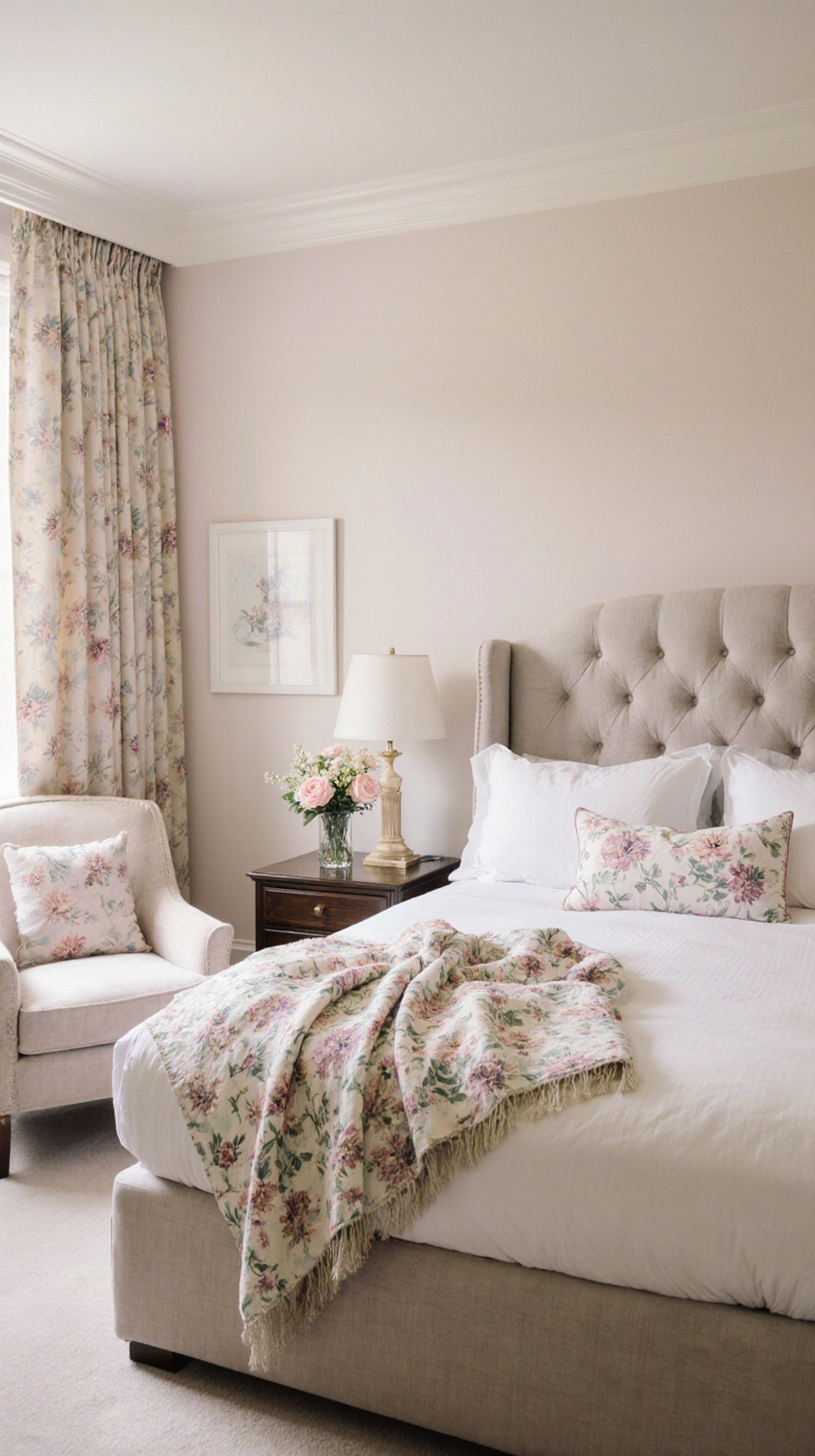
Getting into and out of bed should feel effortless, not like a small battle you fight twice a day. The right bed height makes all the difference, and finding yours is simpler than you’d think.
Sit on a sturdy chair with your feet flat on the floor and your knees at roughly 90 degrees, then measure from the floor to the back of your knee. That number becomes your target mattress height.
If your bed sits too low, bed risers help. Too high, and a lower-profile mattress corrects it beautifully giving you mornings that feel gentle and manageable.
The Americans with Disabilities Act recommends a bed height between 20 and 23 inches as a safe and accessible range for older adults.
Clear Walking Paths That Prevent Falls for Elderly Users
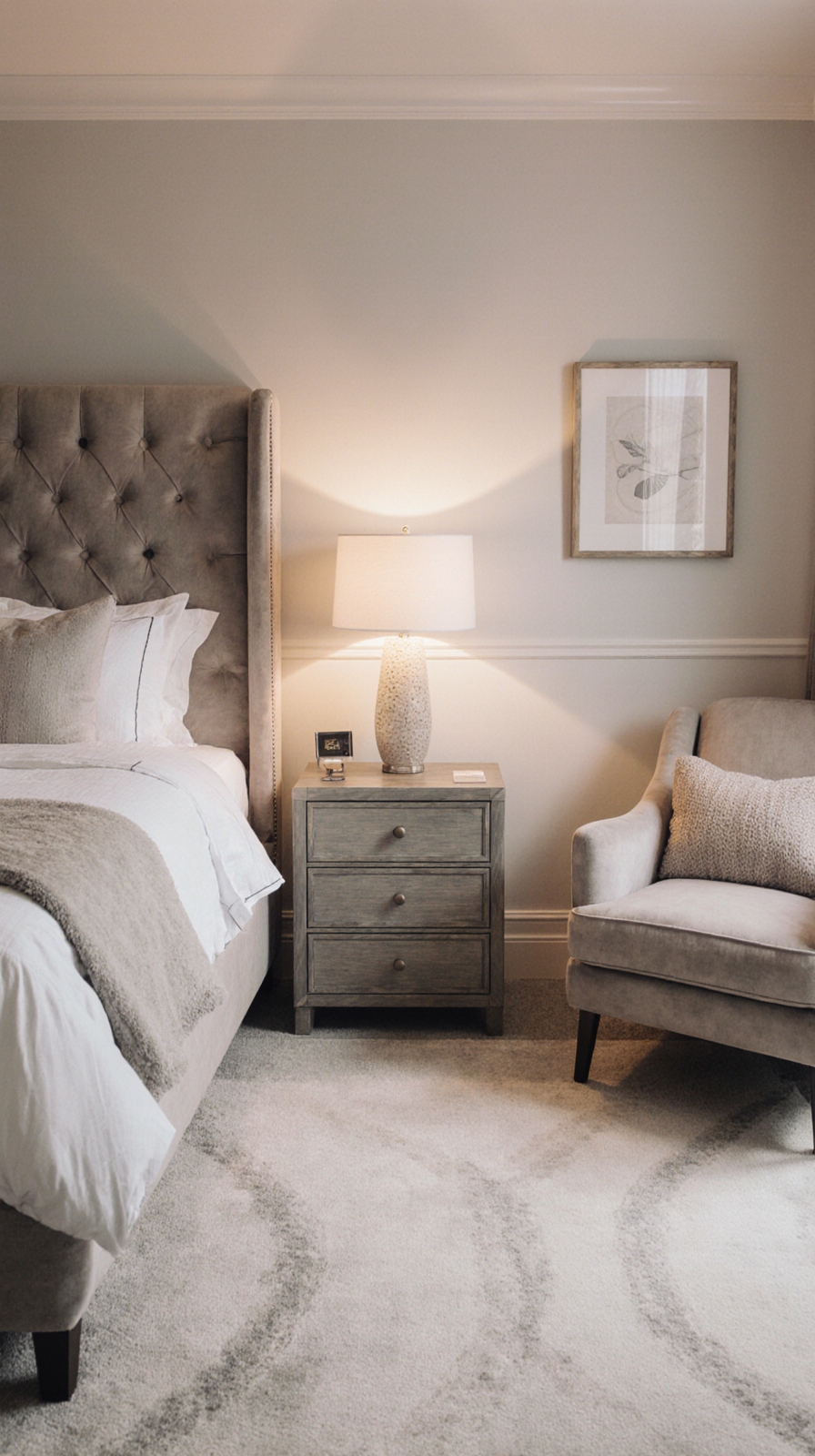
A bedroom should feel like a sanctuary, not an obstacle course you navigate in the dark at 2 a.m. when all you want is a glass of water.
Clear, thoughtful pathways transform your room into something genuinely safe and beautiful.
| Hazard Area | Common Problem | Simple Fix |
|---|---|---|
| Beside the bed | Low furniture blocking movement | Keep walking side fully open |
| Floor paths | Throw rugs sliding underfoot | Use non-slip backing or remove them |
| Electrical cords | Cords crossing walkways | Route cords along walls |
| Bathroom route | Poor nighttime visibility | Install motion-activated night lights |
| Doorway gaps | Narrow pinch points | Rearrange furniture for wider clearance |
You deserve pathways that feel as welcoming as a warm morning, and making a few simple changes can get you there faster than you might think.
The main path to your bathroom must stay unobstructed every day, as cords, clutter, and loose rugs are among the most common tripping hazards that can be easily removed.
Choose a Mattress That Supports Aging Joints and Pressure Points
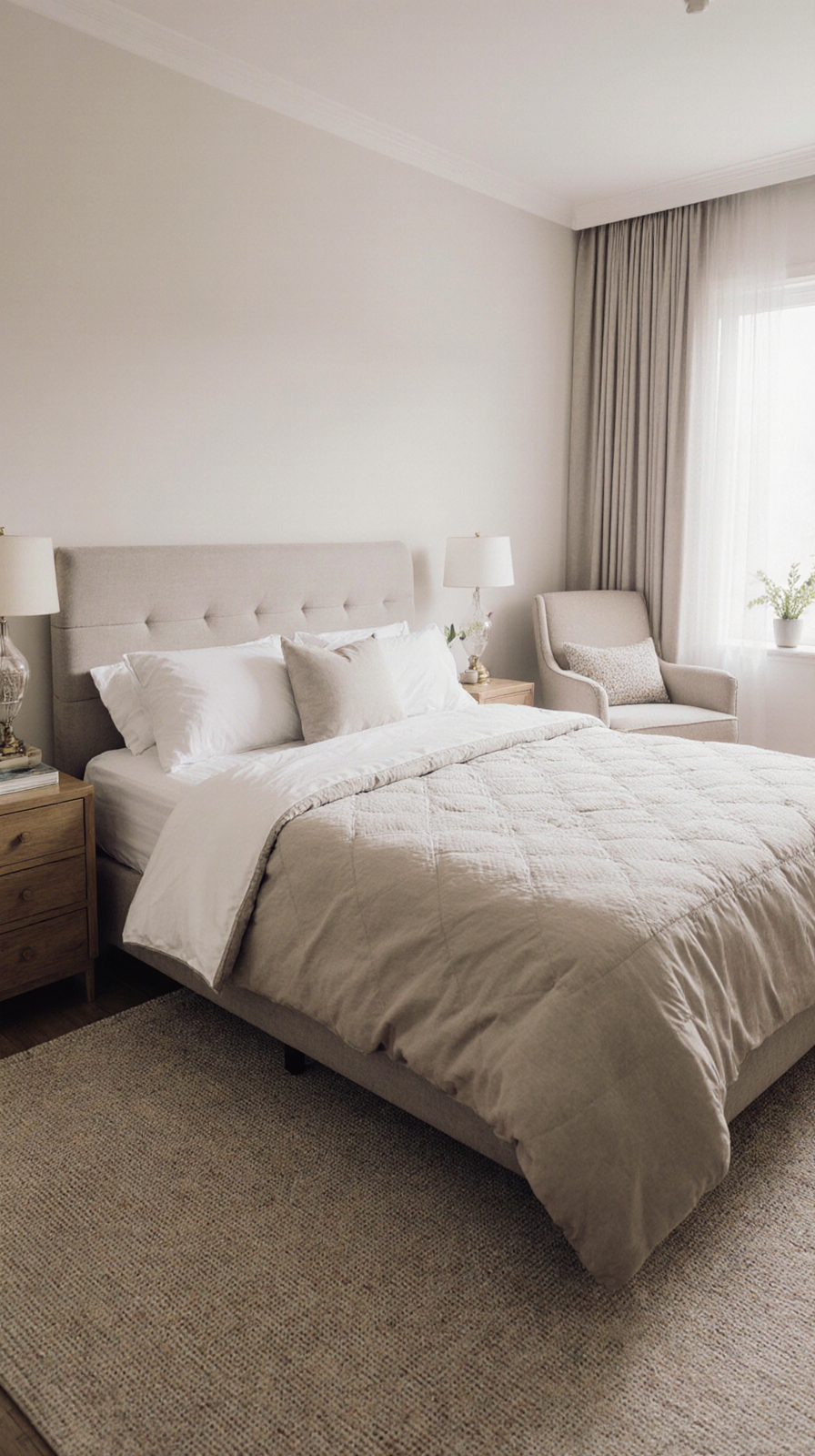
Your mattress is the foundation everything else rests on, quite literally, and choosing the right one can be the difference between waking up refreshed and spending your mornings coaxing stiff hips and aching shoulders back to life.
Look for medium to medium-firm support, ideally rated five to seven on a ten-point scale, which balances spinal alignment with gentle pressure relief.
Hybrid or memory foam mattresses with at least three to four inches of contouring comfort layers cushion your shoulders, hips, and knees beautifully.
If you’re a side sleeper, lean slightly softer within that range, letting your body sink just enough without sacrificing support. Just be careful not to go so soft that you lose proper alignment through the night.
A good starting point is the Saatva Classic or similar brands, which features a coil-on-coil construction with a plush comfort layer and reinforced lumbar support, earning a 4.5 out of 5 for spinal alignment specifically for side sleepers.
Organize Storage So Nothing Requires Bending or Reaching
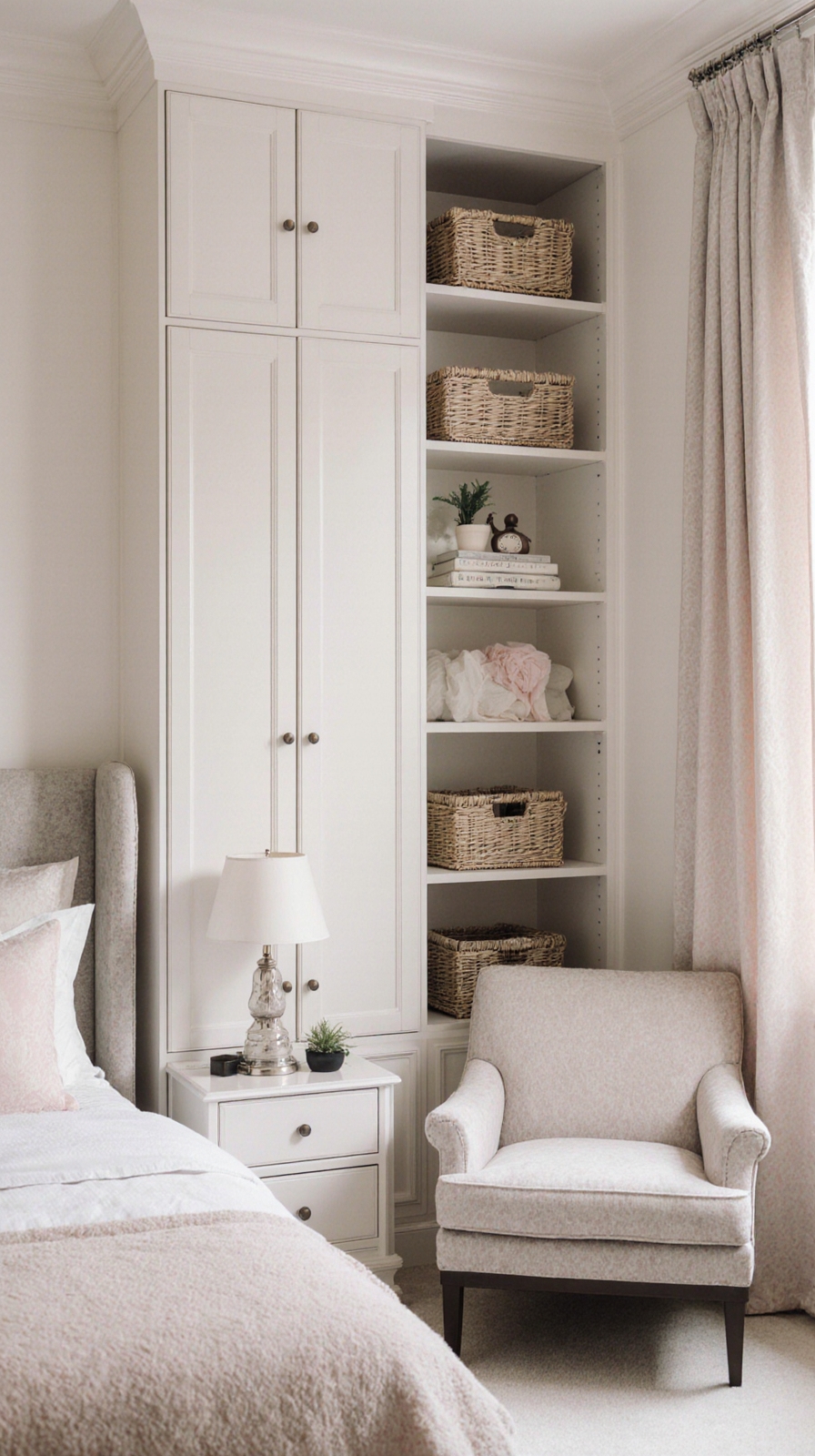
Once your mattress is chosen, the next quiet gift you can give yourself is a bedroom where everything you need sits right at hand, waiting for you without a single awkward stretch or stoop.
Move daily essentials to shelves between waist and shoulder height, tuck clothing into divided drawers, and choose clear bins with large-print labels so you’re never rummaging.
Pull-out shelves bring cabinet contents forward gracefully and open shelving keeps favorites visible and reachable.
Store seasonal pieces elsewhere, freeing your most accessible spaces for what you actually use each morning, each evening, each unhurried, beautiful day.
Well-organized spaces save time and reduce clutter-related hazards that can lead to trips and falls.
Stock Your Nightstand With Essentials You Can Reach From Bed
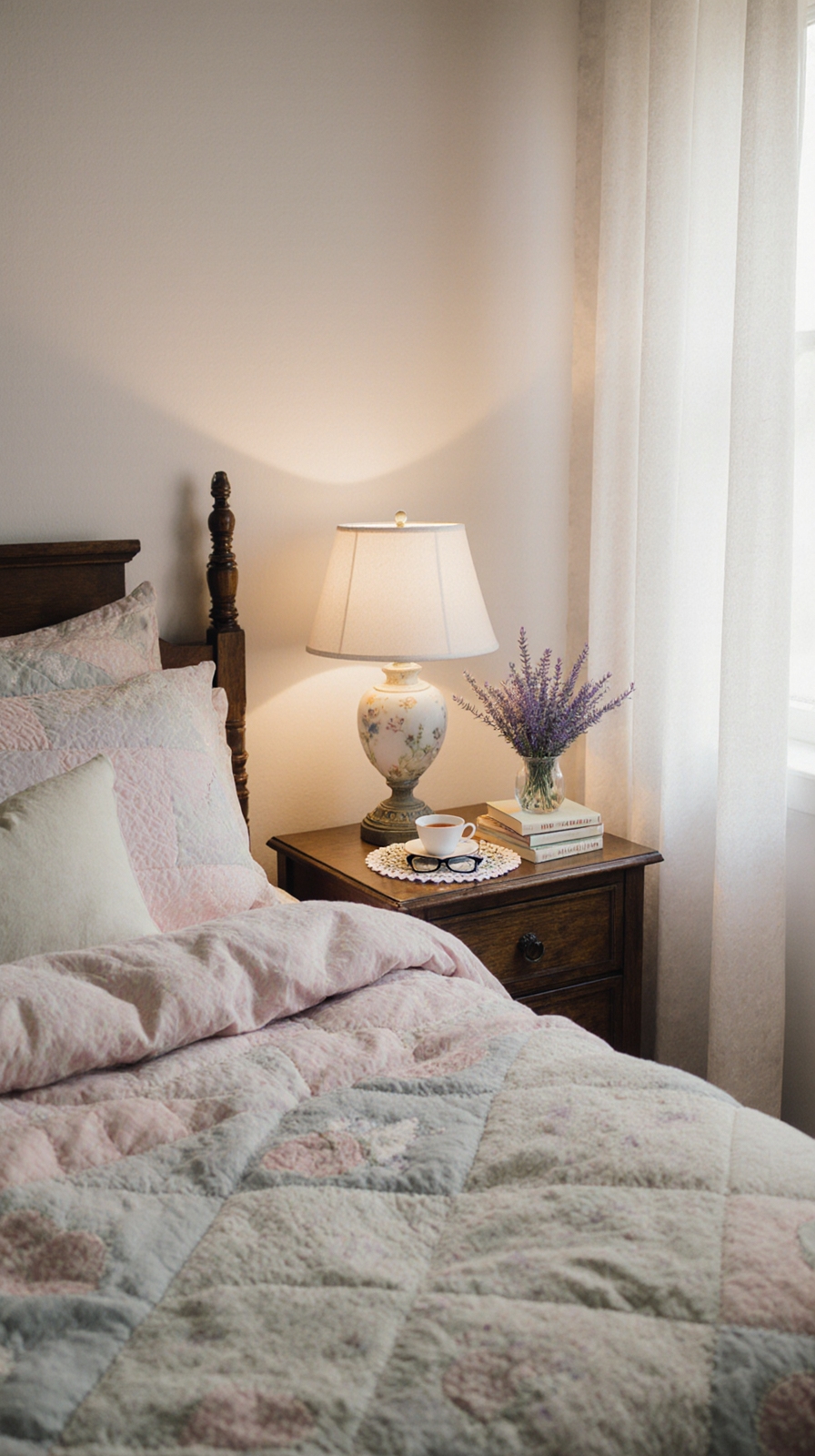
There are five or six small things that can make an enormous difference in how safe, calm, and cared-for you feel between the hours of dusk and dawn, and most of them fit neatly on a single nightstand.
Keep your glasses in a bright protective case, your medications in a divided pill organizer, and a lidded water bottle close by. Store a small flashlight, your medical alert device, and an emergency contact card within easy reach.
A contrasting tray helps you spot everything instantly so each night feels less like a search and more like a gentle, well-prepared retreat.
According to National Institute of Aging, the most dangerous falls tend to happen between 3 AM and 5 AM, making it critical that every essential item is exactly where you expect it to be.
Build a Lighting Plan That Works for Aging Eyes
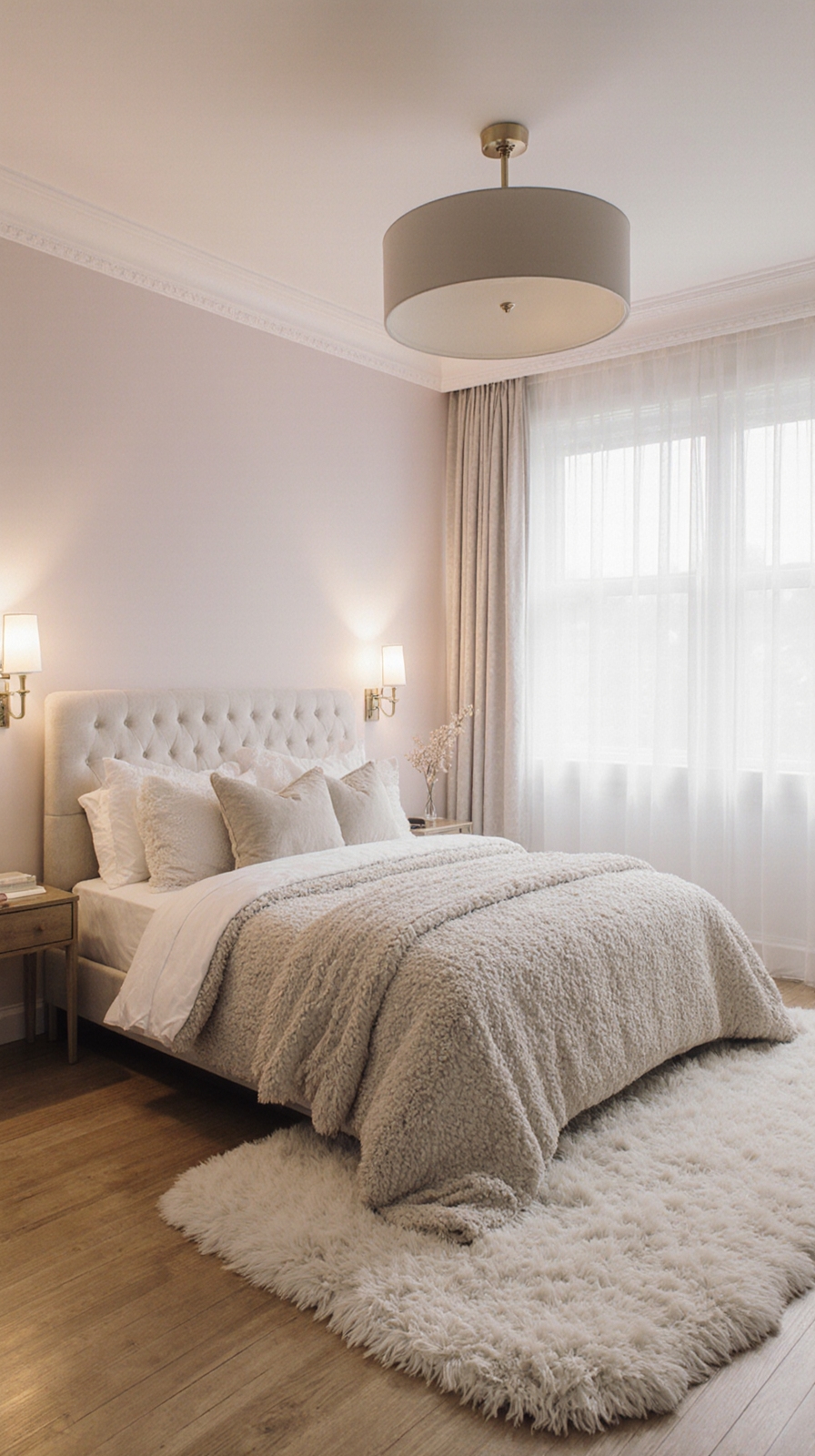
Few things shape the feeling of a bedroom more quietly than its light, and for women over 65, getting that light right isn’t just about atmosphere, it’s about comfort, safety, and seeing your world clearly.
Your aging eyes need roughly two to three times more light than younger eyes, so build your plan in layers:
- Ambient lighting at 600,800 lux for even, shadow-free coverage,
- Task lighting near your reading chair or nightstand,
- Warm bulbs (3000K,4000K, CRI 90+) with dimmers for evening comfort.
Soft, diffused light makes everything feel gentler and more welcoming. Choose fixtures with a matte or frosted finish to minimize glare and protect your eyes from the visual fatigue that comes with bright, direct light sources.
Add Night Lights That Guide Seniors Safely to the Bathroom
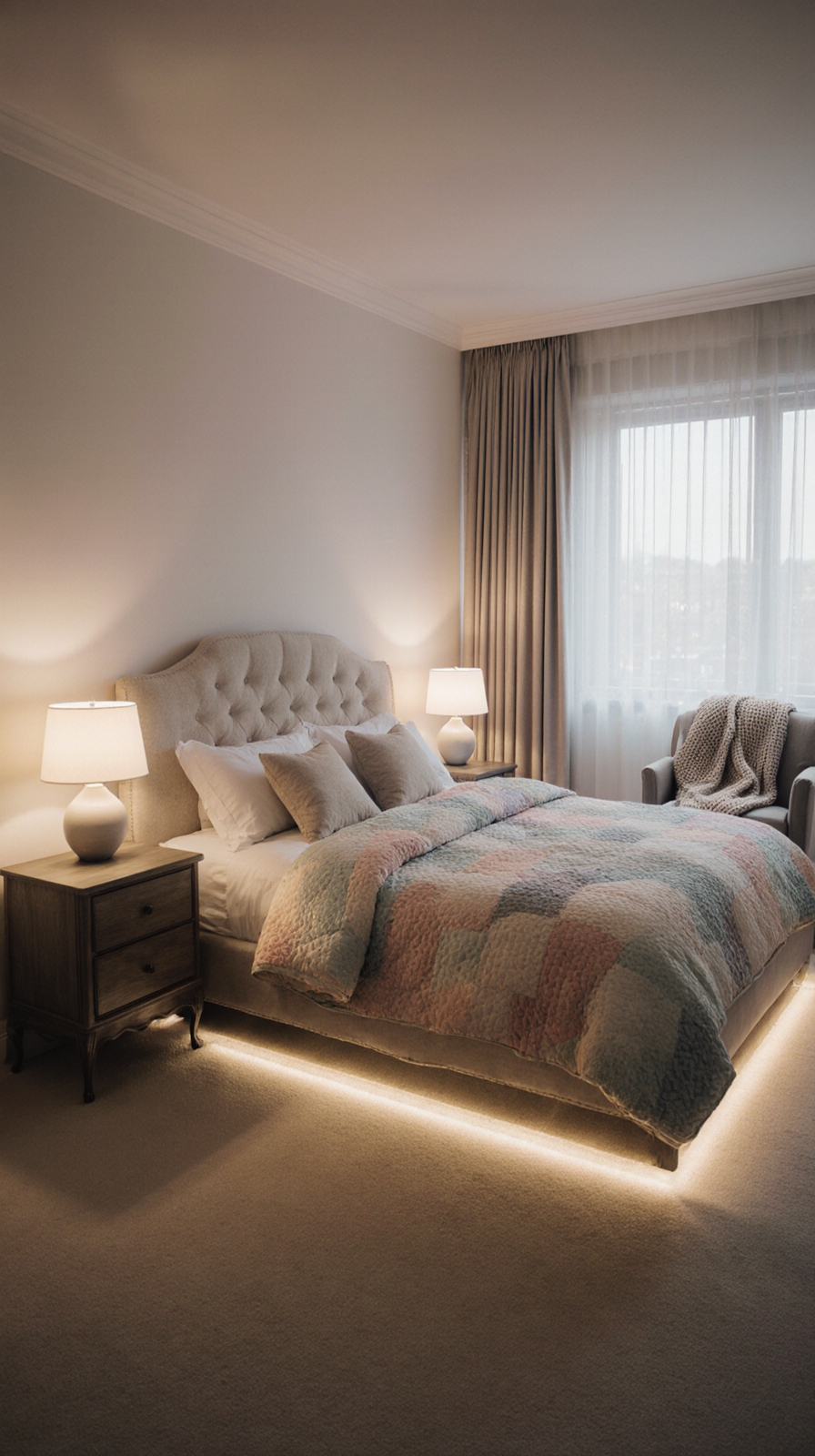
Getting your daytime lighting right is only half the story, because the hours between midnight and morning carry their own quiet risks, and a dark bedroom-to-bathroom walk is one of the most common causes of nighttime falls for women over 65.
Place low-level night lights along baseboards, doorway thresholds, and the toilet area, creating a continuous, glare-free path that guides you gently without fully waking you.
| Placement Zone | Recommended Type | Color Temperature |
|---|---|---|
| Bedside baseboard | Dusk-to-dawn plug-in | 2700–3200K warm white |
| Hallway pathway | Motion-sensor LED | Amber or red-toned |
| Bathroom toilet area | Motion-activated bowl light | Warm amber |
| Shower or tub edge | Toe-kick LED strip | 2700K warm white |
| Vanity under-cabinet | Diffused LED strip | 2700–3200K warm white |
Pick Colors and Decor That Calm Aging Eyes and Reduce Agitation
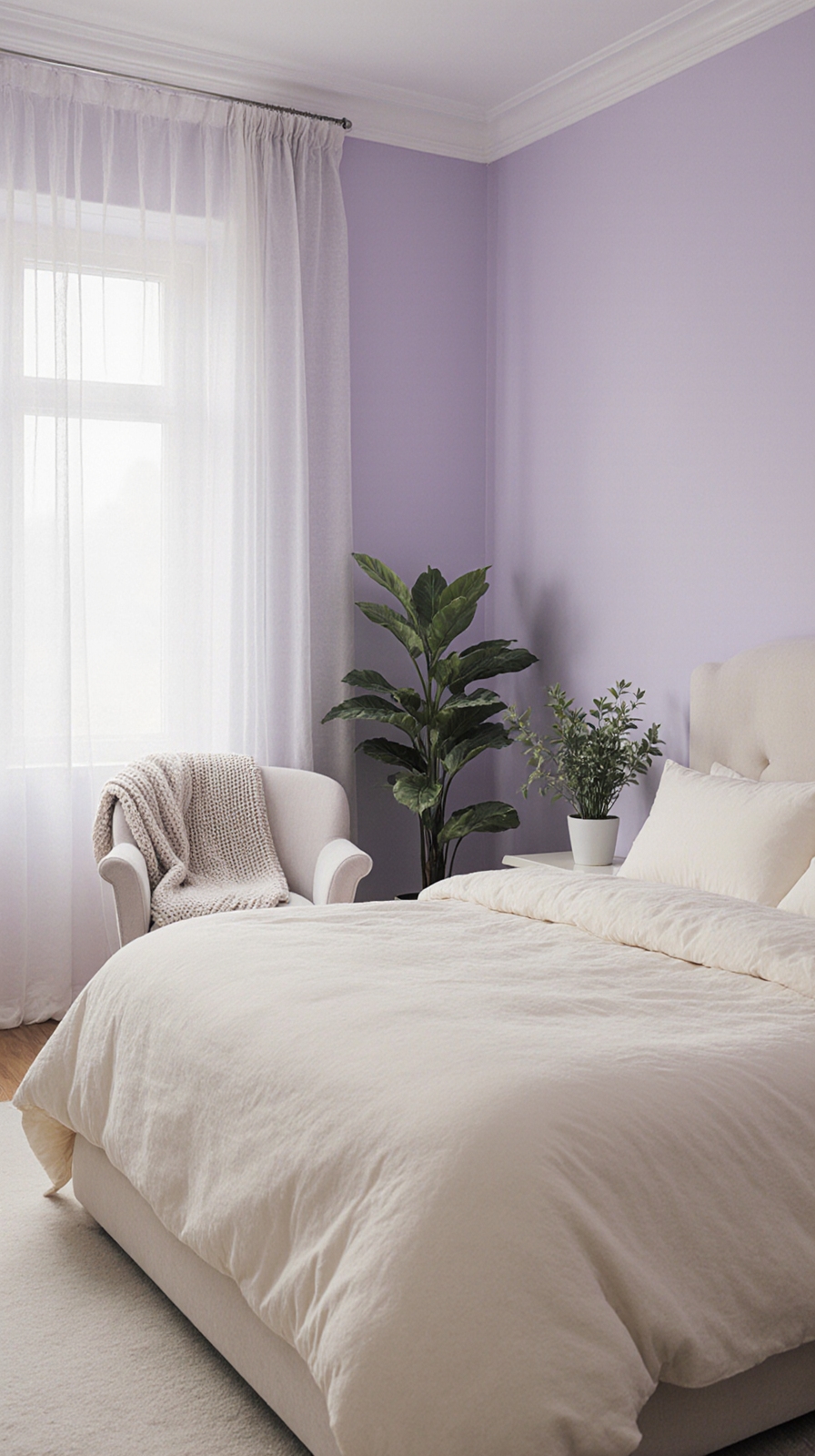
Color carries more emotional weight than most people realize, and once you understand how aging eyes actually process the world around them, the palette you choose for your bedroom becomes one of the kindest decisions you can make for yourself.
Aging lenses naturally yellow, making warm tones far easier to distinguish than cool blues.
Choose your palette thoughtfully:
- Walls: Soft peach, apricot, or warm tan
- Accents: Muted sage or earthy terra cotta
- Finishes: Matte or eggshell paint only
Strong contrast between your bed frame, flooring, and walls reduces visual confusion and brings genuine lasting calm.
Swap Door Handles and Fixtures for Arthritis-Friendly Designs
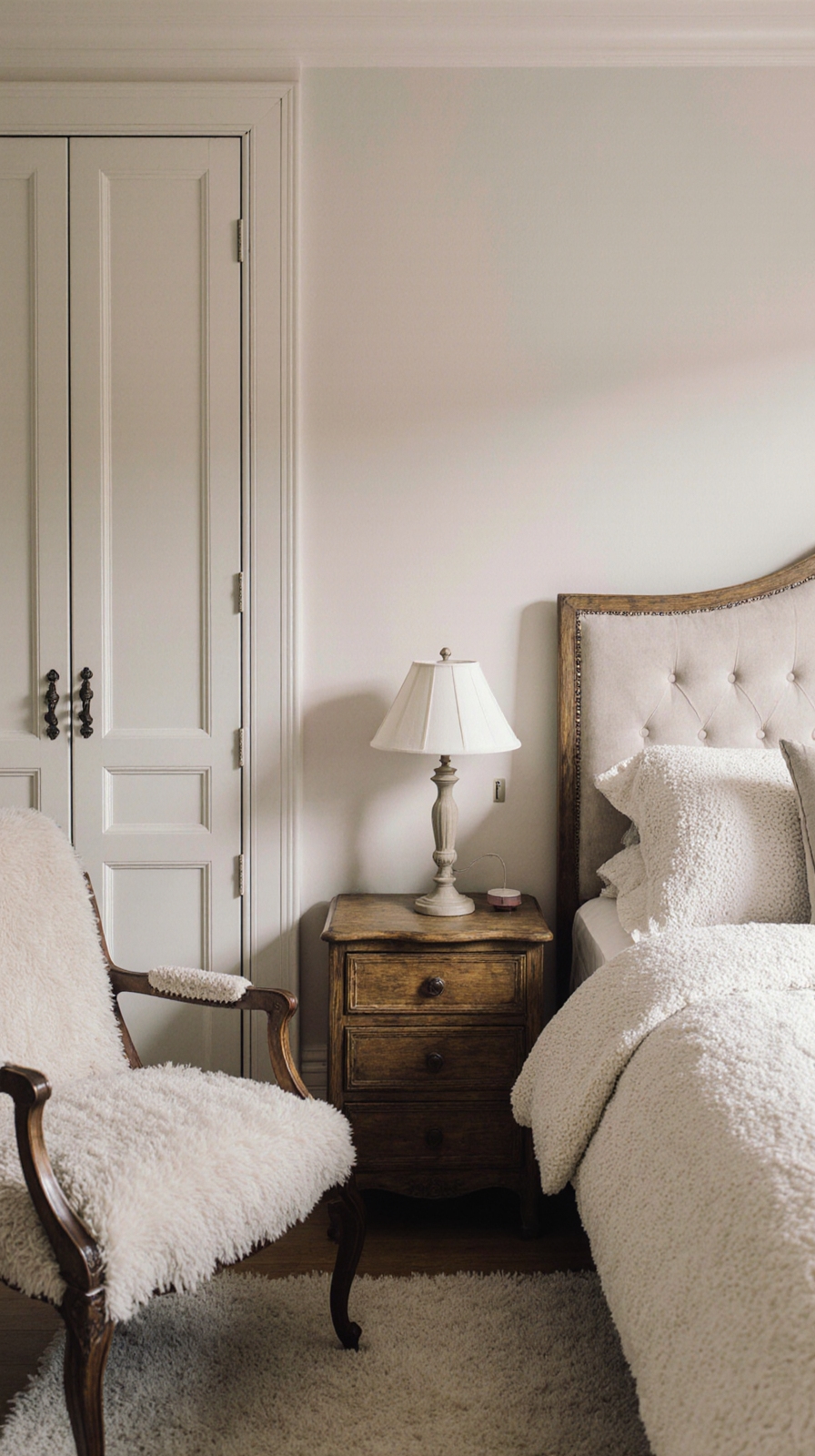
Once you’ve wrapped your bedroom in colors that soothe and settle the eyes, it’s worth turning your attention to the details your hands meet every single day.
Swapping round knobs for lever-style handles means you can open doors with your forearm or elbow, no gripping or twisting required.
Single-lever faucets, rocker light switches, and cabinet pulls with broad, smooth grips all reduce joint strain beautifully.
If full replacement feels overwhelming, doorknob adapters and textured sleeves offer gentle, affordable starting points. Choose hardware with 5, 6 inch levers, solid construction, and ergonomic surfaces and your bedroom will feel genuinely effortless to move through.
Add a Bedside Chair for Safer Dressing and Daily Transfers
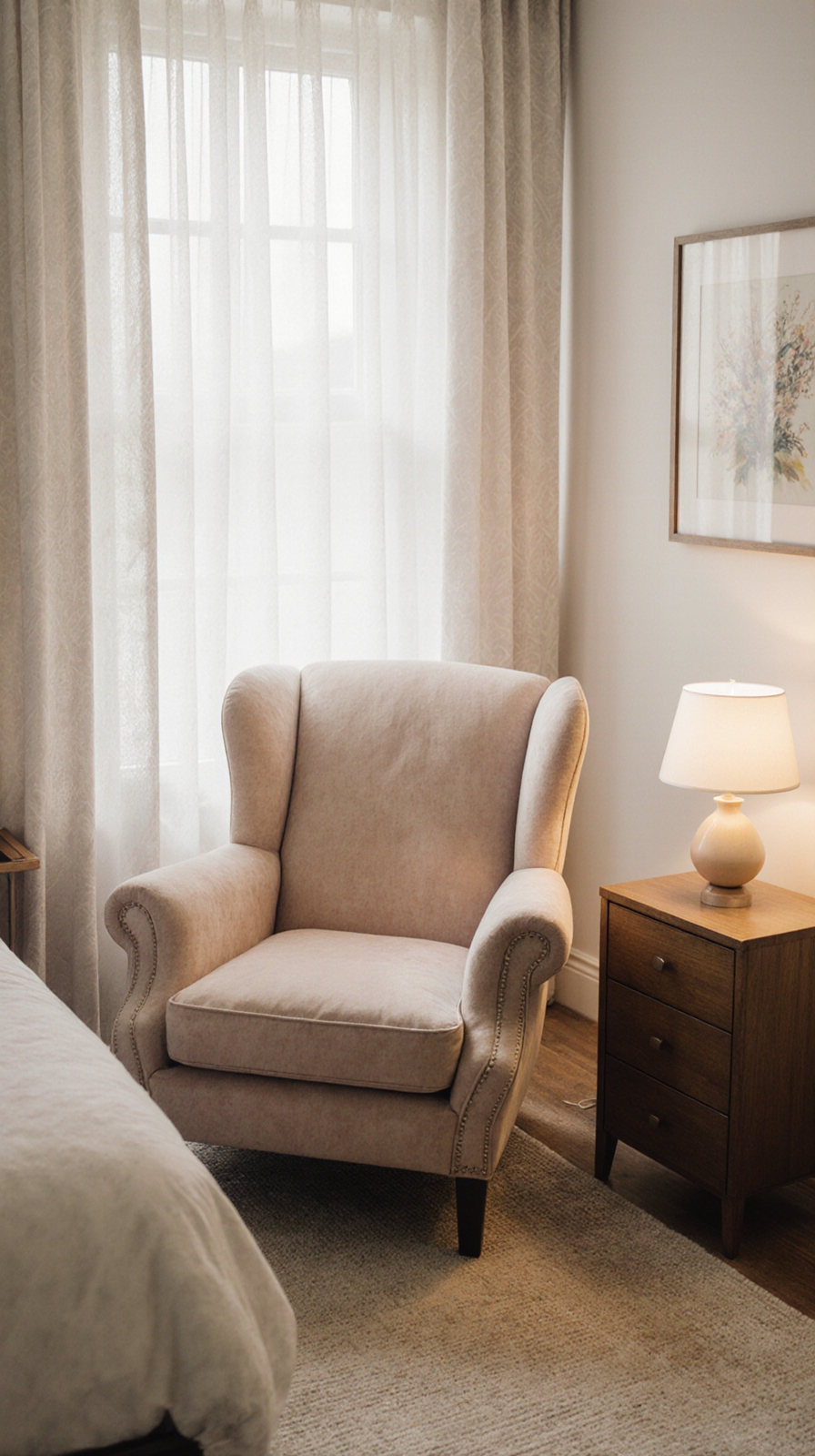
A sturdy bedside chair might be one of the simplest additions you make to your bedroom, yet its quiet impact on your daily comfort and confidence is truly profound.
When choosing yours, prioritize these three features:
- A higher seat height that lets your knees rest near 90°
- Firm, supportive armrests positioned for easy push-up leverage
- A high backrest with gentle lumbar contouring
Placed close to your bed, it shortens transfer distances, eases arthritic joints, and makes dressing feel unhurried and dignified, like mornings once felt when time moved a little more gently.