Imagine you’ve repainted your bedroom three times in two years, yet it still feels “off.”
You’re not alone, picking a calming bedroom color is genuinely tricky, especially when every shade looks different once it hits your walls. The wrong color can make your room feel cold, chaotic, or just plain blah.
But here’s the thing: the right color combo can completely transform how you sleep and unwind. Stick around, because what’s coming next changes everything.
Key Takeaways
- Cool colors like pale sky blue and sage green naturally reduce stress, while warm neutrals like beige and cream create cozy, inviting comfort.
- The 60-30-10 rule simplifies color selection by dividing walls, secondary surfaces, and accents into balanced, visually restful proportions.
- Limiting a bedroom palette to two or three colors prevents visual overwhelm and promotes a consistently calm, cohesive atmosphere.
- Lighting significantly affects color perception; warm bulbs between 2700–3000K enhance calming shades and maintain a relaxing evening ambiance.
- Testing large color swatches throughout the day reveals how natural and artificial light shifts a color’s calming effect.
Why Most Women Struggle to Pick a Calming Bedroom Color
Picking a calming bedroom color sounds simple until you’re standing in the paint aisle staring at 47 shades of blue.
Here’s the problem: calm isn’t one color. It depends on your lighting, room size, bedding, and even how stressed you’re at night.
Cool colors like blue and green feel relaxing to some women, while warm creams and soft blushes feel cozier to others.
Then your decor changes everything again. You’re not bad at decisions — you’re just juggling too many variables at once.
That’s why the choice feels impossible, even when you know what you want. According to MindEye report, color is actually processed by your visual cortex and limbic system at the same time, meaning your body is already reacting to it before your conscious mind weighs in.
How to Build a Calming Bedroom Color Palette
Once you know why color choices feel overwhelming, building your palette actually gets fun.
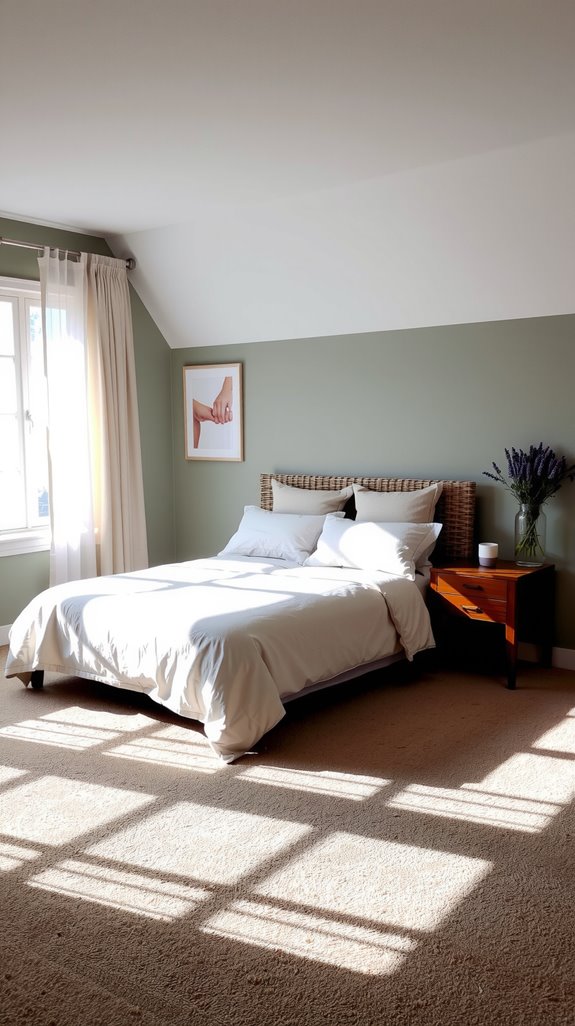
Start with the 60-30-10 rule. Choose one soft base color, like warm white or sage, for your walls. That’s your 60%.
Next, pick a secondary color, maybe misty blue or oatmeal, for your bedding and curtains. That’s your 30%.
Finally, add one small accent color through a pillow or artwork. That’s your 10%.
Keeping only two or three colors total makes everything feel cohesive and restful. Palettes like ivory, beige, and taupe layered together are a great example of how warm neutrals create a naturally cozy and cohesive look.
It’s basically a recipe, and you’re just following the steps. Simple, right?
Soft White and Off-White for a Calm, Timeless Bedroom
Now that you’ve got your color palette recipe down, let’s talk about one of the most popular ingredients: soft white and off-white.
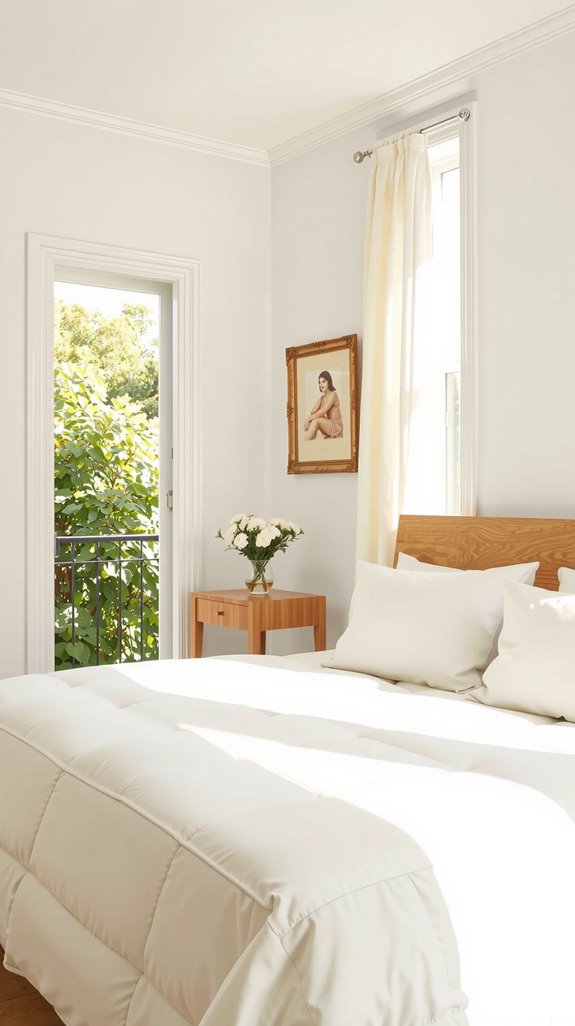
These shades aren’t your blinding, “did I just stare at the sun?” pure whites. They’re warmer, gentler, and way more relaxing. Soft whites reduce visual noise, making your brain feel less cluttered and more peaceful.
Off-whites with creamy or beige undertones even feel cozy and secure, which is perfect before sleep. They also bounce light around beautifully, making small rooms feel bigger without feeling harsh.
Basically, they’re the reliable best friend your bedroom walls have always needed. Popular go-to options like White Dove OC-17 and Swiss Coffee OC-45 are frequently recommended by designers for their ability to create a harmonious, timeless feel in any space.
Warm Beige and Greige for an Effortlessly Cozy Bedroom
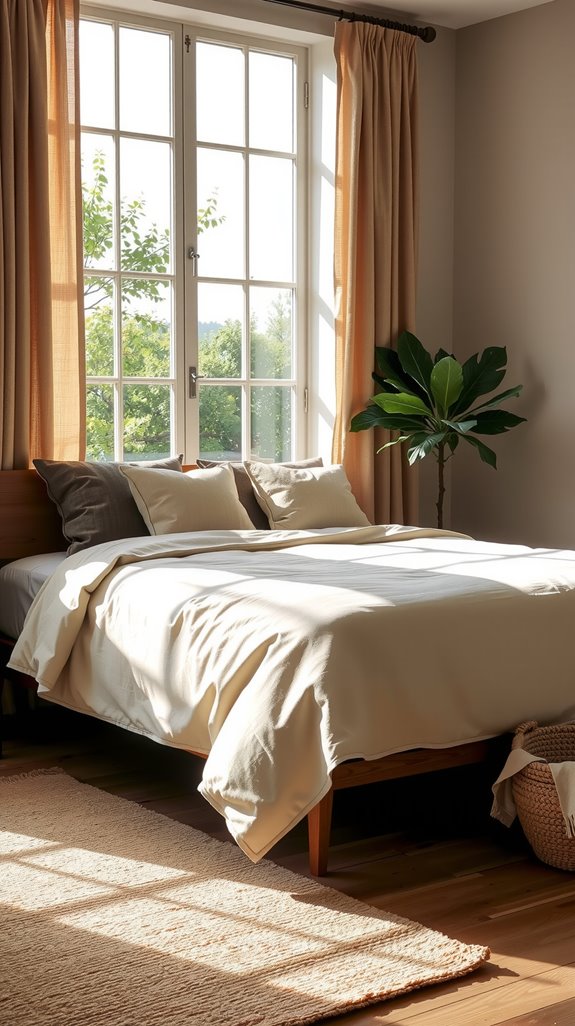
If soft white is the reliable best friend of bedroom walls, warm beige and greige are the cozy older sister who always has a blanket and hot cocoa ready.
These colors keep your brain relaxed and your space feeling like a hug.
Try this winning combo:
- Paint walls a pale greige for an airy, soothing envelope
- Layer chunky knit blankets and linen bedding in matching tones
- Add natural wood furniture for organic warmth
- Use soft 2700K lighting to make everything glow golden
Together, they create a bedroom that whispers, “Stay. Rest. You’re safe here.” Natural materials like linen and wool add breathability to the space while keeping the atmosphere feeling grounded and effortlessly warm.
Cream, Oatmeal, and Tan: How Layered Neutrals Create a Calming Bedroom
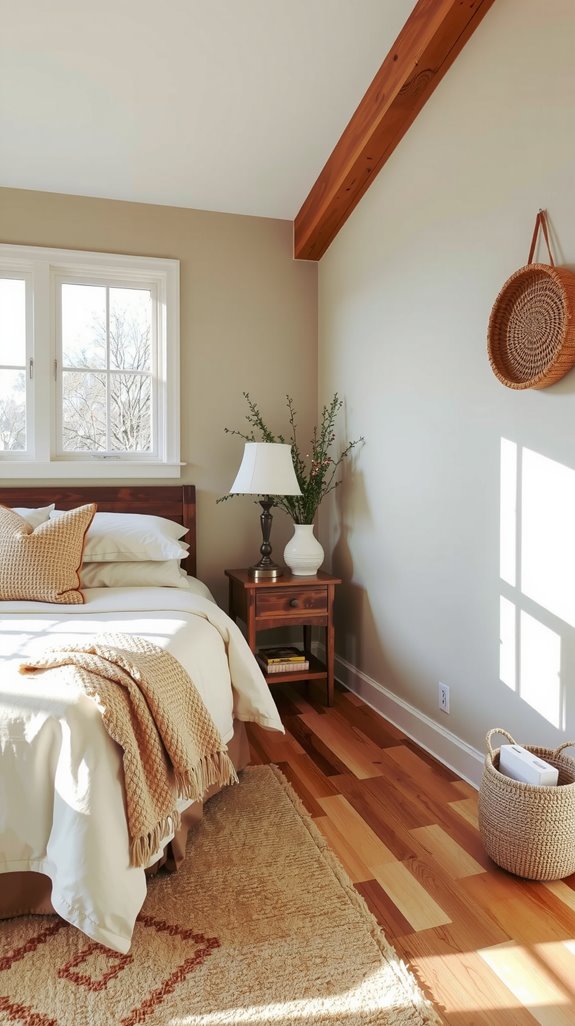
When you want a bedroom that feels like a warm exhale, layered neutrals are your secret weapon. Cream, oatmeal, and tan work together like best friends who never argue — each one slightly different but totally in sync.
Use cream on your walls for a soft, bright base. Add oatmeal in your bedding for cozy warmth. Then bring in tan through a rug or headboard to ground everything.
Toss in some linen, woven textures, and warm lighting, and suddenly your room feels calm, cohesive, and genuinely relaxing — no bold colors required, just beautifully quiet layers doing all the work.
Neutral tones promote a calming environment that keeps the space feeling open and inviting without any added clutter.
Pale Sky Blue for a Bedroom That Feels Instantly Serene
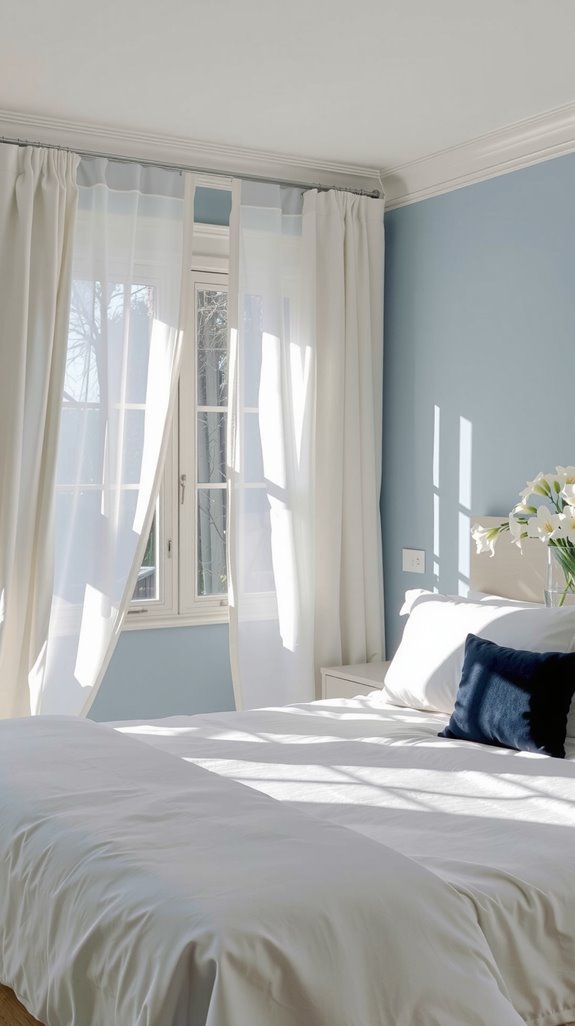
Layered neutrals are a beautiful way to create calm, but there’s another color that takes serenity to a whole new level — pale sky blue.
It’s airy, soft, and honestly feels like sleeping inside a cloud. Sky blue walls can even make a small space feel more open and expansive. Sky blue walls enhance the sense of tranquility and create an airy, spacious feel that makes any room breathe easier.
Here’s how to make it work:
- Paint your walls pale blue and add white furniture for a breezy, coastal vibe.
- Bring in warm wood accents so the room doesn’t feel chilly.
- Layer cotton, linen, and plush bedding for cozy texture.
- Use warm bedside lamps to keep the mood soft and dreamy.
You’ll never want to leave.
Dusty Blue and Muted Aqua for a Dreamy, Gentle Space
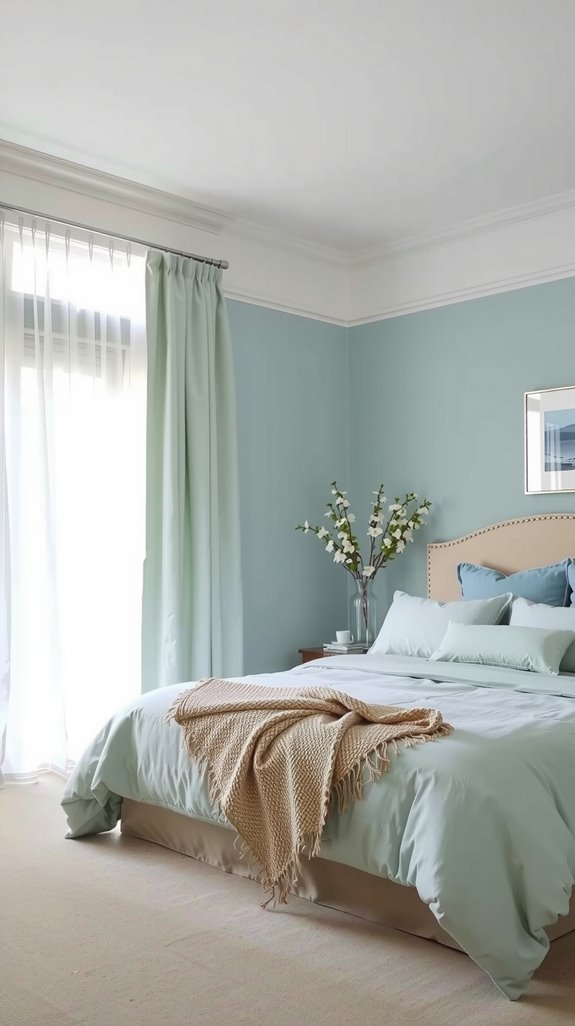
Dusty blue and muted aqua are like the bedroom equivalent of a long, slow exhale. These shades work because they’re low in saturation, meaning they’re soft and quiet rather than bold and buzzy.
Think sky after sunrise, not a neon pool float. The secret is keeping aqua blue-heavy so it stays calm instead of going full tropical vacation. Pair either shade with warm whites, beige, or natural wood to keep things cozy rather than cold.
Use a matte or eggshell finish so the walls don’t bounce light around like a disco ball, and your room stays genuinely dreamy.
Navy Blue Without the Cold or Cave-Like Feel
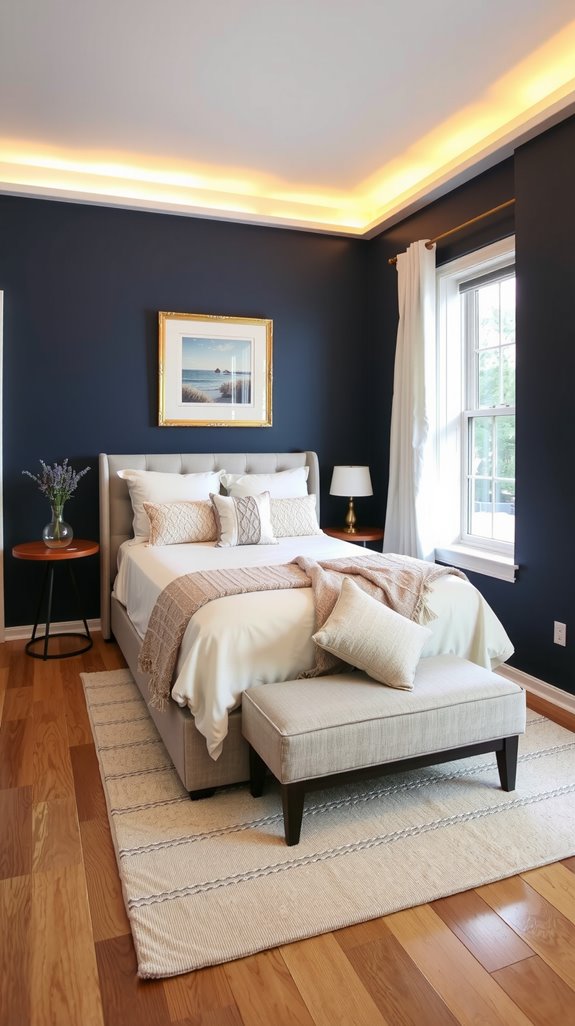
Navy blue gets a bad reputation for making rooms feel like a bat cave, but that’s usually a fixable problem.
Choose a warm-leaning navy with subtle gray or green undertones, and you’ll instantly soften that cold, inky look.
Here’s how to make navy feel cozy, not creepy:
- Paint one wall navy and keep the others off-white or pale gray.
- Add warm brass lamps with 2700K bulbs.
- Layer in cream rugs, linen pillows, and light oak furniture.
- Hang mirrors to bounce light around the room.
Navy done right feels luxurious, not like a dungeon.
Sage Green for a Grounded, Nature-Inspired Bedroom
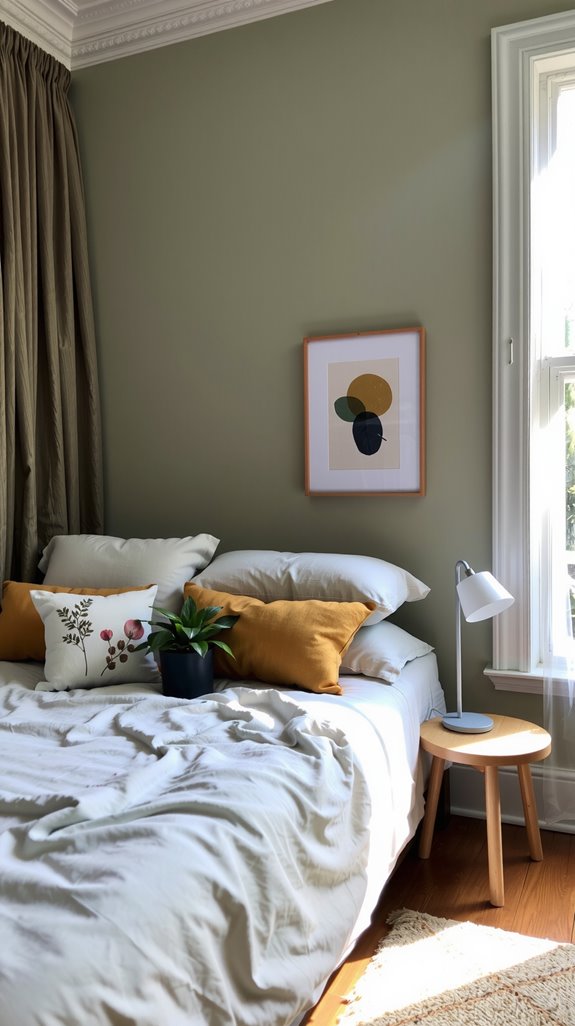
If you want a bedroom that feels like a rejuvenating change, sage green is your color.
It’s a soft, muted green with gray and yellow mixed in, like someone turned down the volume on a forest. That calming quality makes it perfect for sleeping spaces because it doesn’t fight for your attention.
Pair it with creamy whites, light wood furniture, or cozy linen bedding, and your room instantly feels grounded and peaceful.
You can paint all four walls or just one behind your bed. Either way, you’ll feel like you’re sleeping inside nature itself.
Soft Olive and Seafoam for a Spa-Like Calming Bedroom
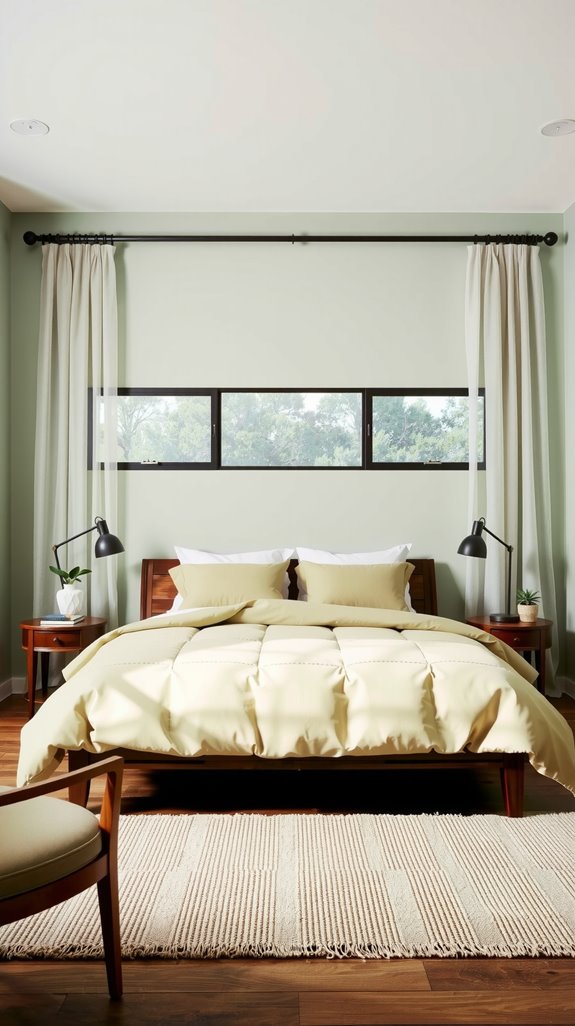
When you want your bedroom to feel like a spa you never have to leave, soft olive and seafoam are the perfect team.
Picture this combo in action:
- Soft olive walls that glow warmly in morning light
- Seafoam accents that make the room feel cool and breezy
- Warm oak furniture grounding everything beautifully
- Soft white trim keeping it clean and uncluttered
Olive brings earthy calm, and seafoam adds that fresh, tropical-water vibe. Together, they lower your visual stress instantly.
Test both colors using large swatches first, because each shifts surprisingly under different lighting throughout the day.
Blush Pink That Feels Sophisticated, Not Juvenile
Blush pink gets a bad reputation sometimes, but the secret to making it feel chic instead of childish is all about the *shade* you pick.
Skip the bubblegum and go for dusty, muted blush or soft plaster pink instead. Pair it with charcoal, navy, or dark wood furniture, and suddenly it looks seriously sophisticated.
Add velvet pillows, brass accents, or linen curtains to give it a luxe, grown-up feel.
Keep your palette tight, just blush plus one or two neutrals like cream or white, and you’ll have a bedroom that feels calm, elegant, and beautifully you.
Lavender and Lilac for a Peaceful Sanctuary Bedroom
Lavender and lilac are basically nature’s way of bottling calm and pouring it straight into your bedroom. These soft purple shades tell your brain it’s time to relax, almost like a built-in spa signal.
- Picture lavender walls making your small room feel open and airy.
- Imagine lilac’s pinkish warmth glowing beautifully in dim, north-facing rooms.
- Visualize creamy white furniture floating against a soft purple backdrop.
- Picture sage green throw pillows adding a fresh, garden-inspired touch.
Together, these colors create a cozy, dreamy sanctuary that genuinely hugs you goodnight.
Mauve and Dusty Rose for Quiet Feminine Warmth
If lavender is your bedroom’s deep breath in, then mauve and dusty rose are the long, cozy exhale. These two colors work like best friends — dusty rose brings warmth and softness, while mauve adds cool, moody depth. Together, they create a layered, calming space that feels grown-up without trying too hard.
| Element | Dusty Rose | Mauve |
|---|---|---|
| Mood | Warm, romantic | Cool, elegant |
| Best Neutral Pair | Beige, oatmeal | Cool gray, stone white |
| Best Accent | Warm wood, linen | Charcoal, matte black |
You’ll love how balanced this palette feels!
Soft Terracotta and Camel for a Cocooning Bedroom Mood
When you wrap yourself in soft terracotta and camel, your bedroom instantly transforms into something that feels like a warm hug you never want to leave.
These earthy tones create a cocooning mood that’s cozy, grounding, and seriously gorgeous.
Here’s how to build that magic:
- Paint one wall in matte terracotta for a soft, glowing backdrop.
- Layer camel-toned linen bedding over creamy white sheets.
- Add a jute rug and rattan basket for earthy texture.
- Toss in rust or camel velvet pillows for depth.
You’ll never want to leave. Honestly, fair warning.
How Room Lighting Affects Your Calming Bedroom Color Choices
Choosing the perfect calming color for your bedroom walls is only half the battle, because the lighting in your room can completely change how that color looks and feels.
Warm bulbs between 2700–3000K make soft blues and greiges look cozy instead of cold or muddy. Cool lighting above 3500K pushes colors toward clinical and harsh, which totally kills the relaxing vibe you’re going for.
North-facing rooms naturally make colors appear grayer, while south-facing rooms brighten everything up.
Keep your evening lighting between 75–150 lux, use matte finishes, and watch your calming color actually deliver the peaceful bedroom you deserve!