Most people assume bright, airy rooms sleep better, but research suggests darker environments trigger melatonin production faster.
Your bedroom’s color temperature and light levels directly influence how quickly you fall asleep. A few deliberate changes, like swapping overhead fixtures for dimmers or painting walls Benjamin Moore’s Hale Navy, can shift the whole mood.
These 10 ideas show you exactly how to pull it off without making your room feel like a cave.
Key Takeaways
- Dark paint colors like navy or forest green signal the brain to wind down, especially in matte finishes that absorb light.
- Layer ambient, task, and accent lighting with bulbs between 2700K–3000K and dimmers for gradual brightness reduction before sleep.
- Choose deep-colored bedding in charcoal, plum, or forest green, layering velvet and bouclé fabrics to absorb light.
- Low-light plants like Pothos, Snake Plants, and ZZ Plants purify air and enhance a dark, cozy bedroom aesthetic.
- Decorative accents like velvet headboards, chunky knit blankets, and brass hardware add warmth and depth without overwhelming the space.
Dark Paint Colors That Make Any Bedroom Feel Cozier
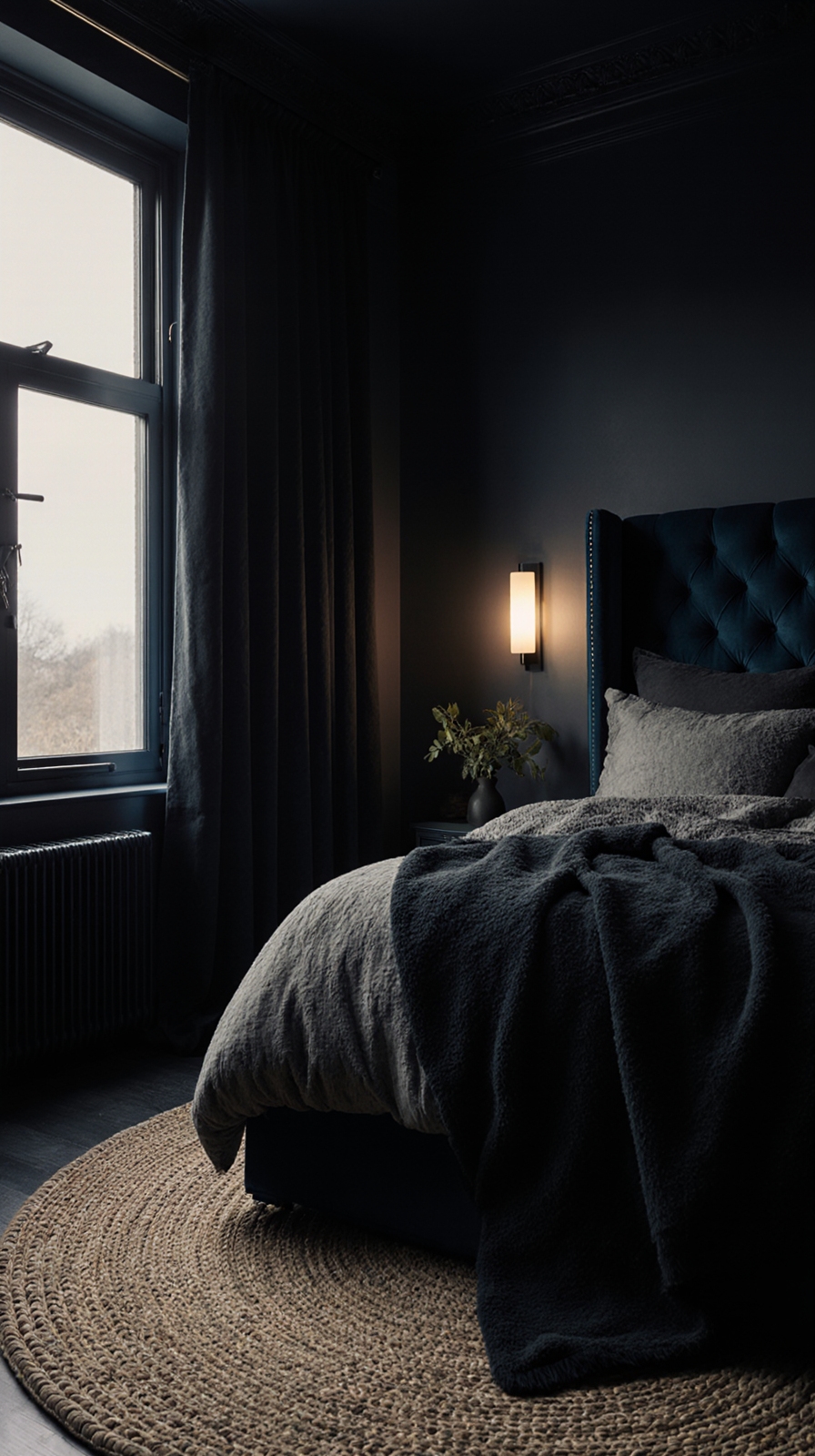
Dark paint colors are one of the most effective and underrated tools for making a bedroom feel genuinely cozy. You don’t need a designer’s budget, just a smart color choice.
Benjamin Moore Hale Navy has an LRV of 6, meaning it reflects almost no light, which naturally signals your brain to wind down.
Hale Navy’s LRV of 6 barely reflects any light — and your brain notices, shifting naturally into sleep mode.
Sherwin-Williams Iron Ore runs warmer, so it won’t make your room feel like a parking garage.
Black Forest Green leans organic and calm.
Avoid pure blacks with no undertones. They lose depth fast and end up looking flat instead of intentional. Matte or eggshell finishes are the best choice for dark walls because they minimize glare and hide surface imperfections that higher sheens would expose.
Why Matte Finishes Work Best in a Dark Bedroom
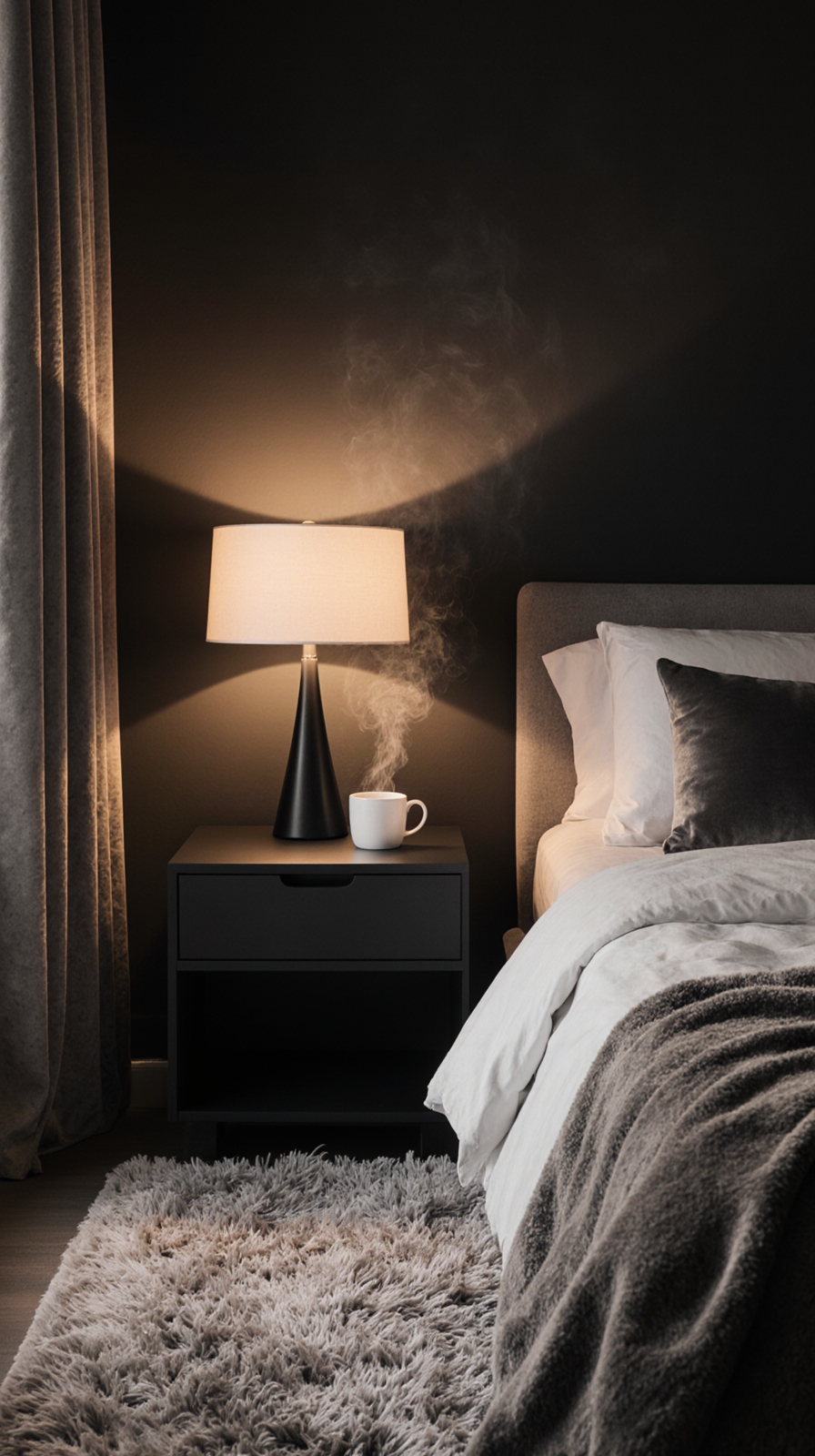
Once you’ve committed to a dark wall color, the finish you choose matters almost as much as the color itself.
Matte paint, meaning flat with zero sheen, absorbs light instead of bouncing it back. That absorption deepens colors like Sherwin-Williams’ Tricorn Black or Benjamin Moore’s Hale Navy considerably. Gloss would reflect your bedside lamp straight into your eyes. Matte won’t.
It also hides patched drywall and minor cracks without requiring perfect prep work. On uneven surfaces, reflected light creates shadows that expose every flaw.
Matte diffuses that light evenly, keeping the wall looking clean, calm, and intentional. Because matte finishes are not as easy to clean, they are best reserved for low-traffic spaces like bedrooms rather than hallways or kitchens.
Bedding and Textiles That Add Warmth Without Brightness
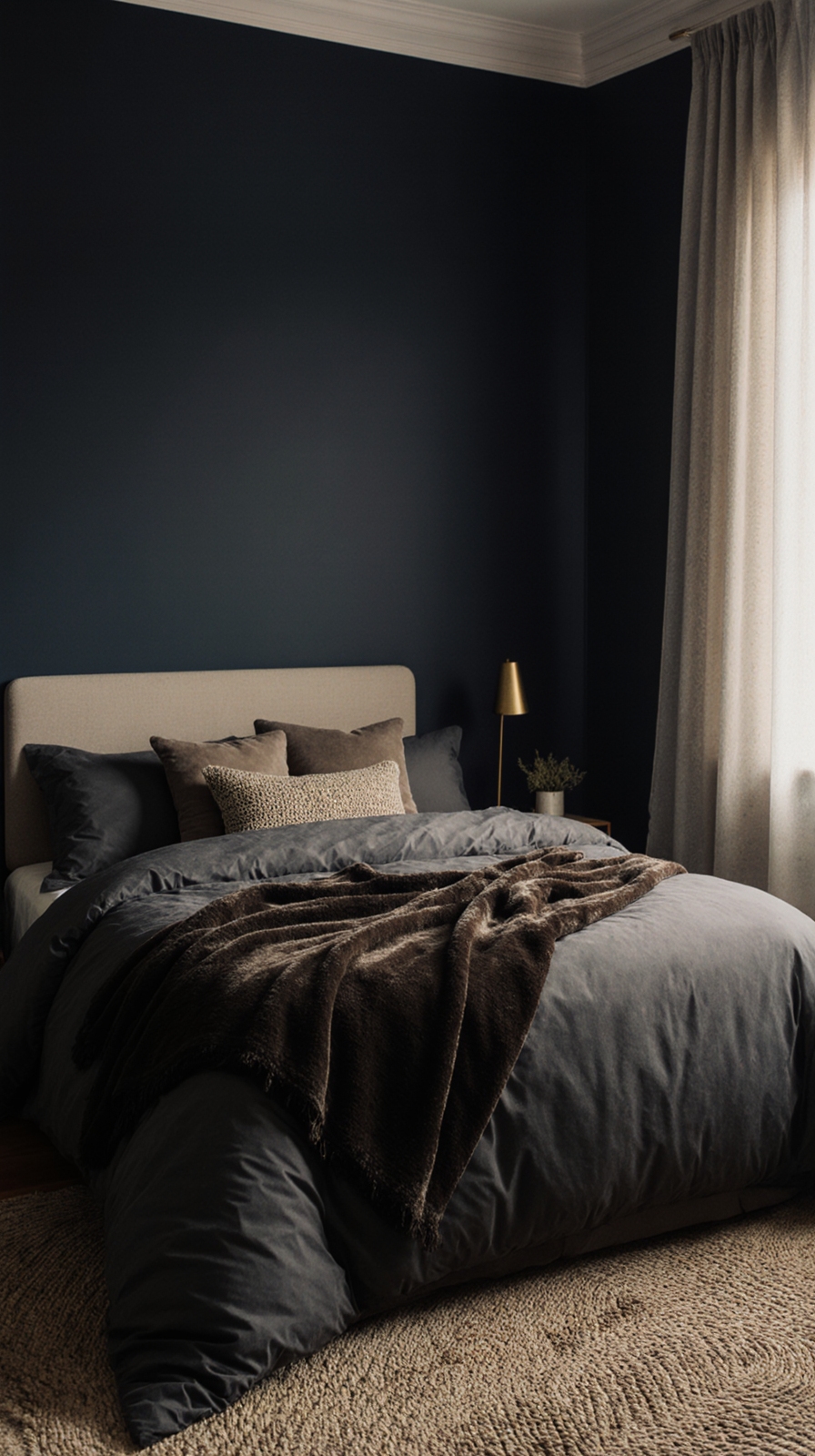
The wall color‘s doing its part, so now your bedding needs to pull the same weight. Skip white or cream — they glow like a flashlight against dark walls.
Go with charcoal gray, deep plum, or forest green in matte finishes instead.
Layer a down duvet inside a linen cover, then fold a wool throw at the foot of the bed. Add chunky knit pillows in slate or olive for texture without shine.
Velvet, bouclé, and brushed cotton absorb light rather than bounce it back. That’s the whole game — soft surfaces that keep the room dark and actually feel good.
Mixing soft fabrics with sleek surfaces like polished wood adds depth and tactile appeal that makes the space feel intentionally layered rather than flat.
SEE THIS: 12 Bedroom Wall Decor Ideas for Women 27–60 Who Want the Room to Feel Finished!
Furniture That Grounds a Dark Cozy Bedroom
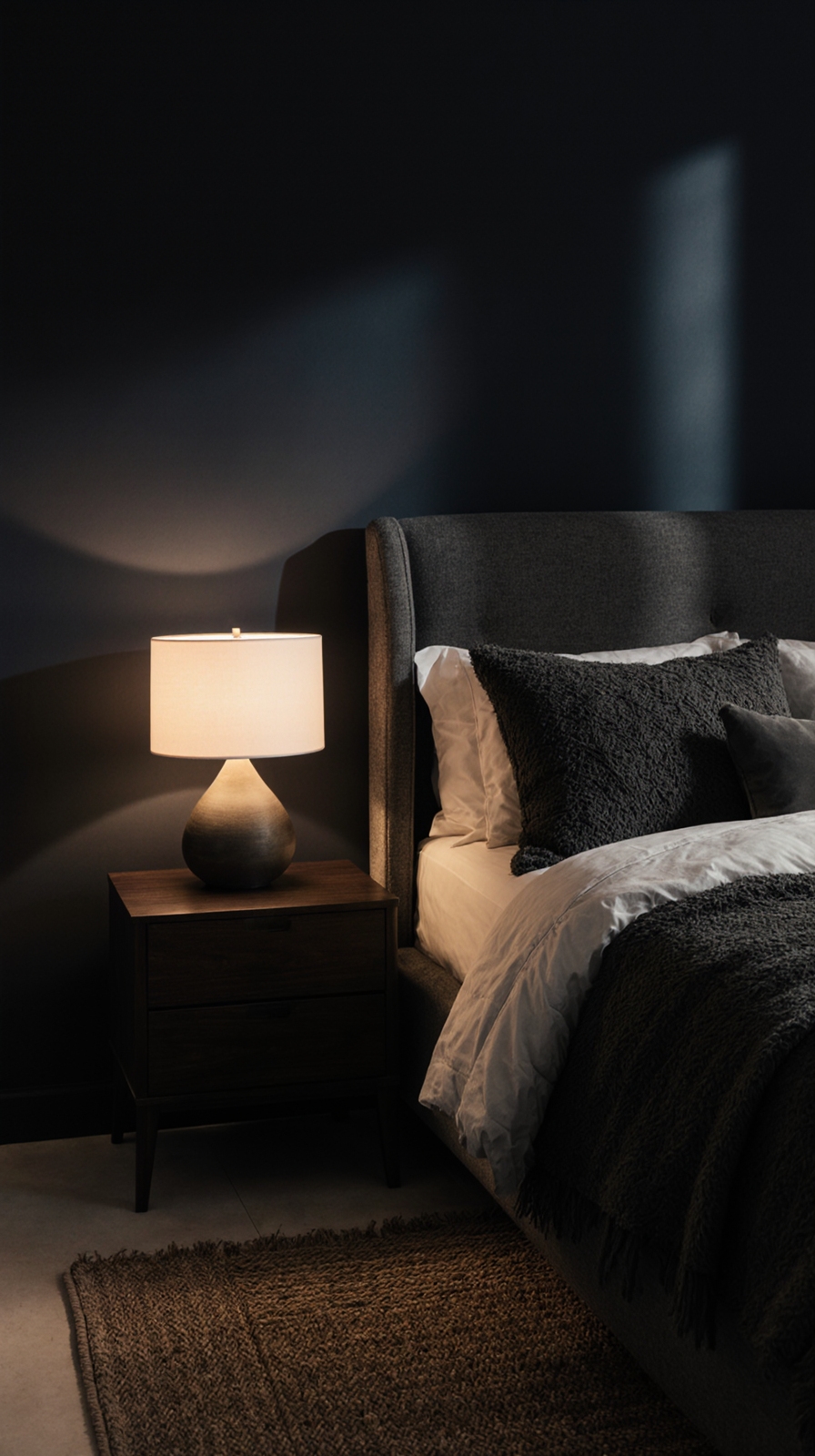
Soft bedding handles the surfaces you touch — furniture handles everything else.
Go low.
Platform beds with minimal headboards cut vertical bulk, and nightstands under 18 inches keep the floor visible and the room breathing.
Dark wood does real work here. Walnut with a matte finish adds warmth without bouncing light back at you. Charcoal-stained oak keeps it natural. Skip glossy surfaces entirely.
For placement, flank your bed with matching nightstands and push a low dresser against your longest wall. That symmetry quietly reduces visual stress.
Functional beats decorative — ottoman beds with lift-up storage handle clutter without adding height. Before committing to any piece, use masking tape on the floor to visualize how much space it will actually occupy.
Layer Soft Lighting for a Relaxing Dark Bedroom
Furniture sets the bones of a dark bedroom — lighting sets the mood.
Skip the single overhead fixture. Instead, layer three light types: ambient (40–50 foot-candles for general use), task (150–300 foot-candles for reading), and accent (soft glow for depth).
Keep everything between 2700K and 3000K — that golden tone supports melatonin without straining your eyes.
- Mount LED strips behind your headboard for indirect, candle-level glow,
- Use dimmers on your brightest source to ease brightness down before bed
- Place bedside lamps on both sides as your room’s main anchors
For best results, wire your ceiling light, wall lights, and lamps on separate electrical circuits so each layer can be controlled independently.
Warm Bulb Colors That Support Better Sleep
Bulb color matters more than most people realize, and getting it wrong is basically asking your brain to stay awake.
Blue and cool white light suppress melatonin, the hormone that tells your body to sleep. Red light, between 620 and 750 nanometers, does the least damage. It’s the safest option for bedside lamps or nightlights.
Amber and deep orange come in close, mimicking natural sunset tones without the harshness. For general room lighting, stay under 2700K.
Anything labeled “warm glow” or “sunset white” around 2000K to 2200K works well. Dim it below 30% brightness an hour before bed. Yellow and orange lights have minimal impact on circadian rhythms, which means they actively support melatonin production rather than working against it.
SEE THIS: n13 Neutral Bedroom Ideas for Women 30–65+ Who Want a Soft, Calm Room!
How to Block Outside Light for Deeper Sleep
Even the most carefully chosen warm bulbs won’t help if streetlight is pouring through your windows all night.
Blackout curtains block up to 95% of outside light, but only if they extend past the window frame on every side. Velcro strips along the edges seal the gaps that ruin everything.
- Push your bed to the wall opposite the window to cut direct glare
- Use adhesive blackout film on glass where curtains aren’t practical
- A sleep mask blocks what curtains miss, no installation required
Close your bedroom door too. Hallway light sneaks in more than you’d think.
How to Control Dark Bedroom Lighting Without Disrupting Sleep
Blocking outside light is half the battle. You still need to manage the light inside your room.
Swap overhead bulbs for warm-toned ones rated between 1500K and 2000K — that’s candlelight territory, and your brain won’t fight it.
Dim your lights gradually over 60 minutes before bed, dropping to around 5–10 lux by the end. A cheap dimmer switch handles this easily.
Warm bulbs, slow dimming, a cheap switch — your brain winds down without a fight.
For navigation, use a red or amber nightlight under 5 watts, placed at floor level about two meters from your bed. Cover any blinking charging lights with black electrical tape.
Small fixes, real results.
Decorative Accents That Deepen a Moody Bedroom Atmosphere
Once the lighting’s sorted, the rest of the room needs to keep up. Velvet headboards absorb sound and kill that sterile, hotel-room vibe.
Chunky knit blankets in cream or charcoal visually anchor the bed without trying too hard. Brass hardware on dark wood nightstands adds subtle luxury without reflecting much light.
- Macrame wall hangings catch faint light and create natural shadow play.
- Dusty rose or mauve dried florals on vanities add softness without bright color.
- Candles grouped on trays mimic warmth that no overhead fixture can fake.
Small details carry the whole mood.
Dark Bedroom Plants That Add Life Without Ruining the Mood
Plants won’t wreck your dark bedroom aesthetic if you pick the right ones.
The Cast Iron Plant survives under 10 foot-candles, which is basically a dimly lit hallway. Snake Plants manage fine at 15–50 foot-candles, and ZZ Plants handle 50–150. These aren’t fragile.
For care, plant them in well-draining soil mixed with perlite, and water only when the soil’s halfway dry. Rotate them weekly between brighter and darker spots to keep growth balanced.
They pull real work too, filtering benzene and formaldehyde from your air. Low maintenance, low light, no drama.