Designing a shared bedroom is like splitting one pizza between two people who cant agree on toppings, someone always feels shortchanged.
But it doesn’t have to work that way. When two sisters share a room with completely different styles, the right layout and storage choices can actually satisfy both of them.
From bed placement to accent colors, each decision matters more than you’d think. Keep going to find out which ideas make the biggest difference.
Key Takeaways
- Place beds on opposite walls to create distinct personal zones while maintaining an open, shared central space for movement and activities.
- Assign each sister one accent color for bedding and décor, while keeping walls and major furniture in a neutral base tone.
- Use cube shelving or tall bookcases as room dividers to separate personal spaces without blocking natural light flow.
- Color-coded bins, labeled drawers, and under-bed storage prevent mix-ups and give each sister organized, clearly defined personal storage.
- Define individual zones with separate rugs, canopies, or different wall treatments while coordinating prints and curtains for overall room cohesion.
Opposite-Wall Twin Beds That Give Each Sister Her Own Zone
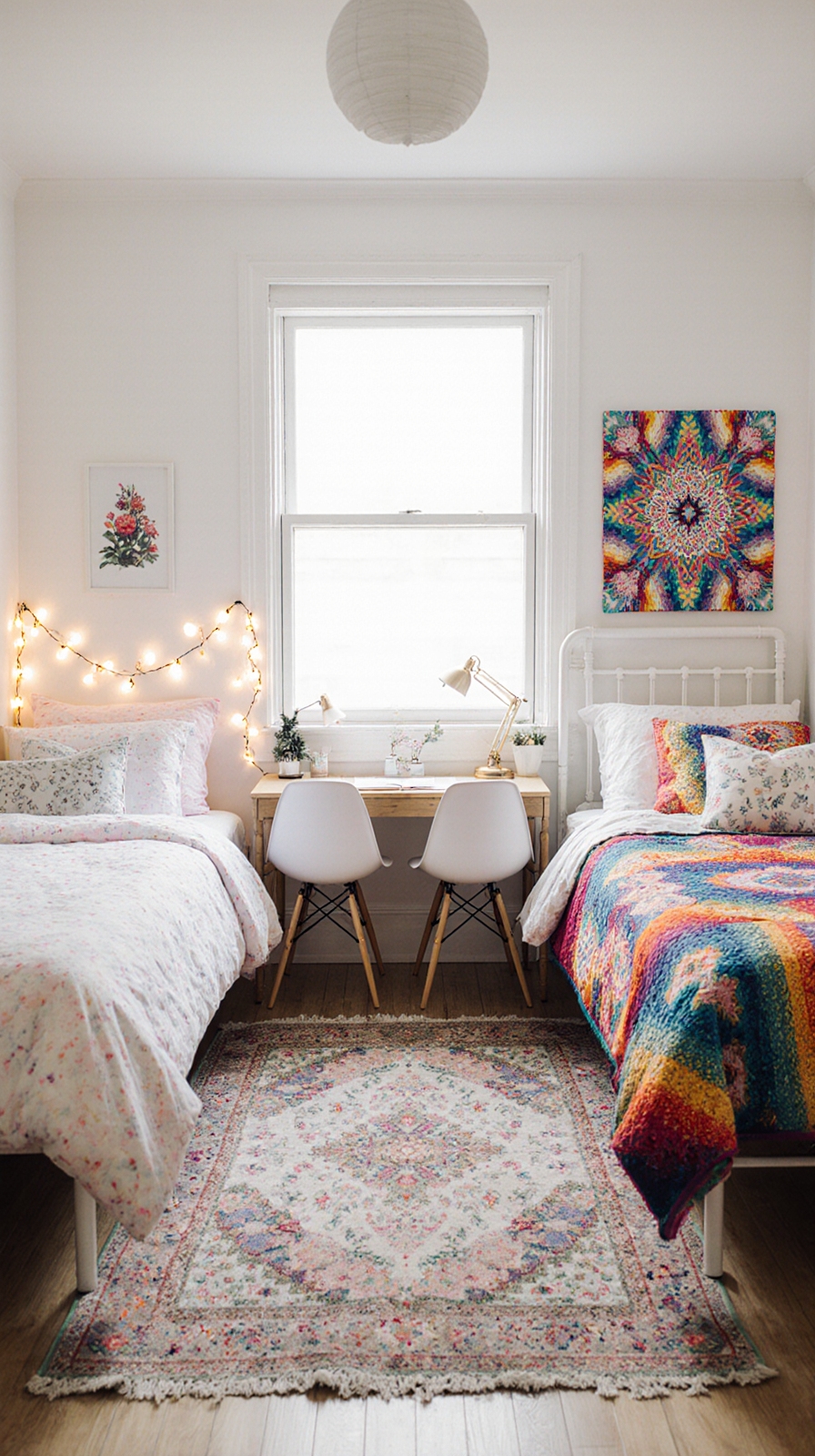
Placing each sister’s bed on an opposite wall is one of the smartest moves you can make in a shared bedroom, because it instantly creates two distinct personal zones without adding a single divider or partition.
It also opens up a clear central pathway, making the room feel bigger and easier to move through. Keep at least 60 cm of clearance beside each bed for safe movement and bed-making.
Aim for a 1.5 m × 1.5 m open zone in the middle for play or shared storage.
This layout naturally reduces noise, visual intrusion, and daily territorial conflicts between sisters, and it’s one of the easiest ways to bring peace to a shared space. Position a center window between the two beds to draw in natural light and enhance the perception of space in the room.
Side-by-Side Beds With a Divider That Actually Works
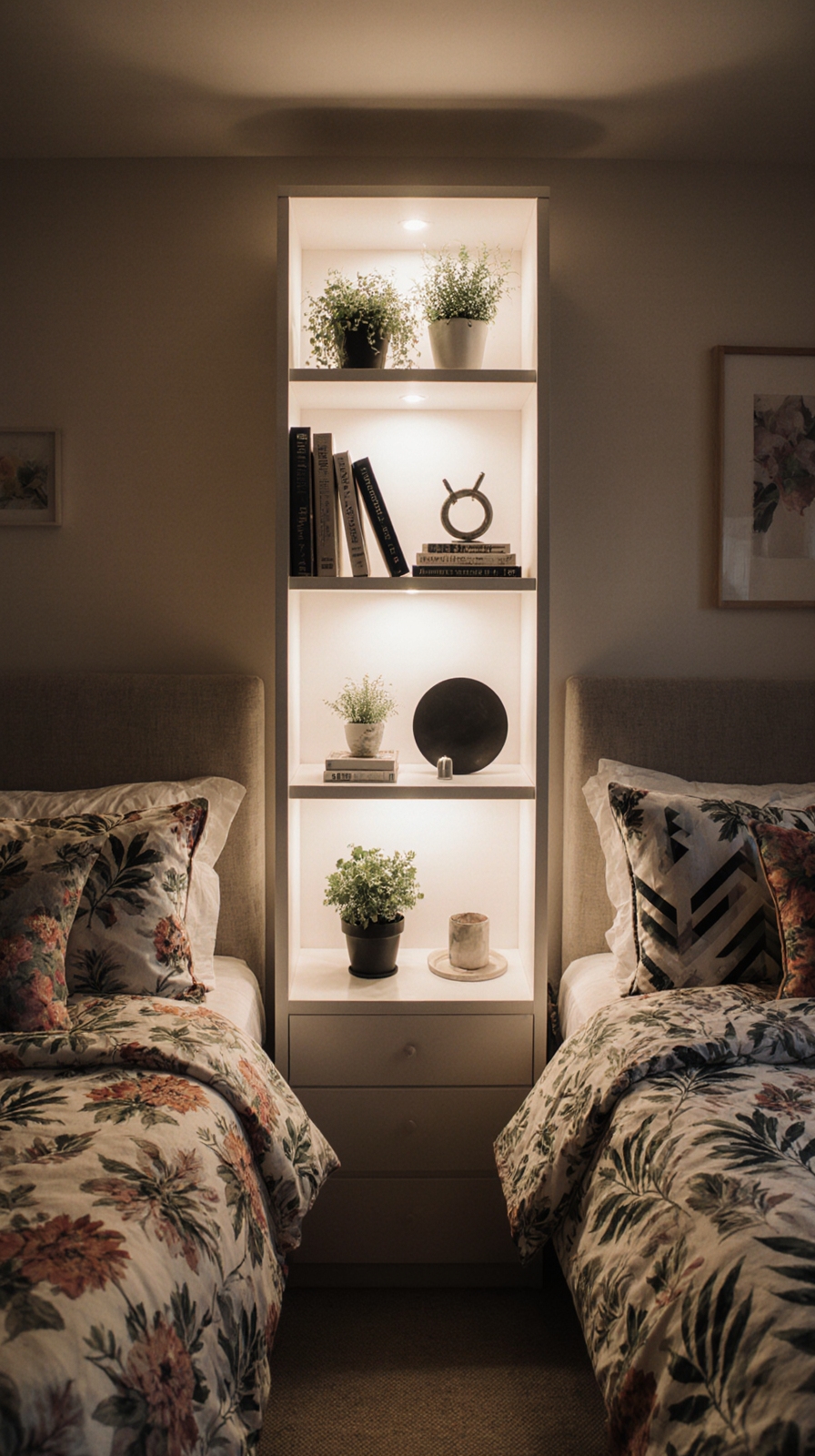
Fitting 2 beds side by side along the longest wall is one of the smartest moves for a shared sister bedroom, because it keeps the rest of the floor open and gives you a clear, natural spot to drop a divider right between them.
A double-sided bookcase works beautifully here, each sister decorates her own face of it, and both get built-in storage. Keep the divider around half the room’s height so light and airflow stay intact.
Add different rugs on each side, and you’ve created two distinct zones without any construction or permanent changes. You can also hang curtains from the ceiling between the beds to create an even stronger visual and physical barrier when either sister needs a private moment.
Why Bunk Beds Still Win in Tight Shared Bedrooms for Sisters
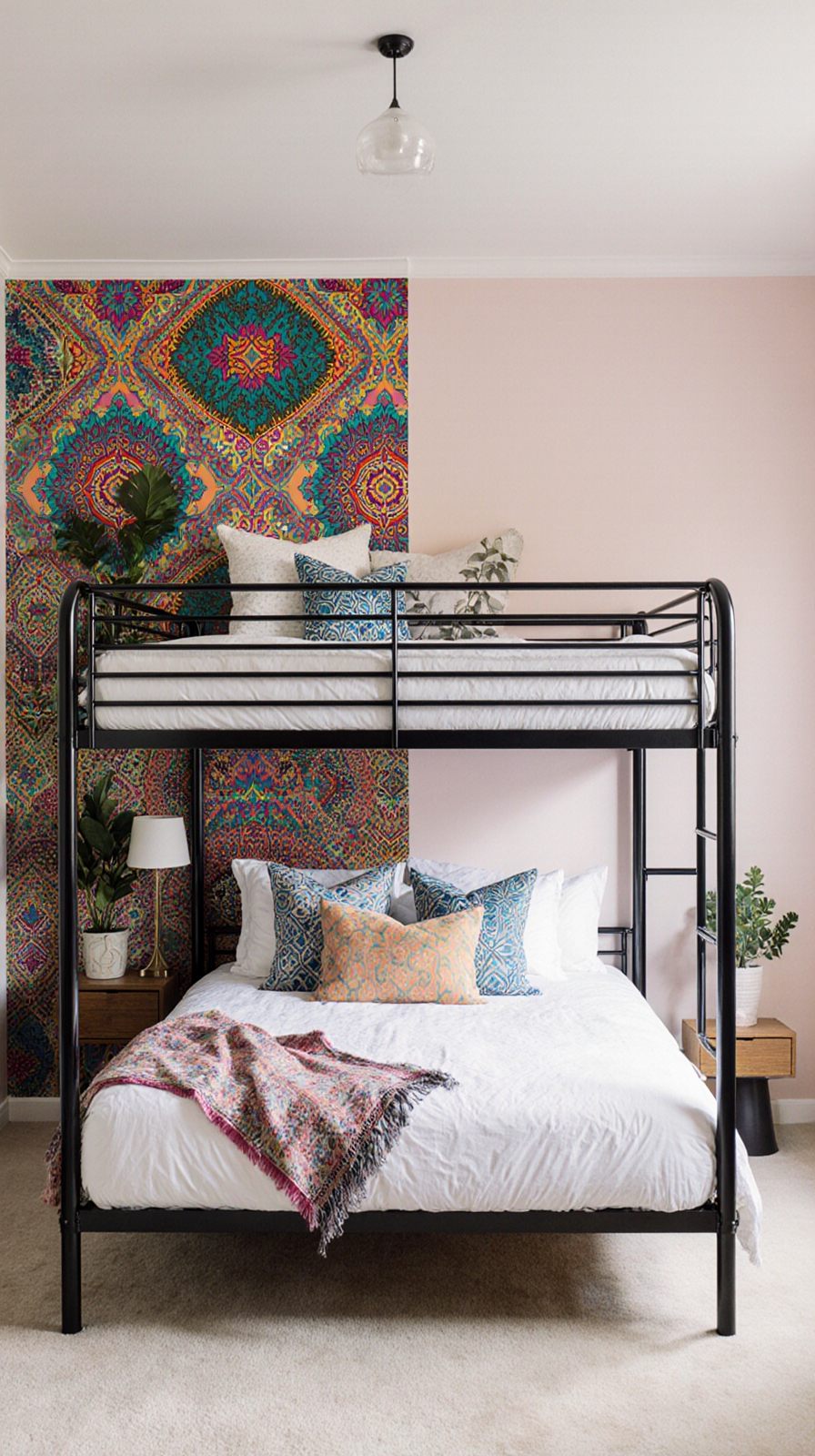
When floor space is already at a premium, bunk beds solve the problem that side-by-side beds simply can’t.
They stack vertically instead of spreading horizontally, which immediately frees up the central floor area for a play zone, a study corner, or just room to move around without bumping into furniture.
Bunk beds stack vertically, freeing up floor space that side-by-side beds simply can’t recover.
Modern bunks offer even more than space savings:
- Built-in drawers and stair steps add vertical storage,
- Curtains or canopies create personal retreats for each sister,
- Loft-style designs open floor space for desks below,
- Convertible frames separate into twin beds later.
They’re genuinely smart, long-term investments. Options like the Twin Over Full Bunk Bed With Stairs are currently available at discounted prices, making it easier to furnish a shared room without overspending.
Under-Bed Storage That Keeps Each Sister’s Stuff Separate
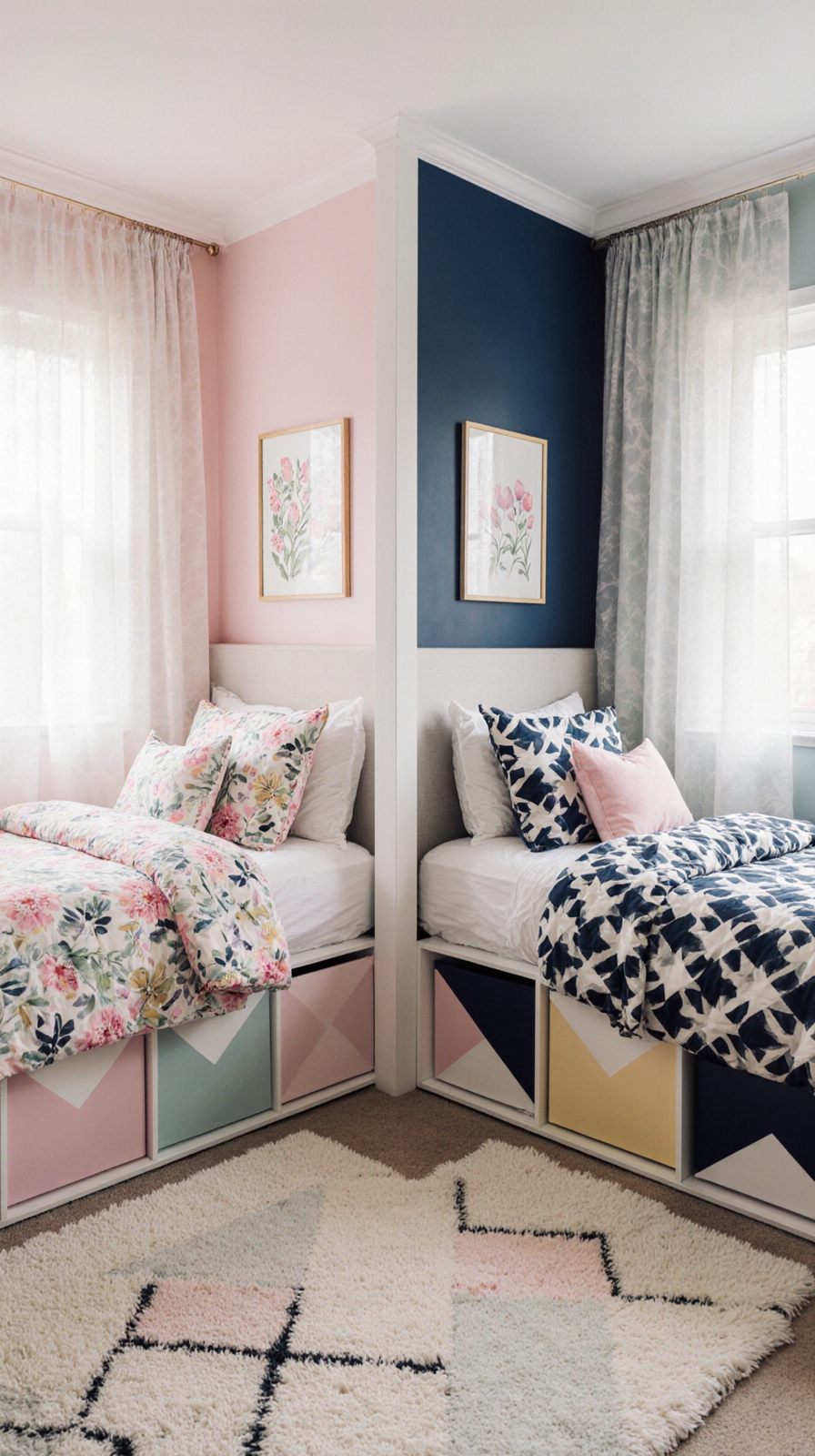
Bunk beds reclaim your floor, but the space hiding underneath each mattress is just as valuable, and it’s one of the easiest places to build a clear, personal storage system for each sister.
| Category | Sister A | Sister B |
|---|---|---|
| Clothes | Blue bins | Pink bins |
| School | Labeled drawers | Labeled drawers |
| Keepsakes | Lockable box | Lockable box |
Assign each sister her own color, then match every bin to it. Add bed risers if clearance feels tight. Rolling drawers slide out without disturbing the other side keeping both systems completely independent and easy to maintain.
For bulky seasonal items like extra blankets or winter clothing, vacuum storage bags compress contents down significantly while also shielding everything from dust and moisture.
Closet Layouts That Stop the Sharing Arguments Between Sisters
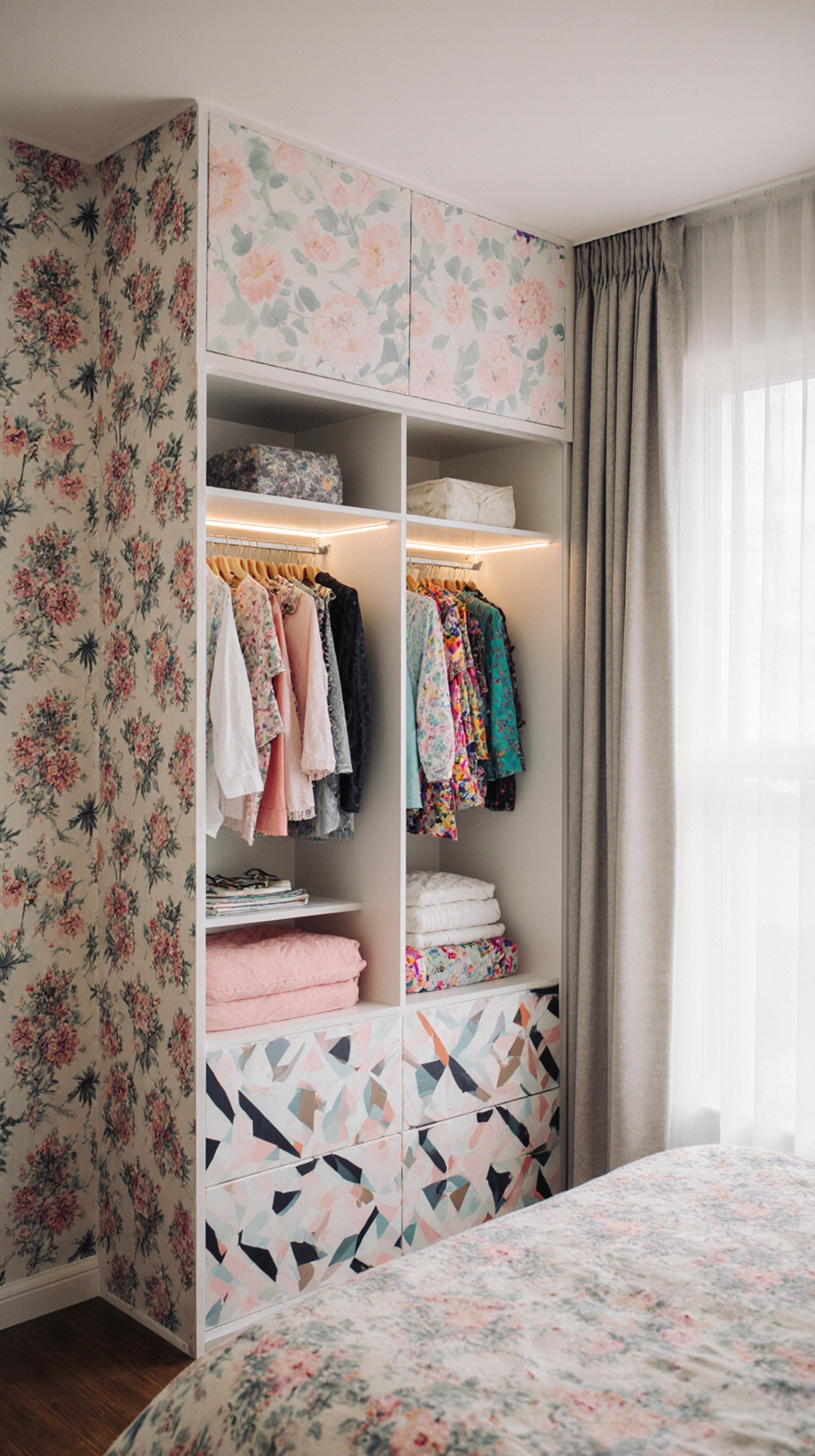
A shared closet without clear boundaries is basically a daily argument waiting to happen, so dividing the space intentionally is one of the smartest moves you can make.
- Split the rod and shelves evenly, so each sister owns a clearly defined zone,
- Add double-hang rods to double hanging capacity and reduce competition,
- Color-code bins and hangers for instant visual ownership, especially helpful for younger sisters,
- Label every shelf and drawer with names or initials to stop mix-up arguments fast.
These simple systems create fairness, reduce daily friction and keep the peace long-term.
Consolidating two separate closets into one well-organized shared space can actually make the laundry process simpler for parents while giving each child a clearly defined area to call her own.
How to Give Each Sister Her Own Wall Without Splitting the Room?
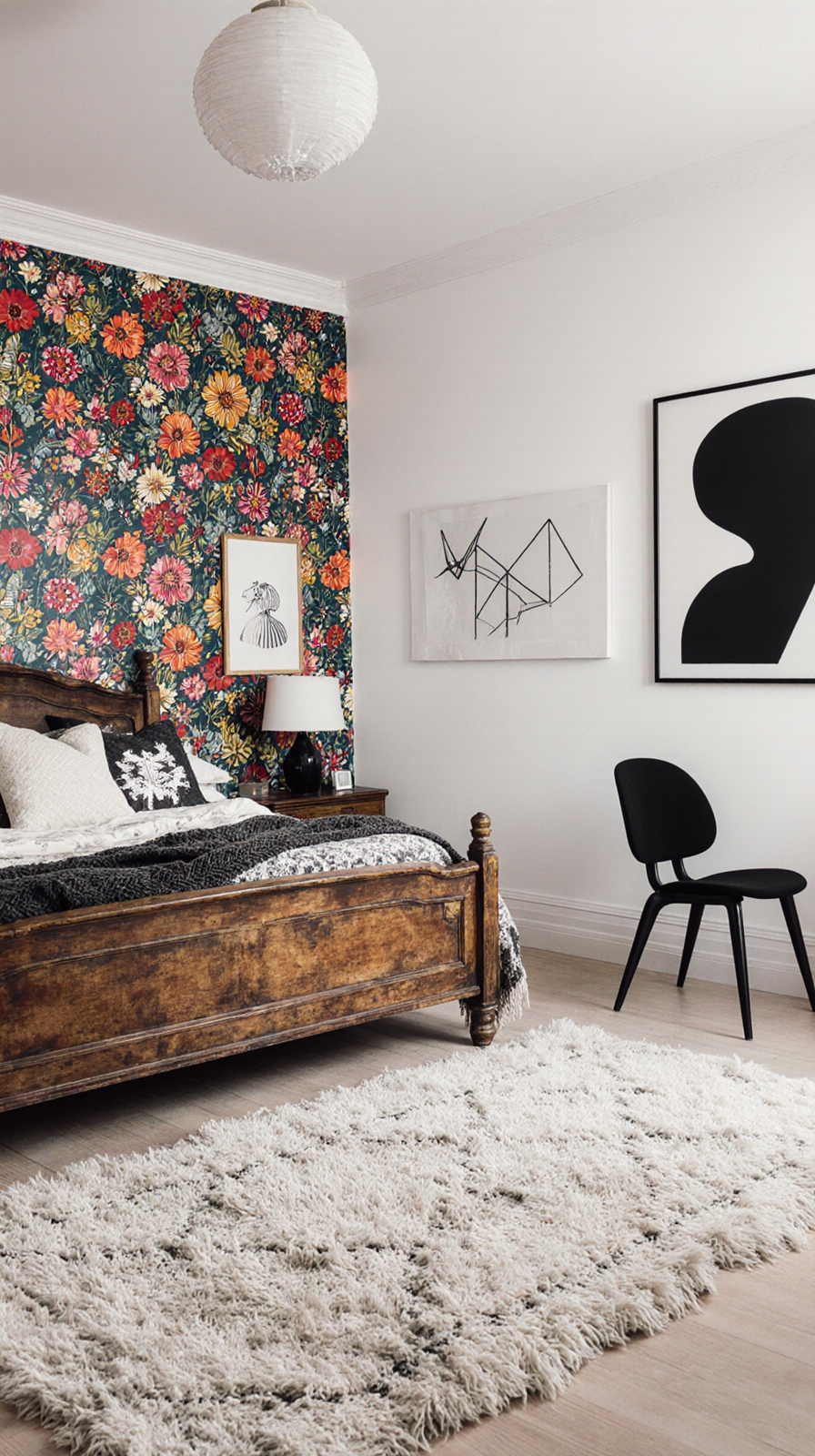
Giving each sister her own wall doesn’t mean you have to physically divide the room or sacrifice space. Instead, use different wallpaper or wall treatments behind each bed to instantly give each side its own identity.
Hang a canopy or drape above each bed to make the sleeping areas feel distinct and personal. You can also add separate rugs to define each sister’s zone on the floor.
These visual cues work together to signal ownership without building anything permanent. Each girl gets her own corner of the world, and the room stays open, functional, and easy to move around in.
For an even stronger sense of individuality, try incorporating junk walls with photos and personal decorations to make each sister’s space truly her own.
How to Coordinate Colors Without Matching Everything?
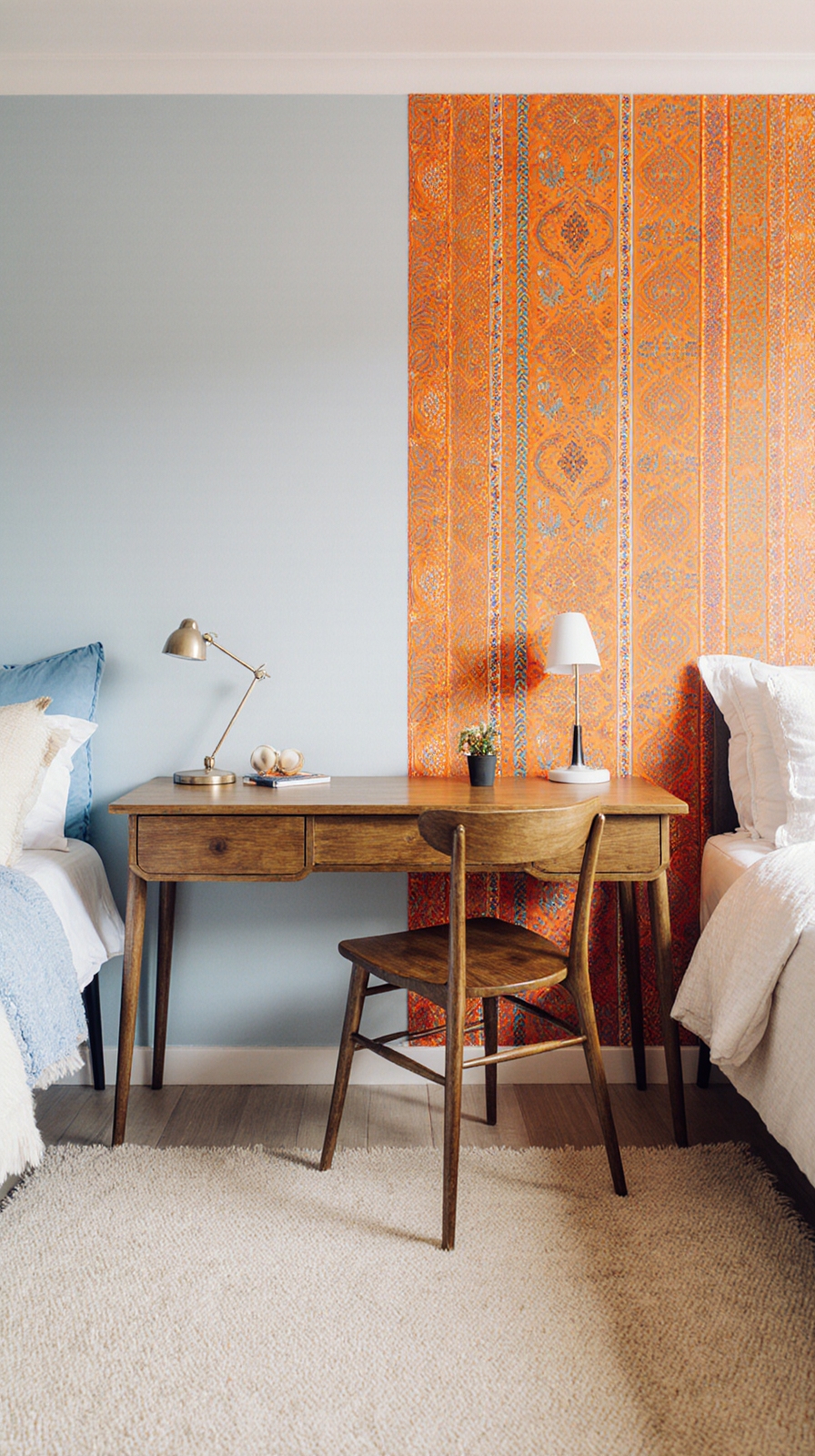
Coordinating colors in a shared bedroom doesn’t mean both sisters have to pick the same shades or surrender their personal style. A shared palette with distinct proportions keeps things cohesive without feeling identical.
Sharing a bedroom doesn’t mean sharing a style — a coordinated palette lets both personalities shine.
- Choose 2,3 core colors and apply them differently on each side.
- Keep one neutral base, white, beige, or greige, consistent across walls and large furniture.
- Match undertones so all colors feel intentionally chosen, not randomly mixed.
- Repeat each color in at least three elements like bedding, rugs, and art.
This approach lets both sides feel connected while still feeling personally yours.
Curtains and Canopies That Create Real Privacy in a Shared Room
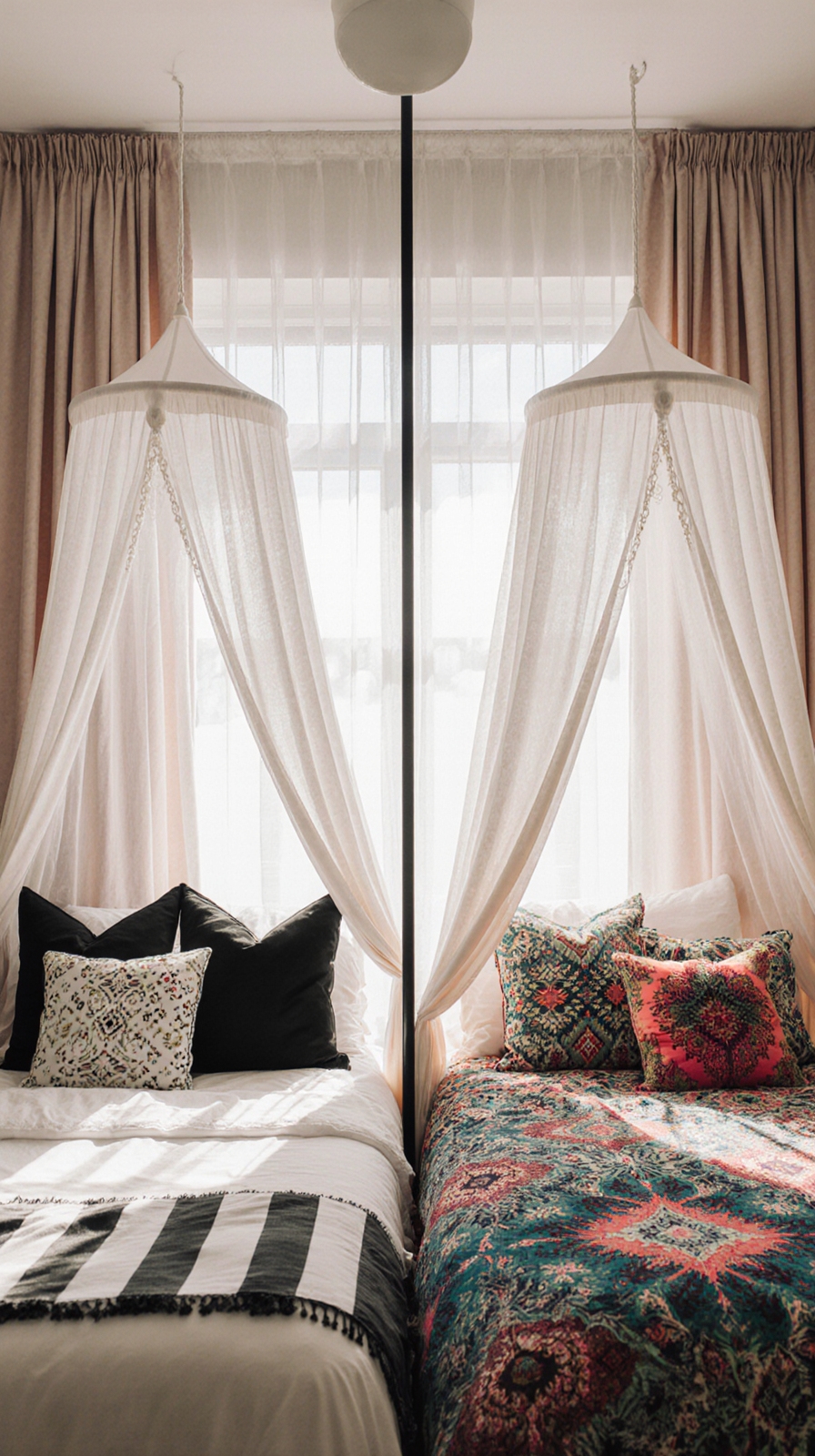
Two simple additions, curtain tracks and bed canopies, can turn one shared bedroom into two genuinely private spaces without knocking down a single wall.
Ceiling-mounted tracks let you hang floor-to-ceiling curtains that slide open during the day and close at night, giving each sister her own retreat. Choose blackout fabric to block light and prevent shadows from showing through.
Bed canopies take it further by wrapping each sleeping area in its own mini-room. Layer sheer panels with opaque ones for adjustable privacy.
Position beds in opposite corners, then extend curtains along the walls to create cozy, enclosed nooks.
Bookshelves and Dressers as Subtle Dividers in a Sisters’ Bedroom
Curtains and canopies are great for overnight privacy, but what about the rest of the day?
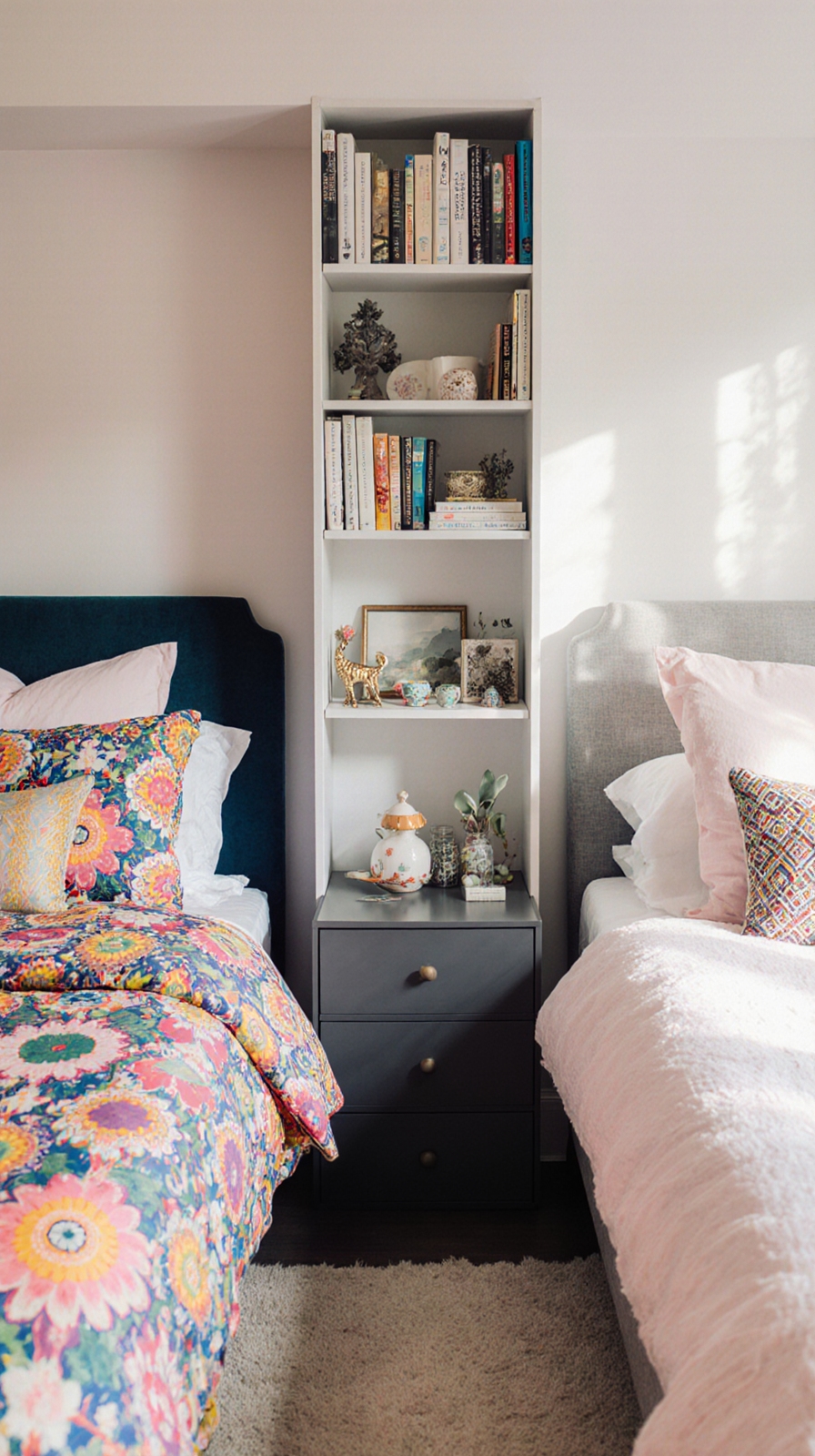
Bookshelves and dressers can quietly divide a shared bedroom without making it feel cramped. Here’s how to make them work:
Furniture can divide a shared bedroom into two distinct zones without sacrificing space or style.
- Position a tall bookcase between beds to block sightlines while keeping light flowing.
- Use a dresser as a low divider, splitting drawers so each sister owns her section.
- Choose cube shelving for hidden storage plus a built-in room divider.
- Customize each side with different colors, decals, or decor to reflect separate personalities.
Two zones, one room, zero wasted space.
A Shared Desk That Works for Two Different Routines
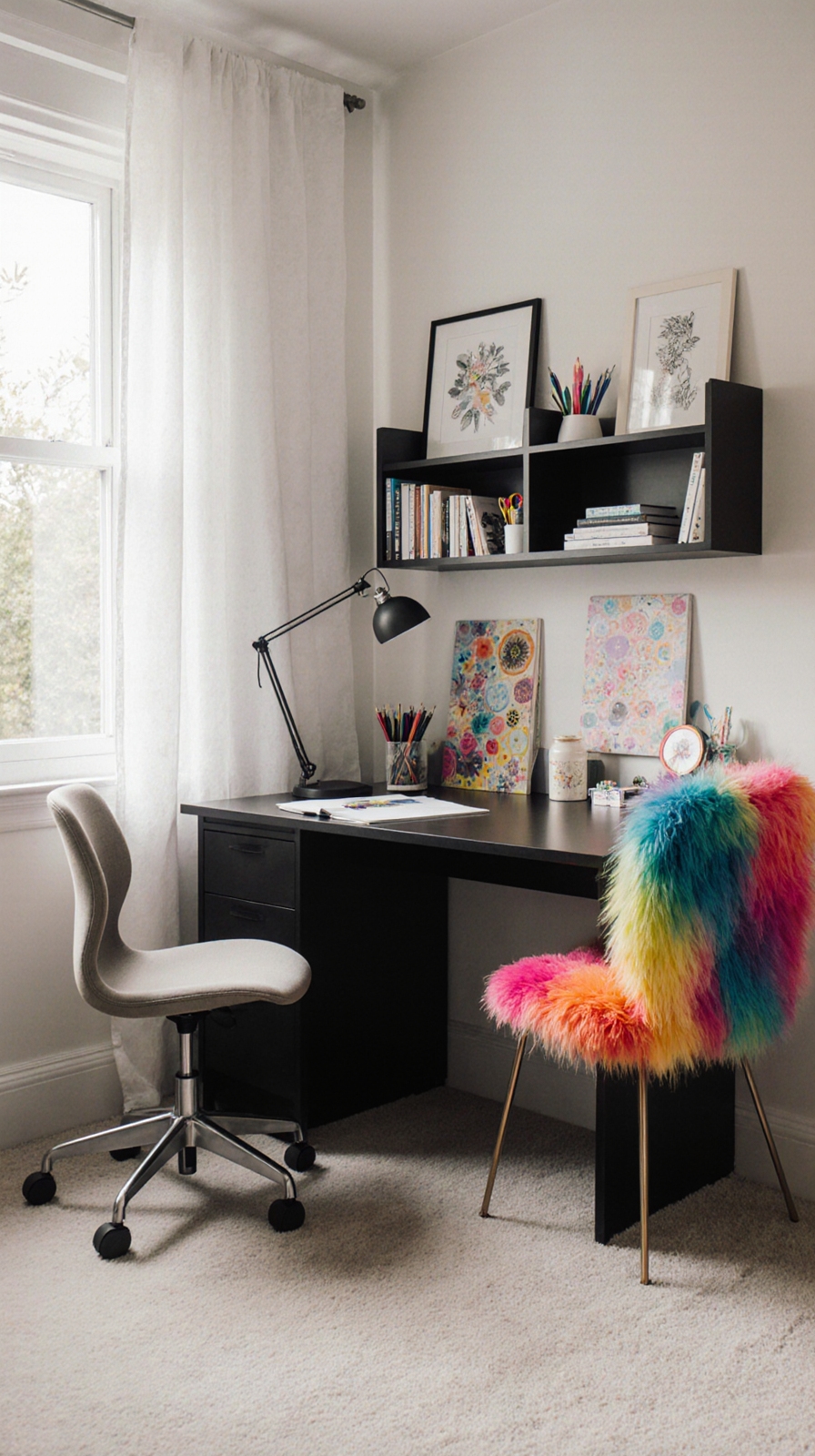
Sharing a desk doesn’t have to mean sharing chaos. A long desk, at least 48 inches wide per person, gives each of you a defined zone without feeling crowded.
Use color-blocked desk pads or small trays to mark your boundaries so supplies and notes stay on their own side. If one of you needs a monitor setup and the other works with sketchbooks or textbooks, adjust accordingly; add a monitor riser, task lamp, or footrest only where needed.
Move shared items like chargers and printers off the main surface entirely so neither routine interrupts the other.
Storage Ottomans and Window Seats That Add Seating and Hidden Storage
A storage ottoman or window seat might be the hardest-working piece of furniture you can add to a shared bedroom. Each piece delivers serious value for two sisters sharing one space:
- Seating for reading, homework, or hangouts
- Hidden storage that keeps each sister’s belongings separated
- Style flexibility through interchangeable cushion covers and upholstery options
- Safety features like soft-close hinges that protect little fingers
Bench-style units hold over 60 liters, so there’s genuinely enough room for both girls’ stuff.
Position one under a window and you’ve instantly created a functional reading nook, making it a smart addition to any shared space.
One Neutral Base With Two Accent Colors Both Sisters Can Live With
When two sisters share a bedroom, agreeing on colors can feel like a negotiation, but the neutral-base-plus-two-accents approach makes it surprisingly manageable.
Start with white, soft gray, or greige on walls and major furniture. That shared foundation keeps everything cohesive.
Then let each sister claim one accent color, maybe blush for one, mint or teal for the other, expressed through her bedding, artwork, or a painted headboard section.
You’re giving each girl a personal color identity without letting either take over the whole room.
Test swatches together first to confirm both accents actually complement each other and the neutral base.
Lighting, Rugs, and Textiles That Tie a Shared Sisters’ Bedroom Together
Once you’ve nailed the color palette, lighting, rugs, and textiles become the finishing layer that either pulls the whole room together or lets it fall apart.
Use these four strategies:
- Add dimmers to ceiling lights so brightness shifts from homework mode to bedtime wind-down.
- Place separate task lamps at each desk or bed to define each sister’s zone.
- Layer rugs, one large shared rug in the center, smaller ones beside each bed.
- Coordinate bedding and curtains using matching prints in each sister’s accent color.
These details unify the room without erasing anyone’s personality.