Your master bedroom should feel like a retreat for both of you, not just one partner’s vision. Getting that balance right takes more thought than most couples expect.
From positioning your bed correctly to blending two distinct styles without compromise, small decisions make a surprisingly big difference.
Whether you’re starting fresh or revamping what you have these 13 ideas will show you exactly how to transform your shared space into something you’ll both genuinely love.
Key Takeaways
- Position the bed against a solid wall with matching nightstands on each side to create balance and equal personal zones.
- Use calm neutrals with warm undertones and layered textures like linen, wool, and velvet for a cozy, restful atmosphere.
- Incorporate separate duvets, individual pillows, and breathable materials to accommodate different sleep preferences without disrupting your partner.
- Personalize the space with shared photos, mementos, and hobby-related objects that reflect your relationship and mutual interests.
- Minimize tech distractions by hiding phones, using sunrise clocks, dimmable amber bulbs, and a white-noise machine for better sleep.
Position Your Bed to Give Both Partners Equal Space
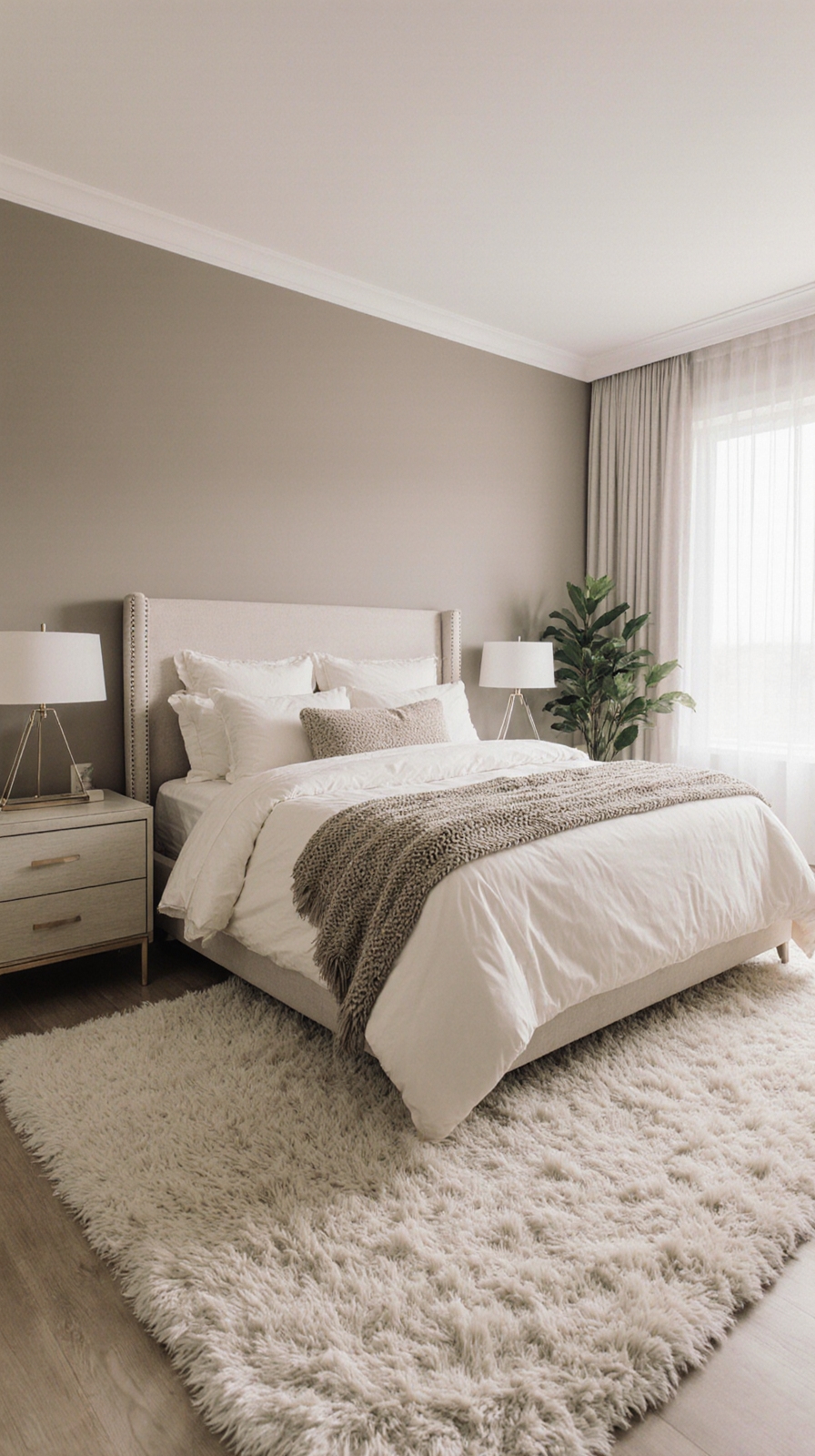
Where you place your bed matters more than most couples realize. Position it so both of you can see the door while lying down, but avoid placing it directly in line with the doorway.
Push the headboard against a solid wall for stability, and center the bed on that wall rather than shoving it into a corner. Aim for at least 18 inches of clearance on both sides so neither partner feels cramped or trapped.
Matching your nightstands and lamps on each side will reinforce equal territory, creating a bedroom that genuinely feels fair and comfortable for both of you. This sense of symmetry and balance in your bedroom layout also makes the space feel more intentional and visually cohesive.
Build Your Master Bedroom Color Palette Around Calm Neutrals
Once you’ve sorted out your bed placement and made sure both partners have equal footing in the room, your next move is choosing a color palette that makes the whole space feel calm and inviting.
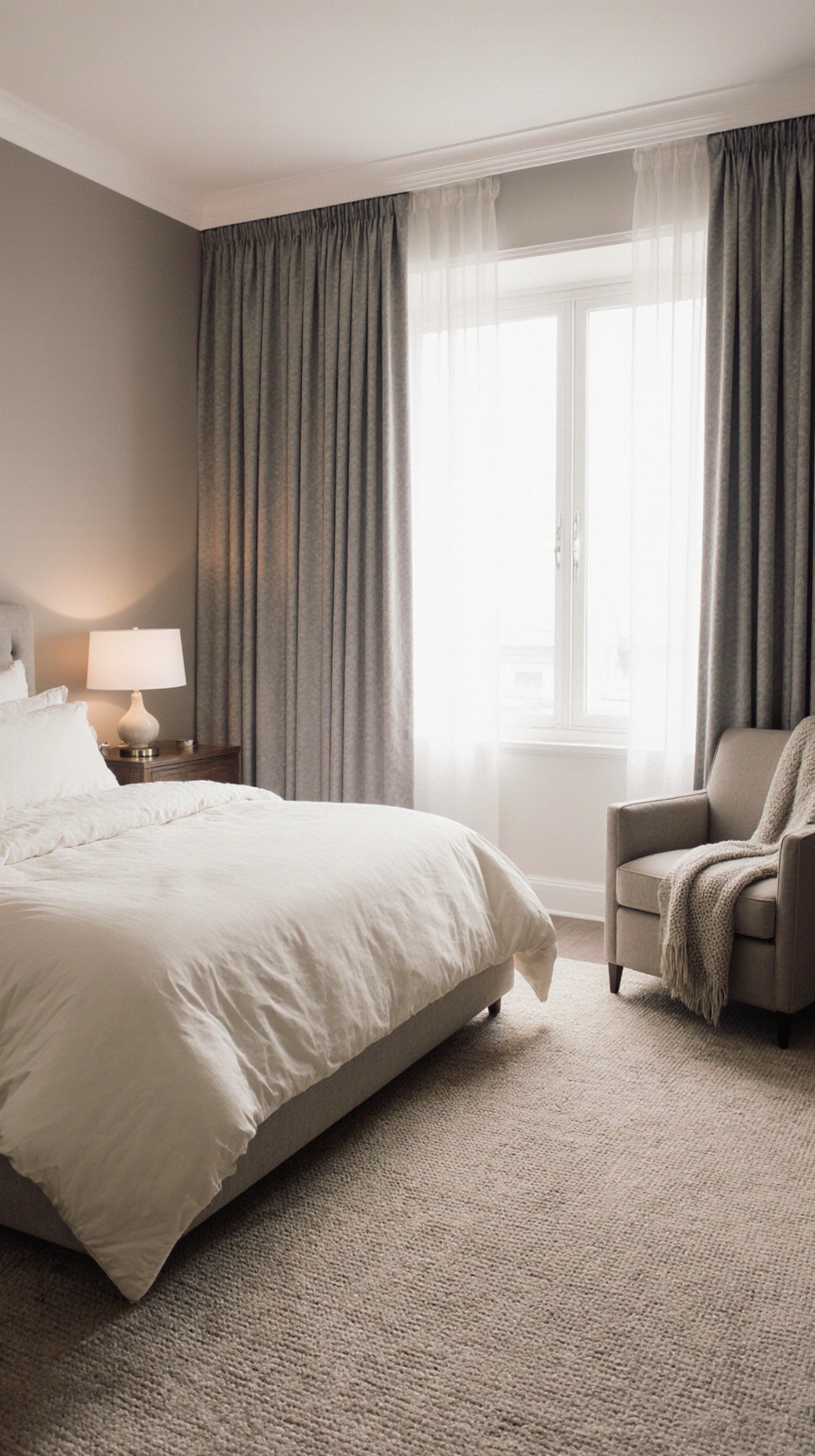
Calm neutrals like beige, greige, soft gray, and off-white lower visual stimulation and genuinely support better sleep.
Aim for paint colors with a Light Reflectance Value between 55 and 70, light enough to feel airy but warm enough to feel cozy. Choose warm undertones over bluish or greenish ones, which can feel cold at night.
Layer textures like linen, wool, and velvet to prevent the palette from falling flat. A matte finish absorbs light rather than reflecting it, reinforcing the soft, restful quality of your neutral palette.
Choose Bedding That Works for Both Partners
Choosing bedding for two people sounds simple, but it’s actually where a lot of couples run into friction, sometimes literally.
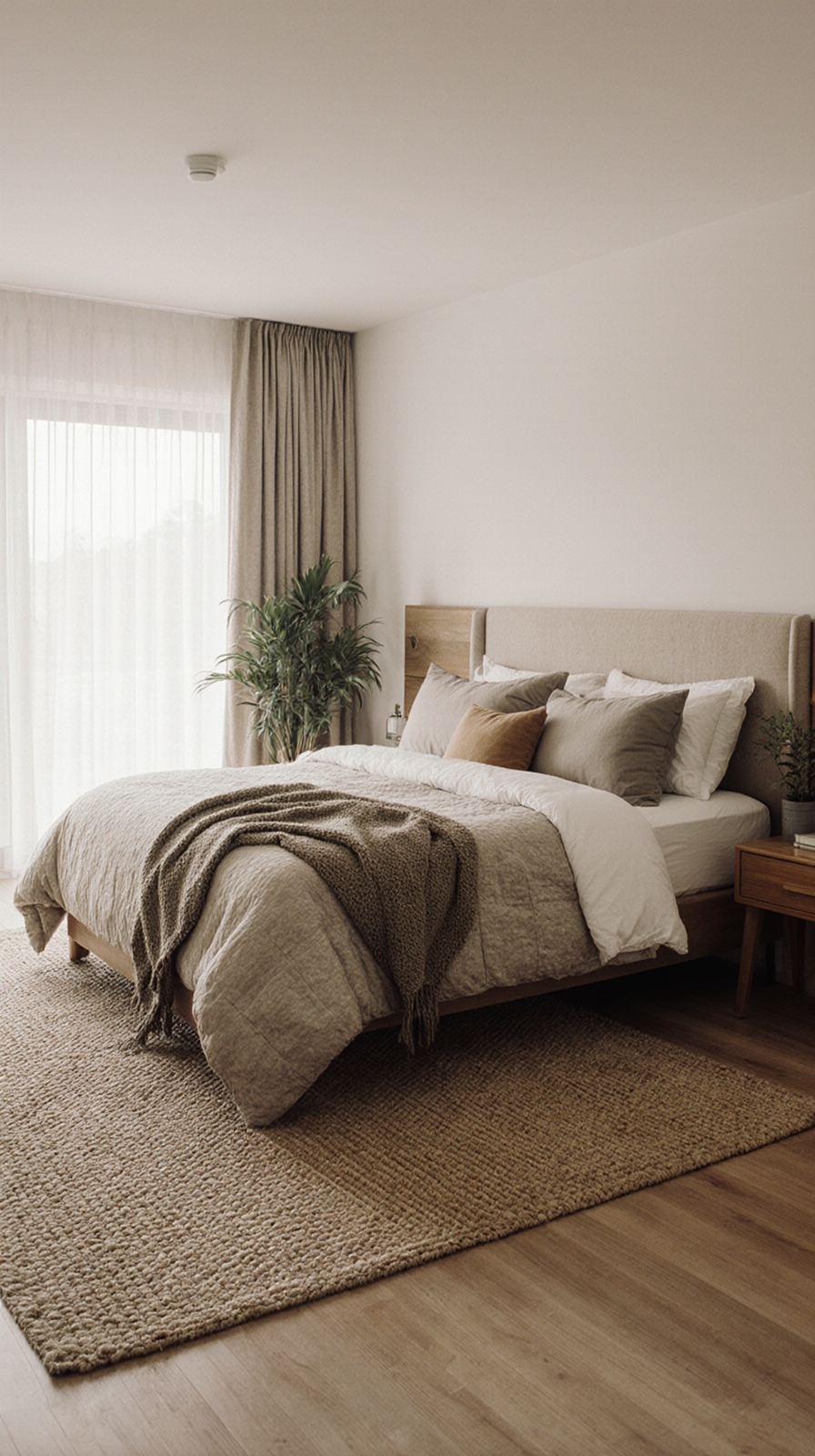
Different warmth needs, cover-stealing, and overheating can all disrupt sleep. Try the Scandinavian method: two separate duvets instead of one shared comforter.
| Bedding Factor | Why It Matters for Couples |
|---|---|
| Separate duvets | Eliminates cover-stealing entirely |
| Cooling mattress cover | Reduces overheating on shared surfaces |
| Individual pillows | Supports different sleep positions |
| Layered blankets | Allows personal temperature adjustments |
| Breathable materials | Improves airflow for both sleepers |
You’ll both sleep better when bedding fits your individual needs, and choosing the right materials makes a bigger difference than most couples expect.
For couples who want to go further, pairing breathable bedding with a mattress that features a Tencel cover can significantly enhance airflow and moisture-wicking on a shared sleep surface.
Add Nightstands That Give Each Partner Their Own Side
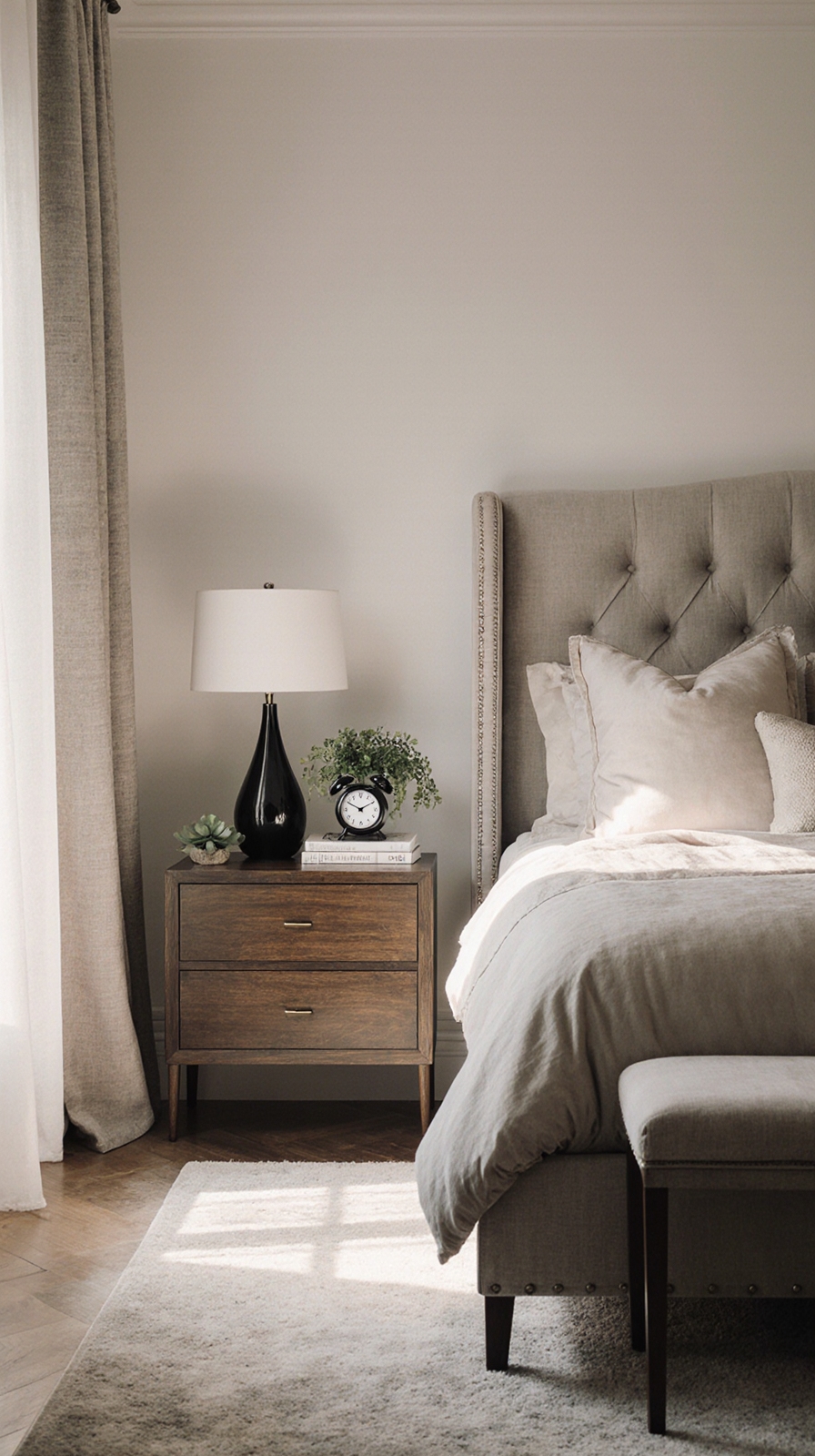
Bedding handles the sleep comfort side of the equation, but nightstands tackle something just as important: giving each of you a dedicated space to call your own.
Place one on each side of the bed to create balance and define clear personal zones. Aim for a height between 24 – 27 inches so everything stays within easy reach.
Make sure walkways stay about 36 inches wide so neither of you is bumping around in the dark.
Choose nightstands with drawers for glasses, medications, and devices. Add individual lamps and charging stations, and you’ve both got a fully functional, personal corner to wind down in.
Opt for matching nightstands on both sides to create visual symmetry that keeps the room feeling cohesive rather than cluttered.
Organize Storage So Each Partner Has Their Own Space
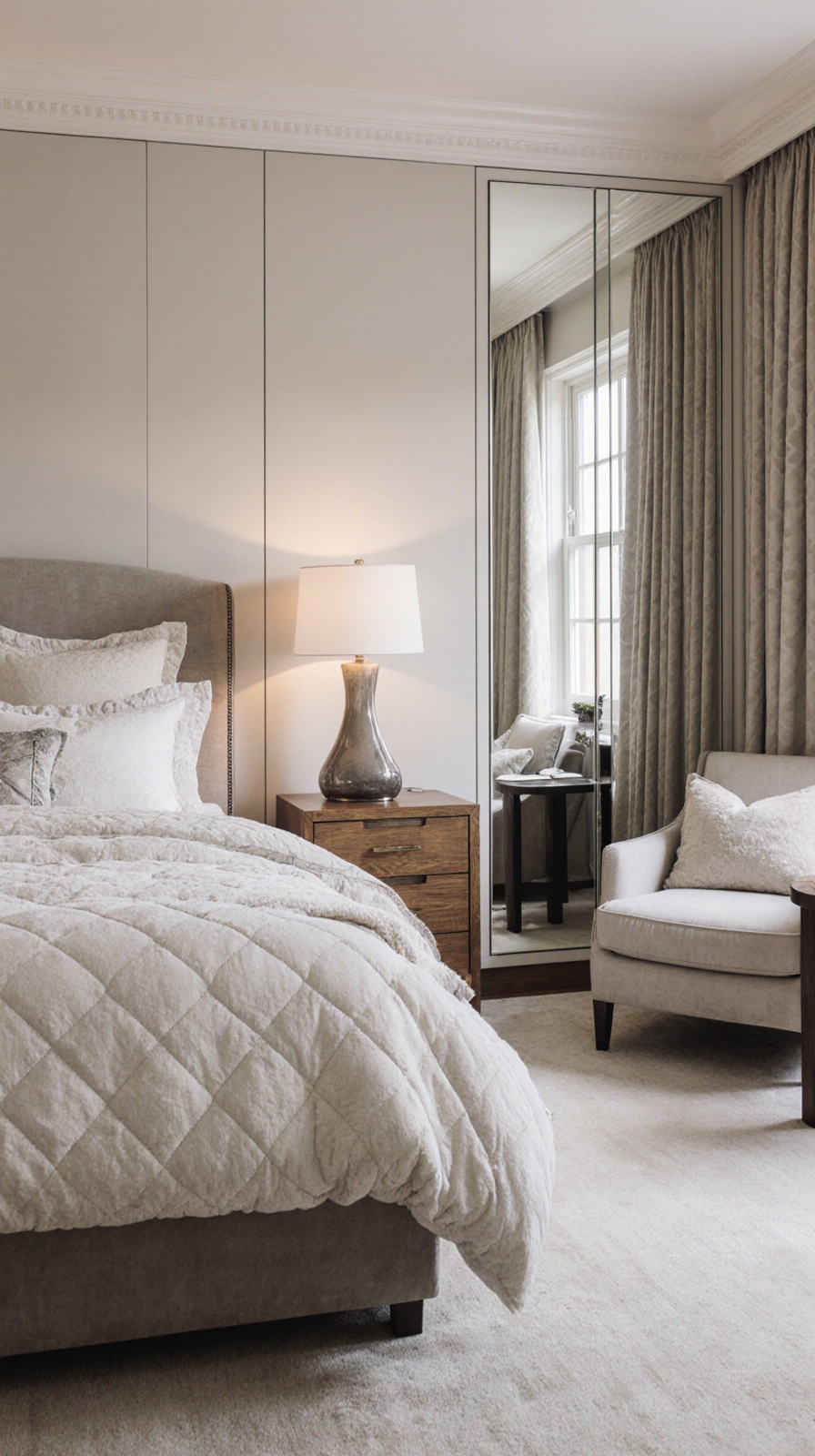
Everything gets easier when each of you has clearly defined storage territory.
Divide your closet into two distinct zones using separate rods, shelves, and labeled bins. Install double hanging rods so both of you get dedicated short-hanging space. Use color-coded hangers to keep your clothing visually separate.
Splitting your closet into two clear zones makes getting dressed faster and keeps shared spaces conflict-free.
Give each partner an identical dresser with category-assigned drawers and built-in dividers. Reserve one top drawer per person for daily essentials. Allocate under-bed bins for off-season items and designate separate sides for over-door organizers.
When every item has a personal home, your shared space stays calmer and morning routines run smoother. Consider adding separate accessories storage, such as tie racks and dedicated jewelry sections, to minimize clutter and keep each partner’s belongings neatly contained.
Get the Lighting Right for Morning and Night
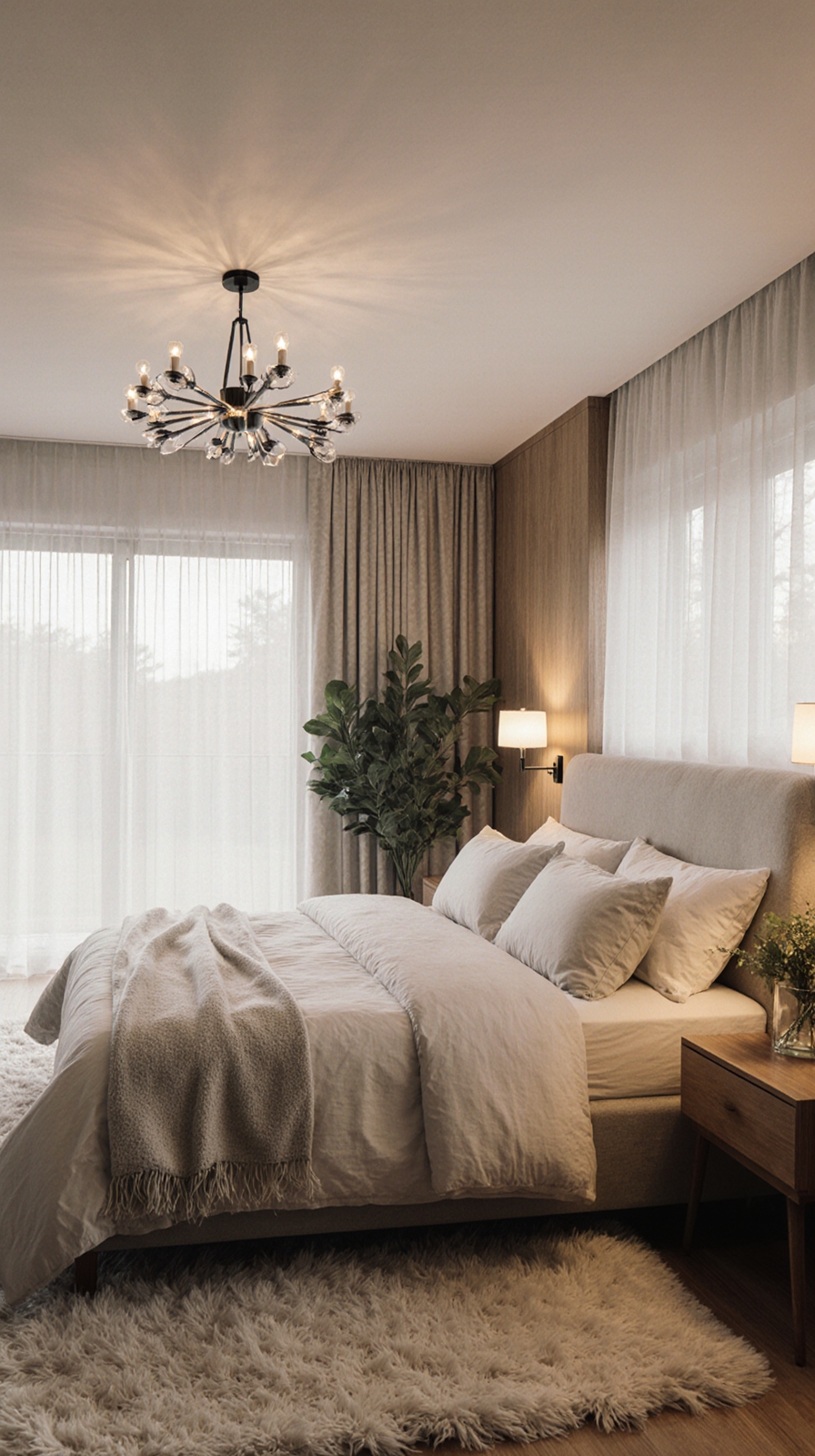
Lighting does more for your shared bedroom than you might expect, it shapes your mood, supports your sleep, and helps both of you start and end the day well.
Layer ambient, task, and accent sources so every need is covered.
Install dimmers and use smart bulbs that shift from cool to warm tones throughout the day. I love Dimmer Switches because they allow you to transition effortlessly between practical brightness and a calming atmosphere suited for winding down together.
| Time of Day | Lighting Approach |
|---|---|
| Morning | 4,000,5,000K cool white |
| Daytime | Bright ambient ceiling light |
| Evening | 2,700,3,000K warm white |
| Pre-sleep | 10,20% dimmed bedside light |
| Late night | Amber motion-sensor night lights |
Layer Rugs, Throws, and Curtains for Tactile Warmth
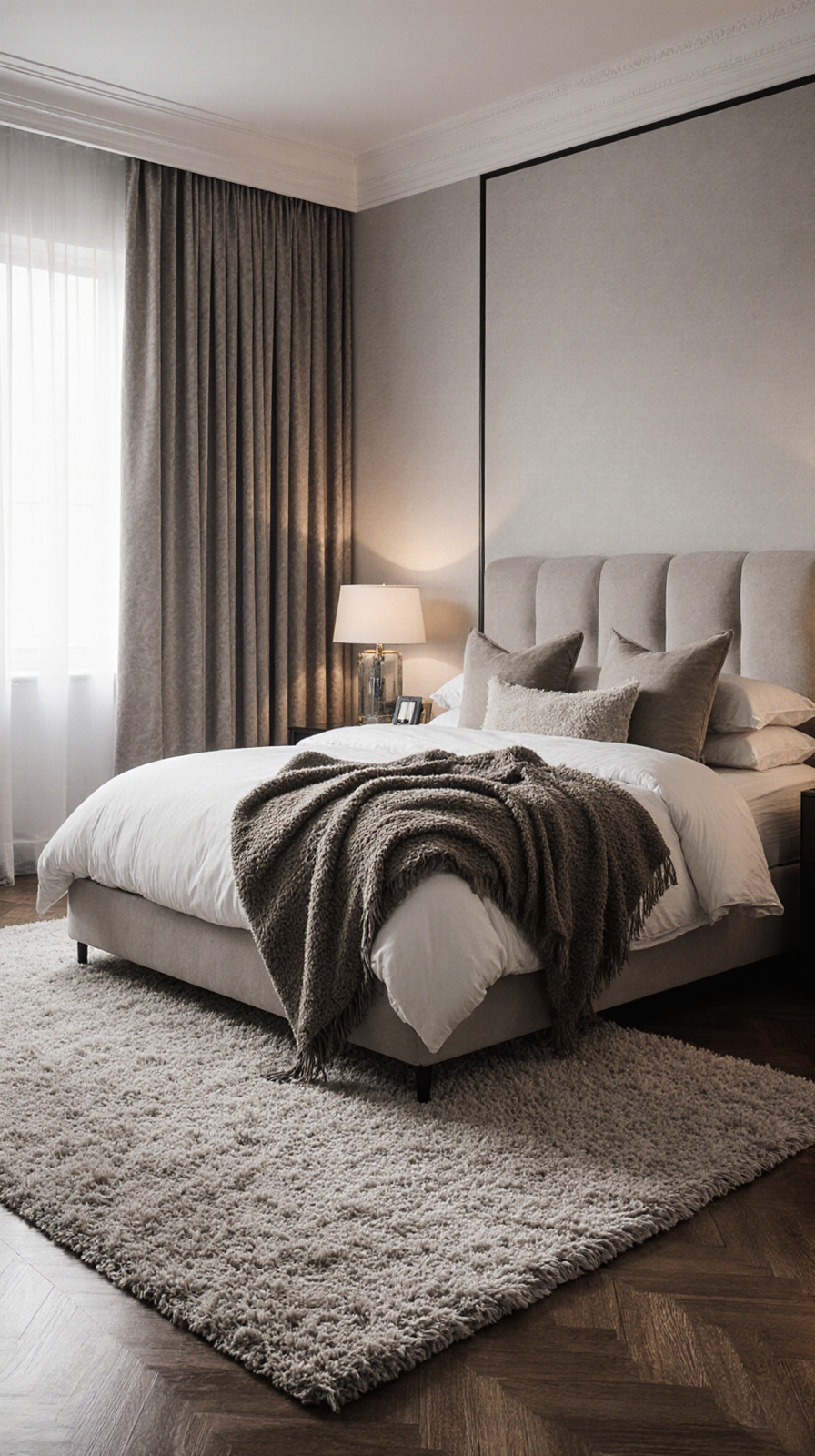
Once your lighting is dialed in, the next layer of coziness comes straight from what you can touch and feel. Layer a soft area rug over hardwood floors, extending it 18-24 inches beyond the bed on all sides.
A soft area rug anchors the bed and keeps bare feet off cold hardwood every morning.
Stack your bedding with sheets, a quilt, a duvet, and a throw at the foot so you and your partner can each adjust your warmth easily.
Pair sheer curtains with lined drapes to soften daylight and block light at night.
Mix two or three textures, chunky knit, linen, velvet, without overcrowding and you’ll create a bedroom that feels genuinely warm and inviting.
Use Scent and Sound to Set the Mood Every Night
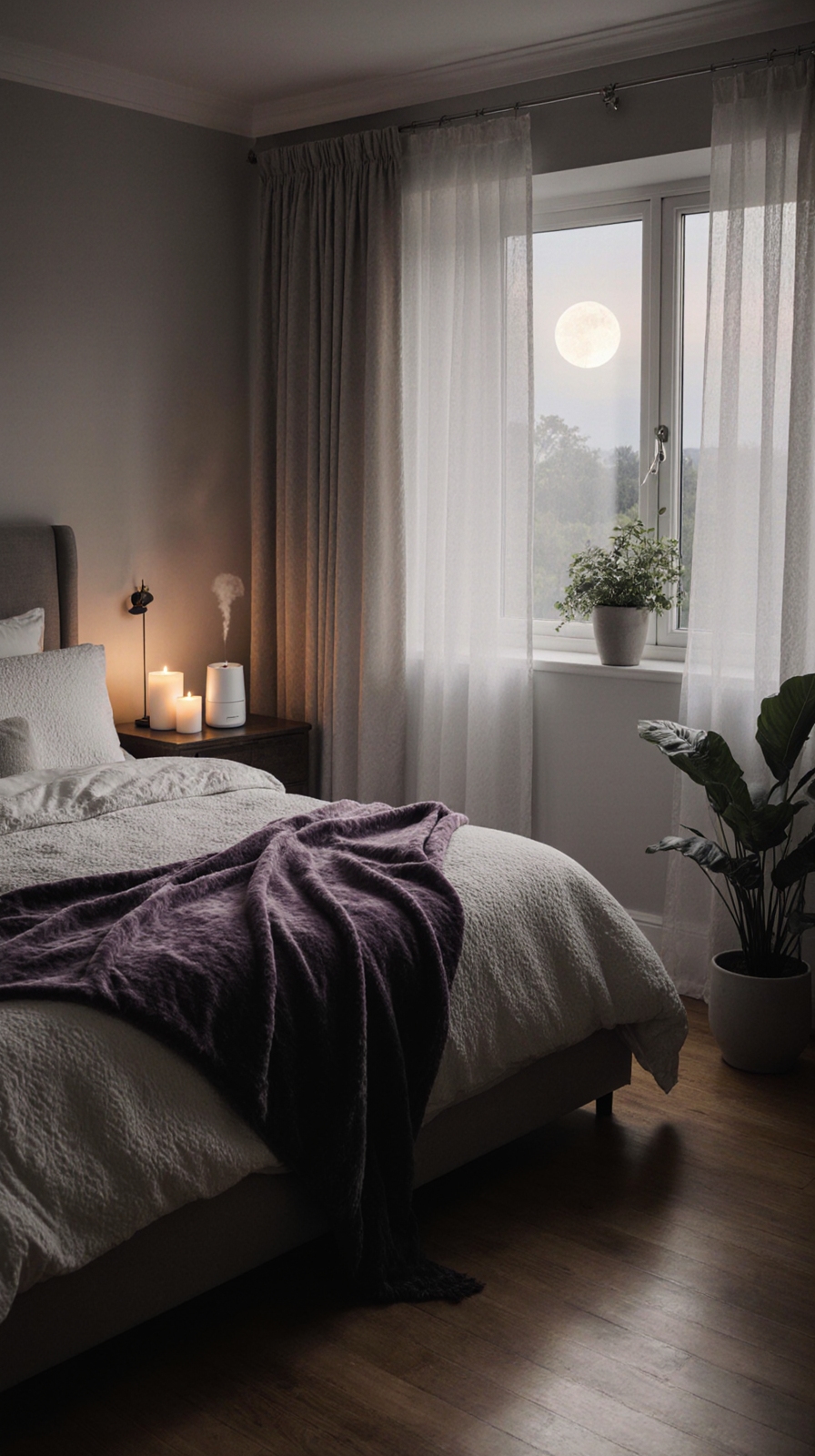
Scent and sound are two of the easiest tools you have for making your bedroom feel like a genuine retreat every single night. Run your diffuser 30,60 minutes before bed using calming oils like lavender or sandalwood.
Keep the concentration light, about 3,5 drops per 100ml of water. Pair that with soft instrumental music or gentle nature sounds played just loud enough to notice. This combination signals to both of you that the day is done.
| Element | Recommended Option | What to Avoid |
|---|---|---|
| Scent source | Ultrasonic diffuser | Synthetic air fresheners |
| Sound type | Instrumental or nature sounds | Background television |
| Timing | 30,60 minutes before bed | Running all night |
Create a Reading Nook or Seating Corner You’ll Actually Use
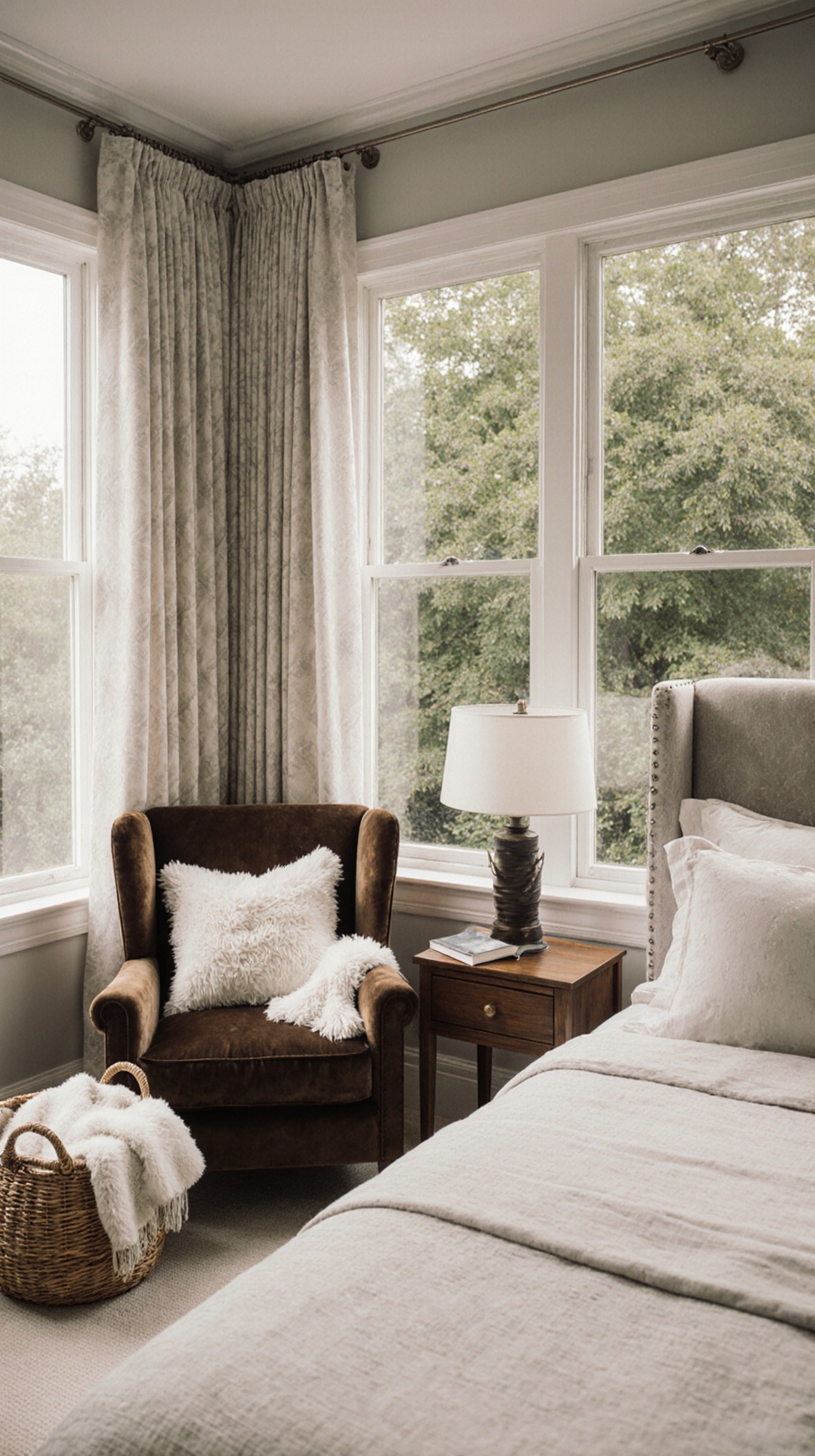
After you’ve set the mood with scent and sound, it’s worth thinking about where the two of you actually spend your downtime together in the bedroom.
Pick a quiet corner away from the door, ideally near a window with adjustable shades so you can use it day or night. Choose seating built for two, a loveseat or two angled chairs, with real lumbar support and medium-firm cushions.
Add an ottoman, a throw blanket, and a small side table for books and drinks. A floor lamp at shoulder height keeps eye strain low and makes the space genuinely inviting, but don’t forget that the right seating arrangement can completely change how often you actually use the corner.
Choose a Headboard or Accent Wall as Your Focal Point
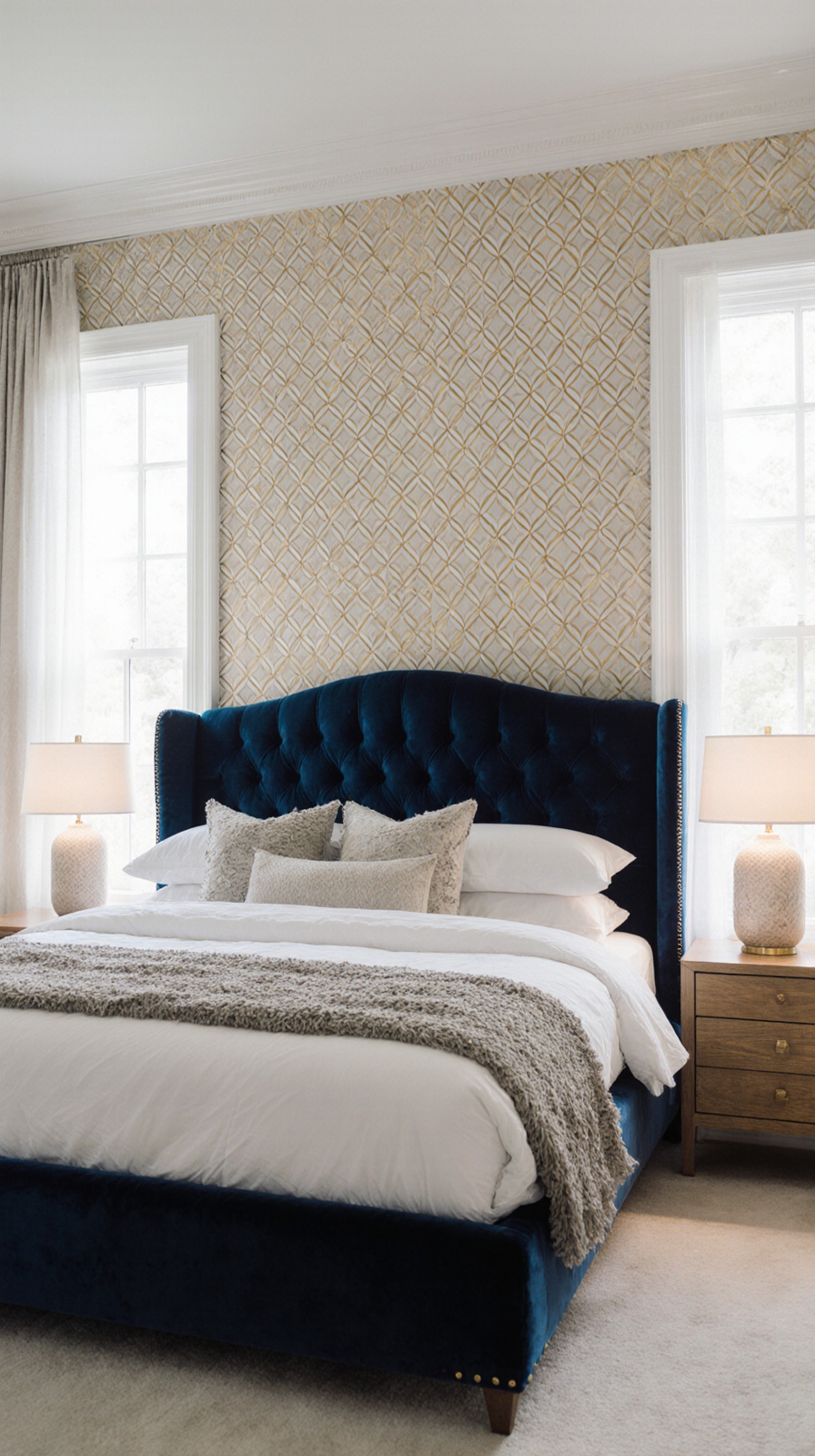
There are two design moves that can completely transform how your master bedroom feels as a shared space: a statement headboard or a bold accent wall. Both options give the room a clear focal point that ties everything together.
Here’s how to make the right choice:
- Match headboard width to your mattress at minimum, or go wider for a grander, more luxurious feel.
- Choose upholstered fabric for warmth and comfort, especially in neutral or deep tones like navy or forest green.
- Try an accent wall for strong visual impact, without repainting the entire room.
Blend Both Partners’ Styles Without Compromising Either
Once you’ve nailed your focal point, the next challenge is making the room feel like it genuinely belongs to both of you.
Try picking a shared theme, like modern-rustic or classic-boho, to give you both a framework. From there, choose matching core pieces like your bed frame and dresser, then let accent furniture express each person’s taste. Mismatched nightstands in similar finishes work surprisingly well.
Layer different textures and keep patterns within one coordinated color family. Use the 60-30-10 rule so neither style dominates. Small compromises in the right places mean you both walk in and feel at home.
Display What Makes Your Relationship Yours
Your bedroom should tell your story, not just fill space. Display photos, mementos, and meaningful objects that reflect your shared history and personality as a couple.
Rotate items occasionally to spark fresh conversations and keep the space feeling alive.
- Frame wedding photos or travel snapshots in a small gallery wall above a dresser or seating area.
- Add engraved or personalized pieces, custom frames, keepsake boxes, or typographic art featuring your wedding date or a favorite lyric.
- Showcase hobby-related objects, books, souvenirs, or instruments, that reflect what you both love.
These touches transform a generic room into your retreat.
Keep Tech Low-Key So the Bedroom Stays a Retreat
Screens and devices have a sneaky way of creeping into the bedroom and quietly undermining both your sleep and your connection as a couple.
Hide phones in nightstand drawers, store chargers outside the room, and replace your phone alarm with a simple sunrise clock. Try swapping harsh overhead lights for warm, dimmable bulbs set to amber tones before bed.
| Swap This | For This | Why It Helps |
|---|---|---|
| Phone alarm | Sunrise clock | Reduces anxiety |
| Bright overhead lights | Dimmable amber bulbs | Supports melatonin |
| Bedside phone | White-noise machine | Eliminates notifications |
These small changes protect your sleep and your relationship.