The best bedroom makeovers rarely start with drama. They start with quiet: a wall color that stops pulling at your eye, bedding that actually feels like it belongs.
Neutral palettes have been the backbone of comfortable, lasting interiors for good reason. Soft beiges, warm taupes, and off-whites don’t go stale the way trends do. Build from there, and everything else falls into place — and these 20 ideas show you exactly what that building looks like in practice.
Contents
- 1 Embrace Soft Beige and Off-White for a Serene Aura
- 2 Add Earthy Tones for a Natural, Calming Effect
- 3 Highlight Textured Elements With Wainscoting
- 4 Implement Warm Neutrals for Cozy Comfort
- 5 Use Tone-on-Tone Schemes to Enhance Tranquility
- 6 Create Contrast With Soft Textiles and Knit Throws
- 7 Incorporate Woven Rugs for Earthy Foundations
- 8 Layer Textures in Boho-Chic Designs
- 9 Choose Low-Profile Furniture for Modern Minimalism
- 10 Embrace Wabi-Sabi With Neutral, Imperfect Elements
- 11 Add Drama With Contrasting Stripe Accents
- 12 Add Tufted Headboards for Architectural Interest
- 13 Utilize Planters With Air-Purifying Plants
- 14 Select Large-Scale Abstract Art for Visual Interest
- 15 Opt for Soft, Natural Lighting and Subtle Sources
- 16 Implement Warm-Hued Lighting for Cozy Vibes
- 17 Combine Neutrals With Soft Pink and Blue Accents
- 18 Use Textured Lampshades for Diffused Lighting
- 19 Incorporate Minimal yet Functional Accessories
- 20 Blend Muted Patterns and Natural Materials for Warmth
Embrace Soft Beige and Off-White for a Serene Aura
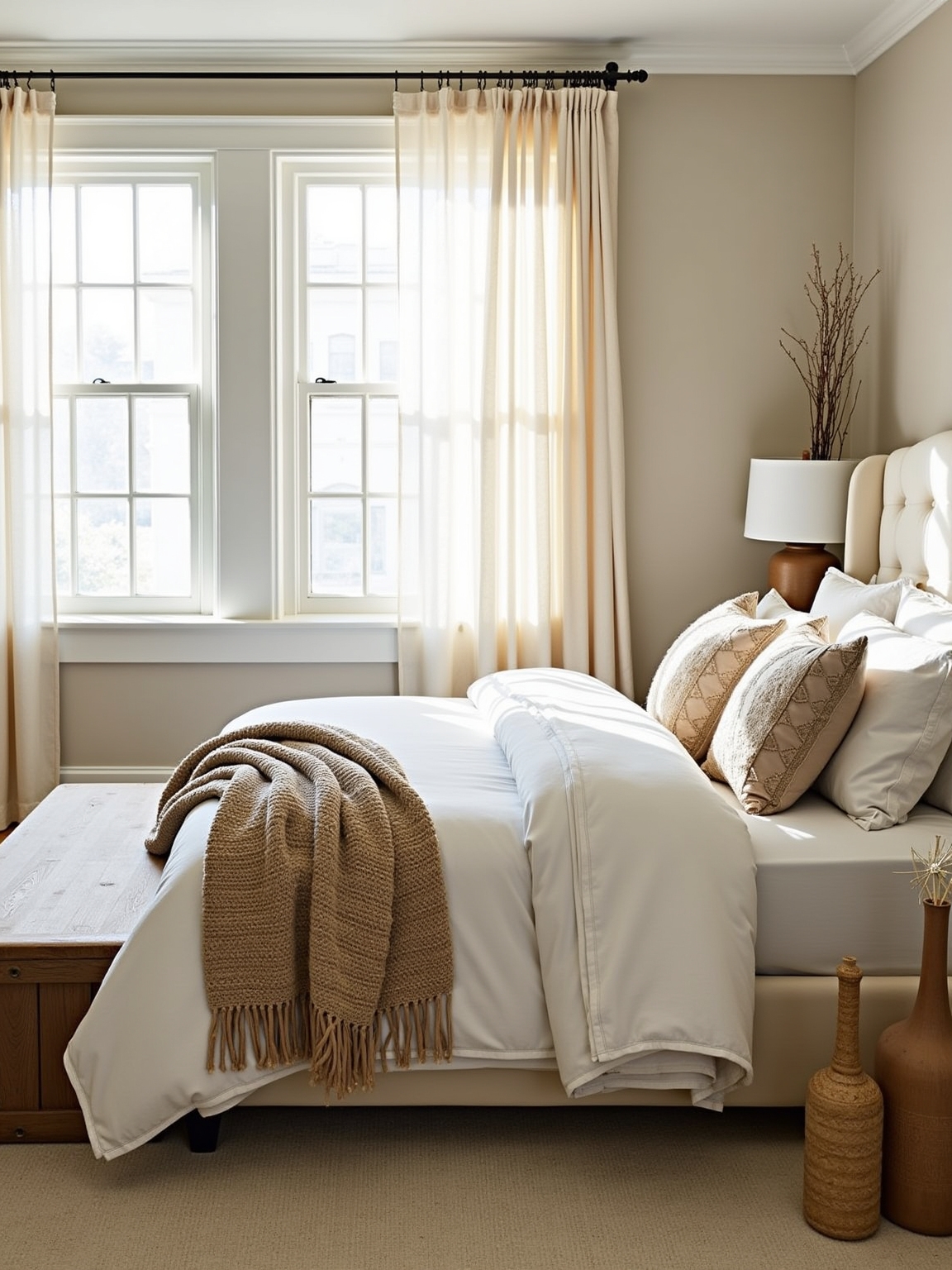
Beige gets a bad reputation, mostly from people who have never used it well. The difference between flat and beautiful lies in how you layer it: warm off-white walls, cream bedding, a single taupe linen pillow.
These tones reduce visual clutter without feeling clinical, and that matters more at the end of a long day than any bold color choice. This palette also ages gracefully, which is more than you can say for most trends.
SEE THIS: 19 Seaside-Inspired Bedroom Refresh Ideas You’ll Love.
Add Earthy Tones for a Natural, Calming Effect

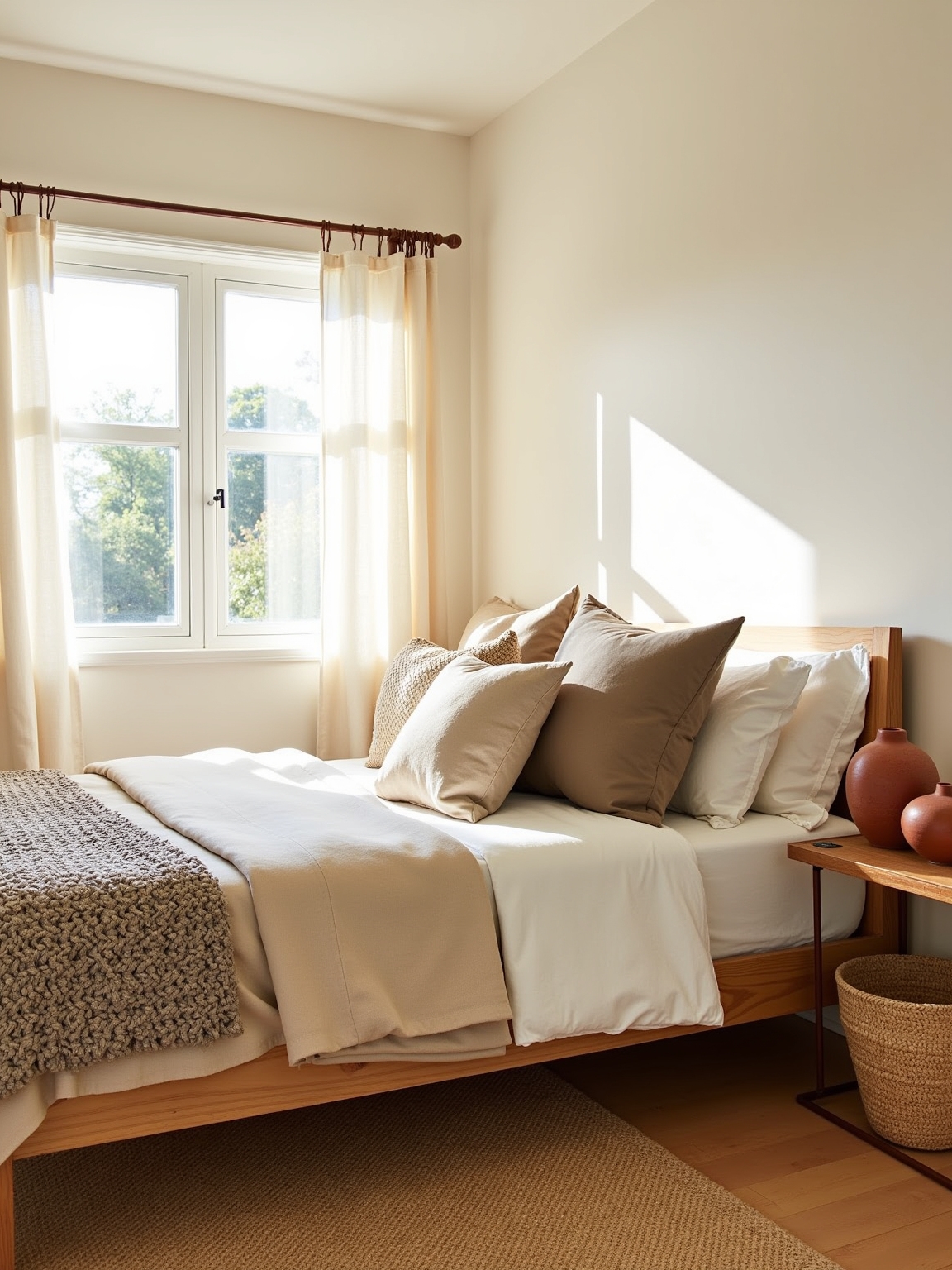
Earthy colors do something soft neutrals alone cannot: they connect a room to the physical world. Warm taupe on the walls, a clay-toned ceramic lamp, a muted olive throw across the foot of the bed, these details make a space feel inhabited rather than staged.
Sage green works particularly well because it reads as both calm and alive without demanding attention. Add a simple wooden bed frame and the whole room starts to breathe.
SEE THIS: Old Hollywood Bedroom Decor: 18 Glamorous Chic Retro Ideas to Try.
Highlight Textured Elements With Wainscoting
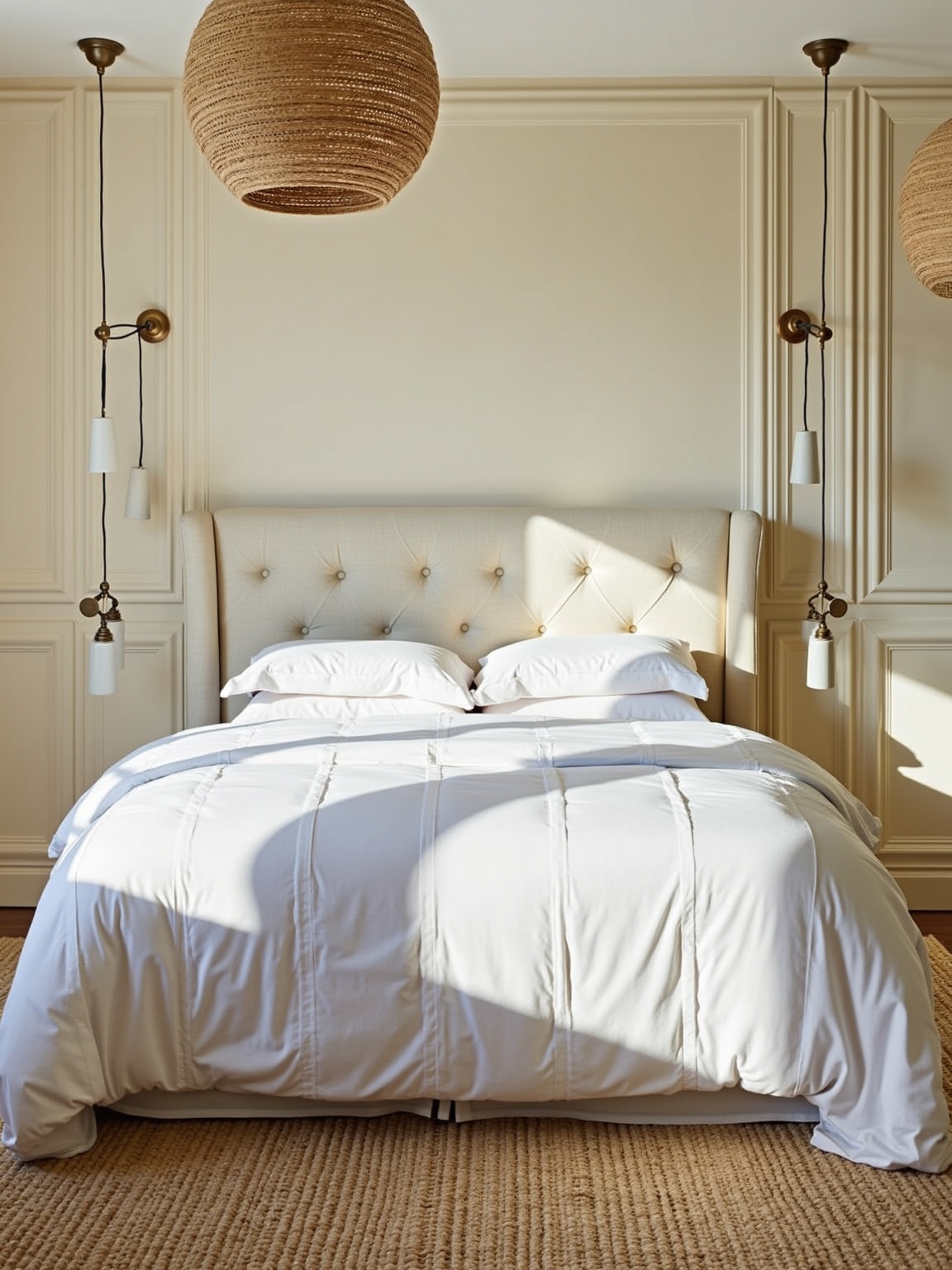
First developed in early English architecture for insulation and wall protection, wainscoting eventually became a mark of considered interior design. In a neutral bedroom, it delivers the architectural detail that bare walls often lack.
The raised paneling catches light differently throughout the day, adding a quiet dimension without introducing any competing color. It also protects walls from scuffs and wear, which matters more in a lived-in room than in a staged one.
SEE THIS: 18 Easy DIY Statement Headboard Wall Hacks for a Fresh Bedroom Look.
Implement Warm Neutrals for Cozy Comfort
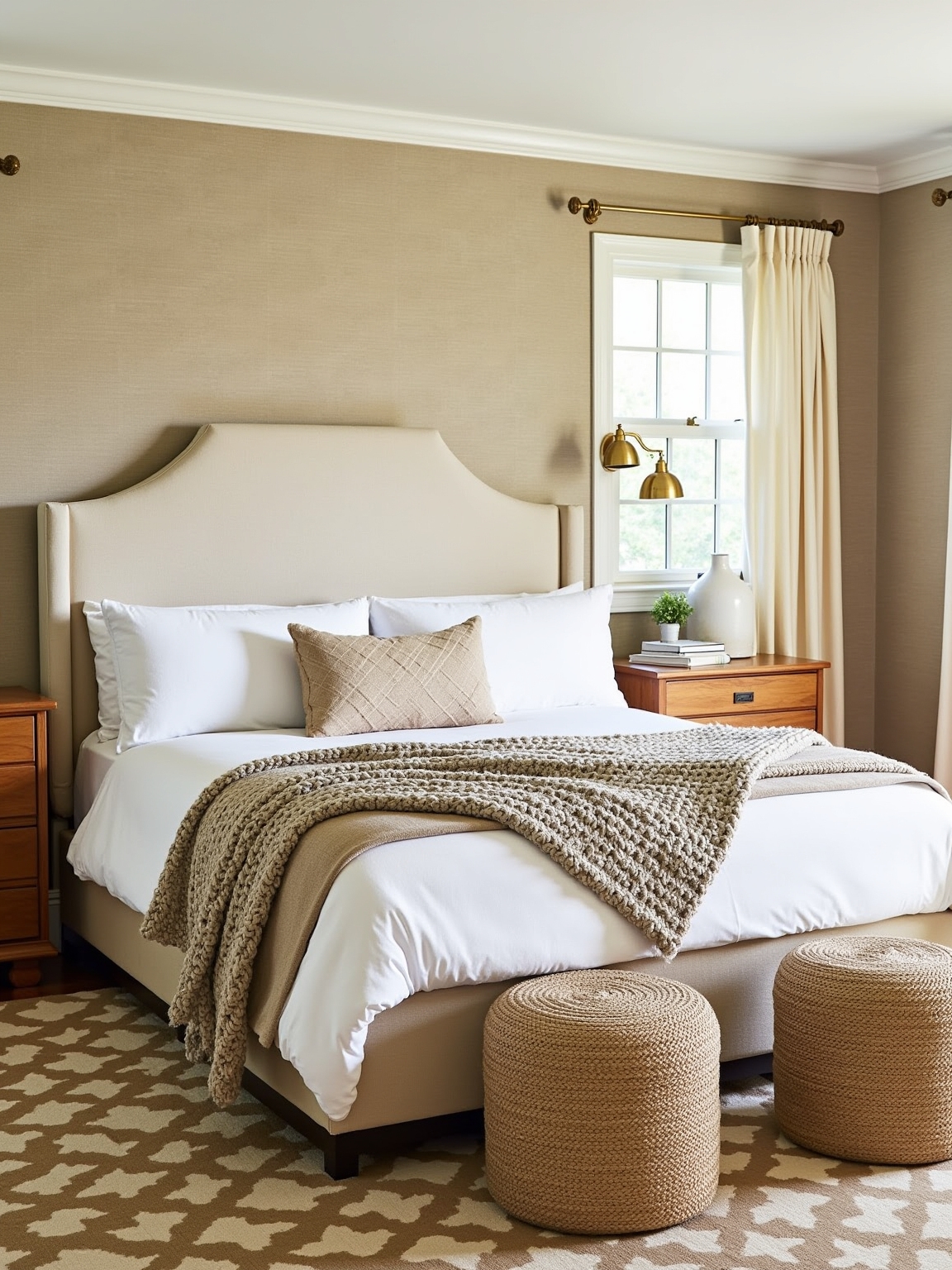
Taupe, warm cream, and butter yellow are the workhorses of a bedroom that actually feels good to be in. Cream and soft yellow amplify natural light in a way that cooler whites simply do not.
A touch of chocolate brown in an accent pillow or picture frame modernizes the palette without pushing it into rustic territory. This combination is dependable in the best way: it works in winter and summer, morning and evening.
SEE THIS: 21 Fifth Wall Bedroom Design Ideas You Haven’t Tried Yet.
Use Tone-on-Tone Schemes to Enhance Tranquility
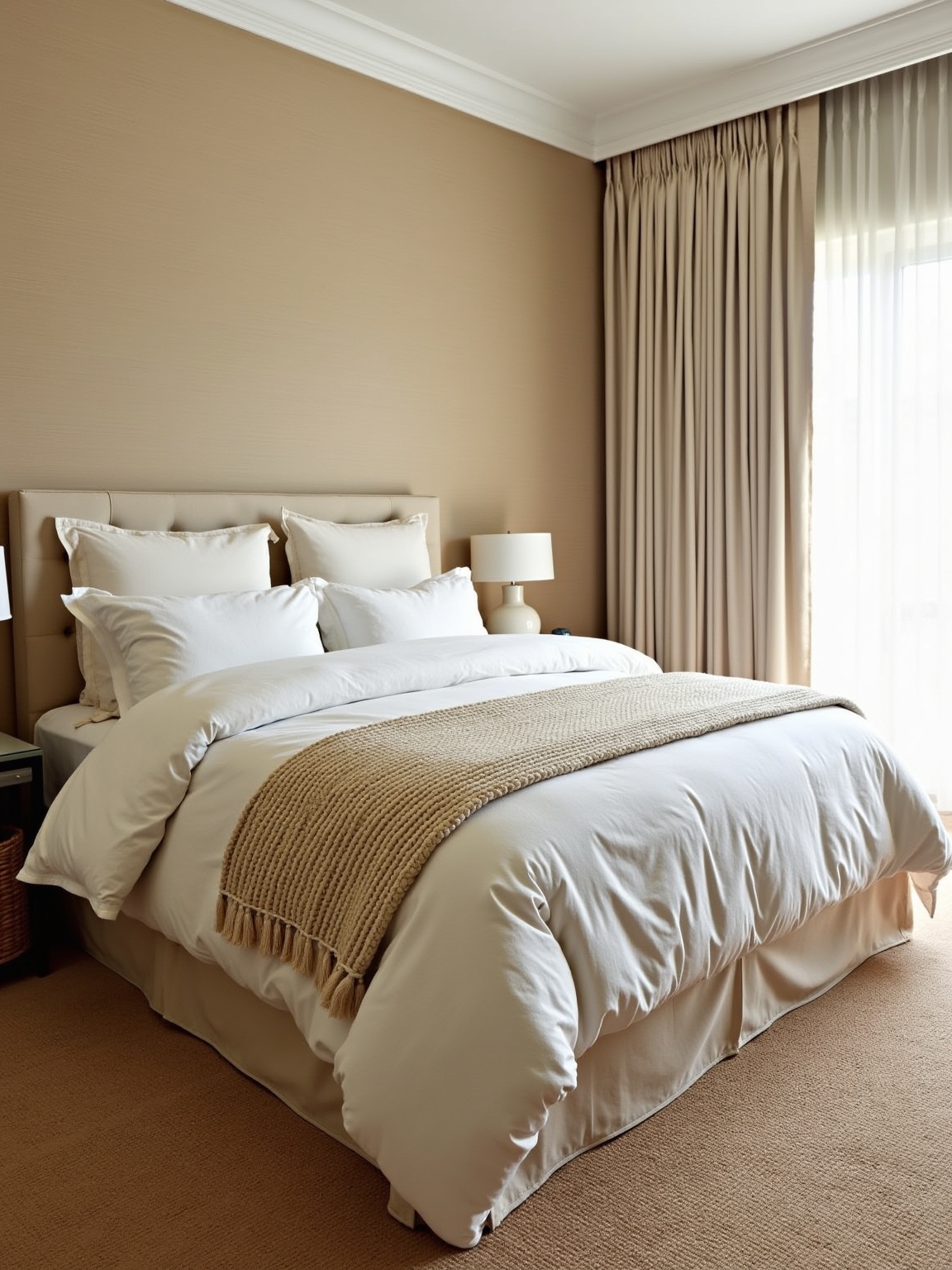
Tone-on-tone styling looks effortless and takes a bit of nerve to commit to fully. The idea is to build through shade and texture rather than contrast, staying within a single color family throughout the room.
A soft gray space might move from a matte wall to a satin-finish headboard fabric to a velvet pillow, all in the same tone. Lighting is what makes it sing, so position a warm lamp where it can cast shadows across those layered surfaces.
Create Contrast With Soft Textiles and Knit Throws
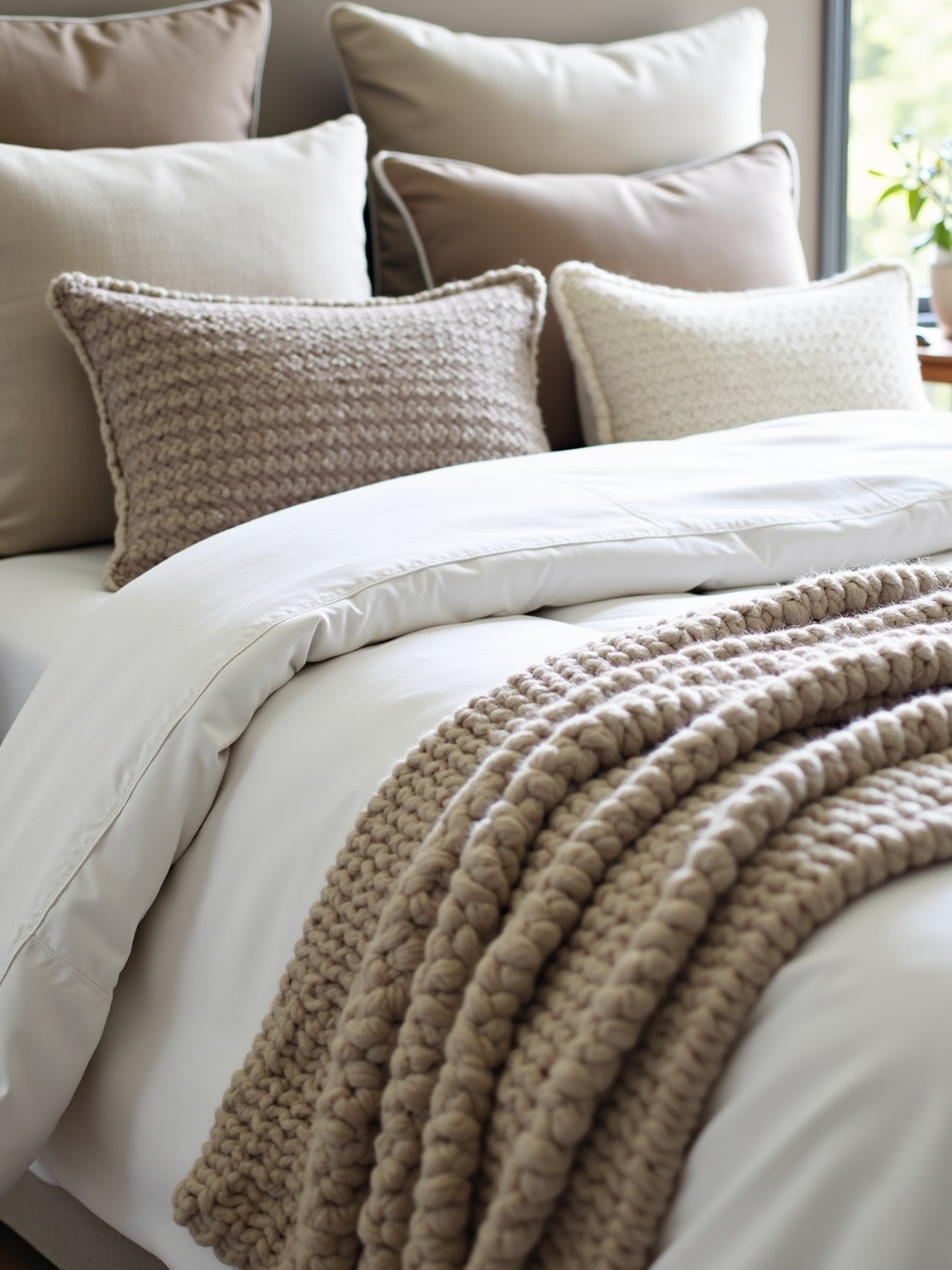
A room built entirely in one texture, no matter how beautiful the color, reads as flat. Knit throws solve this problem without introducing any visual noise, adding tactile contrast that invites you to reach out and touch.
A chunky cotton or merino wool throw draped across linen bedding creates the kind of depth that makes a room feel genuinely comfortable. Waffle and rib knit patterns have just enough structure to hold their shape and stay looking intentional.
Incorporate Woven Rugs for Earthy Foundations
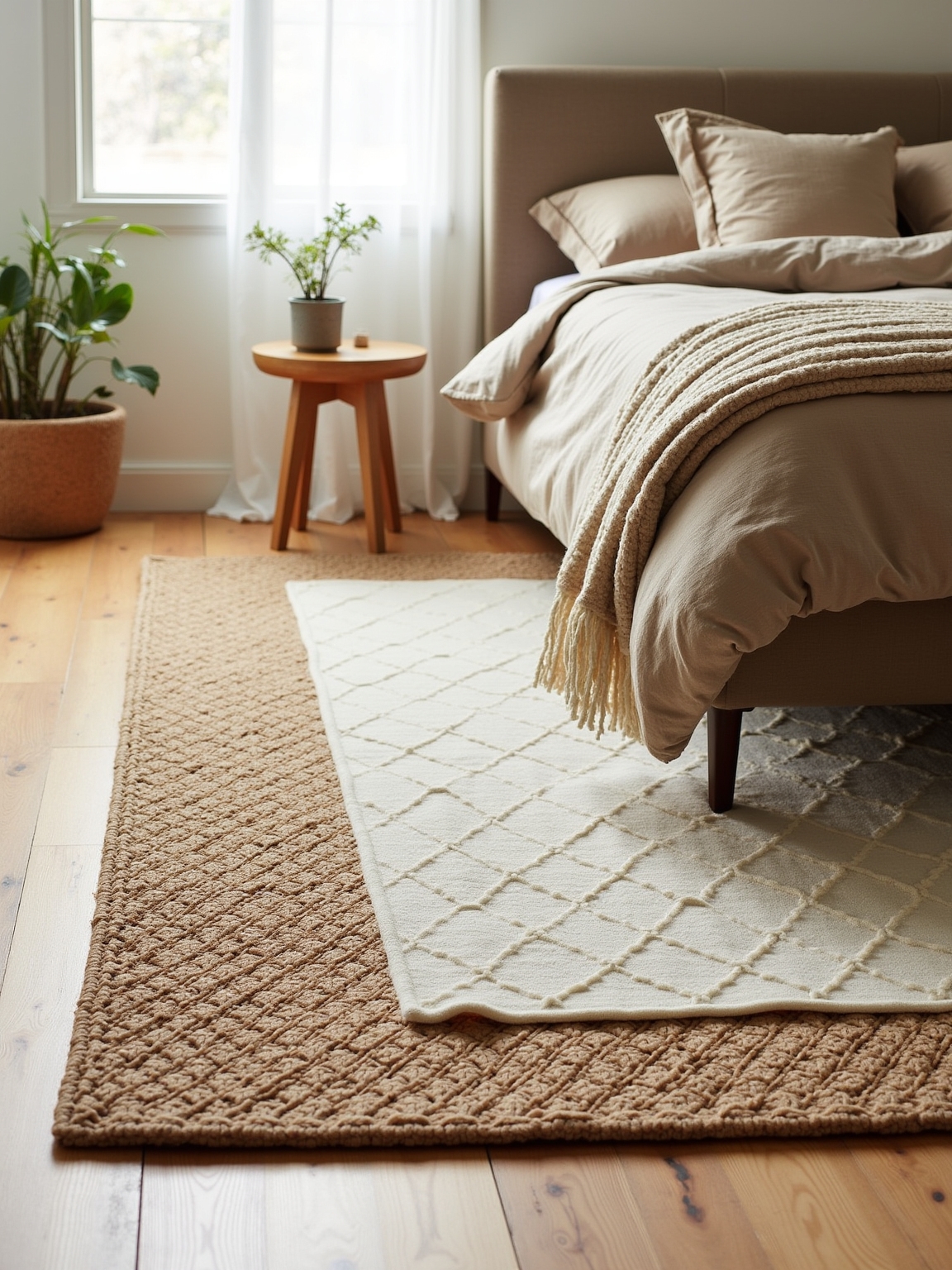
A woven rug does more work in a bedroom than most people give it credit for. It absorbs sound, adds warmth underfoot, and grounds the furniture arrangement so the room feels purposeful rather than scattered.
Flatweave styles in natural fibers age well and clean easily, which counts for a lot in a space you actually live in. Choose a tone that echoes something already in the room and it disappears into the design in the best possible way.
Layer Textures in Boho-Chic Designs
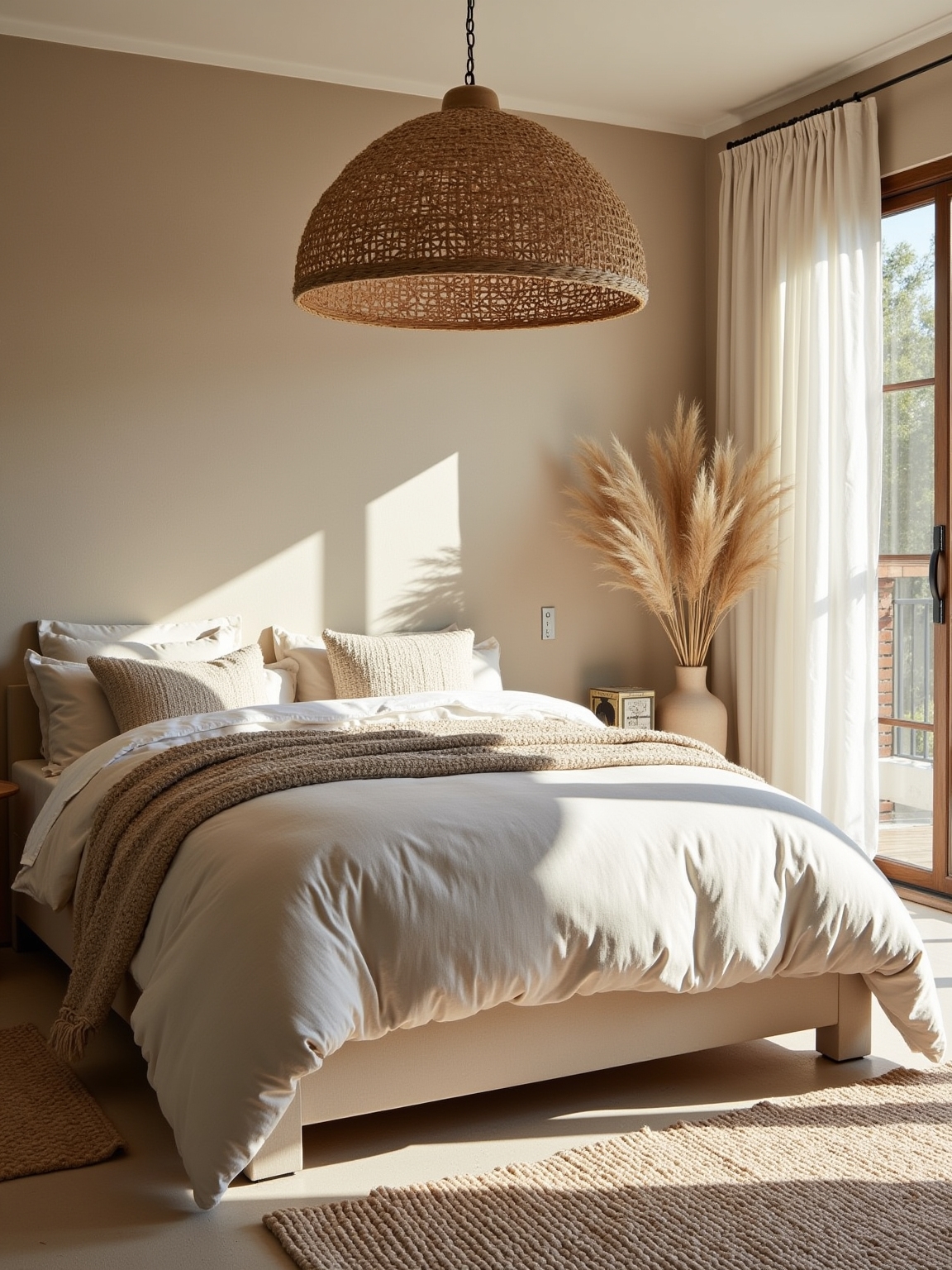
Boho-chic is not about chaos; it is about deliberate abundance. The goal is to layer cotton, linen, velvet, and silk in a way that feels collected over time rather than ordered all at once.
A quilt, a throw, and three pillows in varied textiles can do more for a room than a fresh coat of paint. The key is keeping the color palette restrained so all that texture reads as warmth rather than clutter.
Choose Low-Profile Furniture for Modern Minimalism
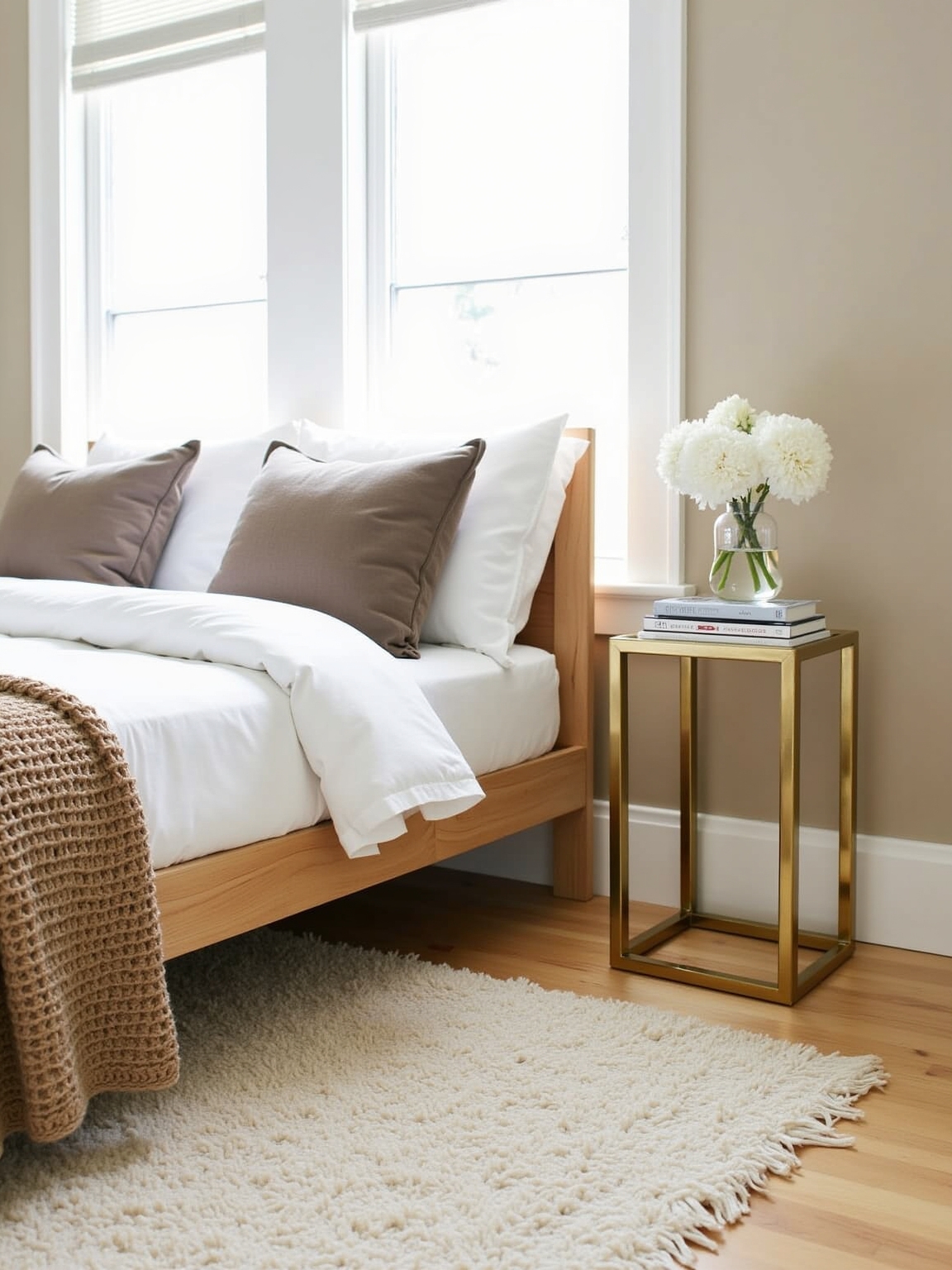
Platform beds and low-slung furniture work in neutral rooms because they do not fight the palette for attention. Clean-lined pieces in walnut, oak, or pale ash keep the visual weight low and let the textures carry the room.
Built-in storage keeps the floor clear, which makes a space feel larger than any mirror arrangement. A streamlined room is easier to live in and, not coincidentally, easier to sleep in.
Embrace Wabi-Sabi With Neutral, Imperfect Elements
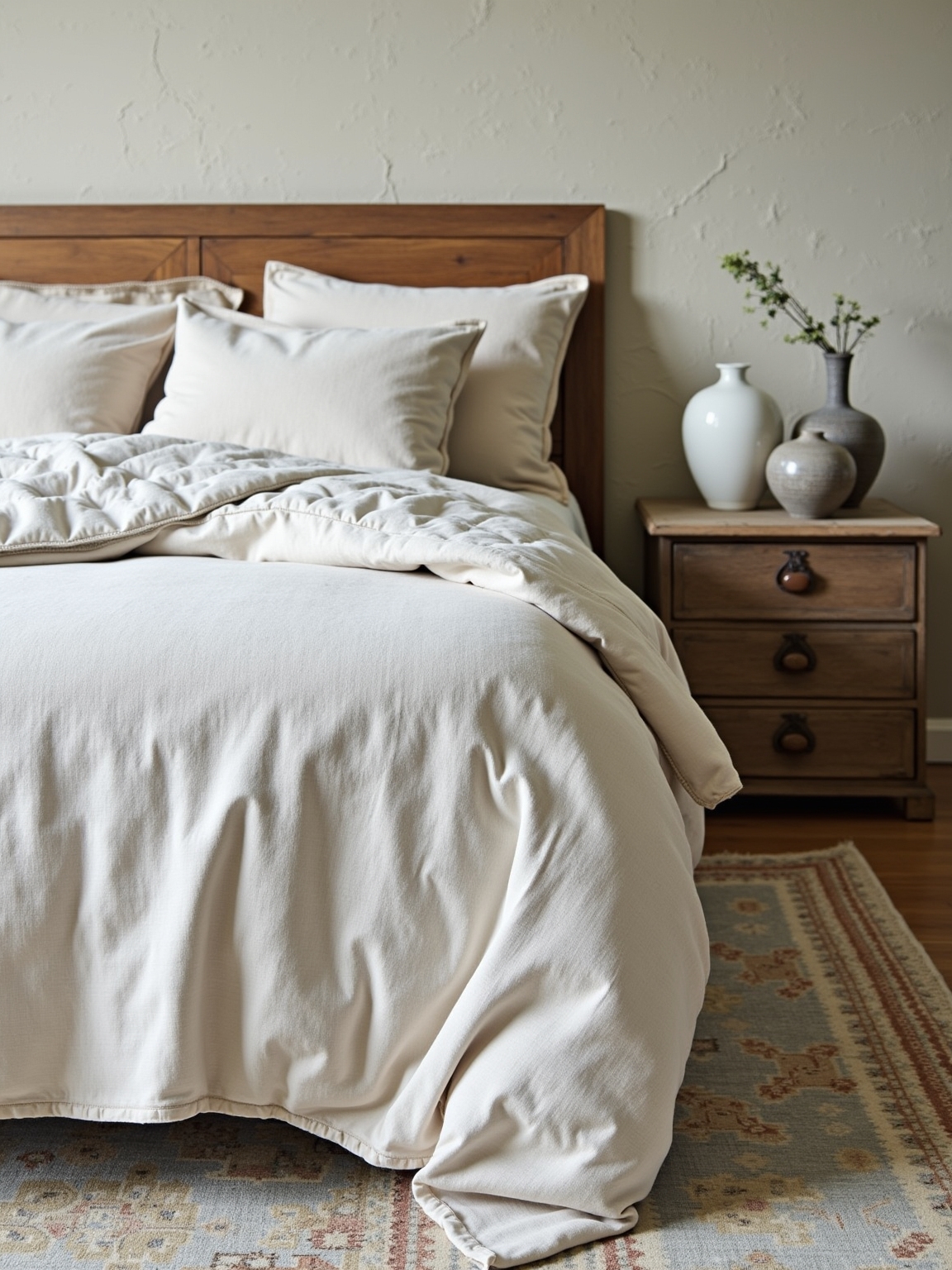
Not everything needs to match, and not everything needs to be new. Reclaimed wood furniture with its grain variations and small surface irregularities adds a warmth that factory-perfect pieces rarely achieve.
Layer in handthrown ceramics, woven bamboo light fixtures, or a weathered linen duvet, and the room begins to feel like it has a real history. That quality cannot be ordered from a catalog, but it can be built piece by piece.
Add Drama With Contrasting Stripe Accents
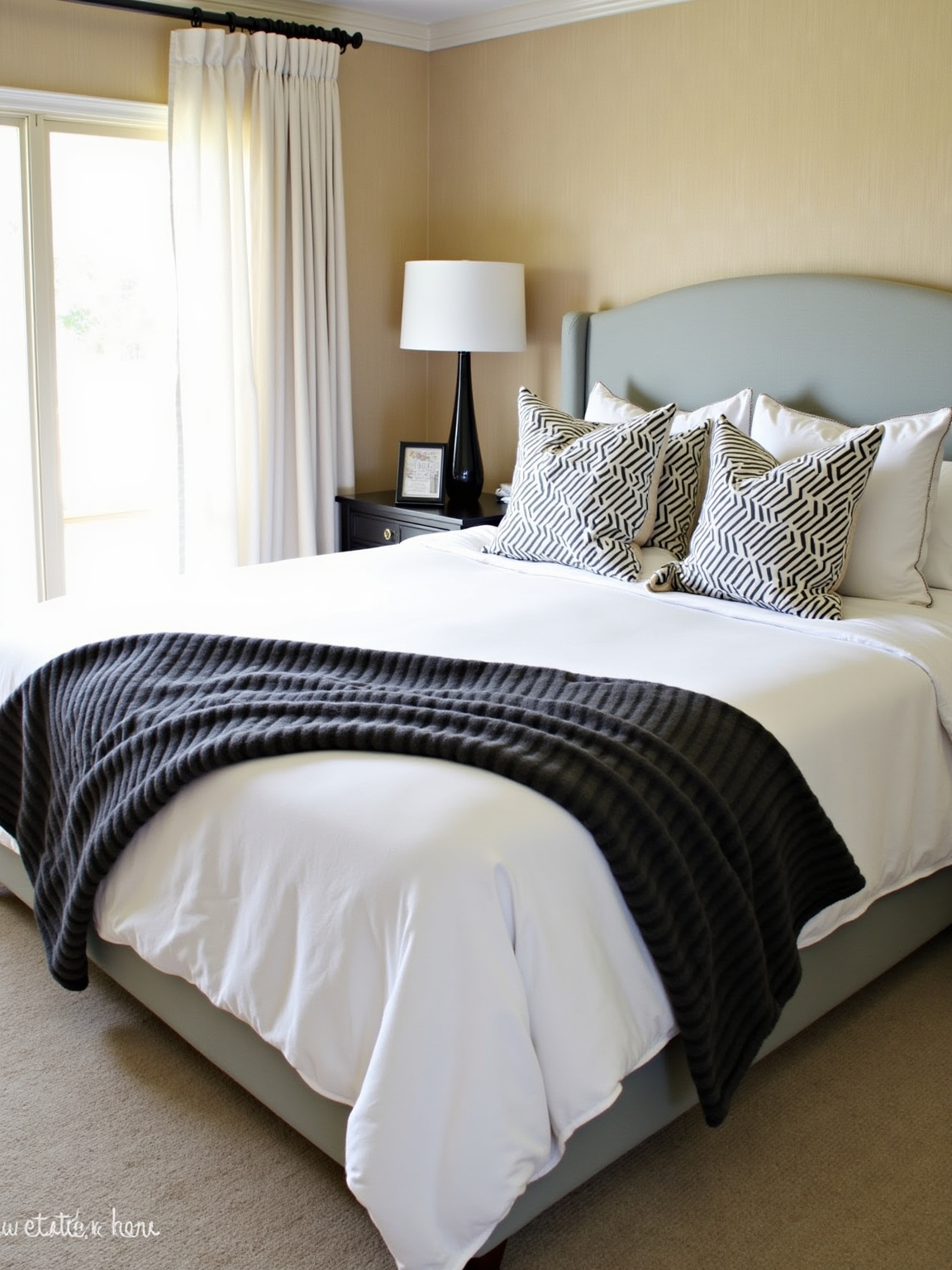
Stripes are one of the few graphic elements that work in a neutral bedroom without breaking the calm. Bold black-and-white stripes create a strong focal point in larger rooms, while softer neutral stripes add dimension in tighter spaces without overwhelming them.
Vertical stripes draw the eye upward and make ceilings feel higher than they are. Horizontal stripes across a throw or rug ground the room and give it a sense of settled weight.
Add Tufted Headboards for Architectural Interest
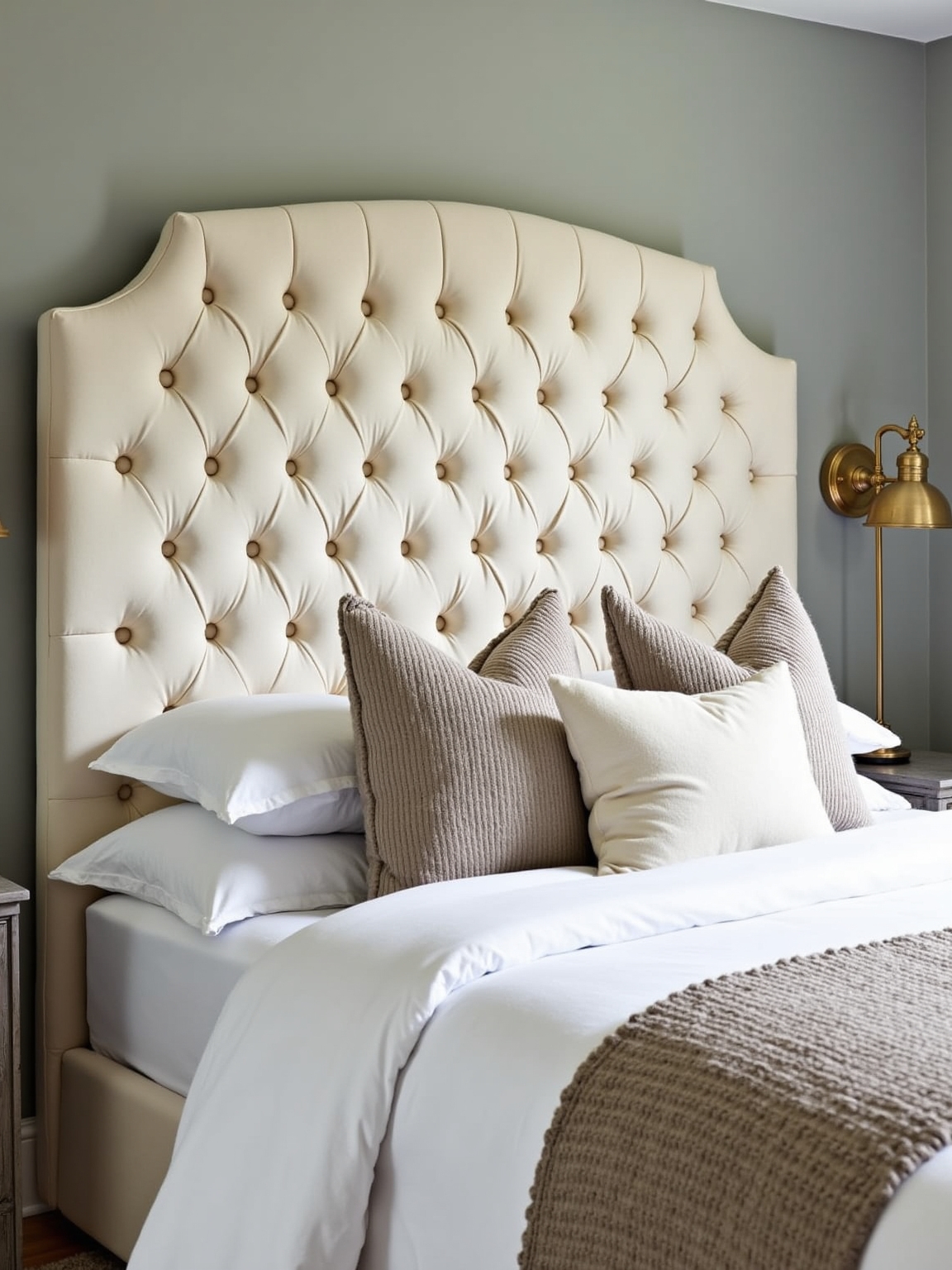
A tufted headboard does what most furniture cannot: it adds visual architecture without taking up floor space. Diamond and square tufting patterns introduce shadow and texture to a wall that might otherwise read as blank.
In a neutral palette, the richness of an upholstered headboard creates just enough contrast to anchor the bed as the room’s focal point. It also serves a practical purpose, providing a comfortable surface to lean against while reading.
Utilize Planters With Air-Purifying Plants
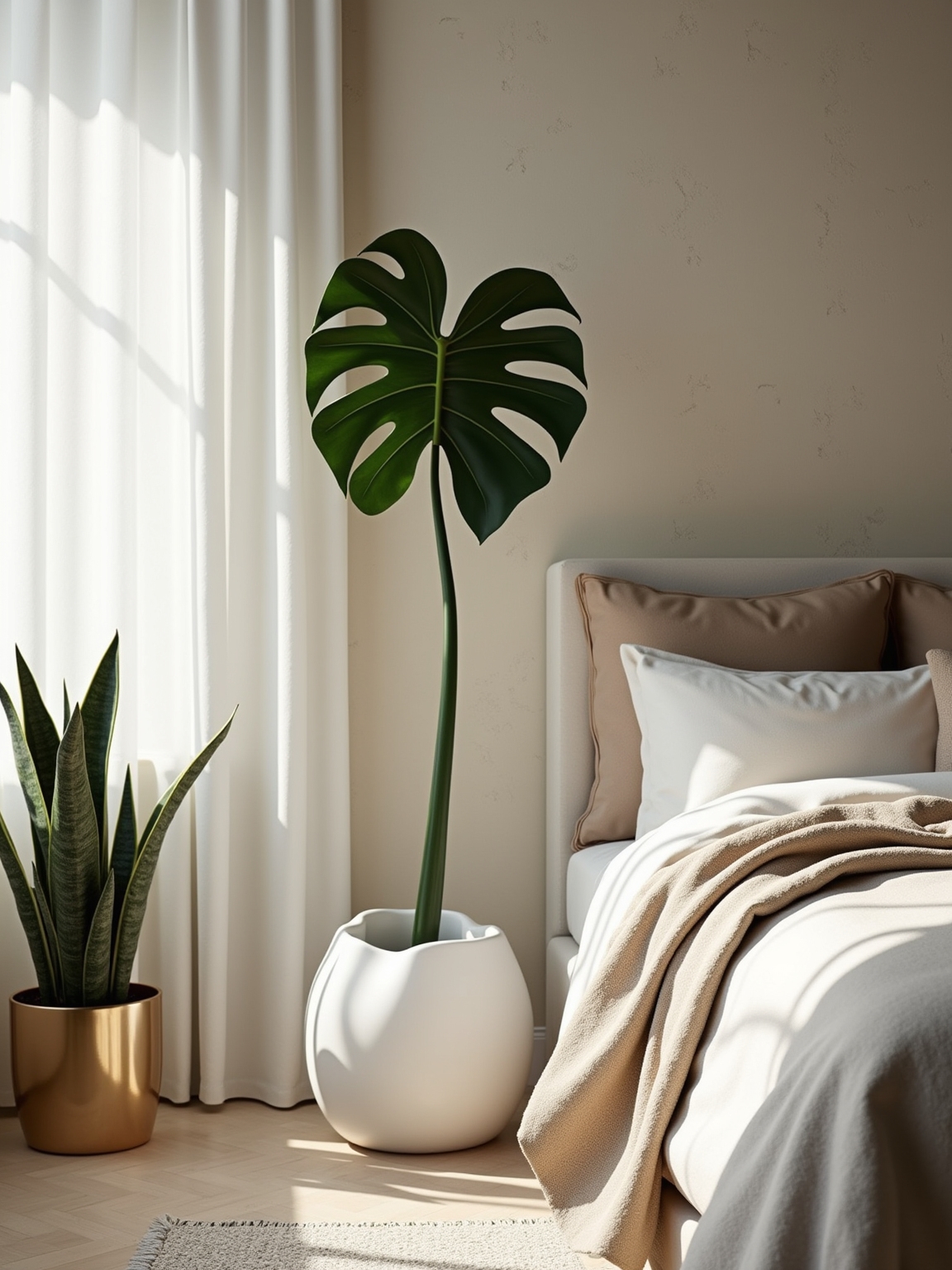
A single plant in a well-chosen planter does more for a bedroom than most decorative objects. Snake plants, pothos, and aloe vera are low-maintenance, genuine air-purifiers, and they add the kind of quiet, living detail that makes a room feel cared for.
Choose a planter in a matte ceramic that pulls from the room’s neutral palette and it reads as intentional rather than decorative. Place it where it catches indirect light and it will need almost nothing from you in return.
Select Large-Scale Abstract Art for Visual Interest
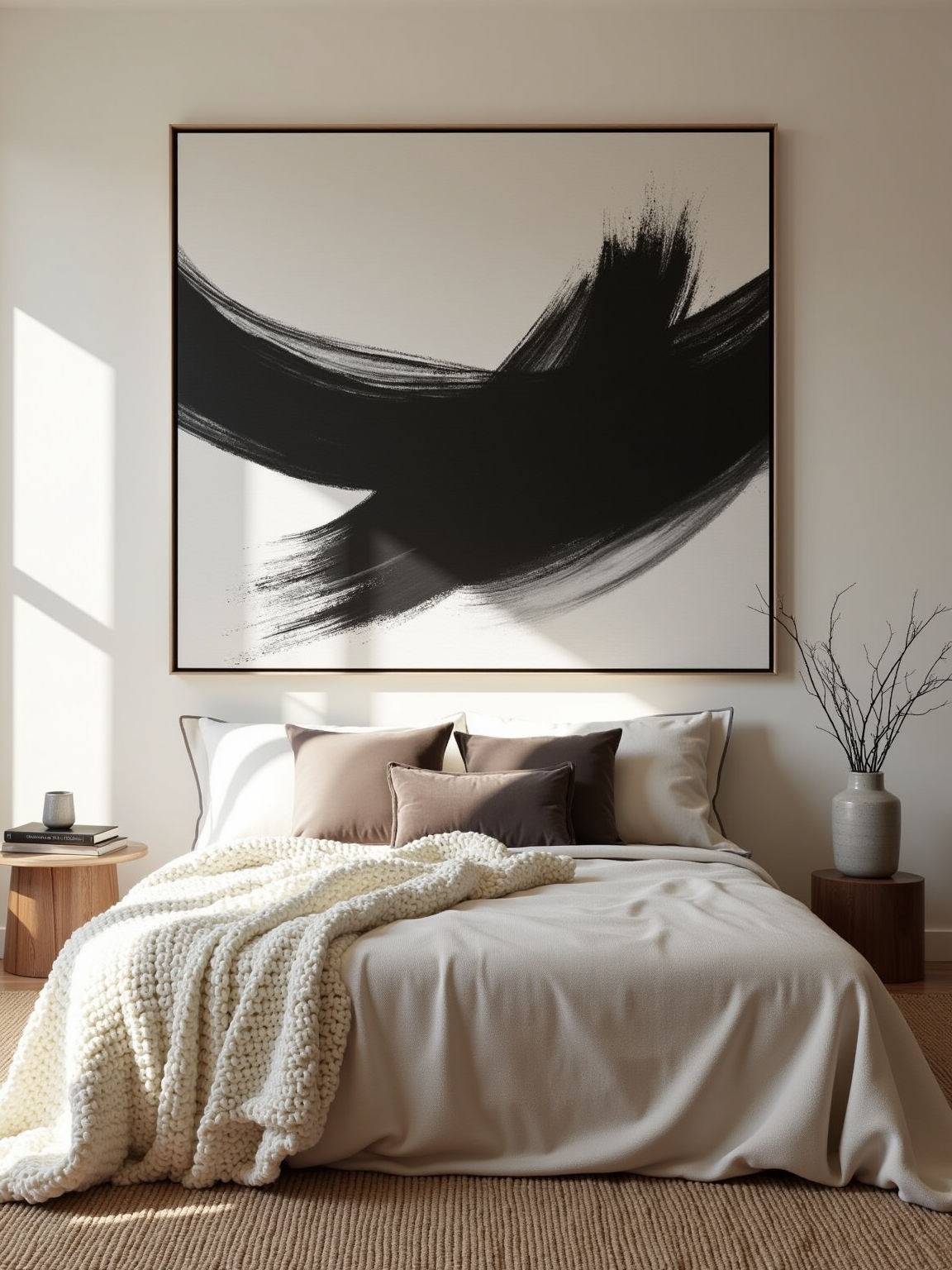
A large abstract piece in muted tones can anchor a neutral bedroom without overwhelming it. The scale matters as much as the image: a piece that fills the wall above a bed creates a sense of proportion that a cluster of small frames rarely achieves.
Choose a work whose palette borrows from what is already in the room and it reads as part of the design rather than an afterthought. Opt for a durable canvas that will not fade under ambient light over time.
Opt for Soft, Natural Lighting and Subtle Sources

Natural light is the one thing no lamp can fully replicate, so it is worth prioritizing before reaching for fixtures. Tubular skylights brighten corners that windows cannot reach, and larger windows make a neutral room glow in a way that transforms it by midmorning.
Reflective surfaces like mirrors and satin-finished walls bounce that daylight deeper into the space. Sheer curtains diffuse harsh afternoon sun while keeping the room from feeling dim or closed off.
Implement Warm-Hued Lighting for Cozy Vibes
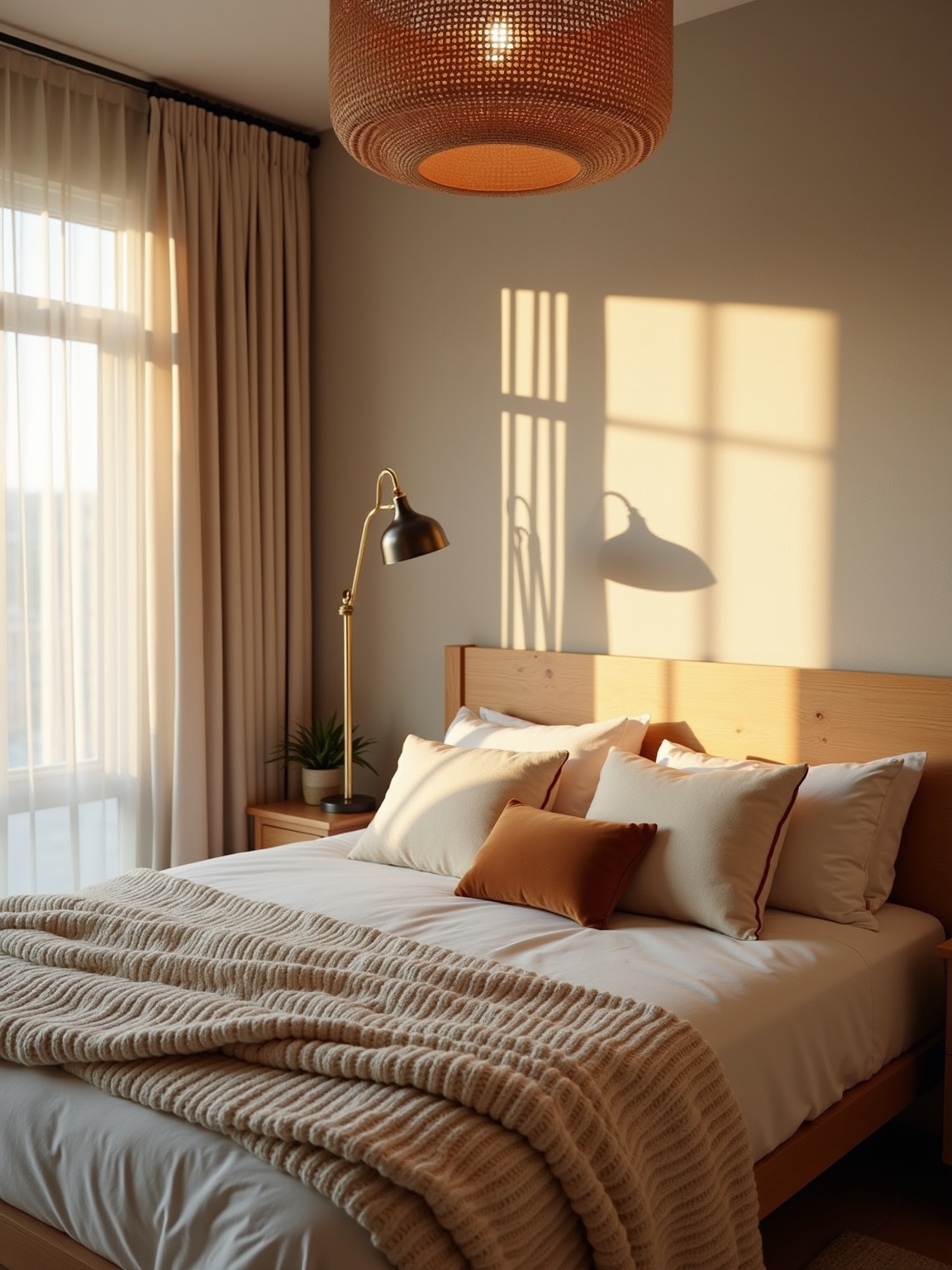
Once the sun goes down, the right bulb temperature changes everything. Bulbs in the 2700K to 3000K range cast amber tones that mimic the colors of sunset, and that signal matters more to your nervous system than most people realize.
This warmth supports a natural sleep rhythm by reducing the blue-spectrum light that keeps the brain alert. Layer a bedside lamp, a dimmer on the overhead, and a low accent source to give yourself options throughout the evening.
Combine Neutrals With Soft Pink and Blue Accents
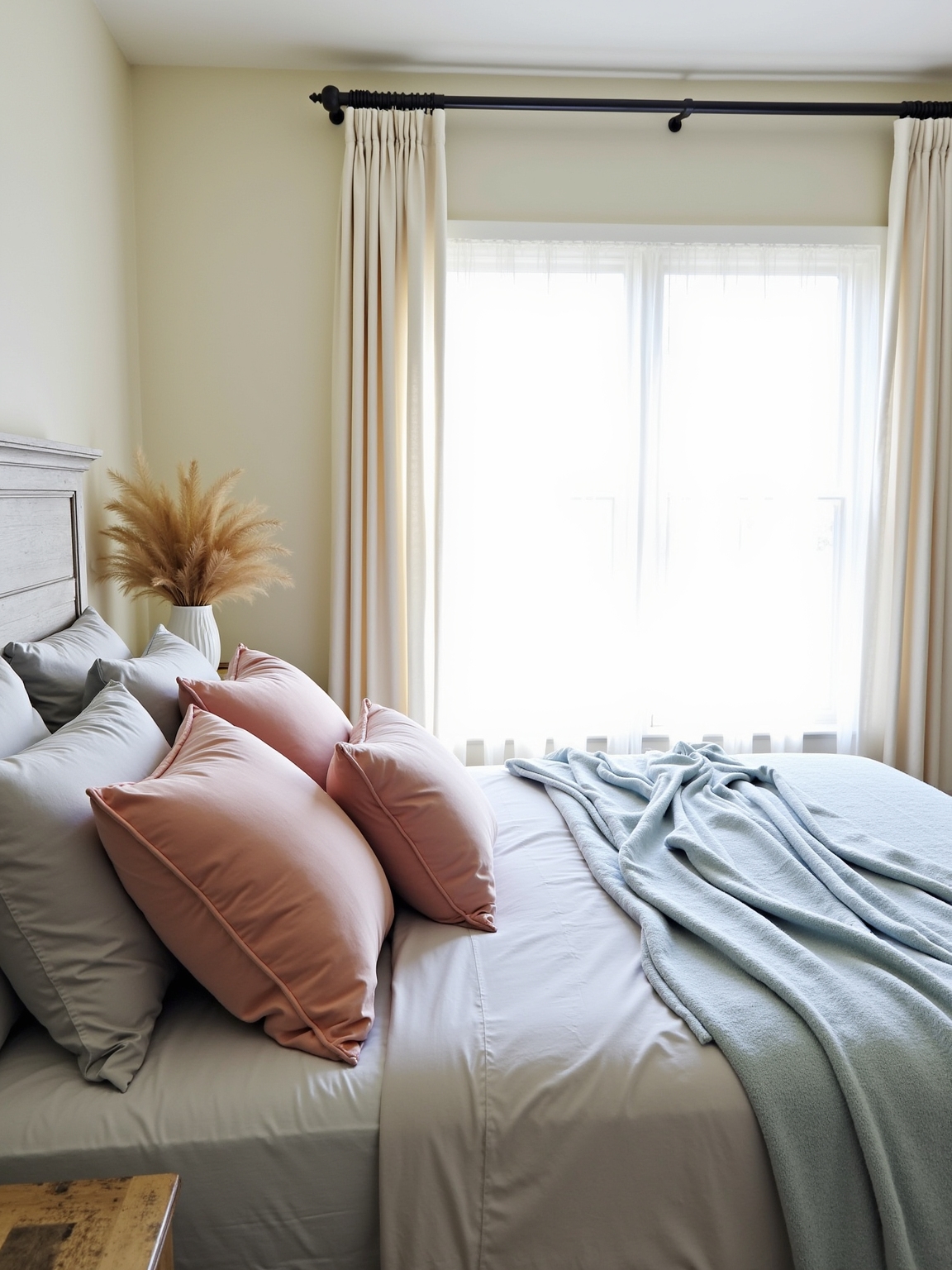
There is a version of color that does not disrupt a neutral bedroom at all. Dusty rose and soft slate blue both sit close enough to neutral that they read as depth rather than statement, especially when introduced through textiles and small accessories.
A rose-toned throw pillow or a muted blue ceramic lamp adds warmth without pulling the eye away from the overall calm. The restraint is the whole point: one or two quiet touches, not a full theme.
Use Textured Lampshades for Diffused Lighting
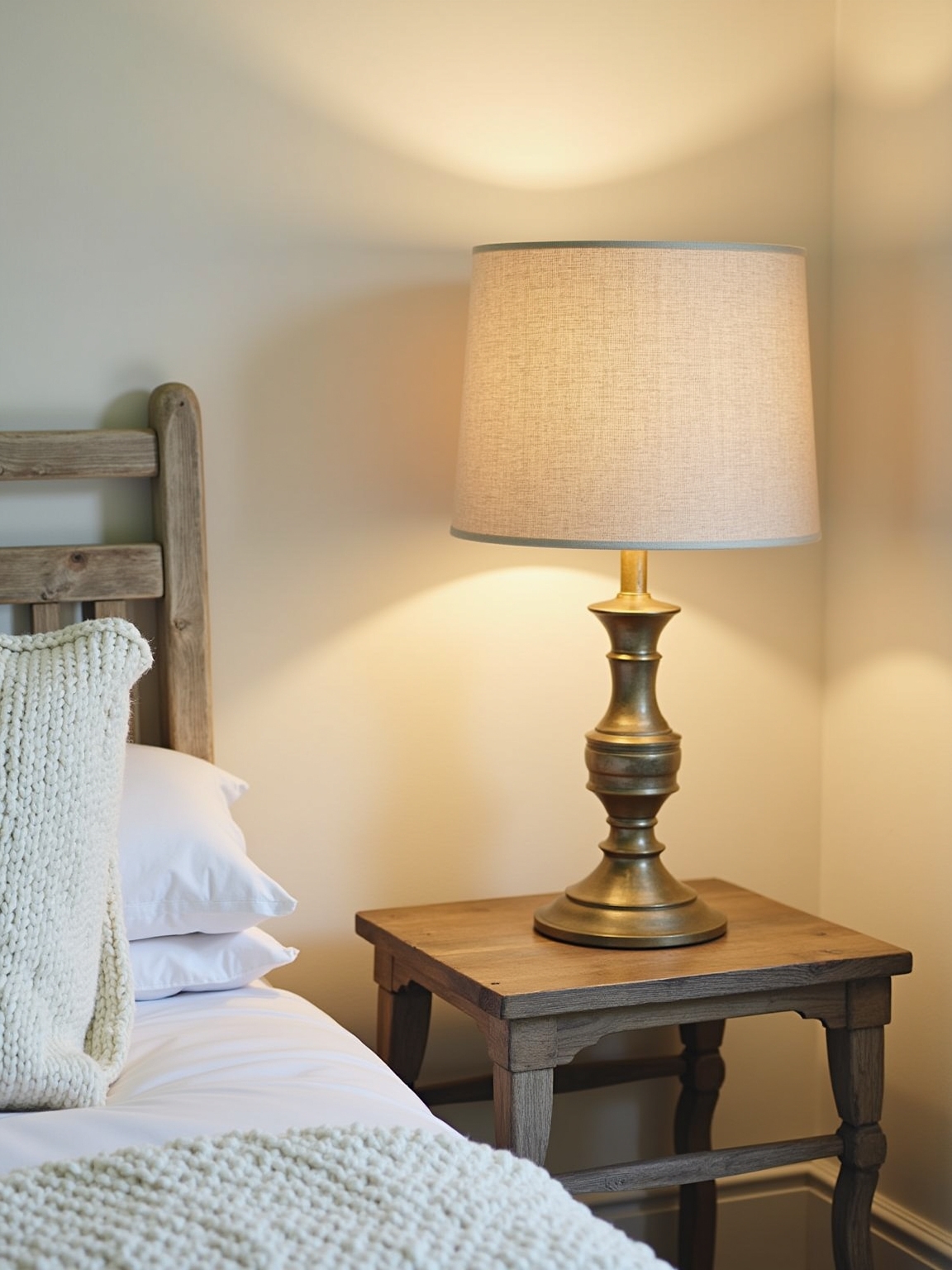
A textured lampshade is a small detail that earns its place in a neutral room. Burlap, linen, or a visible-weave fabric casts light in a softer, more diffused way than a smooth shade, reducing harsh brightness and adding warmth to the corners it reaches.
The shadow patterns a woven shade throws across the wall also add subtle movement and depth after dark. It is the kind of detail you notice only when it is done well or when it is missing entirely.
Incorporate Minimal yet Functional Accessories

The fastest way to undermine a carefully built neutral bedroom is to fill it with too much. A slim-framed mirror, a ceramic dish on the nightstand, a discreet cable organizer, a low planter: that is often genuinely all a room needs to feel complete.
Every object should either do something useful or be something you actually love looking at. Anything that fails both tests is just clutter with better packaging.
Blend Muted Patterns and Natural Materials for Warmth
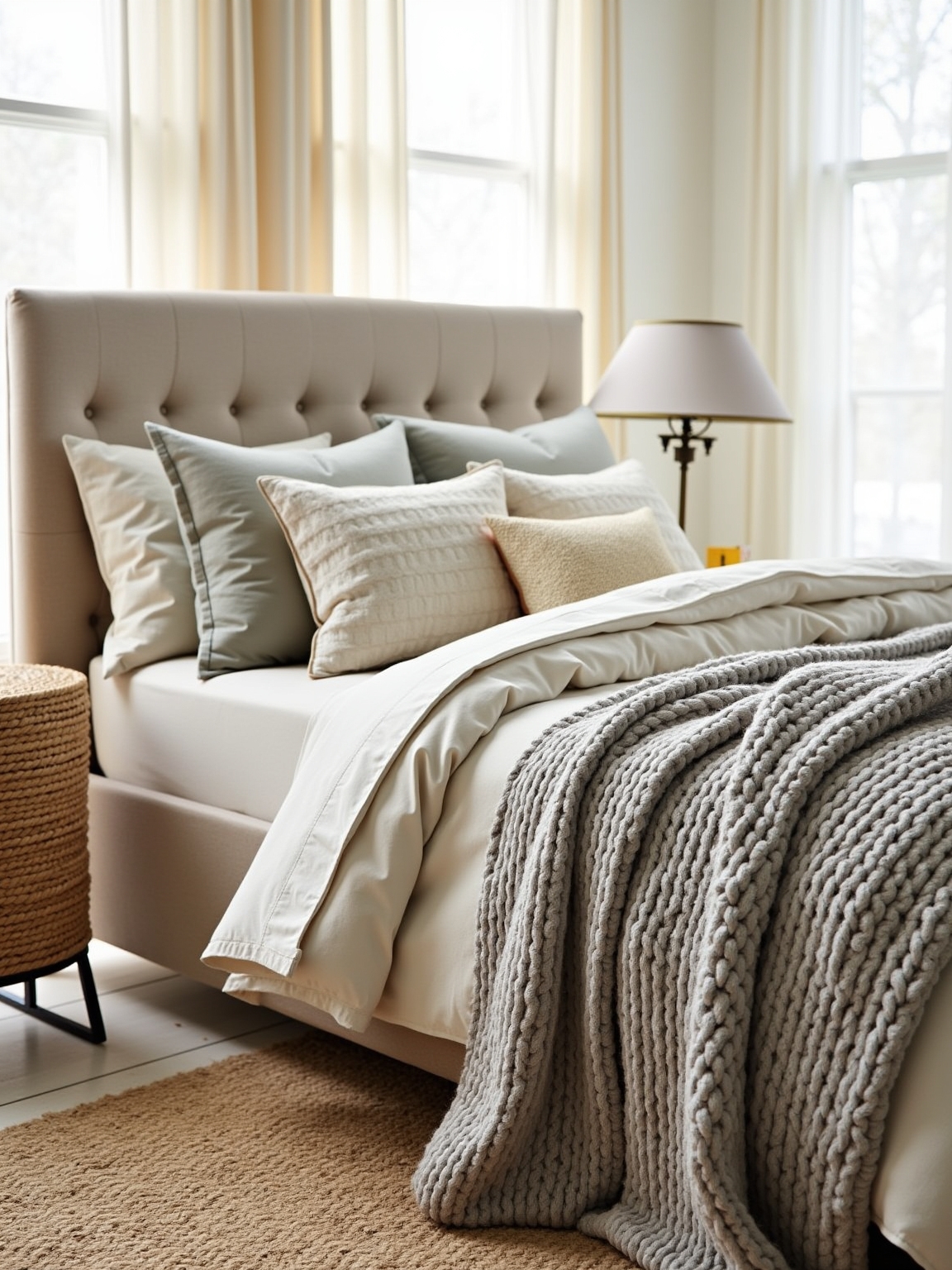
Muted patterns work in neutral rooms precisely because they add visual interest without demanding it. Soft florals, understated geometrics, or a quiet stripe in linen or cotton bring movement to a space that might otherwise feel static.
Pair those patterns with natural materials like reclaimed wood, woven grass, and unglazed ceramic and the room gains a warmth that feels genuine rather than assembled. This is the kind of bedroom that looks better in person than in photographs, which is exactly how it should be.