Walk into two identical rooms with the same furniture, same paint, same layout. One feels complete and polished. The other looks like it’s still waiting on something. Nine times out of ten, the difference comes down to the windows.
Bare glass or cheap builder-grade blinds telegraph “unfinished” louder than almost anything else in a space, while the right window treatment pulls everything together in a way that’s hard to articulate but impossible to miss. The 17 options ahead are the ones that do exactly that.
Contents
- 1 Cellular Honeycomb Shades for Energy Efficiency and Clean Lines
- 2 Plantation Shutters for Timeless Elegance
- 3 Roman Shades for Soft Sophistication
- 4 Motorized Roller Shades for Modern Convenience
- 5 Wooden Blinds for Warm Natural Texture
- 6 Sheer Shades for Filtered Light and Privacy
- 7 Vertical Blinds for Floor-to-Ceiling Drama
- 8 Faux Wood Blinds for Budget-Friendly Style
- 9 Woven Wood Shades for Organic Appeal
- 10 Aluminum Blinds for Sleek Minimalism
- 11 Blackout Roller Shades for Ultimate Light Control
- 12 Layered Treatments Combining Blinds and Drapes
- 13 Top-Down Bottom-Up Shades for Flexible Privacy
- 14 Zebra Shades for Contemporary Dimension
- 15 Cordless Blinds for Child-Safe Streamlined Design
- 16 Solar Shades for UV Protection With View Preservation
- 17 Custom-Fitted Shutters for Architectural Polish
Cellular Honeycomb Shades for Energy Efficiency and Clean Lines
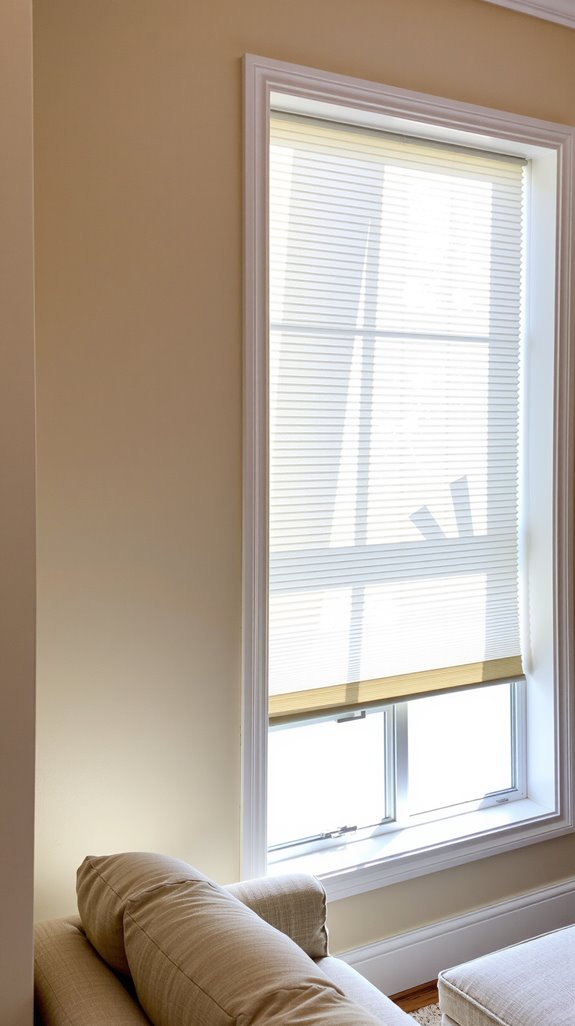
Your windows are bleeding money. Studies show they account for up to 30% of your heating and cooling costs, which explains why your energy bills spike every summer and winter.
Cellular shades tackle this head-on with their honeycomb structure that traps air in tiny pockets, creating an insulating barrier that can cut heating costs by nearly a quarter compared to standard venetian blinds. Beyond the utility savings, they give you those crisp, tailored lines that make a room look intentionally designed rather than hastily decorated.
Plantation Shutters for Timeless Elegance
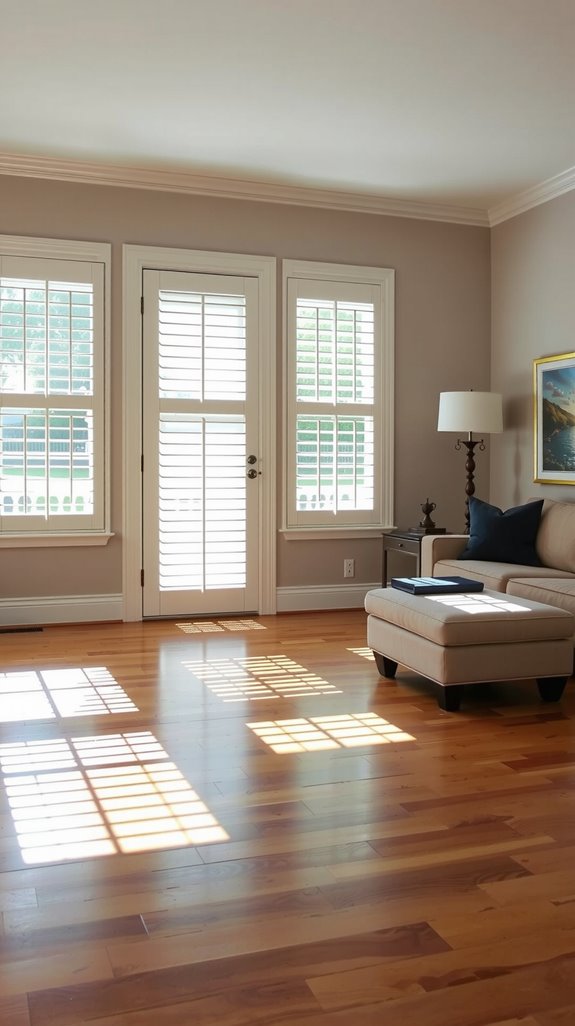
Few window treatments command a room quite like plantation shutters. The adjustable louvers let you fine-tune exactly how much light enters while maintaining privacy, and because they’re essentially part of your architecture, they don’t compete with your furniture or artwork.
They work equally well in a farmhouse kitchen and a Georgian formal living room, which explains why real estate agents consistently point to them as value-adds during home sales. The construction involves louvers, stiles, rails, and tilt rods working together, and when properly installed, they can last decades without needing replacement.
Roman Shades for Soft Sophistication
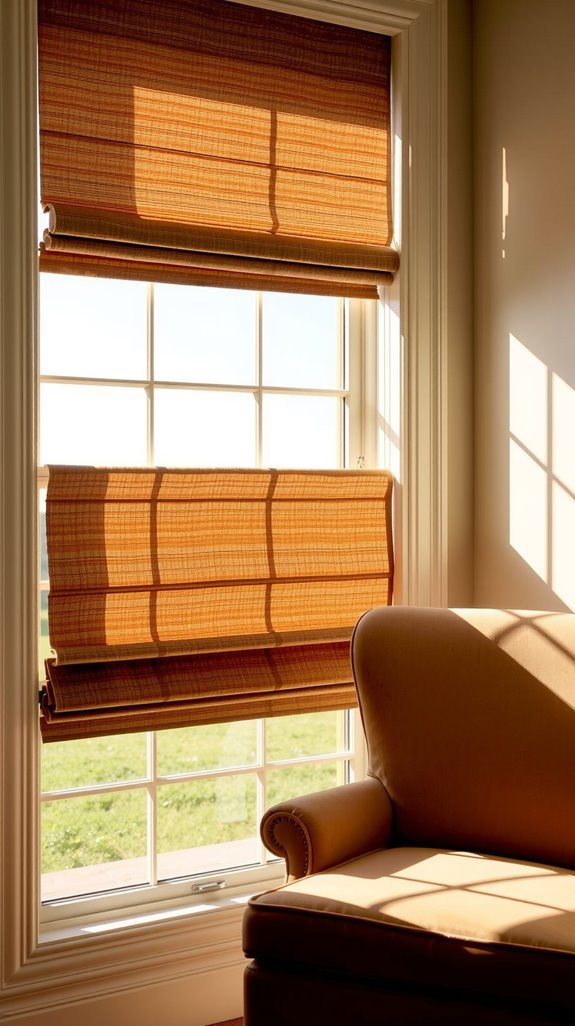
Roman shades do something interesting that harder treatments can’t quite manage. They bring texture and movement to a window without the fussiness of traditional drapes, folding into neat horizontal pleats that add visual weight without overwhelming the space.
The fabric options run from sheer linen to heavyweight blackout materials, and adding thermal linings can reduce heat loss by nearly half. Installation that accounts for proper measurements eliminates those telltale light gaps at the edges that cheaper, off-the-shelf versions always seem to have.
Motorized Roller Shades for Modern Convenience
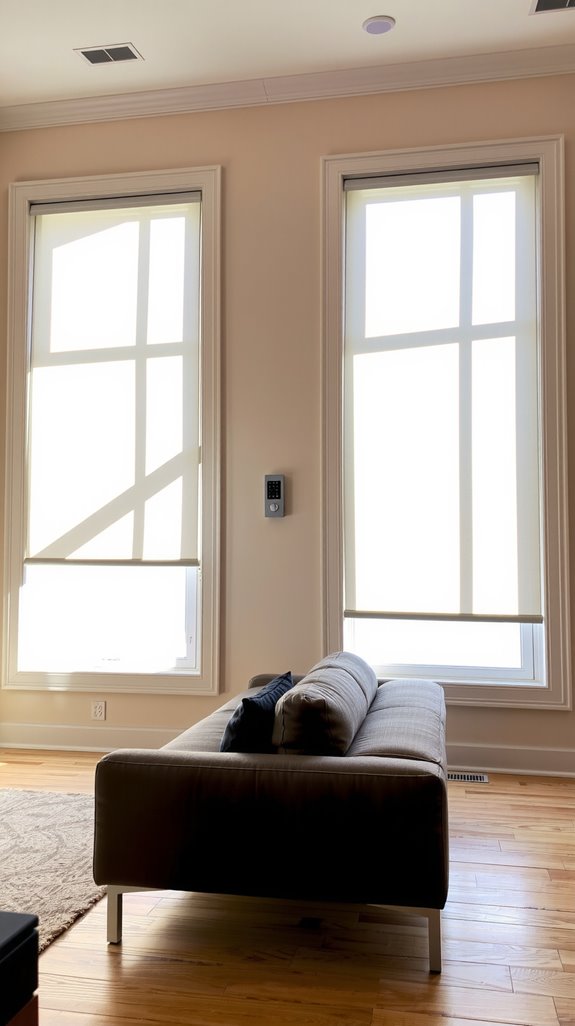
Motorized shades have moved well past the “luxury gadget” phase into genuinely practical territory. You can program them to adjust automatically based on the sun’s position, which not only saves energy but also protects your furniture from UV damage without you lifting a finger.
Voice control and smartphone apps mean you’re not fumbling for remotes, and the absence of dangling cords makes them considerably safer for homes with young children. They also let you simulate occupancy when you’re away, cycling open and closed on schedule to make it look like someone’s home.
Wooden Blinds for Warm Natural Texture
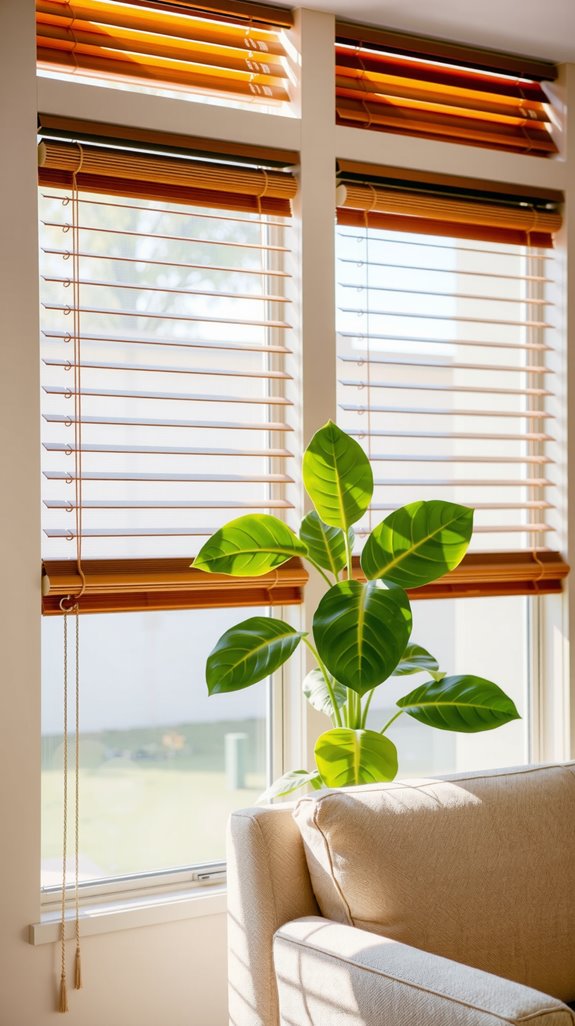
Real wood just hits differently than the alternatives. The grain patterns, the subtle color variations, the way natural light plays across the slats throughout the day create depth that composite materials struggle to replicate.
Wood slats are typically thicker than aluminum or vinyl, which improves both light control and insulation against temperature swings. With proper care, quality wooden blinds easily last a decade or more, developing a patina that actually improves their appearance rather than looking shabby.
Sheer Shades for Filtered Light and Privacy
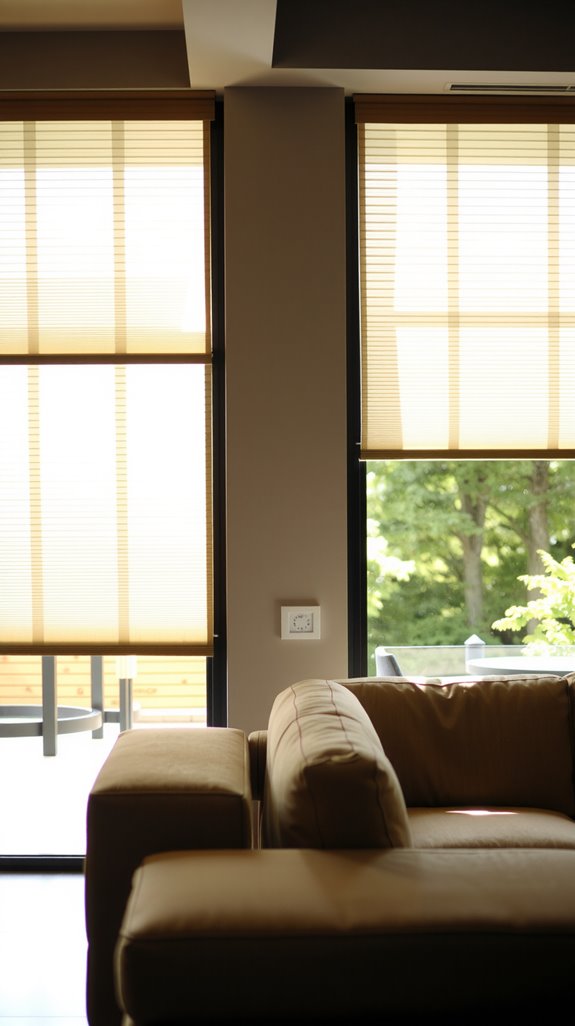
Sheer shades solve a problem that frustrated homeowners for years: how to get natural light without putting your living room on display for the whole neighborhood. The design layers translucent fabric panels with adjustable vanes, letting you dial in everything from soft, diffused illumination to near-complete darkness depending on what you need.
They filter out up to 80% of UV rays, which keeps your upholstery and artwork from fading prematurely. The insulating properties aren’t as dramatic as cellular shades, but they do take the edge off temperature extremes better than bare glass.
Vertical Blinds for Floor-to-Ceiling Drama
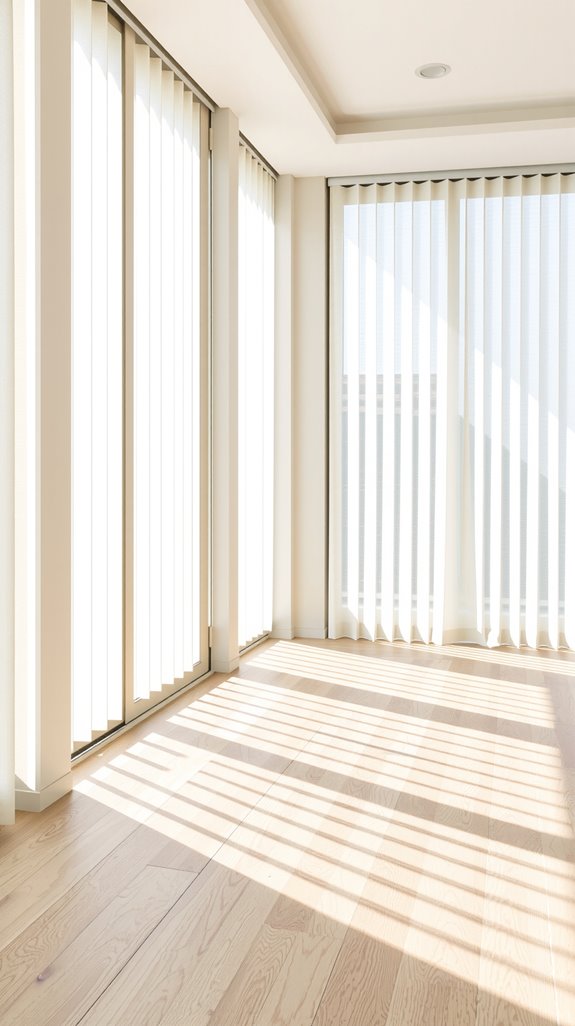
Vertical blinds get unfairly dismissed as dated office equipment, which ignores how effective they are for specific applications. Sliding glass doors and French doors practically demand them because horizontal blinds stack awkwardly and get damaged by constant opening and closing.
The vertical slats adjust to control light while maintaining sightlines, and modern materials look nothing like those flimsy vinyl versions from 1990s apartment complexes. They work particularly well as room dividers, creating flexible privacy without the permanence of walls.
Faux Wood Blinds for Budget-Friendly Style
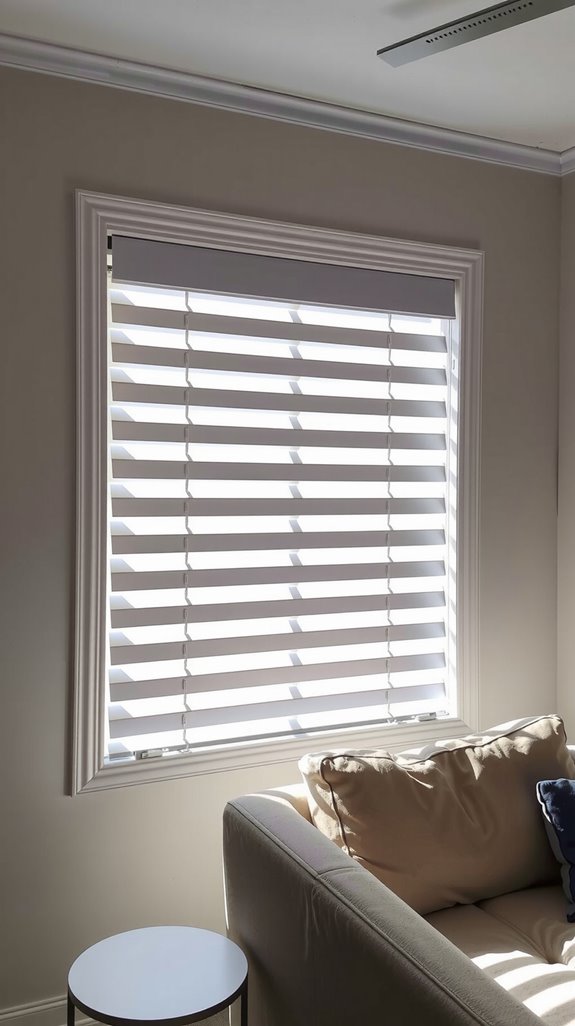
Composite materials have gotten good enough that most people can’t spot faux wood blinds from across a room. The real advantage shows up in bathrooms and kitchens, where moisture warps and cracks natural wood but leaves synthetic materials completely unbothered.
They’re also tougher against the daily abuse of kids, pets, and general household chaos than their wooden counterparts. A damp cloth handles all the cleaning you’ll need, and the cost difference typically runs about 30 to 40 percent less than comparable wood blinds.
Woven Wood Shades for Organic Appeal
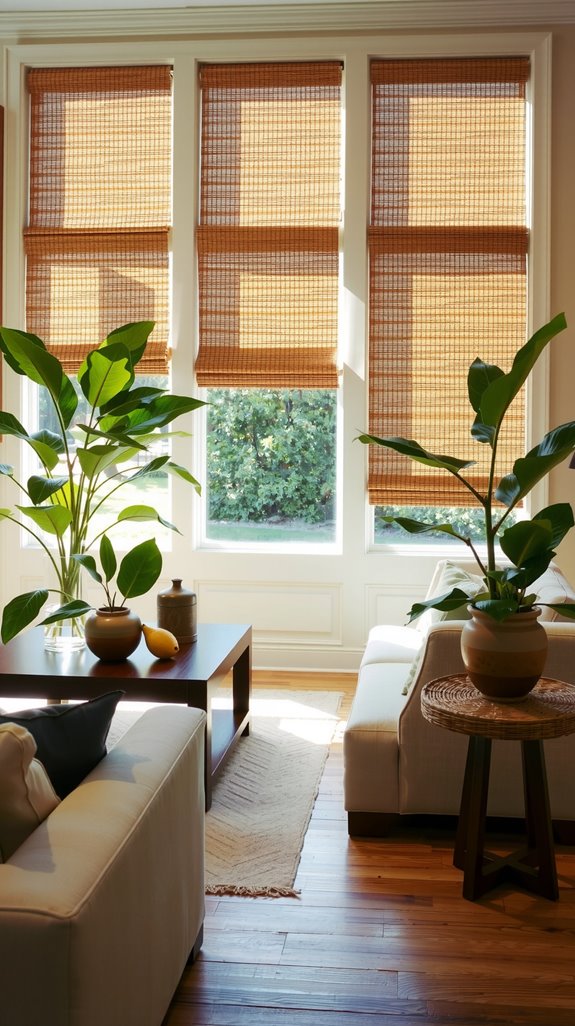
Woven wood shades add real texture to a room, not a printed-on-plastic version. Bamboo, rattan, reeds, and natural grasses filter light through their weave in ways that shift throughout the day, creating subtle pattern play on your walls and floors.
The natural materials provide effective insulation, reducing winter heat loss by up to 40% and blocking summer heat gain by more than half. They suit everything from coastal cottages to modern minimalist spaces, proving that natural materials have more range than most people assume.
Aluminum Blinds for Sleek Minimalism
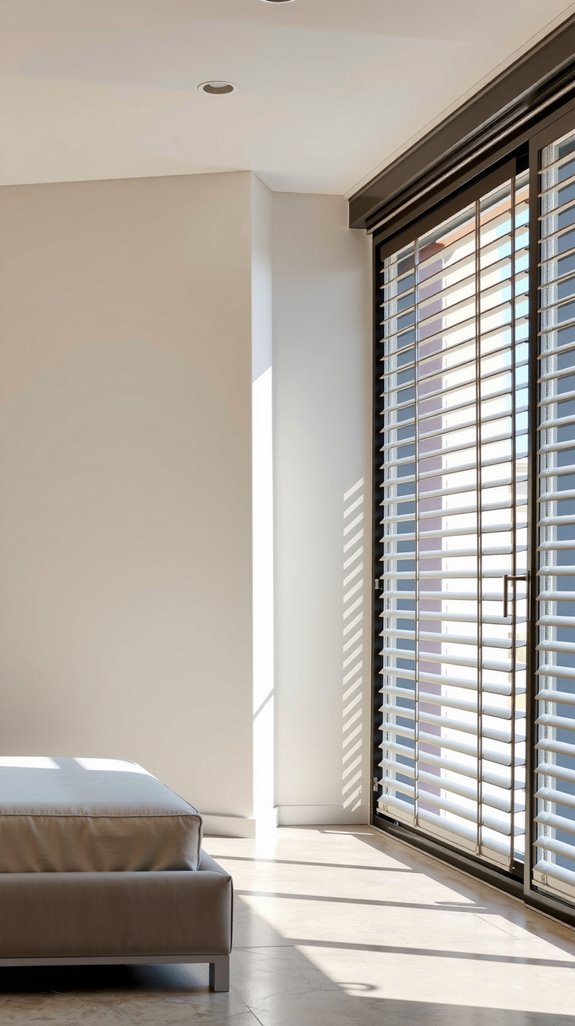
Aluminum blinds have shed their industrial office reputation and found a home in contemporary residential design. The thin profile and clean lines disappear into modern architecture rather than announcing themselves, available in matte finishes and metallics that complement smart home aesthetics.
Light control rivals any other blind type, and the reflective surfaces actually bounce heat away during the summer months, reducing cooling costs measurably. They’re practically indestructible, shrugging off the kind of daily wear that leaves fabric or wood treatments looking tired after a few years.
Blackout Roller Shades for Ultimate Light Control
Some rooms demand absolute darkness, whether you’re a shift worker trying to sleep during the day or setting up a home theater. Blackout roller shades block over 90% of light through multi-layered fabric construction, and technologies like edge-sealing systems eliminate those annoying slivers of light that sneak around the sides.
The dense material also deadens outside noise and provides substantial insulation against temperature transfer. Modern versions skip the cords entirely, using spring mechanisms or motors that meet current safety standards while looking cleaner.
Layered Treatments Combining Blinds and Drapes
Layering window treatments isn’t just about aesthetics, though the added depth and dimension certainly improve a room’s visual interest. Combining blinds with drapes gives you genuine functional advantages: close the blinds for privacy while leaving drapes open for softness, or draw both for maximum insulation and light blocking.
The combination can reduce heating costs by up to 30% compared to single-layer treatments, and it lets you adjust throughout the day as needs change. Common pairings include cellular shades under linen drapes or wooden blinds behind heavier velvet panels.
Top-Down Bottom-Up Shades for Flexible Privacy
Standard shades force you to choose between light and privacy, but top-down bottom-up mechanisms let you have both simultaneously. Lower the shade from the top to bring in natural light through your upper windows while keeping the bottom covered for eye-level privacy, perfect for ground-floor rooms facing sidewalks or neighboring houses.
Bathrooms benefit enormously from this setup, allowing daylight without sacrificing discretion. The dual functionality works in urban apartments, street-facing bedrooms, and anywhere you want illumination without feeling exposed.
Zebra Shades for Contemporary Dimension
The alternating bands of sheer and opaque fabric create the distinctive striped look that earned these shades their name. Adjust the alignment to overlap the solid bands for privacy and darkness, or offset them to let the sheer portions filter light while maintaining some outward visibility.
The effect mimics traditional horizontal blinds but with a smoother, more contemporary profile that fits modern interiors. They’re particularly effective in spaces where you want clean lines but need more visual interest than plain roller shades provide.
Cordless Blinds for Child-Safe Streamlined Design
Dangling cords and chains pose legitimate safety hazards, especially for young children and curious pets who don’t understand the risk. Cordless blinds eliminate the problem entirely, using spring mechanisms or tension systems that operate with a simple push or pull on the bottom rail.
The absence of cords also cleans up the visual clutter, giving you those smooth, uninterrupted lines that make a room feel more polished. Most modern cordless systems work just as easily as traditional corded versions once you get used to the slightly different motion.
Solar Shades for UV Protection With View Preservation
Solar shades function like sunglasses for your windows, blocking up to 99% of harmful UV rays while still letting you see outside clearly. The woven mesh fabric comes in different densities (called openness factors), determining how much glare reduction and view-through capability you get.
Tighter weaves block more heat and light but reduce visibility, while more open weaves preserve views at the cost of some solar control. By reducing heat gain by up to 94%, they can cut your cooling costs by more than 7% during the summer months.
Custom-Fitted Shutters for Architectural Polish
Off-the-rack shutters leave gaps, hang crooked on non-standard windows, and generally announce their generic origins to anyone who looks closely. Custom fabrication accounts for your home’s specific quirks, from odd angles to unusual dimensions, creating shutters that look like they were always meant to be there.
Materials matter here too, with PVC outperforming wood in humid climates by resisting warping and mold growth. Properly fitted operable shutters create an insulating barrier that can prevent up to 30 degrees of temperature transfer, meaningfully reducing your heating and cooling costs year-round.