Remember those 1970s Volkswagen vans with their tapestries and mismatched cushions, rolling down highways like mobile art galleries? That aesthetic hasn’t disappeared, it’s just gotten smarter. Your caravan can capture that same free-spirited energy without sacrificing the comfort and functionality you need for actual living on the road.
The difference between a cramped trailer and a space that feels like home comes down to intentional choices about color, texture, and how you use every square inch. I’ve spent years figuring out what actually works in small spaces, and these 21 approaches will help you create a bohemian retreat that travels with you.
Contents
- 1 Embrace Earthy Tones and Warm Color Palettes
- 2 Layer Macramé Wall Hangings for Textural Interest
- 3 Install Rattan Light Fixtures as Statement Pieces
- 4 Choose Patterned Rugs to Define Living Zones
- 5 Incorporate Handcrafted Pottery and Artisan Decor
- 6 Design Cozy Nooks With Plush Cushions and Throws
- 7 Select Multifunctional Furniture That Converts
- 8 Maximize Vertical Space With Wall-Mounted Storage
- 9 Use Natural Softwood Paneling for Organic Warmth
- 10 Add Strip Lighting for Adjustable Ambient Glow
- 11 Create Gallery Walls With Vintage Finds and Art
- 12 Install Floating Shelves for Display and Function
- 13 Choose Neutral Textiles With Subtle Patterns
- 14 Incorporate Plants and Greenery Throughout
- 15 Opt for Modular Seating Arrangements
- 16 Select Sustainable and Eco-Friendly Materials
- 17 Use Mirrors to Enhance Light and Space
- 18 Install Curtains With Tassels and Fringe Details
- 19 Choose Woven Baskets for Stylish Organization
- 20 Add Vintage or Thrifted Decorative Accents
- 21 Personalize With Handmade and DIY Elements
Embrace Earthy Tones and Warm Color Palettes
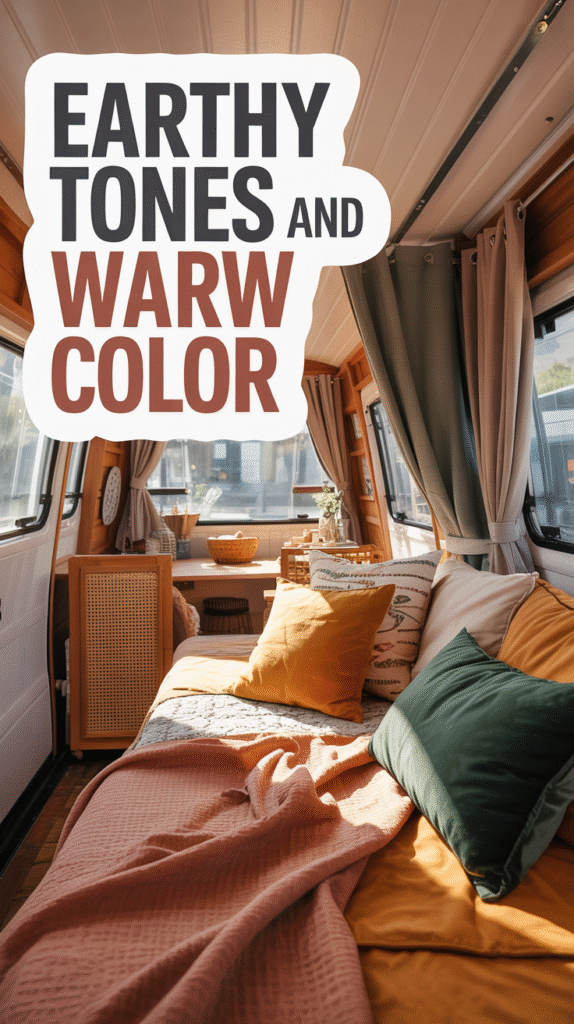
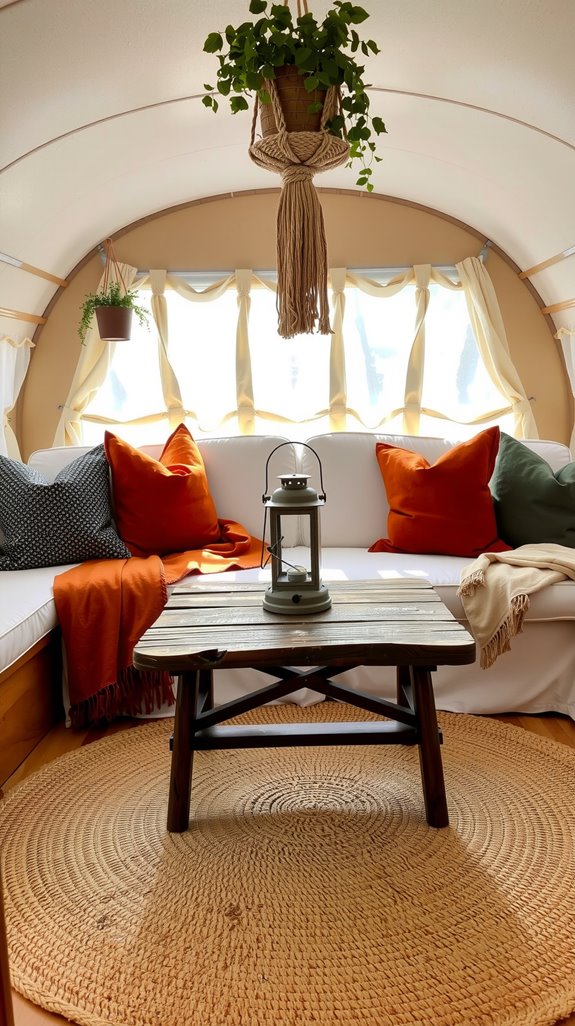
Your color choices set the mood for everything else, so think about how you want to feel when you step inside after a long drive. Grays, browns, and tans work as your canvas because they don’t fight for attention, letting you layer in personality without creating visual chaos.
Terracotta and deep forest greens pull the outdoors inside, while mustard yellows add warmth without overwhelming tight quarters. When you want richness, jewel tones like burgundy or sapphire work better as accents than wall colors, they give you depth without making the space feel smaller.
Layer Macramé Wall Hangings for Textural Interest
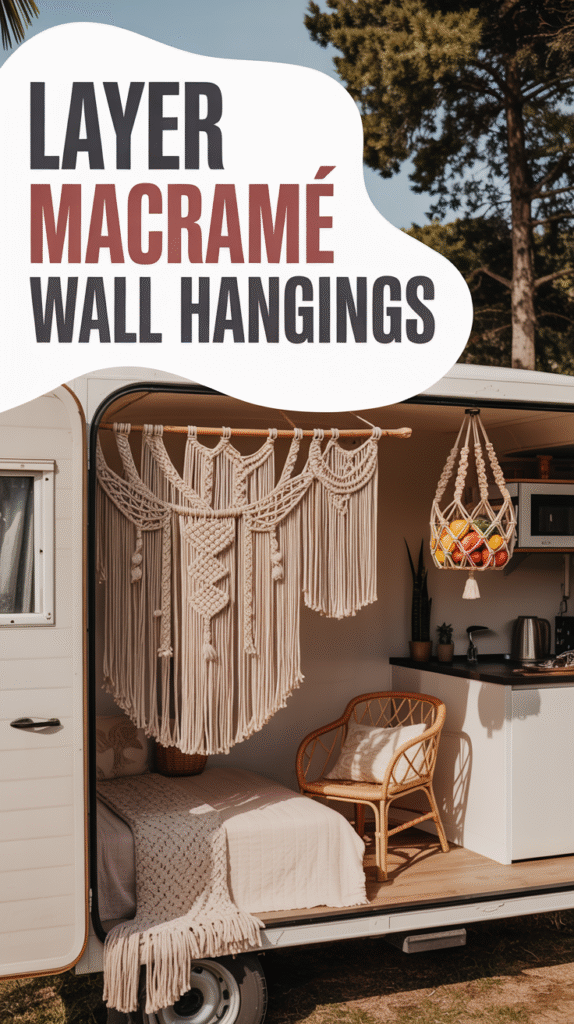
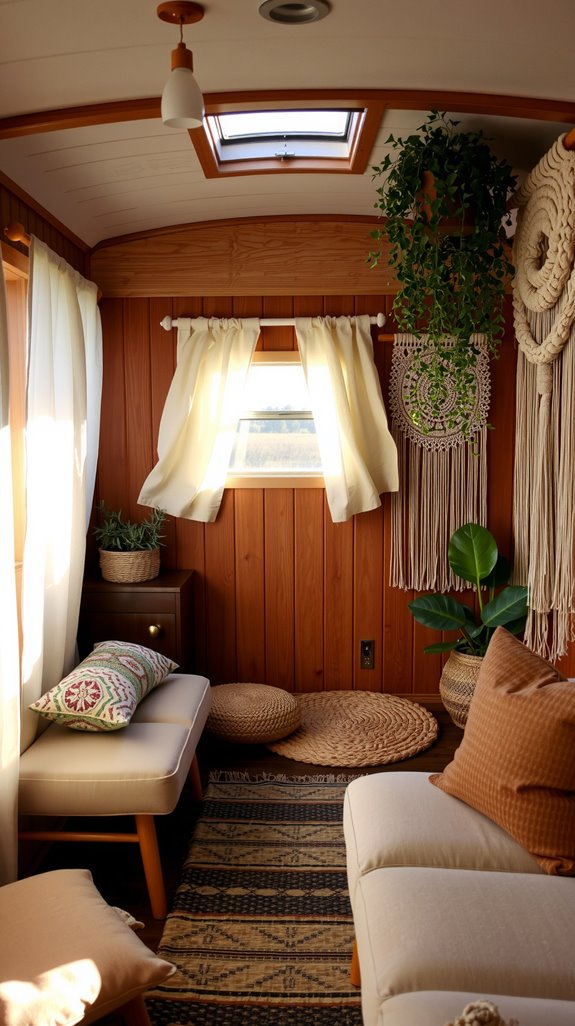
Macramé gets dismissed as outdated until you see how it transforms flat walls into something with real dimension. The trick is mixing different knot patterns and sizes so your eye has somewhere to travel, not just hanging one lonely piece above the bed.
Secure everything properly because the last thing you need is a wall hanging in your lap when you hit a pothole. Natural fibers like cotton and jute age beautifully and soften those hard surfaces that make caravans feel like you’re living inside a Tupperware container.
Install Rattan Light Fixtures as Statement Pieces
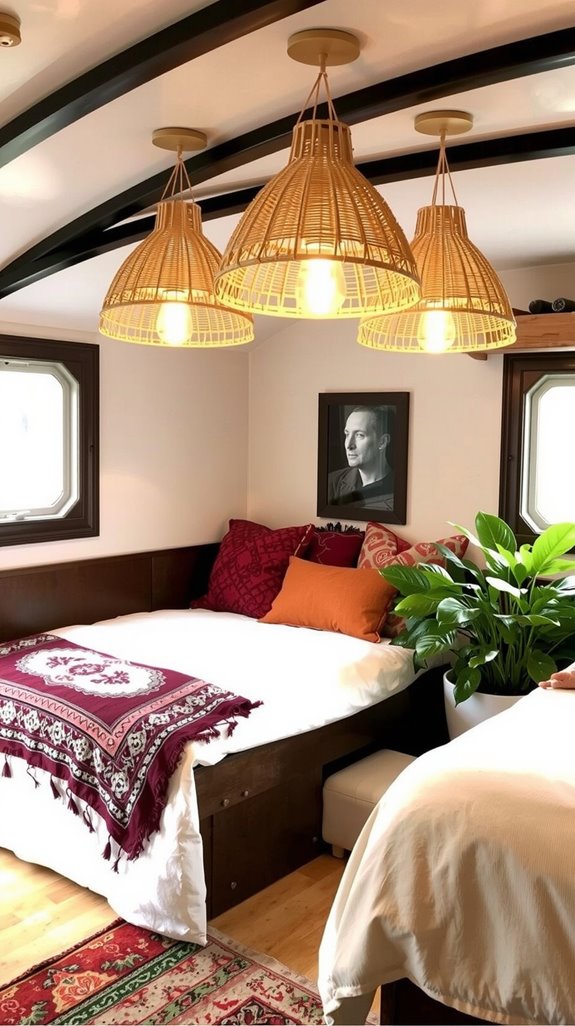
Rattan pendant lights do more work than you’d think, creating focal points that draw your eye up and make low ceilings feel less oppressive. They’re light enough that you won’t worry about damaging your ceiling mounts, and they cast patterns that change throughout the day as natural light shifts.
Make sure your ceiling can actually support what you’re hanging, especially if you’re dealing with older caravan construction. LED bulbs save your battery and run cool, which matters when you’re dealing with limited ventilation and don’t want to add heat to an already warm space.
Choose Patterned Rugs to Define Living Zones
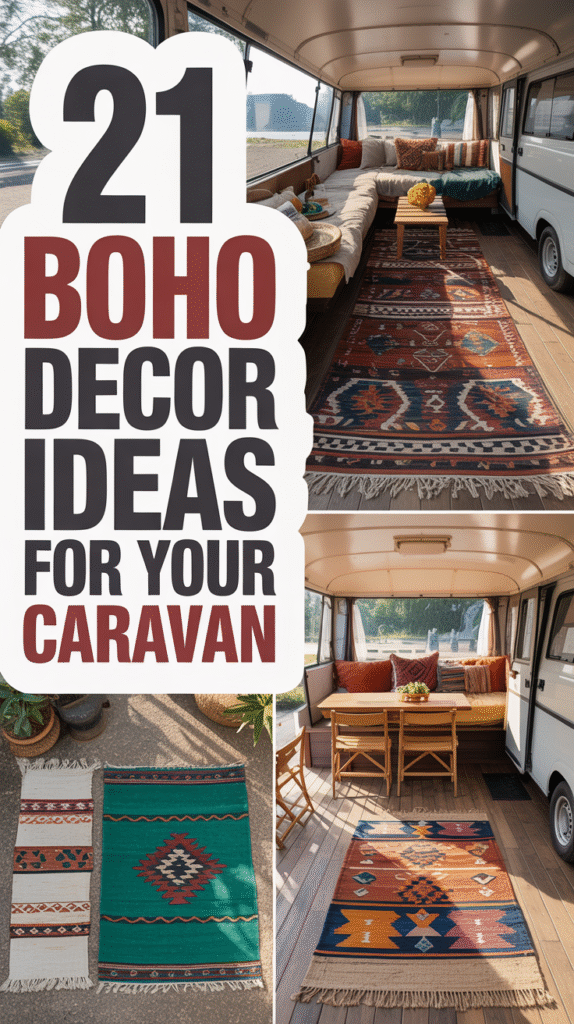
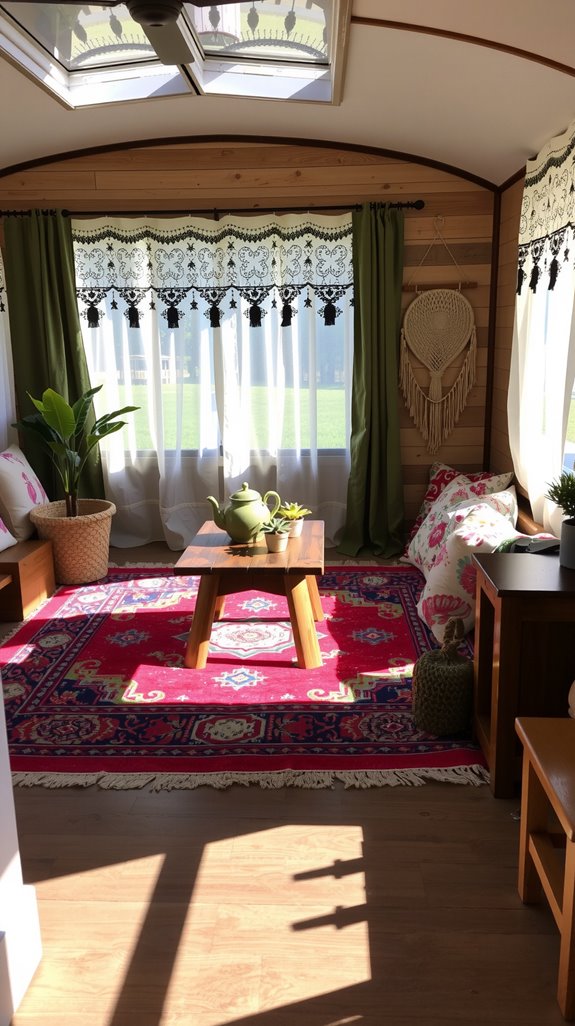
Rugs do the heavy lifting of separating your sleeping area from where you eat without making the space feel chopped up. A Persian-style runner in jewel tones tells your brain “this is the living area” while a smaller geometric piece under your dining table creates its own territory.
Low-pile options in synthetic materials handle foot traffic and spills better than anything plush, and they won’t bunch up when you’re moving around. Layering smaller rugs over a larger neutral base gives you flexibility to change things up without starting from scratch.
Incorporate Handcrafted Pottery and Artisan Decor
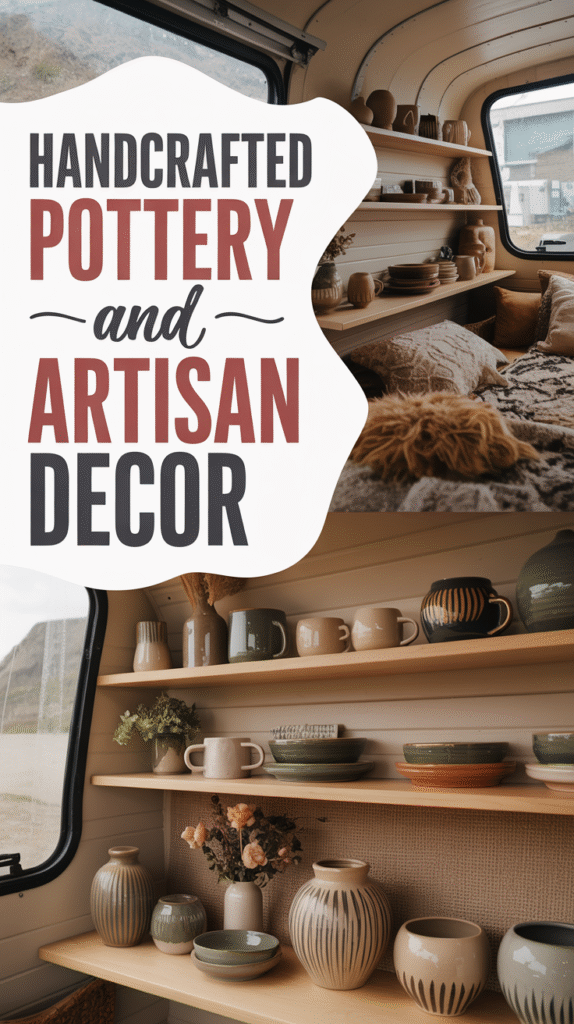
Mass-produced decor looks like mass-produced decor, but a handmade ceramic bowl or vase brings the maker’s hands into your space. Hunt for pieces at local markets when you’re traveling, not just for the uniqueness but because they become memory anchors for places you’ve been.
Earthy glazes in terracottas and mossy greens tie back to your color palette while adding weight and substance to shelves. Group smaller pieces together instead of spacing them out evenly, clustering creates visual interest and makes your collection feel intentional rather than scattered.
Design Cozy Nooks With Plush Cushions and Throws
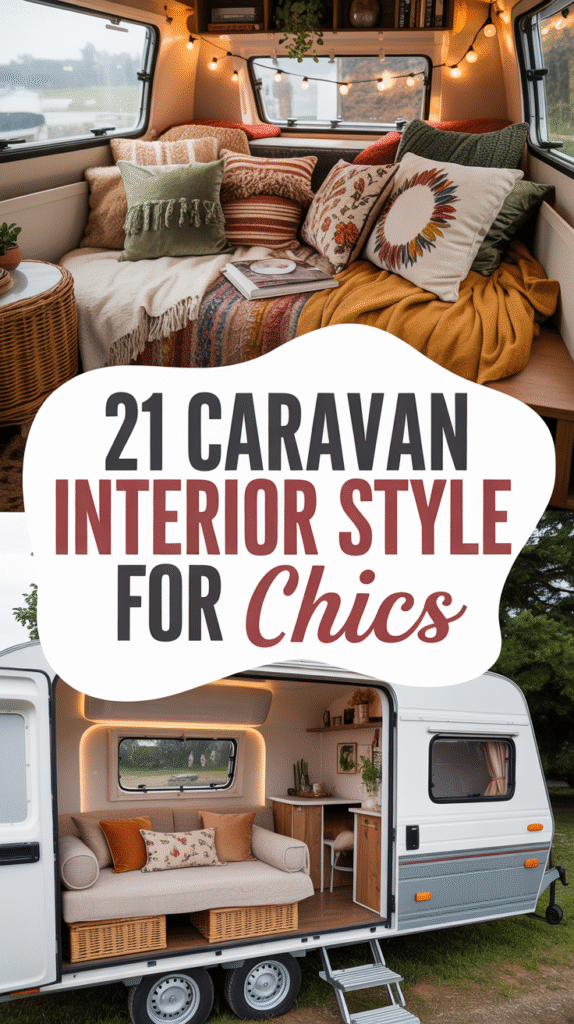

Corners and awkward spaces become your favorite spots when you pile them with cushions that actually invite you to sink in. Mix your textures deliberately, velvet against linen, smooth against nubby, so there’s always something interesting happening.
Throws in rust, mustard, and sage layer over each other and can shift between decorative and functional depending on the temperature. Window seats padded with floor cushions transform dead space into reading nooks, especially when you add a small light and suddenly have a destination within your own home.
Select Multifunctional Furniture That Converts
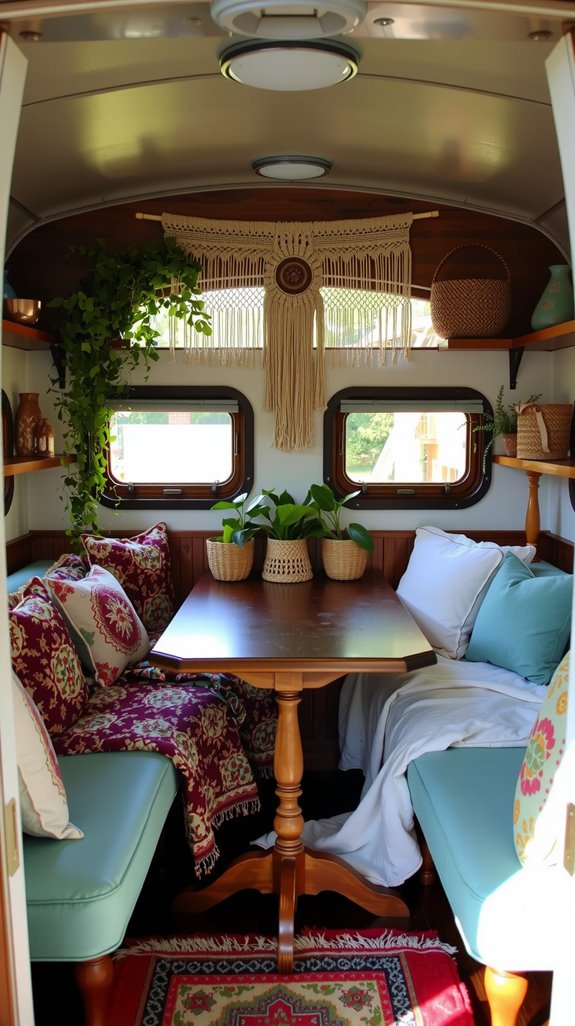
Every piece of furniture needs to earn its place by doing at least two jobs, anything less is wasted space you can’t afford. Sofa beds with storage underneath give you seating, sleeping, and organization in one footprint, though quality mechanisms matter because you’ll use them daily.
Wall-mounted tables that fold down transform your living area into a dining room and back again in seconds. Swivel chairs with hidden compartments are worth hunting for because they solve multiple problems while taking up minimal floor space.
Maximize Vertical Space With Wall-Mounted Storage
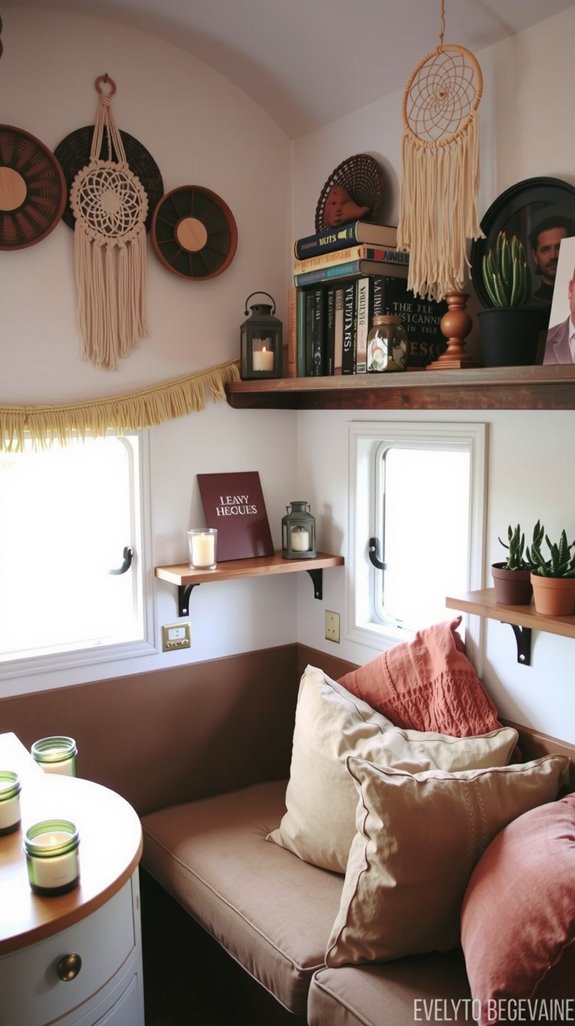
Floor space runs out fast, but your walls stay mostly empty until you get strategic about using them. Fabric pockets mounted near your bed corral phones, books, and glasses without requiring a nightstand that you’ll bang your shins on.
Hooks near the door keep daily essentials accessible instead of buried in drawers, and magnetic strips secure metal items like tweezers and nail clippers where you can actually find them. Hanging baskets from ceiling hooks adds storage that doesn’t compete with your living space, perfect for produce or items you need but don’t use constantly.
Use Natural Softwood Paneling for Organic Warmth
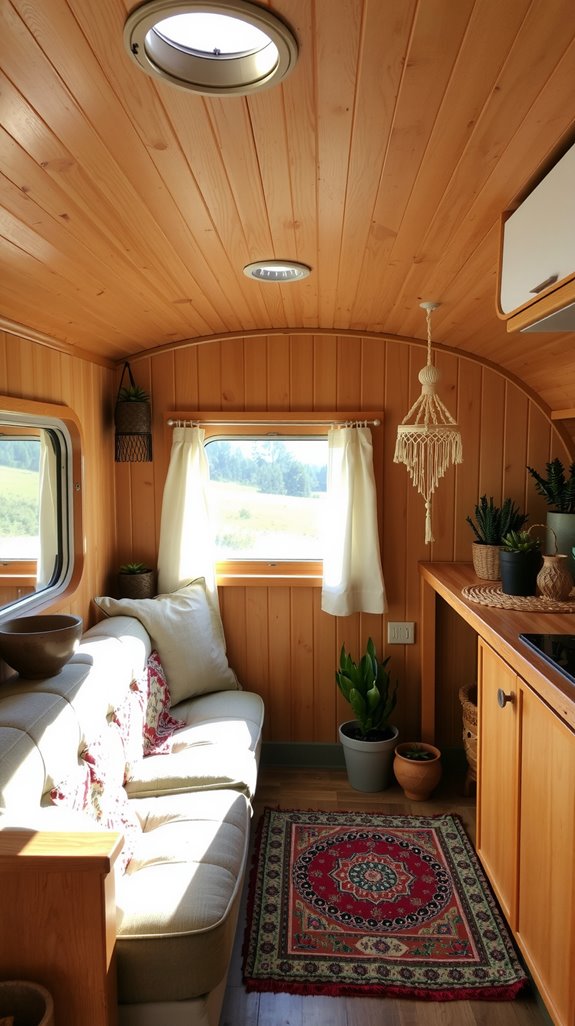
Cedar paneling costs more upfront but pays back in how it makes your space feel and function over time. The natural water resistance matters when you’re dealing with condensation and humidity changes, and you skip the maintenance of constant refinishing.
Insulation properties help regulate temperature swings, which translates to less energy spent on heating and cooling. Road noise diminishes noticeably when you have dense wood absorbing vibrations instead of thin metal walls amplifying every sound from the highway.
Add Strip Lighting for Adjustable Ambient Glow
Strip lighting gives you options that overhead fixtures can’t match, letting you dial in exactly the ambiance you need for cooking versus relaxing. Running 12V strips means you’re working with your existing electrical system rather than adding complicated converters, though you need to get your positive and negative connections right or nothing works.
Clean mounting surfaces with acetone before sticking anything down; it’s the difference between lights that stay put and ones that droop within a week. Bluetooth controllers let you adjust everything from your phone, which beats getting up to fiddle with switches every time you want different lighting.
Create Gallery Walls With Vintage Finds and Art
Empty walls feel institutional, but covering them thoughtfully turns your caravan into a reflection of where you’ve been and what matters to you. Vintage postcards, lightweight prints, and framed fabric pieces build character without the weight of traditional artwork.
Removable adhesive strips save your walls from permanent damage while giving you flexibility to rearrange as your collection grows. Anchor your arrangement around one central piece and build outward with consistent spacing; it creates cohesion even when your individual items are wildly different.
Install Floating Shelves for Display and Function
Floating shelves maximize your vertical real estate while keeping sight lines open, making them smarter than bulky cabinets in tight spaces. Finding studs takes an extra ten minutes but prevents your shelves from ripping out the first time you load them with books.
Level everything obsessively before you drill because even slight angles become obvious once you start placing objects on the shelf. Test stability with weight before you commit to displaying anything breakable, Murphy’s Law says, whatever can fall will fall at the worst possible moment.
Choose Neutral Textiles With Subtle Patterns
Neutrals in your curtains, cushion covers, and upholstery create a calm backdrop that makes colorful accents pop without competing with them. Beige, gray, and oatmeal tones reflect light in small spaces instead of absorbing it, making your caravan feel less cave-like on overcast days.
Subtle geometric patterns hide the inevitable wear and stains that come with regular use better than solid colors. Keeping your base textiles understated gives you freedom to switch out accent pieces seasonally without everything clashing.
Incorporate Plants and Greenery Throughout
Plants improve air quality and soften hard edges, but choosing the wrong varieties means constant maintenance and dead leaves everywhere. Pothos, snake plants, and ZZ plants tolerate the variable light and occasional neglect that comes with mobile living.
Hanging planters and wall-mounted shelves get your greenery up and out of the way while creating visual interest at different heights. Secure every pot with non-slip mats or museum putty, so you’re not cleaning up soil spills every time you take a corner, because traveling with plants requires thinking about movement.
Opt for Modular Seating Arrangements
Modular seating lets you host friends for dinner and then convert the same space into your bedroom without playing furniture Tetris. L-shaped or U-shaped configurations work in most caravan layouts while providing the flexibility to separate pieces when you need a different arrangement.
Track mounting systems mean you can reposition sections without drilling new holes every time you want to change things up. Lightweight materials and stain-resistant fabrics matter because you’ll be moving these pieces around and using them hard, so durability beats aesthetics that can’t handle real life.
Select Sustainable and Eco-Friendly Materials
What you bring into your caravan affects the air you breathe and the environmental impact of your lifestyle, so materials aren’t just about looks. Low-VOC paints and organic cotton furnishings minimize the chemical soup that builds up in enclosed spaces, especially important when you’re living in a few hundred square feet.
Bamboo and sustainably sourced wood give you durability without the carbon footprint of synthetic alternatives. Natural wool insulation and flax fiber composites perform as well as conventional options while reducing your overall environmental impact by margins that actually make a difference.
Use Mirrors to Enhance Light and Space
Mirrors are spatial magic, doubling your natural light and creating the illusion of depth where there isn’t any. Position them across from windows to bounce daylight deeper into your interior instead of letting it stop at the first surface.
Frames in wood or rattan tie back to your bohemian aesthetic while serving the practical purpose of morning grooming checks. Strategic mirror placement highlights architectural features you want to emphasize and disguises awkward corners you’d rather downplay, all while making your caravan feel twice its actual size.
Install Curtains With Tassels and Fringe Details
Curtains with tassels and fringe add motion and visual weight to windows that would otherwise feel flat and functional. Attach trim with fabric glue for a permanent solution or use a sewing machine if you want the option to remove it later, pinning first to get your placement exactly right.
Choose lightweight fabrics that drape properly without sagging under their own weight, which happens faster than you’d think in a humid environment. Make sure tassels and fringe clear your walkways when curtains are open, because tripping over your own window treatments gets old fast.
Choose Woven Baskets for Stylish Organization
Woven baskets in seagrass, rattan, or bamboo solve storage problems while adding texture that plastic bins never could. Compartmentalized options keep similar items together and prevent the chaos that erupts when everything lives in one big container.
Natural tones work with your existing palette instead of introducing jarring colors that fight your overall aesthetic. Stacking baskets vertically uses wall space efficiently while keeping your floor clear, which matters when every square foot counts for actual living space.
Add Vintage or Thrifted Decorative Accents
Thrifted and vintage pieces inject personality that new items from big box stores can’t replicate, giving your caravan a collected-over-time feel rather than a decorated-in-a-weekend feel. A retro mini-fridge becomes a conversation piece while chilling your drinks, serving dual purposes that justify its footprint.
Antique frames add depth to walls, brass lanterns cast warm light with character, and carved mirrors reflect both light and history. These finds take patience to source but transform generic space into somewhere that feels specifically yours.
Personalize With Handmade and DIY Elements
Handmade elements prove that someone cares about this space, which changes how it feels to live there every day. Macramé wall hangings cost almost nothing in materials but add texture and interest that expensive art can’t match.
Custom cushions sewn from bohemian prints fit your exact dimensions instead of sort-of-close, and pendant lights made from woven baskets become one-of-a-kind fixtures. Painted ceramics, personalized storage boxes, and textile art from fabric scraps all add authentic character while keeping your budget reasonable, proving that DIY isn’t about cutting corners but about creating something that actually reflects who you are.