What this is: A complete guide to the dark and moody bedroom aesthetic — the most popular men’s bedroom style — covering color selection, warm accent strategies, the four biggest mistakes that turn a retreat into a cave, and a room by room breakdown of how to do it right.
Who benefits most: Men who love the look of dark walls and warm lighting but aren’t sure how to pull it all together without the room feeling heavy or oppressive.
Why it’s worth reading: The dark bedroom aesthetic dominates because it genuinely works — biologically, visually, and emotionally. This guide explains exactly why and shows you how to get there without making the mistakes that ruin it.
Scroll through any men’s bedroom content online and the pattern is clear — dark rooms are winning.
Charcoal walls, warm amber light, earthy wood tones, and that cozy cave like atmosphere that makes you actually want to spend time in your space.
The dark nature aesthetic bedroom trend isn’t going anywhere, and honestly? It shouldn’t.
Here’s the thing though. Dark done right and dark done wrong look almost identical in concept and completely different in reality.
Getting it wrong means a room that feels like a basement. Getting it right means a room that feels like the most relaxing place you’ve ever been in. Let’s make sure you’re in the second camp!
Why the Dark Moody Bedroom Aesthetic Actually Works
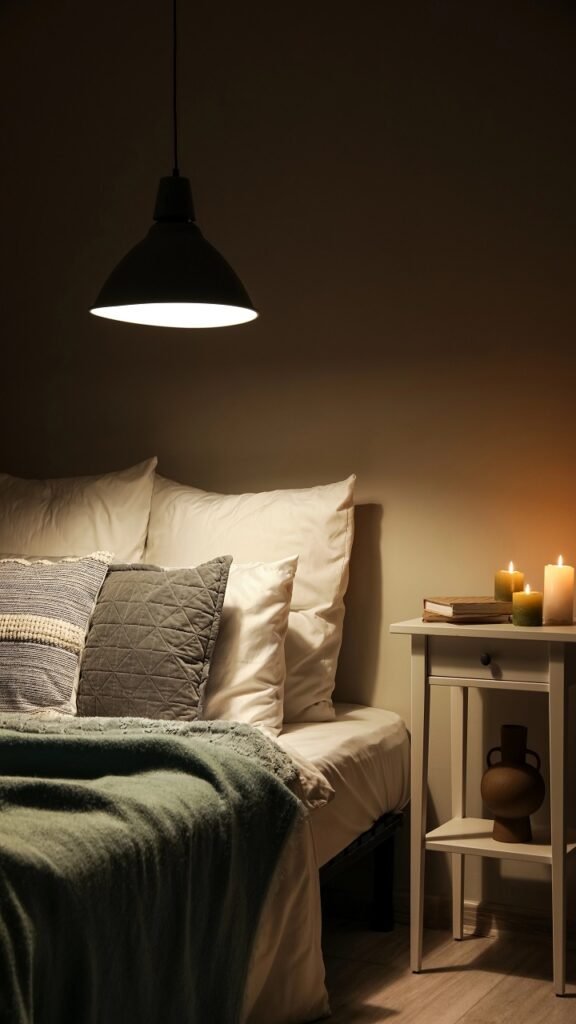
Science backs this one up! Design experts consistently note that dark rooms create a sense of intimacy and envelopment that brighter spaces simply cannot achieve.
Meredith Owen, founder of Meredith Owen Interiors, puts it directly. Darker bedrooms offer a sense of intimacy that brighter rooms don’t, and they genuinely help people sleep better.
RELATED: Creating a Corner for Decompression (Not Just a Gaming Chair)!
Your nervous system reads a dark, warm space as safe.
That’s not aesthetic preference. It’s biology. A room with deep walls and soft amber lighting tells your brain the day is done and rest is appropriate.
Bright, cool lit spaces do the opposite. So when men gravitate toward the cozy dark bedroom look, they’re actually following instinct more than trend.
The aesthetic works visually because of contrast. Dark walls are not the feature. The relationship between dark walls and warm accents is the feature.
Warm wood, amber glass, earthy textiles, and soft lighting create a layered visual warmth that reads as intentional and sophisticated.
Strip those accents away and you’re left with a very expensive paint job that feels depressing.
Choosing Your Dark Color: Charcoal, Forest Green, or Navy
Picking the wrong dark color is the first place most people go wrong with this aesthetic. All three of the main contenders — charcoal, forest green, and navy.
Work, but they work differently and suit different personalities. Here’s how to decide:
| Color | Vibe | Best paired with | Avoid |
| Charcoal grey | Masculine, timeless, versatile | Warm wood, amber light, olive textiles | Cool grey accents, white furniture |
| Forest green | Organic, grounding, nature-forward | Natural wood, warm brass, linen | Bright greens, synthetic fabrics |
| Deep navy | Bold, refined, confident | Gold or brass hardware, cream bedding | Black furniture, cool lighting |
Charcoal is the most forgiving and the most popular for good reason. It pairs with everything warm without fighting for attention.
Forest green is having a massive moment in the dark nature aesthetic bedroom space because it creates a biophilic quality that feels calming without being clinical.
Design experts consistently recommend forest green for its grounding, sleep-supportive qualities in bedroom contexts.
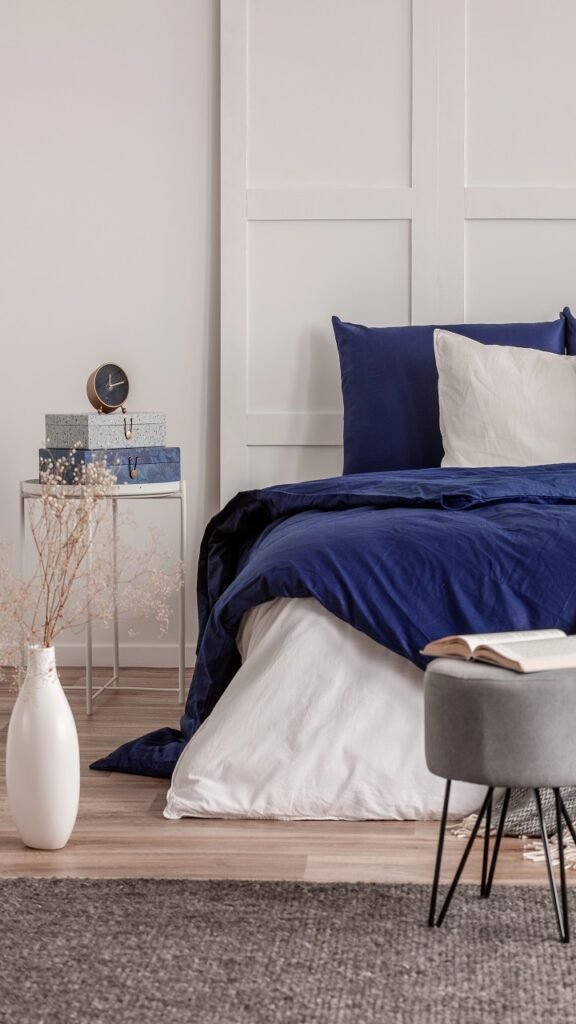
Deep navy is the choice for men who want the room to feel pulled together and intentional. It reads as more refined than charcoal and more structured than green.
One color that often gets considered but rarely works well: black. Full black walls absorb too much light and create a room that feels like it’s closing in rather than wrapping around you. Save black for accents; frames, furniture, hardware, fixtures.
RELATED: Adding a Gym Corner to Any Bedroom (Even a Tiny One)!
The Warm Accent Rule: How to Avoid the Cave Effect
This is where most dark bedroom ideas go wrong. And it’s the single most important thing to get right.
Every dark room needs a warm layer to function as a retreat rather than a void. Without warm accents, a dark room feels unfinished at best and oppressive at worst.
Here’s the four layer warm accent system that works consistently:
- Warm lighting first. A 2700K table lamp on the nightstand and a warm LED strip behind the headboard or along the ceiling edge are non-negotiable. Cool overhead lighting destroys this aesthetic entirely. Switch it off after 6pm and don’t look back.
- Natural wood second. A walnut nightstand, a dark oak floating shelf, a warm toned bed frame — any natural wood surface introduces warmth that painted walls cannot replicate. The contrast between dark walls and warm wood is the visual heartbeat of this look.
- Earthy textiles third. Charcoal linen bedding, an olive throw blanket, a jute or wool rug in dark amber or brown tones. Synthetic fabrics in bright colors kill the aesthetic on contact.
- One warm toned accent piece fourth. An amber glass lamp, a terracotta pot for the plant on the shelf, a framed photograph with a warm wood tone in it. Amber glass specifically amplifies warm light in a way that no other material does — even a single amber glass vessel on the nightstand shifts the room’s warmth noticeably.
The Four Biggest Dark Bedroom Mistakes
Getting this aesthetic wrong is frustratingly easy. These four mistakes account for almost every dark bedroom that looks great in concept and feels wrong in person:
Mistake 1
Going too dark with zero contrast. Dark walls, dark bedding, dark floor, dark furniture, zero warm accents. The result looks intentional for about 30 seconds and then feels like sensory deprivation. Every surface needs at least one warm tone breaking through.
Mistake 2
Keeping the overhead light. Overhead fluorescent or cool LED lighting in a dark room creates a harsh, clinical contrast that flattens the entire aesthetic.
Layered warm lighting from multiple lower sources — a nightstand lamp, an ambient strip, a floor lamp — is what transforms a painted room into an atmosphere.
Mistake 3
Skipping texture. Dark rooms without texture look like a painted box. Linen bedding, a jute rug, a wood grain shelf, a concrete plant pot.
These surface textures catch the light differently at different times of day and give the room visual depth that a flat painted surface never will.
Mistake 4
Mismatching furniture finishes. Chrome or brushed steel hardware and furniture legs look jarring against dark warm walls. Matte black, dark brass, and warm wood finishes integrate with the aesthetic.
The ceiling trim matters too. Dark trim in charcoal or espresso that blends with the wall creates depth, while white trim creates a contrast that works against the enveloping quality you’re building.
The Full Room Setup That Gets It Right
Here’s what a properly executed room ideas for men bedroom dark setup looks like in practice:
Walls: One dominant dark color — charcoal, forest green, or deep navy — on all four walls. No accent wall. The enveloping quality is the point.
Bedding: Charcoal or olive linen. Natural fibre, not synthetic. One texture forward throw blanket draped at the foot.
Lighting: Warm 2700K table lamp on the nightstand, warm LED ambient strip behind the headboard or along the ceiling edge, no overhead light active in the evening.
Furniture: Low platform bed in matte black or dark walnut. Dark wood floating nightstand. A floating shelf with three to five books and one plant in a concrete or matte black pot.
Textiles: Dark jute or wool rug extending past both sides of the bed. Curtains in a dark linen or velvet that reach the floor.
Accents: One amber glass lamp or vessel. Matte black hardware on everything. No chrome, no white plastic.
The result is a room that looks like someone made real decisions about it — and genuinely feels different to be inside. That’s the gap between copying the look and actually understanding what makes it work.