Your ceiling is doing the bare minimum right now. A false ceiling with LED strips changes that fast, we’re talking layered light that makes a room feel designed, not just lit.
You’ll find 13 specific setups here, from perimeter cove lighting sitting about 6 inches off the wall to floating panels with concealed COB strips. Each one solves a real problem.
Stick around to see which layout actually matches your room.
Which False Ceiling LED Style Suits Your Space?
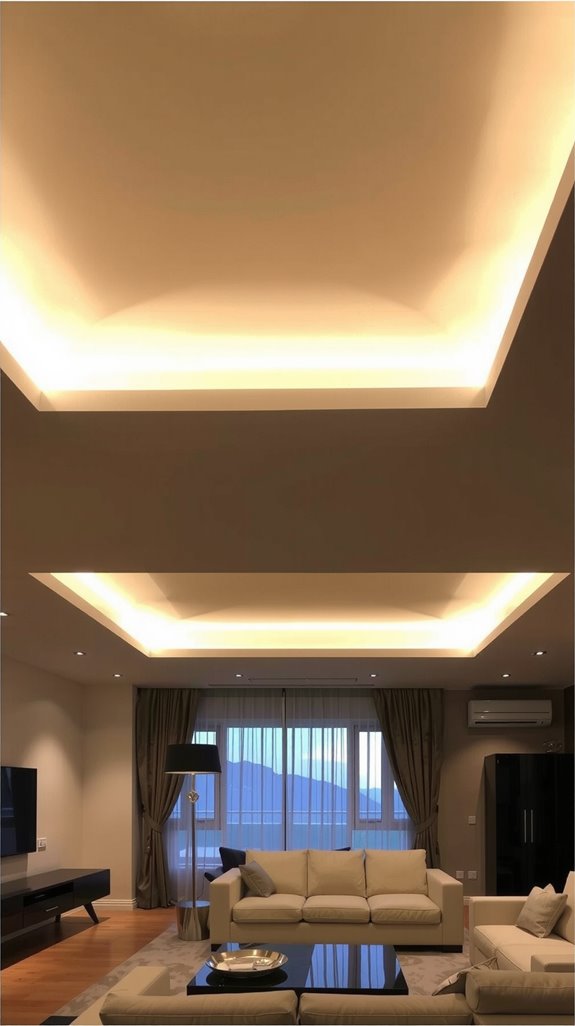
Choosing the right LED style for your false ceiling isn’t just about aesthetics; it’s about matching the light’s behavior to how you actually use the room.
Recessed lights work well in living rooms where you want clean, flush illumination without visual clutter. Cove lighting bounces off your ceiling to create that warm, hotel-lobby feel in bedrooms.
Track lighting lets you redirect heads toward artwork or a kitchen counter. COB lights handle tight accent spots.
LED panel lights deliver the most even spread, making them the go-to for false ceilings where consistent brightness actually matters. Smart ceiling lights let you customize both brightness and color through a smartphone app or voice commands, giving you full control over the mood without touching a single switch.
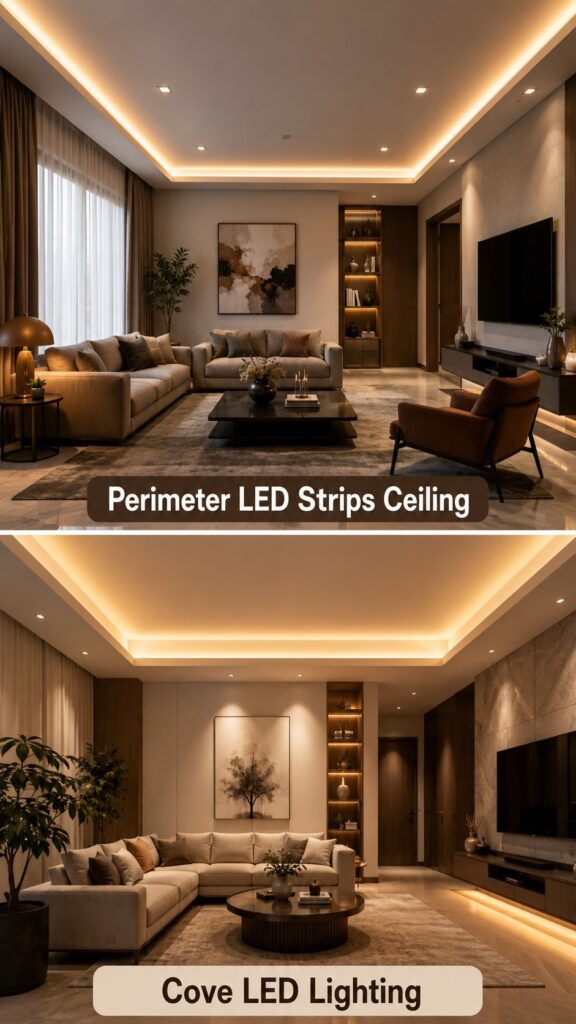
Perimeter LED Strips for a Clean, Minimal Look
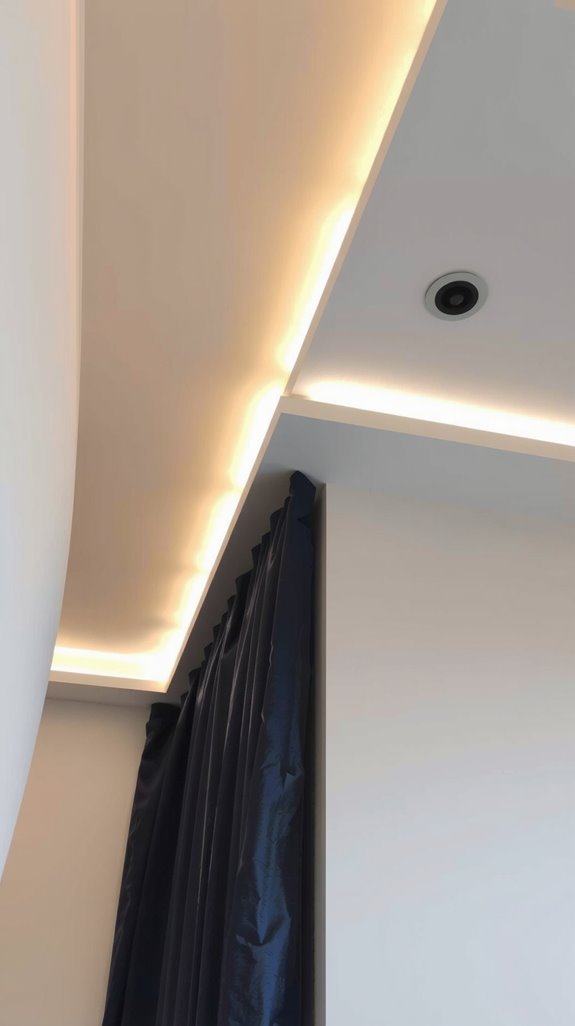
Once you’ve matched your LED type to the room’s function, placement becomes the next real decision.
Perimeter strips run along the outer edges of a false ceiling, casting light down the walls while leaving the center darker. That contrast makes the room feel bigger without adding square footage.
The hidden strip placement keeps things clean, with no visible hardware cluttering the ceiling line. A 3.5″ x 3.5″ profile mounts flush to drywall or ACT ceilings.
With up to 1,600 lumens per foot and color temps from 2700K to 4000K, you’ve got real flexibility without overcomplicating anything. LED strips are energy-efficient compared to traditional lighting, making perimeter installations a practical long-term choice for any room.
SEE THIS: 11 False Ceiling Designs With Hidden Lighting for a Luxury Look!
Cove LED Lighting That Makes Any Room Feel Softer
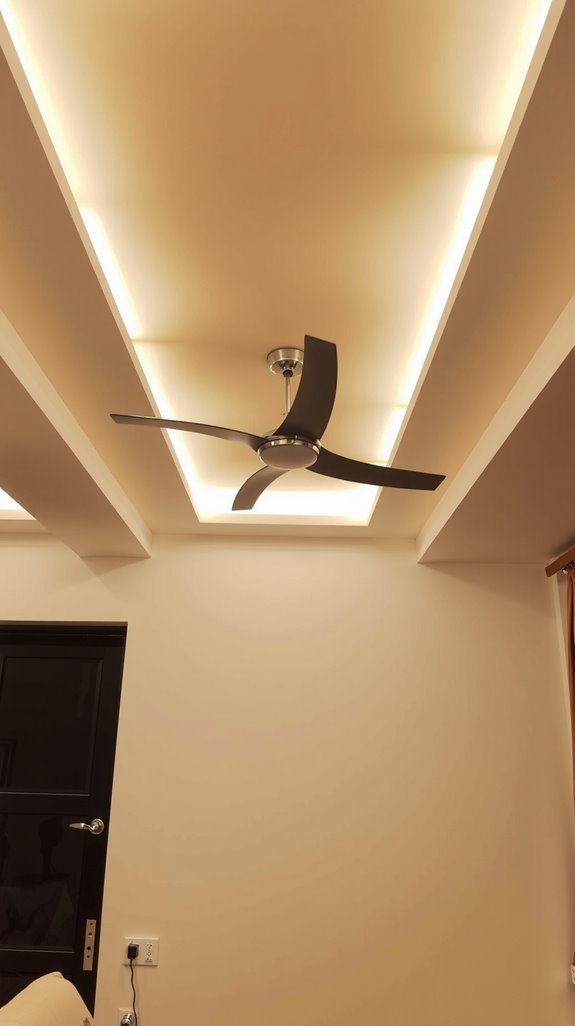
Cove lighting hides the source entirely, bouncing light off the ceiling instead of pointing it at your face. You mount LED strips inside a recessed ledge, typically 18 inches from the ceiling, and the glow spreads outward like it came from nowhere.
No glare, no hot spots, no visible bulbs staring back at you.
For softness, stick with 2700, 3000K strips running 6, 8W per meter on a 24V COB setup.
Add a dimmer and run it at 70, 80% daily. That combination gives you roughly 150 lux of calm, even ambient light without turning your living room into an interrogation room. When selecting strips, prioritize those rated at 100 lm/w or higher to keep energy consumption low without sacrificing output.
SEE THIS: 11 False Ceiling Designs for Girls Bedroom (Soft, Stylish & Pinterest-Worthy)!
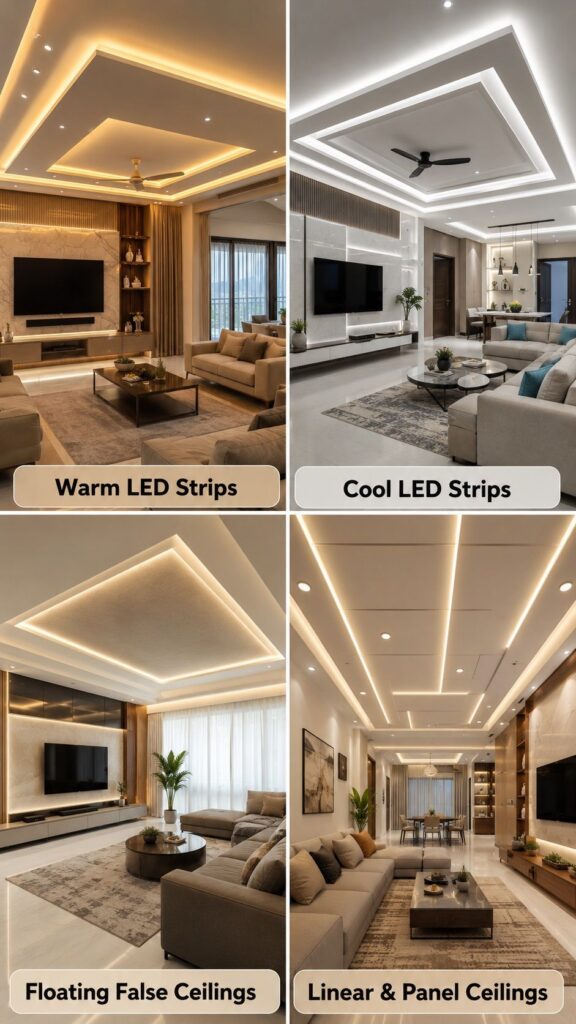
Warm vs. Cool LED Strips: Which Tone Fits Your Space?
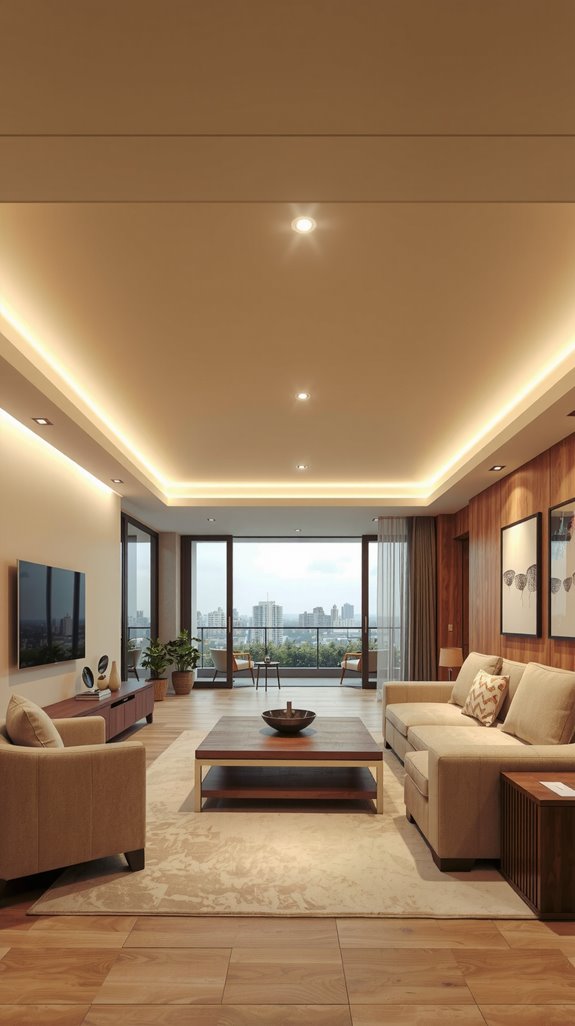
Color temperature is the single setting most people get wrong, and it’s measured in Kelvin (K), basically a number that tells you how yellow or blue your light looks.
Lower numbers like 2700K run warm and yellow, while 4000K and above push cooler and bluer.
Bedrooms and living rooms work best around 2700K, 3000K, which feels relaxed without looking like a dentist’s office.
Offices and kitchens handle 4000K, 5000K better since you’re actually trying to see things clearly.
If you want flexibility, tunable LED strips let you dial between 2700K and 6500K depending on mood or task. The full colour temperature scale runs from 1000K at the red end all the way up to 10,000K at the blue end.
SEE THIS: Latest False Ceiling Designs for Bedroom (Cozy + Modern Styles)!
Floating False Ceilings With Concealed LED Edges
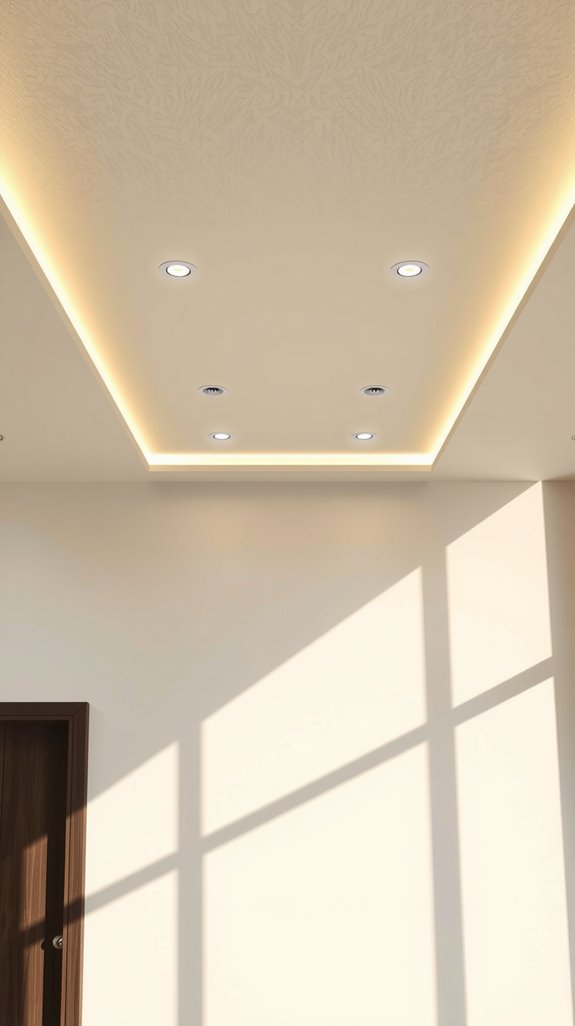
Floating false ceilings work by dropping a secondary panel below your main ceiling and leaving a deliberate gap between the two levels, usually 2 to 4 inches wide, where LED strips hide inside aluminum channels and push light outward.
The aluminum profile, Z model or T model depending on your setup, keeps strips completely invisible while managing heat so your LEDs don’t burn out prematurely.
You mount the channel using screws or clips, tuck your wiring inside the gap, then finish surrounding drywall with paint.
The result is soft ambient light washing upward with zero visible source which looks expensive and actually isn’t. These aluminum profiles are made from high-quality black aluminum that ensures long-term durability and efficient heat dissipation throughout the installation.
SEE THIS: 10 False Ceiling Designs for Puja Room (Calm + Spiritual Vibes)!
Linear LED Strip Ceilings for a Sleek, Symmetrical Look
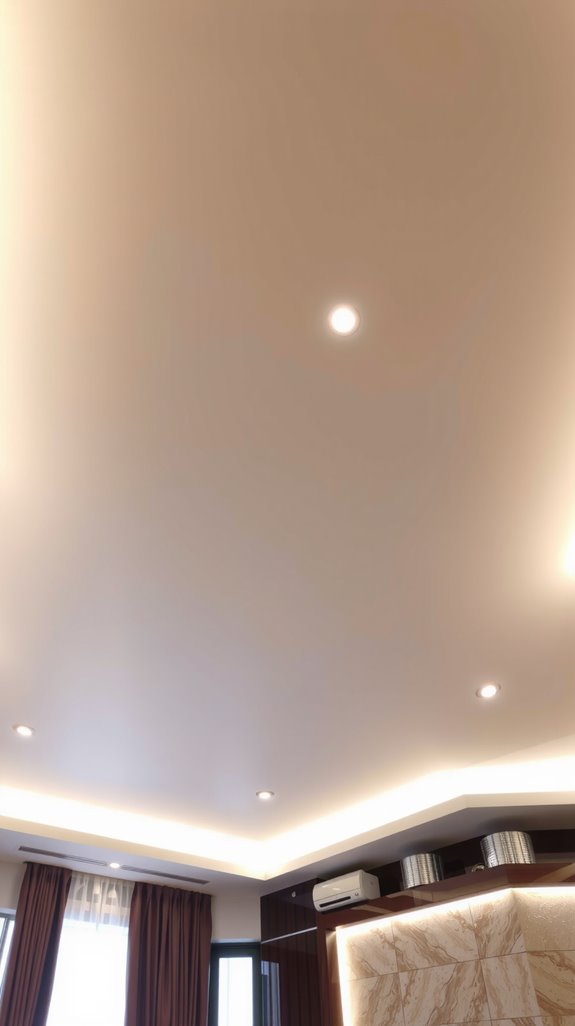
When you want a ceiling that looks intentional rather than accidental, linear LED strips mounted to a T-bar grid are your best option. They fit 9/16″ or 15/16″ Armstrong grid systems without modifications, using screw slots for clean installation.
The strips align precisely with your room’s dimensions, so repeating geometric patterns actually line up instead of almost lining up. Continuous light distribution eliminates shadow gaps across the entire ceiling surface.
You can run multiple strips at varying heights for layered depth, and dimmable functionality lets you adjust brightness throughout the day without touching the symmetry you worked hard to create.
SEE THIS: 10 False Ceiling Designs for Puja Room (Calm + Spiritual Vibes)!
LED Panel Ceilings for Halls With Low Natural Light
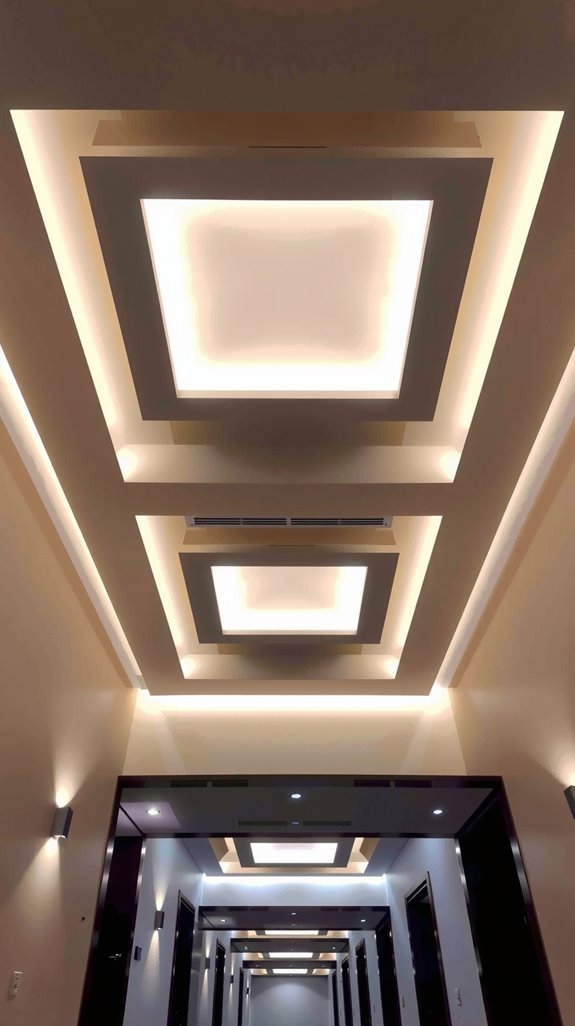
Halls with low natural light don’t forgive bad lighting choices, and LED panel lights are the straightforward fix.
These slim, flat fixtures flush-mount into suspended grid ceilings or drywall, keeping things clean without shadows or hot spots. A 2×4 FT panel pushes out 6,600 lumens, while a 2×2 FT delivers 4,400, enough to make any dim hall feel functional.
You’ll cut energy use by 50-70% compared to fluorescent tubes. Pair them with smart controls to adjust brightness and color temperature as needed.
Low ceilings stay low, but at least now you can actually see what’s in them.
Starry Night False Ceilings With LED and Fiber Optics
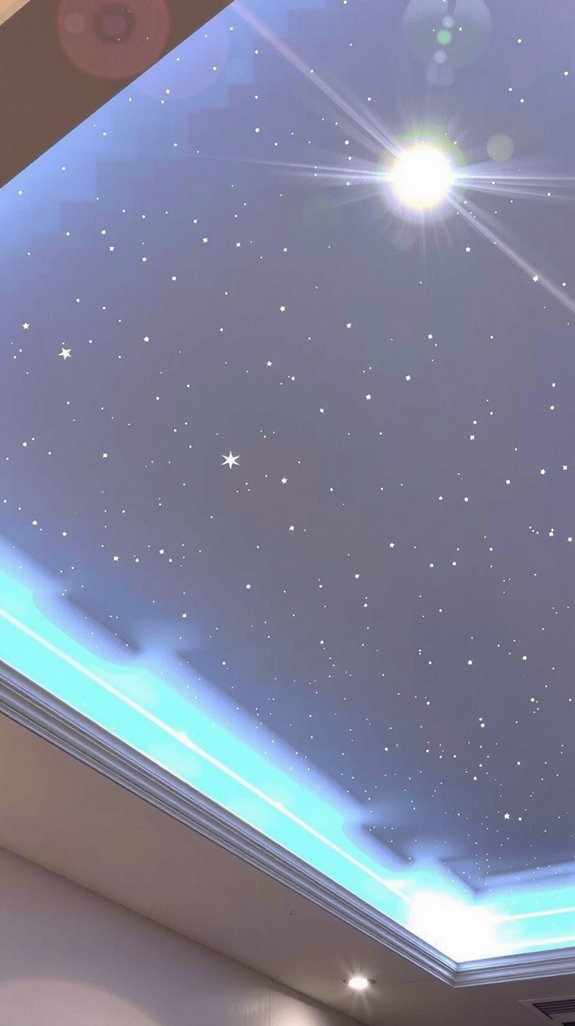
A starry night ceiling turns a plain room into something that looks like you drilled holes in the sky. You actually did.
A 10×10 room needs 150 to 600 fiber optic strands threaded through 1mm holes in your drywall or MDF panels. Each strand connects back to a light engine, which you can find in Amazon kits like 400-strand bundles.
You can program twinkling, shooting stars, or RGB color shifts.
Paint the walls black, add glow-in-the-dark paint for nebula clouds, and the whole ceiling stops being a ceiling; it’s just sky at that point.
How to Layer Cove and Recessed Lighting for Depth
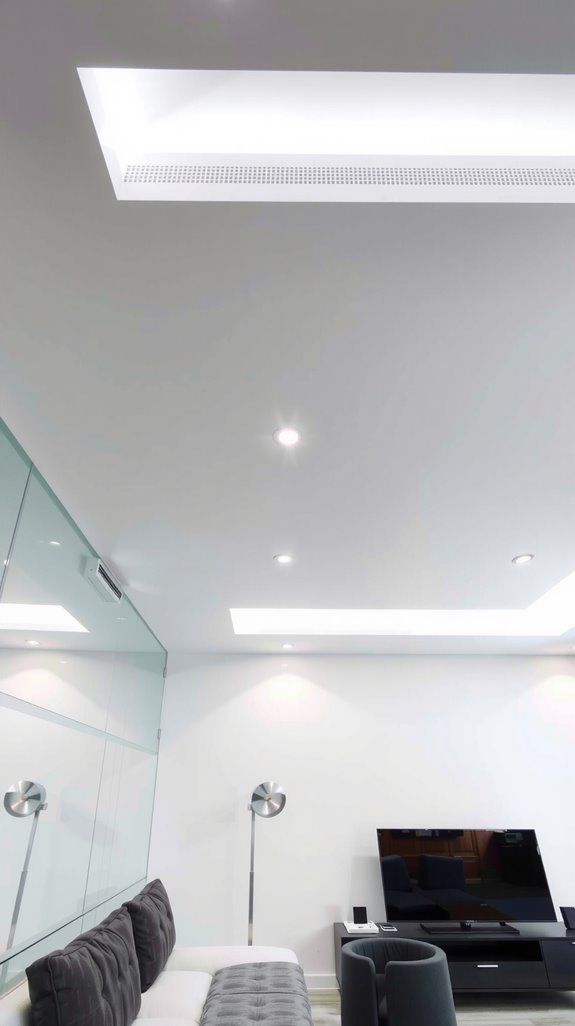
Layering cove and recessed lighting isn’t complicated once you understand the three-layer system: ambient, task, and accent.
Start with recessed cans as your ambient base; they cover the whole room evenly and keep things functional before you add anything decorative.
Next, install LED tape strips inside a ceiling ledge or high-wall recess for your cove layer. This pushes indirect light upward, reflecting off the ceiling and cutting harsh shadows. Light-colored ceilings amplify this effect noticeably.
Island False Ceilings: Combining LED Strips With Pendant Lights
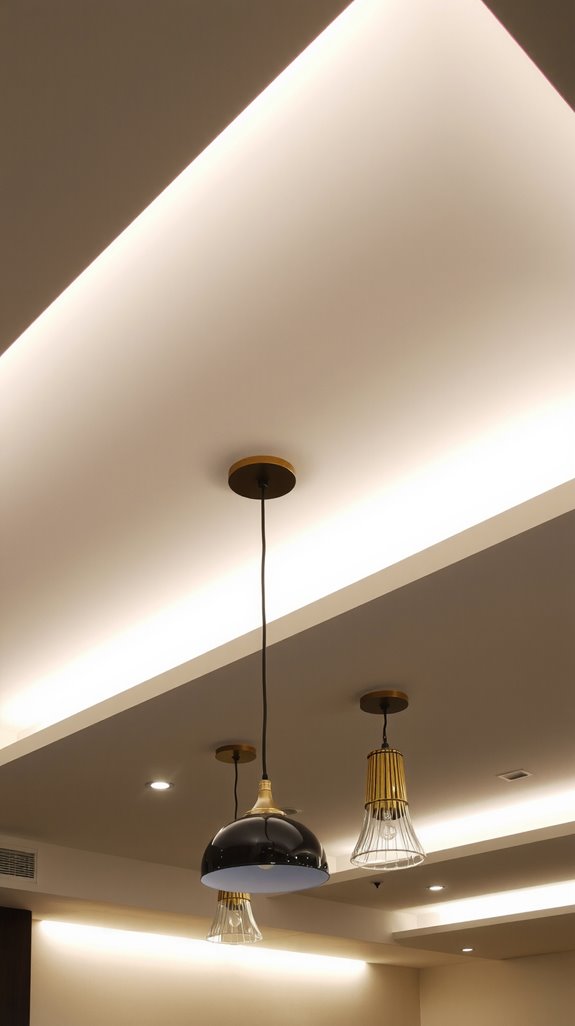
The same layered thinking applies when you’re working over a kitchen island, but now you’re mixing two distinct fixtures in one tight zone.
Run COB LED strips, dot-free, continuous light, along the tray edges of your false ceiling perimeter. Then hang pendants 30 to 36 inches above the island surface, sized to one-third the island’s length.
The LEDs cast a broad, soft wash at 2700K to 3000K while focused pendant beams hit the countertop directly. Wire both through separate smart controls so you can dim each independently.
Two light sources, one zone, zero guesswork.
Why COB LED Strips Work Better in False Ceiling Channels
When you mount an LED strip inside a false ceiling channel, the last thing you want is a dotted line of glowing points staring back at you.
COB strips pack 320 to 528 LEDs per meter under a phosphor coating that blends everything into one continuous line. Compare that to standard SMD strips, which top out at 240 LEDs per meter and show every dot.
COB also throws light at 180 degrees versus SMDs 140, so cove channels fill evenly. You get 20% brighter output, 50,000-plus hours of life, and no polka-dot ceiling to explain to guests.
Smart LED Strip Lighting for False Ceilings You Can Control Remotely
Once your cove channels are in place, the next question is how you’ll actually control them without walking over to a wall switch like it’s 1987.
Smart LED strips solve this with Bluetooth, WiFi, or Zigbee built in. The Enbrighten Vibe 10 includes both a remote and app control straight out of the box.
Bluetooth lets your phone run everything without a hub. WiFi adds scheduling and voice control. Zigbee groups multiple strips so your whole false ceiling syncs together.
The LAIMI series covers all four wireless protocols and reaches up to 150 meters. Thats more range than your apartment needs.
Why Aluminum Channels Make LED Strips Look Cleaner
Bare LED strips look exactly like what they are, a circuit board with a row of tiny light bulbs glued to it. That’s fine inside a cabinet. It’s not fine on your false ceiling.
Aluminum channels fix this. You slide your LED strip inside, snap on a frosted diffuser cover, and suddenly it looks like an actual lighting fixture.
The diffuser eliminates the dot pattern, those individual bright spots that make cheap installations look cheap. Heat also transfers into the aluminum body which keeps your LEDs running cooler and extends their lifespan by up to 50%.