About 68% of homeowners who renovate their ceilings report that hidden lighting alone transformed how large their rooms felt.
That’s a serious return on a relatively small design decision. False ceilings, basically a second ceiling hung below the original, do two jobs at once, they conceal wiring and create depth.
You’ll find 11 specific designs ahead, including exact material choices and LED types that actually work together.
Coffered False Ceilings With Perimeter Concealed Lighting
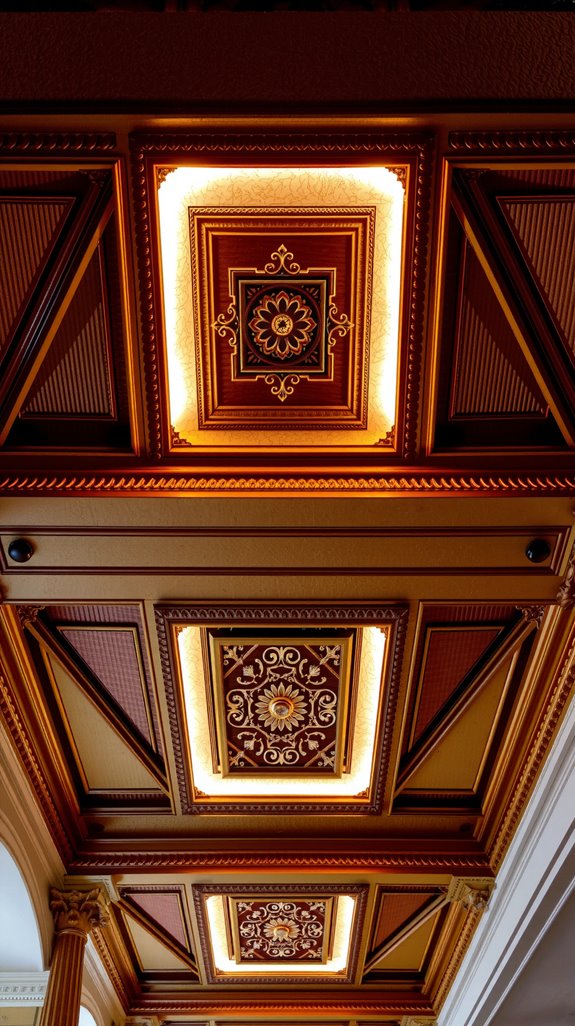
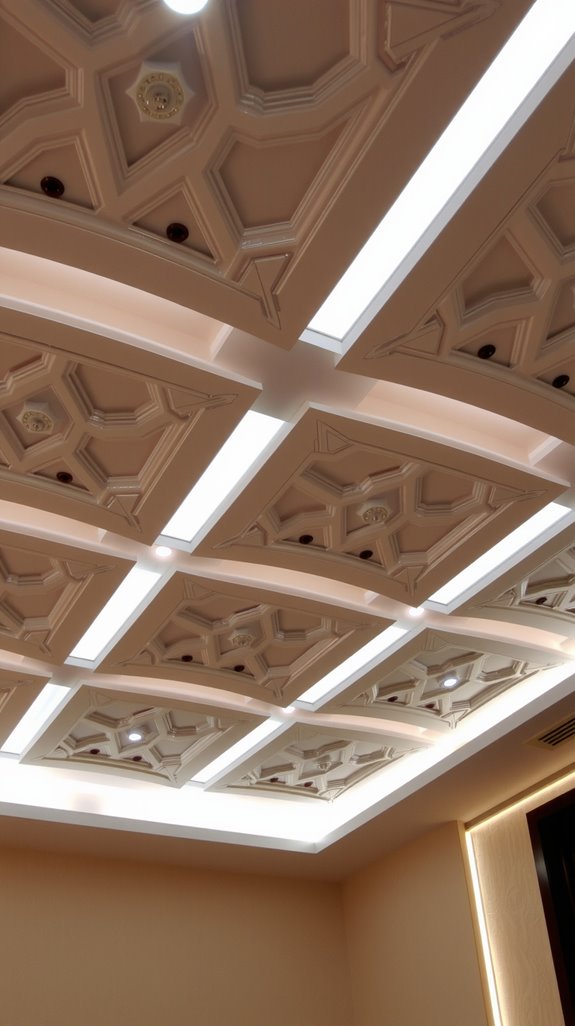
Coffered ceilings carve a grid of recessed panels, squares, rectangles, or octagons, directly into your ceiling plane, giving the room a three-dimensional rhythm that flat ceilings simply can’t fake.
Keep the coffer depth between 60–90 mm in smaller rooms so the geometry reads clearly without eating your headroom. You’ll want at least 9–10 feet of ceiling height for the proportions to actually work.
Run cove LEDs along each grid edge at 2700–3000K for evening warmth or bump to 3500–4000K near windows. The perimeter glow floats each panel visually, turning an ordinary ceiling into something that looks genuinely expensive. The recessed ledges also hide cable runs and junction boxes, keeping the finished surface clean and uncluttered.
Multi-Layered Tray Ceilings With Cove Illumination
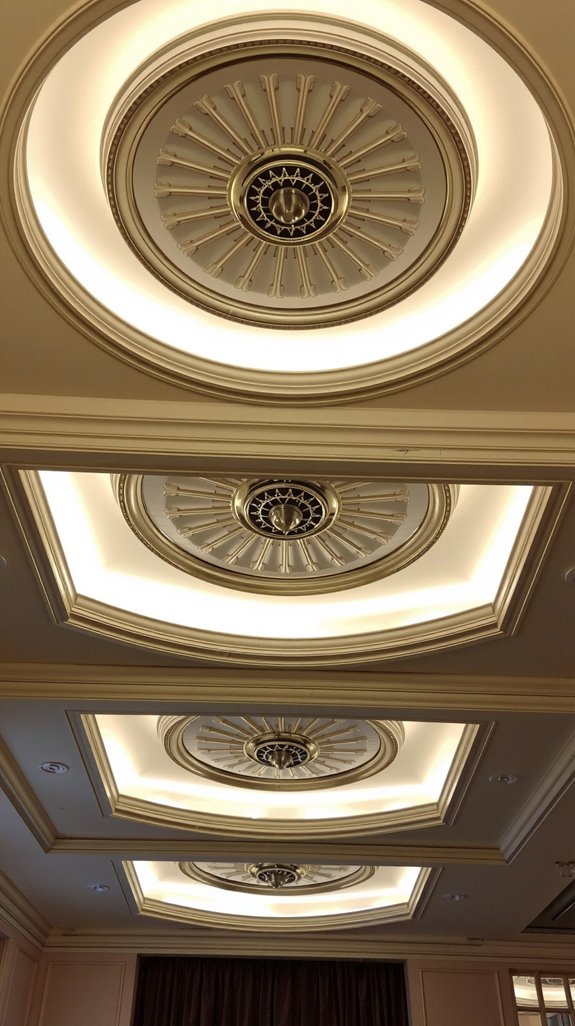
Where coffered ceilings carve geometry into a single plane, tray ceilings stack it. Each recessed tier drops 4, 6 inches, creating stepped layers that pull your eye upward.
Hide LED strip lights, 2700K to 3000K warm white, inside those recessed edges, and you get soft, indirect glow with zero harsh shadows. Gypsum board handles the clean edges well, POP works better if you want custom moulding profiles.
You’ll need at least 9, 10 feet of slab height before attempting multiple tiers; otherwise, the room just feels compressed. Add dimmable controls, and one ceiling handles movie night and Sunday morning equally well.
A classic tray ceiling with step moulding profiles in a 24 x 16 feet configuration is a proven layout for achieving that architectural depth without overwhelming the space.
SEE THIS: Latest False Ceiling Designs for Bedroom (Cozy + Modern Styles)!
Backlit False Ceiling Panels for Windowless Home Spaces
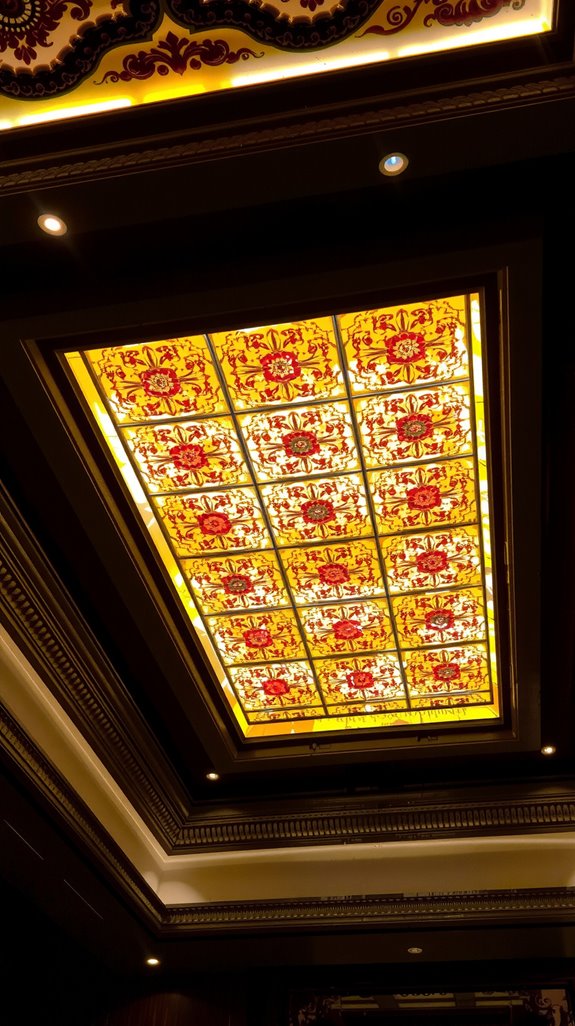
Windowless rooms don’t have to feel like storage closets. Backlit false ceiling panels fix that by flooding the entire ceiling with soft, even light that actually mimics daylight.
You’re not faking a window, you’re replacing it entirely. Stretch membranes, typically PVC tensioned over aluminum track, diffuse LED strips into a seamless glow with zero hotspots.
Set your color temperature to 5000K for daytime alertness, then dial back to 2700K at night. High-CRI LEDs (90 or above) keep wall colors and skin tones looking accurate, not washed out.
Your basement can stop apologizing for itself. Matte ceiling finishes work best here, since matte surfaces provide softer, more evenly distributed light compared to glossy alternatives that can create unwanted reflections.
SEE THIS: 11 False Ceiling Designs for Girls Bedroom (Soft, Stylish & Pinterest-Worthy)!
Geometric LED Channel Ceilings for a Bold Focal Point
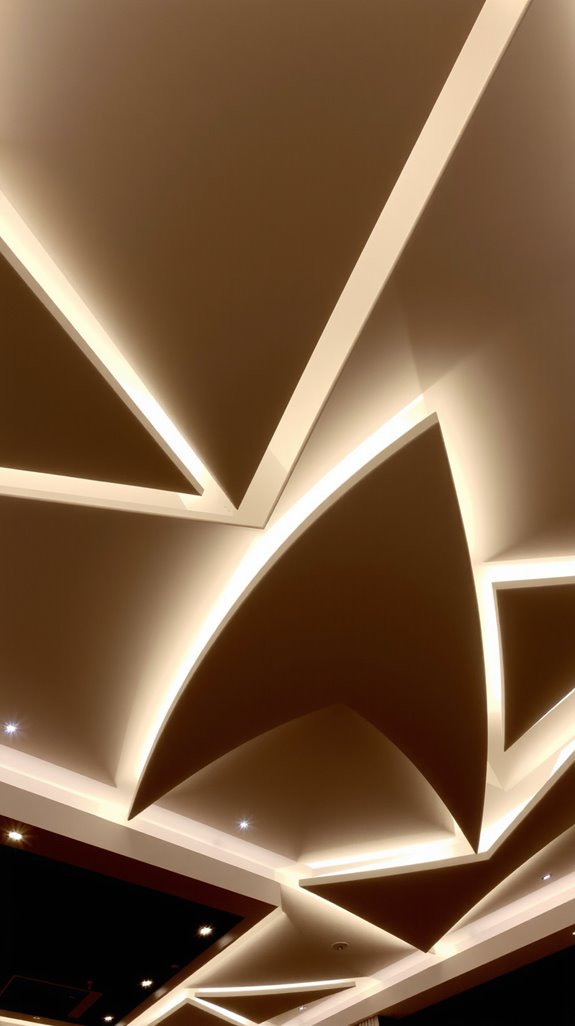
Geometric LED channel ceilings turn your flat gypsum ceiling into something that looks like an architect had strong opinions.
Aluminum profiles, basically slim metal housings, get recessed directly into the ceiling so only a clean line of light shows. You can run them in parallel strips, intersecting rectangles, or asymmetrical triangles depending on how bold you want to go.
Warm white at 2700K feels luxurious, cool white at 5000K feels sharp. You’ll need roughly 40–80mm of ceiling drop to fit everything properly.
Laser-leveling during installation keeps corners tight and lines straight, because crooked geometric patterns defeat the entire point. A minimum ceiling height of 9 feet is recommended to ensure there’s enough clearance to accommodate the aluminum profiles and lighting components without compromising the room’s proportions.
SEE THIS: 10 Latest False Ceiling Designs for Hall with 2 Fans (Balanced Layout Ideas That Actually Work!
Floating Island False Ceilings With Suspended Edge Lighting
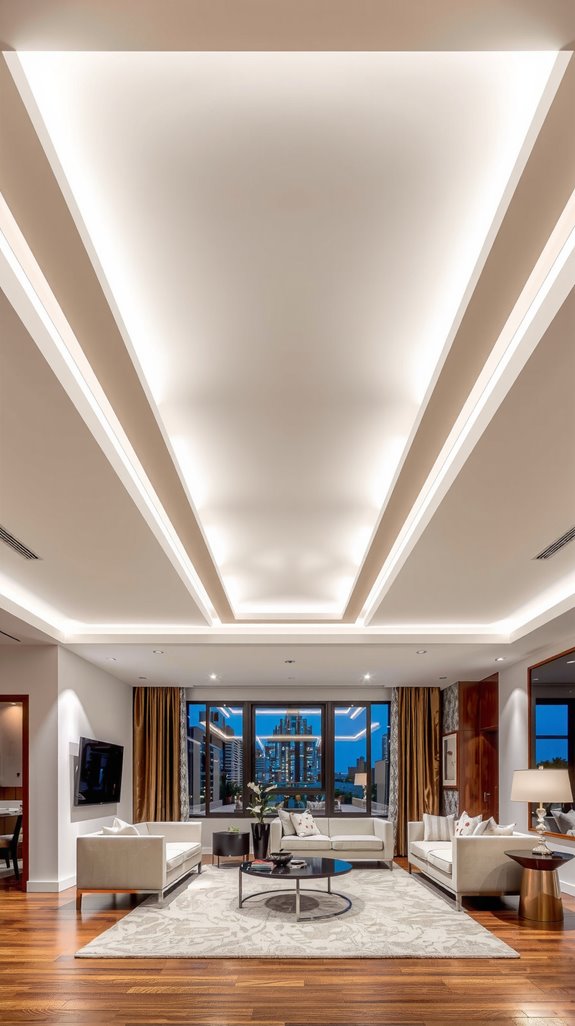
A floating island false ceiling is basically a gypsum panel that hangs in the middle of your room, completely detached from every wall.
That gap around its perimeter hides LED strips or T5 tubes, which throw light upward onto your main ceiling. The result looks like the panel is levitating, which sounds dramatic but actually works surprisingly well.
You’ll need at least 2.6 meters of ceiling height to pull this off without feeling like you’re living inside a shoebox.
Add recessed downlights inside the panel itself, put everything on separate dimmers, and you’ve got full control over the whole atmosphere. For even more versatility, the soft glow of the cove lighting can be paired with magnetic tracklights to spotlight artwork or architectural details around the room.
MORE IDEAS: 28 Latest False Ceiling Designs That Make Every Room Look Custom-Built (Living Room, Bedroom, Kitchen & More).
Curved False Ceilings With Integrated Track Lighting
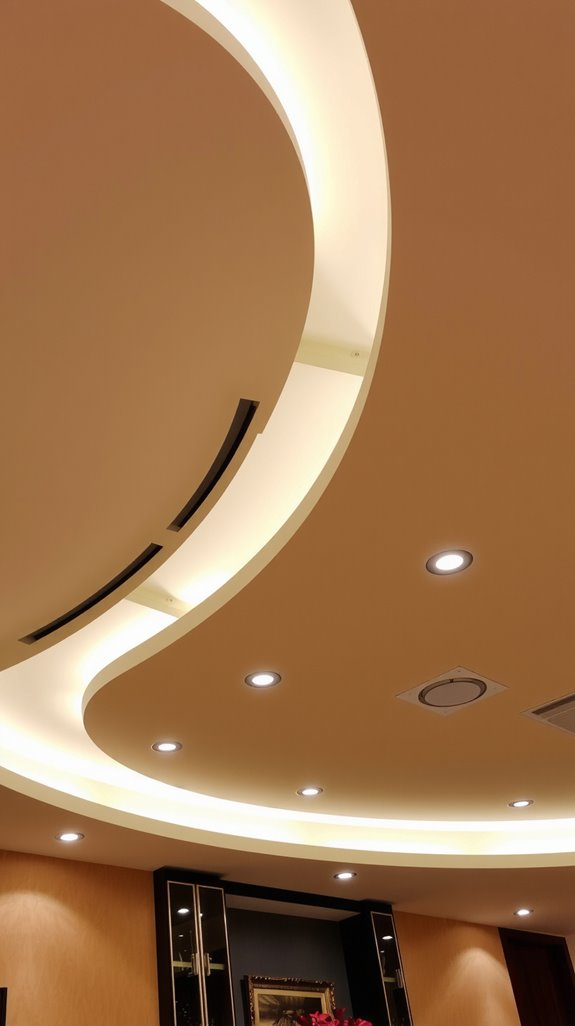
Floating island panels are great for creating that levitating effect, but they’re locked into a flat, rectangular shape.
Curved false ceilings break that rigidity. You can bend gypsum board into arcs, S-shapes, or full circles, then run a 48V magnetic track rail along the curve. The track snaps in flush with the ceiling surface, so it disappears.
Magnetic spotlights clip on without tools and aim precisely, eliminating dark patches along the curve. Over a 16×18 ft room, a single curved track with recessed linear diffusers handles ambient and accent lighting together, turning your ceiling into an actual design feature.
SEE THIS: 13 LED Strip False Ceiling Designs That Create Ambient Lighting Layers!
Which False Ceiling Design Works Best for Small Rooms?
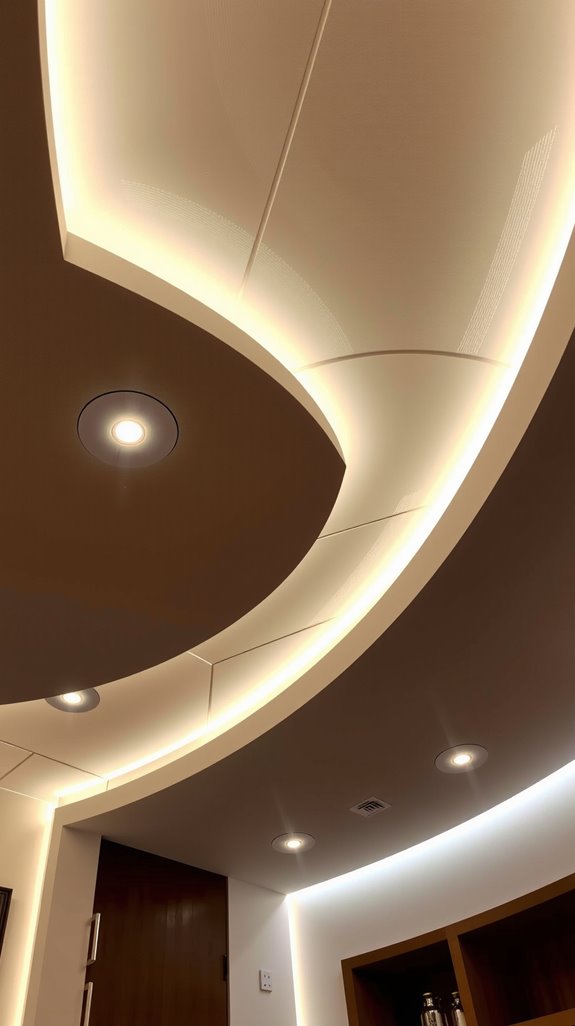
Small rooms don’t need less design, they need smarter design. A slim false ceiling border, just 4.6 inches wide, with hidden LED strips does more for a tight space than any chandelier ever will.
Keep the drop under 4 inches so you’re not trading headroom for style. Use warm white LEDs at 3000K along the perimeter and finish the ceiling in matte white or soft cream, both bounce light upward effectively.
That combination makes walls feel taller without adding a single inch. Simple, clean, and honestly kind of genius for what it costs.
SEE THIS: 10 False Ceiling Designs for Puja Room (Calm + Spiritual Vibes)!
POP, Gypsum, or Wood: Which False Ceiling Material Lasts Longest?
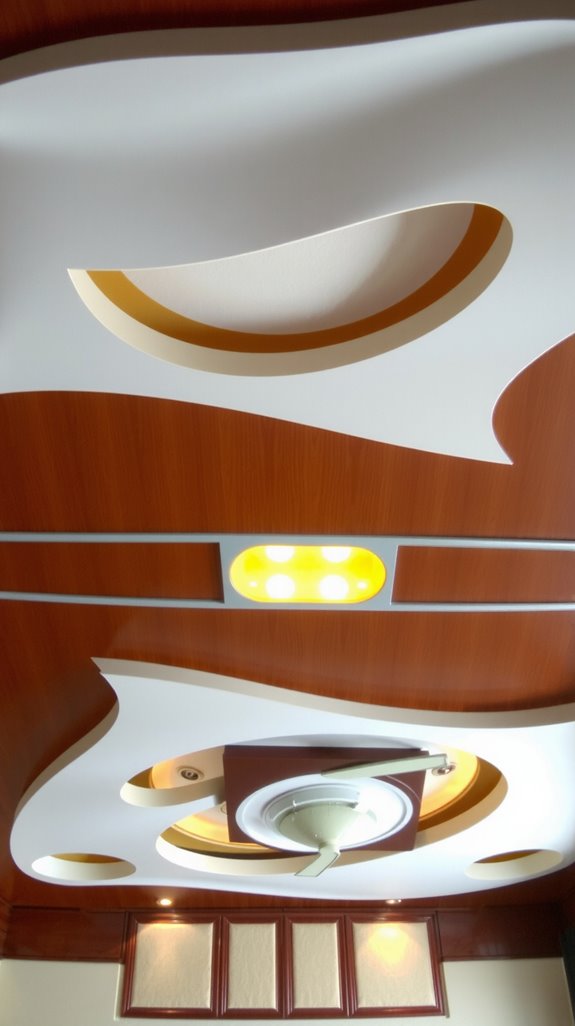
When you’re picking a false ceiling material, durability isn’t just about how long it physically holds up, it’s about how long it looks good without draining your time and money.
POP cracks under humidity and patches never quite match.
Gypsum boards come factory-cut with uniform thickness, resist thermal movement, and only need repainting. Moisture-resistant green boards even survive kitchens.
Wood looks stunning but demands termite treatments, humidity control, and regular polishing; skip those, and it warps fast.
SEE THIS: 10 False Ceiling Designs for Puja Room (Calm + Spiritual Vibes)!
Which False Ceiling Materials Offer the Best Value and Longevity?
Gypsum’s staying power in Indian homes is well-established, but it’s not the only material worth your attention.
Calcium silicate handles coastal humidity better than gypsum and adds fire resistance, making it worth the slight price premium.
Baffle ceilings start at $4 per square foot, but aluminum strips last decades and let you swap individual pieces without touching the whole grid.
Fibre panels win on acoustics and easy replacement, though keep them dry. Match the material to the room, not just the budget.
Which LED Type Suits Your False Ceiling Best?
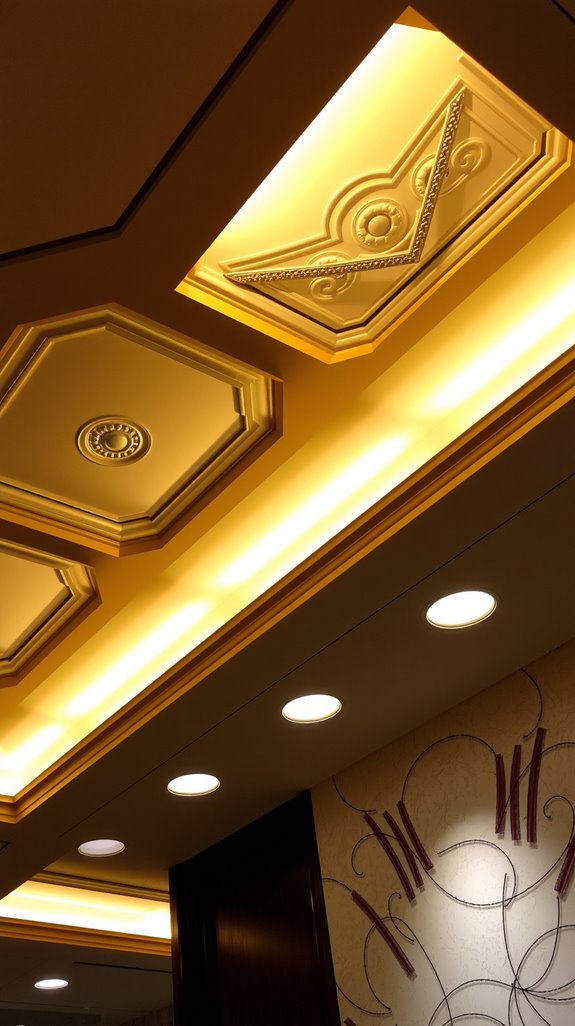
Choosing the wrong LED type for your false ceiling is an easy mistake, and it shows immediately.
Standard SMD strips leave visible dots on glossy ceilings, not ideal when you’ve spent serious money on finishes. COB strips, meaning chip-on-board, produce one continuous glowing line instead.
For focused accent work on artwork or textured walls, COB downlights with 15 to 36-degree beam angles give you clean, precise light without messy spill.
Need even ambient coverage? Edge-lit LED panels with a CRI above 90 render colors accurately.
Stick to 2700K to 3000K throughout or mismatched temperatures will quietly undo everything.
Installation Mistakes That Ruin False Ceiling Lighting Effects
Even a well-chosen COB strip fails if the cove hiding it’s poorly built. Keep your cove at least 3 inches deep and set the strip back far enough from the lip so nobody sees it from standing height.
Position it too close to the back wall and you’ll shadow the ceiling instead of washing it. Too close to the front and the light hits a narrow band.
Beyond geometry, long runs need power injection every 5 meters to prevent the far end from dimming. Skip that step and your “seamless glow” becomes a gradient nobody asked for.