Around 68% of homeowners renovating their bedrooms now include a false ceiling, a dropped secondary ceiling installed below the original slab, in their plans.
It’s not just about looks. A well-designed false ceiling hides wiring, improves acoustics, and can make a standard 10-foot room feel intentionally designed rather than accidentally finished.
But not every style works in every space and picking the wrong one costs both money and ceiling height. Here’s how to choose correctly.
False Ceiling Designs That Actually Work in Bedrooms
A false ceiling, a secondary ceiling installed below the structural one, isn’t just decorative filler; it solves real problems like hiding wiring, improving acoustics, and anchoring your room’s lighting scheme.
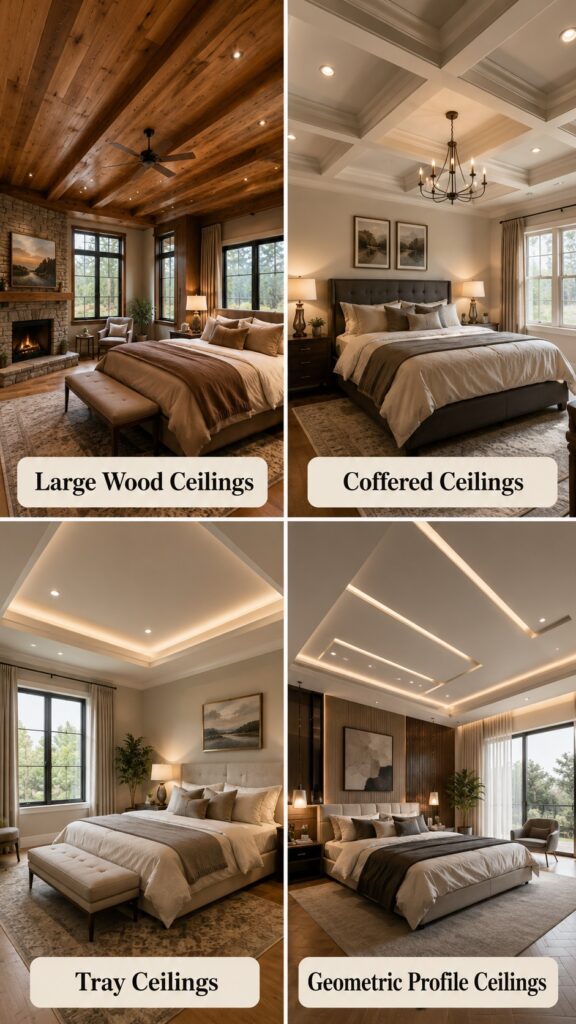
Five designs genuinely earn their place in bedrooms. Coffered ceilings use a grid of recessed panels, working best above 10 feet.
Tray ceilings add dimension with a shallow central recess, costing roughly $1.5 per square foot. Hybrid wood-and-gypsum ceilings layer slim wooden slats over matte gypsum panels.
Geometric profile ceilings embed LED aluminum channels flush into cut-out patterns. Each one does something specific, pick based on your ceiling height and budget.
SEE THIS: 12 False Ceiling Designs for Small Bedrooms That Feel Bigger Instantly!
Peripheral False Ceiling Designs for Small Bedrooms
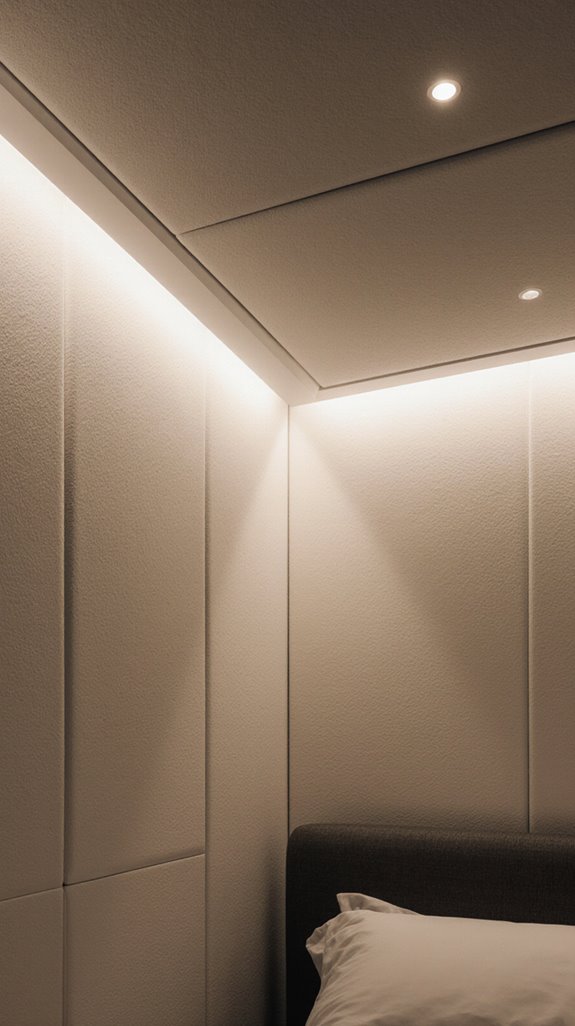
If your bedroom ceiling sits at 7 feet or lower, a full false ceiling will make it feel like a well-decorated cave.
Run a gypsum board or POP border only along the room’s edges, leaving the center completely open. That’s a peripheral false ceiling, and it does two things well: it hides AC ducts and wiring along the perimeter, and it tricks your eye into reading the room as wider.
Tuck LED strip lights inside the border for soft cove lighting. You get ambiance, clean lines, and your full ceiling height, all without sacrificing an inch of headroom.
Geometric pop ceiling designs can take this concept further by adding structured shapes that create an even greater sense of openness in tight spaces.
SEE THIS: 14 Kids Bedroom False Ceiling Designs That Feel Fun but Not Overwhelming!
Floating Island Ceilings for a Dramatic Bedroom Focal Point

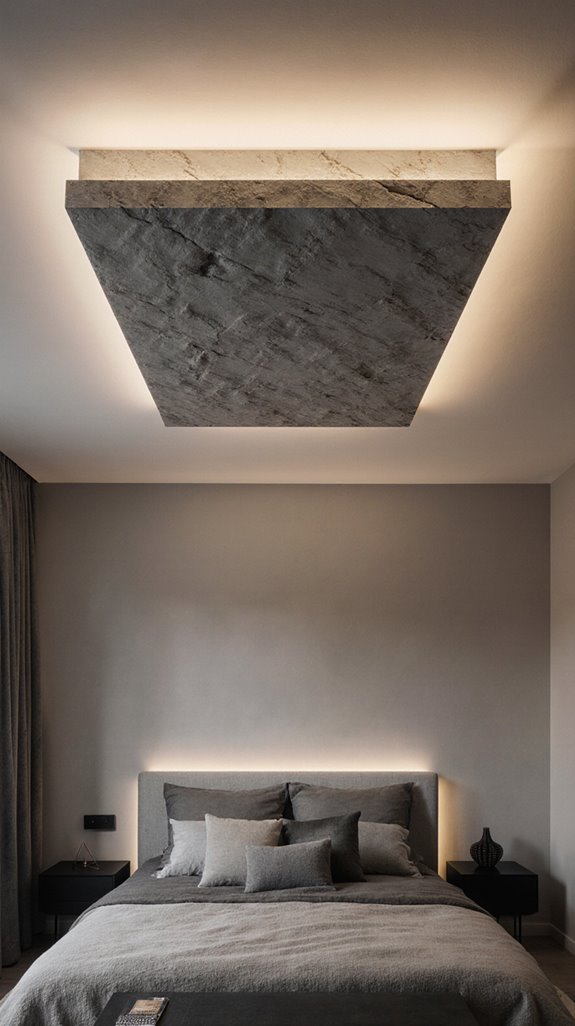
Peripheral false ceilings hug the edges and stay out of the way, but a floating island ceiling does the opposite; it makes itself the whole point.
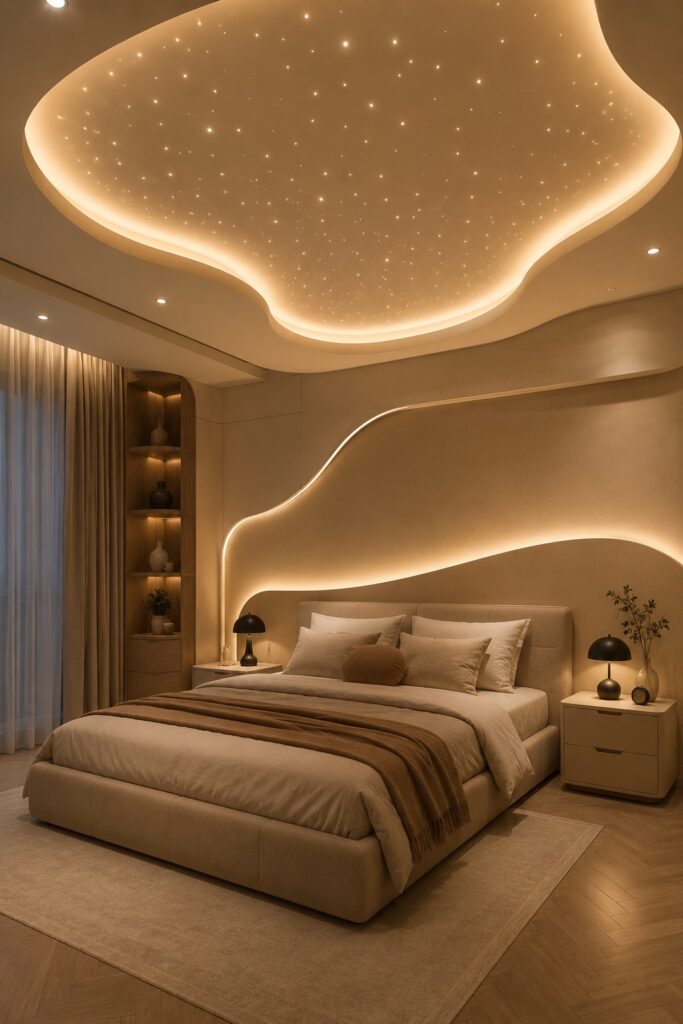
It’s a gypsum or POP panel suspended 4.8 inches below your main ceiling, centered above the bed. That gap isn’t decorative laziness; it hides LED strips or T5 tubes that bounce light off the ceiling above.
No visible fixtures, no glare. Just a soft glow that makes the room feel intentional. Ceiling height must be considered during planning to ensure the suspended panel doesn’t make the space feel cramped.
Size it at 60-80% of your bed width, use 2700K-3000K warm LEDs, and add dimmable drivers for full control.
SEE THIS: 10 Latest False Ceiling Designs for Hall with 2 Fans (Balanced Layout Ideas That Actually Work!
Tray False Ceiling Designs That Balance Style and Function
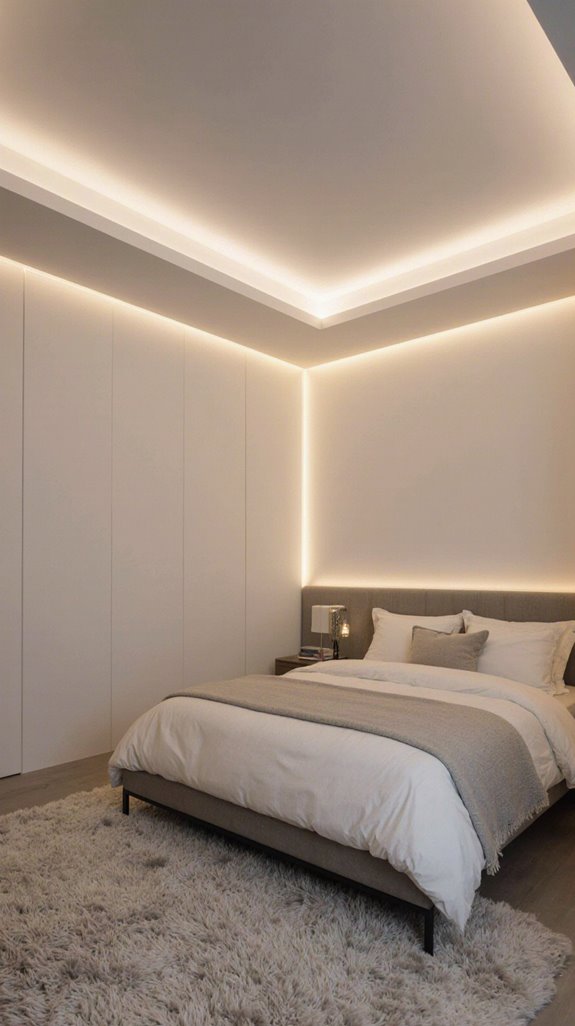
Tray ceilings work because they do two things at once. They give your bedroom a finished, architectural look while quietly hiding everything you don’t want to see, like HVAC ducts, wiring, and plumbing.
The recessed center keeps your original slab height, so the room doesn’t feel squeezed. You can go single-level for a subtle perimeter drop or stack multiple concentric steps for drama.
Add cove lighting in the stepped edges for soft ambient glow, or center a chandelier to anchor the whole design.
POP and gypsum board are your two main material choices, each delivering clean smooth results. For a warmer feel, combining gypsum board with wooden rafters above the bed can create a cozy, cabin-like ambiance that ties the whole room together.
Coffered and Geometric False Ceilings for Bold Bedrooms
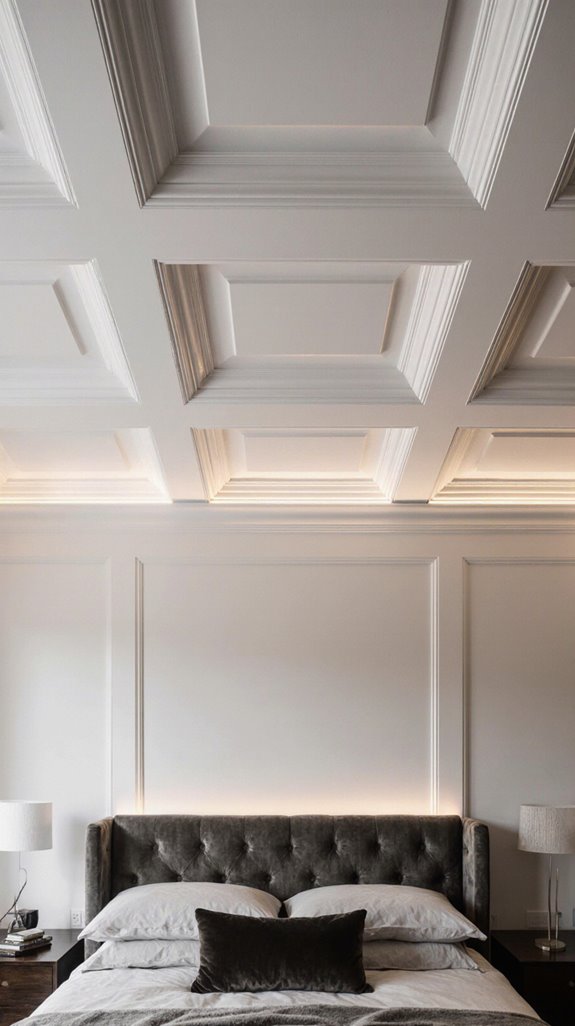
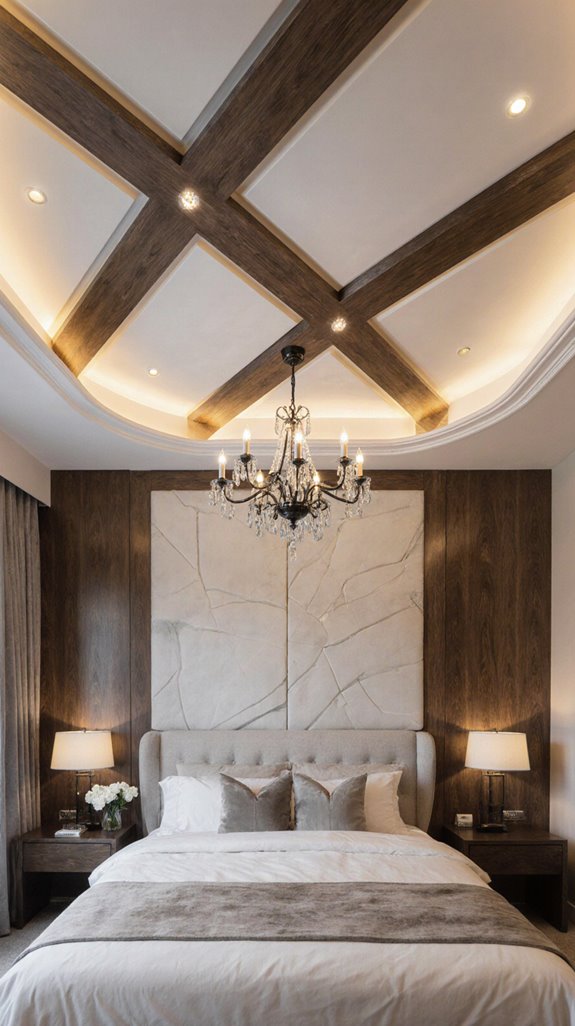
Coffered ceilings turn a flat slab into a grid of recessed square or rectangular panels framed by intersecting beams. You’ll need at least nine-foot ceilings so the dropped grid doesn’t make the room feel like a basement.
Paint the beam faces a contrasting color and the recessed panels a slightly lighter shade to push the ceiling visually upward.
Geometric designs use hexagons or chevrons cut from gypsum board, then trace slim LED strips along the edges for that floating effect.
Geometric designs are making a comeback in 2024, often paired with dual combination finishes of brown and beige running from floor to ceiling for a modern art deco aesthetic.
Both styles reward rooms where the ceiling does the heavy lifting, so the walls can stay clean.
Small Bedroom? These False Ceiling Tricks Add Visual Space
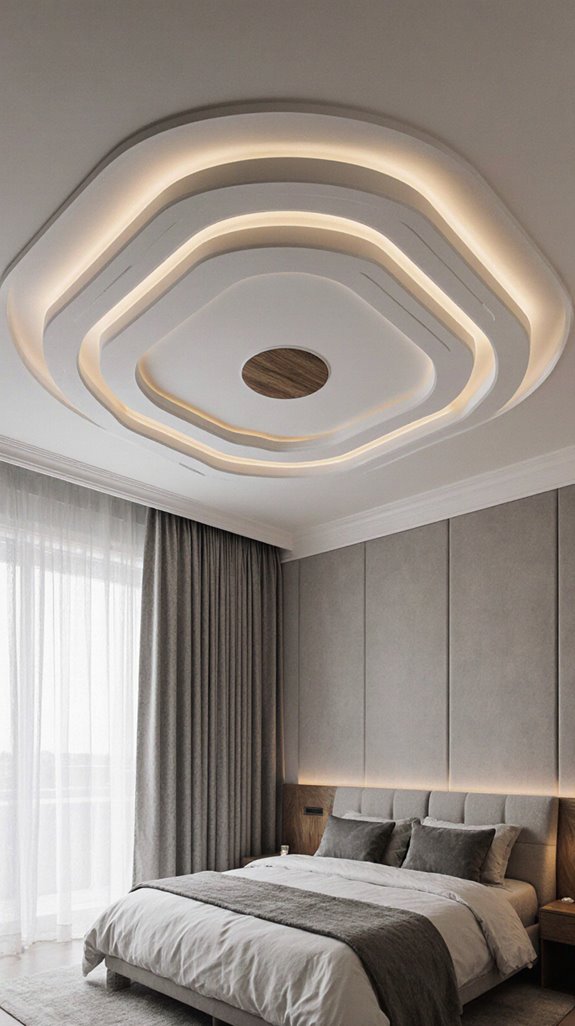
Small bedrooms give you roughly three walls, a door, and a ceiling that feels like it’s slowly descending. A peripheral false ceiling fixes that.
It runs gypsum board only along the room’s edges, leaving the center completely open. You lose maybe four inches on the sides but nothing overhead where it counts.
Tuck warm dimmable LED strips into those side channels, and the light washes upward across the original ceiling, pushing the boundary visually higher.
Paint everything ivory or soft pale grey in matte finish. Same tone, walls to ceiling. Corners disappear and the room reads taller without touching a single stud. Beyond aesthetics, a false ceiling also hides wires and pipes, keeping the overhead space clean and clutter-free.
How to Zone Your Bedroom Using False Ceiling Panels
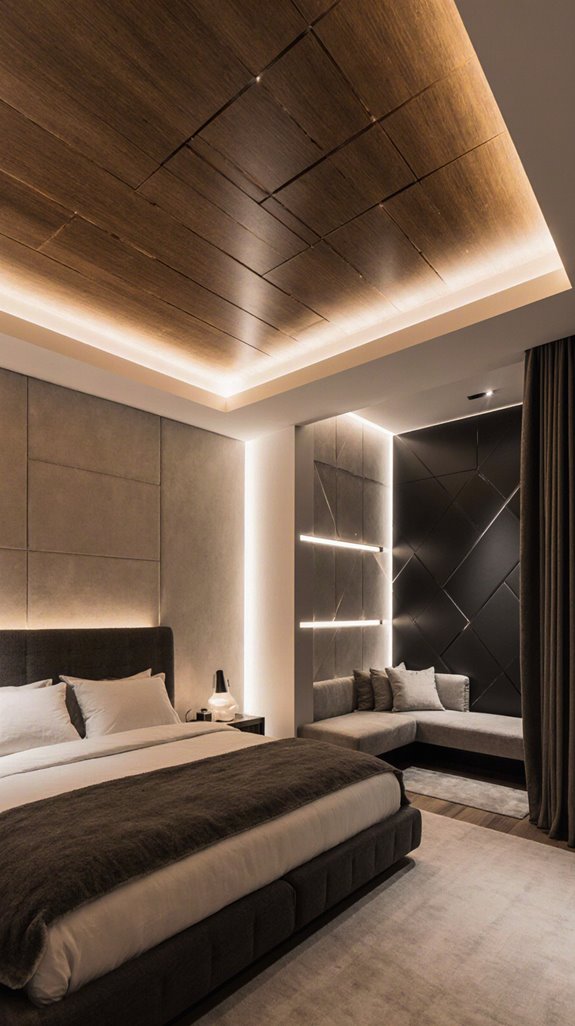
A bedroom without zones is just a rectangle you sleep, work, and change clothes in. False ceiling panels fix that without touching a single wall.
Drop a gypsum panel 6,8 inches above your bed, add warm dimmable LEDs around the edge, and that area instantly reads as the sleep zone.
Move to your desk corner and install a matte grey panel with recessed spotlights, suddenly it’s a workspace.
Near the wardrobe, a 3,4 inch PVC drop with bright strip lighting creates your dressing zone.
Different materials, different heights, different purposes. Same room, finally doing several jobs properly. Gypsum boards are worth prioritizing here because their lightweight quick installation means each zone comes together faster with less mess and sharper lines between areas.
Cove and Profile Lighting That Transforms Your False Ceiling
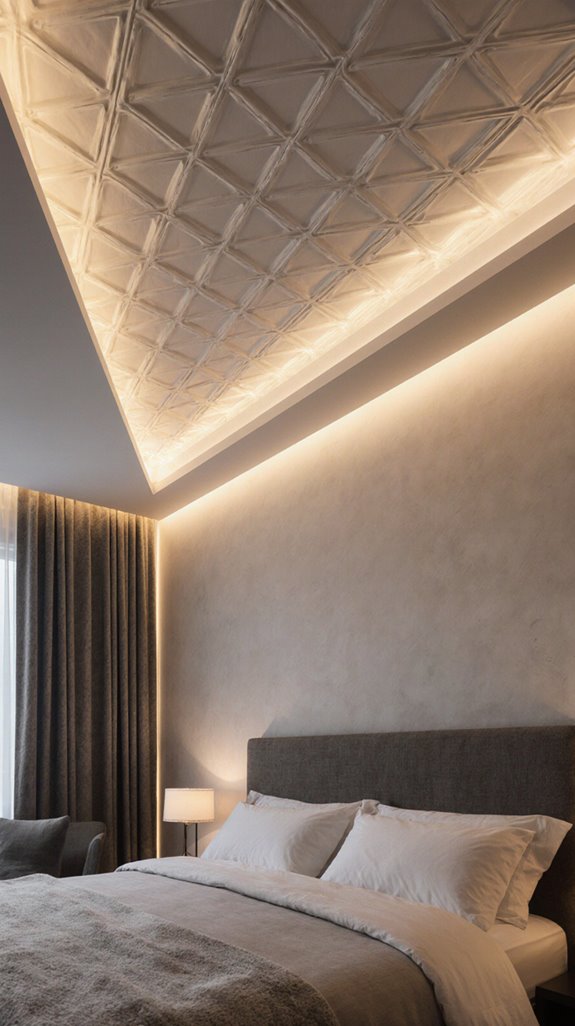
Zoning your bedroom with dropped panels is only half the story. The lighting inside those panels is what actually does the heavy lifting. Cove lighting hides LED strips in a recessed ledge, bouncing light off the ceiling so you never see the source directly.
Stick to 2700K, 3000K warm white to support melatonin and actually sleep. Profile lighting uses aluminum channels with opal diffusers to create sharp, continuous lines, clean geometry that looks intentional.
Run both on separate dimmers and you can shift the whole room’s mood without touching the furniture.
Gypsum, POP, or Wood: Choosing the Right Ceiling Material
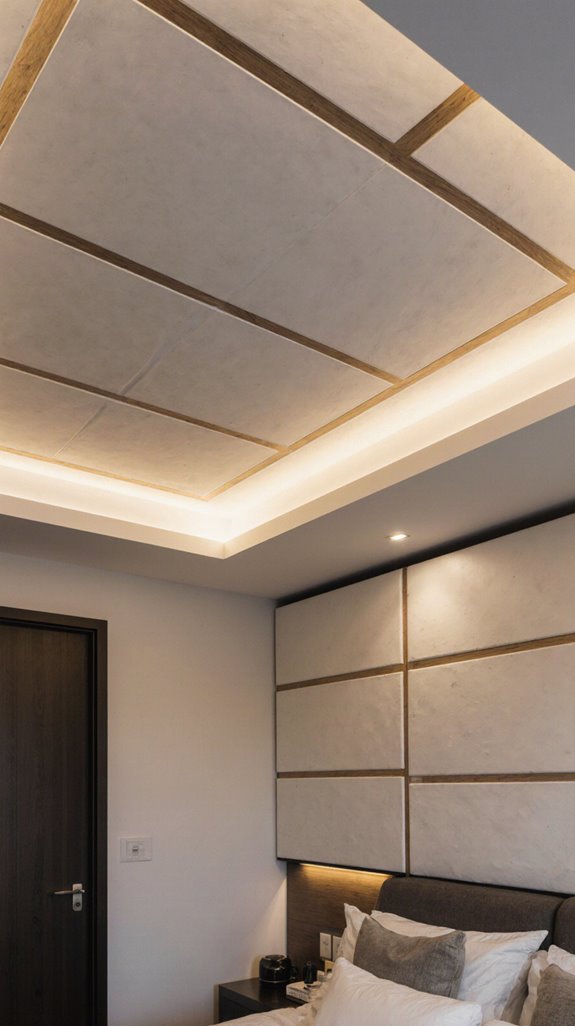
Three materials dominate the false ceiling market: gypsum, POP, and wood, and each one pulls in a different direction.
Gypsum boards screw onto a metal grid fast, cost $1.5-$2 per square foot, and finish in a day. POP costs less at $1-$1.4, but you’re waiting 48 hours for wet plaster to dry.
Wood runs $2.5-$6+ depending on whether you choose pine or teak, and it needs termite treatment. For most bedrooms, combining materials works best: gypsum for flat soffits, POP for decorative borders, and wood slats above the bed as a focal accent.
Best Colors for Bedroom False Ceilings in 2026
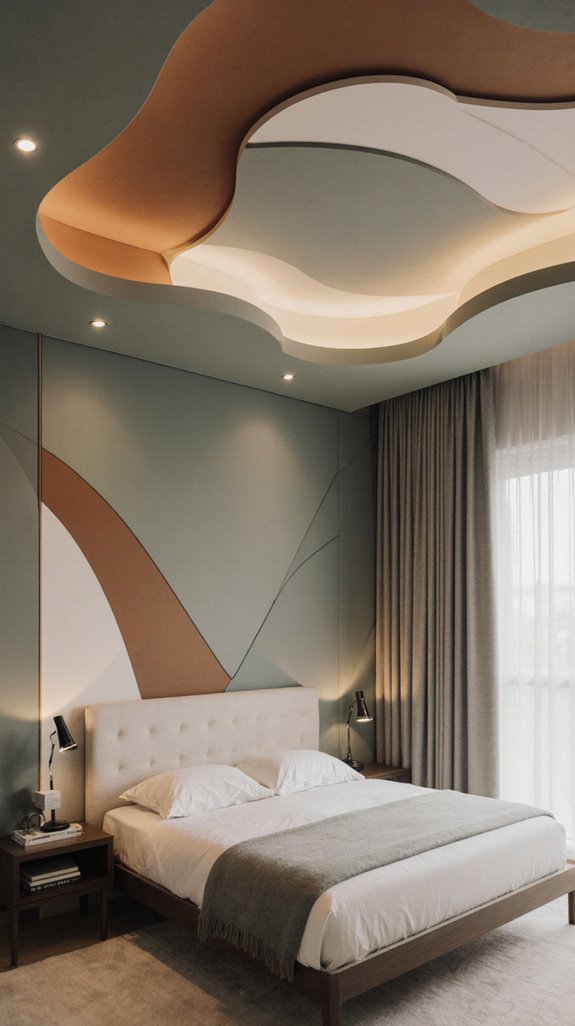
While the material you pick shapes your ceiling’s structure, the colour you paint it shapes how the whole room feels.
In 2026, warm white and off-white dominate bedroom ceilings because they reflect light without feeling clinical. Stark white is losing ground to cream and soft beige, which pair better with oak or walnut accents.
Light grey works well in minimalist rooms without making them feel smaller. If you want a hotel-style finish, pair a warm white matte ceiling with hidden LEDs running between 2700K and 3000K.
Pastels like blush pink or sage green work, but keep them inside a single recessed panel only.
False Ceiling Cost Breakdown by Material and Design Type
Picking the right false ceiling material isn’t just a style call, it’s a budget decision that can swing your total cost from $1.08 per sq. ft. to over $10.78 per sq. ft.
POP runs $1.34–$1.49 per sq. ft. after GST, while gypsum sits close behind at $1.27–$1.63. PVC jumps to $2.26–$2.61 but skips moisture-proofing costs entirely.
Go premium with natural veneer and you’re looking at $10.78–$14.37 per sq. ft. before tax, basically ceiling real estate.
Design complexity matters too. A flat single-level ceiling stays under $1.56, but add tray levels or cove lighting and you’ll easily cross $2.63 per sq. ft.
What Makes a False Ceiling Feel Cozy and Modern in 2026?
Once you’ve locked in your budget and material, the next question is what actually makes a false ceiling feel good to be under.
Four things drive that in 2025,26: lighting, shape, material, and restraint. LED strips with adjustable color temperature shift from cool white to warm amber at night nudging melatonin production.
Curved coves replace hard 90-degree corners, making low rooms feel taller. Light oak slats or fluted gypsum panels add texture without clutter.
Keep 60,70% of the ceiling plain, hide the wiring, and let indirect perimeter lighting do the heavy lifting.
Simple, but it works every time.