Planning a false ceiling for your hall gets tricky when you need to fit two fans into the design. You want airflow in every corner, but at the same time, nobody wants a ceiling that looks off or unbalanced.
The key to a successful two-fan ceiling layout is understanding proper spacing rules and picking patterns that make both fans feel like intentional parts of your overall look.
Whether you lean toward symmetrical panels, geometric shapes, or modern profile lighting, the right approach keeps your hall comfortable and stylish.
This guide walks through practical false ceiling designs that actually solve real layout problems. You’ll pick up spacing formulas, material options, and some mistakes to avoid so your ceiling works with your furniture, not against it.
Challenges of Planning a Ceiling Around Two Fans
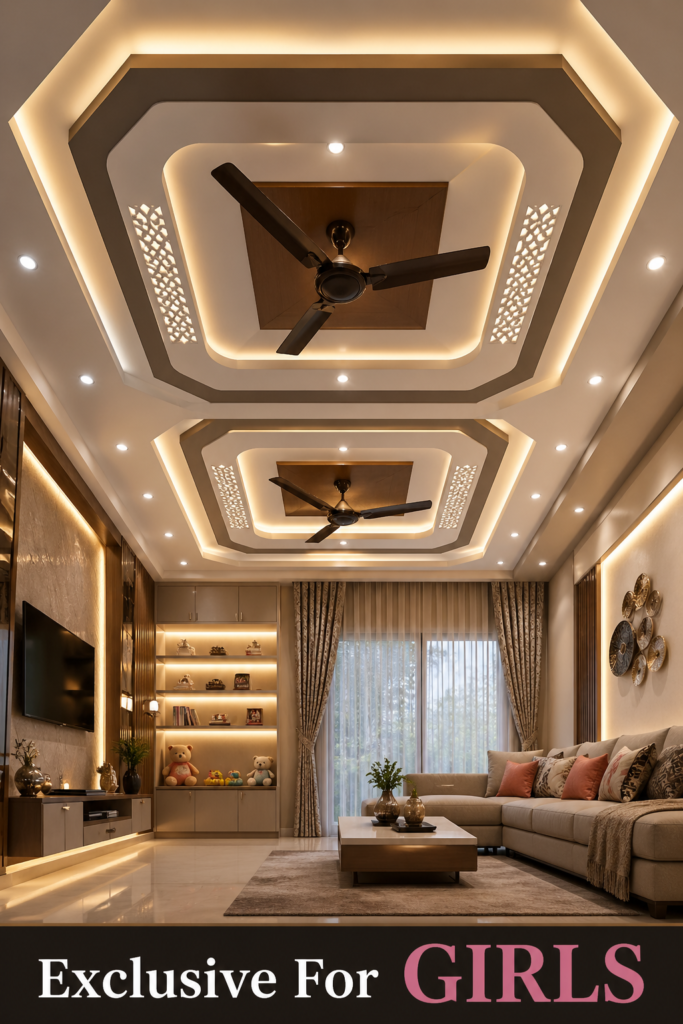
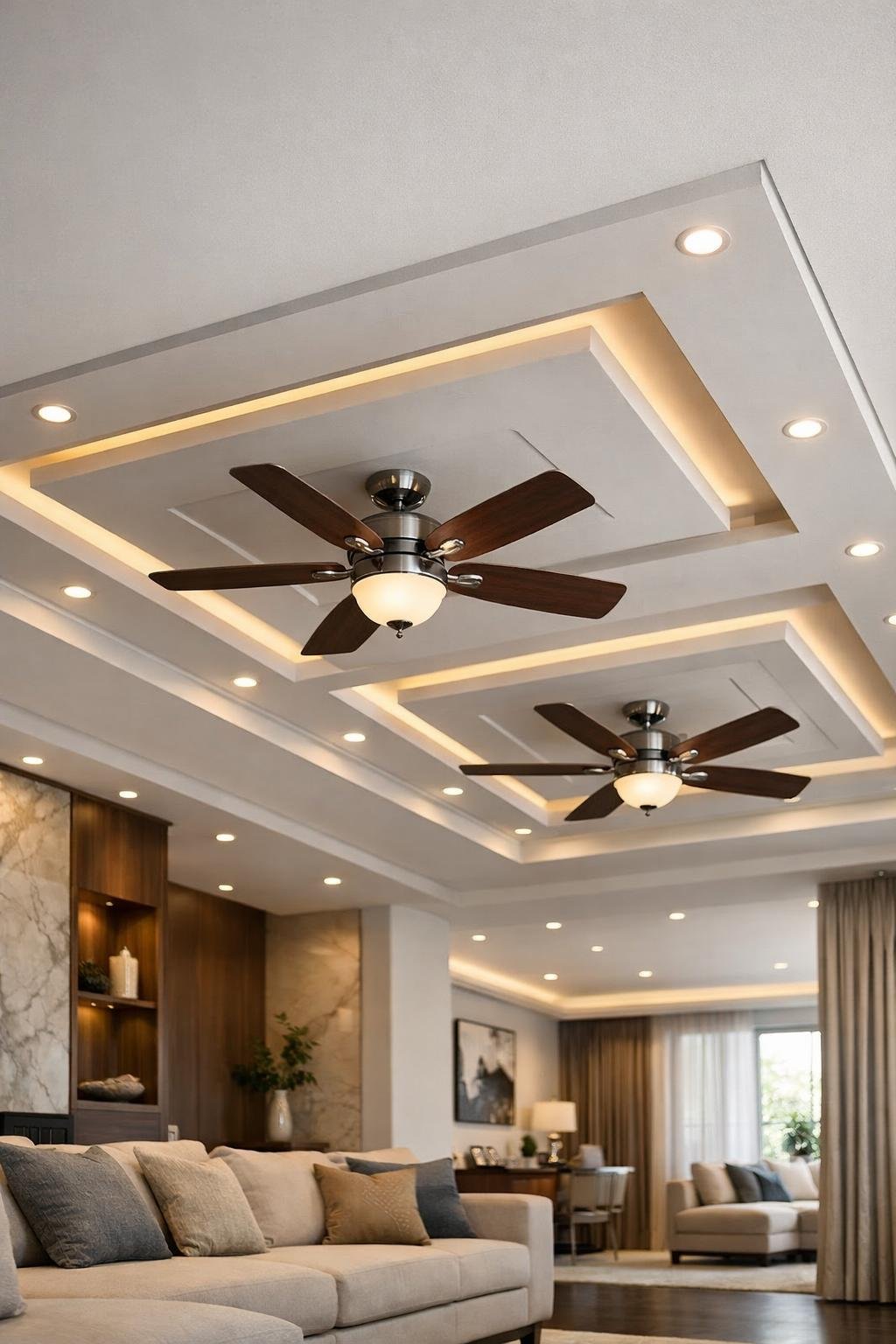
Planning a double fan ceiling design takes more than just picking a pattern you like. You have to think about spacing, airflow zones, and how the fans interact with lights and decorative elements.
Common Layout Mistakes with Fan Placement
The biggest mistake? Designing the ceiling first and adding fans later. That move almost always leads to awkward spacing and throws off the balance.
Plenty of homeowners put fans off-center from the room’s main axis. Suddenly, the whole ceiling just looks tilted, even if everything else lines up.
Common errors include:
- Positioning fans too close to walls
- Ignoring furniture placement below
- Installing lights directly next to fan blades
- Forgetting about blade clearance in drop ceilings
Uneven spacing between the two fans pops up a lot too. If one fan sits closer to the wall than the other, your eye notices right away—something just feels off.
Importance of Symmetry in Modern Ceiling Design
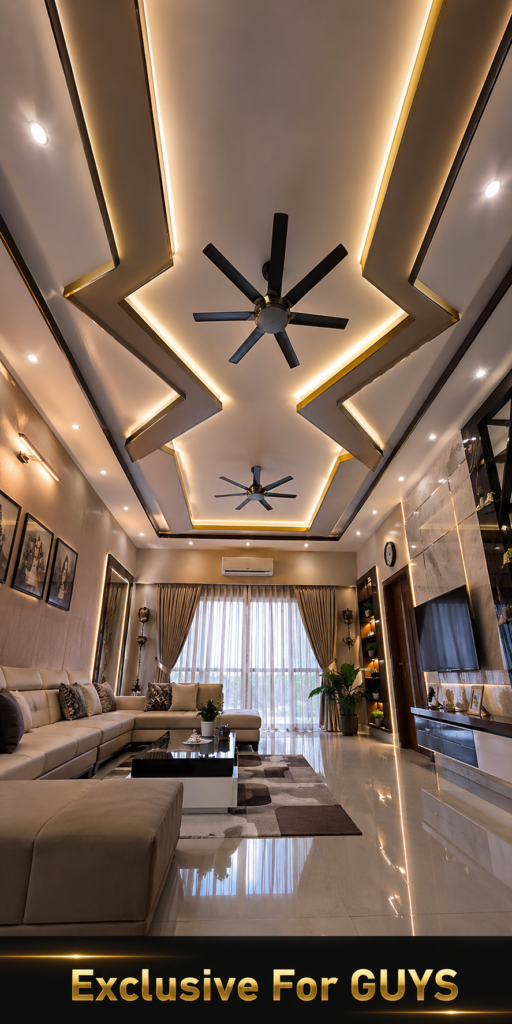
Your double fan ceiling needs symmetry to look intentional. Both fans should align along a central axis or follow a clear geometric pattern.
Imagine invisible guidelines running across your ceiling. Ideally, the fans sit on these lines, creating mirror images across the room.
Symmetry matters because:
- It creates visual calm
- It makes rooms feel larger
- It highlights architectural features
- It prevents the “something’s off” feeling
Modern ceiling designs rely heavily on clean lines and balanced spacing. When your fans follow these principles, they become part of the design instead of awkward afterthoughts.
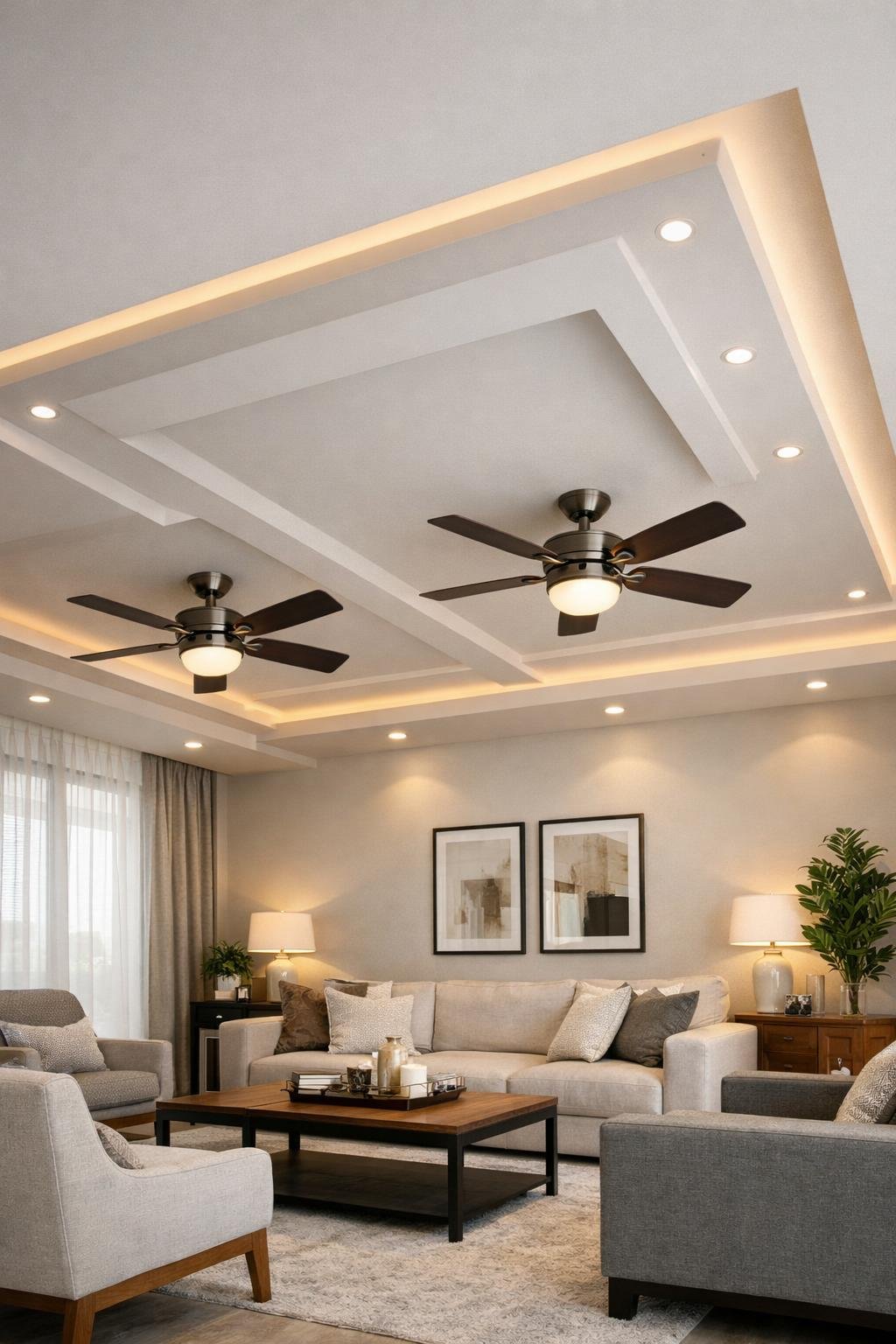
Achieving Balance, Spacing, and Visual Flow
Proper fan spacing depends on your room width and seating areas. Most designers place fans six to ten feet apart, but every room’s a little different.
Map out airflow zones before you finalize the ceiling layout. Each fan creates a circular coverage area, and those zones should overlap a bit in the middle of your room.
Key spacing considerations:
- Blade size affects required clearance
- Ceiling height changes visual weight
- Light placement needs 18-24 inches from blades
- Drop panels can block airflow
Your ceiling design should guide the eye smoothly across the space. When fans, lights, and decorative elements line up, the whole room just feels right—cohesive, not chaotic.
| SEE MORE IDEAS: 28 Latest False Ceiling Designs That Make Every Room Look Custom-Built (Living Room, Bedroom, Kitchen & More). |
Essential Spacing Rules for Dual Ceiling Fans
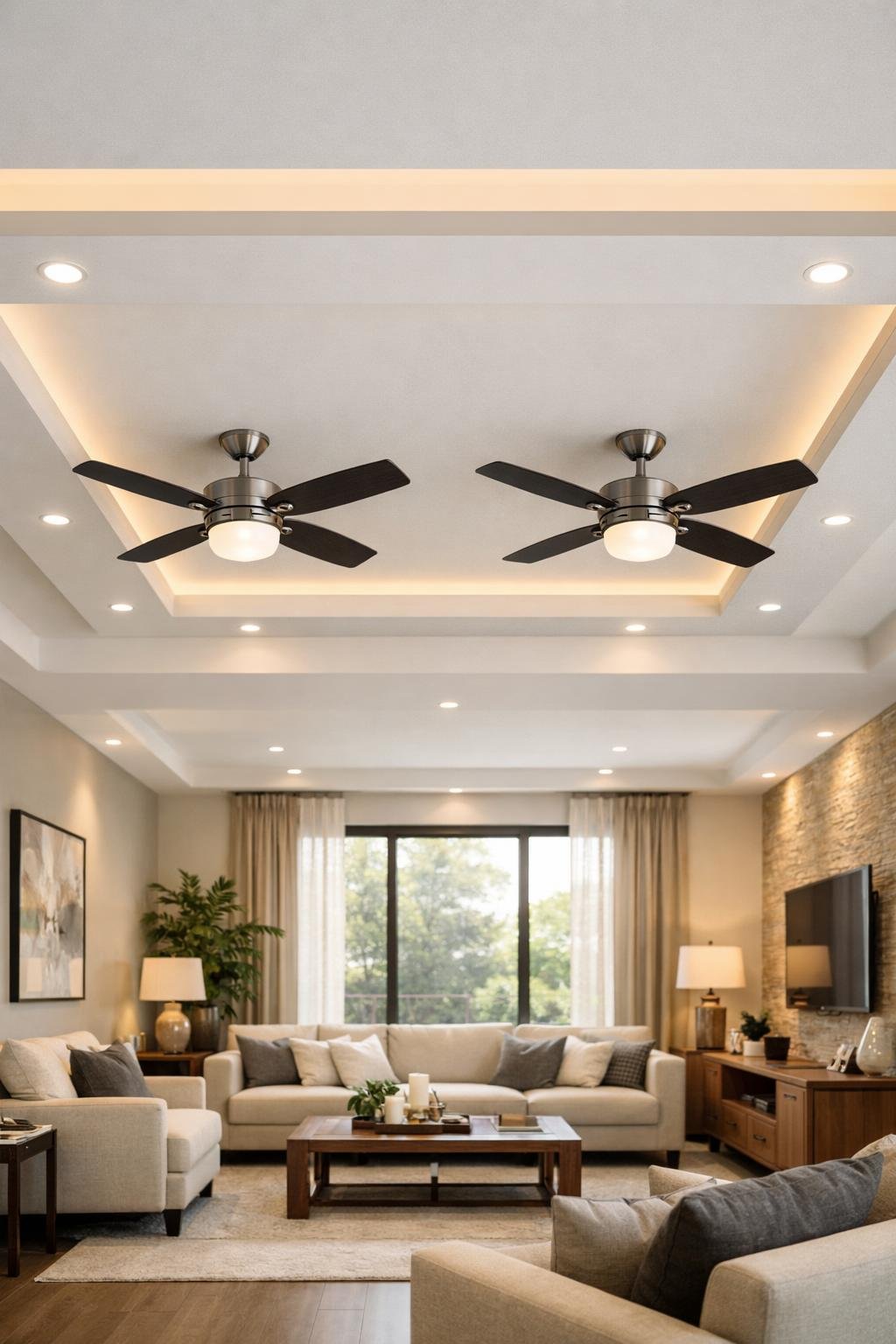
Getting the spacing right between your two ceiling fans makes a big difference in how well they work. Plus, it can really affect how good the room looks overall.
Basic Distance Requirements:
- Leave 7-8 feet of clearance from the floor to the fan blades.
- Keep ceiling fans at least 18 inches away from walls.
- Make sure there’s 3 feet between each fan blade and the nearest object.
Placement Tips for Two Ceiling Fans:
Try to position your fans so they divide the room into balanced zones. For a rectangular hall, it’s usually better to place one fan over each seating area instead of just centering them randomly.
The fans need enough distance between them to avoid creating conflicting air currents. Most folks recommend spacing two ceiling fans at least 10-12 feet apart for the best airflow.
This way, the fans won’t end up working against each other, and you’ll get proper circulation throughout the whole hall. Makes sense, right?
Symmetrical False Ceiling Layouts
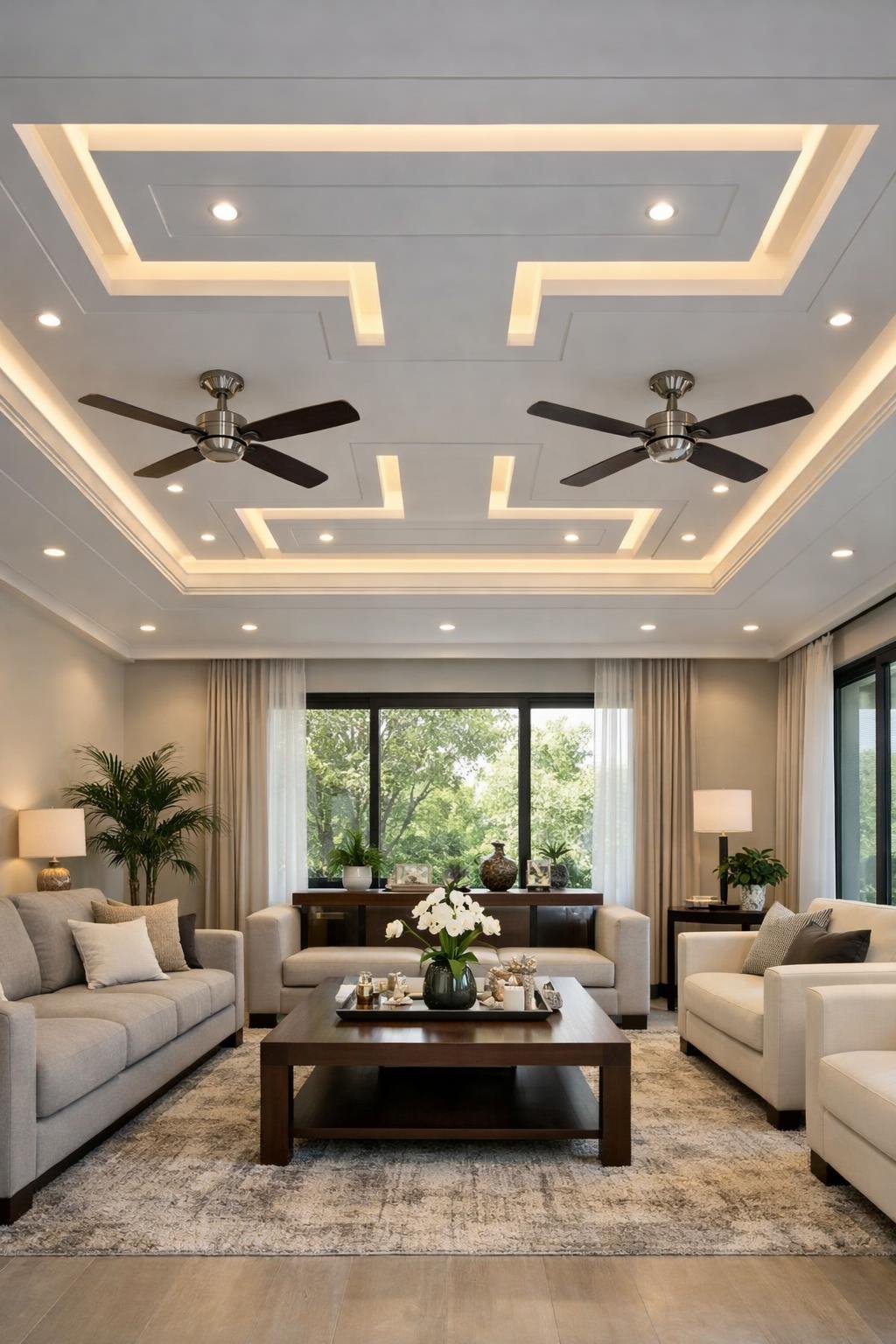
Symmetrical designs just make sense when you have two fans. They bring a natural balance to your hall and help the whole space feel organized.
Try positioning each fan at equal distances from the center. That way, everything feels intentional, not just thrown together.
Popular symmetrical options include:
- Layered false ceiling with matching rectangular recesses on each side
- Circular false ceiling designs that mirror each other
- Twin cove lighting that runs parallel along the length of your hall
A round false ceiling around each fan makes a stunning focal point. Keep the circles identical in size and spacing for harmony.
LED strips along the edges of each recess can really highlight the symmetry—honestly, it just looks cool.
Keep the depth of your layered ceiling consistent across both sides. If one side is deeper, the whole thing starts looking lopsided, and your fans won’t line up right.
Asymmetrical Designs for Balanced Looks
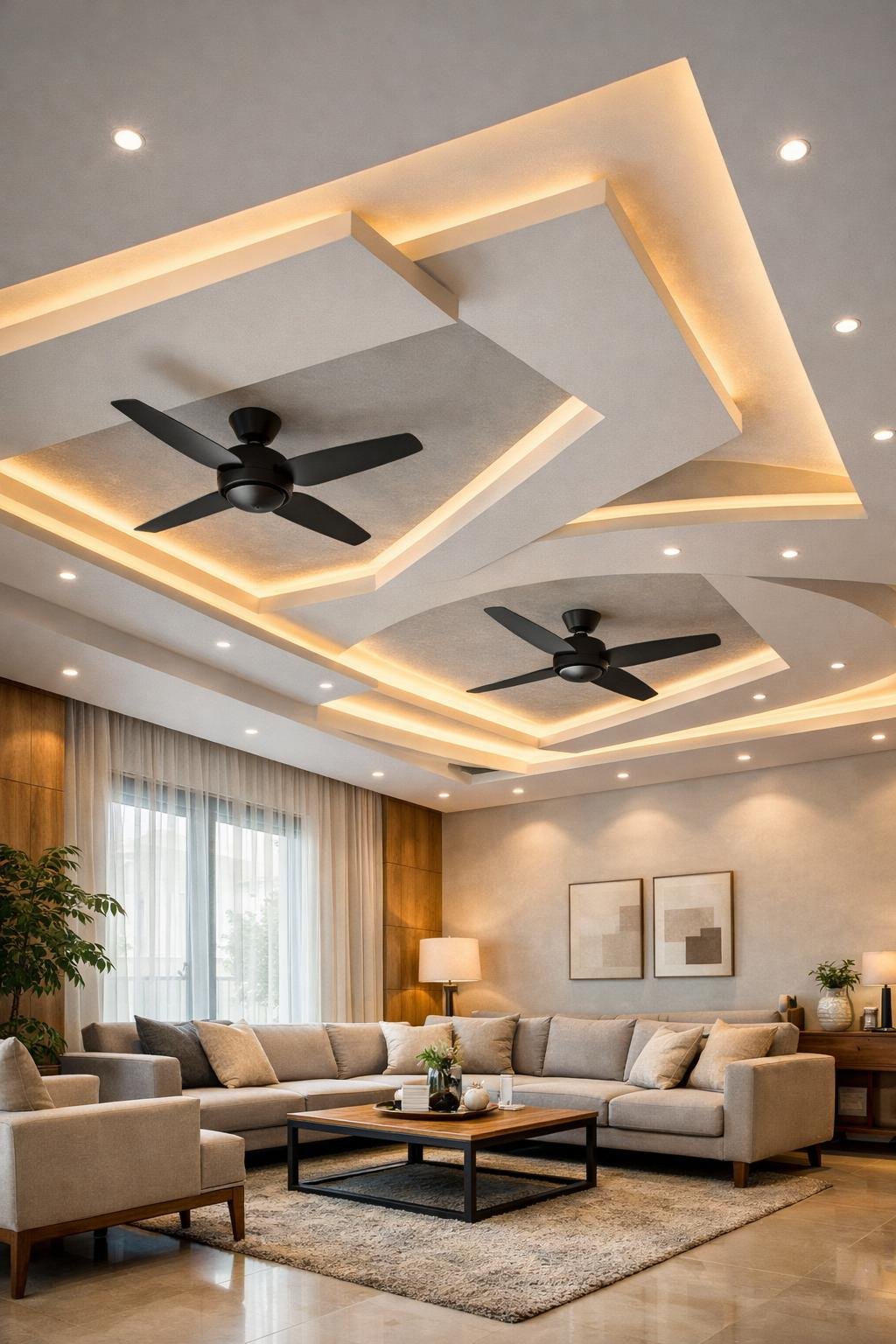
You don’t need perfect symmetry to get a balanced ceiling design with two fans. Sometimes, asymmetrical layouts make your hall look more interesting and modern.
Try placing one fan a bit off-center and let a custom POP design flow around it. Use visual weight to balance things out—a bigger decorative element on one side can totally balance a fan on the other.
Running panels that move across the ceiling at angles can create a sense of movement, while still keeping both fans functional.
Mix geometric shapes if you want; maybe put square frames around one fan and rectangular panels around the other. LED strips along the edges help tie it all together.
The trick is making it look intentional, not just random. Make sure both fans still provide good air circulation throughout your hall.
Profile Lighting Ideas for Double-Fan Halls
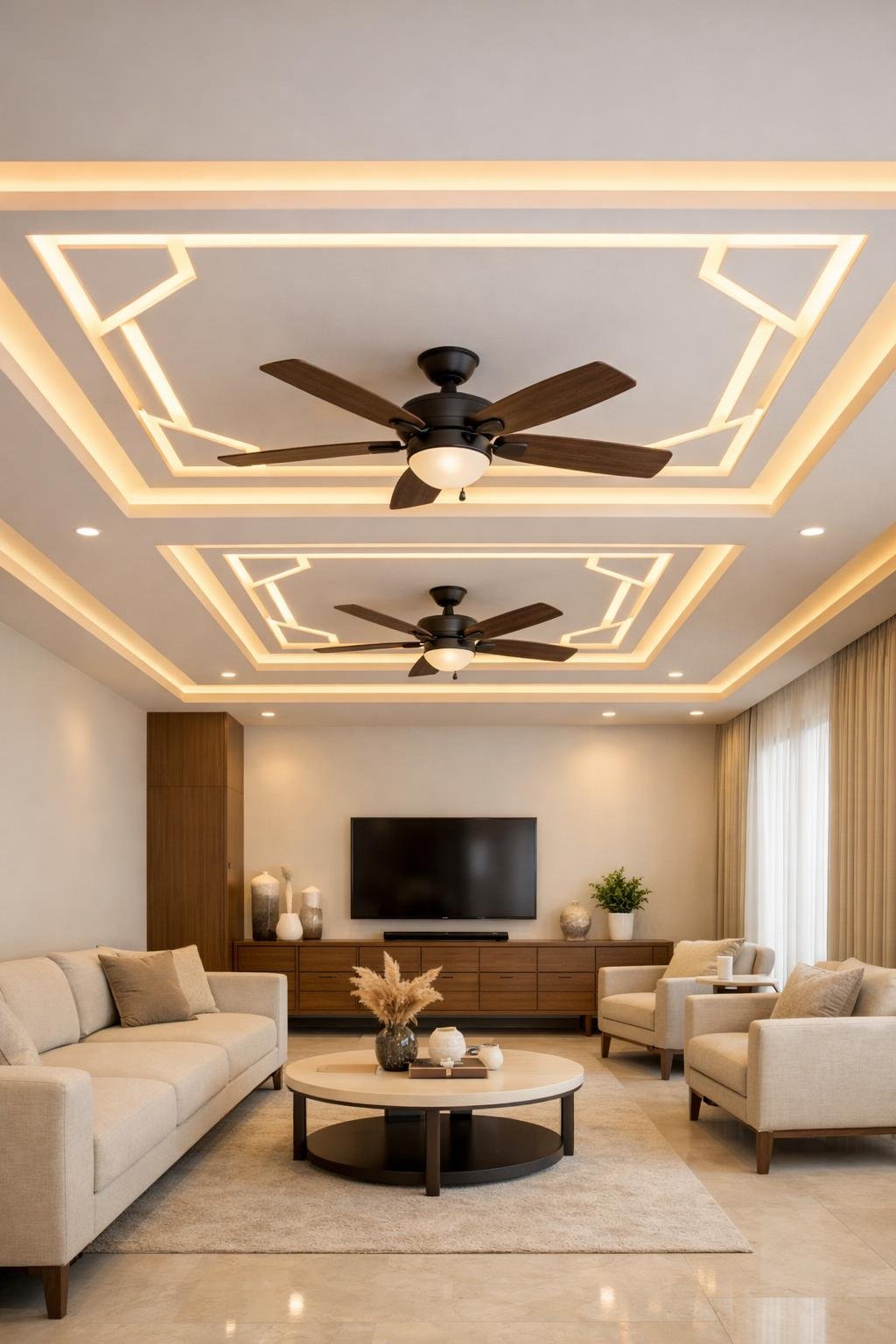
Profile lighting can make your hall look modern and still work around two fans. LED strips along the ceiling edges create a soft glow that highlights the room’s shape.
Cove lighting works especially well around fan panels. It hides the source and gives your ceiling a floating effect.
Install these LED profiles in the recessed areas between your two fans for a subtle but stylish look.
Some solid profile lighting options for double fans:
- Recessed lighting around each fan for balanced brightness
- Spotlights in the corners to light up specific areas
- LED profiles running between the two fans to connect the design
- Accent light strips to highlight ceiling borders
Consider a chandelier in the center as the main light source. Let the profile lighting add depth and mood.
Space your lights evenly so both fans get proper visibility. No one likes a dark spot in the middle of their hall.
False Ceilings with POP Finishes
POP (Plaster of Paris) is a great material for creating false ceilings that suit 2 fan layouts. You can mold it into all kinds of shapes and patterns that frame both fans just right. Creative layouts for granny flats can enhance both functionality and aesthetics. By using effective design principles, you can make the most out of limited space in a comfortable and stylish manner. Incorporating innovative storage solutions will further optimize the living environment.
Why POP Works for Dual Fan Setups:
- Easy to create symmetrical fan boxes on both sides
- Smooth finish that looks expensive
- Can hide wiring and electrical connections
- Flexible enough for curved or geometric designs
Build raised or recessed sections around each fan with POP. Borders with LED strips between the fan boxes connect everything visually and keep things balanced.
POP works for both simple layouts and more complex patterns. Paint it any color you like, though most people stick to white or cream for a bright, open feel.
Integrating Ceilings with TV Units and Furniture
Your false ceiling should work with your TV unit and furniture—not clash with them. When planning, mark where your TV wall sits and design ceiling panels that frame it naturally.
Key Integration Tips:
- Align ceiling borders with your TV unit edges for a cohesive look
- Match materials between your ceiling and entertainment unit for better flow
- Use recessed lighting above the TV area to cut down on screen glare
- Extend ceiling designs just beyond furniture width for good proportion
Sofa placement matters, too. Center your ceiling fans between the seating area and TV wall—not directly above either.
This keeps the air moving where you need it and creates a sense of balance. Try adding a textured panel or wooden finish on your ceiling that matches your TV cabinet. It’s a simple way to tie the whole room together.
Space-Saving Designs for Compact Halls
Small halls need smart ceiling designs that don’t make the space feel cramped. A simple false ceiling is usually best when you’re short on headroom.
Go for a flat design with clean lines along the edges. This gives you space for two fans without adding bulk.
Keep the ceiling mostly white or light-colored. It just makes everything feel bigger and brighter.
Minimalist false ceiling designs with thin borders work perfectly in compact areas. Skip heavy layers or deep drops—basic rectangular frames around each fan keep things balanced.
Some space-saving features to consider:
- Shallow drop height (3-4 inches max)
- Thin LED strips instead of bulky lights
- Simple geometric patterns
- Light paint colors
If your ceiling is already low, skip the chandelier. Use recessed lights that sit flush with the surface for good lighting without losing headroom.
Set your fans in slightly recessed circular sections. This secures them and keeps the look clean throughout the hall.
Modern Material and Finish Options
There are several great materials to choose from for a false ceiling with two fans. Each one brings something different to the table.
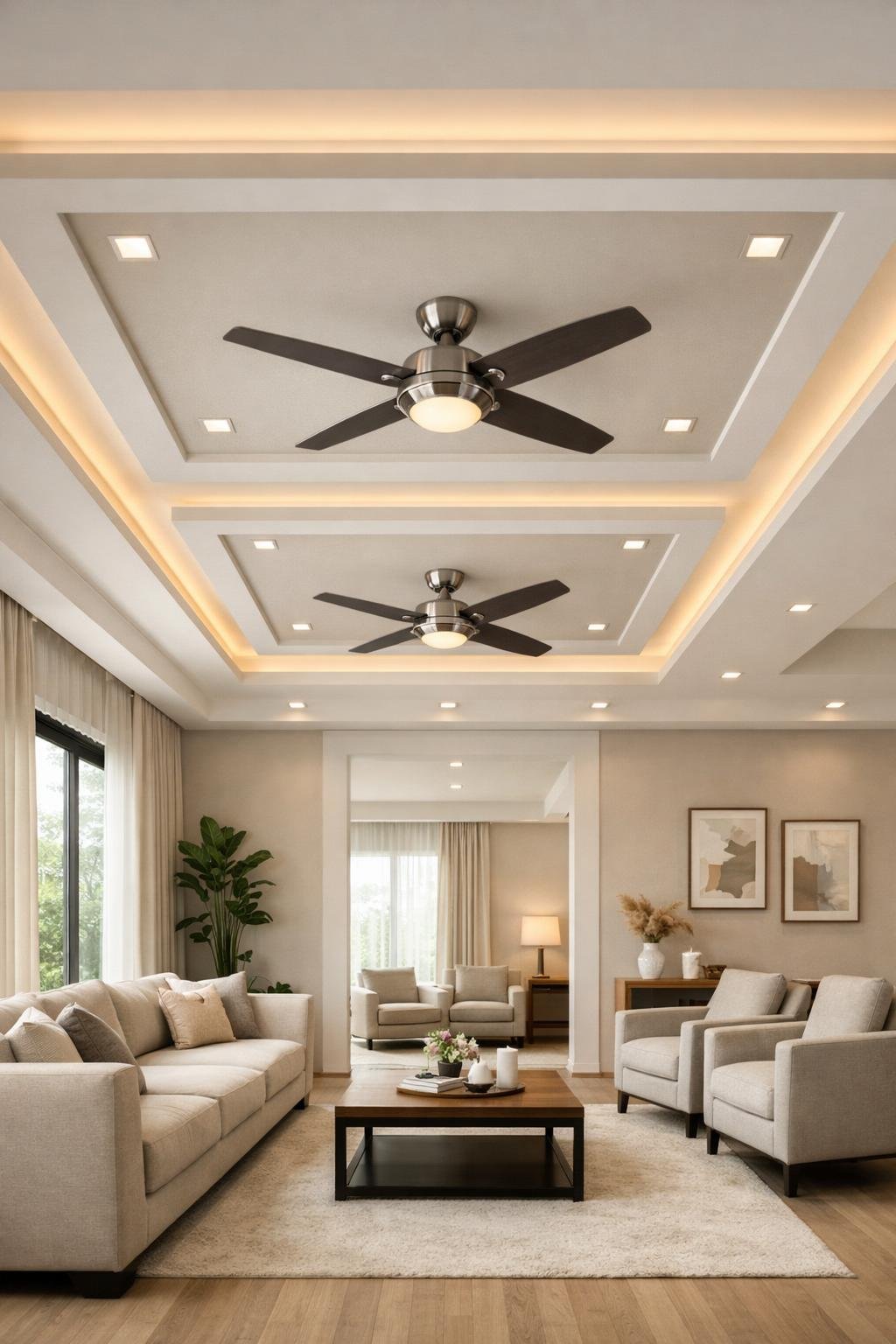
Gypsum false ceiling is super popular these days—lightweight and easy to shape around fan mounts. You get smooth, seamless finishes that look sharp and modern.
Wooden false ceiling adds warmth to your space. Wooden panels work for both traditional and contemporary halls, and they’re tough, with a natural texture you just can’t fake.
Wooden pop ceiling mixes wood and plaster of Paris for a hybrid look. You get decorative details and keep some wood elements in play.
Here’s what works best depending on your needs:
- Budget-friendly: POP or PVC panels
- Premium look: Gypsum ceiling with painted finish
- Natural style: Wooden ceiling panels
- Low maintenance: Gypsum boards with washable paint
Finish matters, too. Matte paint hides small flaws, while glossy finishes reflect more light and make rooms feel bigger.
Common Design Mistakes to Avoid
Ignoring ceiling height is a big mistake. If your hall has a low ceiling, a bulky false ceiling will just make it feel more cramped.
Poor fan placement leads to bad air circulation. Position both fans evenly across the room, not just where it looks good in the design.
Skipping proper lighting planning leaves your space dark or unevenly lit. Don’t scatter recessed lights randomly—plan them around your fans and overall layout.
Choosing the wrong materials can cause durability headaches. Pick materials that suit your climate and budget—POP and gypsum don’t perform the same in humid conditions.
Overcomplicating the design just makes your ceiling look messy. Simple, clean layouts almost always work better, especially with two fans in the mix.
Quick 2-Fan Ceiling Layout Formulas
Getting your double fan ceiling placement right doesn’t have to be complicated. Here are some simple formulas that work for most halls.
For rectangular halls, divide the length into thirds. Put each fan right in the center of the outer thirds—this usually gives you balanced airflow and avoids those annoying dead spots.
For square halls, try the diagonal method. Picture an X going from corner to corner, then drop your fans where those lines cross the middle sections.
Standard spacing rules:
- Keep fans 7-8 feet from the floor.
- Leave about 18 inches from walls.
- Space fans 10-15 feet apart for best circulation.
When you plan your false ceiling design for a hall with two fans, keep these measurements in mind right from the start. Mark those fan positions before you install any ceiling panels or lights—trust me, it saves headaches (and money) down the road.