Sleeping above the forest floor changes everything about how you experience the outdoors. The sounds are different up there, the air moves differently, and there’s something primal about waking up suspended between sturdy trunks with nothing but mesh between you and the canopy.
Ground camping has its place, but once you’ve watched a sunrise from a treetop perch while sipping coffee in your sleeping bag, it’s hard to go back to tent stakes and rocky soil.
Whether you’re rigging a hammock for a solo overnight or setting up a multi-person tree tent for the whole family, understanding the safety fundamentals and setup techniques is what separates a memorable adventure from a dangerous mistake. The 19 ideas ahead cover both beautifully.
Contents
- 1 Essential Safety Tips for Tree Camping Success
- 2 Romantic Tree Camping Ideas for Two
- 3 Choosing the Perfect Trees for Your Camp Setup
- 4 Fun for Families
- 5 Meal Planning for Tree Camp Adventures
- 6 Solo Hammock Adventures
- 7 Budget-Friendly DIY Hacks
- 8 Gear You’ll Be Glad You Packed
- 9 Weather-Proofing Your Camp
- 10 Eco-Friendly Tree Camping Practices
- 11 Storage Solutions for Tree Camp Gear
- 12 Night Safety in Tree Camping
- 13 Kid-Friendly Tree Camping Activities
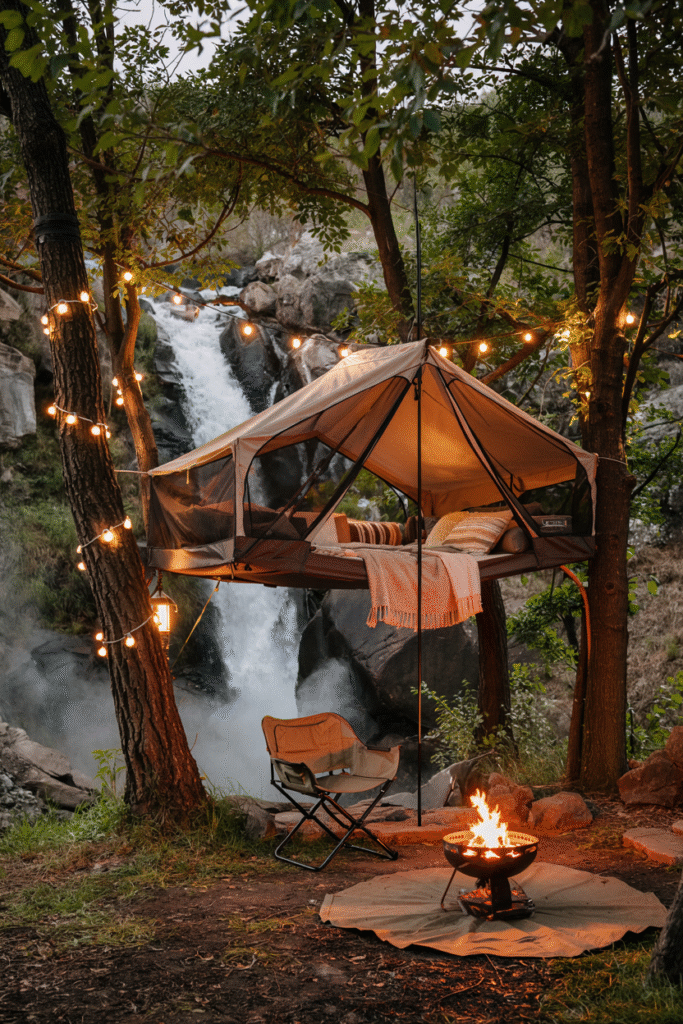
- 14 Creating a Cozy Treetop Vibe
- 15 For the Adventurous Climber
- 16 Multi-Level Tree Camping Arrangements
- 17 Creative Tree Camp Comfort Upgrades
- 18 Seasonal Tips
Essential Safety Tips for Tree Camping Success

Before you clip in anywhere, walk your potential campsite and look up with a critical eye at every branch above where you plan to sleep. Dead limbs don’t always fall during storms; sometimes they let go on calm nights, and I’ve seen widowmakers come down without warning in conditions that seemed perfectly safe.
Your setup should be positioned at least one and a half times the tree’s height away from any standing deadwood, and if you’re building a fire, keep it at least five feet from both your tent and the nearest trunk. When thunderstorms approach, get out of the trees immediately and crouch low on insulated ground with rubber-soled boots until the lightning passes.
SEE THIS: 21 Treehouse Glamping Ideas That Blend Luxury and Nature.
Romantic Tree Camping Ideas for Two
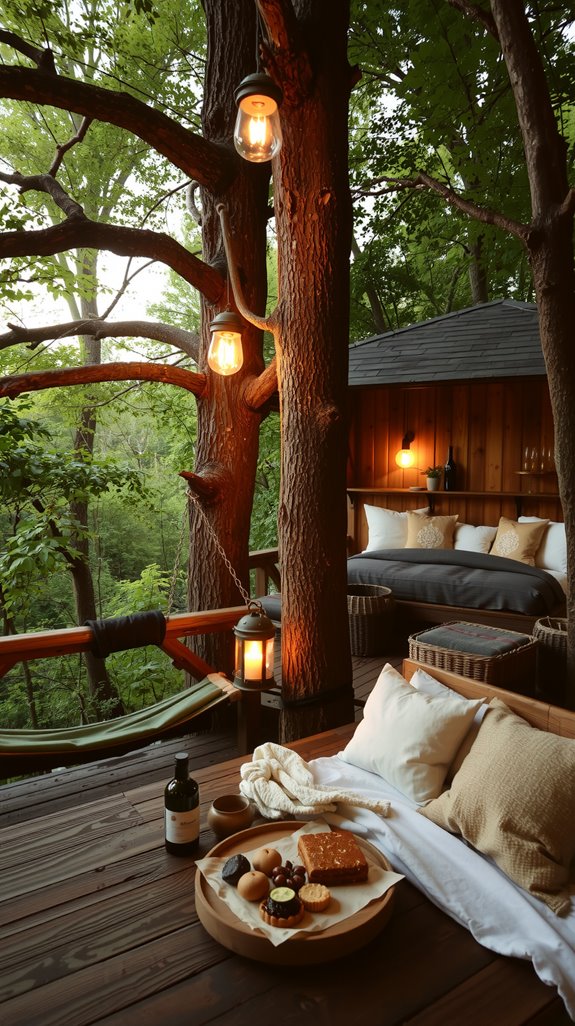
The right tree camping setup for couples isn’t about fancy gear as much as it’s about location and a few thoughtful touches that create atmosphere. String up some solar-powered lights between the trees, pack a compact fire pit you can safely use on the ground below your tent, and choose a spot near moving water if you can find one.
I’ve guided couples to suspended campsites overlooking waterfalls and quiet beaches, and the key is always finding natural privacy rather than trying to create it artificially. Bring one oversized camp blanket instead of two smaller ones, pack extra firewood, and don’t overthink the romance part because sleeping in trees under stars does most of the work for you.
Choosing the Perfect Trees for Your Camp Setup

Your life is literally hanging from these trees, so spend twenty minutes inspecting them instead of five. Oak, maple, beech, and white pine are your best options when they’re mature enough to have trunks at least twelve inches across, and they should stand ten to fifteen feet apart for optimal hammock or tent geometry.
Tap the trunk with your knuckles and listen for a solid thunk rather than a hollow sound that indicates rot, then check the base for fungal shelves or soft spots in the bark that signal internal decay. The angle between your anchor points matters more than most people realize; keep it under 90 degrees or you’ll be putting exponentially more force on the tree than necessary.
Fun for Families
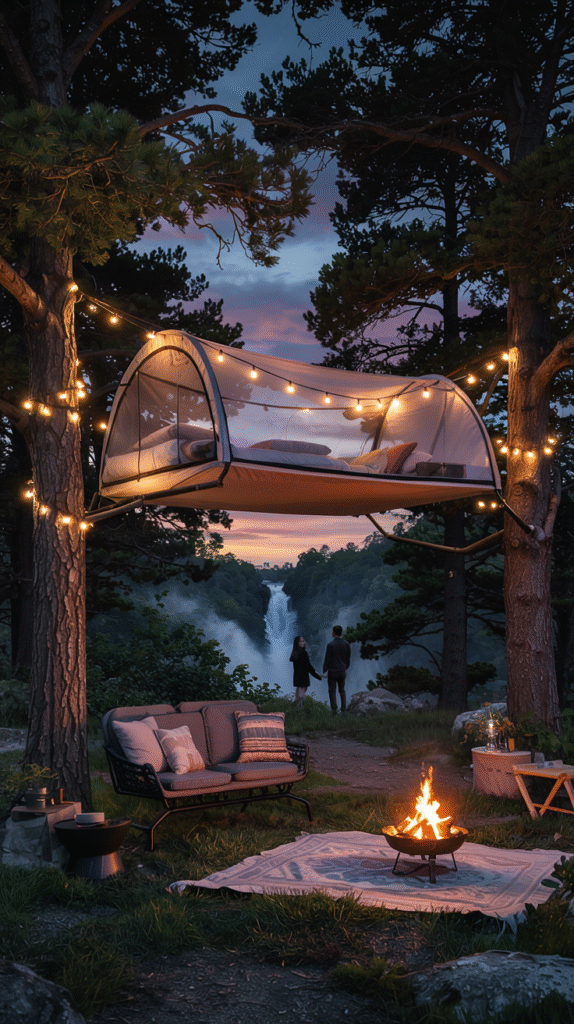
Kids who’ve only slept in ground tents lose their minds the first time they climb into an elevated shelter that sways gently with the breeze. The Tentsile Safari Stingray and similar multi-level designs give everyone their own zone while keeping the group connected, and the triangular setup between three trees provides surprising stability even when smaller campers are bouncing around inside.
Practice your rigging in the backyard before you head out because fumbling with unfamiliar straps and carabiners while your kids are asking when they can climb in gets old fast. The mesh floors double as entertainment since children can lie on their stomachs and watch the ground below, turning the tent into an observation platform that keeps them engaged during quiet times.
Meal Planning for Tree Camp Adventures
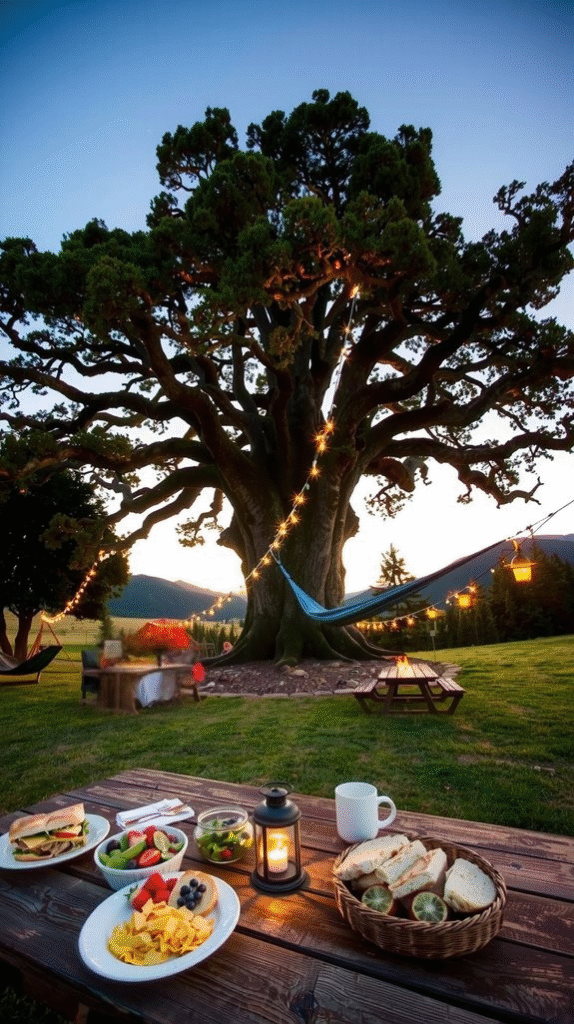
Cooking from a tree camp is trickier than ground camping since you’ll be climbing up and down more often, so front-load your meal prep at home. I freeze everything I can ahead of time, pack it in order with the first night’s dinner on top of the cooler, and rely heavily on foil-packet meals that I can toss on coals without needing multiple pots and pans.
Trail mix, jerky, and granola bars should be distributed throughout your pack rather than stored in one place, so you’ve got energy accessible whether you’re up in your hammock or down gathering firewood. Label everything clearly because when you’re tired, and it’s getting dark, the last thing you want is to dig through three stuff sacks looking for the coffee.
Solo Hammock Adventures

Hammocking alone gives you a kind of freedom that group camping never will, but your tree selection matters even more when there’s nobody around to help if something goes wrong. Look for trees spaced about fifteen feet apart and hang your hammock six feet off the ground, which is high enough to avoid ground moisture but low enough that a fall won’t wreck you.
Tree-friendly suspension straps are non-negotiable because webbing distributes pressure and protects bark better than rope ever will, and you’ll want a proper underquilt or sleeping pad since cold air underneath a hammock will chill you faster than you’d expect. Store your quilt inside the hammock during the day so it’s ready when you are, and use your ridgeline for organizing headlamps, water bottles, and anything else you’ll want within reach after dark.
SEE THIS: 19 Ghostly Hammock Corner Ideas for Halloween Camping.
Budget-Friendly DIY Hacks
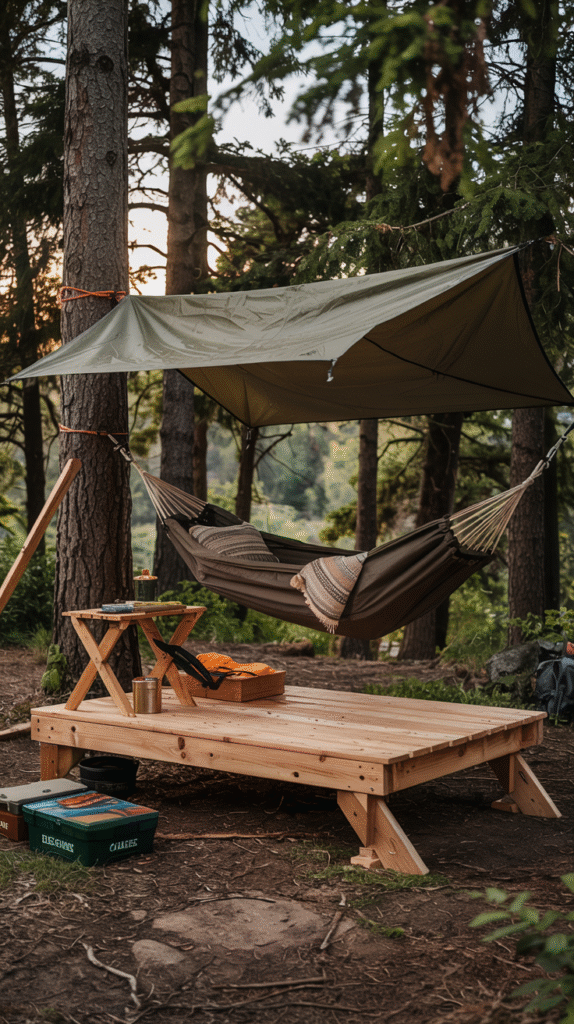
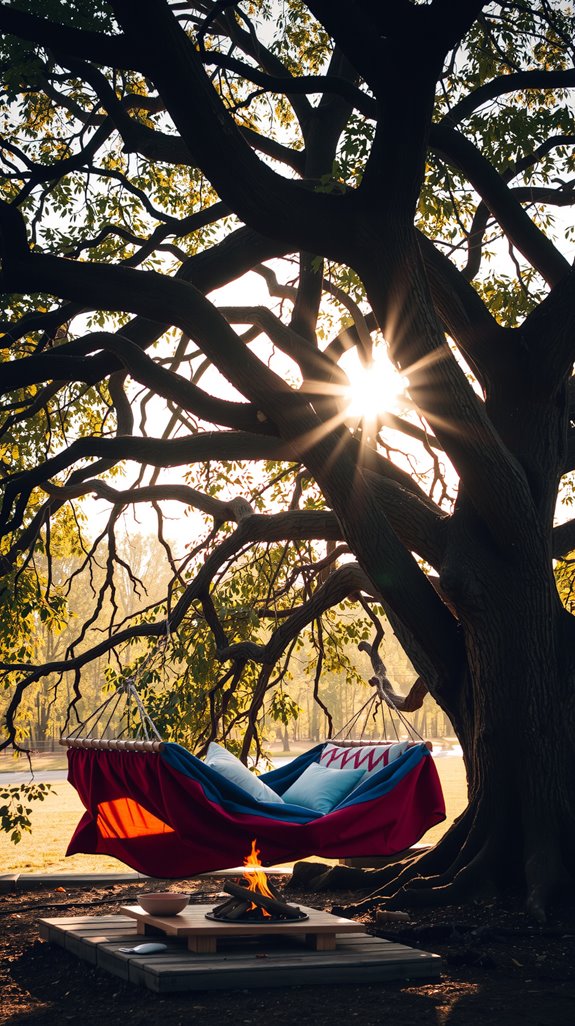
You can drop serious money on tree camping gear or you can get creative with about forty dollars and a free weekend. Sew your own gathered-end hammock from ripstop nylon for around twelve bucks, or if you want something more comfortable, build a bridge hammock for about twenty-five using fabric and some basic hardware from the home improvement store.
Simple wooden platforms can be lashed together from lumber if you’ve got basic carpentry skills and access to healthy trees that can handle the load. Skip the expensive climbing hardware when you’re starting out and learn fundamental knots like the prusik, which costs nothing but practice time and works just as well for many applications.
Gear You’ll Be Glad You Packed

After dozens of nights in trees, I’ve learned that the right sleeping system matters more than almost anything else because if you can’t sleep, nothing else about the trip will feel good. Your sleeping bag needs to be rated for temperatures at least ten degrees colder than the forecast since you’ll be more exposed to wind up high, and an insulated pad is mandatory even if you’re using an underquilt.
A comprehensive first aid kit isn’t optional when you’re suspended above the ground, and neither is some form of communication device for emergencies since cell service in remote areas is unreliable at best. Round out your kit with a reliable headlamp, backup batteries, a lightweight cooking system if you’re eating hot meals, and bear-proof containers that seal tightly enough to keep raccoons and other curious animals from making a mess of your food supply.
Weather-Proofing Your Camp
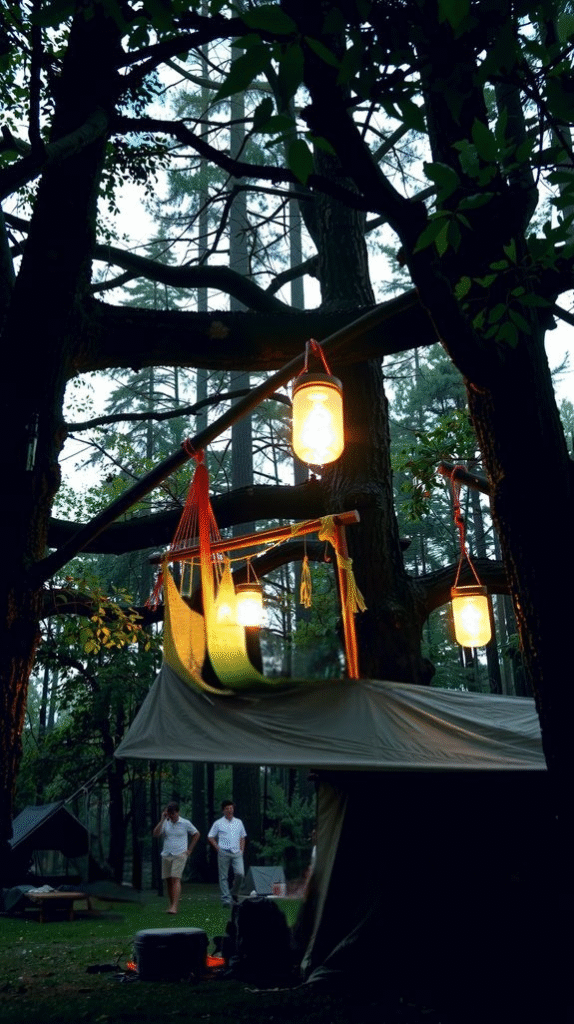
Wind hits differently when you’re up in the canopy, and I’ve been in tree tents that felt like they were going to tear loose during gusts that wouldn’t have bothered me at ground level. Position your shelter on the downwind side of large evergreens that can break the prevailing winds, and invest in a quality rainfly that extends well beyond your tent’s edges rather than one that barely covers the top.
When storms roll through, get low and stay off anything metal, keep your rubber-soled boots on, and don’t touch multiple trees at once if lightning is nearby. Check your tie-off points twice because a strap that seems secure in calm weather can work loose when everything starts moving, and always have a contingency plan for getting down quickly if conditions deteriorate past the point where staying up makes sense.
Eco-Friendly Tree Camping Practices

The trees that hold your camp are living things that deserve better than gouged bark and compacted roots from careless setup practices. Use wide webbing straps instead of rope or chain, avoid established campsites that show signs of overuse, and never hang from branches that are less than six inches in diameter at the attachment point.
Pack out everything you pack in, including micro-trash like twist ties and tiny pieces of wrapper that seem insignificant but accumulate in popular areas. Solar-powered lights eliminate the need for disposable batteries, collapsible containers reduce the volume of what you’re carrying, and choosing reusable gear over single-use items becomes second nature once you make it a priority instead of an afterthought.
Storage Solutions for Tree Camp Gear

Sleeping bags stored in compression sacks between trips lose their loft within a couple of seasons, so hang them loosely in a closet or store them in oversized breathable bags. Modular shelving systems in your garage or storage area keep heavier items like platforms and hardware organized and easy to access, while clear bins let you see what’s inside without opening everything when you’re packing for a trip.
Hang your hammocks and straps on hooks rather than stuffing them into bags where they can develop mildew, and keep carabiners and metal hardware in separate containers so they don’t scratch or damage fabric gear.
Night Safety in Tree Camping
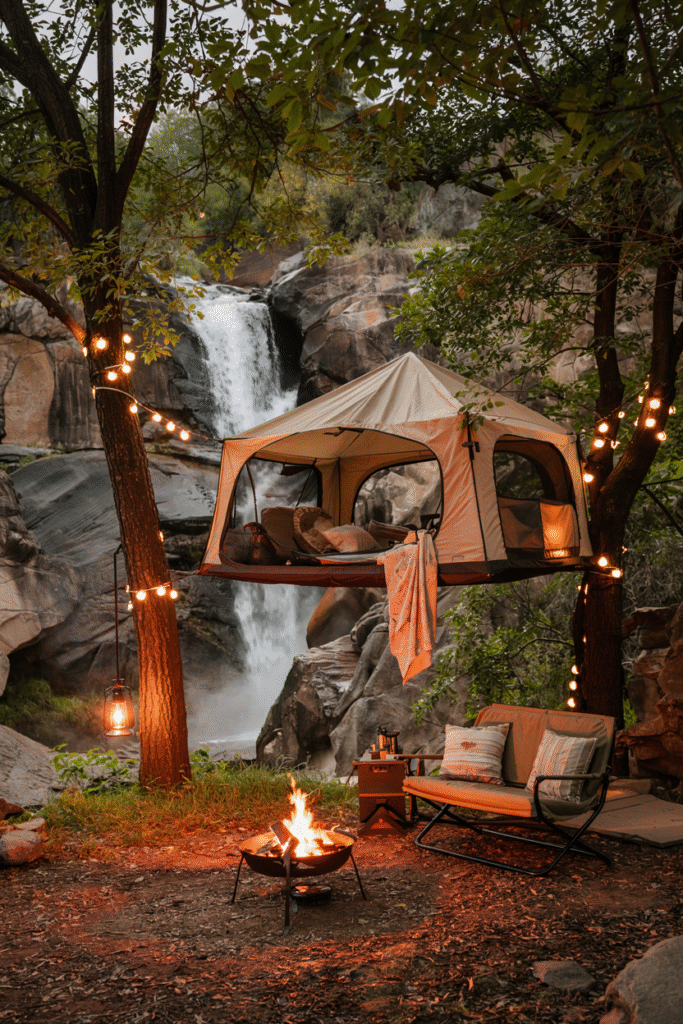
Darkness in the forest canopy is absolute in ways that surprise people who’ve only camped on the ground, so redundant lighting is critical. Attach reflective tape to all your guy lines so you don’t walk into them when you’re climbing down for a midnight bathroom break, and keep a headlamp within reach at all times rather than buried in a pack.
Food storage belongs at least one hundred feet from your sleeping area in a bear bag or canister, and if you’re in an area with aggressive wildlife, consider hanging it even farther downwind. A charged phone or satellite communicator should be in your sleeping bag with you, along with a basic first aid kit and extra clothing layers since temperatures drop faster when you’re elevated and exposed to moving air.
Kid-Friendly Tree Camping Activities
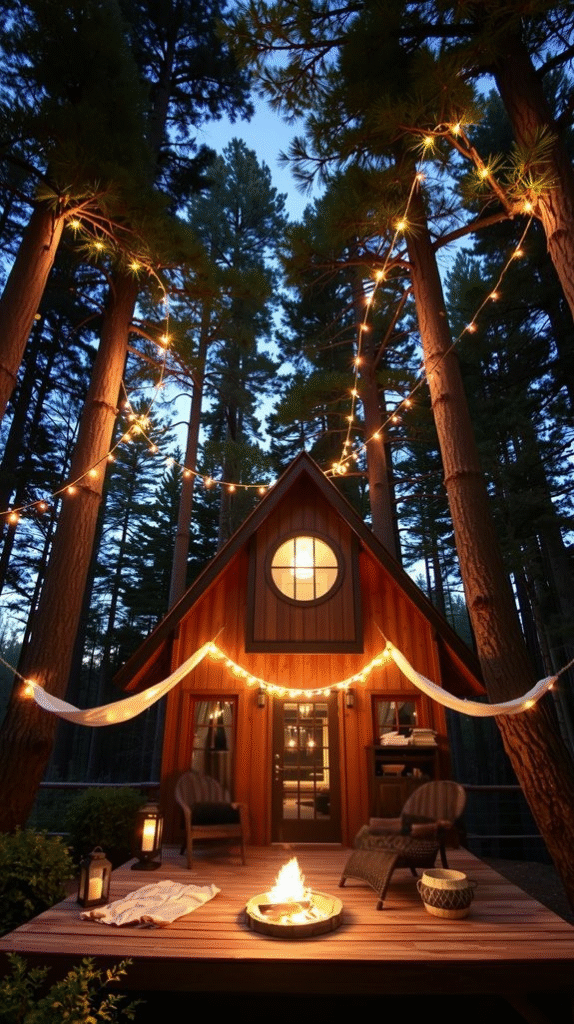
Children need structured activities when they’re not sleeping or eating, or they’ll create their own entertainment in ways you probably won’t appreciate. Set up a low slackline between two trees at ground level for balance practice, organize a flashlight scavenger hunt after dark with a list of things they can find without leaving the immediate campsite, or bring supplies for making nature art like bark rubbings and leaf prints.
Rock painting works well for younger kids since they can collect smooth stones during the day and decorate them at night, and involving them in age-appropriate camp setup tasks like gathering small sticks for kindling teaches responsibility while keeping them engaged.
Creating a Cozy Treetop Vibe

Comfort in a tree camp comes from small details rather than expensive gear, and I’ve seen people turn basic hammocks into spaces that feel more inviting than many hotel rooms.
Battery-powered string lights add warmth without fire danger, cushions and throws create softness against tree tent floors that can feel clinical otherwise, and arranging a few smooth stones or interesting pieces of wood near your entrance personalizes the space.
Hang a small wind chime where it’ll catch occasional breezes but won’t drive you crazy with constant noise, and use hanging organizers to keep your area tidy since clutter feels more oppressive when you’re in a confined, elevated space.
For the Adventurous Climber

Technical tree camping requires equipment and skills that go far beyond basic hammocking, and if you’re serious about sleeping in the upper canopy, invest in proper training before you start experimenting. Single rope technique and doubled rope technique each have advantages depending on the trees you’re working with, and you’ll need ascenders, descenders, and a thorough understanding of load dynamics before you commit your weight to any system.
Floating anchors allow you to sleep comfortably at heights where normal tree camping would be impossible, and techniques like footlocking will get you up and down more efficiently than mechanical systems alone.
Multi-Level Tree Camping Arrangements

Stacking sleeping areas vertically transforms a basic campsite into something that feels like a tiny village suspended in the trees. Upper platforms or large tree tents can accommodate two to four people while hammocks strung below create additional sleeping and lounging space for another couple of campers, and the vertical arrangement means everyone gets their own territory without spreading out over a large footprint.
The setup requires more time and more anchor points than single-level arrangements, but the payoff is worth it when you’ve got a group that wants to stay close while maintaining some personal space. Anti-roll features in hammocks become more important when you’re stacked because someone rolling over aggressively above you can create distracting movement, and quality fabrics that don’t stretch excessively will keep the whole system more stable through the night.
Creative Tree Camp Comfort Upgrades

Once you’ve got the basics sorted, small upgrades make a surprising difference in how rested you feel after a night in the trees. Memory foam toppers designed for camping add cushioning without much weight, waterproof covers protect your sleeping system from unexpected rain even when your rainfly holds, and specialized hammock designs with built-in bug netting eliminate the need for separate accessories.
Solar string lights last longer and perform better than they did even five years ago, and modern insulated sleeping pads have R-values high enough to keep you comfortable in temperatures that would have been miserable with older gear.
Seasonal Tips
Summer tree camping means seeking shade during setup and choosing trees in areas where afternoon breezes will keep you cool rather than sheltered spots that trap heat. Winter requires the opposite approach since you’ll want maximum sun exposure and protection from wind, and your sleeping bag should be rated for at least twenty degrees colder than you think you’ll encounter.
Spring brings unpredictable weather and the possibility of sudden temperature drops, so pack extra layers and check your trees for ice damage or weak points that developed during winter storms. Fall camping offers the most stable conditions in many regions, but watch for widowmaker branches that are ready to come down with the first significant wind, and inspect your anchor points more carefully since decay progresses faster during the warm months and may not be obvious until you’re applying load.
Wrapping Up
Your first night in a tree camp probably won’t be perfect because there’s a learning curve to sleeping suspended that no amount of reading can fully prepare you for. The second night will be better, and by the fifth or sixth trip you’ll have developed your own systems and preferences that work for your body and your camping style.
What started as an experiment for me fifteen years ago has become my preferred way to experience the backcountry, and I’ve watched countless people have the same conversion after initially being skeptical about leaving solid ground behind. The trees are there, the gear is more accessible and affordable than ever, and the only thing standing between you and a completely different perspective on camping is the decision to clip in and commit to spending a night with nothing but air beneath you.