You’ve scrolled past those Instagram interiors that look like someone dropped serious cash on every single item, right? Here’s what nobody tells you: the rooms that actually look expensive usually aren’t.
That’s the whole game with high-low maximalism: spend where it shows, save where it doesn’t, and build a space that looks intentional rather than accidental. The 15 interiors ahead are proof it works.
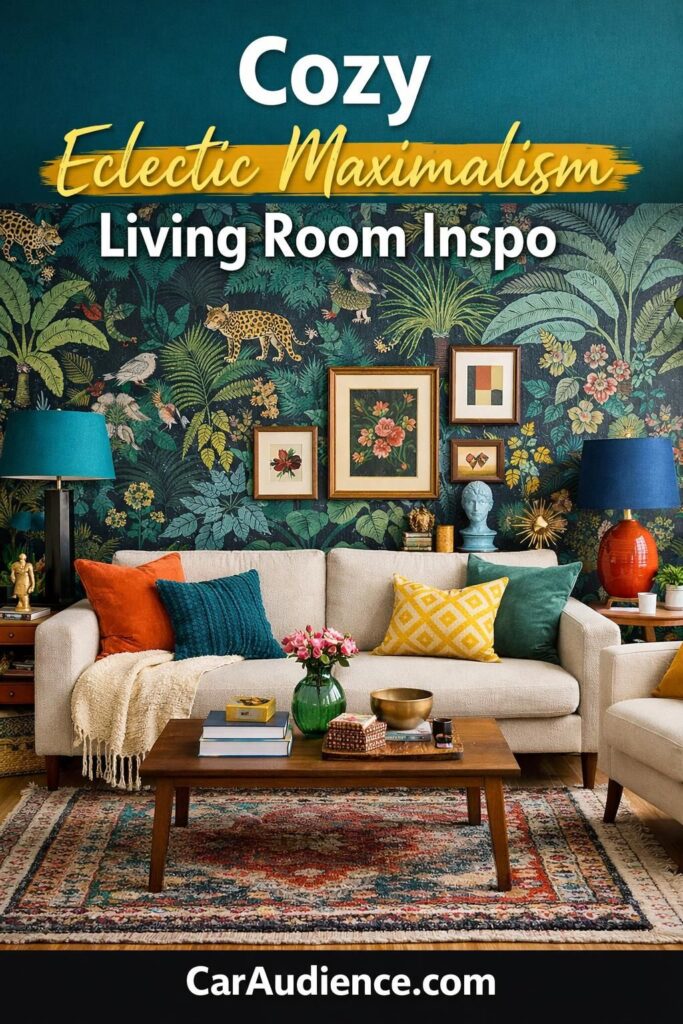
Key Takeaways
- Anchor rooms with one high-investment piece like a quality sofa or statement rug, then layer budget-friendly thrifted décor for depth.
- Apply the 60-30-10 color rule across price points, using dominant hues on large surfaces and accent colors through affordable accessories.
- Mix three pattern scales with shared anchor colors, combining splurge upholstery with budget textiles for sophisticated visual interest.
- Invest in architectural elements and built-ins while saving on trend-driven pieces like lighting, artwork, and vintage furniture finds.
- Layer vertical storage and flat-pack shelving with curated collections, balancing quality comfort pieces with thrifted treasures for effortless eclecticism.
How to Budget in Eclectic Maximalism: What to Splurge vs. Save
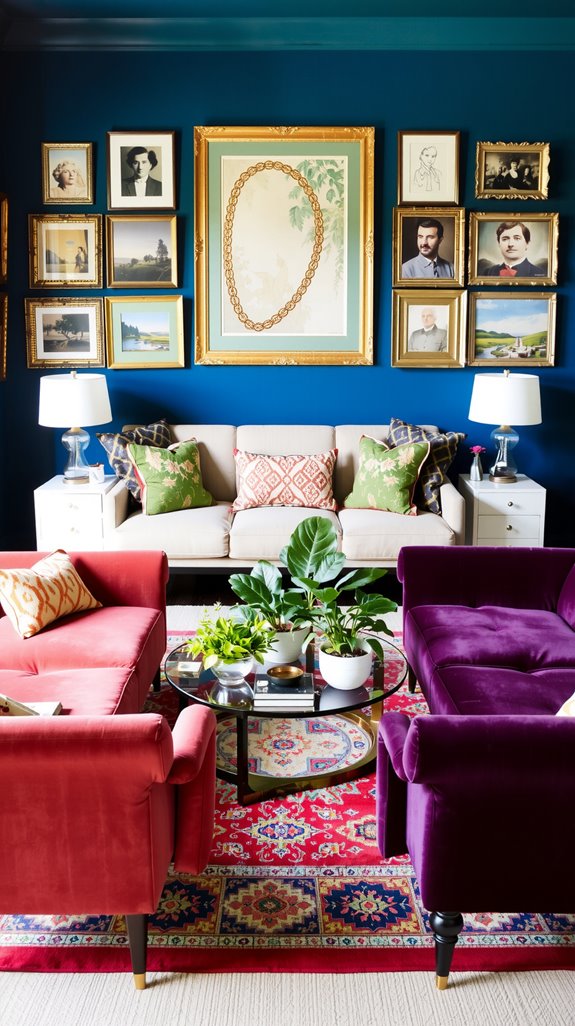
Maximalism doesn’t mean buying everything you see. The stuff that actually matters? Your architectural bones (think statement walls, quality flooring, built-ins) and the furniture you’ll sit on every day.
Save your money for a sofa and mattress that can handle getting restuffed with throw pillows every other week. Everything else, the quirky décor, vintage side tables, and wild textiles, should come from estate sales and consignment shops where you’ll pay pennies on the dollar.
Choosing Your Anchor Piece: The Foundation of High-Low Rooms
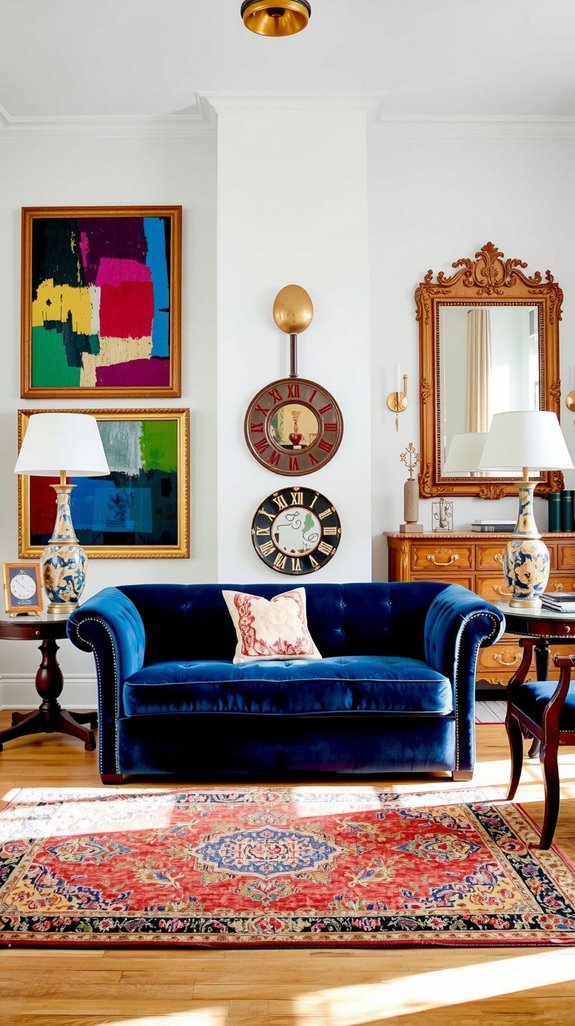
Every maximalist room needs that one piece that stops you in your tracks. Maybe it’s an oversized velvet sectional, a massive oil painting, or even original crown molding if you’re lucky enough to have it.
This anchor gives your eye somewhere to land instead of bouncing around the room like a pinball. Without it, you’re just living in organized chaos, and trust me, there’s nothing organized about it.
Layering Bold Colors Without Chaos: The Three-Hue Rule
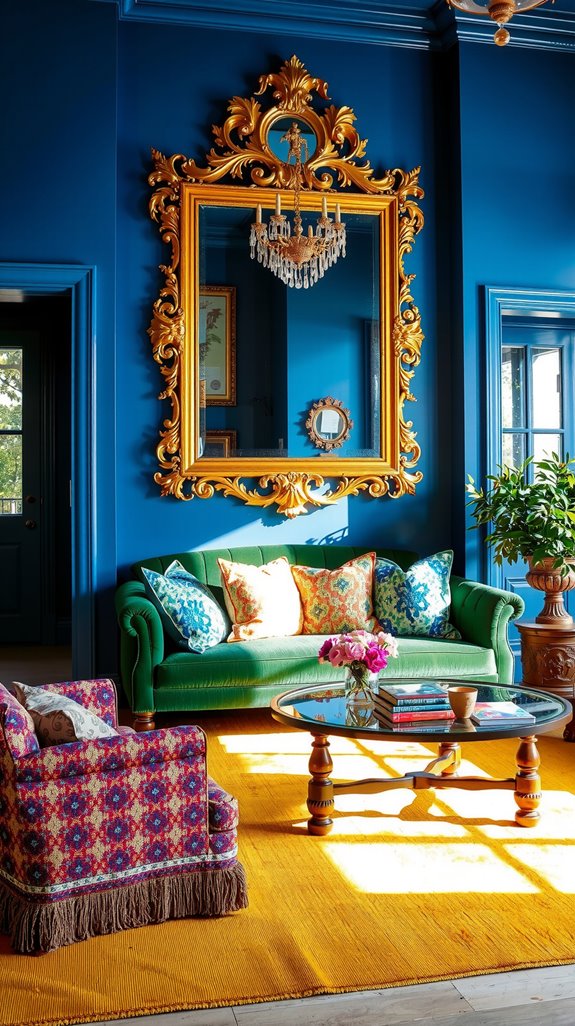
Color is where most people lose their nerve and end up with rooms that feel more migraine than maximalist. Pick three colors and stick to them using the 60-30-10 split.
Your main color covers about 60% of the room (walls, big furniture), your secondary takes up 30% (curtains, accent chairs), and your final color pops up in that last 10% through pillows and artwork. Playing with different shades of these same three colors adds depth without making your space look like a kindergarten classroom.
Mixing Patterns in Maximalist Spaces: Scale and Color Consistency
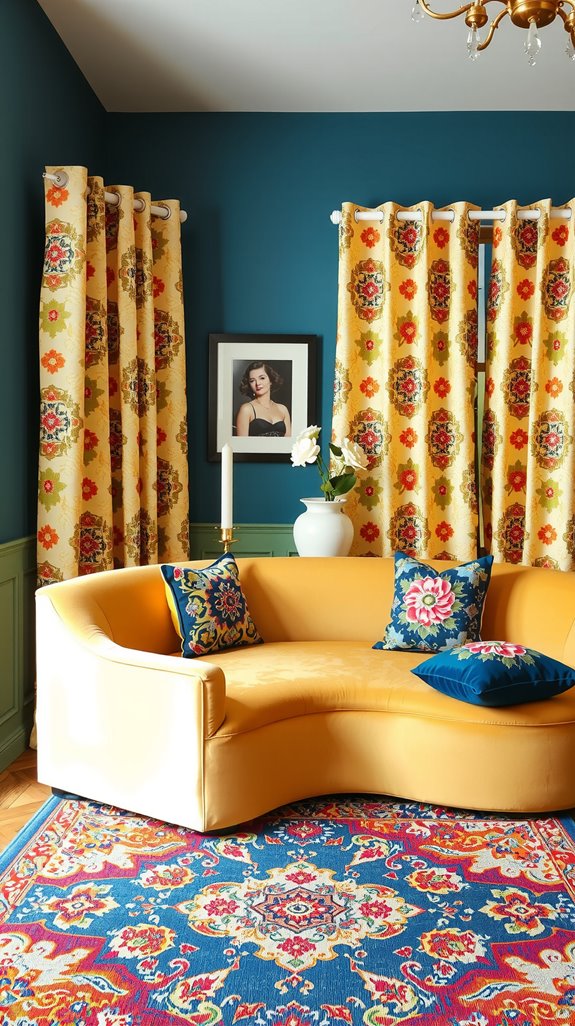
Patterns are non-negotiable in maximalism, but throwing them together randomly just looks sloppy. You need at least three different scales working together: big florals on your sofa, medium stripes on chairs, tiny geometrics on throw pillows.
The trick is threading two or three of your anchor colors through every pattern so nothing fights for attention. When you nail this, you can mix florals with plaids with paisleys, and somehow it all just works.
High-Low Texture Strategy: Velvet, Linen, and Flea-Market Finds
Texture does the heavy lifting when you’re mixing expensive and cheap pieces. Start with something plush like a velvet headboard or sofa to ground the room. Balance that richness with casual linen curtains or bedding that keeps things from looking too precious.
Then throw in your flea market scores, the stuff with actual wear and patina that makes a room feel lived in instead of staged for a photo shoot.
Where to Invest: Upholstery, Rugs, and Statement Lighting
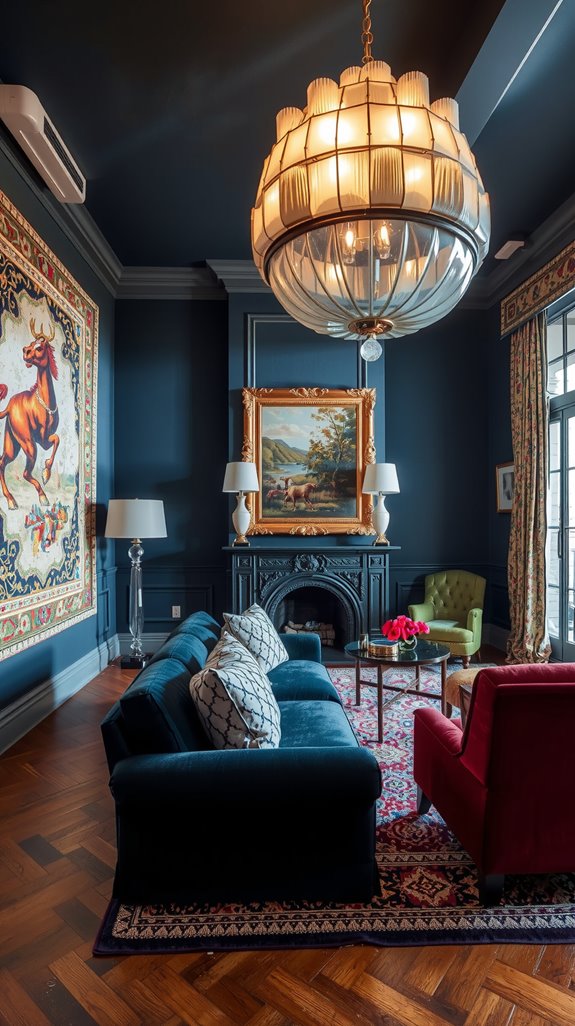
Your money should go into three things: good upholstery, real rugs, and one knockout light fixture. Buy a sofa with high-resilience foam and performance fabric that’ll survive at least a decade of your maximalist makeovers.
Invest in wool or handwoven rugs because they’ll tie your entire color scheme together and actually hold up to foot traffic. That statement, chandelier or pendant? Get one with solid construction because you’ll be staring at it every single day.
Gallery Walls on Any Budget: Originals, Prints, and Framed Textiles
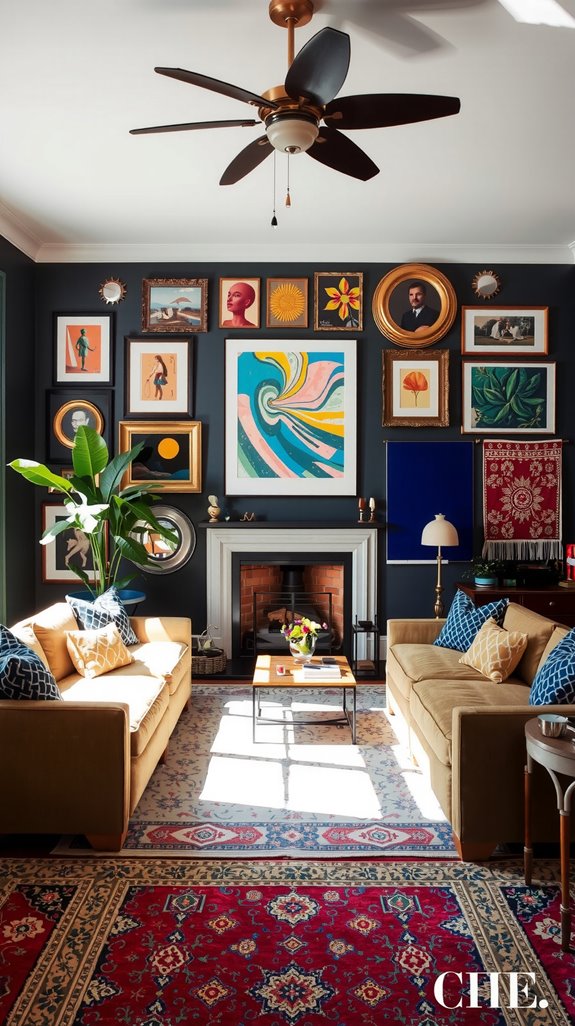
Gallery walls let you go wild without dropping thousands on one piece of art. Hit up thrift stores and estate sales, where you’ll find original paintings for under twenty bucks. Print out digital downloads at your local copy shop and frame vintage scarves or tea towels you picked up for nothing.
Spray paint all those mismatched frames the same color, lay everything out on the floor first, and mix up your media so it doesn’t look too matchy.
Curating Collections That Tell a Story, Not Create Clutter
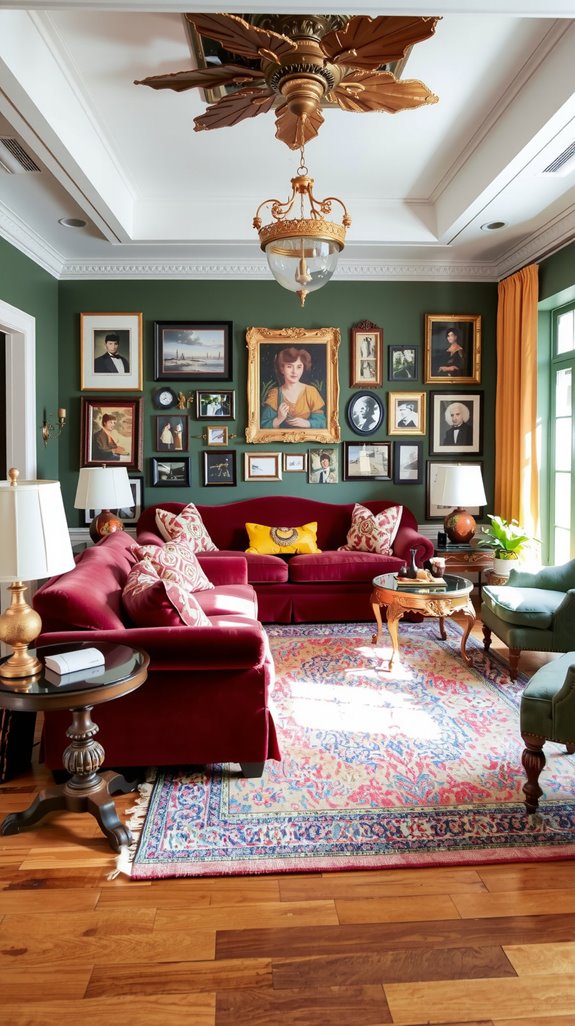
Gallery walls teach you how to arrange things with purpose, and you need to apply that same thinking to every shelf in your house.
Group your stuff by color, era, or theme so it looks intentional. Leave about 20 to 30 percent of your shelf space empty because even maximalists need breathing room. Edit what’s out there seasonally, use trays to corral smaller items, and make sure every surface has an actual purpose beyond “place to dump mail.”
Pairing Designer Wallpaper With Budget Furniture and Decor
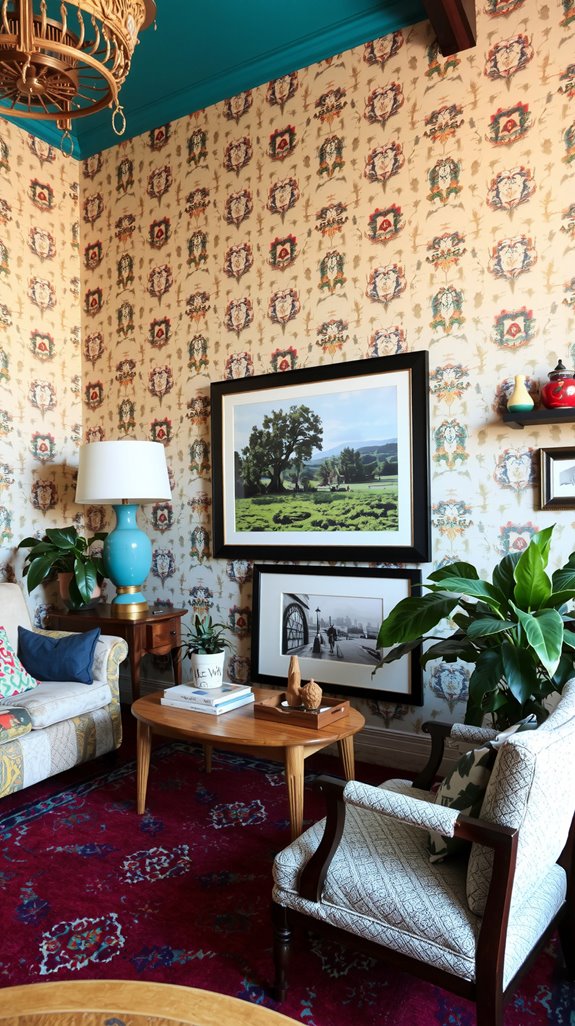
Designer wallpaper can make your IKEA furniture look like it costs ten times what you paid. Paper one accent wall behind your budget sofa, and suddenly nobody’s asking where you got your seating.
Pull two colors from the wallpaper pattern for your pillows and throws. Keep your upholstery simple when your walls are doing all the talking, then let cheaper accessories echo the wallpaper’s motifs.
Eclectic Maximalist Kitchens: Luxury Tile and Big-Box Cabinetry
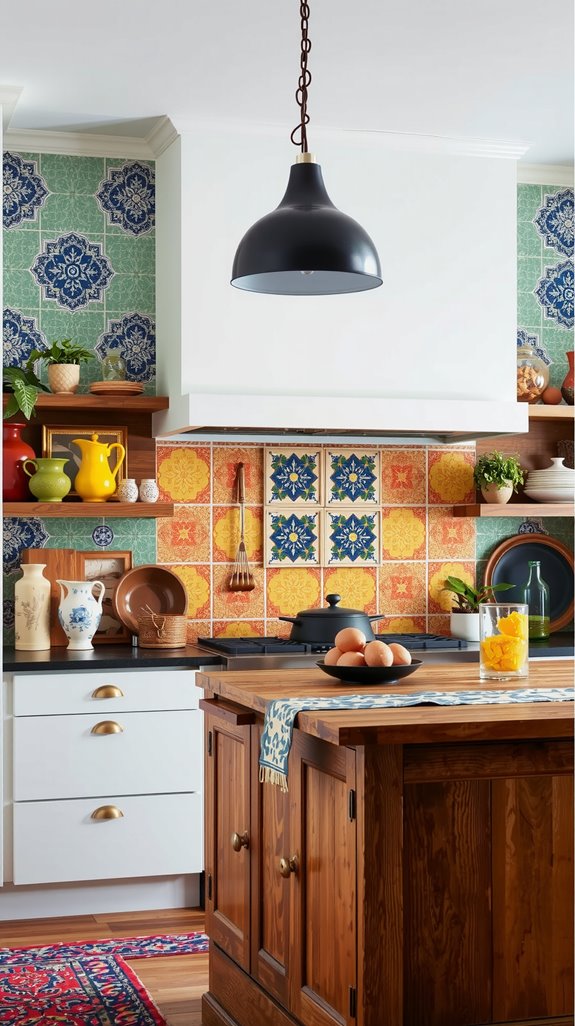
Kitchens are where the high-low strategy really pays off because nobody needs custom cabinetry to pull off maximalism. Splurge on porcelain backsplash tile with metallic details or bold geometric patterns.
Pair it with basic Shaker cabinets from Home Depot, painted in a jewel tone. Upgrade to brass or glass hardware, add some decorative trim, and play glossy tile against matte cabinets for contrast that looks way more expensive than it is.
One Statement Chandelier: Anchoring a Maximalist Dining Room
Your dining room can handle more drama than any other space in your house because people expect it. One oversized chandelier does all the work here.
Size it properly for your room dimensions and hang it about 30 to 36 inches above your table. Let everything else in the room play supporting role to that single sculptural piece overhead.
Mixing Eras in Living Rooms: Victorian Details With IKEA Seating
Victorian architecture comes with built-in maximalism through those high ceilings, fancy plasterwork, and deep window wells. The key is letting those original details dominate instead of competing with them.
Low-profile modern sofas from IKEA actually work better here than ornate antiques because they give those cornices and fireplaces room to shine. Repeat materials like oak, brass, or black metal across old and new pieces to tie everything together. Stick to a tight color palette and save your bright pops for pillows and throws.
Museum-Quality Art Meets Budget Shelving in Home Offices
Home offices have become display spaces now that we’re all on video calls, which means people are hanging serious art above their desks. You don’t need custom millwork to show off those pieces properly.
Flat-pack shelving costs a fraction of built-ins and gives you adjustable display space with decent lighting. The cheap shelving actually lets expensive art breathe instead of competing with fancy woodwork.
Antique Rugs as Entryway Anchors With Affordable Accents
An antique rug in your entryway does three jobs at once: protects your floors, cuts down on noise, and immediately tells guests you know what you’re doing.
Pull your paint colors straight from the rug’s pattern. Surround it with budget hooks, mirrors, and console tables that cost next to nothing because the rug is doing the heavy lifting.
Small-Space Maximalism: High-Low Curation for Studio Apartments
Small spaces can absolutely handle maximalism if you go vertical and get strategic about zoning. Put your money into your sofa and bed since those are what you’ll actually use.
Thrift everything else, side tables, lamps, and accent chairs. Use furniture to create separate zones instead of actual walls, wallpaper one accent wall for impact, and build your collections upward with shelving that keeps your floor space clear.