What this is: A practical guide to setting up the sleep zone in a man’s bedroom for genuinely better rest — covering the floor bed vs frame debate, blackout solutions, lighting that works with your biology, nightstand essentials, and why your phone needs to charge somewhere else.
Who benefits most: Men who are sleeping enough hours but still waking up tired, foggy, or slower to start than they should be.
Why it’s worth reading: The sleep zone is the one part of a bedroom ideas for men setup that has the most direct impact on how you perform the next day — and most men set it up last instead of first.
Most men treat the sleep zone as an afterthought. They pick the bed, throw down some bedding, and move on to the desk and the lighting and the aesthetic. Then they wonder why they’re waking up stiff, foggy, or just not fully recovered.
Sleep is where your muscles repair, your hormones regulate, and your brain consolidates everything you learned and experienced.
Getting eight hours in a poorly designed room is not the same as getting eight hours in one built around actual rest.
Here’s how to build the sleep zone right.
Floor Bed vs Bed Frame: What’s Right and What It Misses
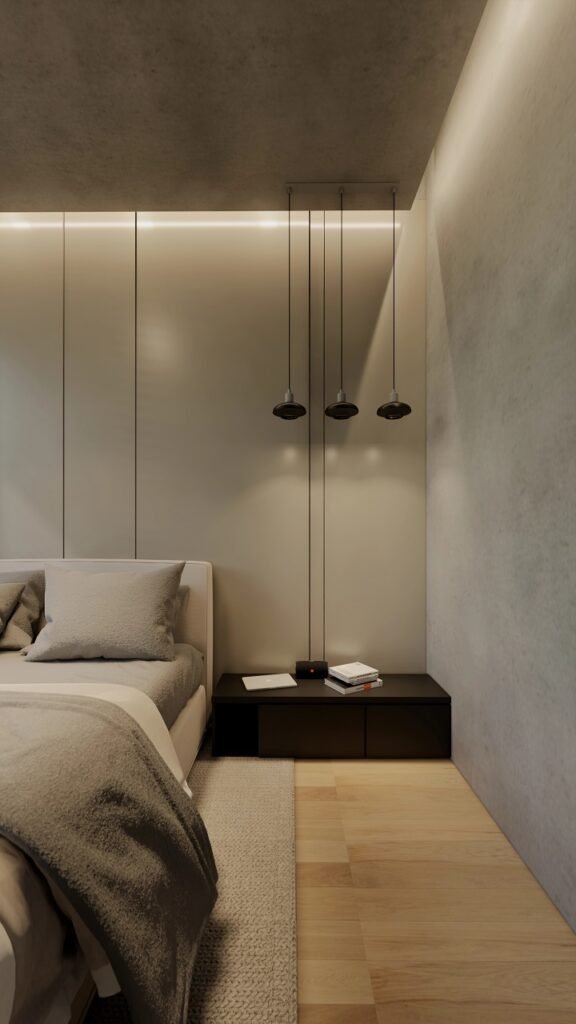
The floor bed aesthetic is all over room ideas for men content right now, and the visual case for it is real.
A mattress low to the ground anchors the room, lowers the visual centre of gravity, and gives the space a clean, dark bedroom ideas energy that frames and box springs rarely match.
It’s also cheaper than buying a proper base, which is why it’s everywhere in first apartment setups.
The practical case is more complicated.
Sleeping directly on the floor restricts airflow beneath the mattress, which traps heat and moisture.
Foam mattresses in particular are vulnerable: memory foam on a hard floor traps heat underneath, accelerates wear, and in damp climates encourages mold growth inside the mattress core. Many manufacturers void the warranty entirely if the mattress is used without proper support.
A low platform bed frame solves this cleanly.
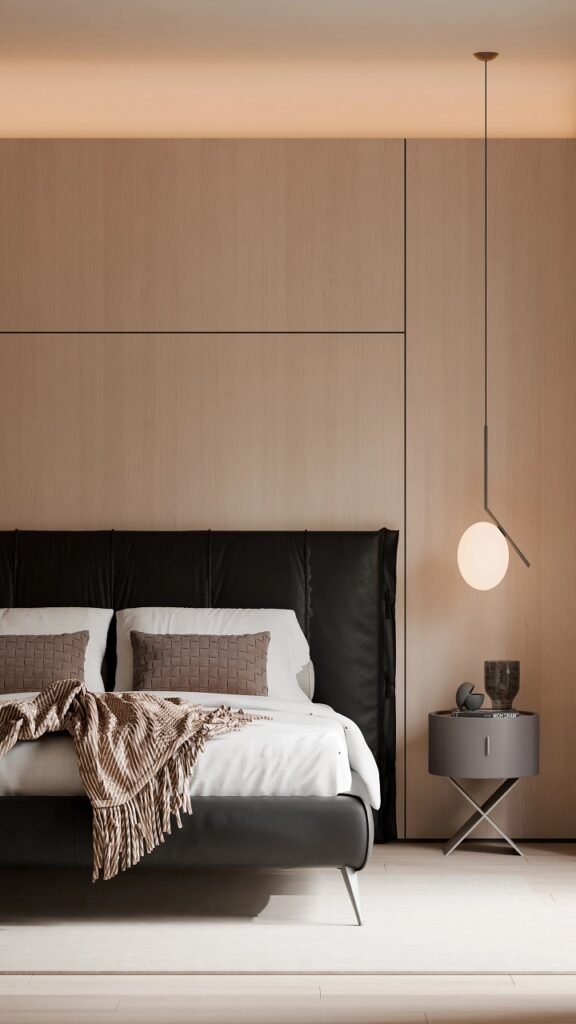
Sitting 3-4 inches off the ground, it preserves the low aesthetic that makes floor beds appealing while allowing airflow, protecting the mattress, and giving you under bed storage for gear you want out of sight.
Visually, the difference between a platform frame and a floor mattress is minimal in a photo. Functionally, the difference over two years is significant.
Here’s a quick comparison:
| Floor Mattress | Low Platform Frame | |
| Aesthetic | Minimal, grounded | Nearly identical |
| Airflow | Poor | Good |
| Foam mattress compatibility | Low | High |
| Warranty | Often voided | Preserved |
| Under-bed storage | None | Available |
| Cost | Lowest | Low to moderate |
| Best for | Short term, firm mattresses, cool dry climates | Long term, most mattress types |
The verdict: go low, but get the frame.
Blackout Solutions That Actually Work in a Rental
Light is the most direct environmental signal your circadian rhythm receives.
According to the Sleep Foundation, even low levels of artificial light during sleep can suppress melatonin production and disrupt the circadian cycle.
This means the streetlight bleeding through your curtains at 3am is doing measurable damage to your recovery, even if you sleep through it.
Blackout curtains are the standard fix and the right one.
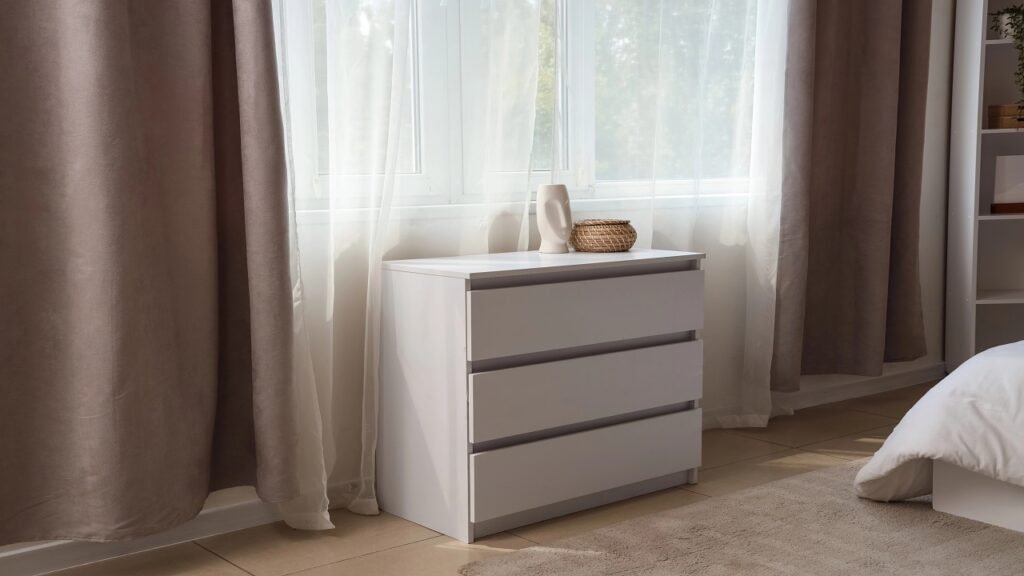
A pair of well fitted blackout panels from IKEA or Amazon runs 20$-45$. Installs on a tension rod with zero drilling, and works in any rental.
The key detail most men miss: curtains need to overlap the window frame by at least three inches on each side to block edge light.
A curtain that fits the window exactly lets light leak down both sides and defeats the purpose.
For renters dealing with especially bright windows or odd shapes, blackout liner panels clip to existing curtains and add light blocking without replacing what’s already up.
Another option worth knowing: self adhesive blackout film sticks directly to glass, blocks light completely, and peels off cleanly at the end of a lease.
It costs around 15$-25$ for a standard window.
Quick blackout options ranked by cost and effort:
- Blackout curtain panels — best overall, twenty to forty dollars, fits most windows,
- Blackout liner clips — best for renters with existing curtains, ten to twenty dollars,
- Self-adhesive window film — best for skylights or non-standard windows, ten to twenty dollars,
- Blackout blinds — most complete solution, forty to eighty dollars, some rental restrictions apply.
Warm vs Cool Lighting: The Setting That Changes Everything
Most men run their bedroom on one light source at one temperature all evening. That single overhead bulb is doing the same thing at 11pm that it was doing at 6pm, which is the problem.
The Sleep Foundation is explicit on this. Low illuminance and warm colour temperature support the transition to sleep, while bright cool light delays it by keeping the brain in an alert state past when the body wants to wind down.
RELATED: 13 Closet and Wardrobe Storage Ideas That Makes Getting Ready Effortless!
Colour temperature is measured in Kelvin.
Cool light runs at 4000K and above. It’s the light in your office, your bathroom, and almost certainly your overhead bedroom fixture.
Warm light runs at 2700K to 3000K and reads amber, not white.
The CarAudience guide on LED strip lighting covers the full Kelvin scale in detail, but the practical rule for a mens bedroom sleep zone is simple: anything you use after 9pm should be warm.
The implementation doesn’t need to be complicated:
| Time of day | Light source | Temperature | Function |
| Morning and daytime | Overhead or desk lamp | 4000K to 5000K | Alertness, focus |
| Evening (6pm onwards) | Table lamp or floor lamp | 2700K to 3000K | Wind-down, relaxation |
| Pre-sleep | Nightstand lamp only | 2700K | Rest signal |
| Sleeping | No light source | N/A | Full darkness |
One warm lamp on the nightstand, switched on when the overhead goes off, is the minimum viable setup.
A warm LED strip behind the headboard adds ambient glow without directing light toward the eyes.
Both together cover the cozy dark bedroom aesthetic that dominates the bedroom ideas for men space. And both are doing real biological work while they look good.
Nightstand Essentials: What Goes There and What Doesn’t
Walk into most men’s bedrooms and the nightstand tells the whole story.
Pockets get emptied there, half-read books land there, last night’s glass stays there, and increasingly — the phone charger lives there. Every one of those items has a job on the nightstand.
That charger does not.
A well set nightstand has three things:
- A warm lamp (the only one running in the room by 9pm)
- A glass of water for the morning
- One book or journal in the lamplight — the habit you want to pick up at night instead of the screen
That’s it. Keys and wallet go on a tray on the dresser. Everything else has a drawer or a shelf. The clarity of the nightstand surface is a direct signal to your brain that the day is resolved and rest is appropriate.
A cluttered nightstand reads as unfinished business, which keeps the brain at a low level of alertness longer than you’d expect.
Phone Charging Away From the Bed — Non Negotiable
Keeping the phone on the nightstand is the single most common mens bedroom setup error, and it compounds in both directions.
Screens emit blue spectrum light that actively suppresses melatonin production, so checking the phone in the last thirty minutes before sleep delays sleep onset.
Having it within arm’s reach at 7am means the morning starts with scrolling before the brain has formed a single clear thought.
Move the charger across the room tonight.
A wall outlet near the door, a dresser across from the bed, anywhere that requires standing up to silence the alarm. The physical act of standing is the hardest part of any morning, and the phone being across the room makes it automatic.
A basic alarm clock on the nightstand replaces the alarm function for around ten to fifteen dollars and removes the only reason most men feel they need the phone within reach.
This is not a productivity hack. It’s a room design decision with a measurable payoff in sleep onset, sleep quality, and morning clarity. The room is either set up to support good sleep or it isn’t.
Getting the phone off the nightstand is the fastest single change in a dark bedroom ideas setup that pays off the next morning.
The Sleep Zone Checklist
Use this before committing to any purchases to create your own room ideas for men bedroom dark:
- ☐ Mattress on a low platform frame, not directly on the floor
- ☐ Blackout curtains overlapping the frame by three inches on each side
- ☐ Warm 2700K lamp on the nightstand as the only evening light source
- ☐ Overhead light switched off by 9pm and not used again until morning
- ☐ Nightstand holding only a lamp, a glass of water, and one book or journal
- ☐ Phone charger on the opposite side of the room from the bed
- ☐ Room temperature between 65 and 67 degrees Fahrenheit for deep sleep
Get the sleep zone right and every other upgrade in the room builds on a working foundation. The desk zone, the recovery corner, the aesthetic — all of it is secondary to this. Start here.