The Clark Fork River light, the mountain backdrop, and the mix of ranchers and artists sharing the same coffee shops all add up to make Missoula a place with genuine visual character.
That character is exactly what the best boho camper interiors out here try to capture, not the curated Instagram version, but the real, layered, lived-in kind that takes patience and a good eye for what actually holds up on the road. These 18 ideas are a solid place to start building that look for yourself.
Contents
- 1 Creating a Natural Foundation With Layered Jute and Sisal Rugs
- 2 Mixing Vintage Textiles With Modern Boho Patterns
- 3 Incorporating Rattan Storage Solutions for Style and Function
- 4 Designing a Cozy Reading Nook With Varied Textures
- 5 Blending Earth Tones Through Throw Pillows and Blankets
- 6 Crafting a Boho-Inspired Kitchen Display
- 7 Installing Natural Fiber Window Treatments
- 8 Maximizing Space With Woven Storage Baskets
- 9 Adding Character With Vintage Maps and Botanical Prints
- 10 Enhancing Ambiance With Mixed Material Lighting
- 11 Utilizing Reclaimed Wood for Custom Shelving
- 12 Styling Your Camper’s Outdoor Living Space
- 13 Incorporating Local Montana-Inspired Elements
- 14 Arranging Macramé Wall Features
- 15 Selecting Statement Pieces for Small Spaces
- 16 Balancing Pattern Mixing in Limited Square Footage
- 17 Creating Warmth With Natural Wood Accents
- 18 Styling Open Shelving With Bohemian Flair
Creating a Natural Foundation With Layered Jute and Sisal Rugs
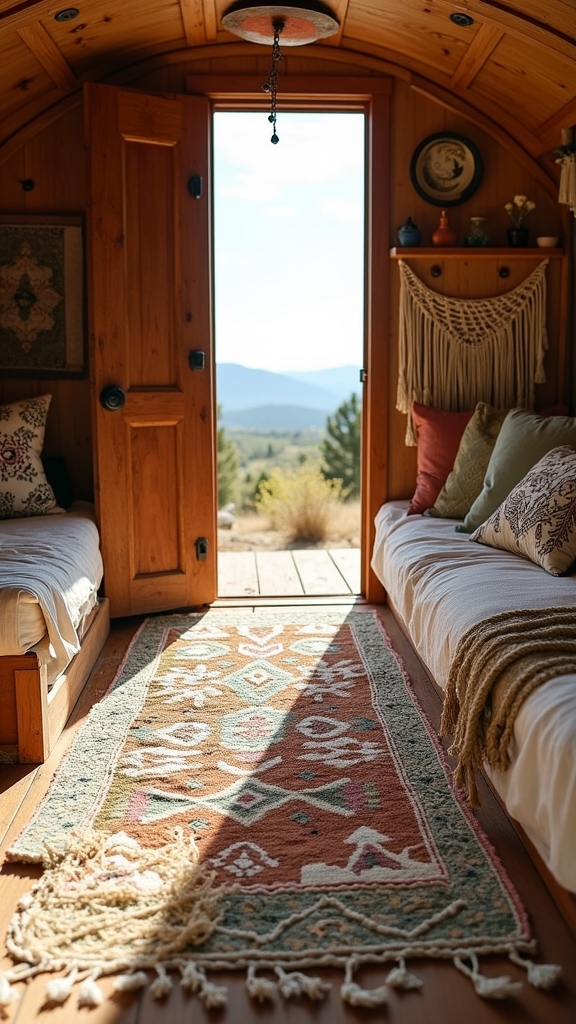
Jute and sisal rugs are where most good camper interiors start, and for good reason. Jute runs softer underfoot and takes layering well; sisal holds its edges cleaner and handles foot traffic without apology.
Stack them with a larger sisal underneath and a smaller jute runner over the top, and you’ve got instant depth without spending much.
They’re also genuinely biodegradable, which matters when you’re trying to keep your rig low-impact.
SEE THIS: 23 Feminine Boho Camper Interior Renovations From Boulder, Colorado!
Mixing Vintage Textiles With Modern Boho Patterns
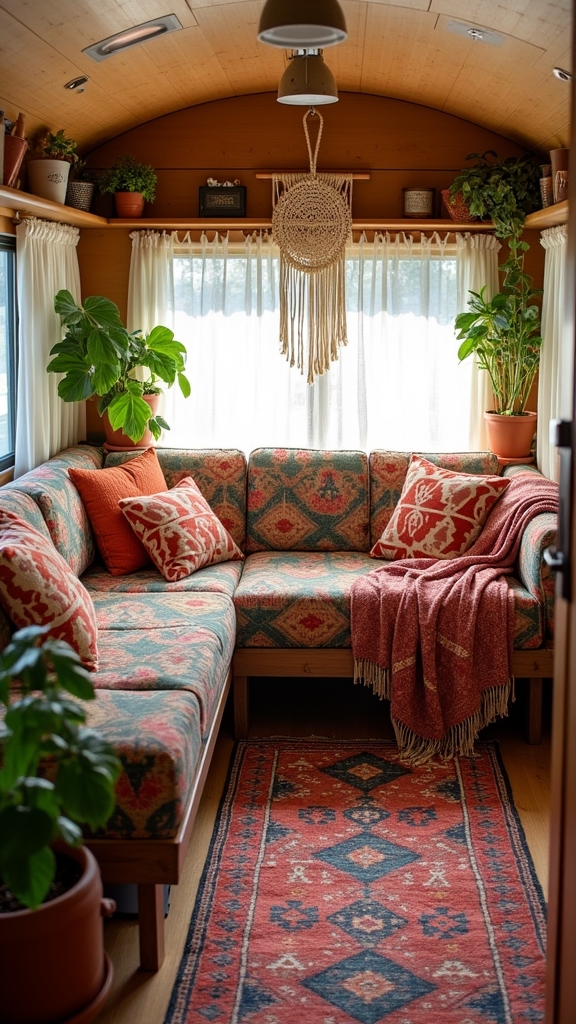
The vintage quilts you find at Missoula’s weekend markets often have more personality than anything sold new.
Pair one with a modern geometric throw, and the contrast does the work for you, old geometry talking to new geometry.
The trick is holding your color palette consistent across both; pick two or three anchor tones and let everything else orbit around them.
SEE THIS: 27 Dreamy Boho Camper Interior Makeovers From Austin, Texas!
Incorporating Rattan Storage Solutions for Style and Function
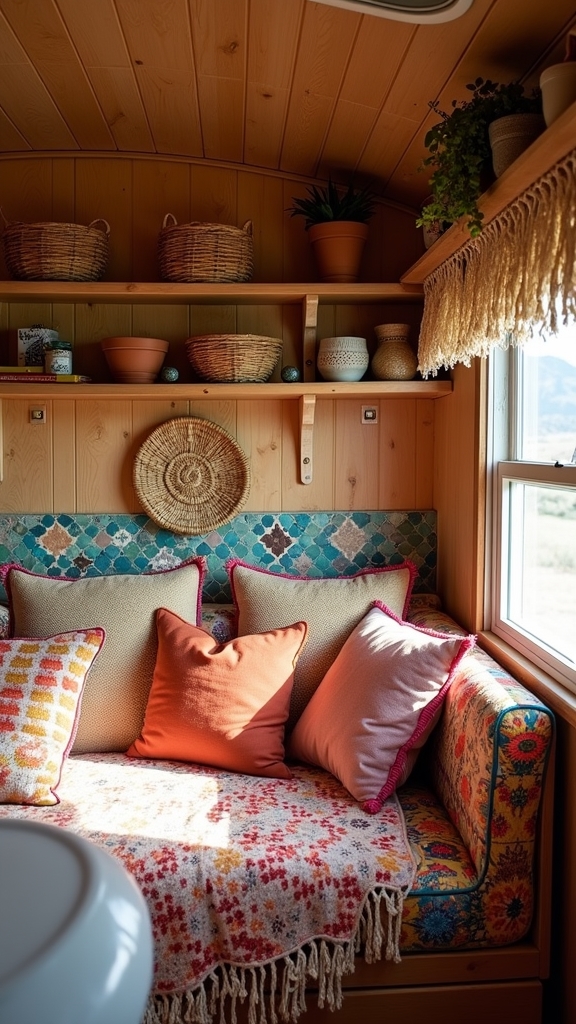
After a few weeks on the road, you learn fast that storage without airflow becomes a smell problem.
Rattan and woven water hyacinth baskets breathe, which keeps gear and food staples from turning funky in a closed cabinet.
Mount them on walls to pull double duty as storage and texture, and suddenly your vertical space is earning its keep.
SEE THIS: 18 Free-Spirited Boho Camper Interior Styles From Sedona, Arizonas!
Designing a Cozy Reading Nook With Varied Textures
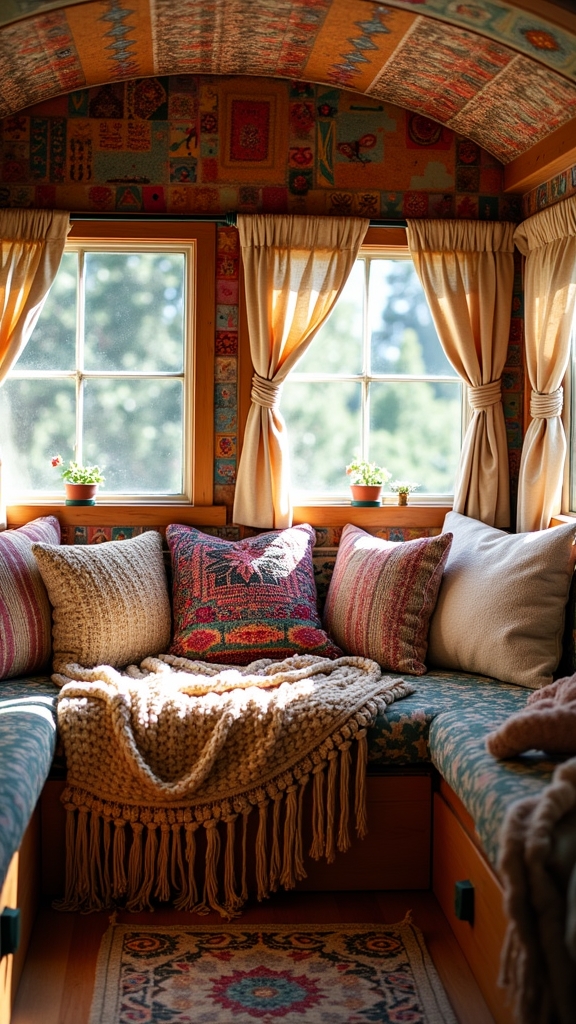
A good reading nook in a camper is less about square footage and more about layering the right things into a corner.
Start with a plush rug, add a secondhand wicker chair, then load it up with velvet pillows and a faux fur throw that you actually want to reach for.
A macramé wall hanging nearby and a woven basket for books within arm’s reach, and the corner becomes a destination rather than dead space.
SEE THIS: 21 Camper Decor Themes That Will Instantly Cozy Up Your Tiny Home on Wheels.
Blending Earth Tones Through Throw Pillows and Blankets
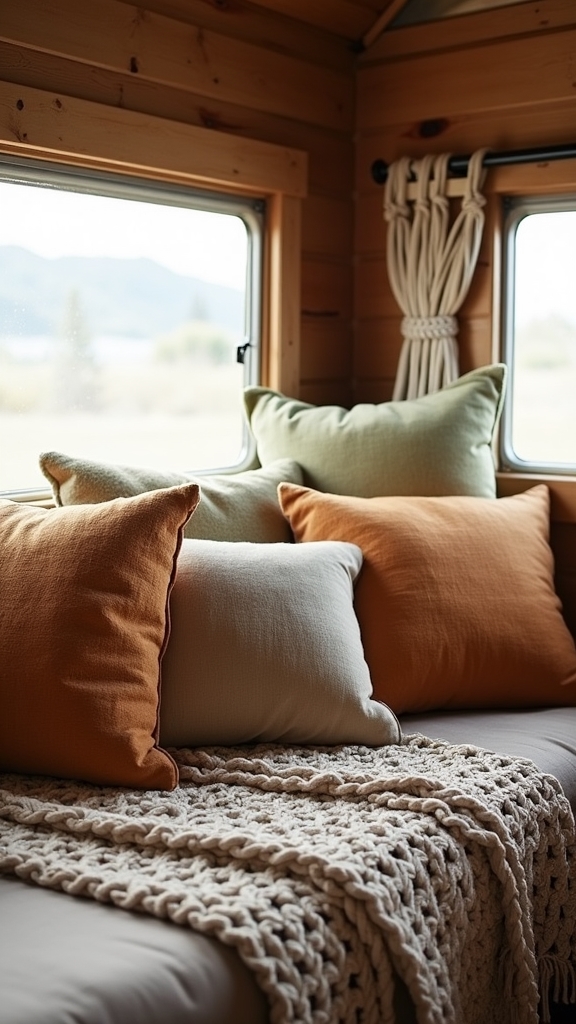
Rust, terracotta, warm ivory, sand, these colors were made for Montana light, which runs golden and long in the evenings.
Mixing a chunky knit blanket against a smooth velvet pillow sounds like a small detail, but the contrast is what makes a sleeping area feel intentional rather than thrown together.
Group your textiles in clusters rather than spreading them evenly, and leave some breathing room between groupings.
SEE THIS: 35+ Outdoor Fall Camper Décor Ideas for Your RV Campsite.
Crafting a Boho-Inspired Kitchen Display
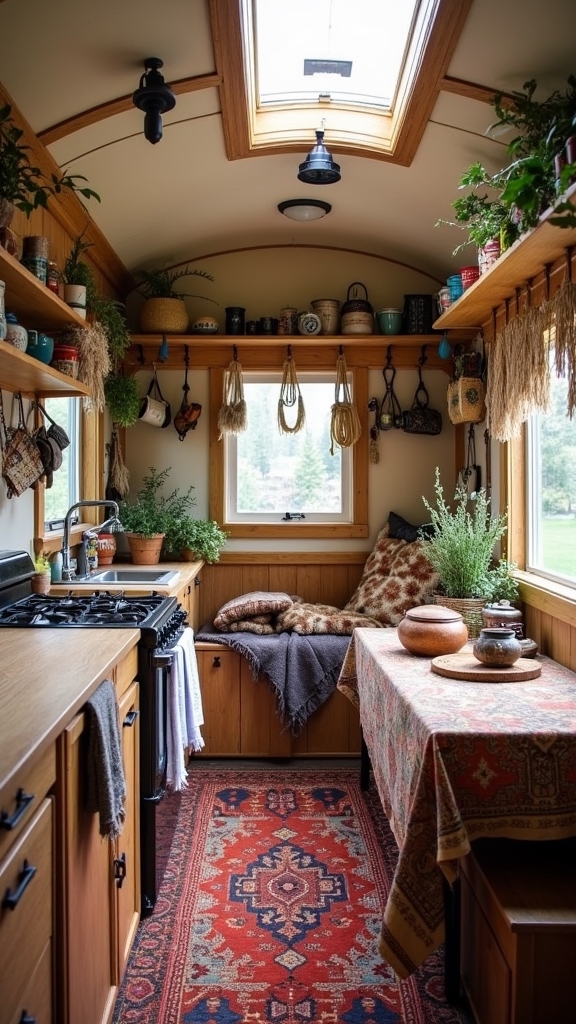
Camper kitchens are usually the ugliest corner of an otherwise thoughtful interior, but they don’t have to be.
Suction-cup hangers for mugs, a pegboard painted in warm ochre or clay, macramé herb holders that actually keep basil alive, these things cost almost nothing and change the whole feeling of the space.
Open shelving with a few terracotta pots pulls the earth-tone palette into an area that normally gets ignored.
Installing Natural Fiber Window Treatments
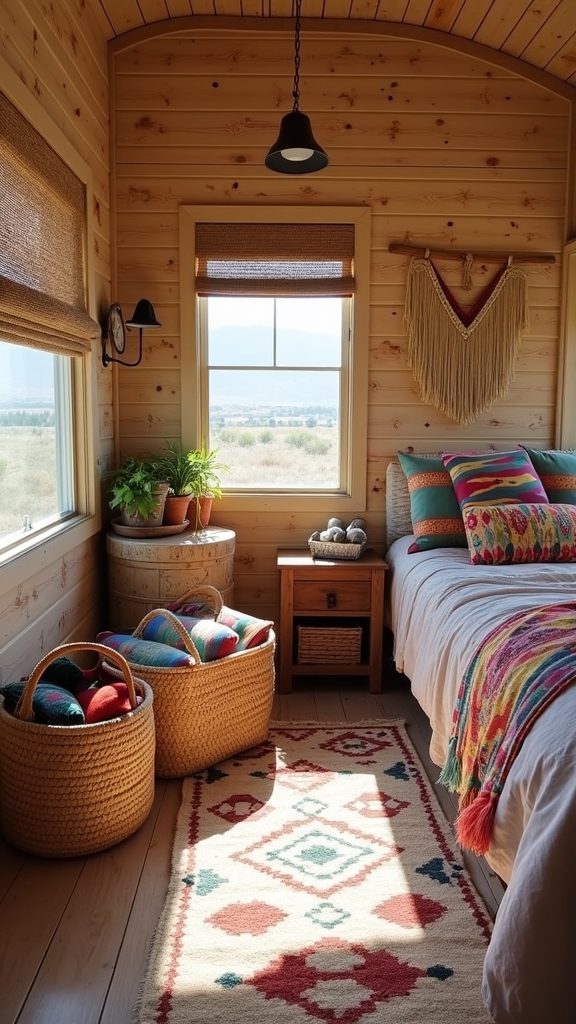
Bamboo, rattan, and jute shades are the only window treatments worth bothering with in a boho build.
They filter light in a way that feels warm rather than blocked, and they install in under ten minutes with a couple of screws per bracket.
The texture they add to a window frame, especially against raw wood trim, is the kind of detail that makes visitors ask what you did differently.
Maximizing Space With Woven Storage Baskets
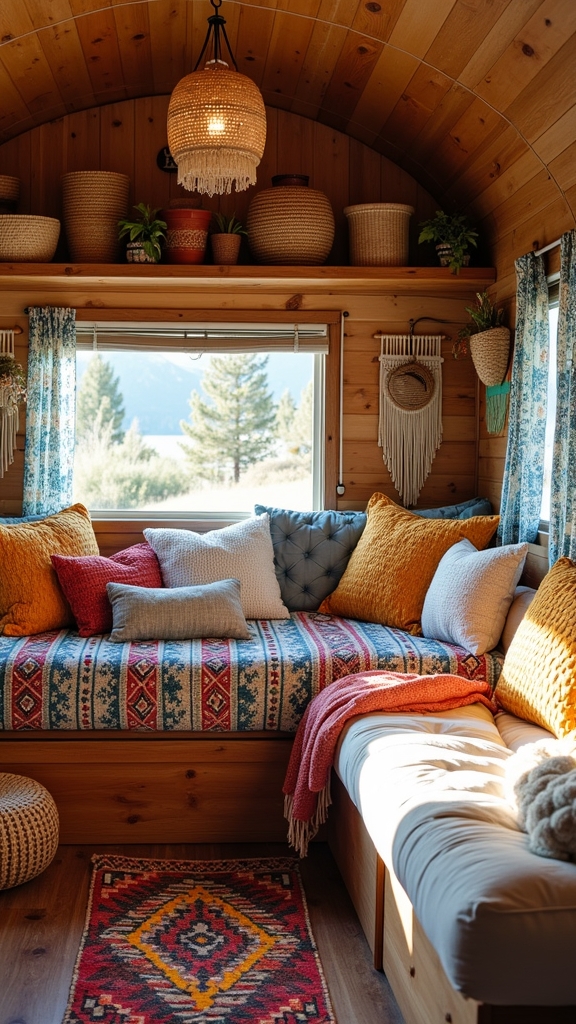
Willow, water hyacinth, and rattan all breathe well and hold their shape after years of use, which cheap fabric bins simply don’t.
Mount them on walls or stack them in columns to pull storage off the floor and open up the living area. Their muted, natural tones sit quietly against bolder textiles rather than competing with them.
That restraint is exactly what keeps a small interior from feeling like a storage unit with throw pillows.
Adding Character With Vintage Maps and Botanical Prints
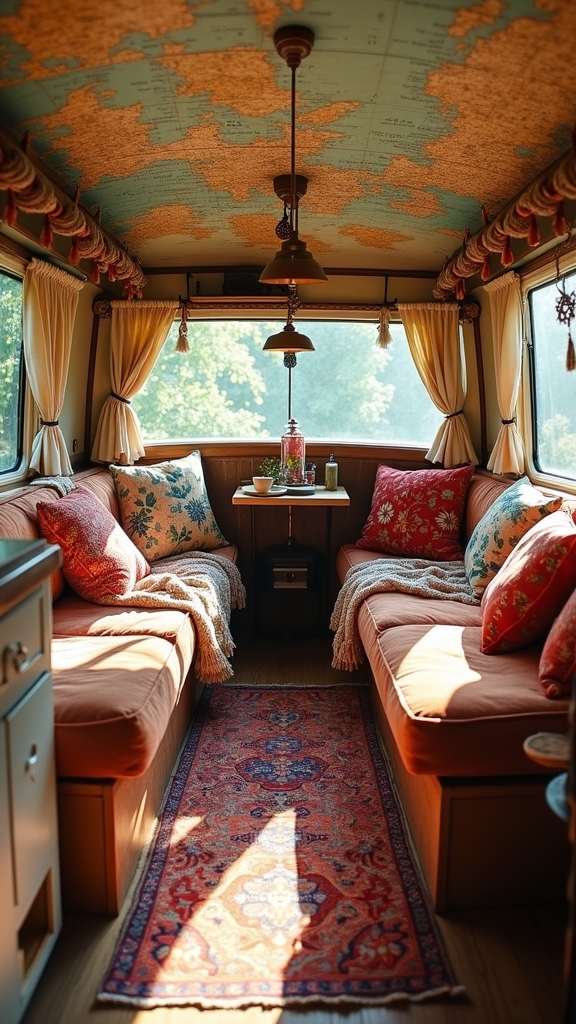
Old maps and botanical prints do something that modern art rarely pulls off in a camper: they make the space feel like it has a history.
Layer them on walls using lightweight adhesives, mixing frame styles and sizes rather than matching everything.
A dog-eared road map of the Northern Rockies next to a hand-illustrated wildflower print tells a story about who lives in this rig.
Enhancing Ambiance With Mixed Material Lighting
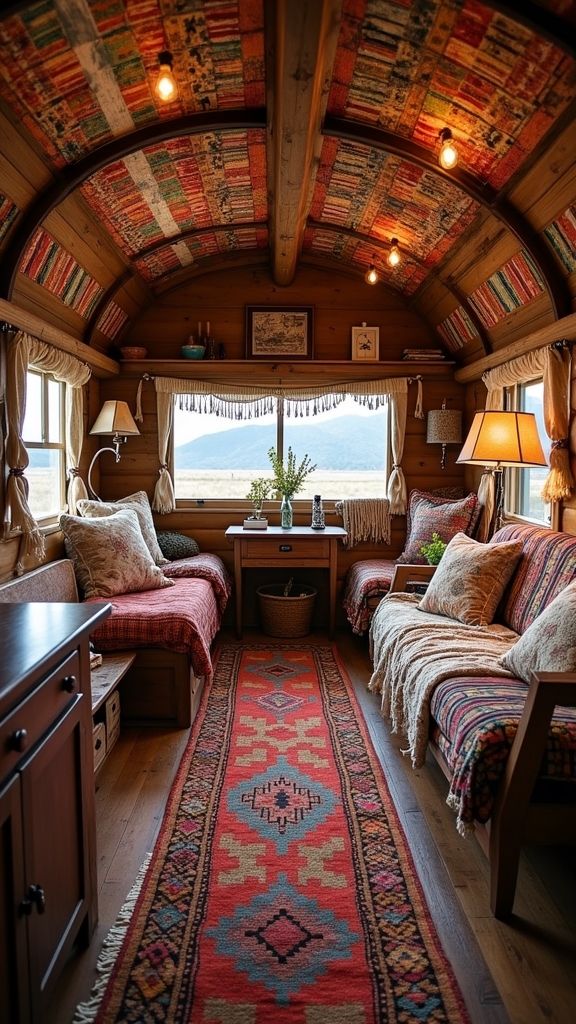
Overhead lighting in most campers is brutal, flat, bright, and unflattering.
The fix is layering: a beaded pendant or Moroccan star fixture for ambient light, wall sconces with aged glass for focused warmth, and battery-operated LED string lights for the low-glow evening hours.
Mixing wood, rattan, and fabric across your fixtures ties them together without making them matchy.
Utilizing Reclaimed Wood for Custom Shelving
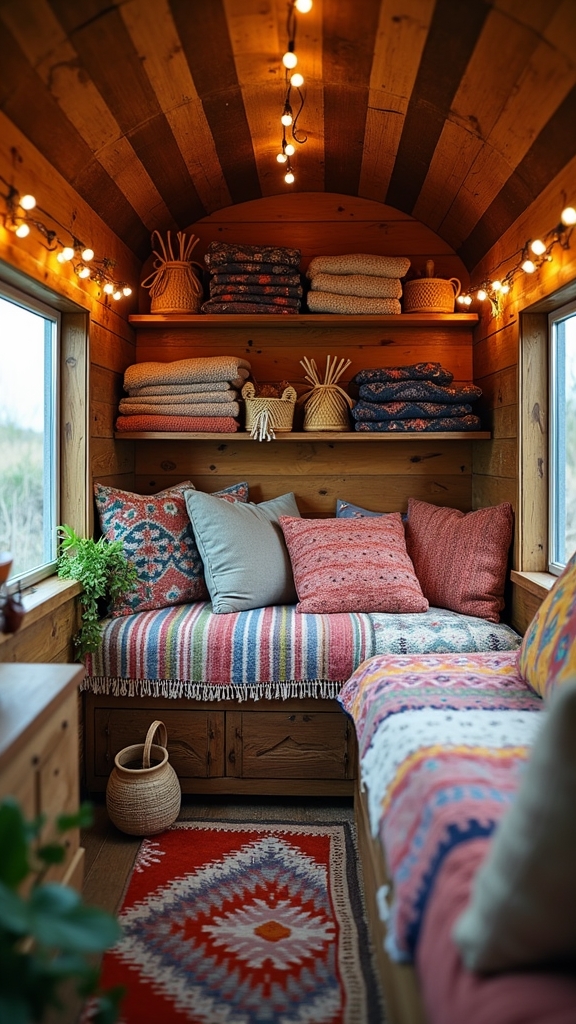
Reclaimed wood shelves are one of those things where the imperfections are the point.
The grain variations and old nail holes give the wood a history that new lumber simply can’t fake.
Pair boards with simple metal brackets, clean lines against rough wood, and you get a contrast that reads as thoughtful rather than rustic-cliché.
Styling Your Camper’s Outdoor Living Space
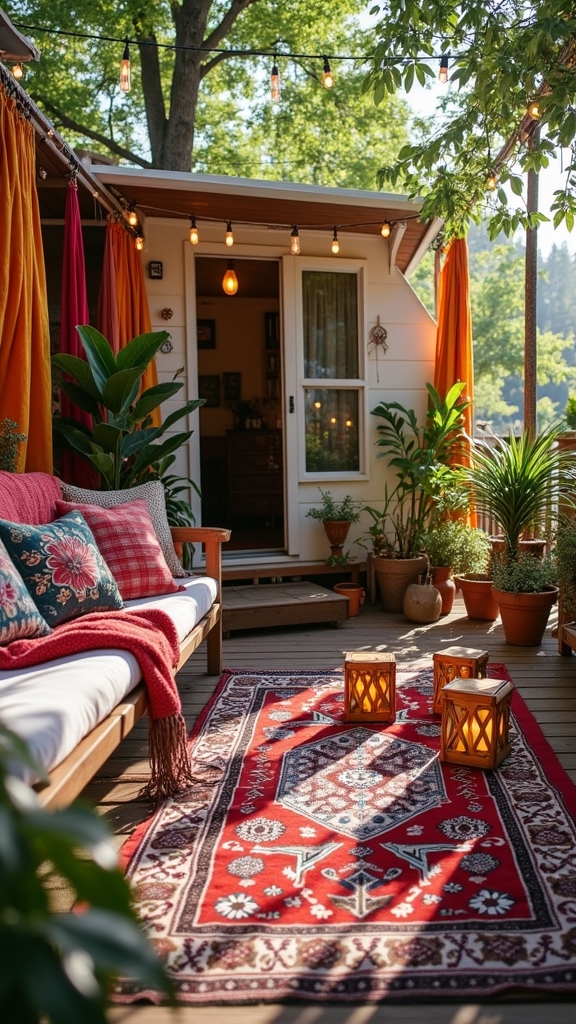
Your campsite is another room if you treat it that way.
A jute rug outside the door, weather-resistant cushions on collapsible chairs, and a strand of warm string lights overhead can create an outdoor living room that reflects the same intention as the interior.
Woven baskets and a potted plant or two carry the natural material language outside, so the transition from in to out feels continuous.
Incorporating Local Montana-Inspired Elements
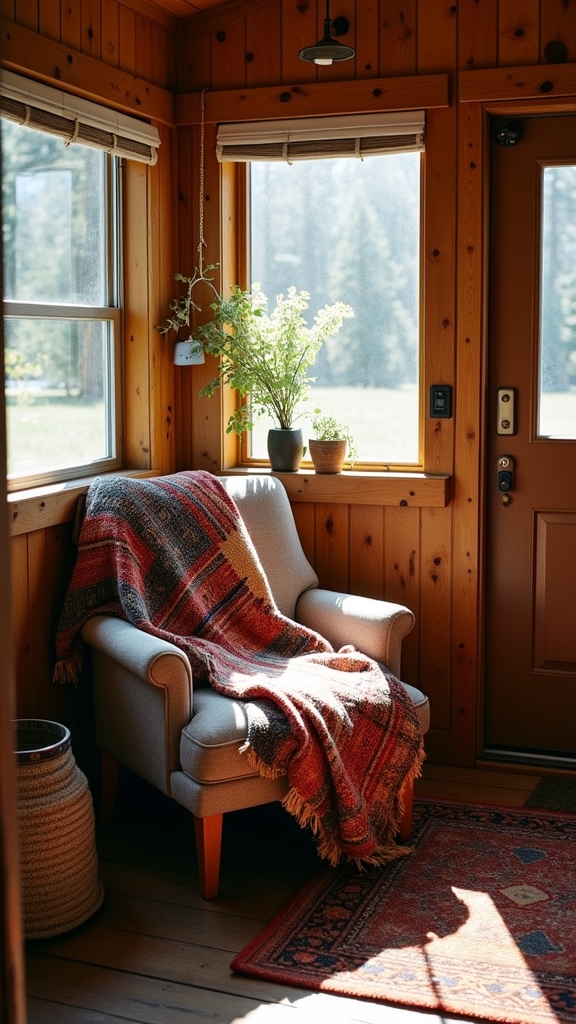
Montana’s color palette is right there in front of you if you pay attention.
The sage green of the Rattlesnake Wilderness, the blue-gray of the Bitterroot range, and the warm brown of worn leather on a working saddle are all worth borrowing.
Incorporate a piece of regional craft when you find it, a Salish-inspired woven piece or a hand-thrown ceramic from a local kiln.
Arranging Macramé Wall Features
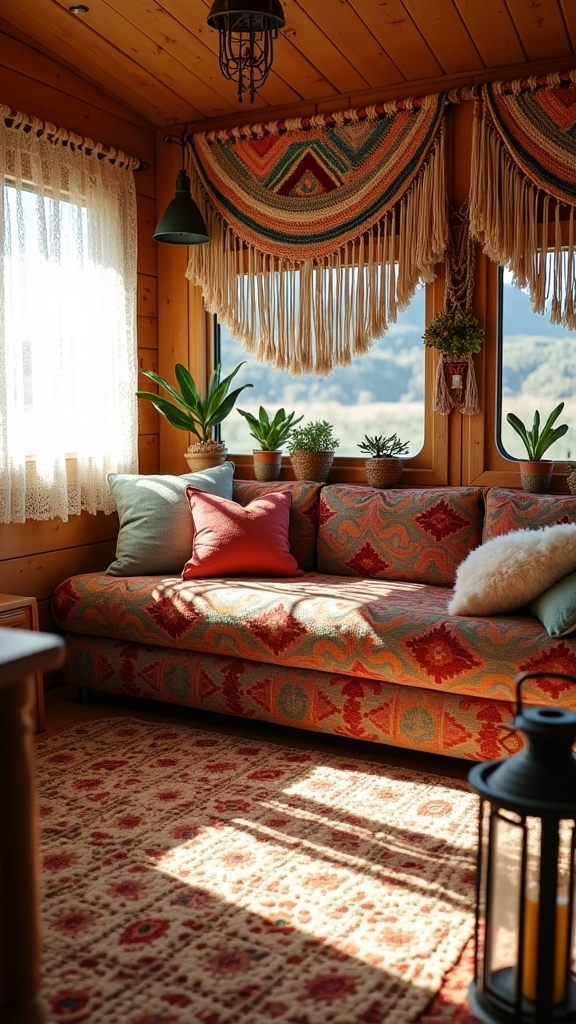
Macramé works best when it’s placed where it can interact with light and architecture, not just hung flat on a blank wall.
Frame a window or mirror with a piece to catch the light and pull some warmth into the room. Layer smaller hangings with woven textiles nearby, mixing cotton and jute for variation in texture and tone.
The entry area of a camper is an underused spot, and a good hanging there sets the tone for the whole interior the moment you step inside.
Selecting Statement Pieces for Small Spaces
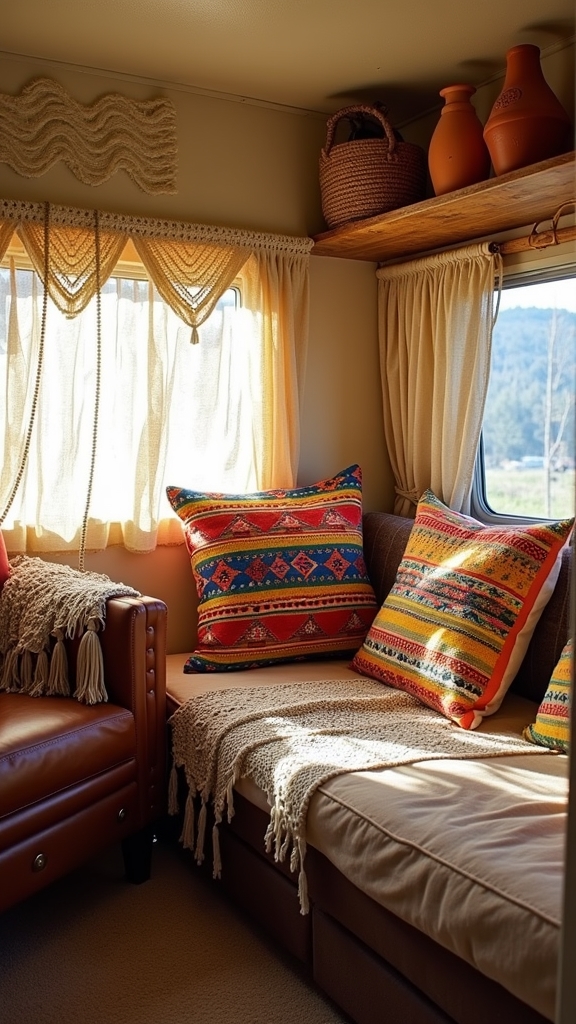
In a small space, every statement piece needs a practical justification. A boldly upholstered storage ottoman does triple duty as seating, footrest, and hidden storage, three jobs in the footprint of one.
A sculptural rattan armchair with an interesting silhouette gives the eye somewhere to land without crowding the floor plan.
The shapes you choose matter as much as the colors; organic curves soften the boxy geometry that most campers are working against.
Balancing Pattern Mixing in Limited Square Footage
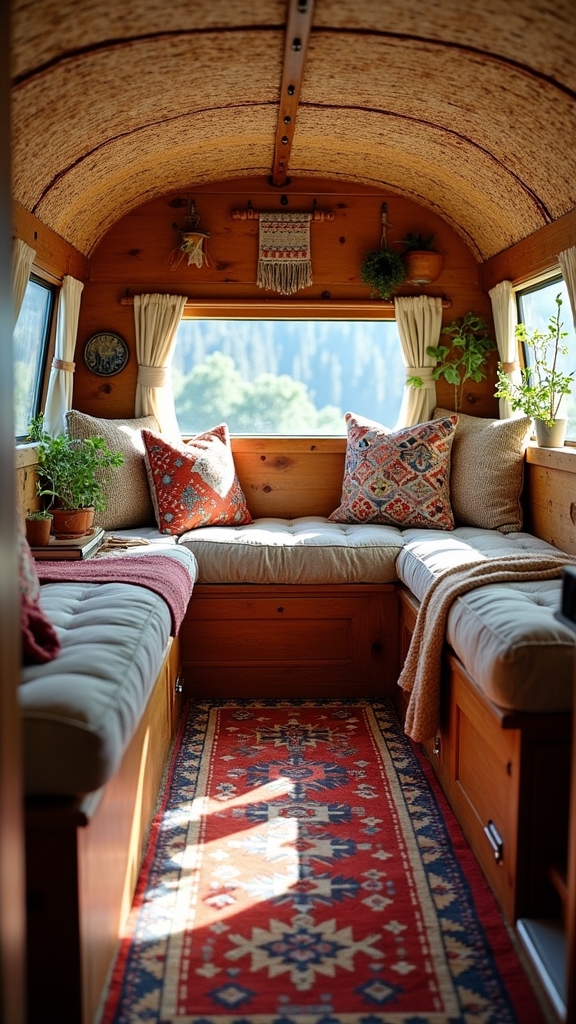
Pattern mixing in a small camper lives and dies by scale variation. A large-scale geometric pattern on a pillow needs a small-scale floral nearby to keep things from competing with each other.
Anchor the whole thing with a neutral jute rug because it gives every pattern something to breathe against.
Earth-toned prints are the most forgiving since they tend to read as harmonious, even when the motifs are quite different from each other.
Creating Warmth With Natural Wood Accents
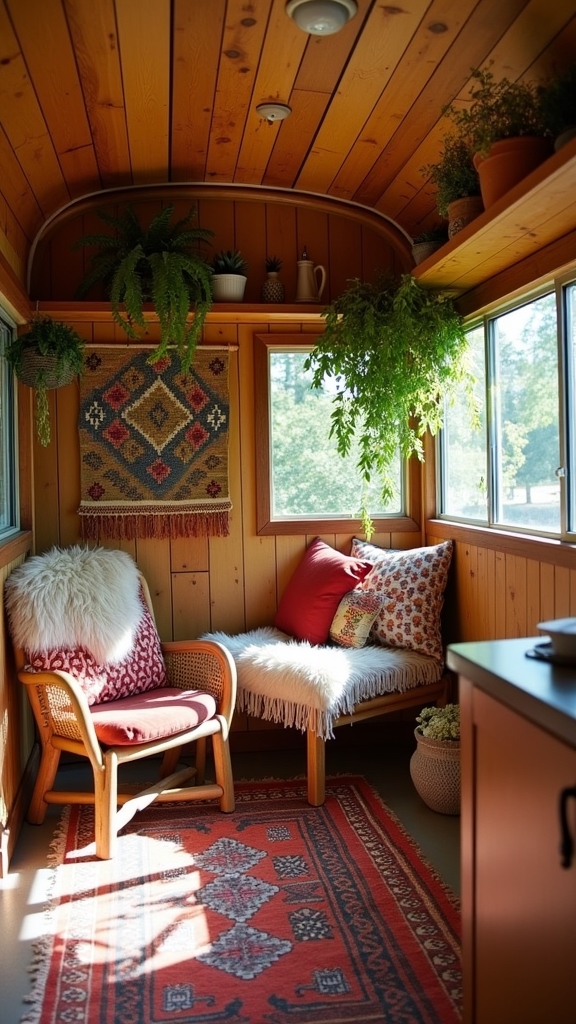
Stikwood is worth knowing about if you want the look of reclaimed wood without the structural commitment.
It’s lightweight, peel-and-stick, and genuinely splashproof, which makes it viable around a camper kitchen or as a headboard accent. The planks exhibit enough tonal variation that they read as authentic rather than wallpaper-fake.
Used selectively on one wall or surface, it anchors the rustic warmth of a bohemian interior without overwhelming its small footprint.
Styling Open Shelving With Bohemian Flair
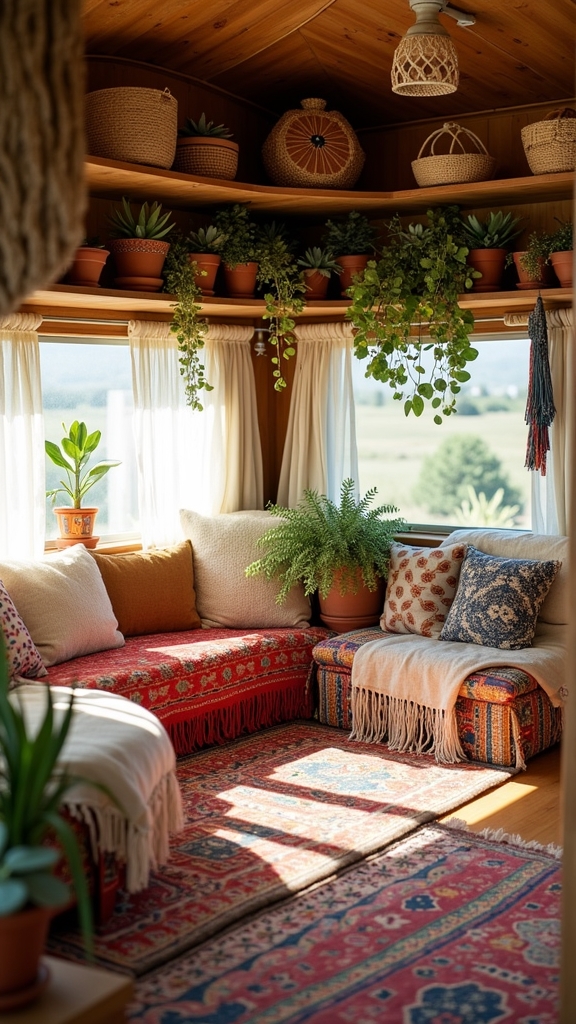
Open shelving in a camper is an invitation to be intentional about what you own. A handmade ceramic piece, a vintage collectible, and a woven basket work well together because the materials are honest and varied.
Bring in a travel souvenir or two, something with an actual story, and the shelf becomes biographical rather than decorative.
Mix metal, glass, and wood across objects, and you’ll get a layered look that holds up to the scrutiny of a small, always-visible space.