Glacier National Park sits in some of the most rugged and beautiful terrain in the country, and traveling there in a truck bed camper means navigating mountain roads, steep grades, and weather that can shift from clear skies to a storm in the time it takes to drive from one trailhead to the next.
A lightweight camper is not just a nice-to-have in this environment. It is the difference between a truck that handles well on switchbacks and one that feels like it is fighting you the entire way up. Modern camper designs have made significant strides in reducing weight without sacrificing comfort or durability, and the right setup opens up parts of the park that heavier rigs cannot reach.
These eleven designs are built around what works in Glacier, from materials and aerodynamics to off-grid capabilities that let you stay out longer. If you are serious about exploring Montana’s crown jewel in a truck bed camper, this is where you start.
Selecting Compact Truck Bed Campers for Montana’s High Country

Choosing a truck bed camper for Glacier means prioritizing lightweight construction and durability in equal measure, given the unforgiving terrain and steep roads.
Powder-coated aluminum extrusions and advanced fiberglass composite systems provide the structural integrity you need while keeping weight manageable, and R8 insulation handles the temperature swings associated with high-altitude camping.
MaxTurn technology improves maneuverability on tight mountain switchbacks, which is critical when navigating roads not designed for large vehicles. A dry weight of around 2,115 pounds keeps the camper light enough that your truck maintains stability on steep grades without struggling or overheating.
SEE THIS: 10 Cozy Truck Bed Camper Interiors for Rainy Days in Seattle, Washington!
Contents
- 1 Fuel-Efficient Designs for Long Mountain Drives
- 2 Weather-Ready Camper Models for Alpine Conditions
- 3 Space-Maximizing Solutions for Extended Park Stays
- 4 Aerodynamic Designs for Mountain Pass Travel
- 5 Cost-Effective Options Without Sacrificing Durability
- 6 Custom Storage Solutions for Outdoor Gear
- 7 Mid-Size Truck Compatibility and Weight Distribution
- 8 All-Season Camper Performance in Glacier’s Climate
Fuel-Efficient Designs for Long Mountain Drives

Fuel efficiency matters more in the mountains than it does anywhere else, because every extra pound you are hauling up a grade costs you gas and puts strain on your engine.
Lighter campers, such as the Total Composites models that weigh around 795 pounds, make a noticeable difference in how your truck performs on long ascents.
Maintaining steady speeds rather than accelerating and braking constantly saves fuel over the course of a day. Pop-up campers offer better fuel economy than hard-sided models because their lower profile reduces wind resistance during highway travel.
SEE THIS: DIY Pop Up Camper Renovation Projects for Beginners!
Weather-Ready Camper Models for Alpine Conditions

Alpine conditions in Glacier are unpredictable and often harsh, so a weather-ready camper is not optional if you are planning to spend real time in the park.
Hard-sided designs with fiberglass shell construction hold up better than soft-sided campers in wind and rain, and ducted furnace systems like the ones Northern Lite uses keep the interior warm without creating condensation issues.
Insulated water tanks prevent your water supply from freezing overnight, and double-insulated cab-over beds protect you from the cold that seeps in through the roof when temperatures drop. The entire system needs to work together, because a single weak point in the insulation or heating is all it takes to make a night in the mountains uncomfortable.
Space-Maximizing Solutions for Extended Park Stays
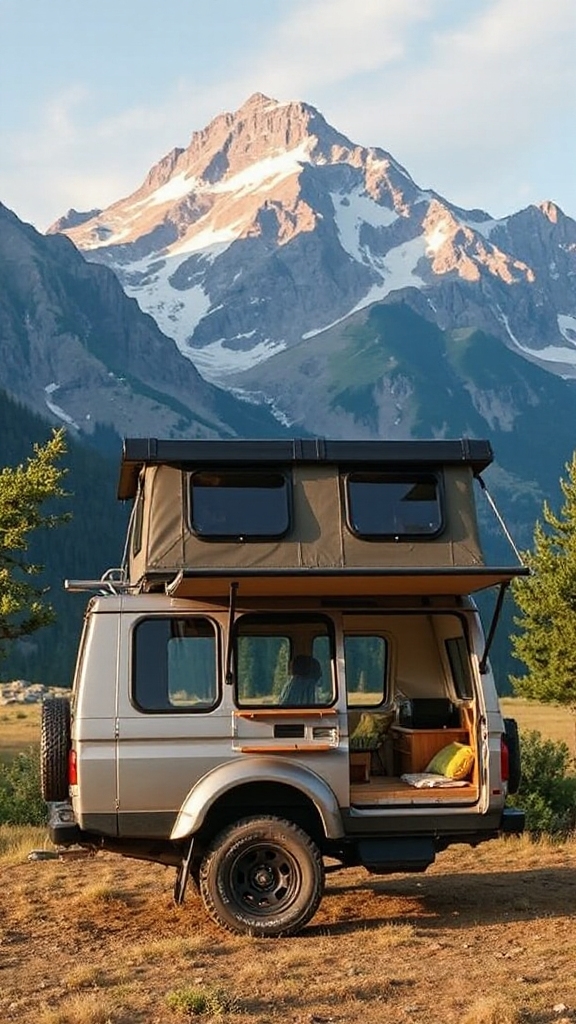
Spending more than a weekend in Glacier means you need a camper interior that actually works for daily living rather than just sleeping, and smart space-maximizing solutions are what make that possible.
Vertical storage compartments and retractable drawers use the camper’s height rather than floor space, keeping the living area open and functional. Foldable furniture and modular countertops adapt to whatever you are doing at any given moment, so the space shifts between dining, working, and relaxing without requiring you to move everything around.
Compression clothing cubes and other organizational tools keep your gear from turning into a chaotic pile, and that level of order is what separates a comfortable extended stay from a frustrating one.
Lightweight Materials and Construction Innovations

The materials and construction techniques used in modern lightweight campers enable them to be strong enough for mountain use while still being light enough not to compromise your truck’s handling.
All-aluminum construction and vacuum-bonded materials deliver strength without adding unnecessary weight, and unibody structures eliminate the weak points that come with bolted or riveted joints. Tubular aluminum frames, combined with seamless fiberglass exteriors, create a shell that withstands rough roads and adverse weather without cracking or leaking.
Off-Grid Compatibility Features for Remote Camping

Glacier has plenty of developed campgrounds, but the best spots are often miles from the nearest hookup, and an off-grid-capable camper lets you stay out there as long as you want.
Solar panels on the roof keep your batteries charged without running the truck, and efficient water storage systems provide enough capacity for cooking, cleaning, and drinking without daily refills.
Comprehensive waste management solutions handle gray water and black water to maintain compliance and hygiene, and a reliable GPS system paired with emergency communication devices ensures you can navigate the backcountry and call for help if something goes wrong. Off-grid capability is not about luxury.
Aerodynamic Designs for Mountain Pass Travel

Aerodynamics in a truck bed camper matter more than most people realize, because wind resistance on a mountain pass can turn a manageable drive into a white-knuckle experience.
Sleek, streamlined shapes reduce drag and improve fuel efficiency, and modern designs such as the AZAR4 and Soaring Eagle use aluminum construction with fiberglass skins to maintain a smooth, uninterrupted exterior. Air dams and deflectors minimize the turbulence that gets trapped around the camper and pushes against your truck, which is what causes instability in crosswinds.
A well-designed aerodynamic camper feels planted and controlled even when the wind is gusting across an exposed ridge, and that stability is worth every bit of the extra engineering that goes into it.
Cost-Effective Options Without Sacrificing Durability
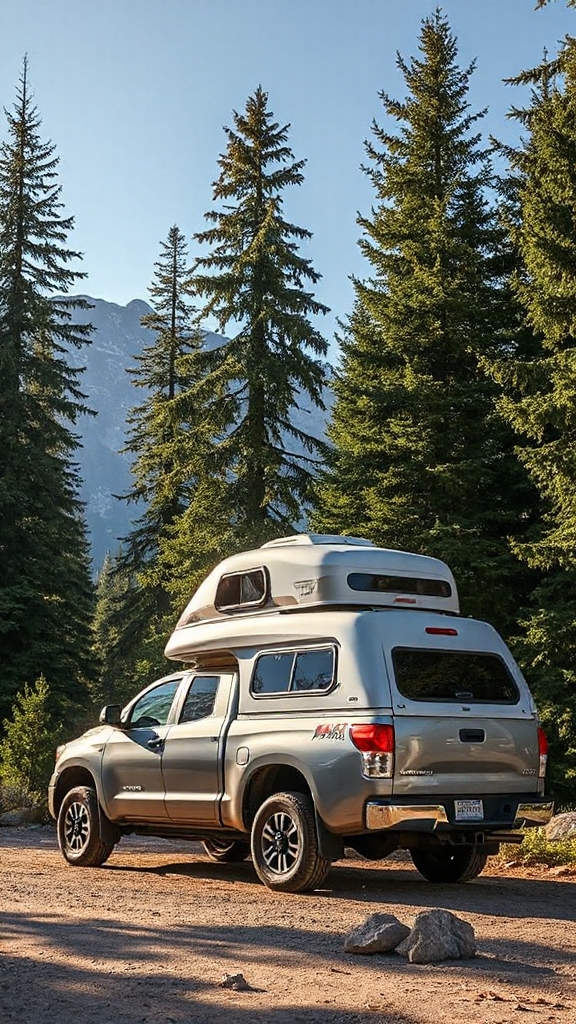
Lightweight truck-bed campers can get expensive quickly, but there are cost-effective options that do not compromise durability or functionality.
Used models with fiberglass construction and aluminum frames offer solid value if you look for them, and previous-year models with basic trim levels often come at significant discounts without sacrificing the core features that matter.
High-efficiency systems keep your operating costs down over the long term, and DIY conversion options let you customize a setup to your exact needs while keeping the budget under control. The key is knowing which features are essential and which are nice to have, and building your rig around what you actually need for the kind of camping you plan to do.
Custom Storage Solutions for Outdoor Gear

Outdoor gear takes up a lot of space, and in a truck-bed camper, that space is already limited, so custom storage solutionshttps://caraudience.com/camper-storage-solutions-smoky-mountains-tennessee/ keep everything organized and accessible.
Weatherproof modular storage units with adjustable shelves let you configure the interior to fit your specific gear, whether that is climbing equipment, fishing rods, or camera bags. Wall-mounted systems use vertical space and keep the floor clear, while reinforced construction with padded compartments protects fragile equipment from damage during off-road travel.
Mid-Size Truck Compatibility and Weight Distribution
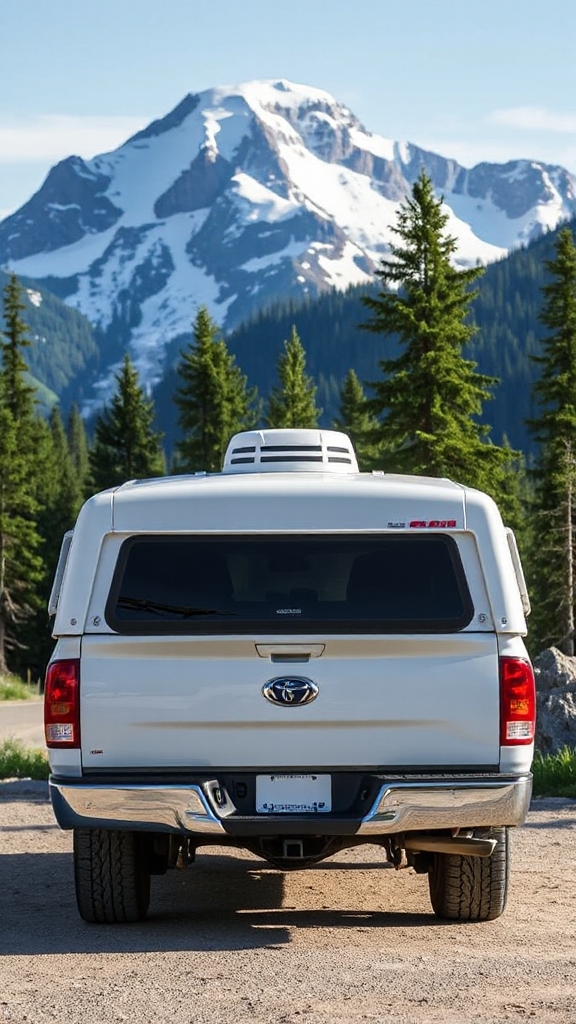
Mid-size trucks such as the Toyota Tacoma and Ford Ranger are popular choices for lightweight campers, but compatibility and weight distribution are critical to ensure the setup handles well.
The camper’s center of gravity must sit ahead of the truck’s rear axle for stability; positioning it too far back makes the entire rig unstable and prone to wandering and bouncing on rough roads. Payload ratings are hard limits, not suggestions, and exceeding them compromises safety and puts unnecessary strain on your truck’s suspension and brakes.
All-Season Camper Performance in Glacier’s Climate
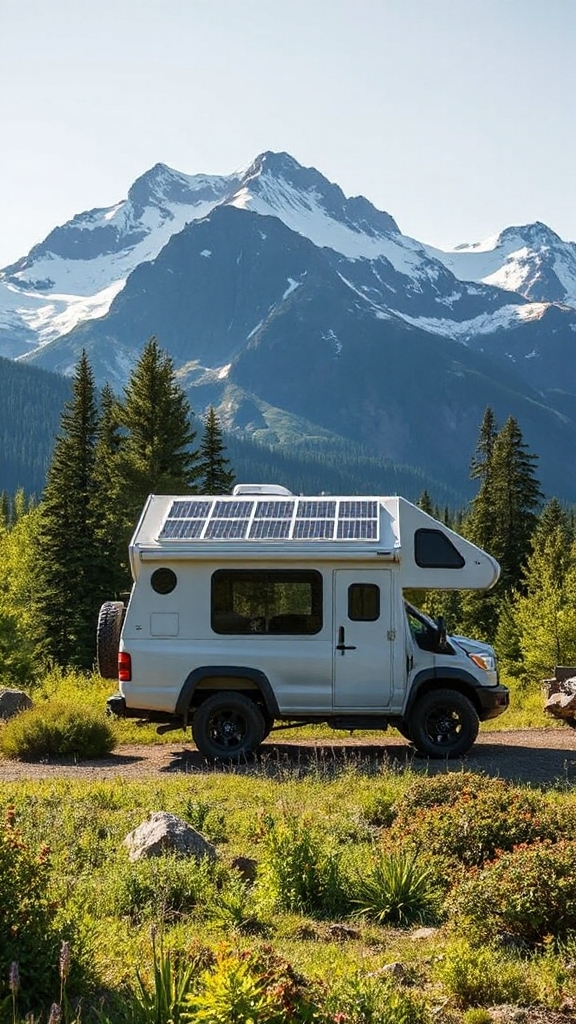
Glacier National Park has a climate that swings from summer heat to winter frost in the span of a few months, and an all-season camper is what lets you use the park year-round rather than just during peak summer.
Robust thermal insulation, double-glazed windows, and a reliable heating system keep the interior comfortable regardless of the thermometer outside, and weatherproof materials withstand rain, snow, and the notorious winds that rip through the mountain passes.
Aerodynamic designs help the camper remain stable in high winds, and when these features work together, they turn a lightweight rig into something that genuinely performs in every season. If you are serious about camping in Glacier, build for the worst conditions rather than the best.