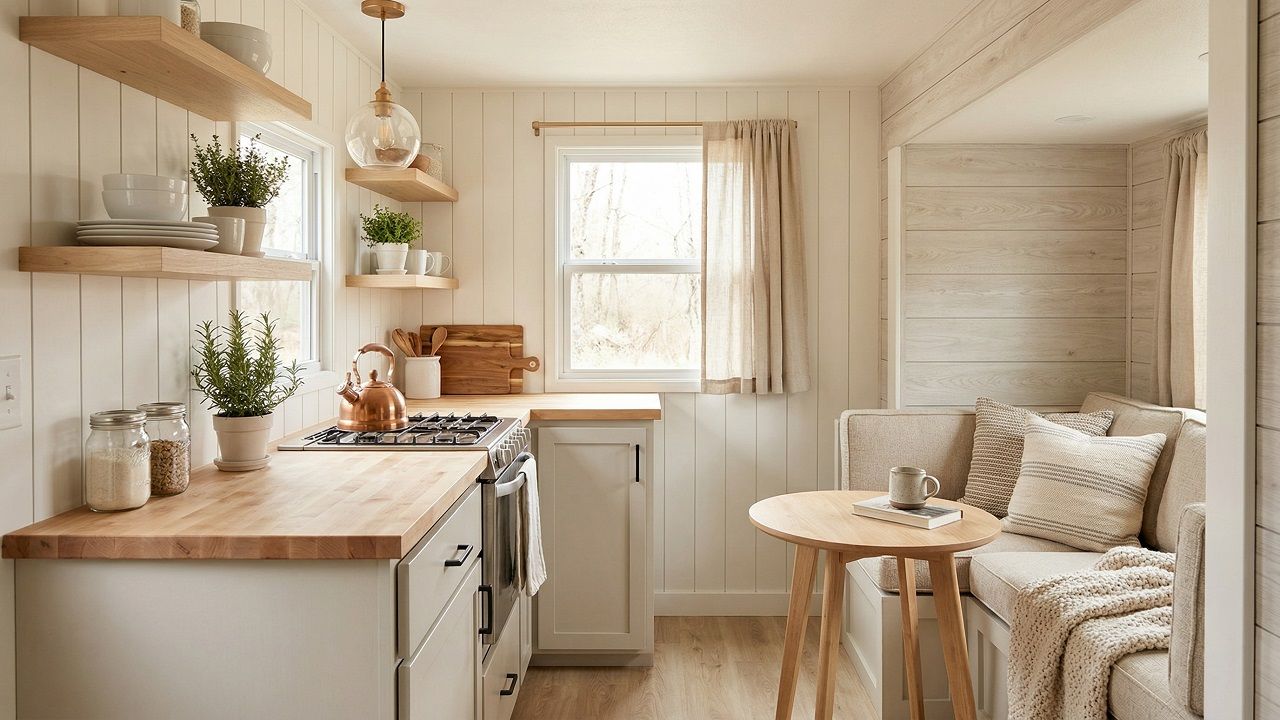
I’ve watched countless homeowners wrestle with living rooms that feel chopped up and disconnected, and nine times out of ten, that stark white ceiling is the culprit. Painting your ceiling the same color as your walls creates what designers call “color drenching,” and it’s probably the most underused trick in residential design.
The effect is immediate: your eye stops hitting that harsh boundary line where wall meets ceiling, and suddenly the room reads as one fluid space instead of a box with a lid.
Whether you go dark and moody or stick with softer tones, the technique works because it eliminates the visual stopping points that make rooms feel smaller and more fragmented than they actually are. The 16 living rooms ahead make the case better than any explanation could.

Color Drenching Expands Small Living Rooms by Eliminating Visual Breaks
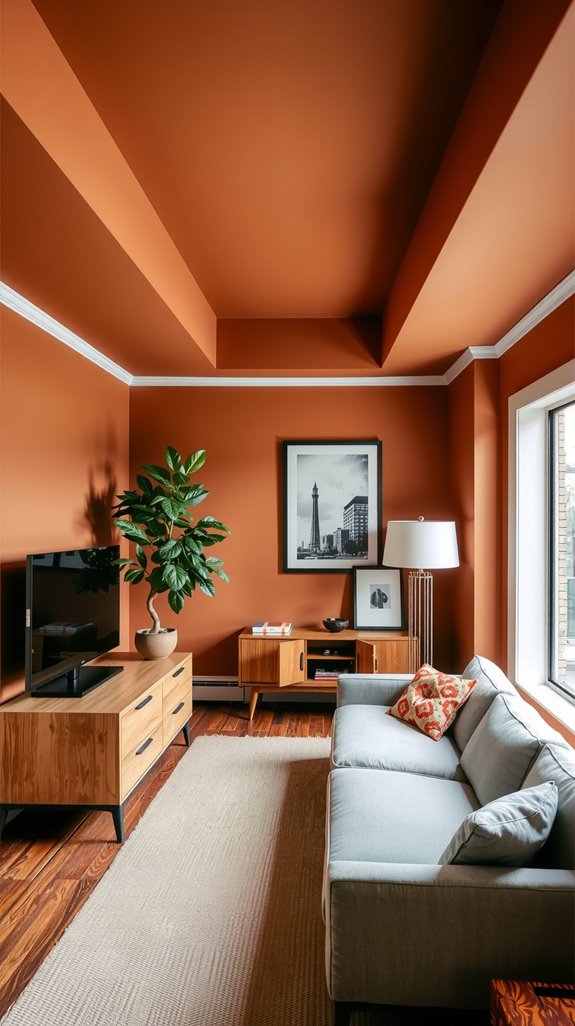
Your brain is constantly measuring spaces by counting the transitions it encounters, which is why that white ceiling makes your living room feel boxed in. Carry the wall color straight up and across the ceiling, and those measurements get fuzzy in the best possible way.
The room suddenly reads as a continuous volume rather than separate surfaces stacked on top of each other. Dark colors pull this off just as well as light ones, which surprises most people until they see it in action.
Smoky Jade Color Drenching Creates a Seamless Living Room Sanctuary
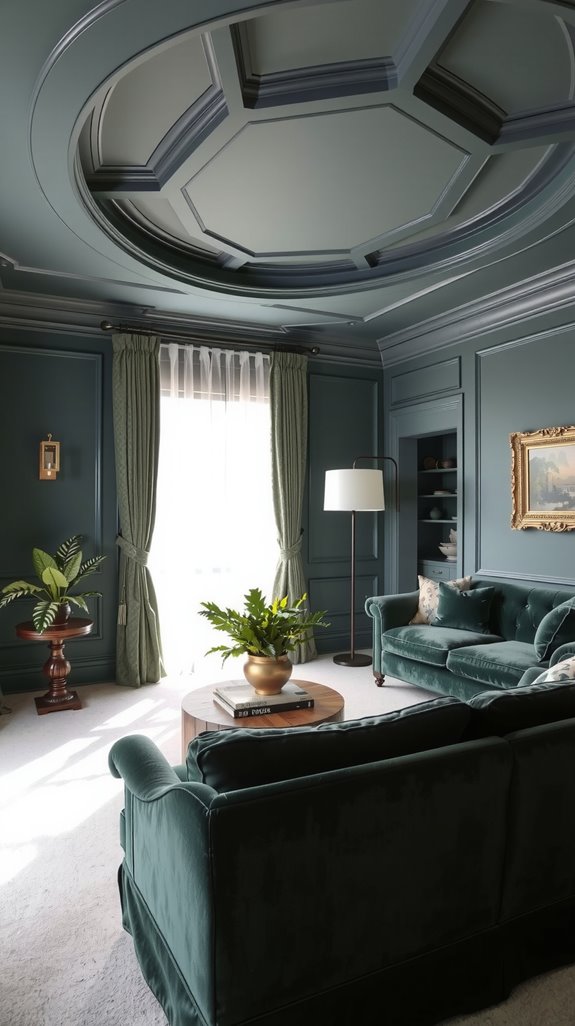
Hidden Gem has this gorgeous smoky jade quality that shifts between green and teal depending on how the light hits it throughout the day. Wrapping your entire living room in it, trim included, creates an atmosphere that feels both grounded and alive.
The beauty of this particular shade is how it responds to your lighting conditions, going deeper and moodier in the evening while staying fresh during daylight hours. Most color-drenched rooms work because they eliminate visual interruptions, but this one goes further by actually changing character as you use the space.
Black Sapphire Drenching Wraps Living Rooms in Bold Drama
Black Sapphire turns a living room into something that feels like a private club, wrapping every surface in the same deep, sophisticated hue. The monochromatic approach clears away visual clutter while adding serious depth, especially when you layer in textures like a velvet sofa against those matte walls.
A glossy ceiling finish kicks the drama up several notches, and suddenly your brass fixtures and architectural details pop against that rich backdrop instead of fading away. Crown molding and door frames that normally disappear become defining features when they’re silhouetted against this kind of intensity.
Muted Sage Green Color Drenching Maximizes Light Reflection
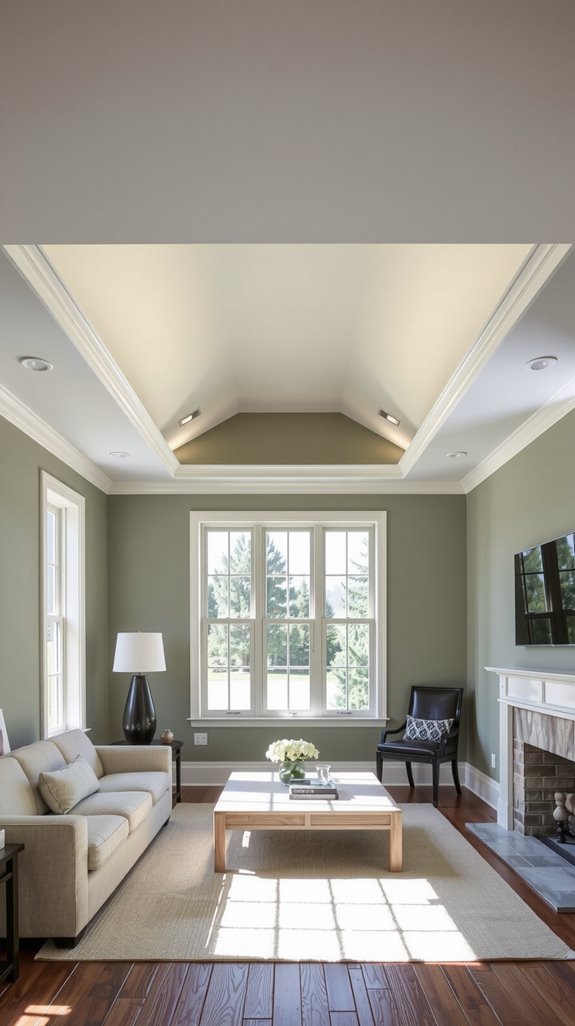
Sage green works completely differently from those dramatic darks because it actively bounces light around instead of absorbing it. The shade looks lighter in bright conditions and gains depth when things get dimmer, which means your room adapts naturally to changing daylight.
Pair it with creamy trim and some textured paneling, and you’ve got a space that feels bigger and brighter without any of the starkness that comes with plain white. The undertones in sage give you room to experiment until you find the exact tone that works with your specific lighting situation.
Deep Ruby Red Envelops Living Rooms in Luxurious Drama
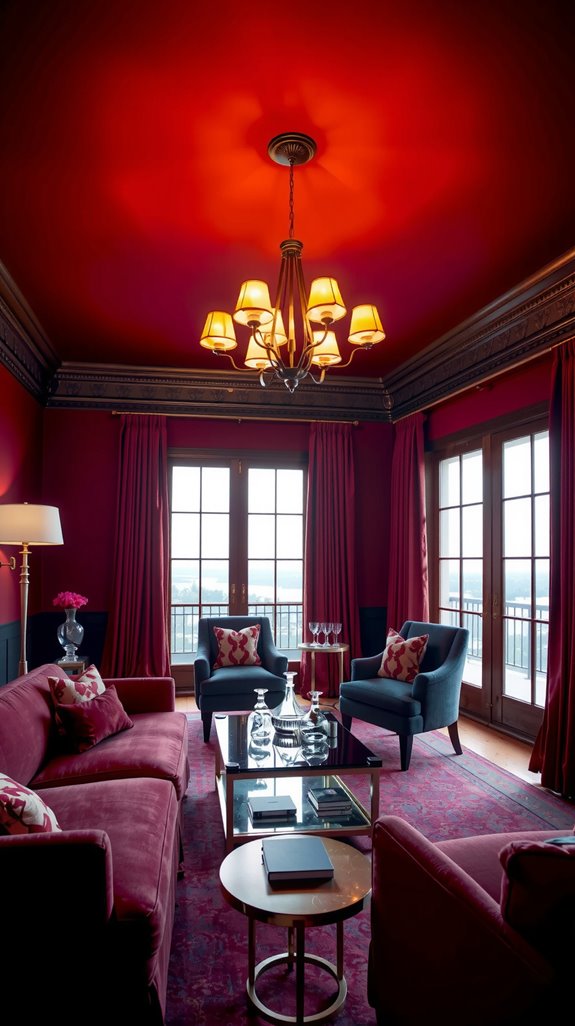
Drenching a living room in deep ruby red from baseboard to ceiling creates this enveloping warmth that works especially well in spaces without much natural light. The cocoon effect turns what might feel like a limitation into an asset, making the room into a retreat you actually want to spend time in.
Architectural trim disappears into the background when it’s all the same color, which simplifies everything visually. Go with a glossy ceiling finish, and you’ll amplify both the depth and the light reflection, maximizing the impact of every lamp and fixture.
Rich Moody Green Makes Accessories Pop Against Unified Walls

Deep emerald or forest green works differently than ruby red because it creates a backdrop that makes everything else in the room the star. Your colorful throw pillows, framed art, and natural textures become genuine focal points when they’re sitting against that unified dark surface.
The wall and ceiling read as one continuous field, which means your eye goes straight to the objects and furniture instead of measuring the architecture. Accessories that would get lost in a busier space suddenly command attention and define the room’s personality.
Inky Blue Walls With Lighter Ceilings Balance Drama and Airiness
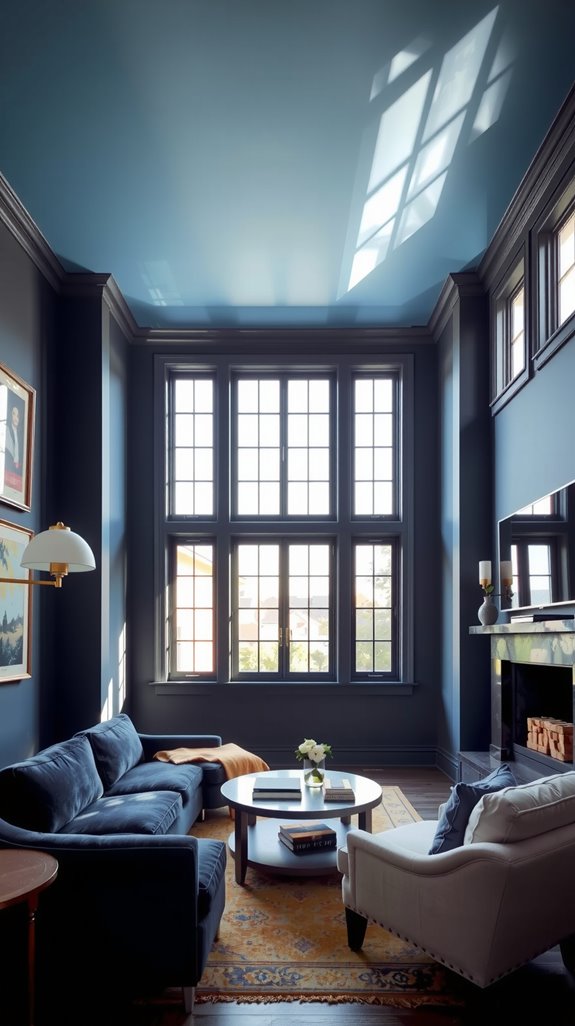
Deep navy on the walls gives you all that sophisticated drama without sacrificing the openness that keeps a living room from feeling oppressive. The color creates a calm, grounding backdrop for modern furniture while maintaining enough visual weight to feel intentional and designed.
Keeping the ceiling white or adding gold accents preserves that sense of lift and prevents the darkness from overwhelming the space. The contrast works because it gives your eye a release valve, a place to rest that keeps the richness from becoming too much.
Small Dark-Drenched Living Rooms Create Cocooning Evening Retreats
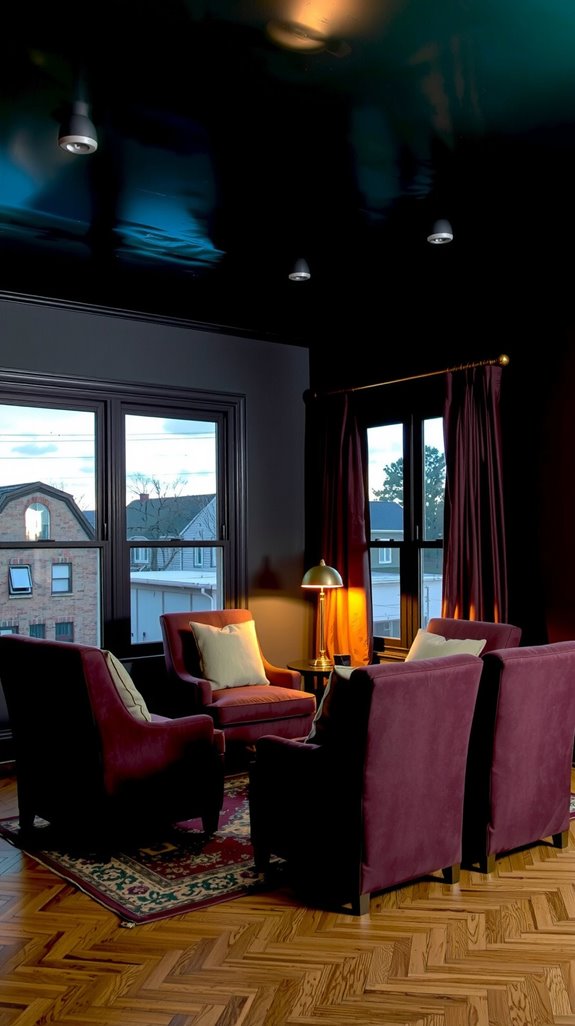
Some living rooms are meant to be wrapped tight rather than opened up, particularly if you use the space mainly in the evenings. Rich navy covering both walls and ceiling turns a small room into exactly the kind of cocoon you want after a long day.
These fully immersed spaces work as low-light retreats where moody atmosphere becomes the whole point. Add some ambient lighting, and those deep tones create coziness instead of claustrophobia, proving that small and dark doesn’t have to mean uncomfortable.
Glossy Ceilings Intensify Drama in Same-Shade Color Drenching
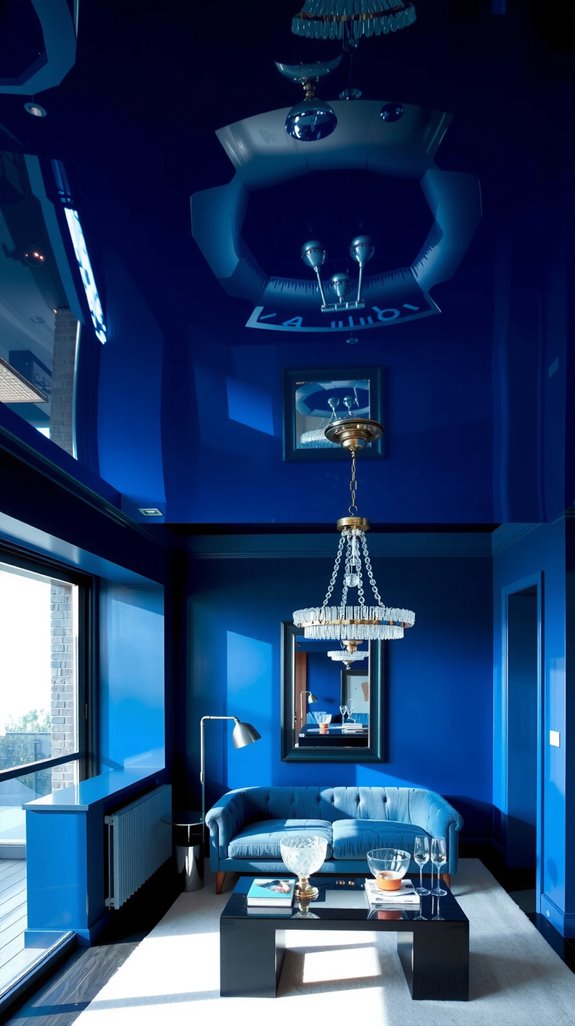
A glossy ceiling finish takes color drenching from impressive to absolutely arresting by adding sheen variation to the technique. Matte walls paired with a high-gloss ceiling in the same color create depth through texture rather than tone, which intensifies the mood while bouncing more light around.
Deep shades like ruby red or Black Sapphire become genuinely luxurious with this treatment. Just know that glossy finishes show every imperfection, so your ceiling needs to be in excellent shape before you commit.
Dark Charcoal Ceilings Add Intimacy to Living Rooms
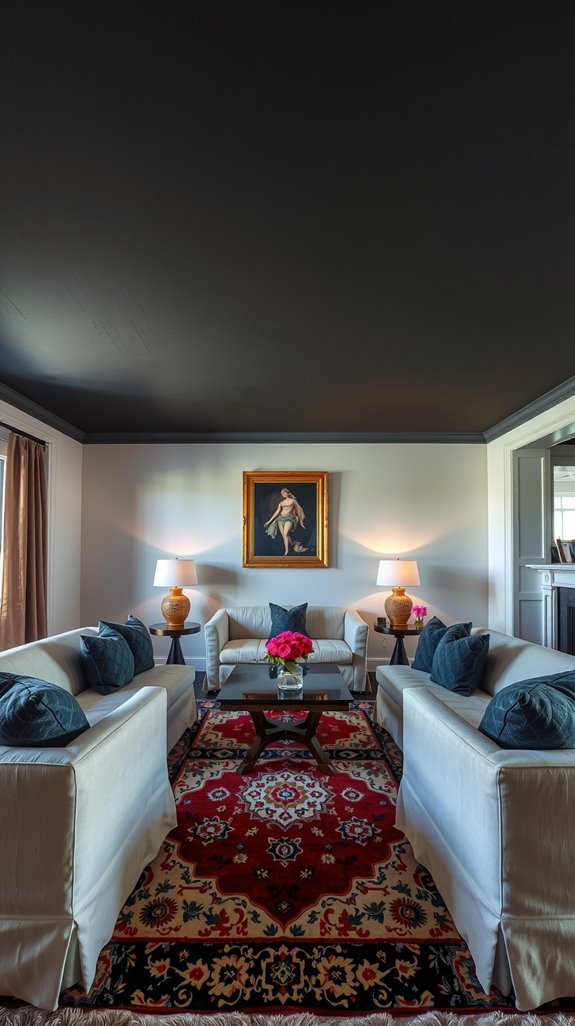
Painting your ceiling dark charcoal lowers the perceived height of the room by absorbing light instead of reflecting it, which transforms even tall spaces into cozier gathering areas. The technique works best when you pair that charcoal overhead with lighter walls, giving you the intimacy without the cave effect.
Lighting becomes crucial because dark surfaces swallow up overhead fixtures, so you’ll need wall sconces and pendants to create warmth and fill in the gaps. The result is a room that naturally focuses attention inward, perfect for conversation and relaxation.
Navy Ceilings With Neutral Walls Bring Sky-Like Calm
A navy ceiling mimics twilight sky in a way that feels surprisingly calming and expansive rather than heavy. The deep blue acts almost like a neutral, grounding the space while elevating everything below it.
White or beige walls provide a clean contrast and prevent that cave-like feeling you risk with darker combinations. The pairing delivers modern sophistication with real spatial depth, proving that drama and airiness can absolutely coexist.
Matching Color on Pitched Ceilings Unifies Compact Spaces
Pitched and angled ceilings create an awkward design challenge that most people solve incorrectly by just painting everything white and hoping for the best. Matching your walls and sloped ceiling in the same color eliminates those distracting perimeter lines and creates a cohesive envelope that actually makes the space feel larger.
The ceiling appears higher because your eye isn’t constantly measuring where one surface ends and another begins. Without that visual dissection, the room reads as complete and intentional rather than awkwardly unfinished.
Double Drenching With Two Close Hues Adds Subtle Depth
Using two closely related colors instead of one introduces a subtle dimension without breaking up the space with jarring contrast. Pick analogous shades from adjacent spots on the color wheel, paint your ceiling in one and your walls in the other, and you’ve got layered depth that still feels cohesive.
The technique gives you more visual interest than a single flat color while maintaining that continuous flow that makes color-drenching work. The result is sophisticated and nuanced rather than matchy-matchy.
Hidden Gem on Walls and Fireplace Unifies Architecture
Covering every surface in a single shade, including the fireplace, trim, and ceiling, makes all the architecture recede so your decorative choices can take center stage. Hidden Gem’s smoky jade pulls this off beautifully because it blends structural elements into the background while making mirrors, light fixtures, and artwork pop.
The unified treatment creates an enveloped atmosphere with a serious flow. Everything feels connected and intentional rather than like a collection of separate decisions.
Wallpaper on Ceilings Extends Color in Maximalist Living Rooms
Wallpaper takes the ceiling from a painted surface to a genuine design element by adding pattern and texture to the mix. Maximalist living rooms thrive on this approach because bold patterns and abstract shapes tie together all those colorful walls, textiles, and custom window treatments.
Tropical prints, patterned grasscloth, and graphic black-and-white motifs running from the ceiling to the walls create fully immersive environments. Your fifth wall becomes just as important as the other four, which is exactly what maximalism is all about.
Balanced Beige Color Drenching Grounds Eclectic Living Spaces
Sherwin-Williams’ Balanced Beige proves that color drenching doesn’t require bold hues to make an impact. The neutral tone grounds eclectic furniture and accessories by creating a monochromatic backdrop with real depth.
Running it across walls, ceiling, and trim blurs those boundaries and creates an illusion of height without any visual competition. Layer in wood tones and brass fixtures to bring warmth and character while keeping that sophisticated, pulled-together feeling.