Your pop-up camper doesn’t need to feel like a cramped box on wheels. I’ve spent enough time in these compact rigs to know that smart design choices make the difference between tolerating your space and actually enjoying it.
The goal here is straightforward: create a setup that works for how you actually camp, whether that’s weekends in the desert or coastal trips that stretch into weeks. Southern California’s climate and landscape offer specific advantages for camper design, and we’re going to use every one of them.
Contents
- 1 Sage Green Cabinet Makeovers With White Accents
- 2 Multi-Purpose Storage Benches With Modern Cushions
- 3 Natural Wood and White Color Combinations
- 4 Budget-Friendly Peel-and-Stick Floor Transformations
- 5 Cozy Textured Throw Pillow Arrangements
- 6 Santa Fe-Inspired Interior Touches
- 7 Space-Maximizing Cabinet Solutions
- 8 Modern Farmhouse Design Elements
- 9 Bright Window Treatment Ideas
- 10 Compact Dishwashing Station Designs
- 11 Custom Curtain and Bedding Projects
- 12 Leather-Look Seating Alternatives
- 13 Creative Cabinet Refacing Techniques
- 14 Layered Pattern and Texture Combinations
- 15 Natural Light Enhancement Strategies
- 16 DIY Cabinet Painting Guide
- 17 Removable Decor Solutions
- 18 Warm Color Palette Inspirations
- 19 Storage-Smart Furniture Selections
- 20 Functional Countertop Designs
- 21 Easy-to-Clean Upholstery Options
- 22 Space-Saving Kitchen Organizations
- 23 Stylish Bedding Arrangements
- 24 Instagram-Ready Interior Styling Tips
- 25 Pinterest-Worthy Accent Ideas
Sage Green Cabinet Makeovers With White Accents
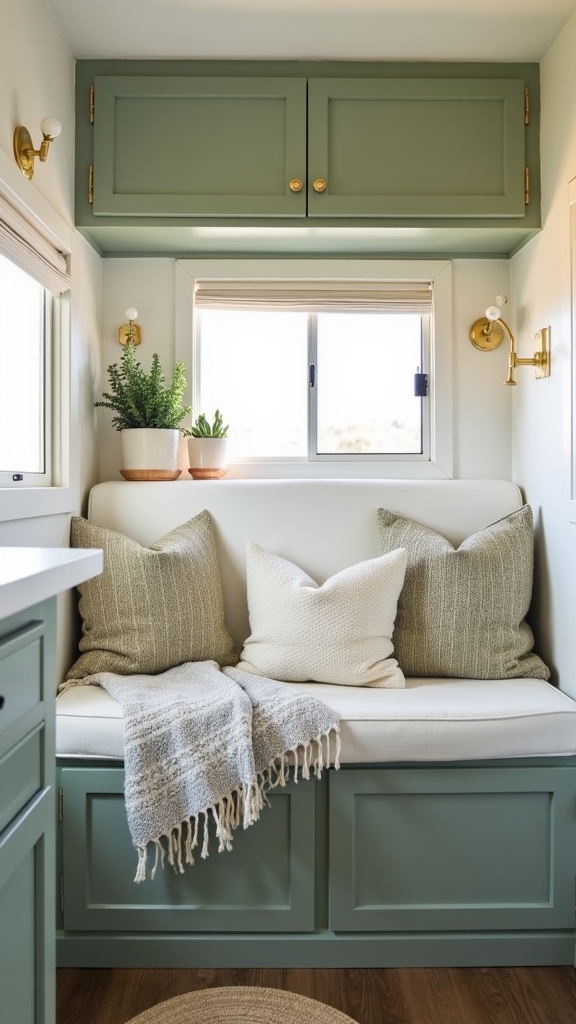
Sage green works in campers for reasons beyond aesthetics. The color hides minor dirt and wear better than stark white, which matters when you’re tracking in desert dust or beach sand. Paired with white trim and cabinet faces, it opens up tight spaces without the sterile feeling of an all-white interior.
I’ve seen this combination hold up well in the intense sunlight we get here, where pure whites tend to yellow and darker colors make small spaces feel smaller. The key is using actual cabinet paint, not wall paint, because you need something that can handle the constant vibration and temperature swings.
SEE THIS: Step-by-Step Guide to Rustic Pop Up Camper Interior Ideas in Vermont!
Multi-Purpose Storage Benches With Modern Cushions
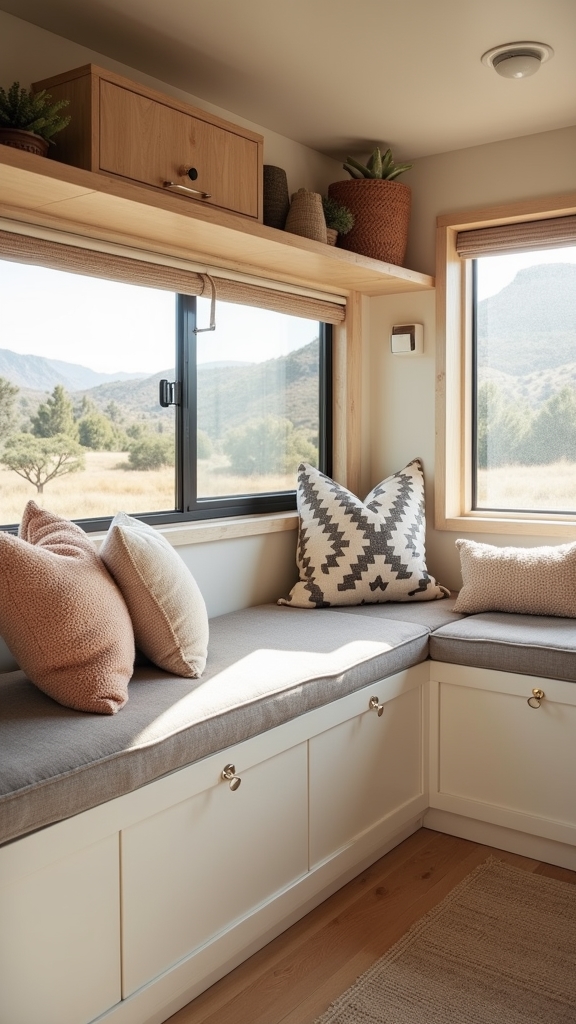
Every piece of furniture in a pop-up should earn its keep twice over. Storage benches with modern cushions give you seating, storage, and often a sleeping surface all in one footprint. The U-shaped dinette configuration I keep coming back to converts from dining to sleeping in about thirty seconds, no struggling with complicated mechanisms.
Look for benches with lids that stay open on their own instead of slamming on your fingers. Cushions should be dense enough to sit on comfortably but not so thick they eat up your headroom when the top is down.
SEE THIS: How to Create a Modern Pop-up Camper Interior: 17 Ideas Pink From Seattle, Washington!
Natural Wood and White Color Combinations
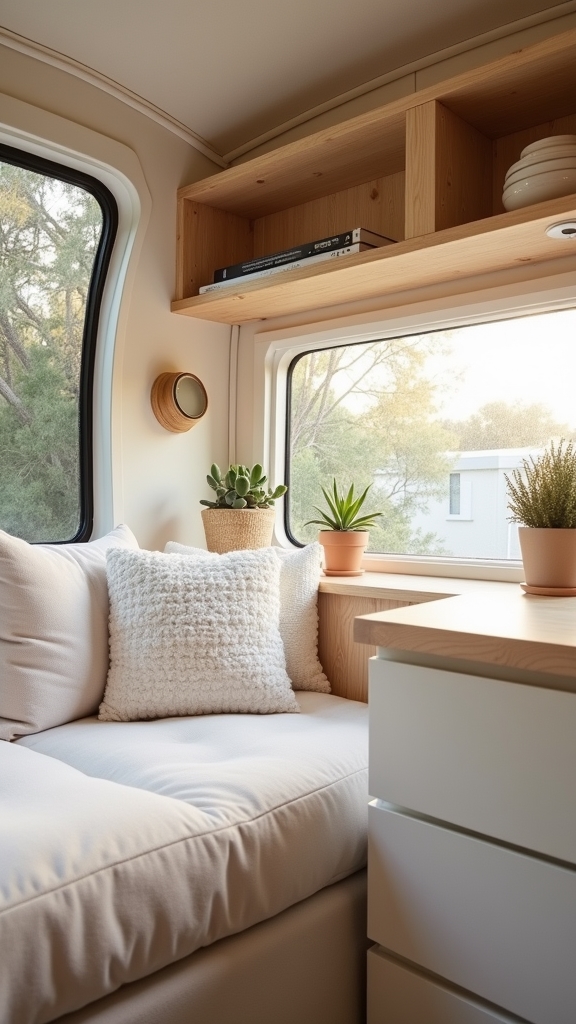
Wood tones bring warmth that white alone can’t match, especially in the evening when you’re running on battery power and softer lighting. White walls and cabinet faces reflect our abundant California sunlight during the day, making a seven-foot interior feel less claustrophobic.
I prefer leaving wood natural on the lower cabinets and going white up top to draw the eye upward. The contrast also helps define different zones in what is essentially one room. Skip the polyurethane on natural wood inside a camper; the smell in that confined space is brutal, and a simple paste wax holds up fine.
SEE THIS: 22 Boho Camper Interior From Joshua Tree, California That Feel Like Home!
Budget-Friendly Peel-and-Stick Floor Transformations
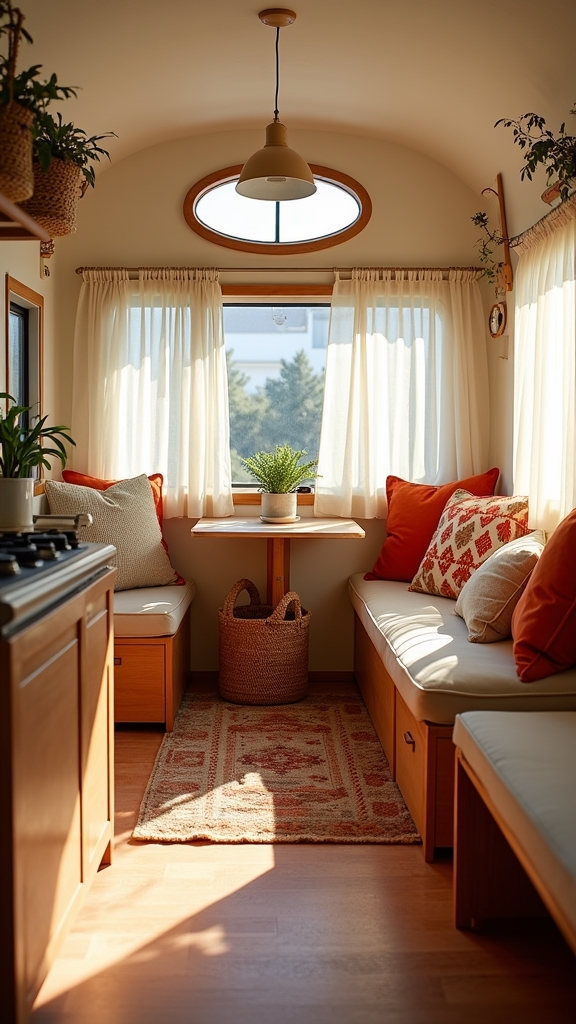
The original vinyl in most pop-ups deteriorates quickly, especially around the door where moisture accumulates. Peel-and-stick tiles run under a dollar per square foot and install with just scissors and patience. Armstrong makes a version sold at Home Depot that I’ve watched survive three years of hard use, including a full season of sandy beach camping.
Clean your existing floor completely before installation, because any debris will telegraph through and eventually cause the tile to lift. Start from the center and work outward so your cuts end up hidden along the edges.
Cozy Textured Throw Pillow Arrangements
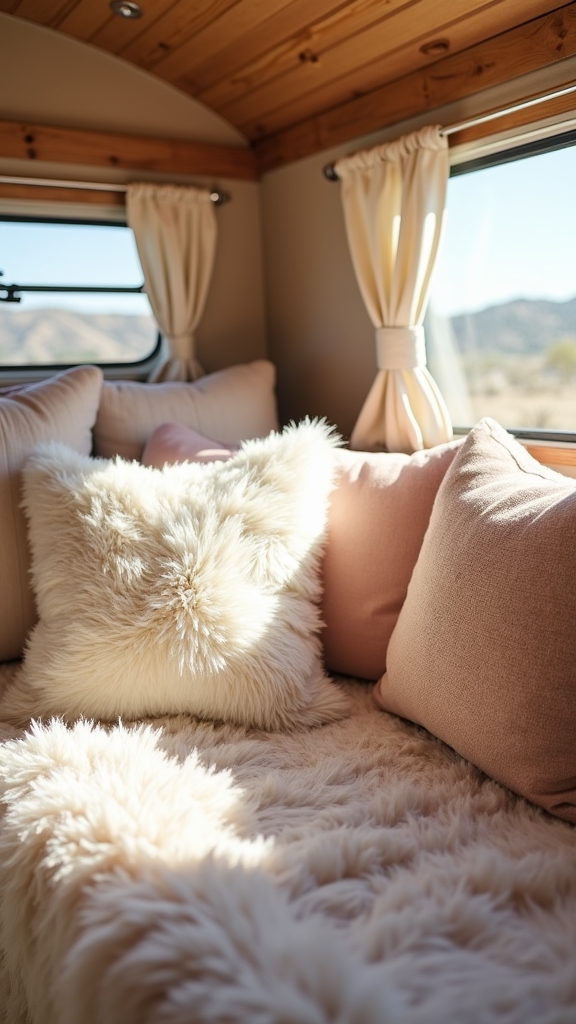
Throw pillows in a camper need to do more than look good on Instagram. Layer different textures like chunky knits with smooth outdoor fabrics, but make sure everything is actually washable. Place larger, firmer pillows at the back for lumbar support when you’re sitting, then add smaller decorative ones in front.
Round and lumbar shapes pack more efficiently than standard squares when you’re breaking camp. Choose materials that dry quickly, because in a pop-up, everything eventually gets damp.
Santa Fe-Inspired Interior Touches
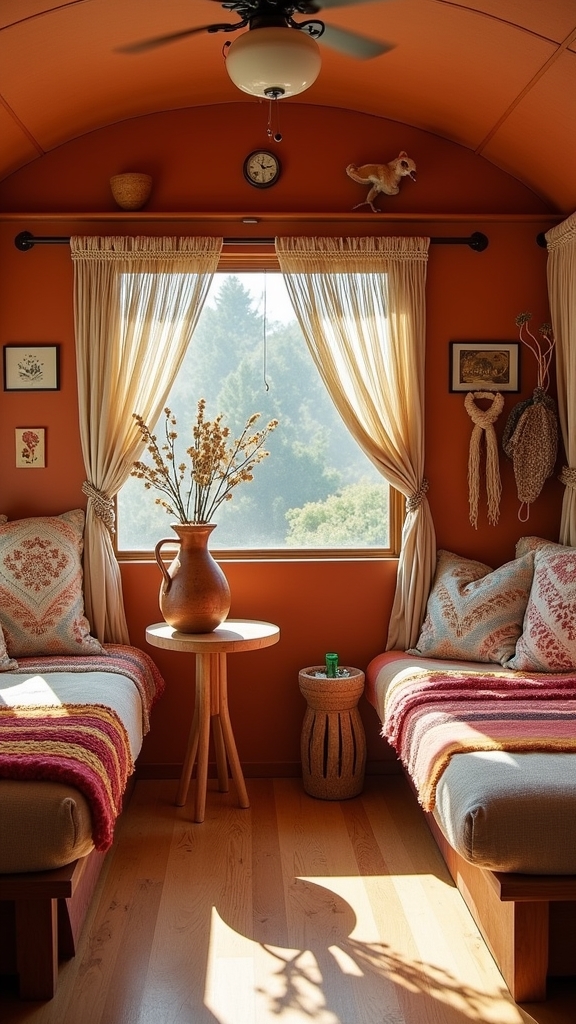
The Santa Fe aesthetic translates surprisingly well to camper interiors, probably because both prioritize natural materials and earthy colors. Terracotta and sage tones complement each other without competing for attention in a small space.
Handwoven textiles and pottery add texture without requiring much square footage. Wooden corbels under shelves provide genuine structural support while adding visual interest. Keep it restrained, though; three well-chosen pieces beat a dozen tchotchkes that’ll rattle loose on washboard roads.
Space-Maximizing Cabinet Solutions
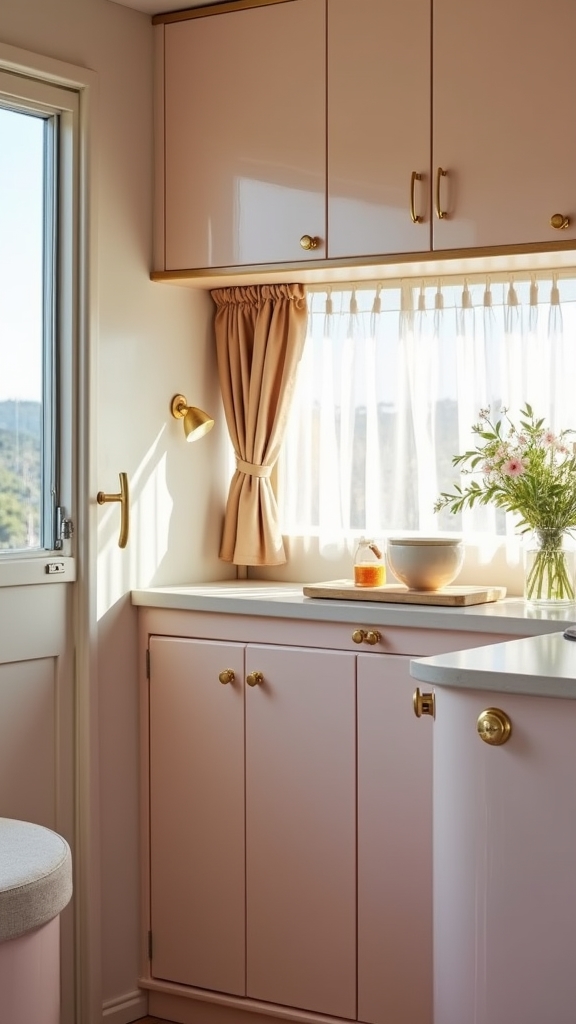
Vertical space in cabinets goes to waste in most stock campers. Cut plastic furniture legs to create tiered shelving over your sink, instantly doubling your usable cabinet space. Command hooks on the inside of cabinet doors hold utensils, measuring cups, and other lightweight items that otherwise clutter drawers.
Install narrow shelves on cabinet backs for spices and small items. Think about what you actually reach for daily and give those items the most accessible spots.
Modern Farmhouse Design Elements
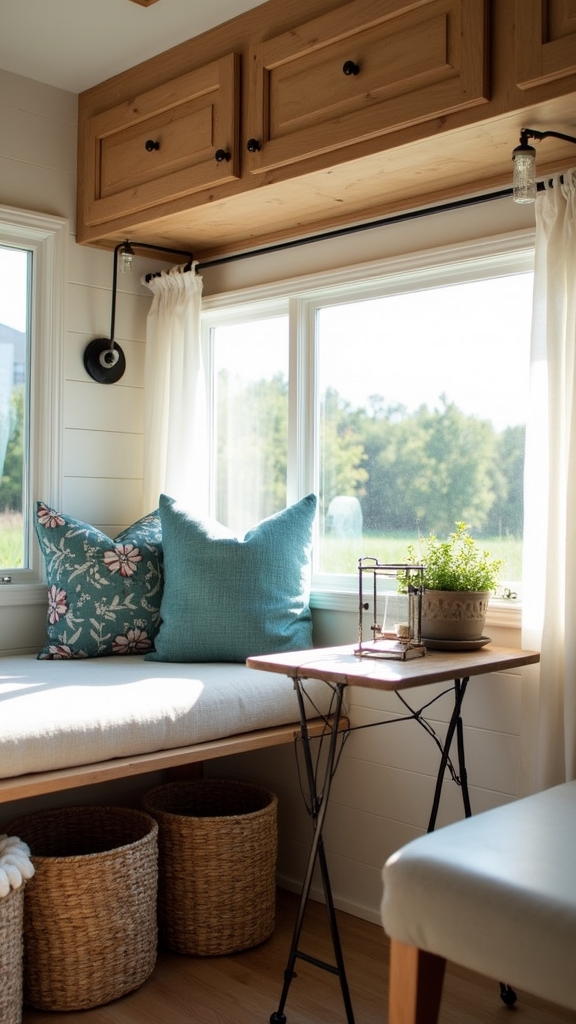
Modern farmhouse design scales down beautifully for campers because it emphasizes texture over size. Cream and sage gray create a neutral foundation that won’t overwhelm a compact space. Woven baskets and wool throws add warmth without visual clutter.
Vintage-inspired lighting fixtures, especially ones with Edison bulbs, provide better ambiance than the harsh overhead LEDs that come standard. Metal accents in brushed nickel or aged brass tie everything together without adding weight.
Bright Window Treatment Ideas
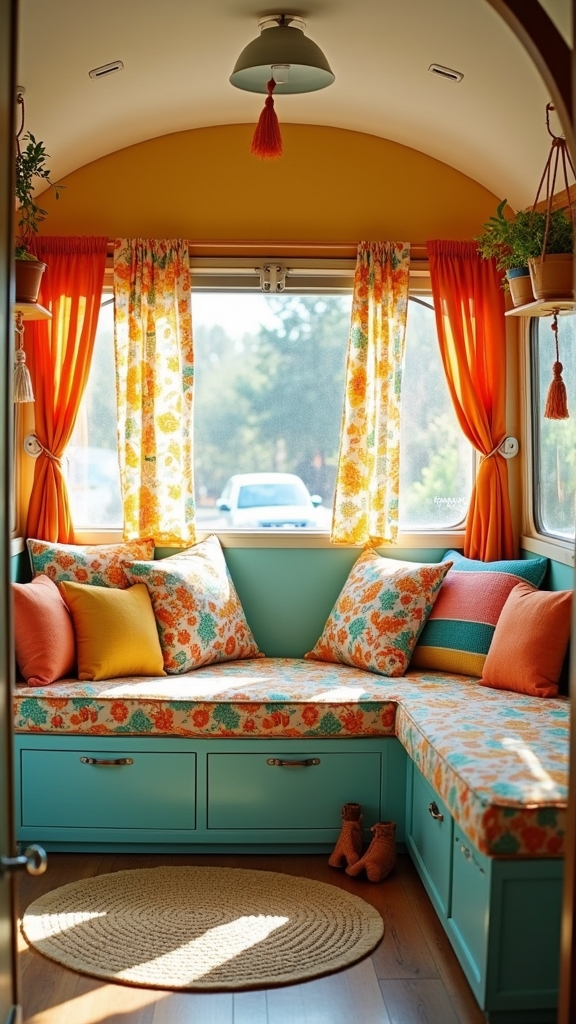
Light-filtering fabrics let you wake up naturally without turning your camper into a greenhouse by noon. Honeycomb shades insulate surprisingly well, keeping heat out during the day and warmth in on cool desert nights. Exterior solar screens block up to ninety percent of the sun’s heat before it penetrates your windows, which matters enormously when you’re parked in full sun.
I’ve used them in Joshua Tree during the summer, and the temperature difference is immediately noticeable. Choose treatments that mount without drilling if you’re leasing or planning to sell eventually.
Compact Dishwashing Station Designs
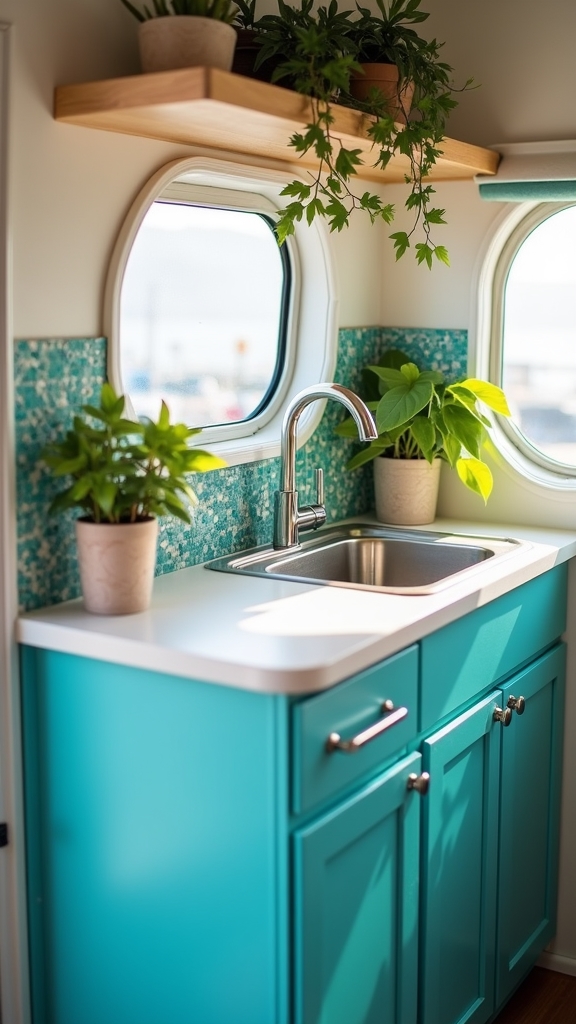
A functional dish station in a pop-up requires creativity and restraint. Collapsible basins store flat when not in use and set up in seconds. Vertical drying racks mounted to the wall keep dishes off your limited counter space.
Add a small LED light strip above the sink so you can actually see what you’re washing after dark. A few personalized touches, like a favorite dish soap or a small plant, make the task less tedious.
Custom Curtain and Bedding Projects
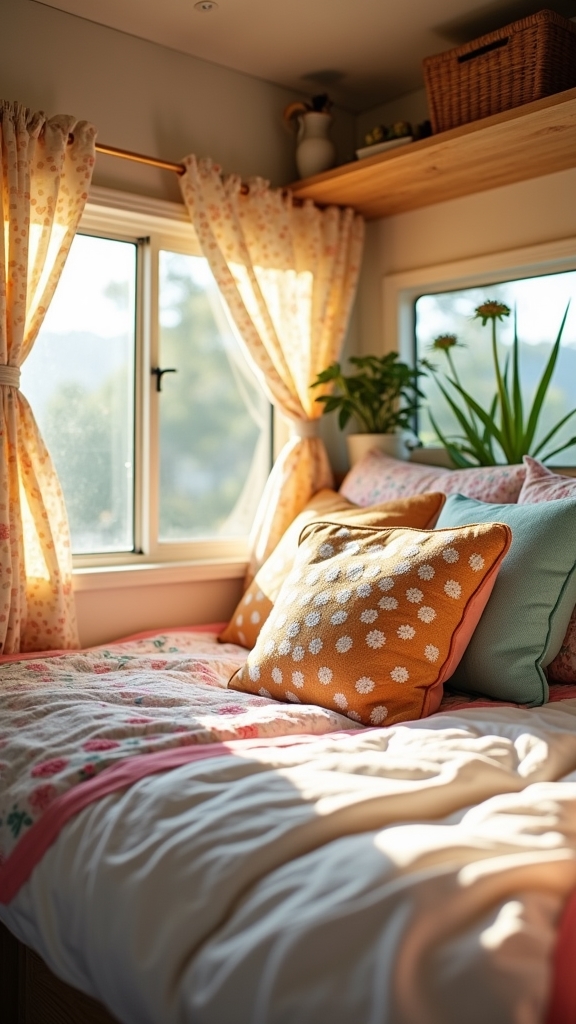
Coordinating your bedding and curtains creates visual continuity in a space where everything is visible at once. Blackout liners do double duty, blocking light for better sleep and providing insulation against temperature extremes.
Custom-fit curtains eliminate light gaps that store-bought options leave. I use the same fabric for both to simplify the visual field. Choose materials that match California’s outdoor aesthetic, leaning toward natural fibers that breathe well in our dry climate.
Leather-Look Seating Alternatives
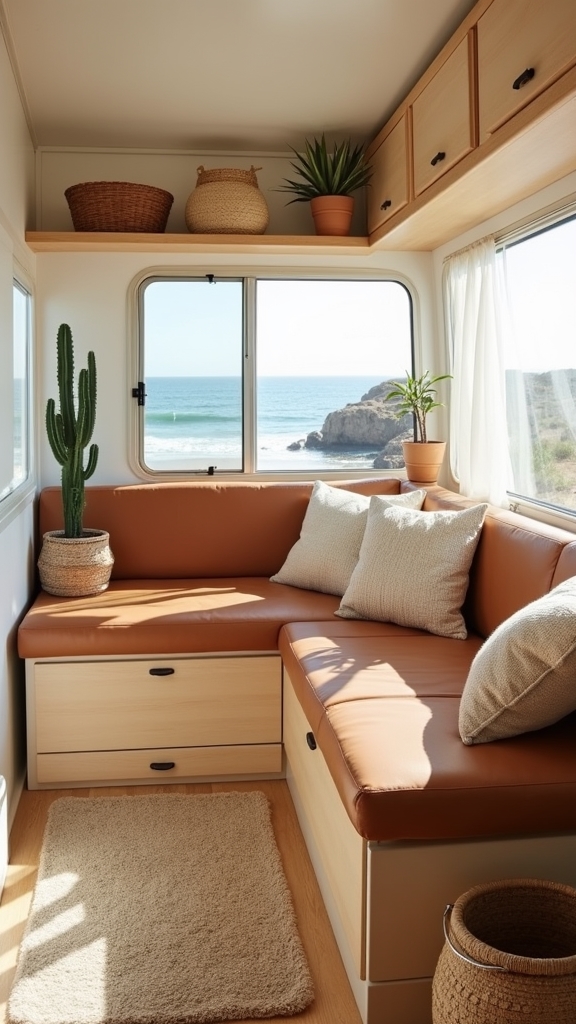
Real leather in a camper deteriorates quickly due to temperature fluctuations and UV exposure. Faux leather and marine-grade vinyl resist moisture, clean easily, and cost a fraction of genuine leather. Eco-friendly options now provide a surprisingly luxurious feel without the environmental cost.
Reupholstering existing cushions yourself is manageable with a staple gun and patience. The transformation changes how the entire space feels, and you’ll save hundreds compared to buying new cushions.
Creative Cabinet Refacing Techniques
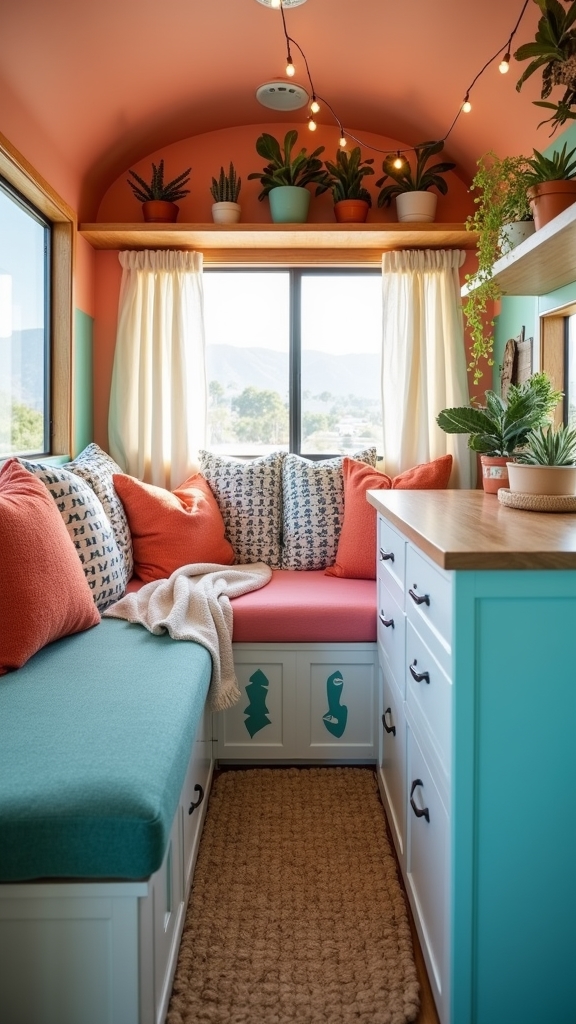
Cabinet refacing updates your interior faster and more cheaply than replacement. Spray paint transforms dated hardware in an afternoon, or swap it entirely for modern pulls and hinges. Laminate resurfacing covers worn surfaces with fresh material that’s tough enough for camper life.
Test any new material on a hidden spot first, because not all adhesives play well with the original finishes. This approach works best when your cabinet boxes are still structurally sound.
Layered Pattern and Texture Combinations
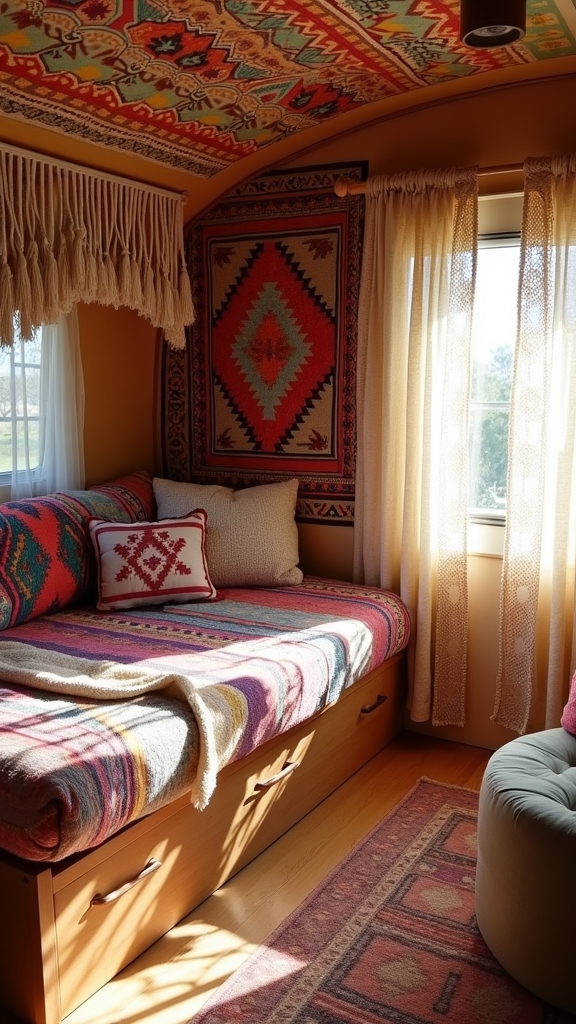
Mixing patterns in a small space requires restraint and intention. Combine faux fur throws with woven baskets for contrasting textures that add depth. Layer coastal stripes with geometric prints on throw pillows, keeping the color palette consistent.
Desert-inspired colors through textured wall art connect your interior to the landscape outside. The key is choosing patterns at different scales, so they complement rather than compete.
Natural Light Enhancement Strategies
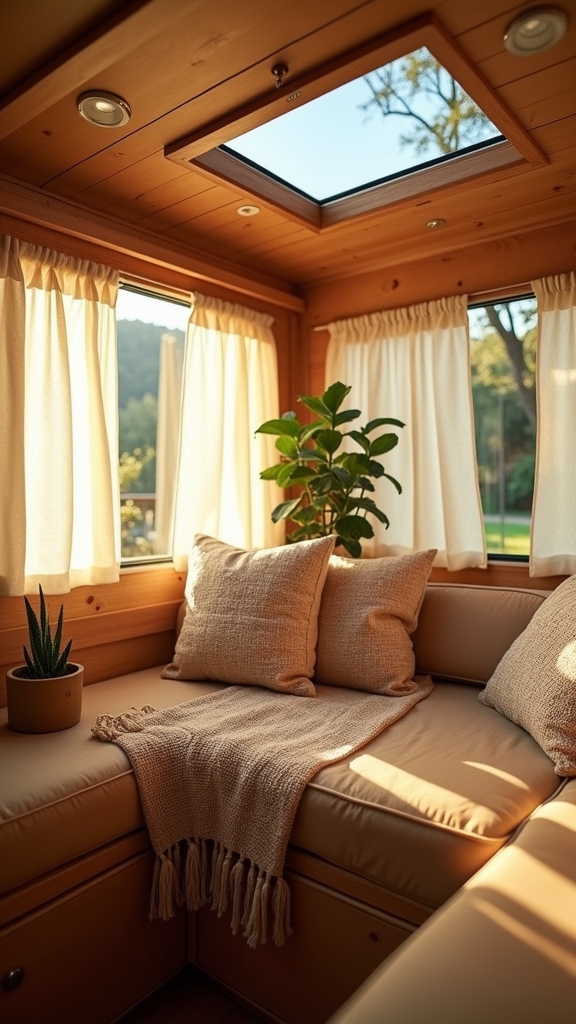
Natural light makes any camper feel larger and more livable. Upgrading to bigger windows involves cutting into your walls, so it’s not a casual project, but the impact is transformative. Position windows to catch morning light on one side and avoid harsh afternoon sun on the other.
Light-colored walls and glossy cabinet finishes reflect available light throughout the space. Even small changes, like removing heavy curtains or cleaning windows thoroughly, make a noticeable difference.
DIY Cabinet Painting Guide
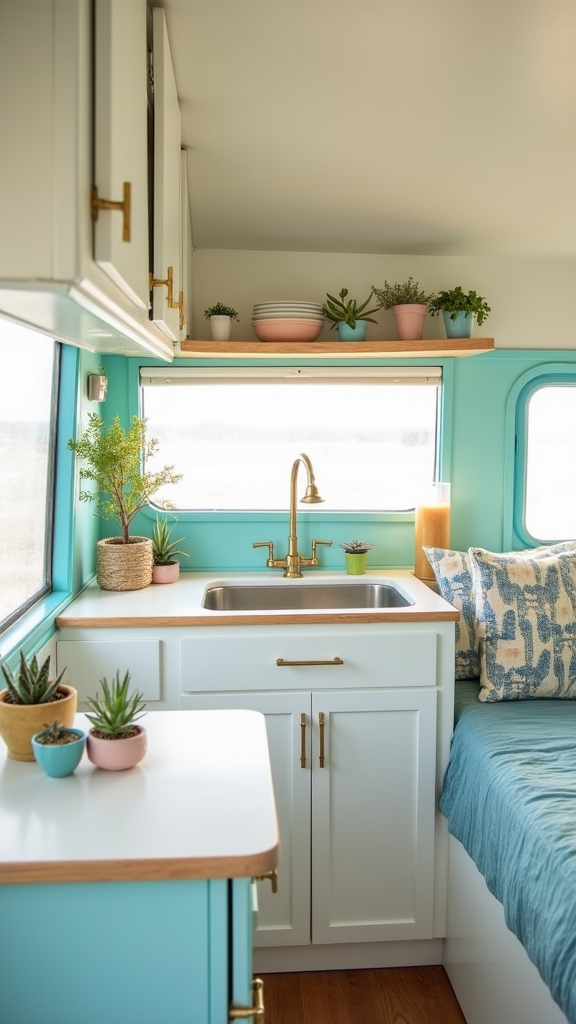
Remove all hardware before you start, then clean every surface with TSP cleaner to remove grease and grime. Fill imperfections with wood filler and sand smooth once dry. Set up in a well-ventilated space, because paint fumes in a closed camper will overwhelm you.
Quality primer is non-negotiable; it’s what makes the paint actually stick. Choose cabinet-specific paint in semi-gloss or satin, and consider low-VOC options if you’re sensitive to fumes.
Removable Decor Solutions
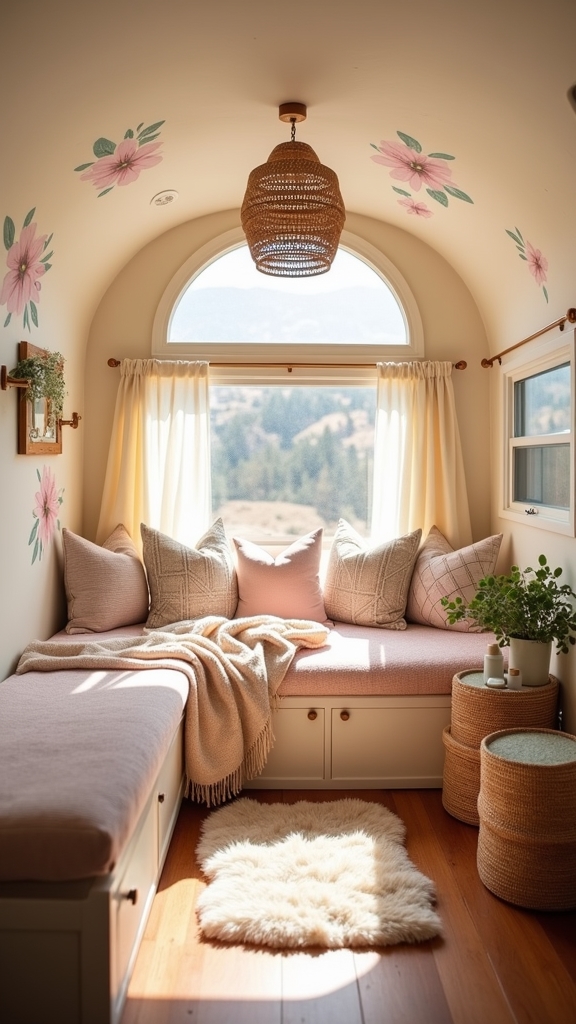
Adhesive wall decals add personality without permanent commitment, perfect for renters or those who like to change things up. Temporary shelving maximizes vertical space and can be lowered without causing damage.
String lights create ambiance and provide functional lighting without hardwiring. Removable fabric elements like cushion covers and curtains let you update the look seasonally. Everything should be chosen with removal in mind, because your needs and tastes will evolve.
Warm Color Palette Inspirations
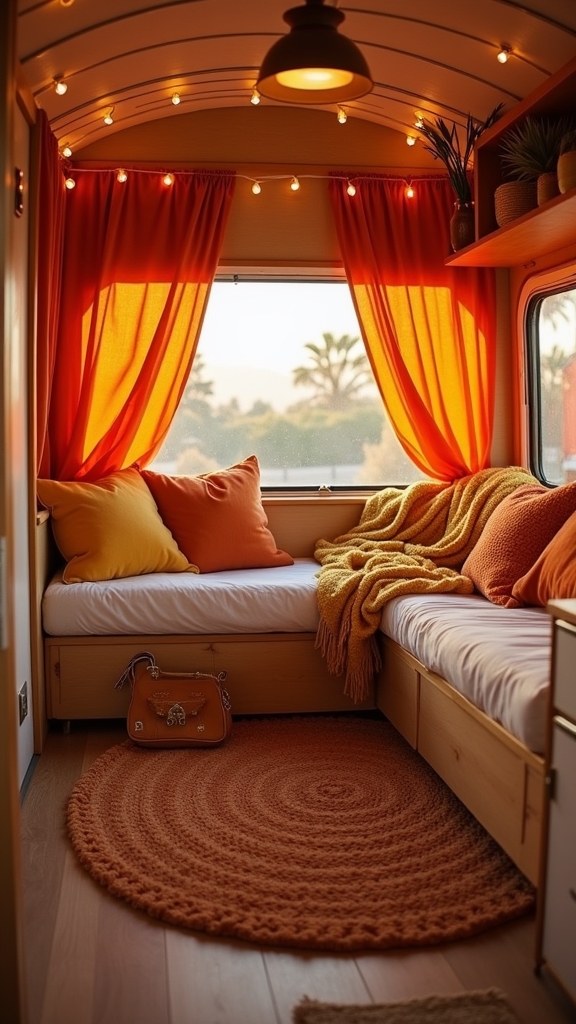
Warm colors make small spaces feel cozy rather than cramped. Terracotta, rust, and golden yellows complement Southern California’s natural landscape. These hues work particularly well with natural lighting, glowing in the morning and evening when you’re most likely to be inside.
Coastal elements in warm tones, like coral or sandy beige, connect your interior to the environment. The goal is to create a space that feels intentionally designed rather than accidentally decorated.
Storage-Smart Furniture Selections
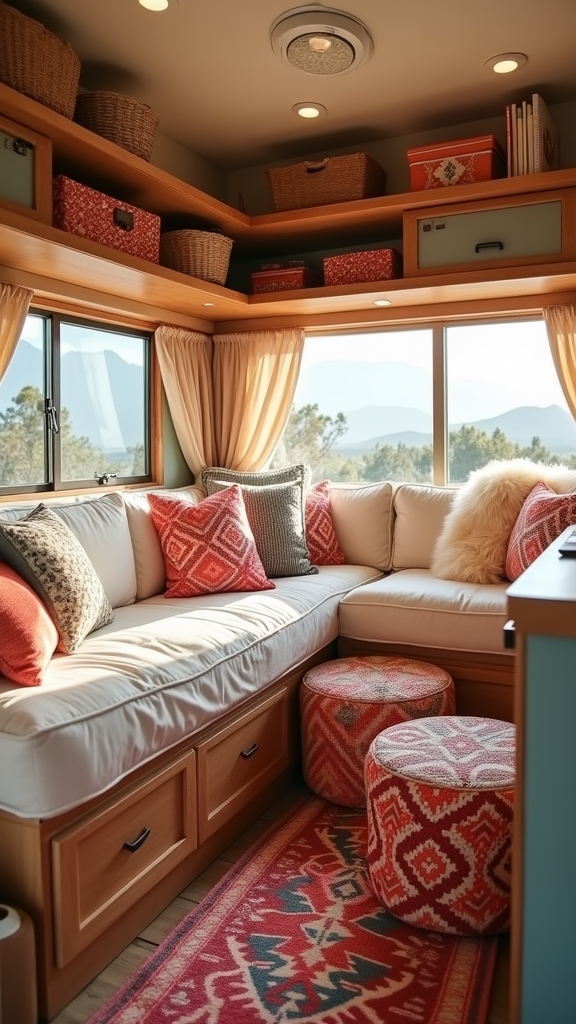
Wall-mounted foldable tables disappear when not needed and deploy for meals or work. Convertible sofas transition from seating to sleeping without requiring a degree in engineering.
Multifunctional shelving units that double as steps make use of otherwise dead space. Mobile storage containers with wheels reorganize easily as your needs change. Every piece should justify its footprint by serving multiple purposes.
Functional Countertop Designs
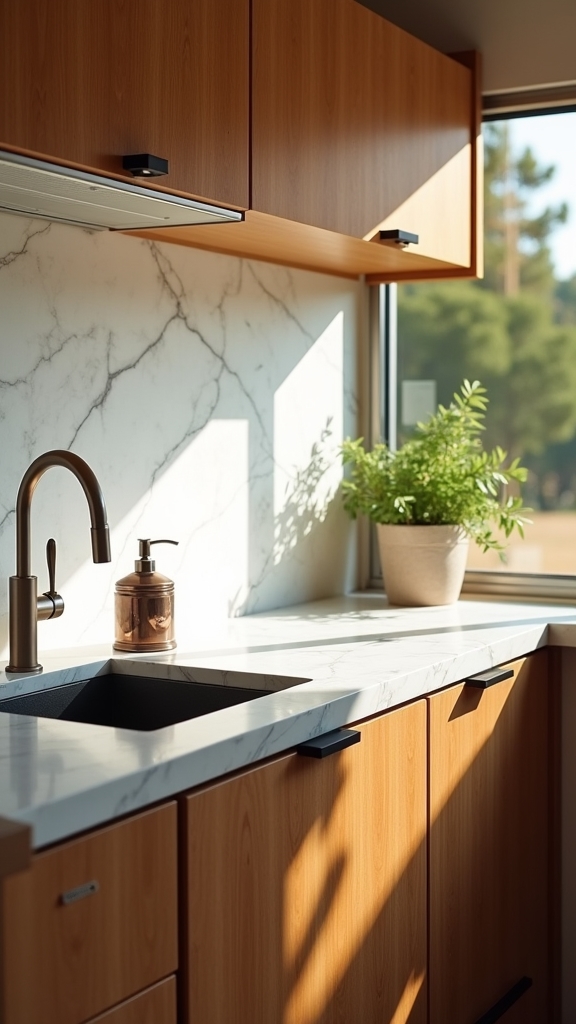
Flip-up counters and pull-out extensions provide workspace when you need it and disappear when you don’t. Built-in storage compartments beneath countertops utilize space that would otherwise go to waste. Durable materials like faux marble or laminate sheets offer style without adding significant weight.
Keep countertops light in color to maximize their reflective quality, making small kitchens feel larger. Installation should be robust enough to handle actual food prep, not just light-duty use.
Easy-to-Clean Upholstery Options
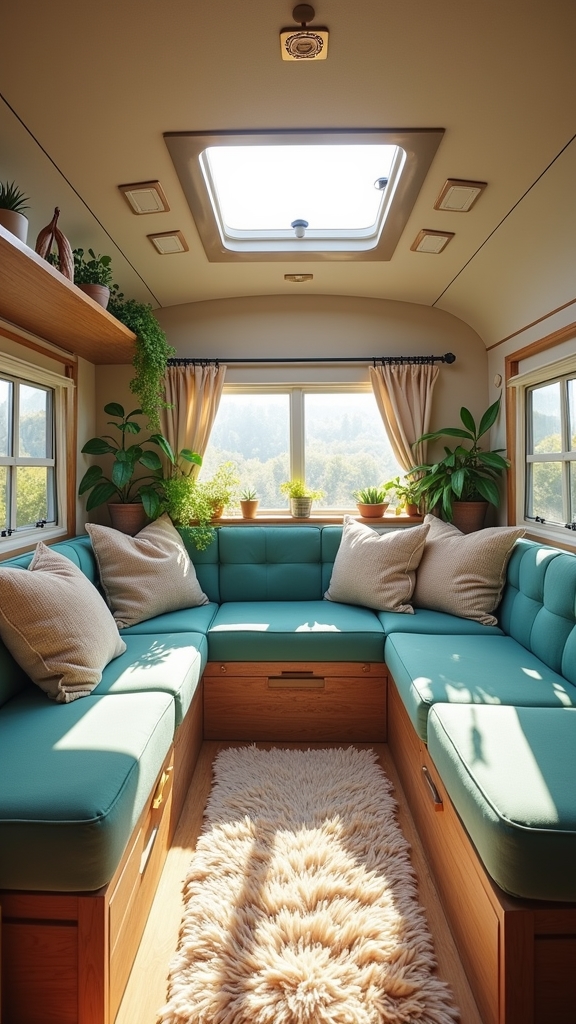
Sunbrella and marine-grade fabrics resist water damage and can be cleaned with just soap and water. These materials cost more upfront but pay for themselves in durability and maintenance savings. Address spills immediately to prevent staining, even with resistant fabrics.
Mild detergents work better than harsh cleaners that can damage protective coatings. Choose darker patterns that naturally camouflage the minor dirt that’s inevitable in camper life.
Space-Saving Kitchen Organizations
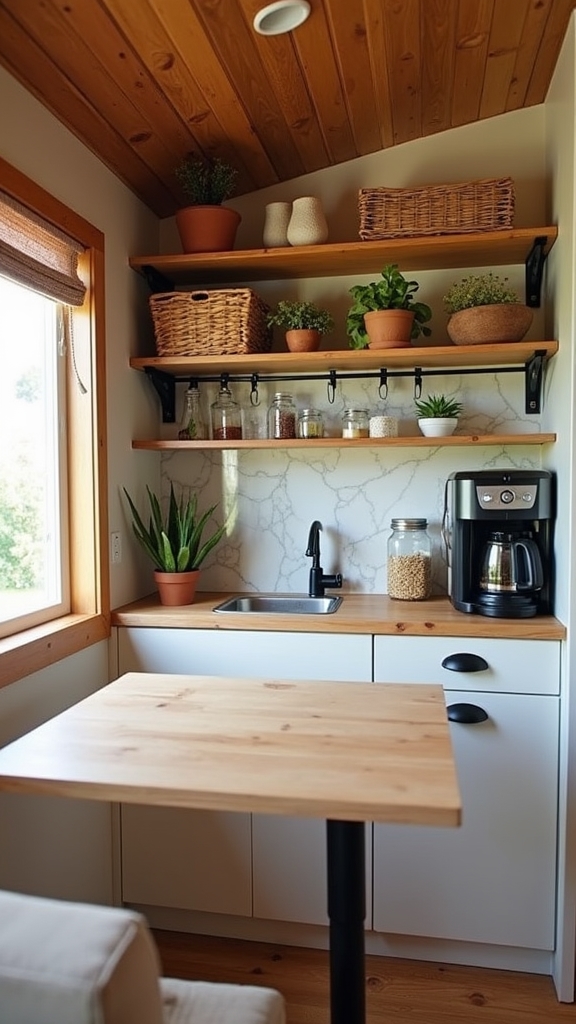
Collapsible items like colanders, bowls, and measuring cups store flat and expand when needed. Multifunctional appliances like an Instant Pot replace several single-use devices. Mount magnetic knife strips to walls to free up drawer space.
Install tension rods inside cabinets to create dividers for cutting boards and baking sheets. Every kitchen item should have an assigned spot that makes sense for how you actually cook.
Stylish Bedding Arrangements
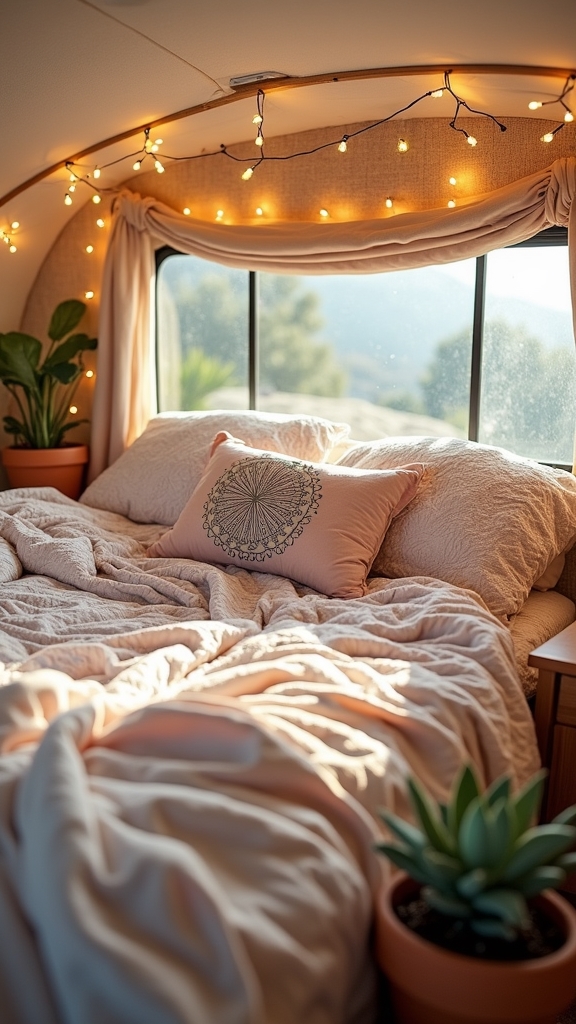
Layer quick-drying, waterproof bedding with memory foam toppers for comfort that doesn’t trap moisture. Zip-up bedding systems stay in place on camper mattresses that tend to shift. Neutral or earth-toned textiles create a calming environment conducive to sleep.
Soft lighting, like battery-powered reading lights, provides ambiance without harsh overhead illumination. The bed is where you’ll spend a third of your camping time, so invest in making it comfortable.
Instagram-Ready Interior Styling Tips
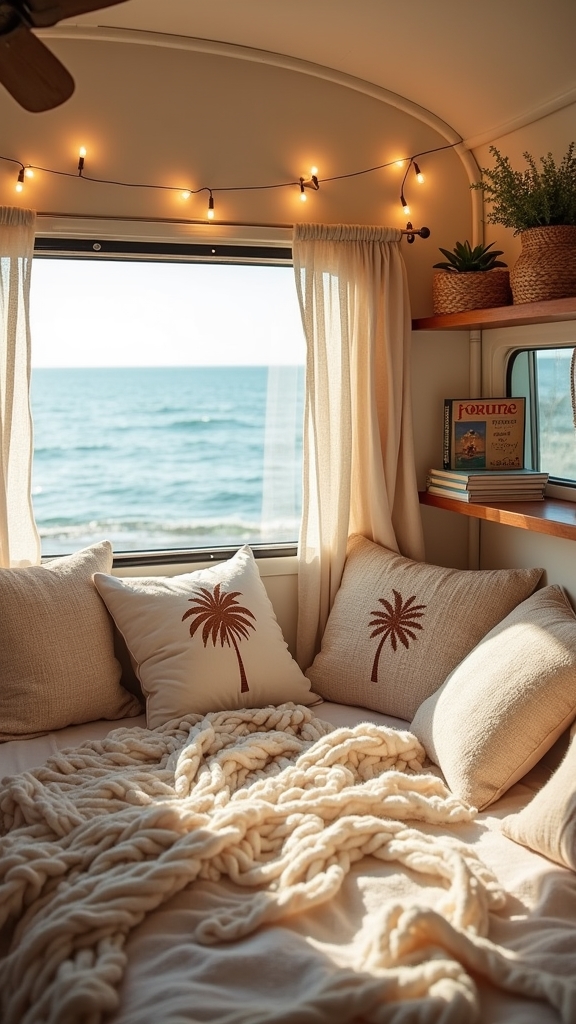
Layer textiles with varying patterns and textures to create visual depth that photographs well. Incorporate props like vintage camping gear or potted plants that tell a story. Maximize natural lighting by shooting during golden hour or positioning your camper to catch the best light.
Clean thoroughly before photographing, because clutter reads worse in photos than in person. The goal is to show your space authentically while highlighting its best features.
Pinterest-Worthy Accent Ideas
Natural elements like wicker baskets and macrame wall hangings create a cottage feel without requiring much space. Coastal vibes come through with light blues and subtle nautical touches that don’t veer into theme park territory.
Minimalist elegance focuses on quality over quantity, choosing a few perfect pieces rather than filling every surface. Boho chic works in campers because it celebrates the eclectic, making mismatched pieces feel intentional rather than accidental.