Most off-road enthusiasts obsess over their vehicle’s capabilities, but here’s the truth: your truck bed camper setup will make or break your Moab adventure. You need way more than basic camping gear to handle Utah’s challenging backcountry terrain and brutal desert conditions.
From lightweight pop-up designs to heavy-duty flatbed configurations, these 14 proven setups each bring something different to the table for extended stays in remote wilderness. The right combination of modifications and equipment can completely change how you experience off-grid camping in the Red Rock Country.
Contents
- 1 Choosing the Perfect Truck Bed Camper for Moab’s Terrain
- 2 Essential Off-Grid Modifications for Your Truck Camper
- 3 Solar Power Systems for Extended Desert Stays
- 4 Water Storage and Conservation Solutions
- 5 Compact Kitchen Setups for Backcountry Cooking
- 6 Storage Solutions for Extended Off-Grid Living
- 7 Navigation and Communication Equipment
- 8 Suspension Upgrades for Rough Trail Handling
- 9 Trail-Ready Safety and Recovery Equipment
- 10 Maximizing Limited Space in Your Truck Camper
- 11 Power Management and Battery Systems
Choosing the Perfect Truck Bed Camper for Moab’s Terrain
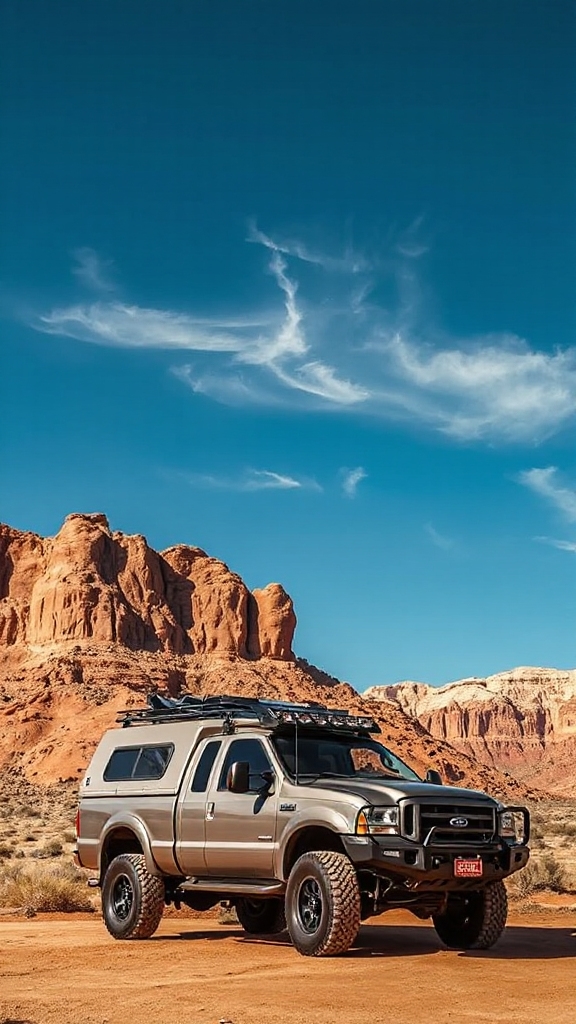
Finding the right truck bed camper for Moab means prioritizing clearance and dimensions. Look for compact designs under 10 feet tall with a narrow profile, because those tight canyon trails don’t give you much wiggle room.
Many trails limit vehicle width to 7 feet 2 inches, so measure twice before committing to a camper. Go lightweight but durable, with weather-resistant construction, decent insulation, and a reinforced frame that won’t rattle apart on washboard roads.
SEE THIS: 15 Smart Truck Bed Camper Storage Ideas for Great Smoky Mountains, Tennessee!
Essential Off-Grid Modifications for Your Truck Camper
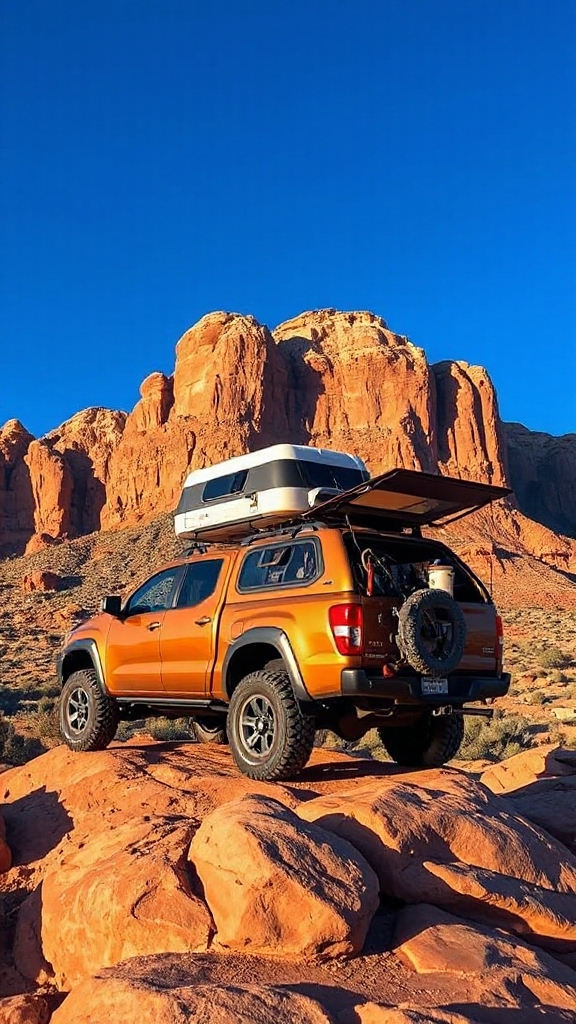
Once you’ve picked your camper, it’s time to turn it into a true off-grid machine through some key modifications. Start with a robust power system built around lithium-ion batteries and a Victron MultiPlus inverter for reliable power. A dual-battery setup weighing approximately 60 pounds can deliver up to 5,000 charge cycles, which equates to years of off-grid living. Solar starter kits from brands like Renogy include everything you need to get going for under $200, making it an easy first step.
Solar Power Systems for Extended Desert Stays
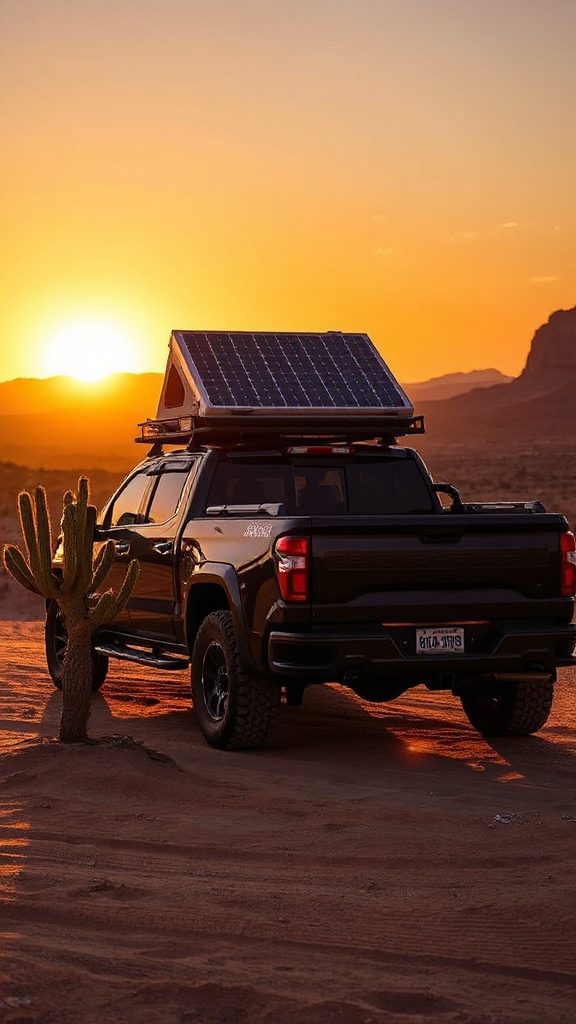
Desert camping offers one significant advantage: sunshine for days on end. Mount monocrystalline panels at a 39-degree angle to capture the most energy throughout the day, and pair them with MPPT controllers that squeeze every bit of power from your setup.
Lithium-ion batteries store the energy you generate, while a quality battery management system ensures the battery does not overcharge or drop below a safe lower limit. Portable solar panels work great when roof mounting isn’t practical or when you want to reposition them as the sun moves.
Water Storage and Conservation Solutions
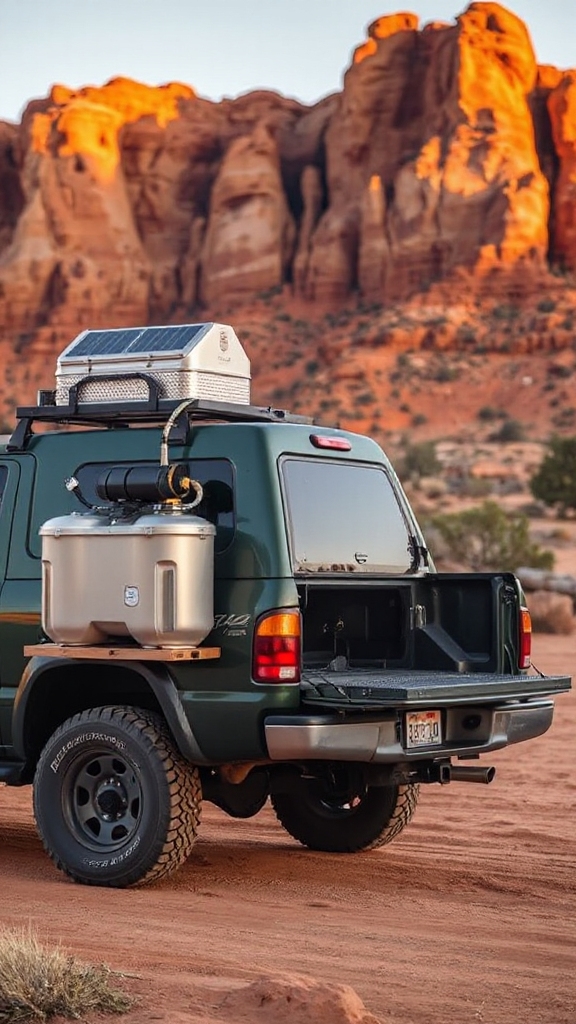
Water management in the desert separates comfortable camping from survival mode. A primary 55-gallon food-grade barrel system gives you a solid baseline, while portable 5-gallon Scepter cans handle drinking water and are easier to refill in town.
Adding a USB water pump to your Scepter cans makes dispensing easy without lifting and pouring. Big Berkey filters keep your drinking water clean, and low-flow nozzles paired with a dual-basin camp sink using foot pumps stretch every gallon further.
Compact Kitchen Setups for Backcountry Cooking
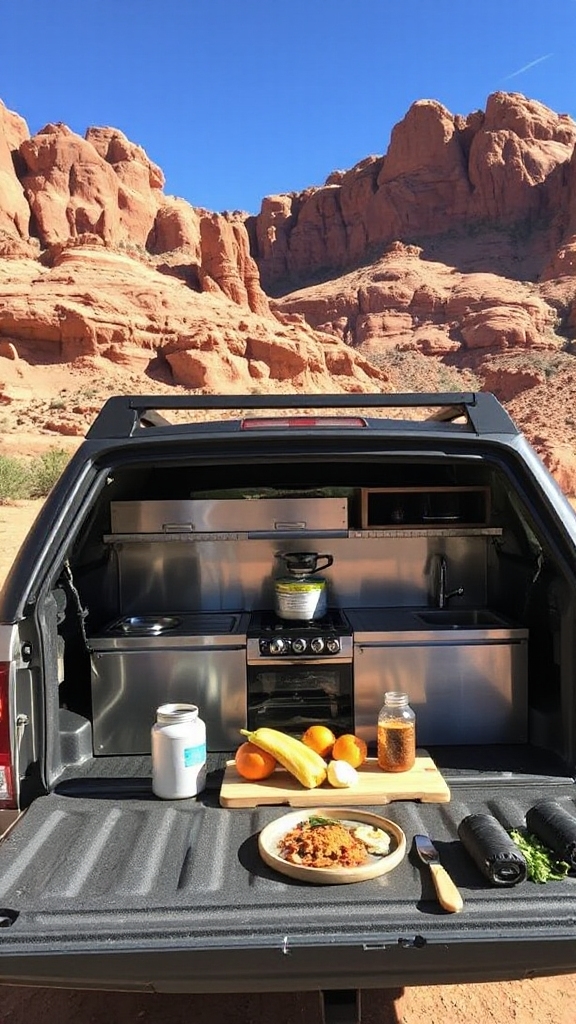
The right backcountry kitchen setup turns your truck bed into a surprisingly functional cooking space. Lightweight stoves like the PocketRocket 2 paired with aluminum cookware give you good heat control without eating up storage room.
Nested pots and multi-use items, such as a kettle that doubles as a drinking mug, reduce the gear you’re hauling. Foldable prep stations with integrated storage keep your cooking area organized and give you actual counter space to work with.
Weather-Resistant Features for Desert Climate
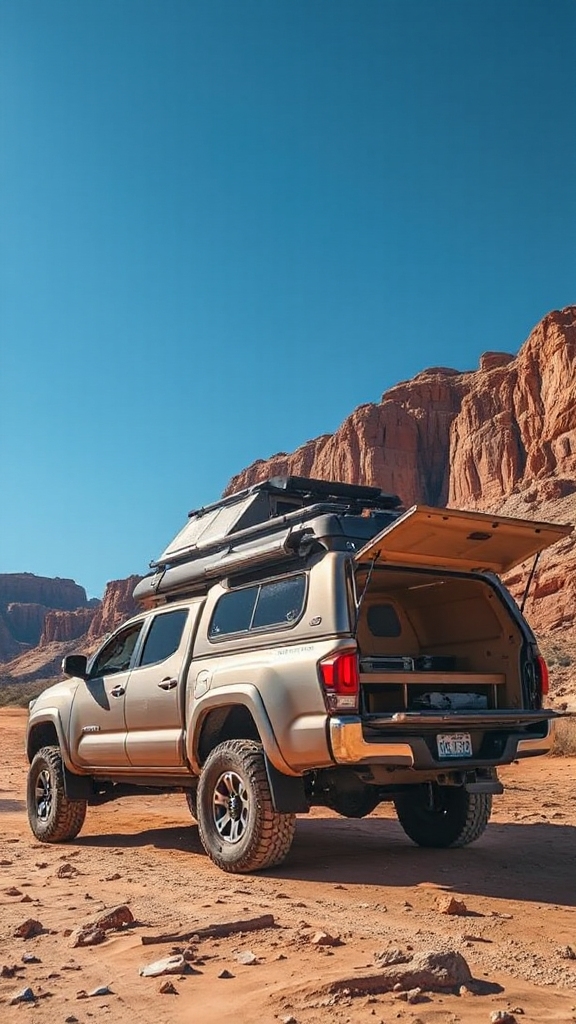
Desert conditions are harder on camping gear than most people realize until they’ve spent time in Moab. High R-value insulation combats those wild temperature swings between blazing days and freezing nights.
UV-protected exterior finishes prevent sun damage, while secure anchoring systems keep everything in place during those fierce desert windstorms. Reflective surfaces and proper ventilation manage heat buildup, and desert-grade fabrics with dust-resistant covers protect against the fine red sand that gets into everything.
Storage Solutions for Extended Off-Grid Living
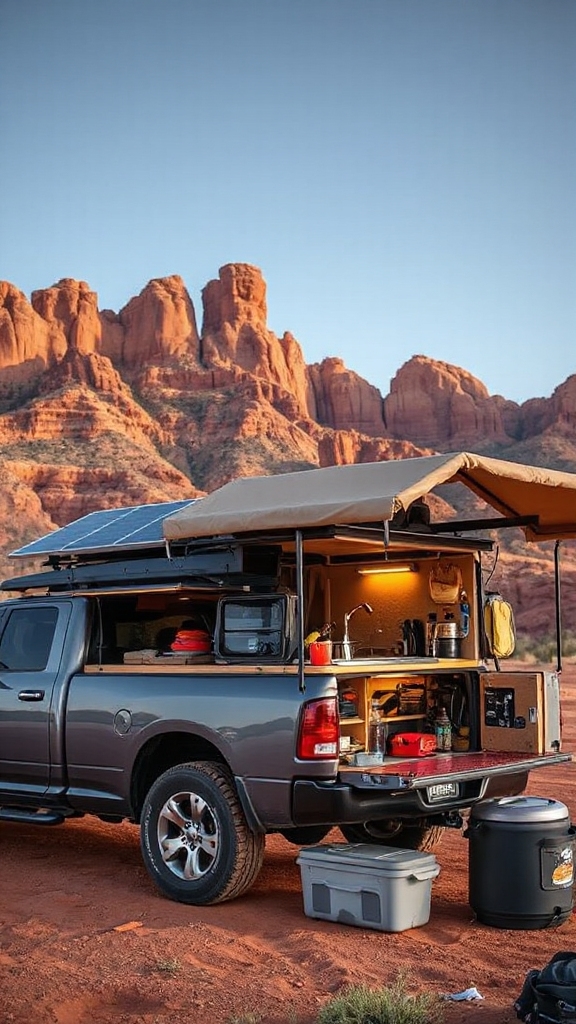
Smart storage becomes critical when you’re living off-grid for more than a weekend. Stackable containers and vacuum-sealed bags compress your gear down to manageable sizes. Wall-mounted racks and overhead nets use vertical space you’d otherwise waste.
Multi-functional furniture with hidden compartments serves double duty, and if you plan to spend significant time in Moab, off-site storage units in town let you rotate seasonal equipment without cramming everything into your camper.
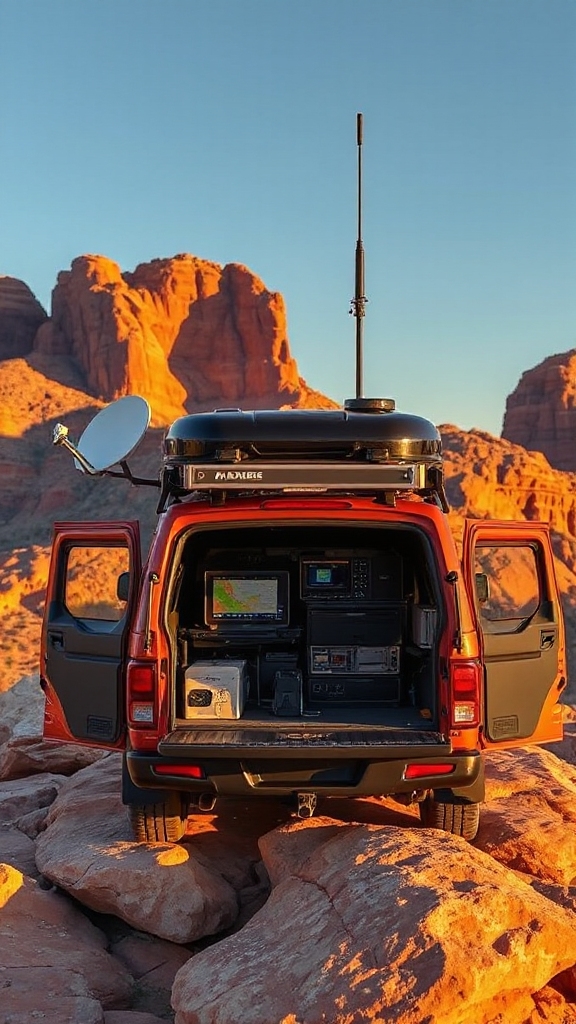
Exploring Moab’s backcountry trails requires navigation gear you can actually trust when cell service disappears. A Garmin InReach or GPSMAP 66i provides satellite messaging and tracking so people know your location.
Keep offline mapping apps such as Gaia GPS or Maps.me installed on your phone as backups. A simple GPS beacon adds another layer of emergency redundancy that could save your life if everything else fails.
Suspension Upgrades for Rough Trail Handling
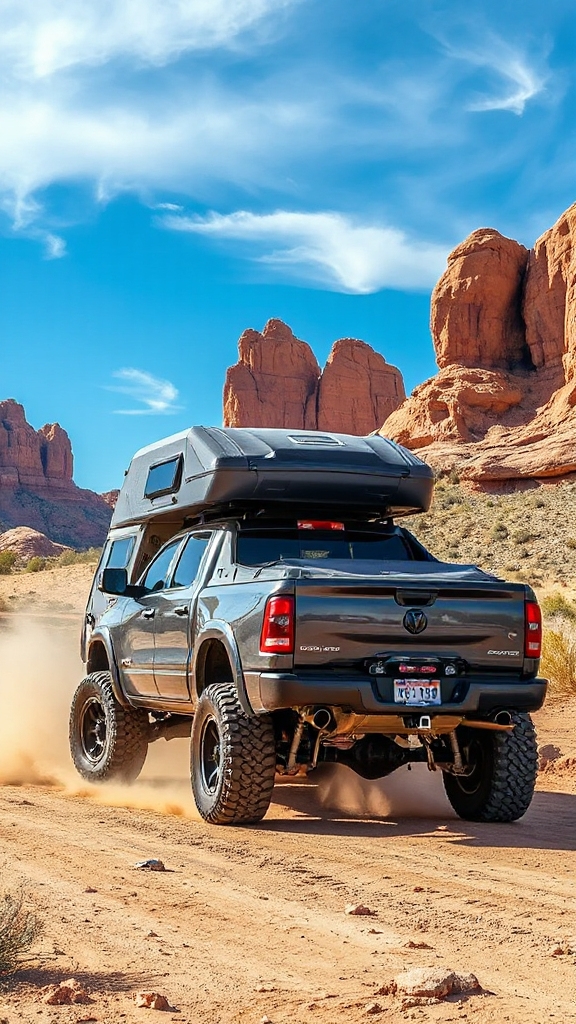
Loading a camper onto your truck bed changes how it handles, especially on rough trails. Lift kits and upgraded shock absorbers handle the increased weight while giving you better ground clearance for rocky sections.
Adaptive suspension systems, such as LiquidSpring, adjust in real time to changing terrain conditions. The right suspension setup makes the difference between white-knuckling every washboard and actually enjoying the drive to your campsite.
Climate Control Systems for Desert Extremes
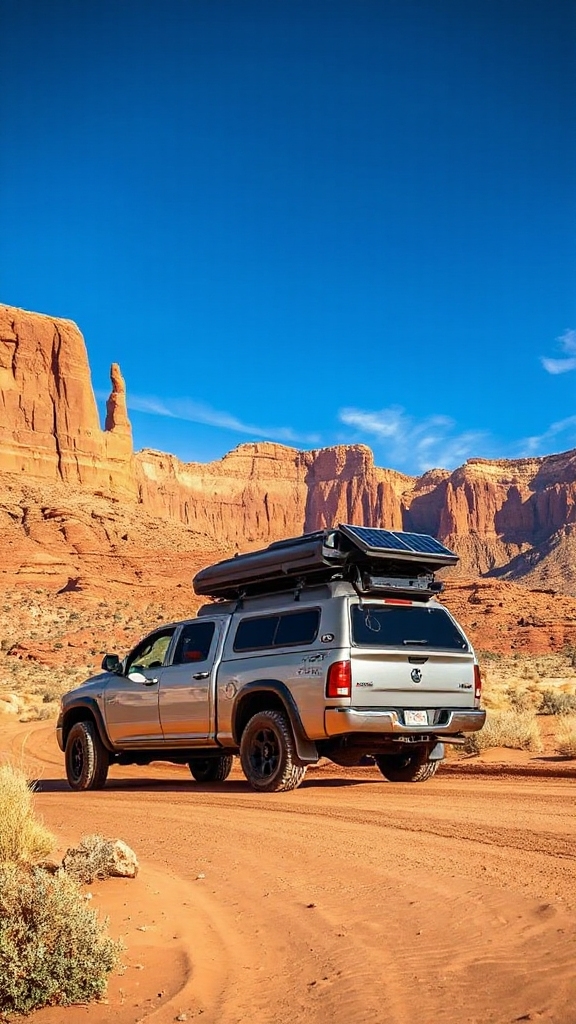
Desert temperatures will cook you alive without proper climate control in your camper. HVAC units rated for extreme temperatures, such as the BES 3000 Series, can operate at up to 130°F without degrading performance.
Systems with desert-specific settings and low-humidity optimization continue to run reliably even when cheaper units fail. Good climate control isn’t a luxury in Moab; it’s what lets you sleep comfortably instead of lying awake sweating through your sleeping bag.
Multi-Purpose Gear Organization Systems
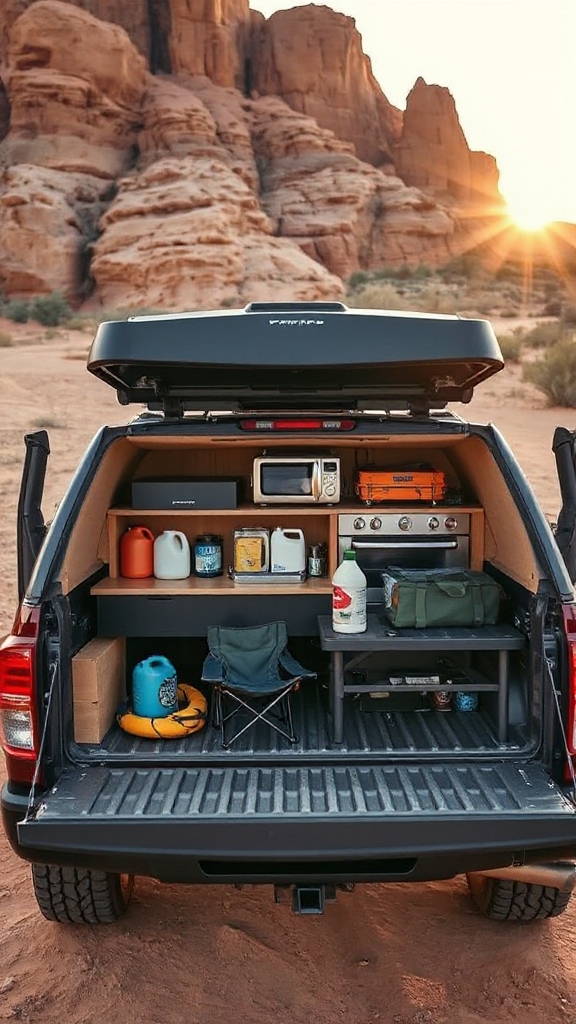
A well-thought-out organizational system keeps your camper functional rather than chaotic. Modular drawers and cubbies from companies like Viato adapt to your specific gear needs and change as those needs evolve.
LoftLockers maximize space by suspending storage from your topper, freeing up floor area. TruckVault drawer systems protect valuable gear while giving you quick access, which matters when you’re parked at remote trailheads.
Trail-Ready Safety and Recovery Equipment
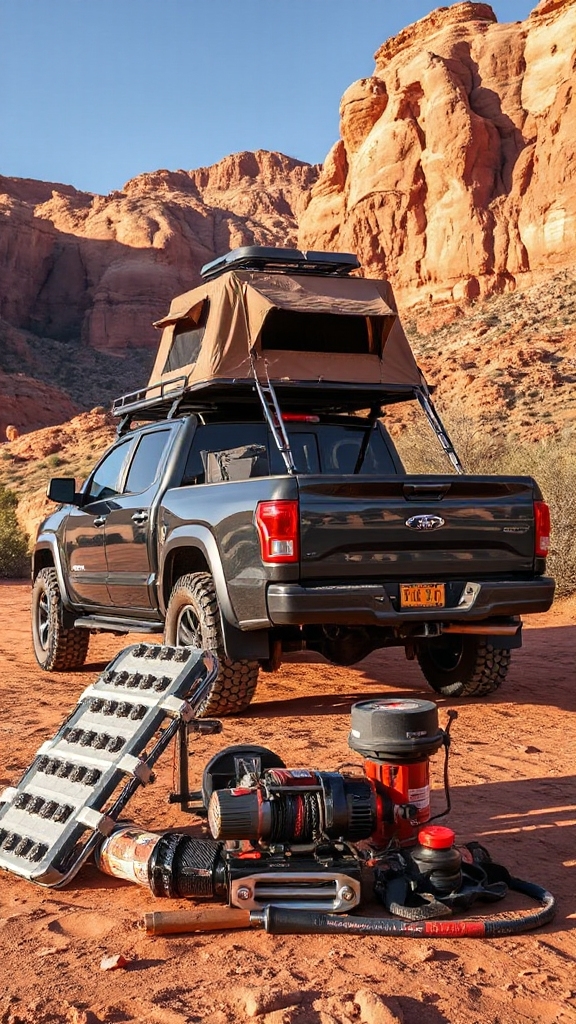
Safety gear isn’t optional when you’re exploring off-grid in Moab’s backcountry. Stock a reliable winch, rated recovery straps, and traction mats for getting unstuck from sand or mud.
Recovery dampers prevent dangerous strap snapback, while high-visibility lighting helps other vehicles spot you. A thorough first-aid kit gives you peace of mind when the nearest hospital is an hour away on dirt roads.
Maximizing Limited Space in Your Truck Camper
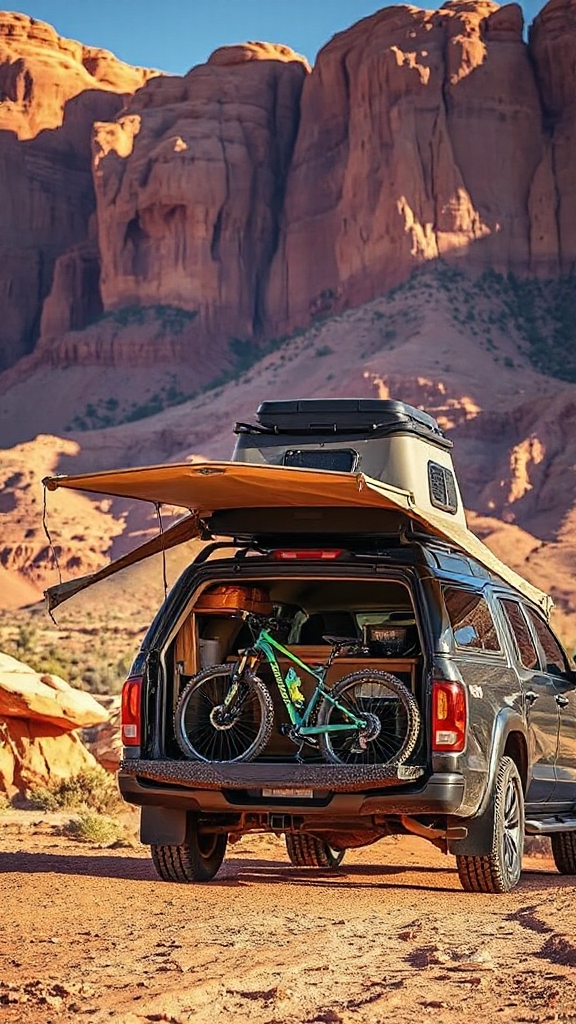
Truck campers give you incredible mobility but force you to get creative with limited space. Vertical storage solutions use wall space that otherwise goes to waste. Rooftop cargo boxes add capacity without eating into your living area.
Modular packing systems, foldable gear, and multipurpose furniture keep everything organized and accessible, while slide-out drawers and bins make finding what you need quick and easy.
Power Management and Battery Systems
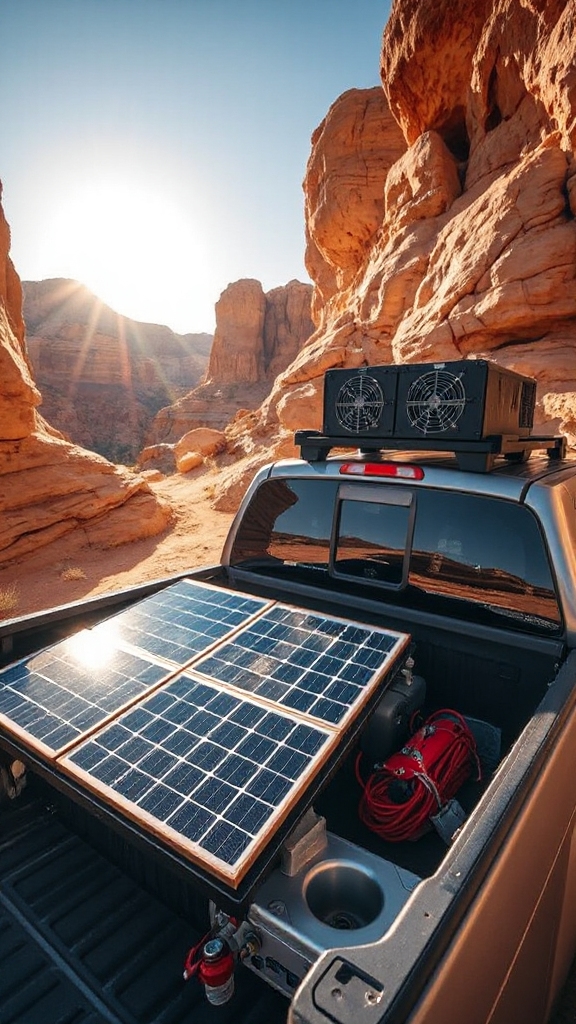
Power management makes or breaks extended off-grid stays in your truck camper. Start with high-performance LiFePO4 batteries for their longevity and stable discharge rates.
Integrate them with Victron equipment for precise control over your power system.
An 800W solar array paired with smart charging systems keeps your batteries topped off, giving you reliable power for days or even weeks in remote locations without running your truck.