The bedroom is the one room where atmosphere does the heaviest lifting. Get it right, and you fall asleep feeling like you’re somewhere worth being.
Coastal design works because it pulls from a palette the human brain already finds calming: water, wood, stone, and open sky. You don’t need to live near the ocean to make it feel that way. These ideas will help you build a room that earns its rest.

Contents
- 1 Embrace Blue and Green Hues
- 2 Opt for Navy and Burgundy Accents
- 3 Integrate Lighter-Toned Wooden Pieces
- 4 Choose Woven Textiles and Rugs
- 5 Experiment With Seashell Motifs
- 6 Select Linen for Bedding and Pillows
- 7 Invest in a Canopy or Cane Bed
- 8 Add Rattan Seating Elements
- 9 Prioritize Open, Spacious Layouts
- 10 Keep Decor Minimal and Functional
- 11 Enhance Light With Sheer Curtains
- 12 Use Woven or Linen Light Fixtures
- 13 Incorporate Modern Coastal Art
- 14 Introduce Botanical Elements
- 15 Include Textured Accent Pillows
- 16 Feature Unique Wall Sconces
- 17 Blend Natural Textures With Soft Hues
- 18 Layer Textiles for Warmth and Comfort
- 19 Add Seashell and Beach-Themed Accessories
Embrace Blue and Green Hues
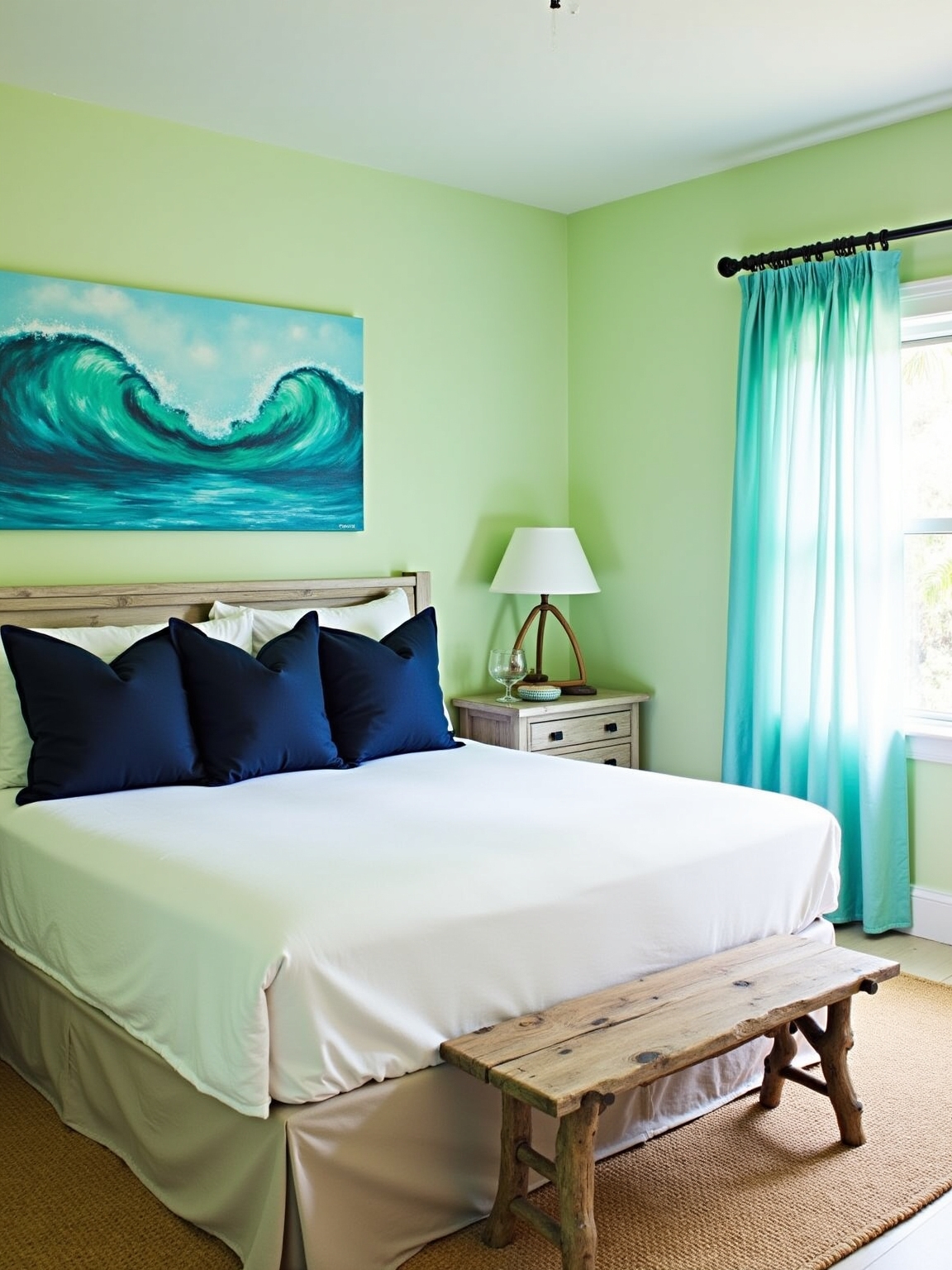
Blue and green are the backbone of any coastal bedroom, and the science actually backs up what your instincts already tell you. Softer blues lower blood pressure and quiet anxiety in a way that warmer colors simply don’t.
Green pulls in the balance that blue alone can’t quite achieve, grounding the room in something that feels alive. Together, they create a space where your nervous system genuinely unwinds.
SEE THIS: Old Hollywood Bedroom Decor: 18 Glamorous Chic Retro Ideas to Try.
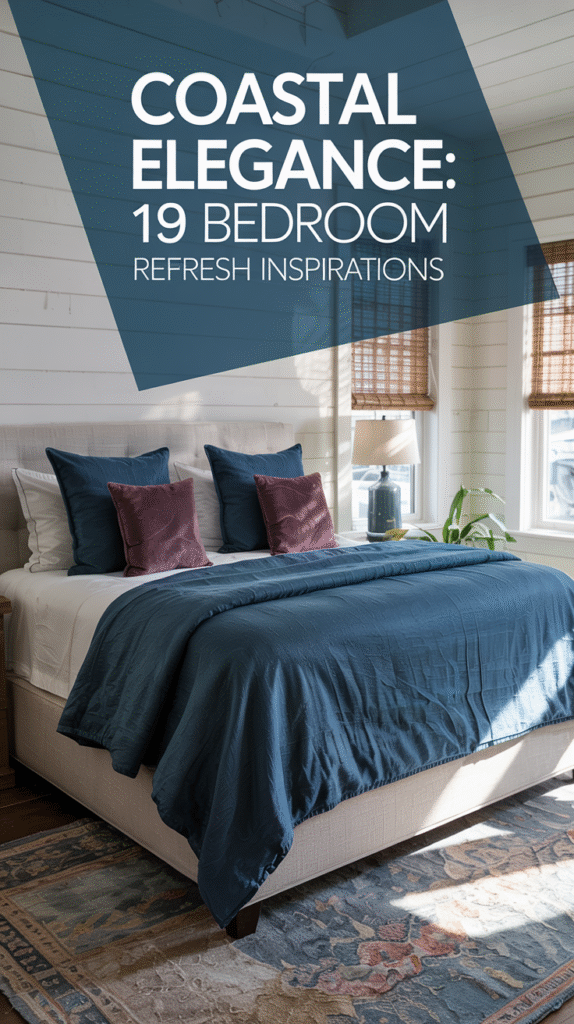
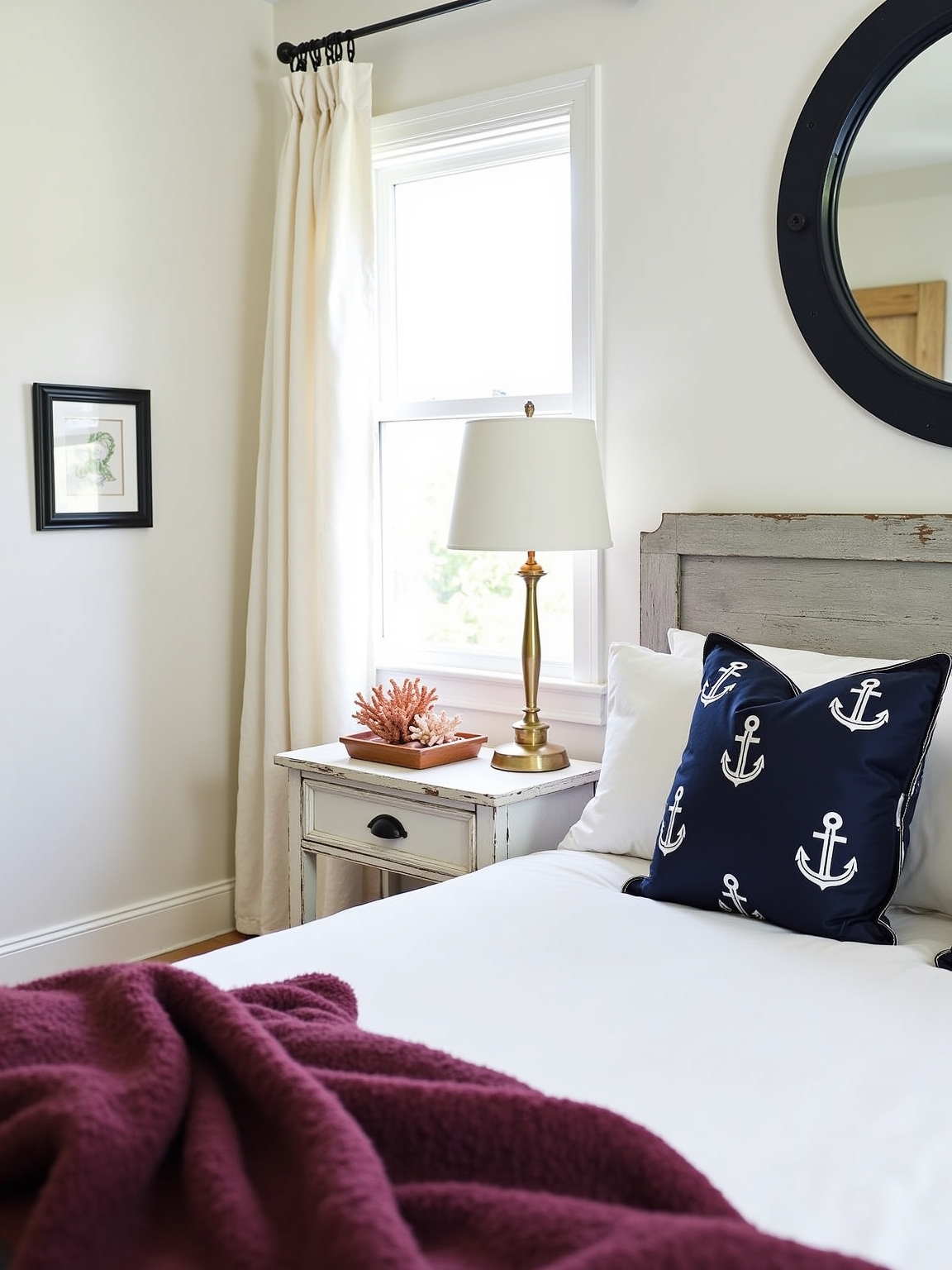
Navy and burgundy sounds like an unexpected pairing for a coastal room, but it works when you understand what each color is doing. Navy brings that deep, still-water calm, while burgundy adds just enough warmth to keep the room from feeling cold or clinical.
Plush pillows in soft grays, muted reds, and dusty blues layered against each other create richness without visual clutter. Pair the whole thing with woven shades or natural linen and the combination reads sophisticated rather than nautical.
SEE THIS: 20 Bedroom Refresh Ideas: Neutral Palettes With Dimension.
Integrate Lighter-Toned Wooden Pieces
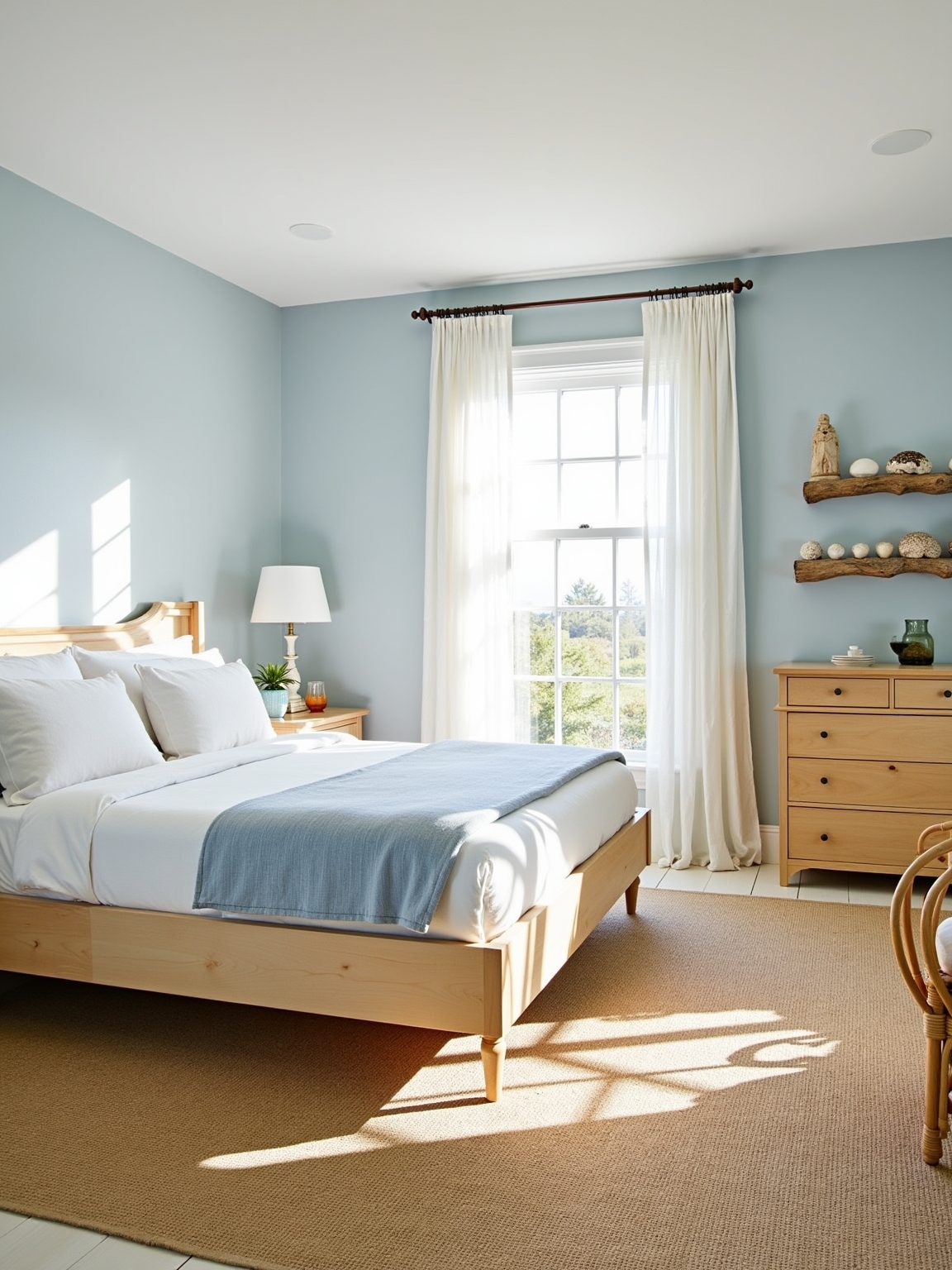
Dark furniture is the fastest way to sink a coastal room. Lighter wood finishes like maple, birch, or whitewashed oak keep things feeling open and sun-touched, the way a well-worn beach house actually looks.
These tones reflect natural light back into the space rather than absorbing it, which matters more in a bedroom than most people realize. They also sit cleanly alongside whites, soft blues, and sandy neutrals without competing for attention.
SEE THIS: 18 Easy DIY Statement Headboard Wall Hacks for a Fresh Bedroom Look.
Choose Woven Textiles and Rugs

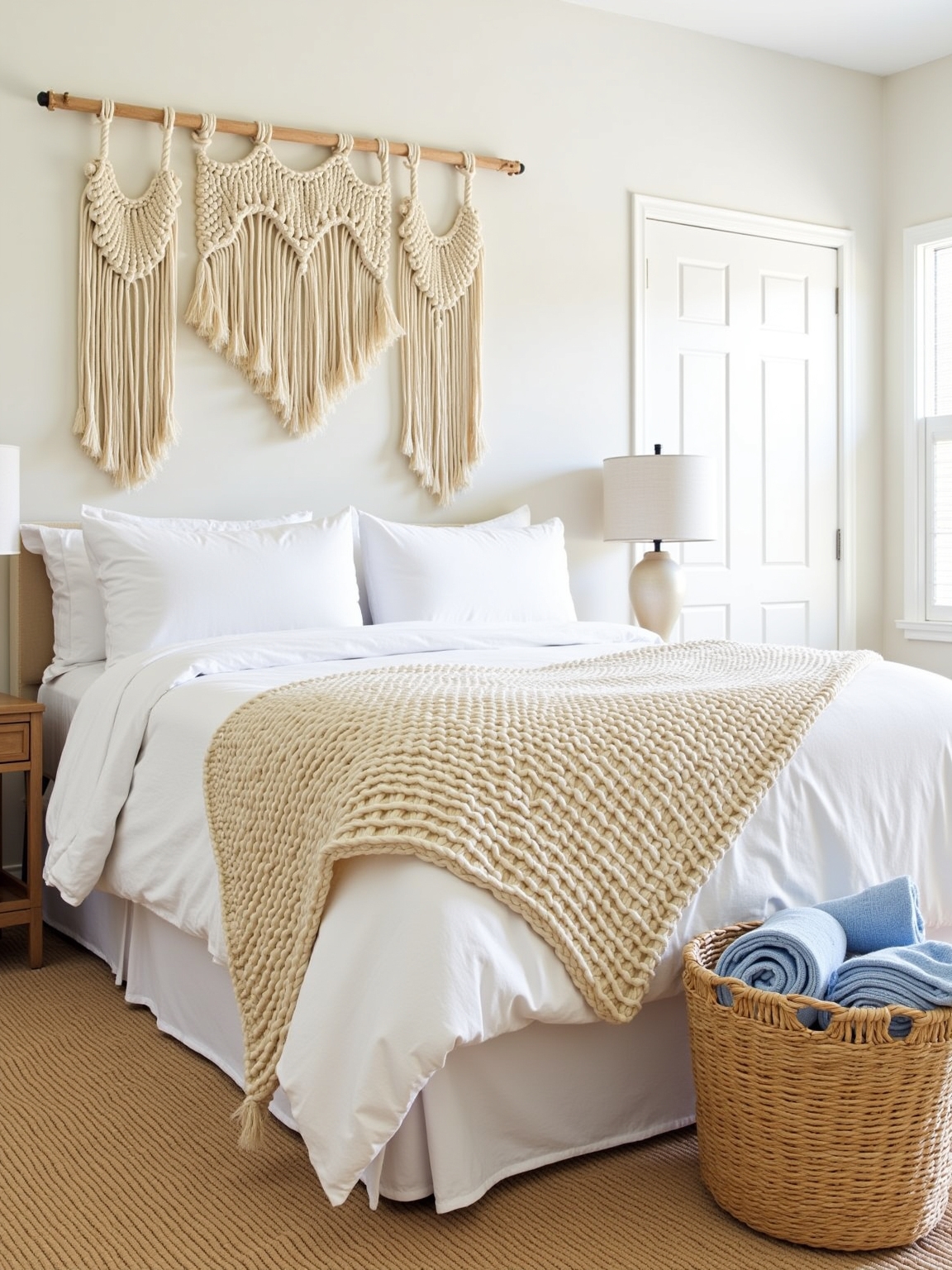
A seagrass or jute rug underfoot does something no paint color can replicate. The texture adds a layer of tactile warmth that signals comfort the moment you step out of bed.
Natural fiber rugs also breathe in warm climates, which matters in a room built around the idea of easy, coastal air. Choose a pattern loose enough to feel relaxed, and size up rather than down so the rug anchors the bed properly.
SEE THIS: 21 Fifth Wall Bedroom Design Ideas You Haven’t Tried Yet.
Experiment With Seashell Motifs

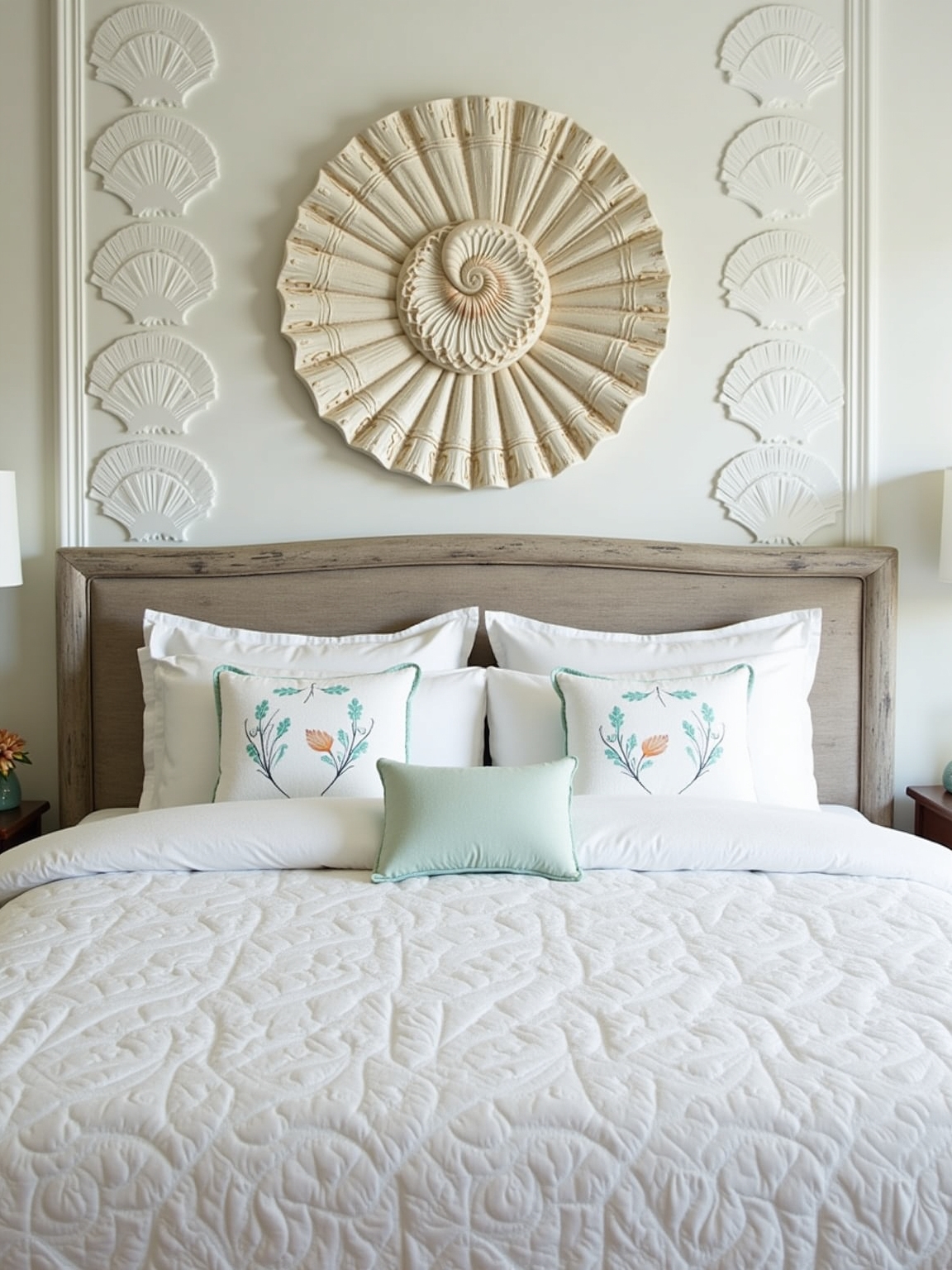
Seashell patterns earn their place in a coastal bedroom when they’re treated as an accent rather than a theme. A duvet with a subtle, monochromatic shell print reads far more elegantly than bold, high-contrast designs that announce themselves from across the room.
Layer in embroidered shell throw pillows or a piece of framed shell art, and you’ve built a visual conversation rather than a costume. The key is spacing these details out so each one gets room to breathe.
Select Linen for Bedding and Pillows

Of all the bedding materials available, linen is the one that actually improves with age. It softens with each wash, breathes in warm weather, and takes on that slightly rumpled, effortless quality that makes a coastal bedroom look genuinely lived-in.
Pale blues, sandy neutrals, and soft greens are the natural companions here, all colors that linen holds without looking flat or artificial. A linen duvet paired with mismatched linen pillowcases in the same tonal family always looks considered without looking fussy.
Invest in a Canopy or Cane Bed
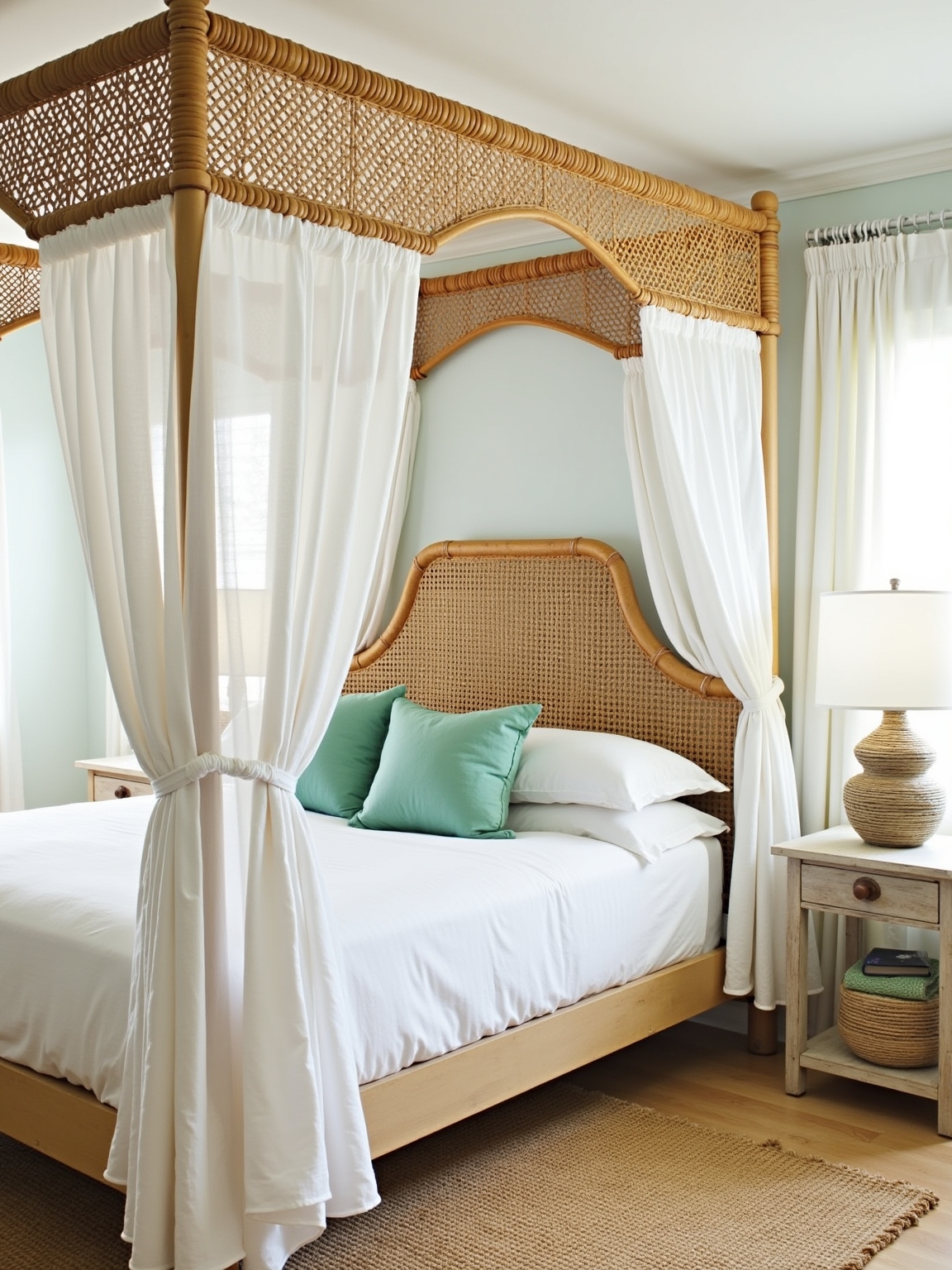
The bed frame sets the entire tone of the room, and a canopy or cane frame does it better than almost anything else in a coastal context. Billowy white or cream curtains on a four-poster canopy create that gauzy, open-air feeling that’s hard to achieve through any other single design choice.
Cane headboards bring the same organic warmth in smaller rooms where a full canopy would overwhelm the space. Stick to light tones and avoid ornate carvings; the beauty of these frames is in their simplicity.
Add Rattan Seating Elements
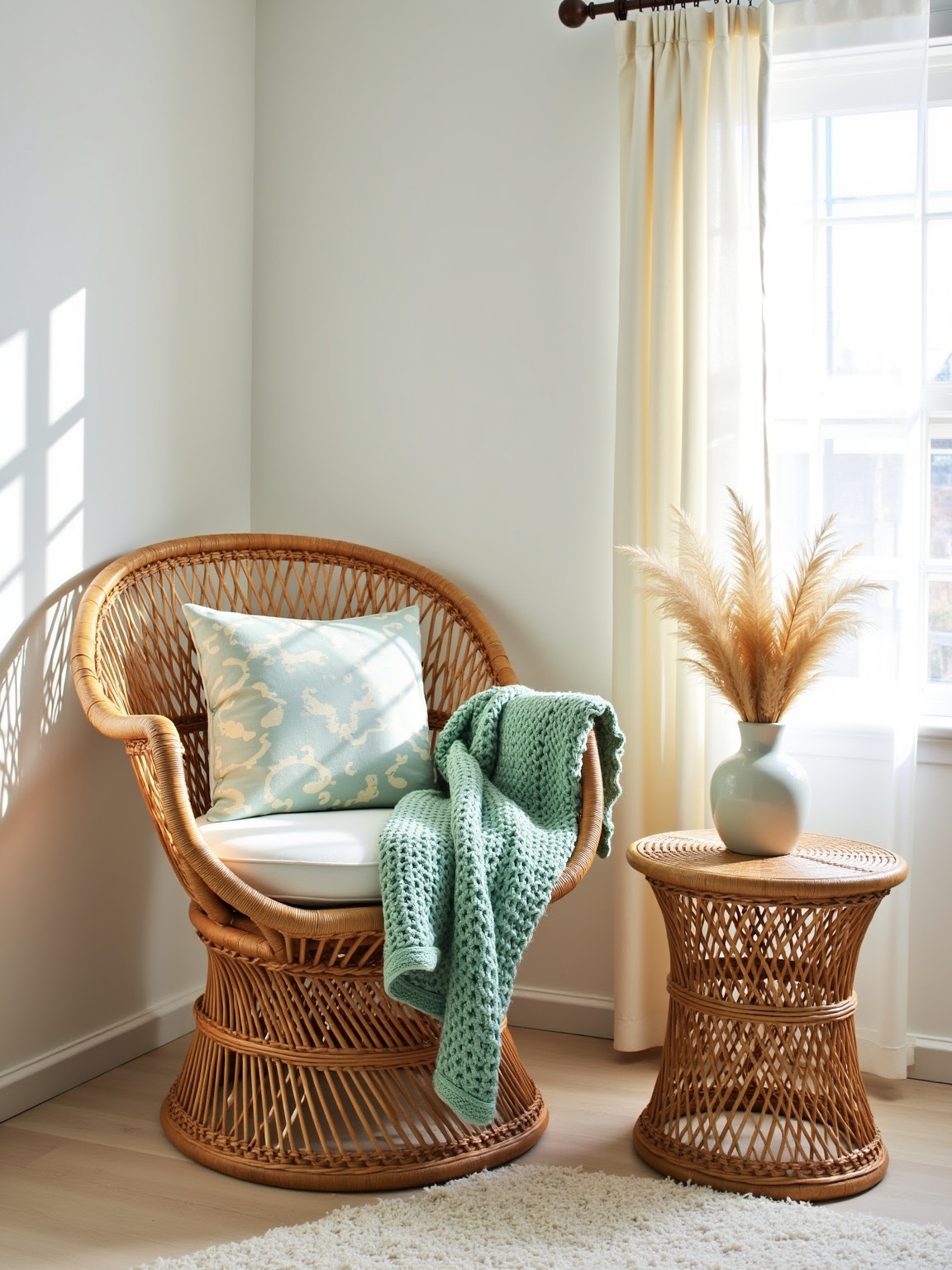
Every bedroom needs at least one place to sit that isn’t the bed, and rattan is the right answer in a coastal room. A rattan chair in the corner with a linen cushion creates a reading spot that feels relaxed and intentional at the same time.
The woven texture adds visual depth at a scale that doesn’t crowd the space, and rattan is light enough to shift around until placement feels right. It also transitions well between design directions, sitting comfortably in everything from boho to classic coastal without looking out of place.
Prioritize Open, Spacious Layouts
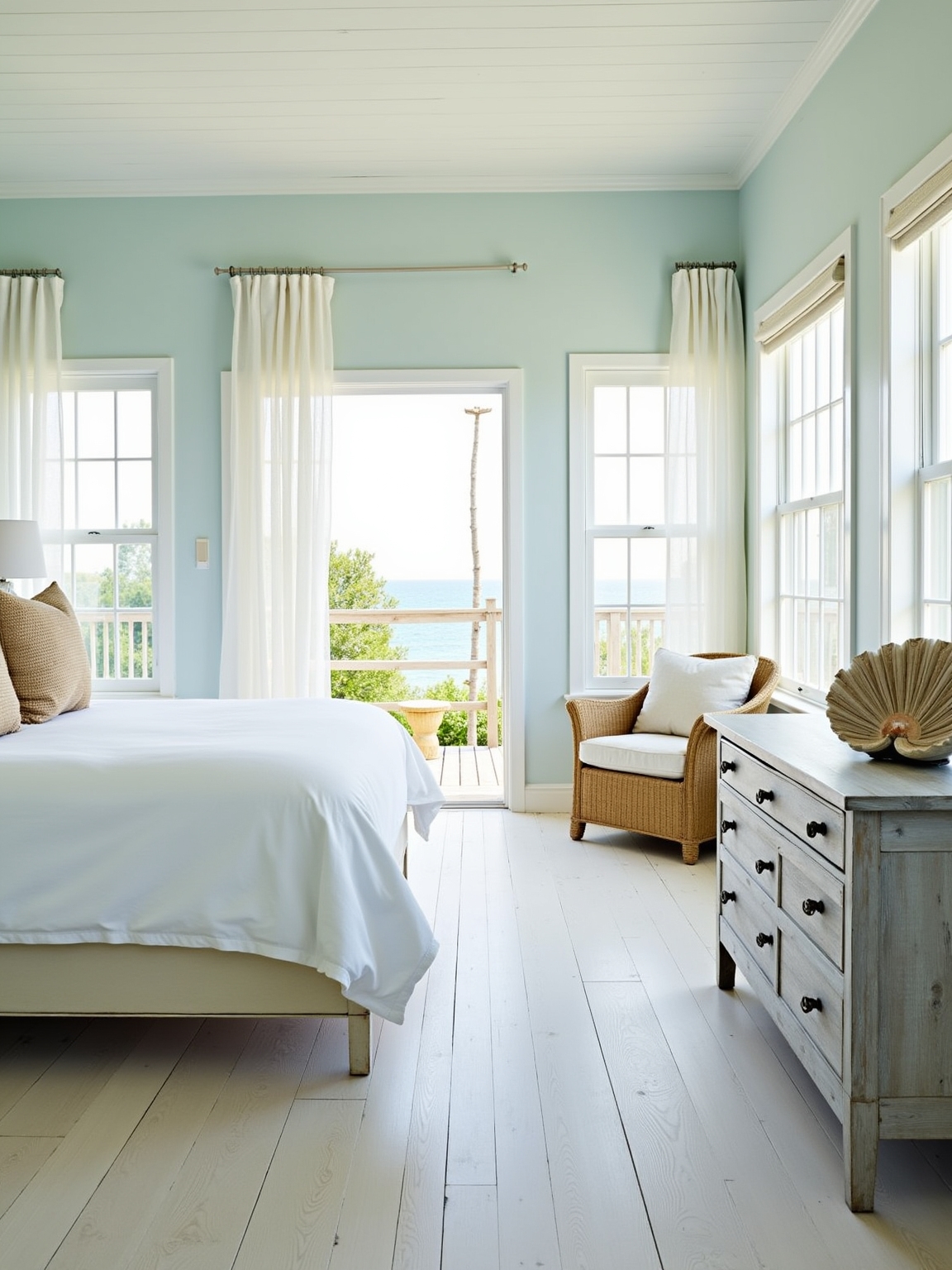
A coastal room that feels crowded has already lost the plot. Clear sightlines, furniture pulled away from walls, and nothing blocking the windows are the practical foundation the whole look depends on.
Multi-functional pieces like storage beds and benches with hidden compartments let you eliminate surface clutter without eliminating the things you actually need. The ocean feels vast because there’s nothing in the way, and a good coastal bedroom borrows that same logic.
Keep Decor Minimal and Functional
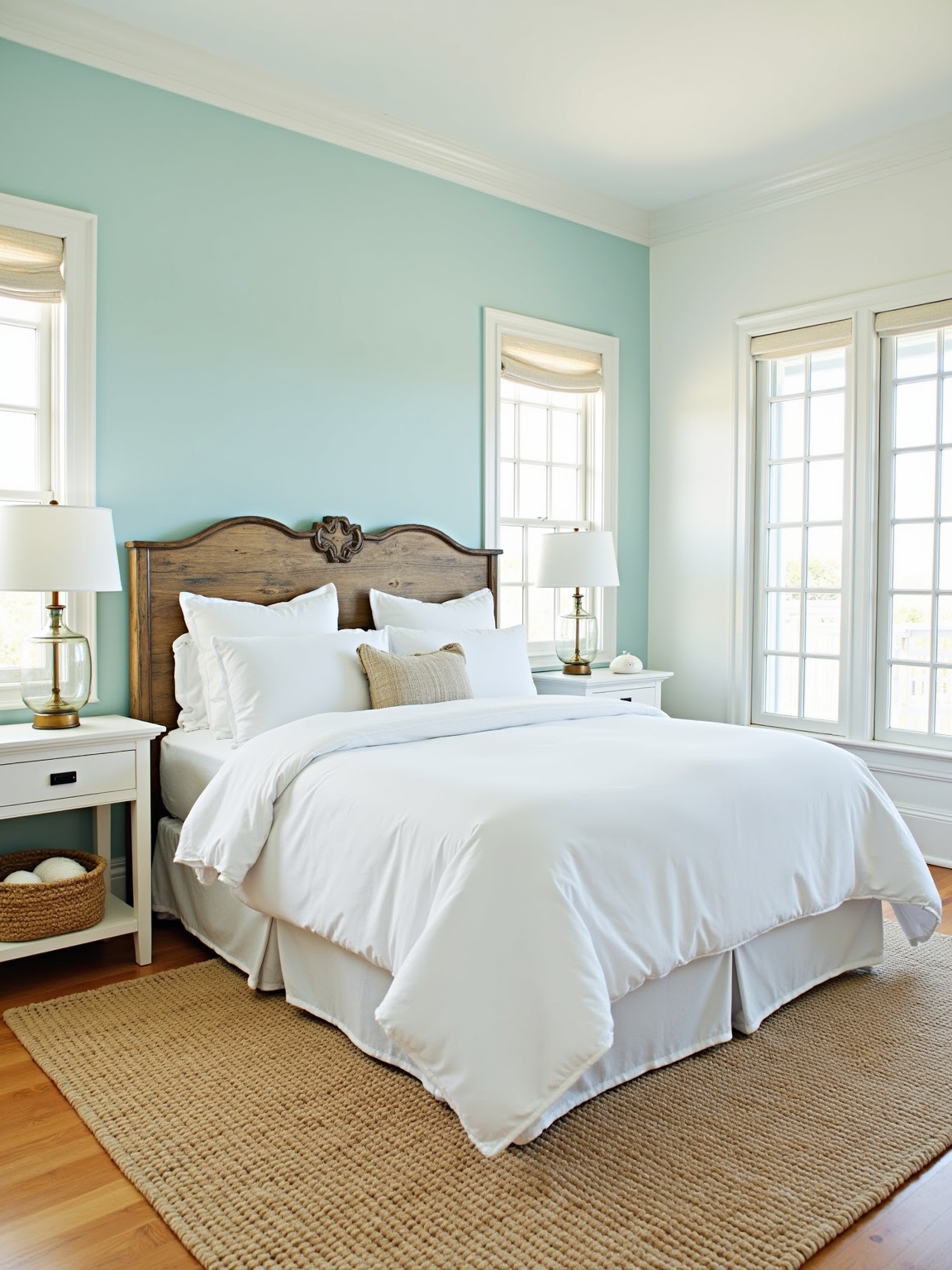
Every object in a coastal bedroom should justify its presence. Stick to clean-lined furniture, neutral surfaces, and one or two deliberate decorative choices per surface rather than collections that drift into clutter.
Subtle coastal motifs like a soft wave pattern on a pillow or a piece of driftwood on the nightstand carry more weight when they’re not competing with a dozen other things. The rooms that feel most genuinely coastal are almost always the ones with the least in them.
Enhance Light With Sheer Curtains

Sheer curtains are one of the quietest upgrades you can make to a bedroom, and the impact is immediate. They diffuse harsh midday sun into something softer and more diffuse, which flatters both the room and the people in it.
Unlike blackout panels, sheers keep the room connected to the light and movement outside, which is exactly the quality a coastal bedroom is reaching for. They also protect fabrics and wall colors from UV damage without making the room feel sealed off from the world.
Use Woven or Linen Light Fixtures
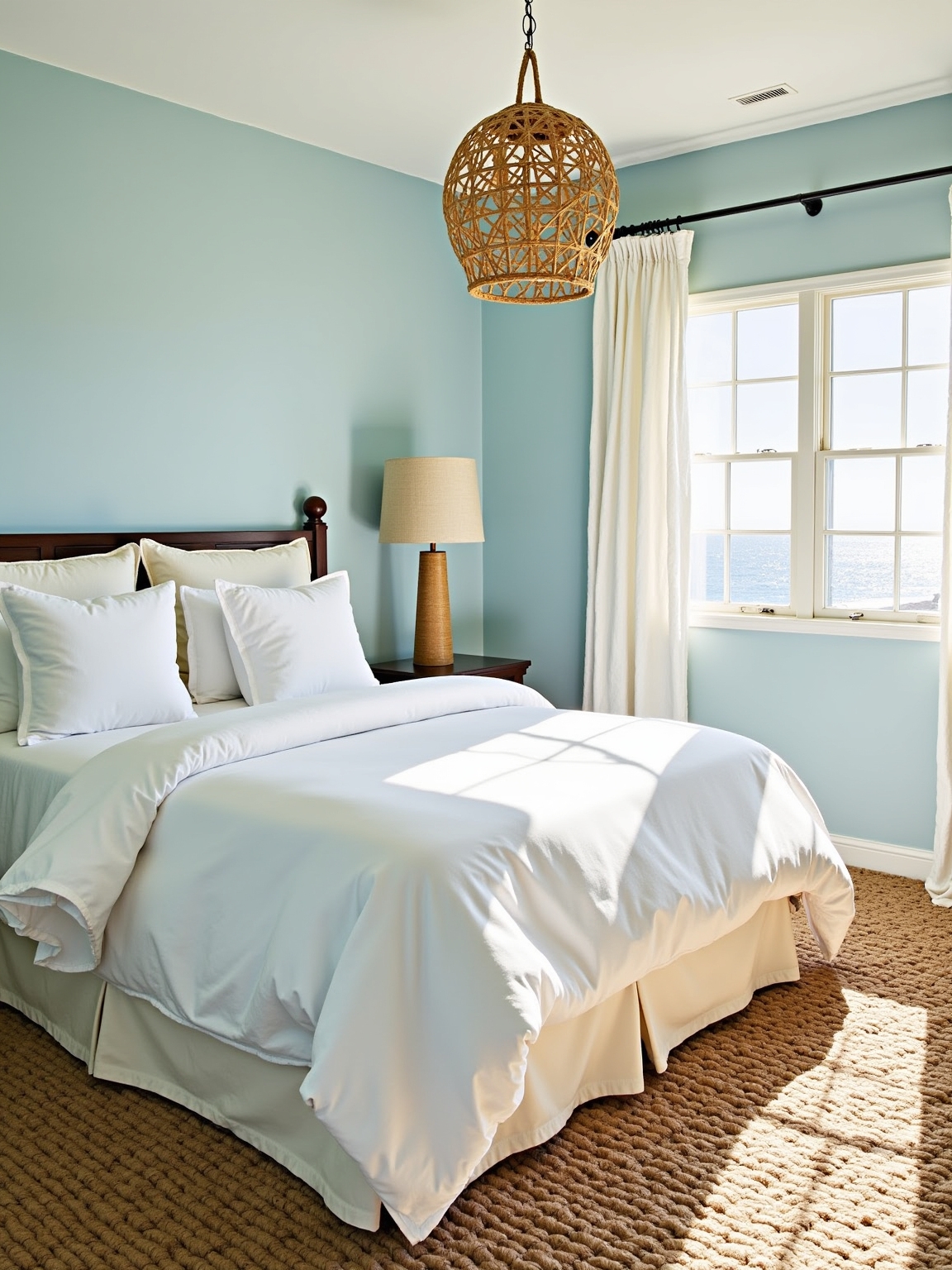
Overhead lighting in a coastal bedroom should feel warm and diffuse, never harsh. Woven rattan or bamboo pendants scatter light through their natural gaps, casting a texture on the ceiling and walls that no standard shade can replicate.
Linen drum shades do something similar, softening the bulb into a glow that feels candlelit without actually requiring candles. Either option shifts the whole feeling of the room after dark, which is when a bedroom’s atmosphere matters most.
Incorporate Modern Coastal Art
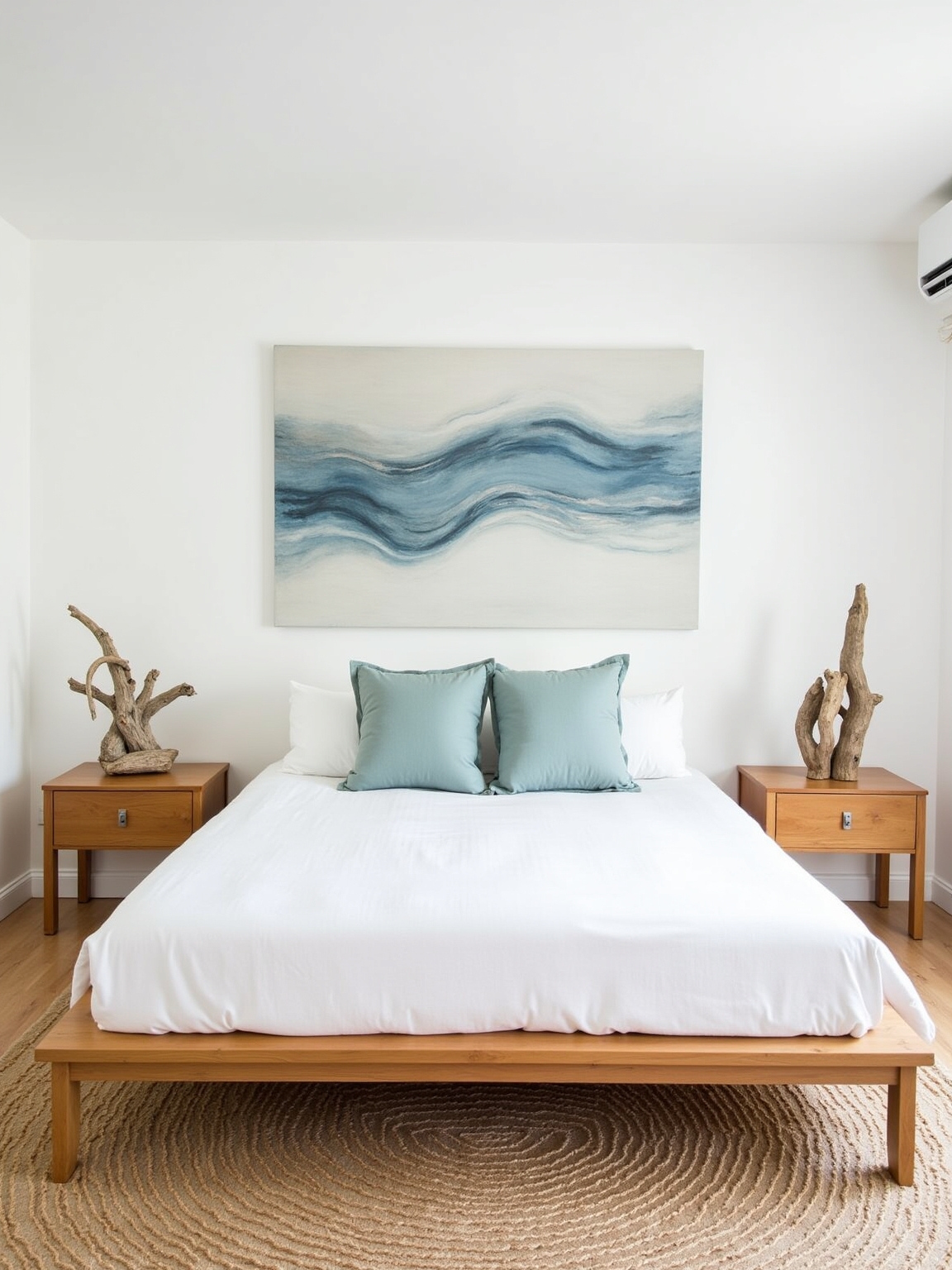
Abstract seascapes in muted ocean tones are more versatile than they sound and far more elegant than literal nautical prints. Look for pieces that suggest water or horizon without spelling it out: washes of blue-gray, soft sand tones, or layered marks that read like tide and movement.
Materials matter here too; bamboo or rattan frames add texture at eye level and reinforce the coastal palette without adding another layer of color. One strong piece placed above the bed does more than a gallery wall of smaller prints ever will.
Introduce Botanical Elements
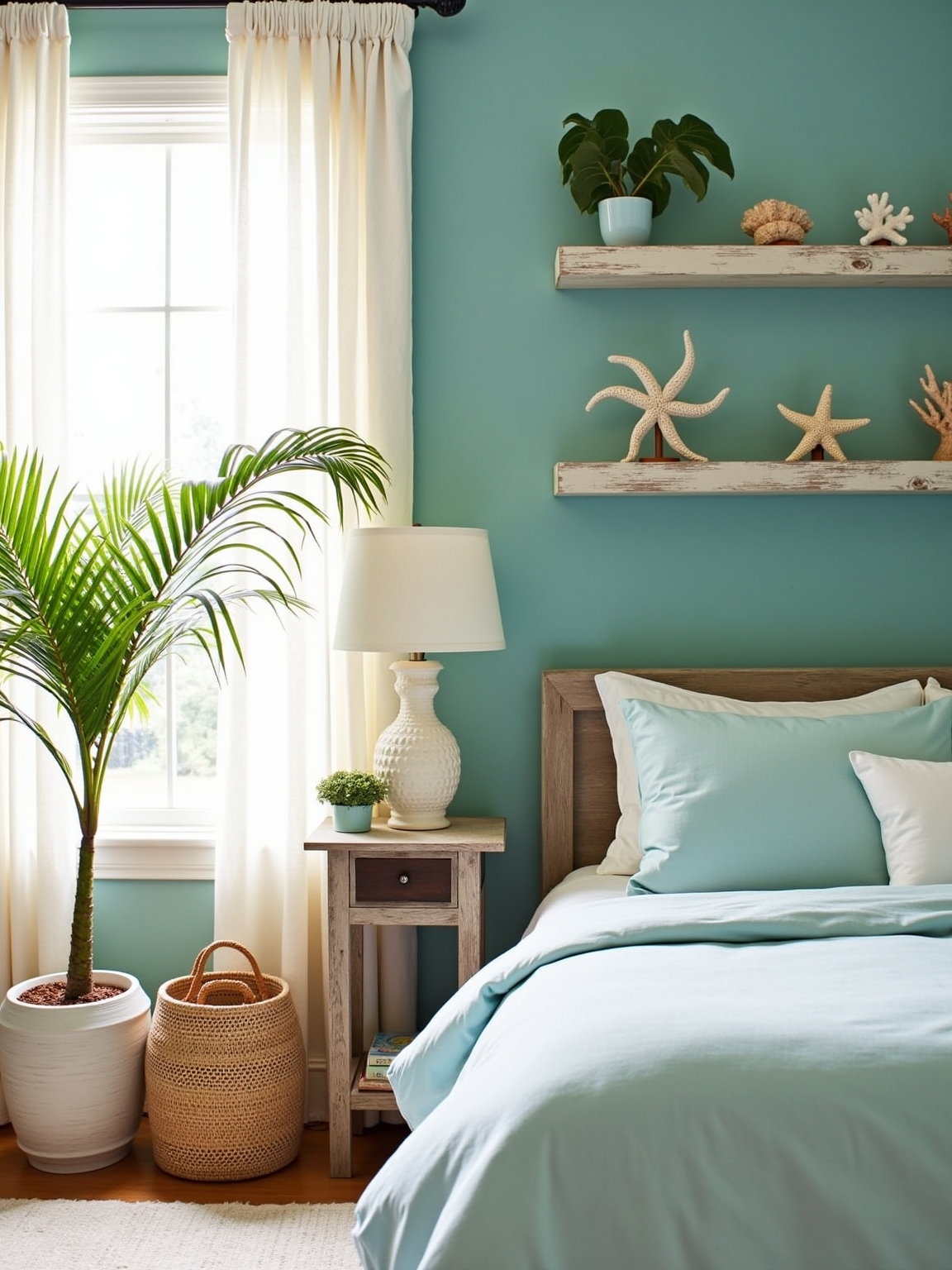
Plants do something in a coastal bedroom that no textile or paint color can fully replace. An indoor palm or a cluster of ferns brings in the kind of green that feels genuinely alive, shifting the air quality right along with the atmosphere.
Dried pampas grass in a woven planter adds height and gentle movement without demanding much care. Botanical fabrics or subtle wallpaper panels work well for anyone who wants the visual effect without the watering schedule.
Include Textured Accent Pillows
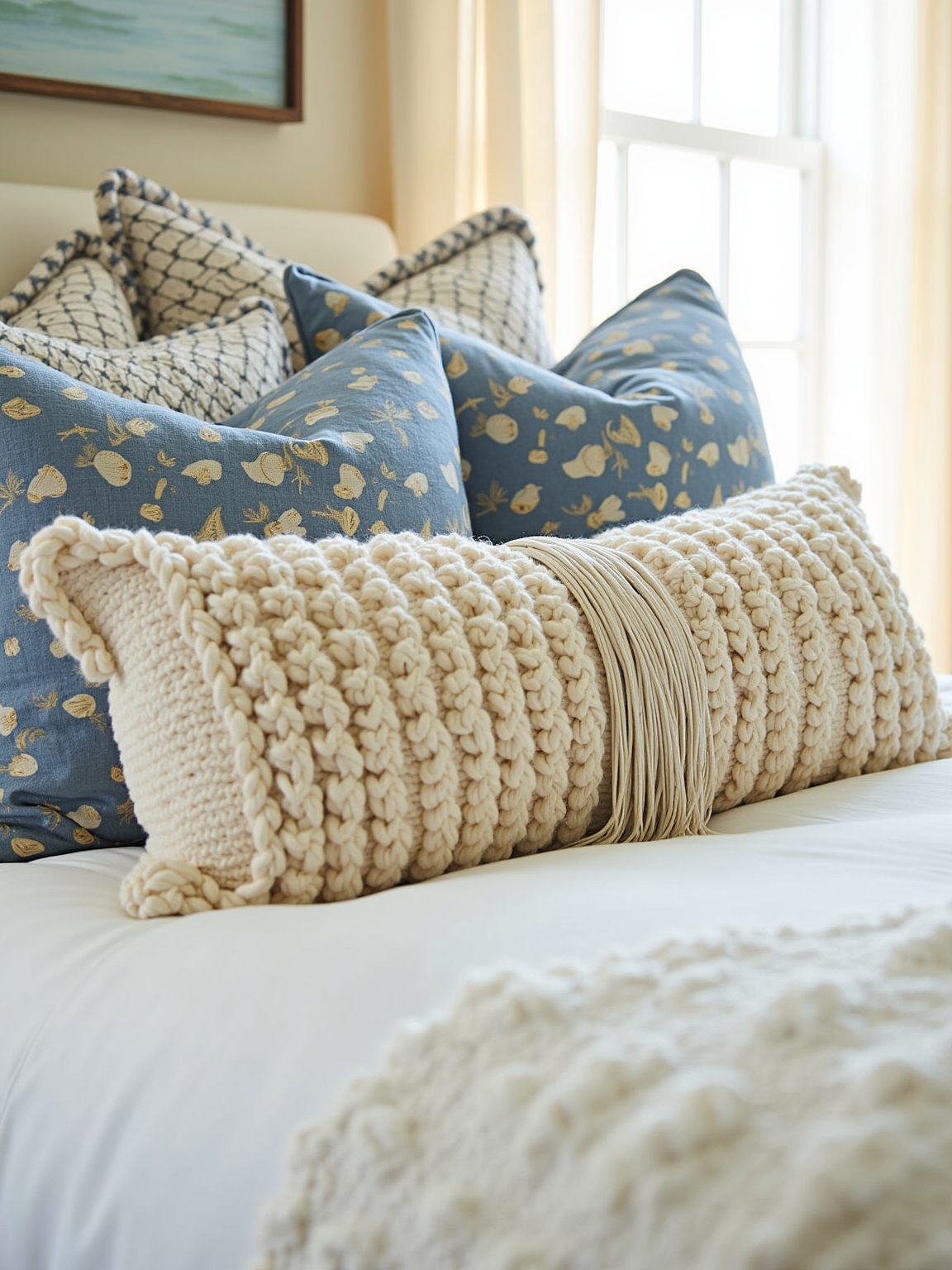
Pillows are where a coastal bedroom earns its layered, finished look, but only if you’re deliberate about texture rather than just color. Soft blues, warm beiges, and clean whites are the right palette, mixed across different materials like cotton, washed linen, and loosely woven knits.
Vary the scale of the patterns rather than matching everything precisely; a subtle stripe next to a quiet abstract weave creates depth without chaos. Arrange them asymmetrically, because a perfectly symmetrical pillow arrangement always looks like a hotel and never like a home.
Feature Unique Wall Sconces
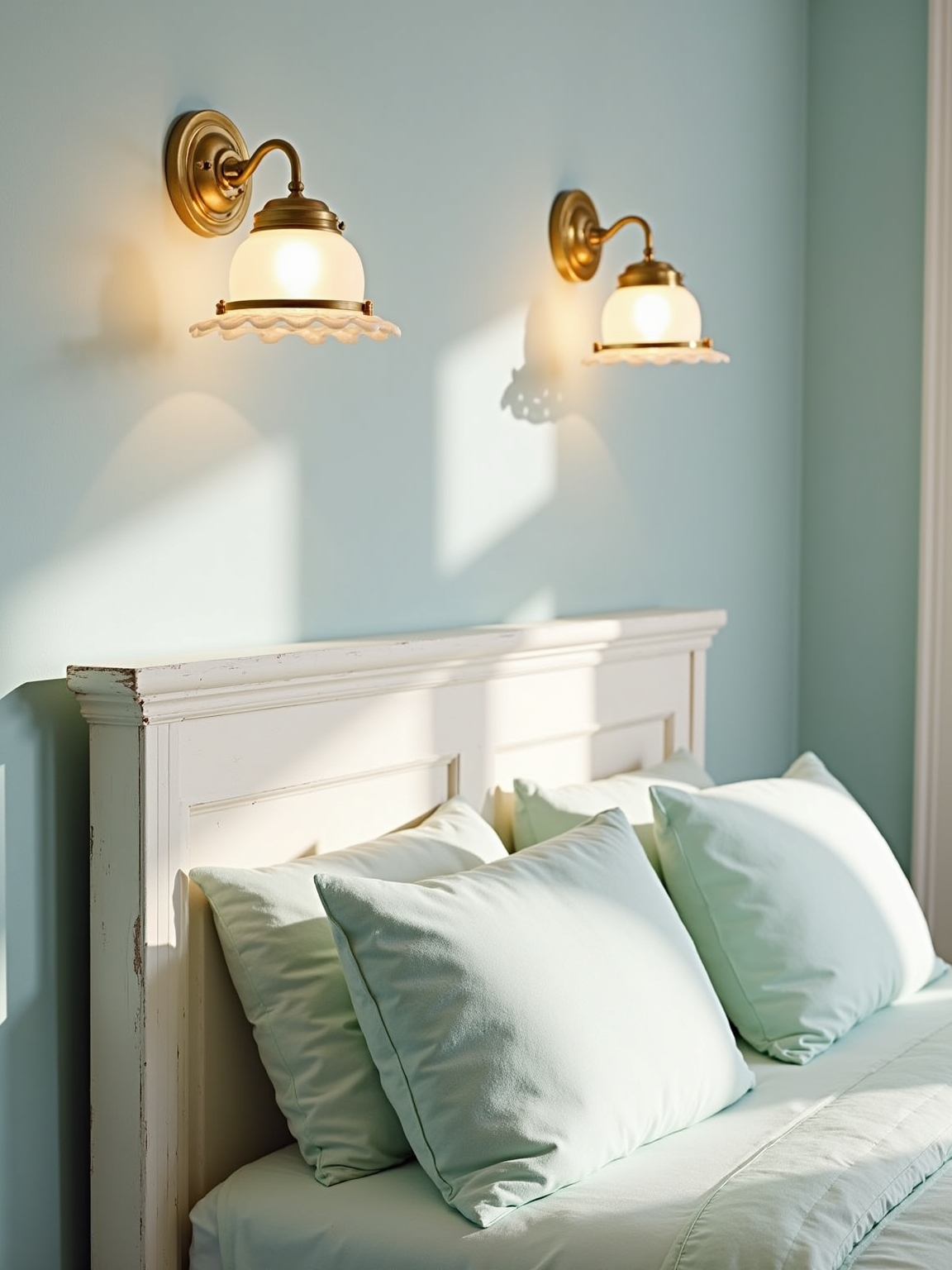
Wall sconces in a coastal bedroom pull double duty as both lighting and art. Natural materials like driftwood, rope, or rattan immediately signal the aesthetic without requiring any wall decor.
Ceramic shades with open lattice work cast beautiful patterned shadows when the light is on, which adds a layer of atmosphere that overhead fixtures simply can’t.
Install them at reading height on either side of the bed, and they become one of the most functional details in the room.
Blend Natural Textures With Soft Hues
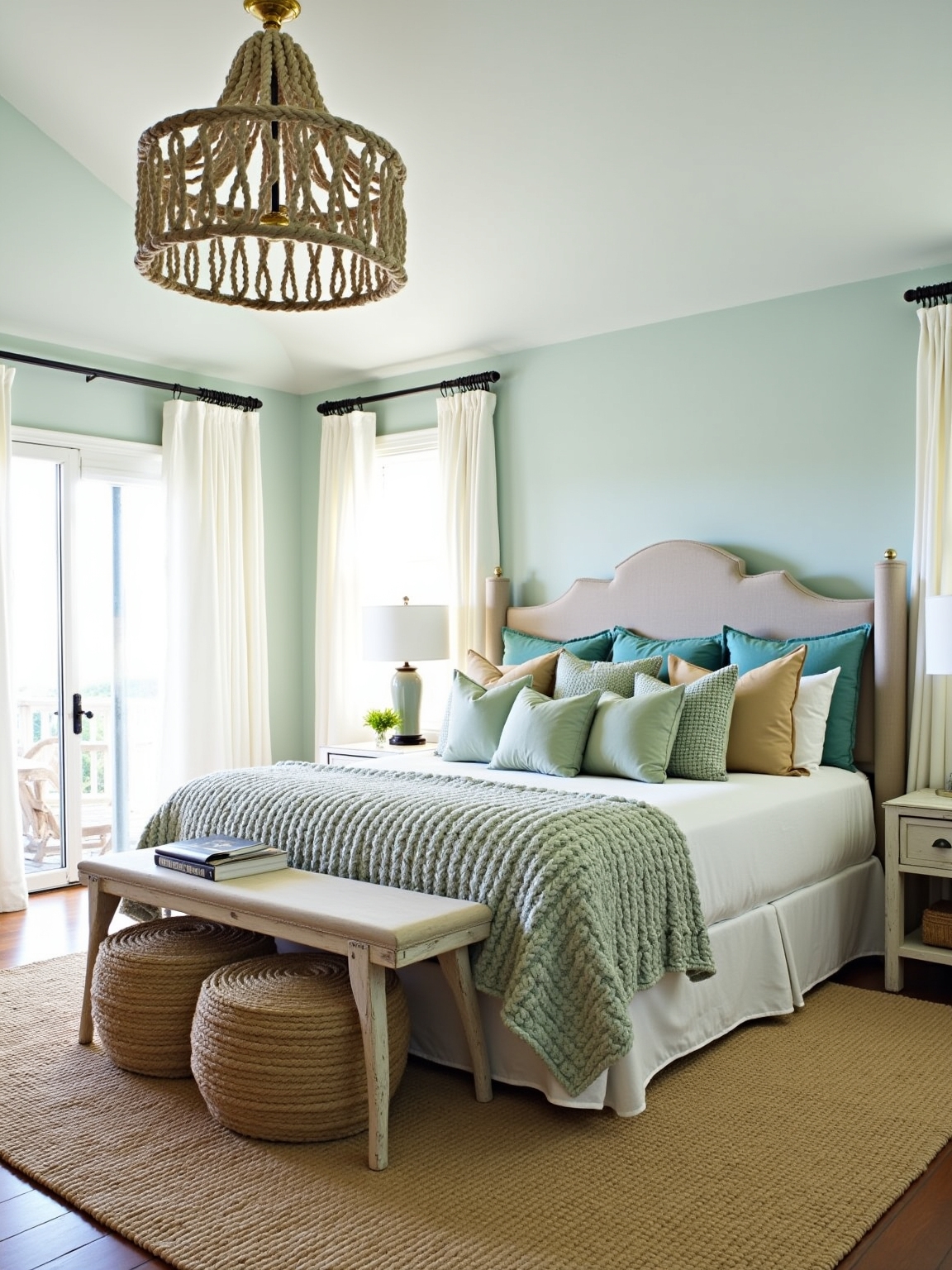
The rooms that feel most authentically coastal are built on the relationship between texture and color, not on either one alone. Soft grays and quiet blues establish the mood, and then organic materials like rattan, linen, and pale wood give those colors something to live inside.
Warm wood tones keep the palette from feeling cold or washed out, adding the kind of grounded warmth that painted surfaces alone rarely achieve. When the textures and hues work together, the room reads as cohesive without feeling designed.
Layer Textiles for Warmth and Comfort

Start with a fitted linen sheet as your base, because linen breathes in summer and insulates better than you’d expect in cooler months. Add a cotton percale top sheet for durability and a light quilt for the middle layer that most people overlook until they actually need it.
A textured throw at the foot of the bed pulls everything together visually while giving you something to grab at 3 am when the temperature drops. The goal is a bed that looks assembled and feels genuinely comfortable, not one that sacrifices one for the other.
Add Seashell and Beach-Themed Accessories
Accessories are where coastal rooms either hold together or fall apart, and restraint is the whole game.
A seashell wreath on the back of the door, a few shells arranged on a tray on the dresser, or shell-shaped drawer pulls on a nightstand are enough to anchor the theme without turning the room into a souvenir shop.
Seashell candles or lanterns on the bedside table provide soft evening light and serve as decoration throughout the day. Let these details feel found rather than purchased, and the whole room will carry that quality with it.