You’ll lose half your summer to digging through cluttered closets if you don’t master seasonal camper swaps. I’ve watched too many weekenders waste precious daylight hunting for shorts buried under winter parkas, and it doesn’t have to be this way.
Limited RV storage demands a rotation system that works with how you actually camp, not against it. The swaps here are ones I’ve refined over years of full-timing and weekend trips alike, and they make the difference between starting your adventure organized and starting it frustrated.
Contents
- 1 Vacuum-Seal Bulky Winter Gear for Compact Storage
- 2 Install Tiered Hanging Rods to Double Your Closet Space
- 3 Rotate Heavy Coats Out and Bring Lightweight Jackets In
- 4 Store Off-Season Shoes in Under-Bed Bins
- 5 Use Cascading Hangers for Tank Tops and Summer Shirts
- 6 Swap Winter Bedding for Breathable Summer Linens
- 7 Organize Seasonal Accessories in Compact Bins
- 8 Move Recreational Equipment to Garage Storage
- 9 Switch to Slim Hangers for Maximum Rod Capacity
- 10 Create a Designated Bin for Beach and Water Gear
- 11 Utilize Over-the-Door Hooks for Current Season Outerwear
- 12 Replace Fleece Blankets With Cooling Throws
- 13 Store Camping Equipment in Heavy-Duty Garage Bins
- 14 Add Shelf Dividers for Folded Seasonal Clothing
- 15 Refresh Closet With Dehumidifiers Before Each Season
- 16 Conclusion
Vacuum-Seal Bulky Winter Gear for Compact Storage

Winter gear takes up an absurd amount of space considering you might only use it a few months out of the year. Vacuum-sealing compresses those puffy jackets and fleece blankets down to about a fifth of their original size, which feels like magic the first time you watch it happen.
The airtight seal does double duty by keeping moisture and those determined little closet moths away from your favorite sweaters. Toss a few cedar blocks between the layers before you seal everything up, and you’ve got natural pest control that doesn’t smell like your grandmother’s attic.
Install Tiered Hanging Rods to Double Your Closet Space
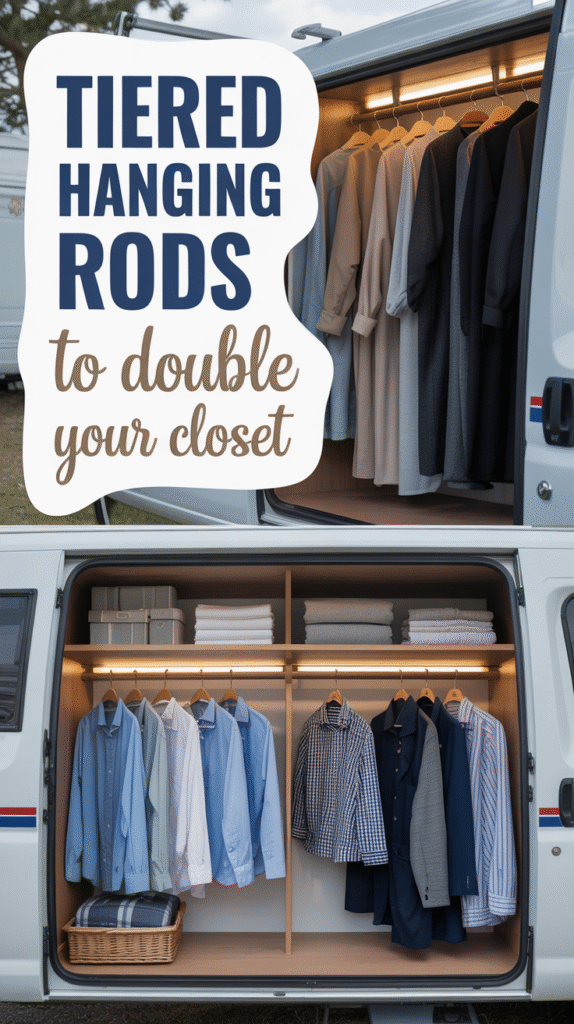
Most camper closets waste the vertical space above your hanging clothes, leaving a useless gap that just collects dust. Installing a second rod about 40 inches from the floor lets you hang shorter items like shirts and jackets below your longer pieces.
The setup takes maybe an hour with a drill and some sturdy brackets, but you’ll gain back double the hanging capacity you had before. I like sliding mechanisms on at least one of the rods because fumbling with stuck clothes while your coffee gets cold outside is nobody’s idea of a good morning.
Rotate Heavy Coats Out and Bring Lightweight Jackets In

Heavy winter coats hog prime real estate in your closet even when it’s 85 degrees outside, and you haven’t touched them in months. Clean everything before you pack it away because storing dirty clothes is basically sending an invitation to every moth in the campground.
Move your lightweight jackets and windbreakers to eye level where you can actually see them instead of playing closet archaeology every time the temperature drops at night. Store the heavy stuff in clear bins so future-you doesn’t have to guess which container holds the down parka versus the sleeping bags.
Store Off-Season Shoes in Under-Bed Bins

That space under your camper bed is probably housing nothing but dust bunnies and maybe a lost sock right now. Rolling bins or soft-sided containers with front zippers turn that dead space into actual storage without requiring you to dismantle your entire bed setup.
Make sure whatever you choose has some grip on the bottom because the last thing you need is bins sliding around back there every time you take a corner. Always store shoes clean and completely dry, or you’ll open those bins next season to discover a science experiment you definitely didn’t sign up for.
Use Cascading Hangers for Tank Tops and Summer Shirts

Cascading hangers sound gimmicky until you realize they can free up about 80% of your rod space without any complicated installation. These things let you stack multiple lightweight items vertically on a single hanger’s footprint, which is perfect for tank tops and t-shirts that don’t wrinkle easily.
The hook-and-loop system means you can grab what you need without the whole chain coming down like some kind of closet Jenga game. Your summer wardrobe stays visible and gets proper airflow instead of being smashed together on a crowded rod.
Swap Winter Bedding for Breathable Summer Linens

Nothing ruins a summer camping trip faster than waking up drenched in sweat because you’re still using your flannel sheets from February. Cotton and linen breathe in ways that synthetic materials just can’t match, and they’ll actually help regulate your body temperature instead of turning your bed into a sauna.
Vacuum bags compress those bulky comforters down small enough to fit in overhead compartments or under beds where they won’t be taking up your everyday storage. Label everything clearly because nobody wants to play “guess which bag has the winter bedding” when the first cold snap hits in October.
Organize Seasonal Accessories in Compact Bins

Gloves, scarves, beanies, and all those little seasonal extras turn into a tangled mess. Collapsible bins let you stack vertically without wasting the space that traditional rigid containers leave empty when they’re not completely full.
Color-coded labels on multiple sides of each bin mean you can identify what you need without pulling everything down from the top shelf. Group items by actual function rather than just throwing everything winter-related into one bin, and you’ll thank yourself when you need to grab something specific in a hurry.
Move Recreational Equipment to Garage Storage

Your camper’s interior storage should be reserved for things you actually need while you’re on the road, not your entire arsenal of camping gear. Tents, sleeping bags, and camp chairs belong in your garage on overhead racks where they’re protected from moisture but not eating up precious closet space.
Custom shelving systems keep everything organized and visible so you can grab what you need for each trip without excavating through random piles. This separation also makes it easier to do a proper inventory before you head out, instead of discovering you forgot the tent poles halfway to the campground.
Switch to Slim Hangers for Maximum Rod Capacity

Those chunky plastic hangers from the dry cleaner are costing you about an inch of rod space per garment, which adds up fast in a camper closet. Slim hangers give you roughly a foot of additional hanging space compared to standard options, and that’s not an exaggeration.
The uniform profile makes everything look cleaner and more organized instead of like a garage sale explosion. Velvet-coated versions grip delicate fabrics securely without needing those annoying clips that always seem to break at the worst possible moment.
Create a Designated Bin for Beach and Water Gear

Sandy towels and damp swimsuits have a special talent for contaminating everything else they touch if you let them loose in shared storage. A dedicated water-resistant bin with a secure lid contains the moisture and keeps beach sand from migrating into your clean clothes and bedding.
Separate swimwear from towels and water toys so everything has its place and dries properly between uses. Never store anything even slightly damp because mildew can take hold faster than you’d think, especially in the warm, enclosed environment of a camper.
Utilize Over-the-Door Hooks for Current Season Outerwear
Over-the-door hooks install without tools or drilling, which means you’re not punching holes in your camper’s doors for a storage solution you might want to change later. These hooks transform that vertical door space into practical staging areas for jackets and hoodies you wear regularly.
Assign each hook to a specific type of garment and rotate what’s hanging there as the seasons change so you’re not reaching past winter coats to grab a rain jacket in July. The setup keeps current outerwear accessible and visible instead of buried in a closet where you’ll forget you even own it.
Replace Fleece Blankets With Cooling Throws
Fleece blankets are perfect for cold weather camping but turn into portable saunas the moment temperatures climb above 70 degrees. Cooling throws made from moisture-wicking fabrics and breathable materials actually help regulate your body temperature instead of trapping heat like their winter counterparts.
Vacuum-seal those fleece blankets and stash them away to free up valuable storage while keeping your cooling throws within easy reach. This simple swap prevents those middle-of-the-night wake-ups when you’re overheated and kicking off covers, only to get cold an hour later.
Store Camping Equipment in Heavy-Duty Garage Bins
Heavy-duty polypropylene bins with reinforced walls protect your gear from the moisture and dust that inevitably accumulate in garage storage. Stackable models with secure latches let you build vertically instead of spreading everything across your garage floor like a yard sale.
Choose bins with grooved lids so they actually stay stable when stacked instead of sliding off each other every time you walk past. Keeping seasonal camping gear organized in your garage means you can rotate what you need into the camper without dragging out every piece of equipment you own.
Add Shelf Dividers for Folded Seasonal Clothing
Folded clothes have a natural tendency to topple into each other and create chaotic piles that require complete reorganization every time you need something from the bottom. Shelf dividers create permanent sections that hold their structure even when you pull items out in a hurry.
Acrylic dividers let you see through to what’s behind them, while metal wire options handle heavier garments like jeans and sweatshirts without bending. Position dividers at regular intervals based on how you actually use the space, not some arbitrary measurement that looks good but doesn’t match your wardrobe.
Refresh Closet With Dehumidifiers Before Each Season
Moisture builds up in closed spaces faster than most people realize, especially in campers that sit unused for weeks or months at a time. Running a dehumidifier before you swap your seasonal wardrobe pulls out that excess humidity and prevents mold from getting established in the first place.
Target humidity levels between 30 and 50 percent to protect leather, wool, and other fabrics that suffer in damp conditions. Compact portable dehumidifiers work well in tight closet spaces and pay for themselves by extending the life of clothes that would otherwise need replacing after a season in storage.
Conclusion
Implementing these seasonal swaps transforms your camper closet from a source of frustration into a system that actually works with your camping lifestyle. The time you save not digging through disorganized storage adds up to hours you could spend outside enjoying the reason you bought a camper in the first place.
Consistent rotation schedules and proper humidity control keep your gear in good condition and ready to use instead of discovering ruined clothes when you need them most. Strategic storage makes spontaneous trips possible because you’re not facing a full day of reorganization every time you want to hit the road for a weekend.