Travelers figure out organization the hard way, usually resulting in a missed reservation, a lost receipt, or a deadline blown in a hostel common room.
After years of working remotely from campgrounds, vans, and budget hotels across three continents, I’ve learned that structure is what makes adventure sustainable.
The difference between a trip that fires on all cylinders and one that slowly unravels usually comes down to a handful of weekly habits. These 19 are the ones that changed everything for me.
Contents
- 1 Outline Top Priority Tasks
- 2 Implement the 80/20 Rule
- 3 Conduct Weekly Planning Sessions
- 4 Utilize Time Blocking Techniques
- 5 Set Realistic Daily and Weekly Goals
- 6 Create Functional Workspaces
- 7 Organize Digital Files and Tools
- 8 Schedule Regular Backups
- 9 Use Calendar Management Tools
- 10 Maintain Clear Work-Life Boundaries
- 11 Prioritize Sleep Hygiene
- 12 Plan for Physical Activity
- 13 Monitor Mental Health
- 14 Research Accommodations in Advance
- 15 Organize Travel Documents
- 16 Track Expenses and Budget
- 17 Adapt Routines for New Environments
- 18 Regularly Review Digital Organization
- 19 Prepare for Time Zone Changes
Outline Top Priority Tasks

Not everything on your task list deserves equal attention, and pretending otherwise is how you end up busy all day without accomplishing anything real.
The Eisenhower matrix is worth learning: sort tasks by urgency and importance, then cut or delegate whatever lands in the low-priority quadrant.
On the road, that discipline matters more than it does at home because distractions multiply and willpower gets spent faster. Once you know your top three tasks for the week, everything else has to earn its place on the list.
SEE THIS: Top 21 Systems for Full-Time Camper Living Success.
Implement the 80/20 Rule

Here’s something it took me an embarrassingly long time to accept: a handful of tasks are responsible for most of your meaningful output.
Identifying that 20% and protecting time for it is the whole game, especially when every day on the road brings fresh invitations to get sidetracked.
Strip out the low-return busywork ruthlessly, and you’ll find you have more hours than you thought. The Pareto principle sounds like business-school fluff until you actually start using it, and then it feels obvious.
SEE THIS: How to Stay Organized in a Camper Under 20ft.
Conduct Weekly Planning Sessions

Sunday evenings, I spend about 45 minutes reviewing the past week and sketching out the next one, and I’d give up a lot of gear before I’d give up that habit. Set measurable goals, not vague intentions, and tie them to your bigger objectives so they actually mean something.
Reviewing last week’s stumbles is just as important as planning next week’s wins, because patterns reveal themselves fast. A honest weekly review keeps you from repeating the same mistakes in a new city.
Utilize Time Blocking Techniques
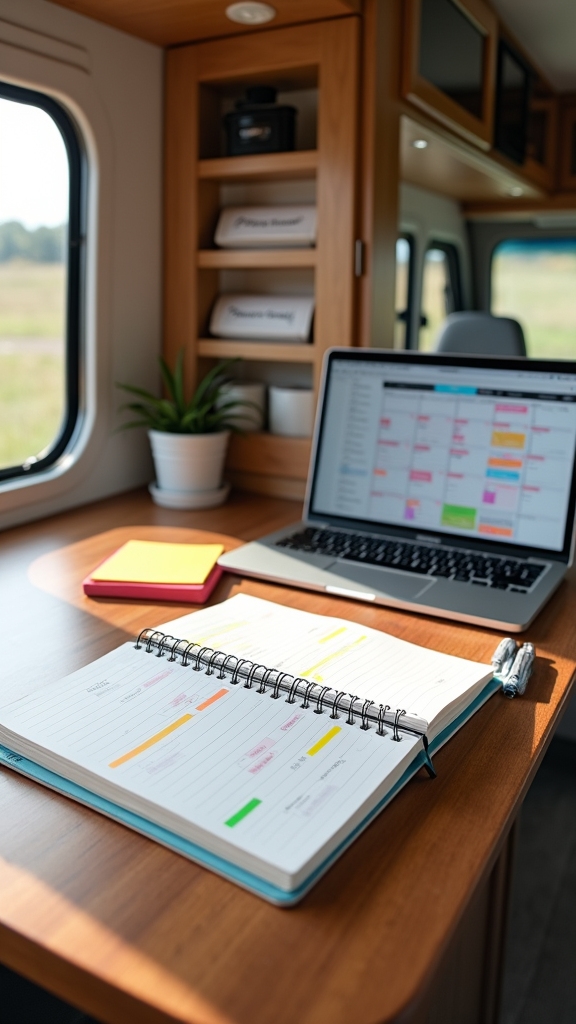
Planning sessions only work if you back them up with actual structure during the day. Time blocking, dedicating specific chunks of your calendar to specific types of work, is the closest thing to a productivity superpower I’ve found while traveling.
It reduces the mental overhead of deciding what to do next, which drains you faster than the work itself. Guard those blocks the same way you’d guard a ferry departure: non-negotiable.
Set Realistic Daily and Weekly Goals

Ambitious goals feel great to write down and terrible to fail at, so be honest with yourself about what’s achievable from a moving base. SMART criteria help: specific, measurable, achievable, relevant, time-bound, and each word in that list is doing real work.
Break larger projects into daily tasks small enough to finish in a two-hour café session with spotty wifi. Review and adjust mid-week without guilt, because conditions on the road change faster than any plan accounts for.
Create Functional Workspaces

Your physical environment shapes your output more than most people want to admit. A lightweight laptop, a comfortable chair, and a clear separation between where you work and where you relax makes a measurable difference in how much you accomplish.
Vertical storage and multi-use furniture matter in small spaces like camper vans or studio rentals where every square foot counts. Even a simple ritual like putting on headphones or brewing coffee can train your brain to shift into work mode.
Organize Digital Files and Tools

A chaotic digital workspace follows you everywhere, which makes it worse than a messy desk. Consistent folder structures and clear naming conventions take about an hour to set up and save you from the slow-burn frustration of hunting for files across three devices.
Use centralized cloud storage so your documents are accessible whether you’re on your laptop at a campground or your phone at a trailhead. Schedule a monthly digital cleanup the same way you’d clean out a gear bag after a long trip.
Schedule Regular Backups

The first time you lose a week of work to a hard drive failure in a country with unreliable wifi, the 3-2-1 backup rule stops sounding paranoid. Keep three copies of your data in two different formats, with one stored off-site or in the cloud.
Automate backups so they run without you having to remember, because on a busy travel day you simply won’t. This is the kind of system that feels unnecessary right up until the moment it saves everything.
Use Calendar Management Tools
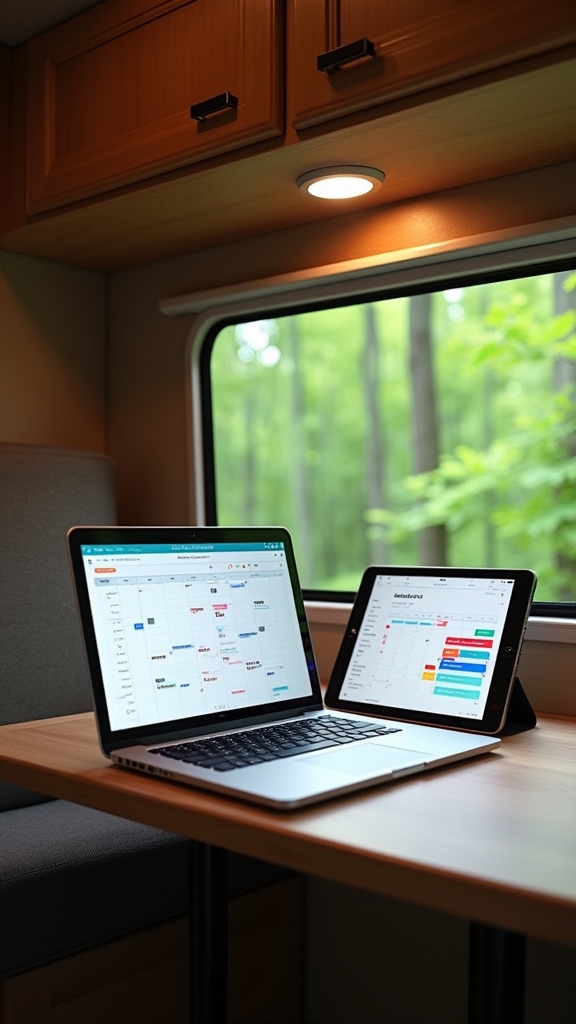
Managing commitments across time zones without a solid calendar is like navigating without a map: technically possible, practically miserable. A good calendar app consolidates appointments, flags conflicts, and handles time zone math automatically so you’re not doing it in your head at 6am.
Sharing booking links with clients or collaborators cuts down the back-and-forth that eats more time than people realize. The goal is a single source of truth for your schedule, one you can trust completely.
Maintain Clear Work-Life Boundaries

Boundaries are harder to keep on the road because your office travels with you, and so does the temptation to check email at dinner. Designate a physical workspace, set firm work hours, and build small rituals that signal the shift from work mode to off mode, even something as simple as closing the laptop and stepping outside.
Mute work notifications after hours and actually leave them muted. Without that separation, the road becomes just another location to be perpetually half-working and half-not.
Prioritize Sleep Hygiene

Everything else in this system falls apart if you’re running on poor sleep, which is especially easy to do when you’re crossing time zones or bunking in unfamiliar places. Stick to a consistent sleep schedule even when you’re tempted not to, and limit caffeine in the afternoon and alcohol in the evening.
A simple wind-down routine signals your nervous system that it’s time to shift gears, and it works better than most people expect. Strategic naps can bridge a rough night, but they work best when they’re short and timed carefully.
Plan for Physical Activity

Fitness routines are the first casualty of most travel schedules, which is a mistake because movement directly affects your mental sharpness and resilience.
Put workouts in your calendar as confirmed appointments, not aspirations, and look for local options that make exercise feel like exploration rather than obligation.
Walking everywhere, taking stairs, hiking a local trail: none of it requires a gym membership or special gear. The goal is staying functional, not maintaining a training regimen.
Monitor Mental Health

Road life puts a unique kind of pressure on your mental state, and it’s easy to mistake exhaustion or anxiety for logistical problems that need solving. Build in honest weekly check-ins with yourself and look for signs like disrupted sleep, irritability, or a creeping inability to concentrate.
Have a plan for accessing support before you need it, whether that’s a therapist you can video call or a trusted person you check in with regularly. Catching things early matters more when you’re far from your usual support system.
Research Accommodations in Advance

Scrambling for a place to stay two days out is a reliable way to overpay, undersleep, and arrive stressed. Start looking two to three months ahead for longer stays, and weigh options like serviced apartments or vacation rentals against hotels based on your work needs and length of stay.
Always cross-reference your accommodation choice with transportation logistics, because a cheap place that puts you an hour from everything is rarely actually cheap. The time you invest upfront pays back every single day of the trip.
Organize Travel Documents

Passports, visas, insurance cards, booking confirmations: these need a home you can reach instantly, because the moment you need them is never a calm one. A dedicated document pouch keeps physical copies sorted, while digitized backups stored securely in the cloud give you a safety net if the pouch goes missing.
Keep emergency contacts stored separately from your main documents so a single theft doesn’t wipe out everything at once. This kind of preparation feels excessive until you’re standing at a border crossing at midnight.
Track Expenses and Budget

Budget drift is real, and it happens gradually: a few untracked coffees, a cab you forgot to log, a dinner that cost more than you remembered. An app like Tripcoin handles offline tracking and real-time currency conversion, which matters when you’re bouncing between countries with different currencies.
Automating receipt capture removes the manual logging that most people abandon after the first week. When your finances are clear, you make better decisions about where to spend and where to cut back.
Adapt Routines for New Environments

Routines are tools, not rules, and the best travelers know when to bend them. Monitor local weather, traffic patterns, and cultural rhythms, then adjust your schedule accordingly rather than forcing your usual structure onto a place that won’t support it.
Real-time data and a genuine willingness to pivot keep you functional when conditions shift unexpectedly. The goal is consistency of output, not rigidity of method.
Regularly Review Digital Organization

Even a well-built digital system drifts toward disorder if you never look at it. Set aside time every month to evaluate your folder structures, naming conventions, and cloud storage to make sure they still match how you actually work.
Clear out outdated files the same way you’d purge gear you stopped using: without sentiment. Tracking a few simple metrics, like how fast you can locate a specific file, tells you quickly whether your system is still serving you.
Prepare for Time Zone Changes
Jet lag isn’t just an annoyance; it’s a productivity killer that can knock out two or three working days if you don’t manage it proactively. Start shifting your sleep schedule a few days before departure, and once you land, get outside in natural daylight as early as possible to help reset your internal clock.
Keep meal times consistent with your destination’s schedule, and go easy on caffeine and alcohol in the days surrounding travel. A little preparation beforehand saves a lot of miserable, foggy adjustment time on the other end.