False ceilings aren’t just about hiding wires or pipes anymore. Today’s false ceiling designs can transform any ordinary room into a space that looks professionally designed and custom-built, no matter your budget.
You might make a small bedroom feel bigger or turn a boring kitchen into a modern showpiece. The right ceiling approach adds warmth to your living room, too.
False ceilings work in every room of your home. They help with lighting, reduce noise, and add personality to spaces that once felt flat and generic.
Whether you’re in a tiny apartment or redesigning your entire house, the right ceiling design can make a huge difference. It’s wild how something overhead changes the whole vibe.
This guide dives into the latest trends and practical ideas for living rooms, bedrooms, kitchens, workspaces, and more. Let’s see how simple changes up top can totally shift how a room looks and feels.
Innovative Living Room Ceilings
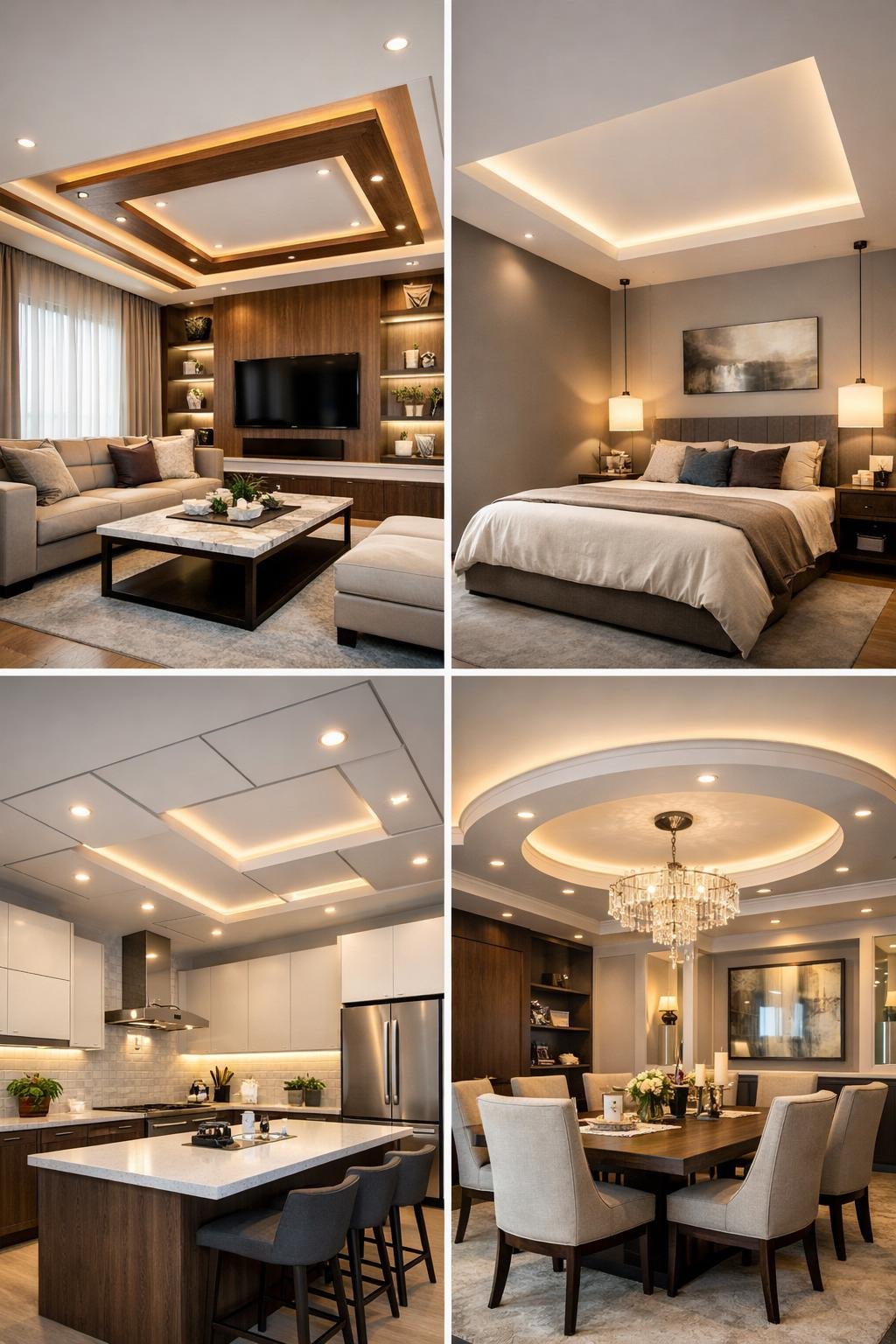
Living room ceilings in 2026 really blend function and style. You can integrate fans without messing up the visual flow, pick materials that look high-end (but aren’t pricey), or keep things minimal and still make an impact.
Profile lighting adds warmth. TV units can blend right into the ceiling design, and square layouts bring a clean sense of symmetry to your space.
Latest False Ceiling Designs for Hall with 2 Fans (Balanced Layout Ideas)
Needing two ceiling fans doesn’t mean you have to sacrifice style. The trick is to create symmetrical zones that make both fans feel like part of the plan.
Try a dual-tray design. Let each fan sit in its own recessed circle or square—suddenly, your ceiling has clear, intentional sections.
Space the fans evenly from the center line of your room. Cove lighting between the two fan zones visually connects them, so it all feels cohesive.
You can run LED strips along the perimeter or create a central groove that links both areas. Suddenly, the ceiling feels like one complete design, not two random fans stuck up there.
Placement tips:
- Measure fan placement from the walls, not just from each other
- Keep at least 7-8 feet clearance below each fan
- Align fans with seating areas if you can
- Use matching fan styles and finishes.
| READ FULL GUIDE: 10 Latest False Ceiling Designs for Hall with 2 Fans (Balanced Layout Ideas That Actually Work. |
Modern POP False Ceiling Designs for Hall That Look Expensive
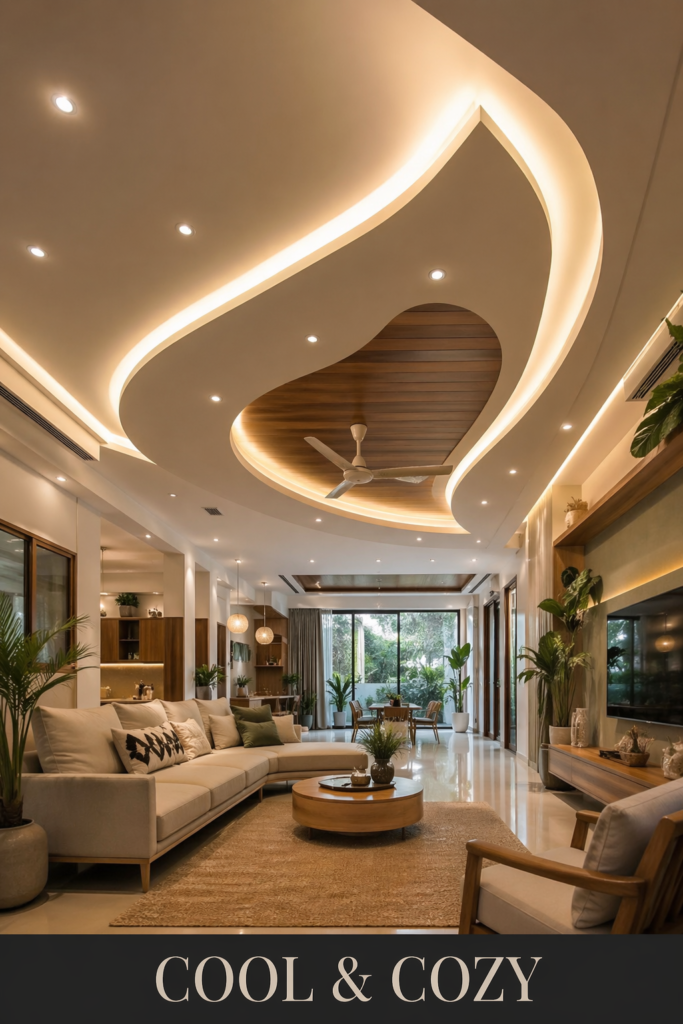
POP (Plaster of Paris) ceilings can look premium if you focus on clean lines and thoughtful lighting. You don’t need ornate patterns to make a statement.
Go for layered tray designs with sharp edges. Two or three levels add depth without making things look busy.
Paint each layer in the same color, and let your lighting show off the levels. Integrate LED strips into the grooves between layers for backlighting and shadow lines.
Slim spotlights in the recessed areas can highlight specific zones. It’s all about the details.
Cost-effective upgrades:
- Add thin metal or wooden trim along edges
- Try textured paint in recessed sections
- Install dimmable lights for mood control
- Keep moldings minimal and geometric
A smooth matte finish feels more modern than glossy surfaces, honestly.
| READ FULL GUIDE: Modern POP False Ceiling Designs for Hall That Look Expensive (Without Overdoing It). |
Simple False Ceiling Designs for Living Room (Clean & Minimal Looks)
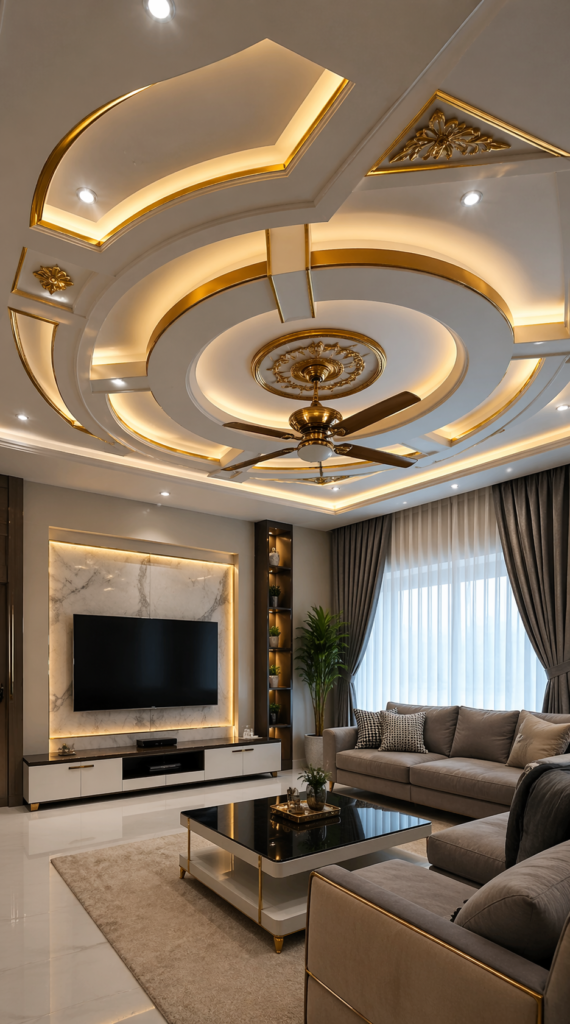
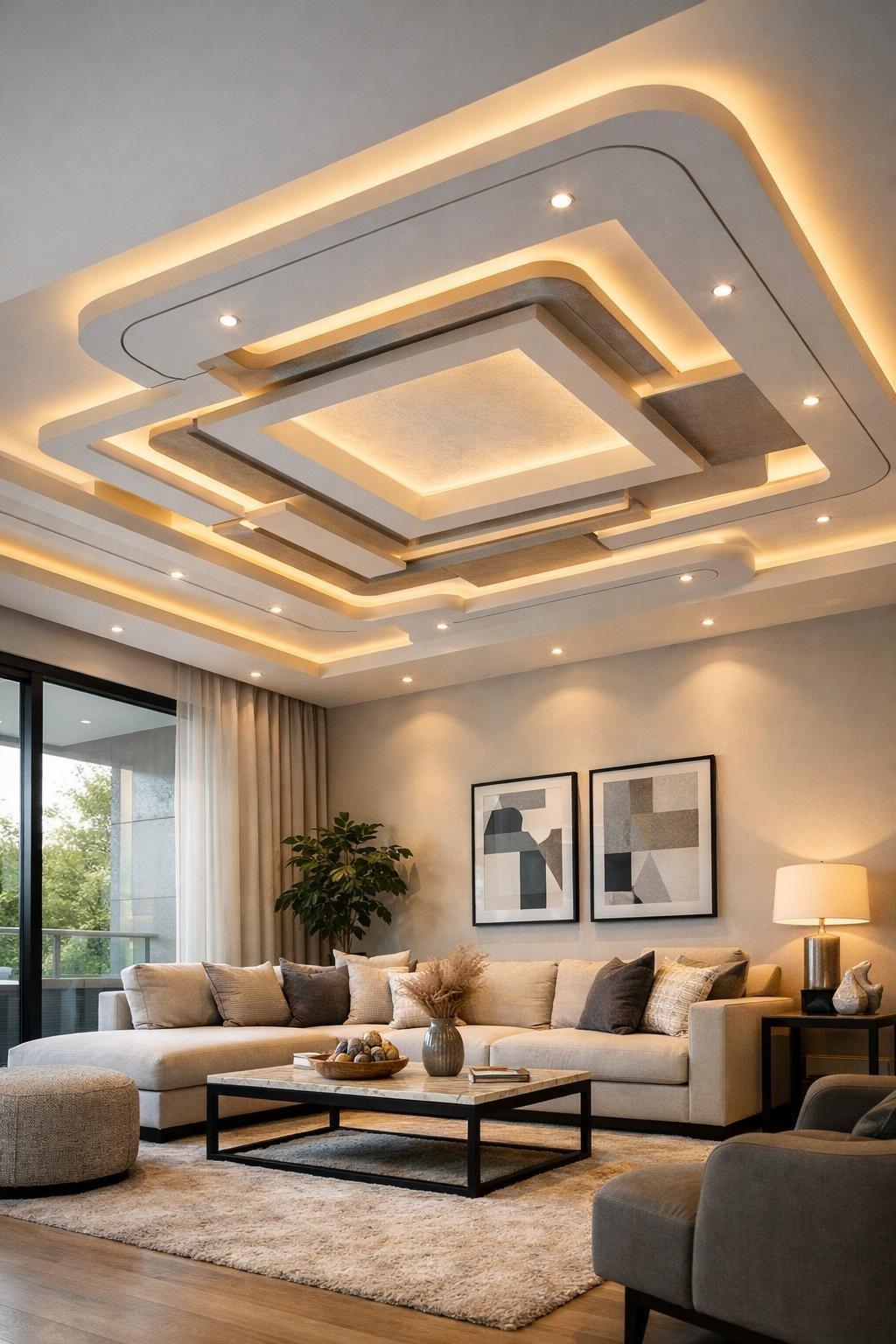
Simple doesn’t mean boring. A minimal ceiling can make your room feel larger and more polished.
Start with a single-level drop around the perimeter. It frames your room without filling the entire ceiling.
Keep the center at the original height to maintain volume. Run a single line of concealed lighting in the dropped border—warm white LEDs work best for living rooms because they feel inviting.
Skip the spotlights if you want and rely on floor or table lamps for tasks. Less can be more.
Minimal design elements:
- One continuous groove instead of lots of lines
- Neutral colors matching your walls
- Hidden AC vents within the border
- Flat surfaces—no curves or angles
This approach works especially well in small living rooms where you want to keep sightlines open.
| READ FULL GUIDE: 10 Simple False Ceiling Designs for Living Room (Clean & Minimal Looks). |
False Ceiling Designs for Living Room with TV Unit Integration
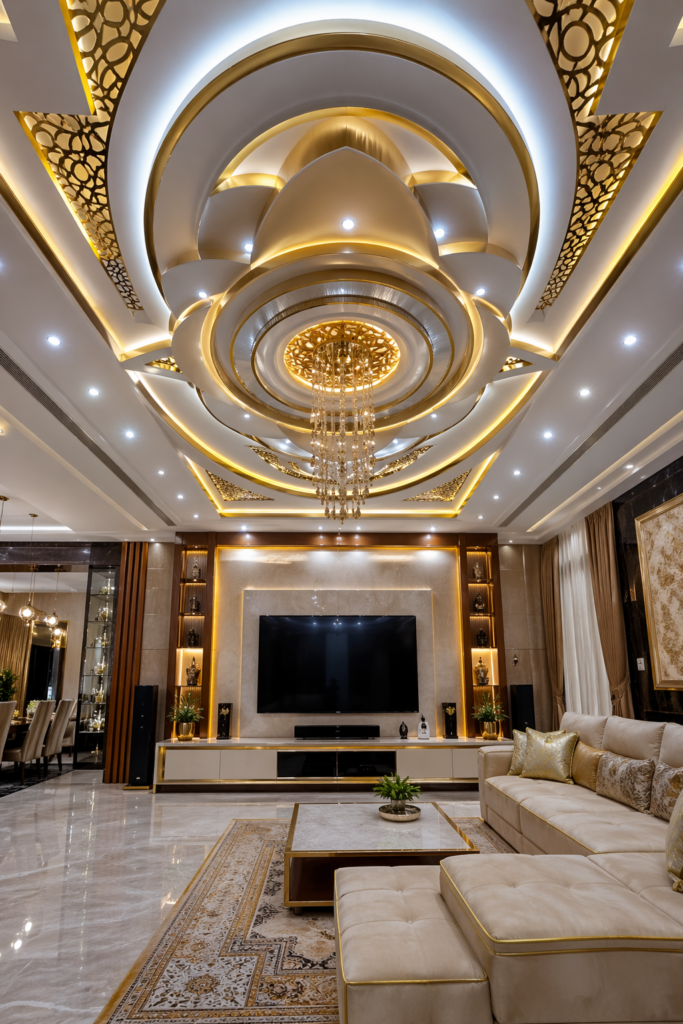
Your ceiling and TV wall should work together. Integration means creating visual connections between both surfaces, not letting them compete.
Extend your TV unit’s vertical lines into the ceiling. If you have a tall TV panel, run a groove or light strip from the top of the panel onto the ceiling—this draws the eye up and makes the walls feel taller.
Create a recessed ceiling section right above the TV area. This defines your entertainment zone without needing a full wall.
Add focused lighting in this recess to reduce screen glare. It’s a practical detail that makes a difference.
Integration techniques:
- Match materials (continue wood from wall to ceiling)
- Align ceiling grooves with TV panel edges
- Use the same lighting temperature on both surfaces
- Create a lowered ceiling “frame” around the TV wall
Watch out for ceiling lights reflecting on the TV screen during viewing. That’s always annoying.
| READ FULL GUIDE: 11 False Ceiling Designs for Living Room with TV Unit Integration. |
Living Room False Ceiling Designs with Profile Lighting (Soft Glow Effect)
Profile lighting creates a soft glow that makes your ceiling feel like it’s floating. Install LED strips in aluminum channels (profiles) mounted into the ceiling.
The most common setup? Perimeter lighting. Create a shallow recess around the edges of your room and mount the LED profiles facing upward or outward, so the light bounces and spreads evenly.
Profile lighting options:
| Type | Effect | Best For |
|---|---|---|
| Upward-facing | Ceiling glow | Low to medium ceiling heights |
| Outward-facing | Wall wash | Highlighting textures |
| Recessed | Clean lines | Modern minimalist spaces |
| Surface-mounted | Easy install | Rental properties |
Choose warm white (2700K-3000K) for a cozy feel. Cool white (4000K) gives a more contemporary look.
Install dimmers so you can adjust brightness as the day goes on. Sometimes you want a soft glow, sometimes you need more punch.
Square Hall False Ceiling Designs That Feel Symmetrical and Modern
Square rooms practically beg for geometric ceiling designs. You can embrace the symmetry instead of fighting it.
Create a central square or rectangular recess right in the middle of your ceiling. That’s your focal point—perfect for a chandelier, pendant light, or even a ceiling fan.
Build layers moving outward from the center. A stepped design with two or three levels adds depth, and each step can have its own lighting to emphasize the geometry.
Symmetrical design ideas:
- Four corner recesses with matching lights
- Grid pattern with equal squares
- Concentric squares getting larger toward the edges
- Cross-beam effect using grooves or wooden strips
Keep your furniture layout symmetrical, too. When your ceiling, furniture, and room shape all follow the same logic, everything just feels more intentional.
| READ FULL GUIDE: 8 Symmetrical & Modern False Ceiling Designs for a Square Hall: Stylish Ideas & Tips. |
Cozy and Modern Bedroom Approaches
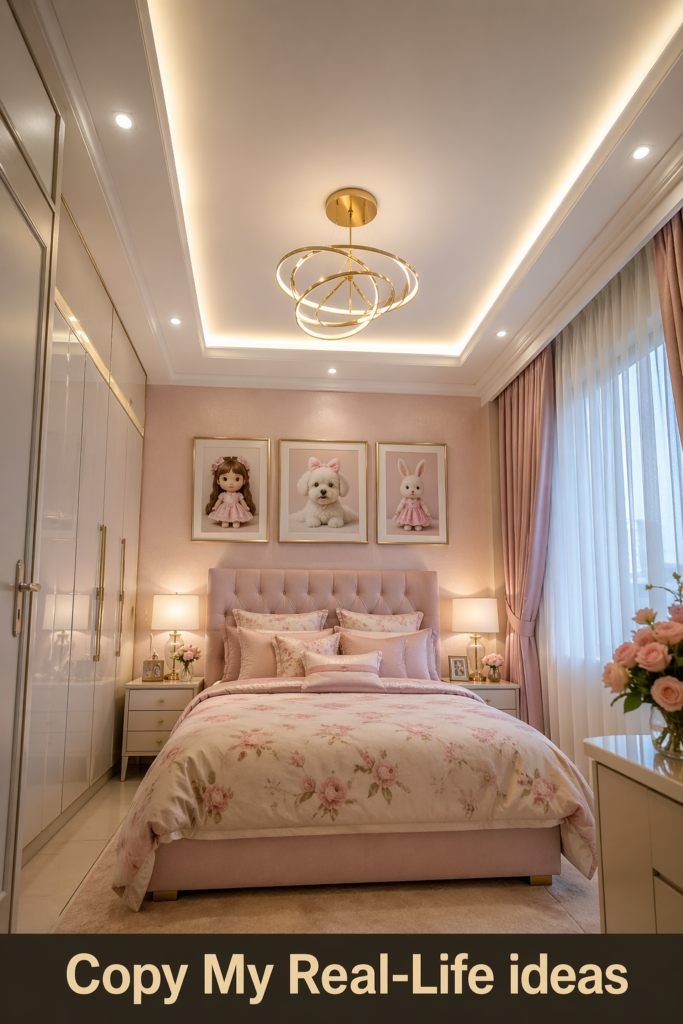
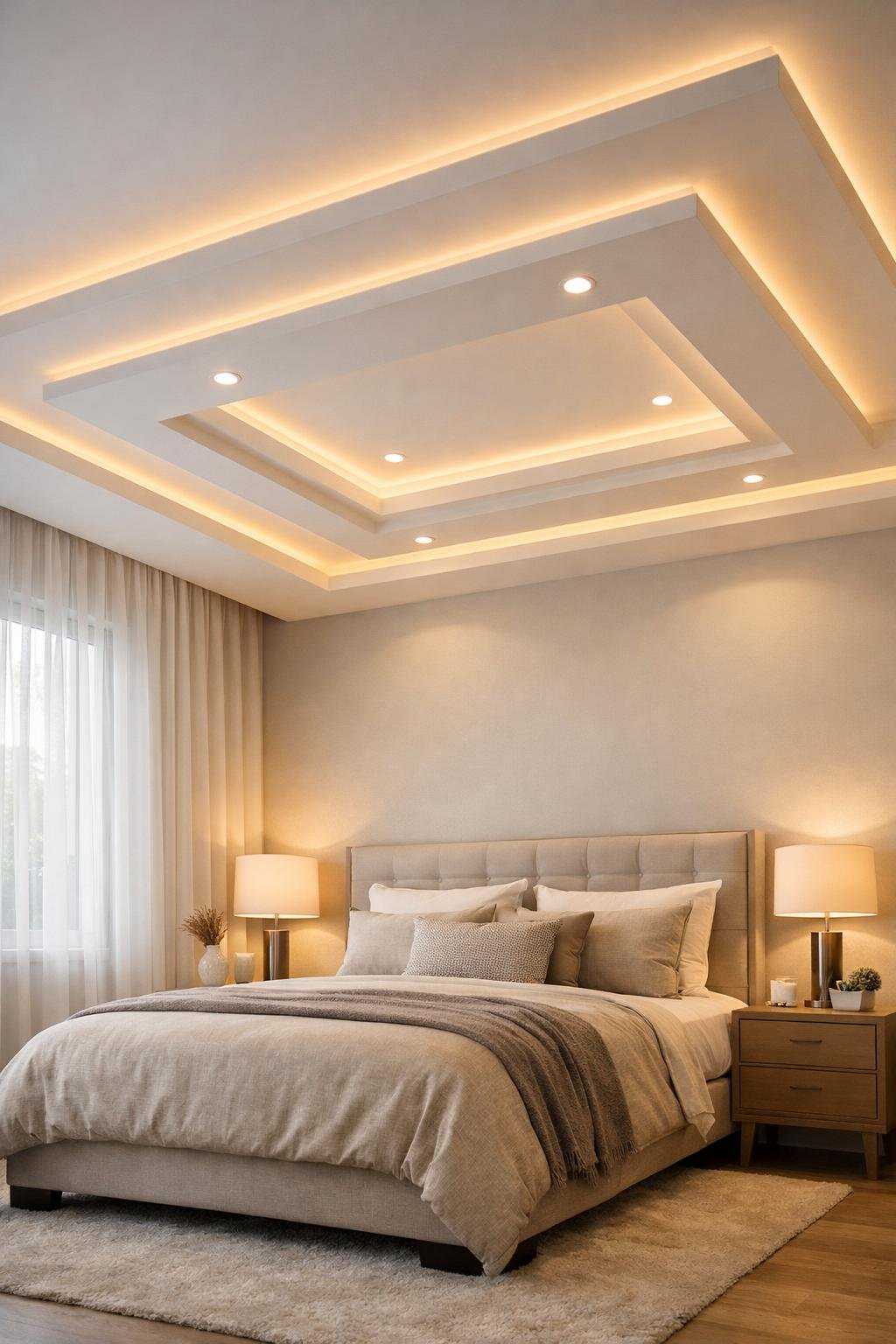
Bedroom ceilings set the mood for rest and relaxation. The right design combines soft textures, smart lighting, and clean lines to create a space that feels personal and calm—but not fussy.
Latest False Ceiling Designs for Bedroom (Cozy + Modern Styles)
Tray ceilings work if you want depth without drama. The center sits higher than the edges, so you get layers to highlight with LED strips or warm rope lighting.
This design pairs nicely with neutral wall colors and fits both large master bedrooms and medium-sized spaces.
Cove ceilings use curved edges where the wall meets the ceiling. You can tuck lighting into these curves for a soft glow that feels a bit like natural light.
Wood panel ceilings bring instant warmth. Light oak gives a Scandinavian vibe, while darker walnut feels rich and grounded.
Keep the rest of the room simple so the wood stands out. Gypsum board lets you create custom patterns, like geometric shapes or subtle 3D textures, for interest without clutter.
| READ FULL GUIDE: Latest False Ceiling Designs for Bedroom (Cozy + Modern Styles). |
False Ceiling Designs for Small Bedrooms That Feel Bigger Instantly
White ceilings reflect light and make low rooms feel taller. A plain white finish with a simple drop design keeps things clean and open.
Mirrored panels or glossy finishes bounce light around the room. Use them in small sections—covering the whole ceiling would be a bit much.
Linear recessed lighting creates the illusion of length. Run thin LED channels along the width to make the room seem wider, or along the length to stretch it out.
Skip heavy designs with multiple levels. Stick to a single-layer false ceiling with thin borders, and choose light grays or soft beiges instead of bold colors.
| READ FULL GUIDE: 12 False Ceiling Designs for Small Bedrooms That Feel Bigger Instantly. |
Kids Bedroom False Ceiling Designs That Feel Fun but Not Overwhelming
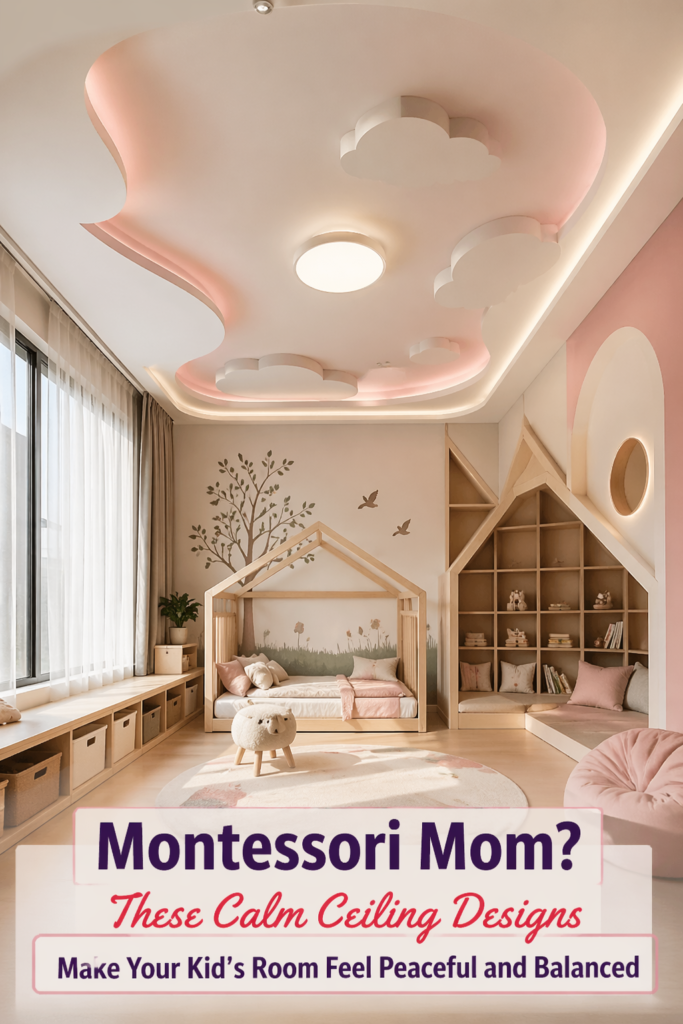
Cloud-shaped cutouts with backlighting create a dreamy sky effect. Space the clouds out and use cool white or soft blue LEDs for a calm, nighttime vibe.
Simple geometric shapes like hexagons or circles in pastel colors add playfulness without being too much. Paint the recessed sections in mint green, peach, or powder blue, but keep the main ceiling white.
Glow-in-the-dark star decals with a smooth white false ceiling give kids something magical to look at before bed. During the day, the ceiling still looks clean.
Avoid cartoon characters or themes that kids will outgrow fast. Stick with shapes, colors, and patterns that age well.
| READ FULL GUIDE: 14 Kids Bedroom False Ceiling Designs That Feel Fun but Not Overwhelming. |
False Ceiling Designs for Girls Bedroom (Soft, Stylish & Pinterest-Worthy)
Floral POP patterns can look romantic if you keep the flowers subtle and limit them to one section. Pair with soft pink or lavender accent lighting for a gentle touch.
Scalloped edges add a feminine vibe without going overboard. This design looks like gentle waves along the ceiling border and works for both modern and traditional bedrooms.
Blush pink or lilac tinted lighting turns a simple white ceiling into something special. Use LED strips with color-changing options so your daughter can adjust the mood herself.
Gold or rose gold trim adds a bit of glam. Thin metallic borders around ceiling panels or light fixtures create an upscale look for not much extra cost.
| READ FULL GUIDE: 11 False Ceiling Designs for Girls Bedroom (Soft, Stylish & Pinterest-Worthy). |
Creative False Ceiling Designs for Children Bedroom (Playful + Functional)
Chalkboard paint panels in the ceiling give kids a creative outlet. Frame a section with gypsum board, paint it with chalkboard finish, and let them doodle while lying in bed.
Try multi-level designs with built-in storage pockets to organize toys. Small recessed sections can hold lightweight bins or display favorite treasures.
Rainbow gradient lighting using RGB LED strips lets children pick their favorite colors. Dimmable options help the room shift from playtime brightness to bedtime calm.
Space themes with circular cutouts resembling planets are always a hit. Paint each circle a different color and add simple LED spotlights to make them pop.
Space-Saving Designs for Compact Rooms
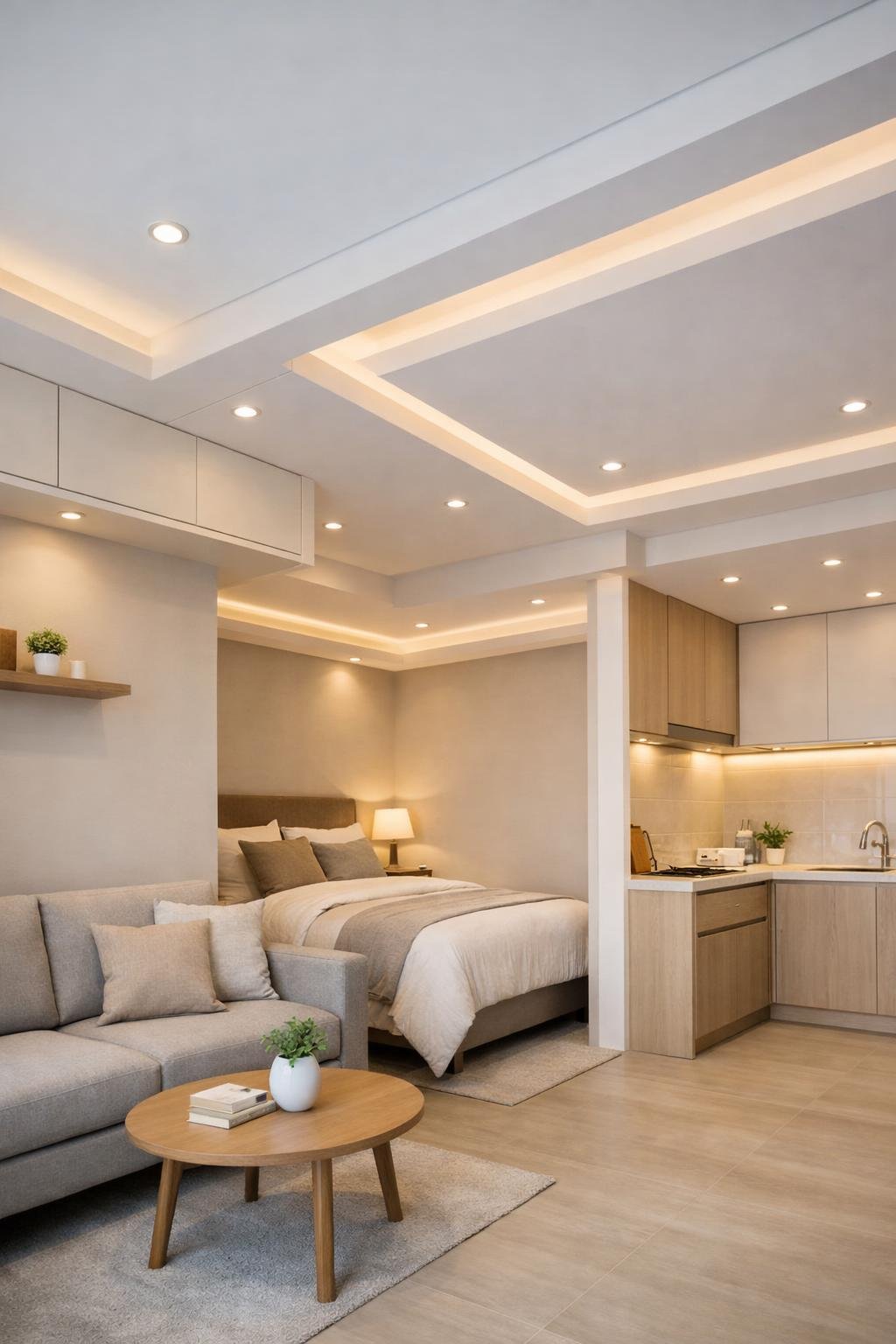
Small rooms demand smart ceiling solutions that add style without stealing vertical space. Light colors, simple shapes, and strategic lighting work together to make rooms feel taller and more open.
Small Room False Ceiling Designs That Maximize Space Visually
Keep your false ceiling design simple with a single-level layout. Gypsum boards are lightweight and create those smooth, clean lines people love.
Avoid multiple layers or deep drops—they just eat up headroom. Border designs give you the best of both worlds by adding a slim POP or gypsum border around your room’s edges instead of covering the entire ceiling.
This adds definition while keeping the center open and airy. Use cove lighting along the perimeter to create a floating effect.
Indirect light washes across the ceiling, making it appear higher than it really is. Stick with warm white LEDs at 3000K for a welcoming glow.
Pick light colors like white, cream, or soft grey. These shades reflect light and visually push the ceiling upward.
| READ FULL GUIDE: 10 Small Room False Ceiling Designs Ideas That Maximize Space Visually. |
Versatile Layouts for Unique Room Shapes
Not every room is a perfect rectangle. L-shaped spaces, odd corners, and open-plan layouts need ceiling designs that work with the shape, not against it.
The right layout can define zones and balance proportions, making awkward spaces feel intentional. L-shaped ceilings follow the natural outline of your room.
They create visual zones without adding walls. In an open living and dining area, the ceiling border can mark where one space ends and another begins.
Where L-shaped ceilings work best:
- Open-plan living rooms
- Combined hall and dining areas
- Master bedrooms with attached sitting zones
The design runs along two adjoining walls, forming an L-shape. Add recessed lights along the border or use cove lighting to highlight the edges.
Keeping the center plain helps prevent the room from feeling too busy. L-shaped designs also help in rooms with uneven dimensions.
If one side of your hall is wider, the ceiling border balances the visual weight. A top-view layout shows exactly where your ceiling borders, lights, and cutouts will go.
This step matters before installation starts. You avoid mistakes and get a sense of how the ceiling interacts with furniture placement.
| READ FULL GUIDE: 12 L-Shaped False Ceiling Design Ideas for Hall, Bedroom & Living Room. |
Top View False Ceiling Design Layouts (Plan Before You Build)
- Border widths and panel positions
- Light fixture locations (recessed, cove, spotlights)
- Air conditioning vents and fan points
- Height drop measurements.
Your contractor or designer should provide this drawing. It helps you visualize the final result and make changes before it’s too late.
You can see if the ceiling lines up with your dining table, sofa, or bed. The plan also helps you check if the layout feels balanced from above, not just from one angle.
| READ FULL GUIDE: 13 Top View False Ceiling Design Layouts (Plan Before You Build). |
Lighting-Focused False Ceiling Ideas
Lighting can make or break your ceiling design. The right setup adds depth, sets the mood, and makes rooms feel custom-designed.
Profile lights, LED strips, and hidden lighting each bring their own character to a space. You can create stunning visual impact by grouping different light types in your false ceiling.
False Ceiling Designs Using Profile Lights for a Modern Glow
Profile lights sit flush in narrow channels cut into your ceiling. They create clean, continuous lines of light without visible fixtures.
You get a sleek, architectural look that feels high-end. These lights work beautifully in geometric patterns.
Try parallel lines running across your living room. Or frame your ceiling’s edges with L-shaped profiles that meet at corners.
Profile lights are slim, usually under an inch wide. They disappear during the day and come alive at night.
You can install them in gypsum, POP, or wooden ceilings. They’re perfect for modern and minimalist homes where you want lighting that doesn’t compete with your decor.
| READ FULL GUIDE: 10 False Ceiling Designs Using Profile Lights for a Modern Glow. |
LED Strip False Ceiling Designs That Create Ambient Lighting Layers
LED strips give you soft, indirect light that washes across walls and ceilings. Hide them in coves, grooves, or behind panels.
The light bounces off surfaces instead of shining directly down. This creates layers—bright task lighting from spotlights, medium ambient light from LED strips, and low accent lighting near artwork.
Each layer serves a purpose and works together. Install LED strips in a tray ceiling’s perimeter for a floating effect.
Or tuck them behind wall-to-ceiling panels in your bedroom. You can dim them, change colors, or set them on timers.
They use less power than traditional bulbs and last years longer. Hidden lighting sits completely out of view—you see the glow, not the source.
| READ FULL GUIDE: 13 LED Strip False Ceiling Designs That Create Ambient Lighting Layers. |
False Ceiling Designs with Hidden Lighting for a Luxury Look
This technique makes ceilings look like they’re backlit from within. Build shallow recesses or coves into your false ceiling design and place LED strips or tube lights inside.
The light spills out gently, creating a warm halo effect. Your ceiling appears to float above the room.
This works especially well with stepped ceiling designs. Each level can have its own hidden light source, creating depth and dimension.
In bedrooms, hidden lighting gives you a soft glow perfect for winding down. In living rooms, it adds sophistication without harsh glare.
| READ FULL GUIDE: 11 False Ceiling Designs With Hidden Lighting for a Luxury Look. |
Spiritual and Calm Spaces
Prayer rooms need ceilings that support peace and focus. Soft colors, hidden lighting, and sacred symbols can turn ordinary overhead spaces into places that feel set apart for devotion.
False Ceiling Designs for Puja Room (Calm + Spiritual Vibes)
Your puja room ceiling sets the mood for prayer and meditation. A simple tray ceiling with cove lighting creates soft, indirect light that won’t distract you.
Light colors work best—ivory, pale gold, or sky blue promote calm. Gypsum board lets you add gentle curves or recessed sections for LED strips.
You can even include small relief patterns like lotus shapes or geometric mandalas. Keep designs simple so the space feels peaceful, not busy.
Popular features:
- Dimmable LED strips for adjustable brightness
- Recessed lights above your altar or idol shelf
- Fire-resistant materials if you use oil lamps
- Easy-to-clean surfaces that handle incense smoke
PVC panels resist moisture and clean with just a damp cloth. They’re great for smaller puja corners where you need low maintenance.
| READ FULL GUIDE: 10 False Ceiling Designs for Puja Room (Calm + Spiritual Vibes). |
Mandir False Ceiling Designs for Home Temples
Home temple ceilings can feature more traditional details. Carved wooden panels, lattice work, or hand-painted symbols add cultural meaning.
You can combine a clean modern base with one ornate section for visual interest. Backlit acrylic or onyx panels create a glowing effect behind deity statues.
This works especially well in dedicated mandir rooms where you want a focal point overhead. Material options:
- Wood or engineered wood for warmth and a traditional look
- Decorative molding to frame sacred artwork
- Gold or brass accents that reflect soft light
- Pendant fixtures for vertical drama
Match your ceiling to the rest of your mandir’s style. If you have carved doors or pillars, echo those patterns overhead for a cohesive look.
| READ FULL GUIDE: 11 Mandir False Ceiling Designs for Home Temples. |
Stylish Workspaces
A well-designed ceiling in your workspace can boost focus and create a more polished, professional environment. The right false ceiling design adds structure to open offices and private cabins while keeping the space bright and distraction-free.
False Ceiling Designs for Office Cabin (Clean & Professional Look)
For a private office cabin, a clean gypsum false ceiling with recessed LED lights works best. This setup gives you even lighting across your desk without harsh shadows or glare.
Add a simple layered profile around the edges for subtle depth. Neutral tones like white or light grey keep the space looking sharp and focused.
Hidden wiring and air vents fit neatly into the design, so your office ceiling stays smooth and clutter-free. If you want a bit more warmth, try a wooden panel accent in one section.
It adds character without making the room feel too busy. Open office areas need ceilings that handle acoustics and lighting across larger zones.
| READ FULL GUIDE: 13 False Ceiling Designs for Office Cabin (Clean & Professional Look). |
Modern False Ceiling Designs for Office Spaces
Modular grid ceilings with acoustic panels help reduce noise and improve sound comfort. Mix materials like metal trims and gypsum boards to define different work zones.
Integrated LED strips or track lighting give you flexibility to adjust brightness based on the task. Geometric patterns or sleek linear designs add a modern touch without overwhelming the space.
Keep colors light and finishes matte to maintain a calm, productive atmosphere throughout the day.
Kitchen and Dining Enhancements
Kitchen false ceilings need to balance style with practical concerns like heat, moisture, and cooking odors. The right design can define zones between cooking and dining areas while making the space feel more finished and intentional.
False Ceiling Designs for Kitchen Entrance (Stylish Transitions)
Your kitchen entrance sets the tone for everything beyond it. A stepped false ceiling draws a clear line between your kitchen and the next room—no need for walls or doors.
Drop the ceiling a bit and tuck in some recessed lighting right at the transition. It’s a simple move, but it really marks where one space ends and another begins.
Try boxing in the entrance archway to frame the opening. This trick works even better if you match the ceiling detail to your cabinet color or countertop material.
Cove lighting along the entrance perimeter adds a soft, welcoming glow. Tuck LED strips into the ceiling grooves for a vibe that’s both modern and cozy.
| READ FULL GUIDE: False Ceiling Designs for Kitchen Entrance (Stylish Transitions). |
Modern Kitchen False Ceiling Designs (Minimal + Functional Styles)
Modern kitchen ceilings lean into clean lines and smart function. A simple gypsum board ceiling, painted crisp white, reflects light and makes even tiny kitchens feel bigger.
You don’t have to go wild with patterns to get a custom look.
Key features of modern kitchen false ceilings:
- Flush-mounted lights that sit flat against the ceiling
- Grid patterns with straight lines in geometric layouts
- Single-level designs without multiple tiers or drops
- Integrated ventilation spaces for exhaust systems
POP (Plaster of Paris) gives you smooth surfaces that shrug off kitchen moisture. Add a recessed panel above your cooking area to spotlight the main work zone.
Stick to neutral colors. White, light gray, or beige ceilings pair with any cabinetry and don’t show every little steam mark from daily cooking.
| READ FULL GUIDE: 9 Modern Kitchen False Ceiling Designs (Minimal + Functional Styles). |
Farmhouse Style False Ceiling Designs for Kitchen Spaces
Farmhouse ceilings warm things up with natural materials and rustic charm. Wooden beams set against a white false ceiling bring that classic country kitchen vibe.
You can use real wood or go with lightweight faux beams that look just as good for less.
Shiplap-style PVC panels give you farmhouse texture without the headaches of real wood. These panels handle moisture and wipe clean after a messy meal.
Try a coffered ceiling with wooden trim outlining each section. Paint the recessed areas a soft cream, and keep the beams raw or go for a distressed finish if you love that lived-in feel.
| READ FULL GUIDE: 10 Farmhouse Style False Ceiling Designs for Kitchen Spaces. |
Creative Material and Finish Ideas
Material choice shapes both the look and the performance of your ceiling. Gypsum boards give you crisp lines at a range of price points, CNC cutting brings precision patterns without heavy detail work, and mirror elements bounce light around and make small kitchens feel bigger.
Latest Gypsum Board False Ceiling Design Ideas (Budget to Premium)
Gypsum boards fit just about any budget. For basic setups, a single-layer ceiling with recessed LEDs runs about $0.96–$1.44 per sq. ft.
You get a smooth finish and a clean look, and the install isn’t complicated.
Want more drama? Add borders and cove lighting. Stepped patterns or shallow recessed sections can frame the room and add depth.
Premium gypsum ceilings go all out with layered panels, profile lights, hidden strips, and geometric cutouts. Some folks mix in wooden inserts or painted accent panels—same material, but a totally different vibe.
| READ FULL GUIDE: 11 Latest Gypsum Board False Ceiling Design Ideas (Budget to Premium). |
CNC Cut False Ceiling Designs That Add Pattern & Detail
CNC cutting lets you carve out precise patterns in gypsum or wood panels. The machine handles intricate shapes that would be a pain by hand.
Geometric grids, floral motifs, and linear grooves are all fair game.
These panels shine as feature sections above dining tables or even bed headboards. Backlight the CNC panels and the patterns really pop, throwing shadows that shift as the day goes on.
Install time is shorter than hand-carved POP work, and you get consistent, repeatable patterns. If you want detail without the fuss of traditional moulding, CNC is a solid bet.
| READ FULL GUIDE: 10 CNC Cut False Ceiling Designs That Add Pattern & Detail. |
False Ceiling Designs with Mirror Elements (Reflective & Luxurious)
Mirrors open up small rooms and make ceilings feel taller. Try mirror strips along borders, or add small mirror tiles in a grid.
Full mirror ceilings are rare at home, but in a dressing area, why not?
Reflective finishes bounce light all over, which helps if your kitchen doesn’t get much sun. Mirror panels look even cooler with cove lighting or LED strips.
Don’t overdo it, though. A bordered mirror panel or a single reflective strip adds some luxury without turning the place into a funhouse.
| READ FULL GUIDE: 12 False Ceiling Designs With Mirror Elements (Reflective & Luxurious). |
Outdoor and Transitional Spaces
Covered porches and semi-outdoor areas demand ceiling designs that can handle weather and still look sharp. The right materials and finishes help these spaces feel like a real part of your home.
False Ceiling Designs for Porch (Covered Outdoor Style Ideas)
Your covered porch needs materials that can handle moisture and temperature swings. Wood-look PVC panels give you the warmth of natural wood, but they won’t warp or rot.
These ceiling grades are easy to install and honestly, you barely have to maintain them. That’s a win in my book.
Tongue-and-groove vinyl beadboard feels right at home with traditional porch styles. It shrugs off humidity way better than real wood.
You can get it in classic whites and soft grays, so shaded spots look brighter without much effort.
Modern porches? Try fiber cement panels paired with recessed LED strips. Those clean lines really change the vibe at night.
If you want everything to flow, just paint them to match your exterior trim. Simple, but it works. Outdoor-rated acoustic tiles cut down on echo, which is honestly a lifesaver for big covered patios. They come in finishes that actually last outside, so you won’t be stuck replacing them every few years.
| READ FULL GUIDE: 13 False Ceiling Designs for Porch (Covered Outdoor Style Ideas). |