Profile lighting in false ceilings creates a soft glow that makes your living room feel warm and modern without harsh overhead lights.
These hidden LED strips sit in aluminum channels along your ceiling edges or patterns, washing light upward or downward for an elegant floating effect.
Profile lighting transforms ordinary ceilings into architectural features by combining sleek design with gentle illumination that sets the mood in your space.
You can choose minimal edge designs, bold geometric patterns, or layered looks depending on your room size and style preferences.
This guide walks you through practical ceiling designs, material choices, light colors for that perfect soft glow, and common mistakes to avoid when planning your installation.
How Profile Lighting Transforms a Living Room
Profile lighting uses slim LED strips tucked into aluminum channels to create soft, indirect light along your ceiling edges. This approach shifts away from harsh overhead bulbs toward layered, modern illumination that makes rooms feel more spacious and inviting.
What Profile Lighting Is (Simple Explanation)
Profile lighting involves LED strips housed inside aluminum channels that mount along your ceiling perimeter or within false ceiling grooves. The aluminum profile acts as both a protective case and heat sink for the LEDs.
A diffuser cover spreads the light evenly, eliminating harsh dots or bright spots. The result is a continuous line of soft illumination that highlights your ceiling’s architecture.
You can choose recessed profiles that sit flush with your ceiling or surface-mounted options that attach directly to existing surfaces. Most systems run on low voltage and connect to a simple power supply.
The channels come in different widths and depths. Wider profiles with frosted diffusers create a gentler glow, while narrower ones produce more focused lines of light.
SEE THIS: 11 False Ceiling Designs for Living Room with TV Unit Integration.
Why Soft Glow Lighting Feels More Modern Than Harsh Lights
Soft glow lighting creates depth and dimension in your living room instead of flattening everything under bright overhead bulbs. Your eyes naturally relax when light comes from multiple indirect sources rather than one intense fixture.
Profile lights eliminate the stark shadows that make spaces feel cold or institutional. The diffused illumination from LED profiles makes your room feel warmer and more welcoming for both relaxation and entertaining.
Modern design embraces clean lines and hidden light sources. When your lighting fixtures disappear into the architecture, your ceiling becomes the feature instead of bulky lamps or fixtures.
The gentle upward wash from perimeter profile lighting makes your ceiling appear to float, adding visual height to your space without any structural changes.
| SEE MORE IDEAS: 28 Latest False Ceiling Designs That Make Every Room Look Custom-Built. |
The Shift From Bright to Layered Lighting in Modern Homes
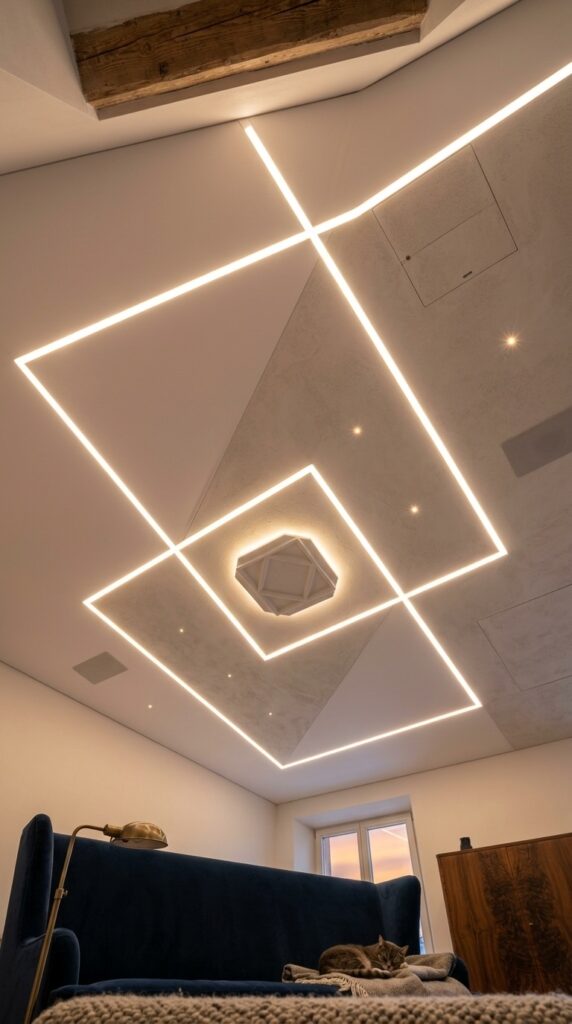
Layered lighting combines ambient, task, and accent sources to give you control over your room’s mood and function. Profile lighting handles the ambient layer by providing background illumination that doesn’t compete with reading lamps or decorative fixtures.
You can add dimmers to your profile system to adjust brightness throughout the day. Lower settings create intimate evening atmospheres, while brighter levels work for cleaning or daytime activities.
This approach replaces the old single-ceiling-fixture method that forced you to choose between too bright or too dark. Multiple light sources at different heights and intensities let you customize your space for different activities.
Profile lighting works especially well when combined with table lamps for reading zones and accent lights for artwork or architectural features.
SEE THIS: 8 Symmetrical & Modern False Ceiling Designs for a Square Hall: Stylish Ideas & Tips.
Basics of Profile Lighting in False Ceilings
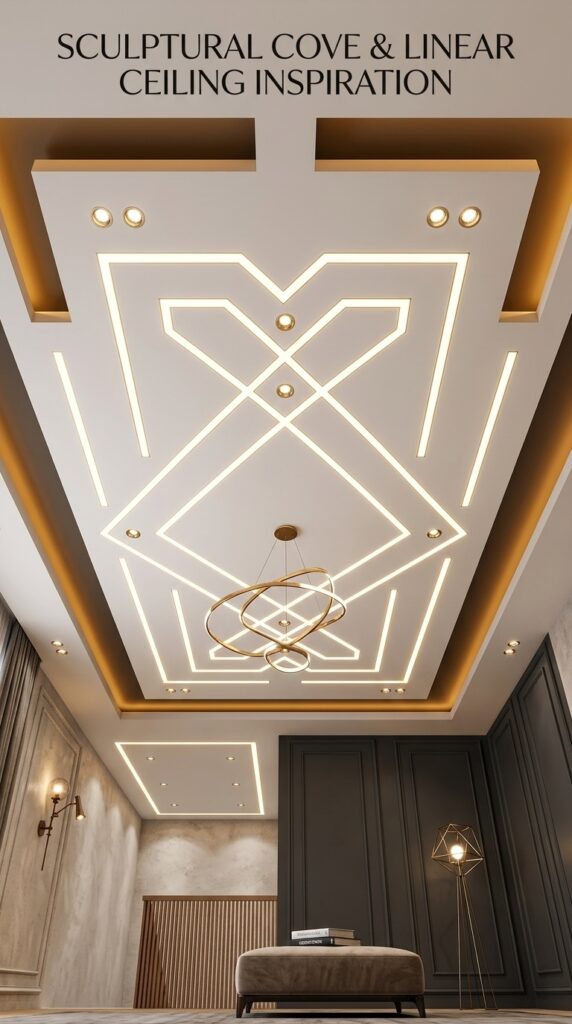
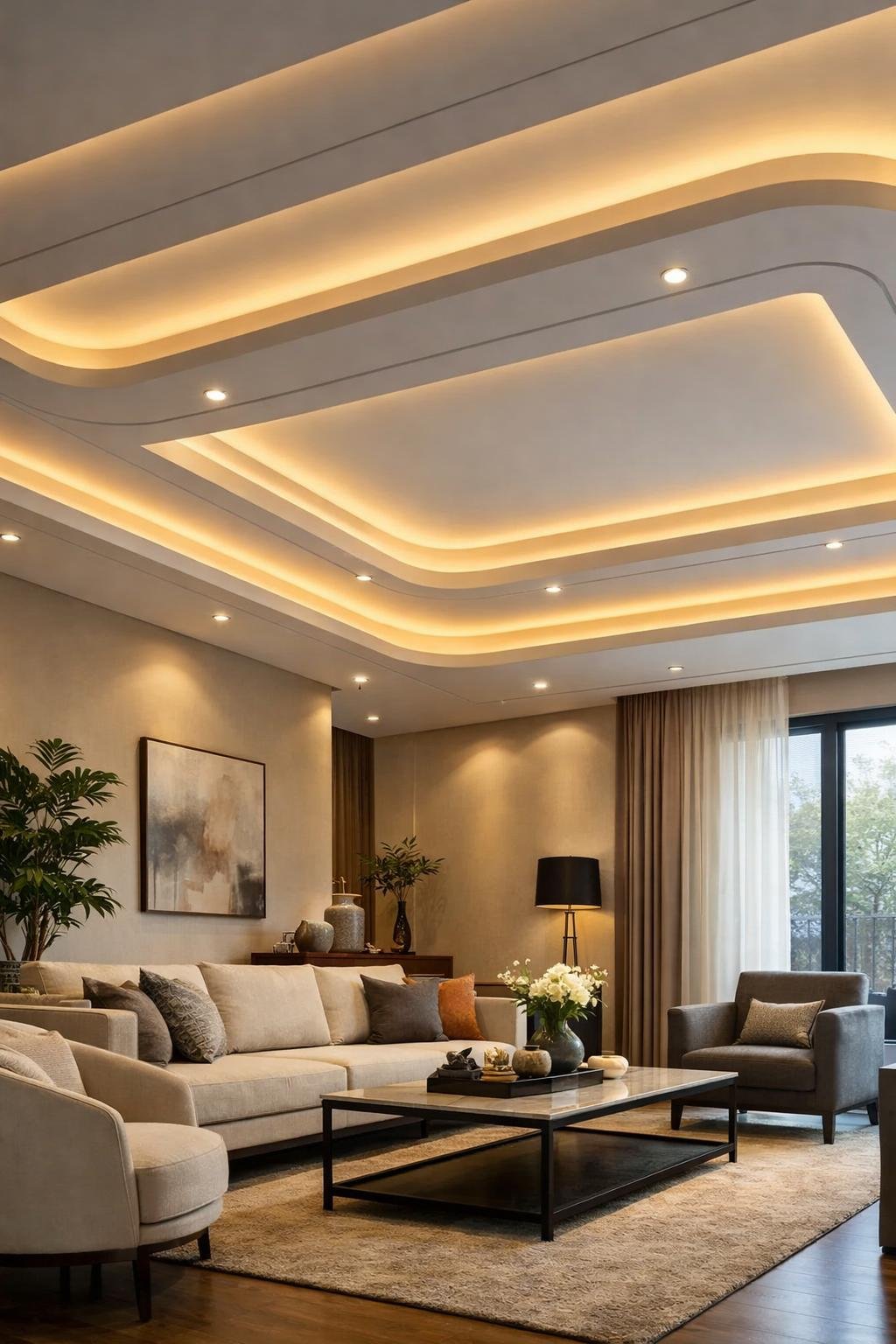
Profile lighting transforms your false ceiling into a modern design feature. It uses LED strip lights housed inside aluminum channels to create clean lines of light across your ceiling.
A false ceiling (also called a drop ceiling or suspended ceiling) gives you space to hide these lighting profiles. You can install them in different ways to get the look you want.
Common installation methods include:
- Recessed into the ceiling surface for a flush look
- Mounted along edges for cove lighting effects
- Placed in corners to highlight room dimensions
- Built into ceiling patterns or geometric designs
The LED profile light system has a few basic parts. The aluminum profile holds everything together and protects the lights. The LED strips provide the actual illumination. A diffuser cover spreads the light evenly and reduces glare.
This setup creates that soft glow effect that makes rooms feel warm and inviting. You can choose between warm white for cozy spaces or cool white for a crisp, modern feel.
Minimal Ceiling Designs With Profile Lighting
Minimal false ceiling designs work well if you prefer clean lines and simple spaces. These designs skip heavy decorations and focus on sleek profile lights instead.
A basic tray ceiling with a single LED strip around the edge creates a soft glow without extra details. The profile light ceiling design stays hidden in a small groove, so you only see the light effect.
Key features of minimal designs:
- Single-line LED strips along ceiling edges
- Flat surfaces with no heavy molding
- Simple geometric shapes
- White or neutral ceiling colors
Modern false ceiling designs can use just one or two light channels instead of multiple layers. This keeps your living room feeling open and airy. The profile lights sit flush with the ceiling surface, which maintains the minimal look you want.
You can place a thin LED strip in a straight line across one wall. This draws the eye without adding bulk to your ceiling. The soft glow effect still happens even with less lighting.
Geometric Ceiling Designs Using Profile Lighting
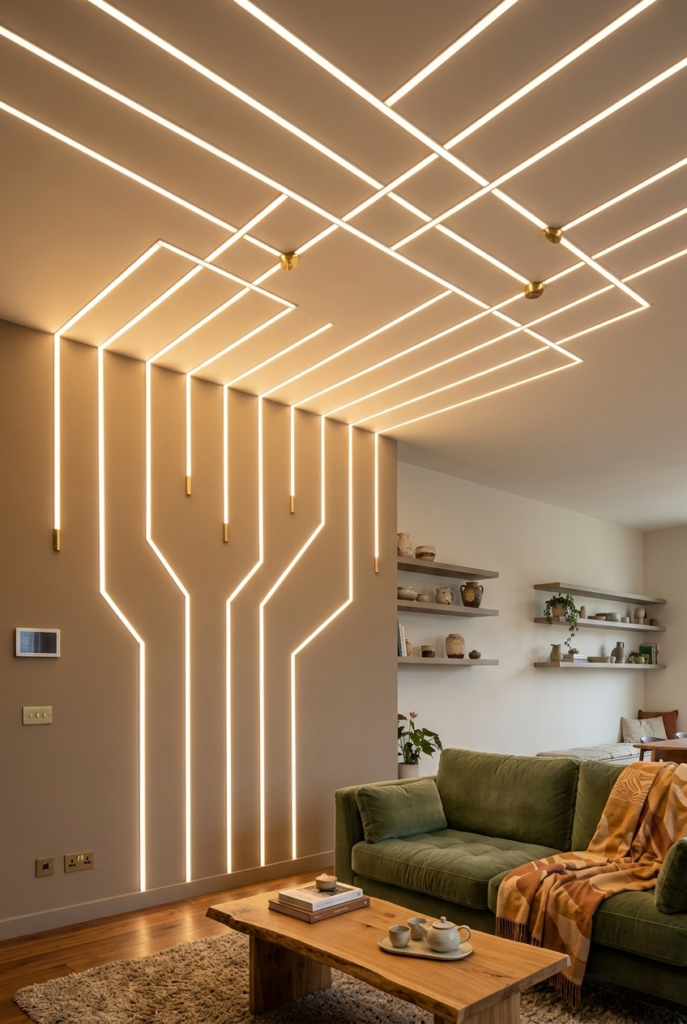
Geometric patterns add modern style to your living room ceiling. You can use profile lights to outline squares, rectangles, or diamond shapes in your false ceiling design.
Popular geometric layouts include:
- Coffered ceiling patterns with profile lights along the edges
- Triangular designs that draw the eye upward
- Hexagon shapes arranged in clusters
- Intersecting lines that create depth
Profile light ceiling designs work best when the geometric shapes match your room’s size. Smaller rooms look better with simple patterns, while larger spaces can handle more complex designs.
Adapting Profile Lighting to Different Living Room Layouts
Profile lighting works differently depending on your living room’s shape and size. You need to plan the placement carefully to get the best results.
For Small Living Rooms:
- Use recessed profile lights around the perimeter
- Install them in straight lines to make the space feel larger
- Keep the design simple with one or two light strips
For Open-Plan Spaces:
- Create zones with separate profile light sections
- Highlight different areas like the seating zone and TV area
- Use curved or L-shaped profiles to define boundaries
For Long, Narrow Rooms:
- Run profile lights along the longer walls
- Add cross-beams of light to break up the space
- This helps balance the room’s proportions
Square living rooms benefit from geometric patterns in the false ceiling. You can create a box design with profile lights running parallel to each wall. Rectangular rooms work well with linear strips that follow the room’s natural direction.
Position your profile lights to complement your furniture layout. If your sofa faces a feature wall, frame that wall with profile lighting. For living rooms with high ceilings, consider adding layered profile lights at different heights to add depth and interest.
False Ceiling Ideas for Small Living Rooms
Small living rooms need smart false ceiling choices that make the space feel bigger, not cramped. Light colors work best because they reflect light and create an open feeling.
Keep these tips in mind:
- Choose recessed designs instead of heavy layered ones
- Use lighter shades like white or cream
- Add profile lighting around the edges to expand visual space
Simple geometric patterns can add style without overwhelming your room.
How to Choose the Right Light Color for a Soft Glow
Warm white light (2700K-3000K) creates the softest, most inviting glow for your living room. This color temperature mimics traditional incandescent bulbs and makes spaces feel cozy.
Avoid cool white or daylight bulbs if you want a gentle atmosphere. These work better for task lighting, not relaxation areas.
Best Materials for Ceilings With Profile Lighting
When you plan a ceiling with profile lighting, your material choice affects how well the soft glow spreads across the room. Some materials work better than others for creating that smooth light effect you want.
Gypsum board works best for most profile light installations. It gives you clean edges and straight lines that hold LED strips securely. The smooth surface helps light bounce evenly without creating dark patches.
POP (Plaster of Paris) lets you create curved channels for profile lights. If you want rounded corners or flowing designs, POP shapes easily on-site. But it takes longer to install than gypsum.
Wooden ceiling design adds warmth when paired with profile lighting. The wood grain creates texture while LED strips in grooves provide gentle illumination. You’ll need proper treatment to protect the wood from heat.
| Material | Profile Light Benefit | Best Use |
|---|---|---|
| Gypsum | Sharp, clean grooves | Modern straight designs |
| POP | Custom curved channels | Decorative patterns |
| Wood | Warm aesthetic glow | Premium living rooms |
Make sure your chosen material can support the profile track weight. Gypsum and POP both handle standard LED profiles well. Wooden ceiling design needs reinforced mounting points.
The material should also hide wiring neatly behind the profile channel. This keeps your installation looking professional with no visible cables.
Layered Profile Lighting for a Luxe Look
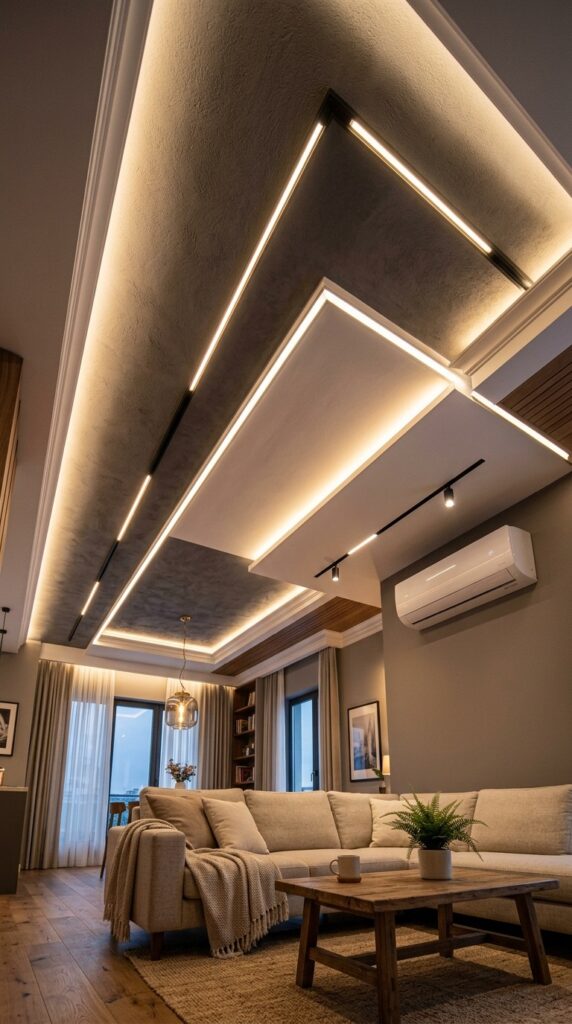
Layered false ceilings with profile lighting create depth and visual interest in your living room. You can install multiple levels of ceiling panels with LED strips positioned between each layer.
This design approach adds a luxurious feel to your space. The profile lights cast a soft glow upward and downward, highlighting each ceiling tier.
You can customize the light intensity and color temperature to match your mood. Warm white creates a cozy atmosphere, while cool white offers a modern vibe.
Common Mistakes That Ruin the Soft Glow Effect
Getting profile lighting wrong can completely kill the soft glow effect you’re trying to create. Here are the mistakes that often mess up your living room false ceiling design.
Placing LED strips too close to the wall creates harsh lines instead of a gentle wash of light. You need at least 2-3 inches of space between the strip and wall for proper diffusion.
Using the wrong color temperature is another big problem. Cool white LEDs (above 5000K) feel clinical and harsh. Stick with warm white (2700-3000K) for that cozy soft glow you want.
Not installing a diffuser leaves you with visible LED dots that look cheap. A simple frosted cover or diffuser strip smooths out the light beautifully.
Skipping the dimmer switch means you’re stuck with one brightness level. Dimmers let you adjust the intensity based on time of day and mood.
Mixing different LED brands often results in uneven color matching around your ceiling. The glow looks patchy when strips don’t match perfectly.
Forgetting to seal gaps in the profile lets light leak where it shouldn’t. Those stray beams break the smooth effect you’re working toward.
Installing recessed lighting too close to profile lights creates competing light sources that confuse the eye. Space them properly so each type serves its purpose without fighting for attention.
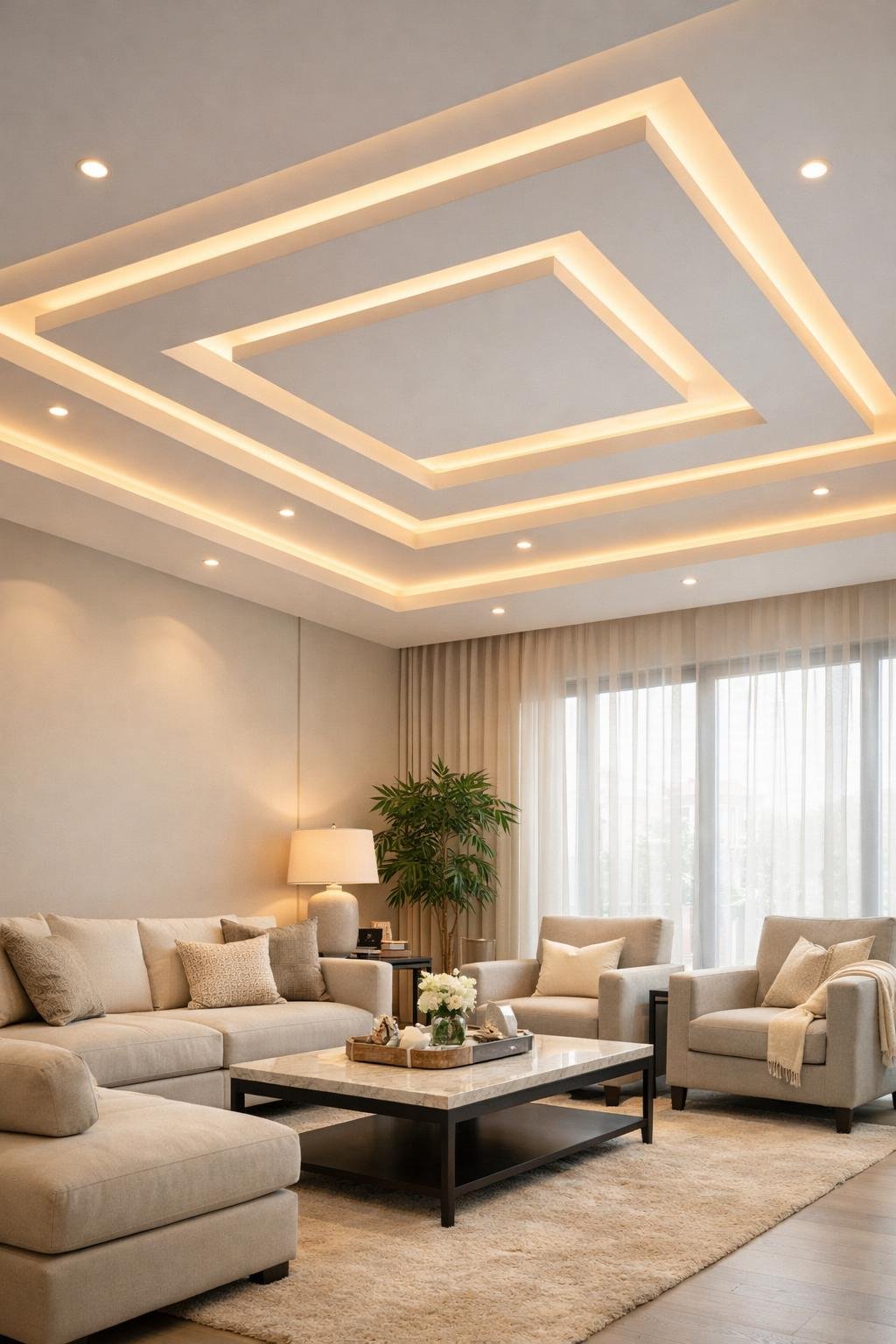
Easy Soft Glow Ceiling Formulas to Try
You don’t need complicated layouts to get that soft glow effect. A simple profile light setup can completely change how your living room feels at night.
Minimal Ceiling + Linear Lighting
Strip a single LED profile along the edges of your ceiling. That’s it. You get clean light that spreads evenly without any harsh spots.
This works best in smaller living rooms where you want brightness without taking up visual space. Use aluminum profiles with frosted diffusers so the light softens before it hits your walls.
Mount the profiles flush with your false ceiling border. The glow bounces off the walls and creates depth. You can pick warm white LEDs around 3000K for a cozy feel or go cooler if you prefer sharper light.
This formula costs less and installs fast. It’s one of the easiest false ceiling ideas to pull off.
Warm Light + Clean Layout
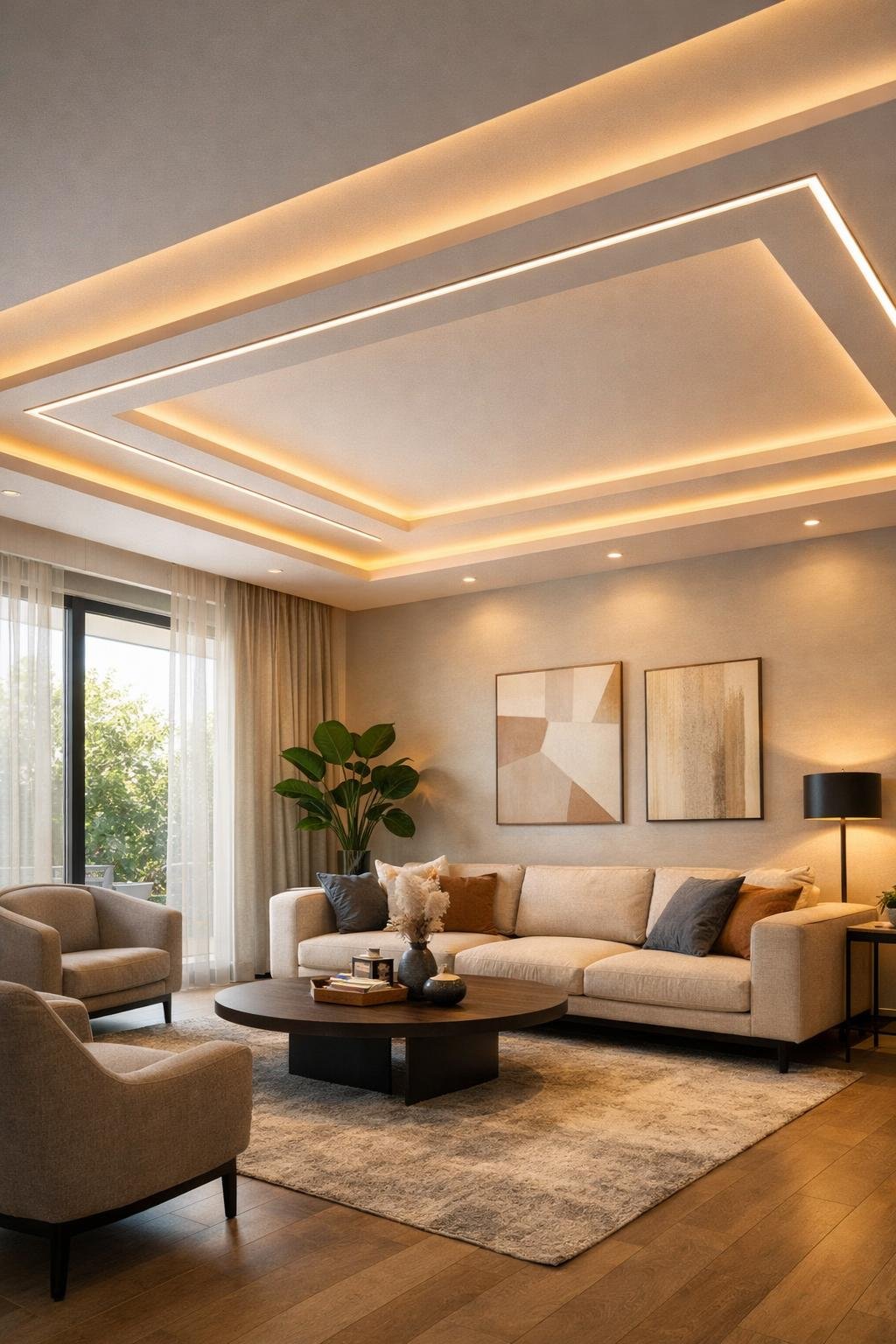
Pair your profile lights with a simple tray ceiling. Keep the tray shallow, maybe six inches deep. Line it with LED strips on all four sides.
The warm glow fills the tray and spreads across your ceiling. It feels like the room is lit from within. You avoid that flat, overhead bulb look.
Use dimmable LEDs so you can adjust brightness based on time of day. Mornings can be brighter. Evenings can drop lower for a relaxed vibe.
Stick to neutral ceiling colors like white or light beige. They reflect light better and make the glow more visible.
One Focal Zone, Rest Kept Calm
Pick one area to highlight with profile lighting. Maybe above your TV wall or around your seating zone. Leave the rest of the ceiling plain or use soft recessed lights.
This pulls attention where you want it without overwhelming the whole room. The focused glow adds drama but keeps things balanced.
Use L-shaped or U-shaped profiles to frame that zone. The light should outline the space, not flood it. Keep other lighting minimal so your focal area stands out clearly.