| What this is: A complete, practical guide to making any room genuinely feel like fall — through light, texture, and color rather than a pile of pumpkins. Who it’s for: Anyone styling a bedroom, living room, dorm, rental, or small mobile space for autumn, on any budget. Why read it: You’ll learn the handful of small, high-impact changes that shift a room into the season — and how to adapt them to your exact space and aesthetic. |
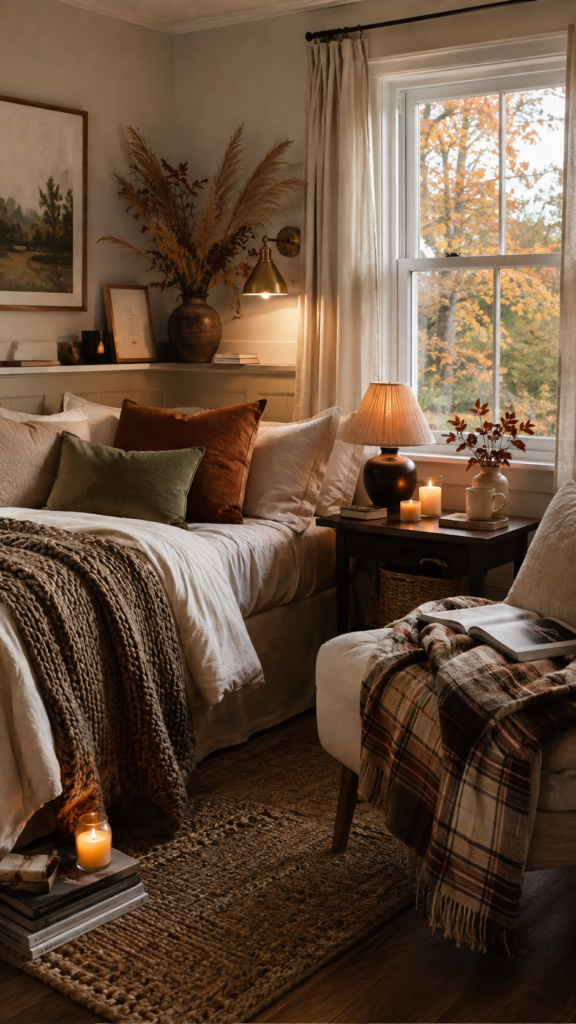
Every September, the same quiet panic sets in. You feel the first cool morning through the window, look around your room, and realize it looks exactly the same as it did in July. Somewhere between the life stuff and the scroll stuff, fall decorating got lost entirely.
Here’s what nobody in the seasonal decor space wants to lead with: most fall rooms look the same. Orange throw pillow, a pumpkin on the shelf, maybe a fake leaf garland if someone was feeling ambitious.
These things aren’t bad — they’re just the absolute minimum, and a room that genuinely feels like fall does a whole lot more. Whether you’re working with a big living room, a cramped dorm, a rental you can’t touch, or a compact space that moves with you, this guide covers how to get there. Read it front to back or jump to your situation.
What Actually Makes a Room Feel Like Fall
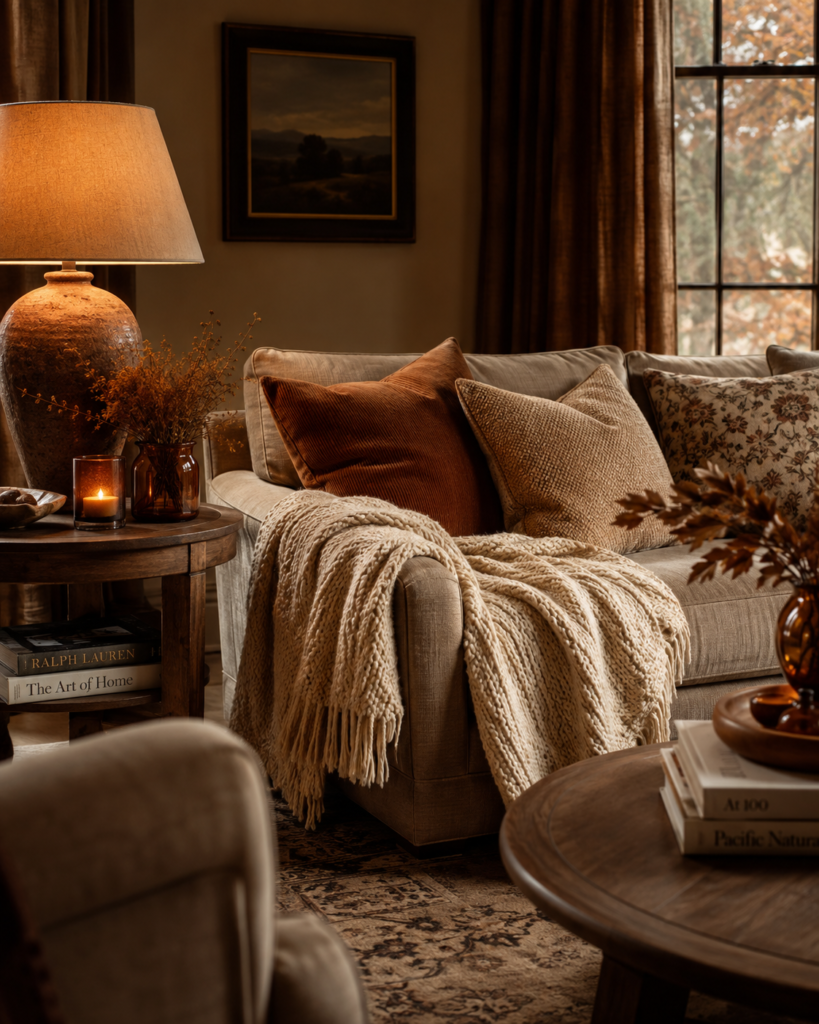
Most people approach fall decorating like a shopping list. Buy some gourds, swap the pillow covers, call it done — then wonder why the room still feels like August with a pumpkin in it.
The truth is that fall is a sensory experience before it’s a visual one. What your brain registers as fall is a combination of warm light, soft textures within reach, and a slightly lowered visual ceiling — a room that feels more enclosed and intimate than its summer version. The fastest way in is light.
Swapping a cold overhead bulb for warm 2700K lighting from a couple of lamps shifts the whole mood more than a hundred dollars of decor. Texture does the rest: your brain reads the visual weight of a chunky knit throw as warmth before you’ve even touched it. Layer those two changes and the season arrives, whether or not you’ve bought a single new thing.
Choosing Your Fall Room Palette (It Doesn’t Have to Be Orange)
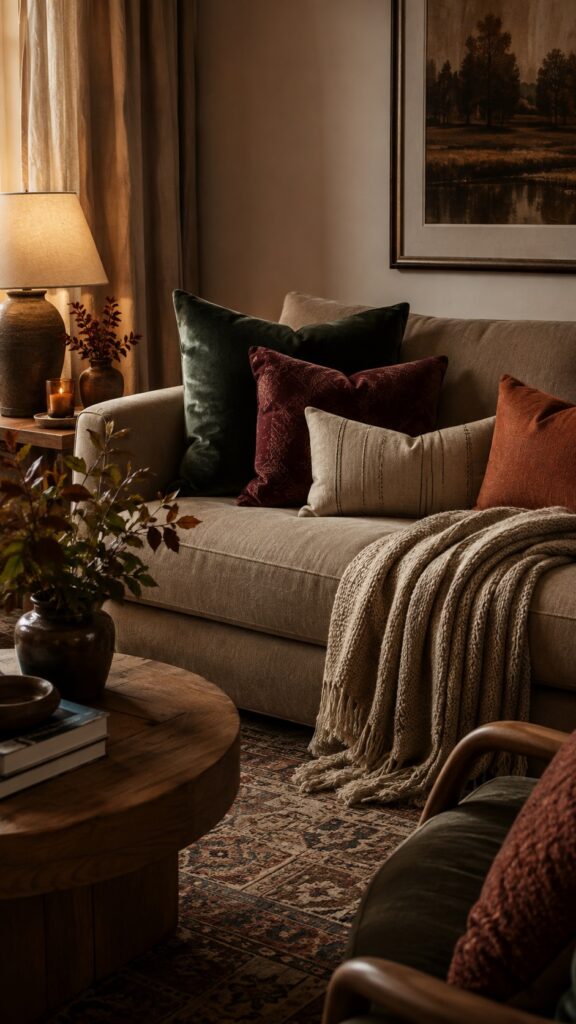
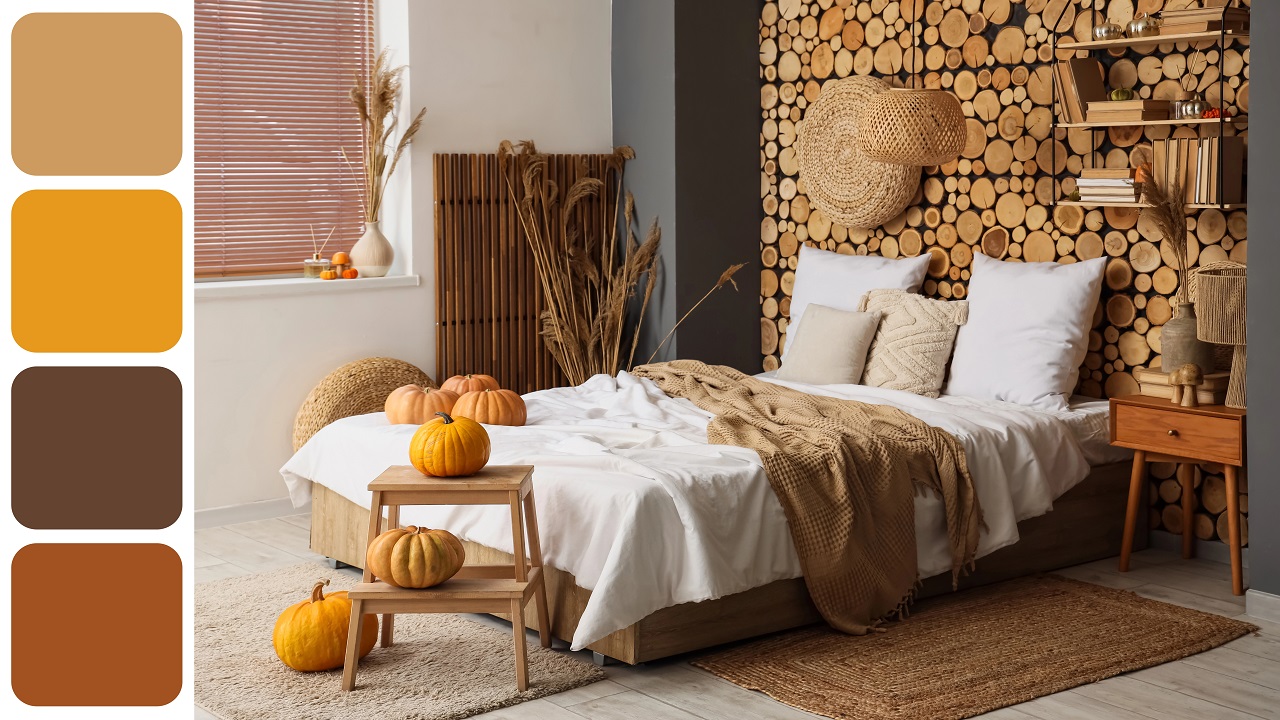
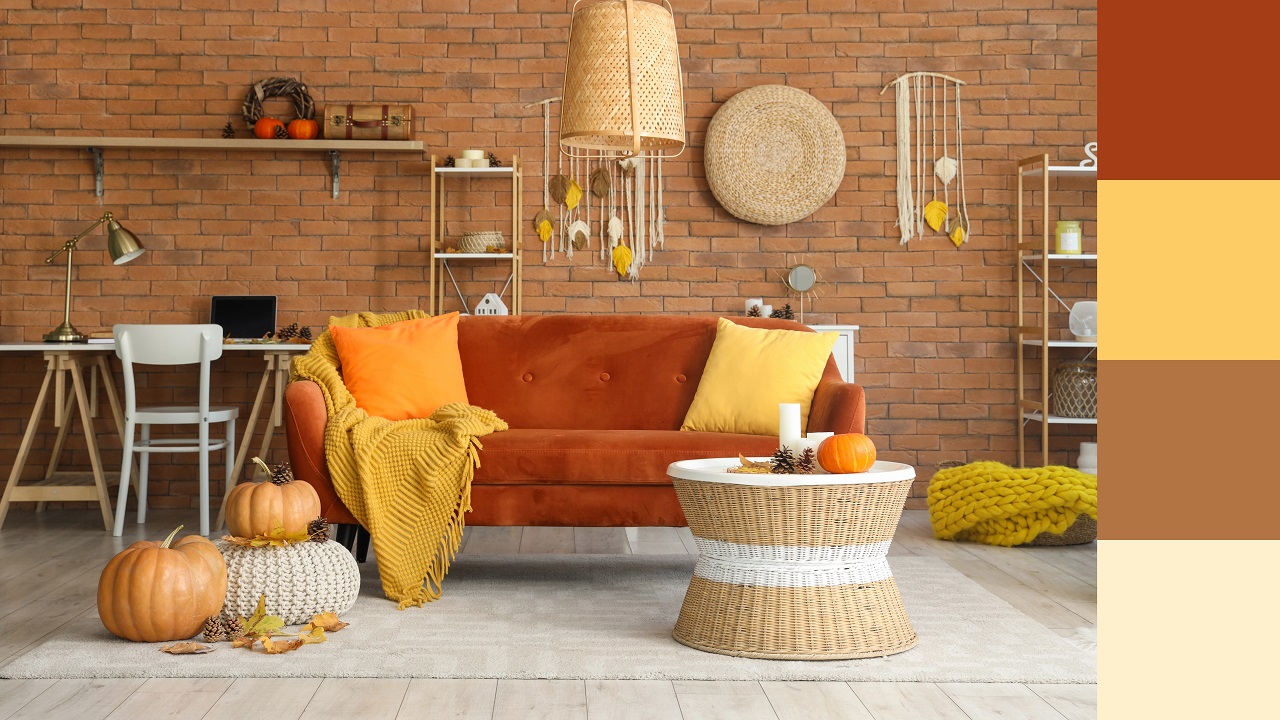
The fall palette most people default to — burnt orange, mustard, brown — has been running the same playbook for decades, and half the homes online now look like the inside of a candle store in October. There’s a better way in, and it starts with thinking about temperature rather than theme.
The goal isn’t a room that looks like a leaf pile. It’s one that feels warmer, moodier, and more enclosed than it did in summer — which deep green, burgundy, navy, and warm terracotta all achieve as well as orange does.
If you want a foolproof structure, borrow the caravan world’s approach to warm color schemes: a dominant warm neutral, one richer accent, and natural materials to keep it from going flat. The single most common mistake is going all-in on one color.
Give your main tone about 60% of the room, a supporting tone 30%, and one sharp accent the last 10% — the ratio that keeps a space from turning into a costume.
Cozy Fall Bedroom Ideas
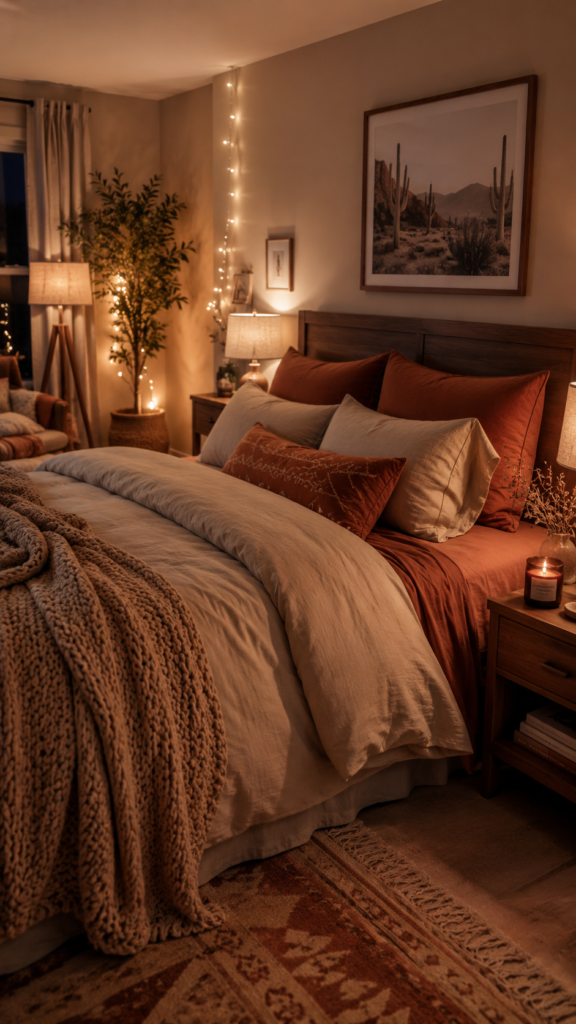
The bedroom is the easiest room to shift for fall, because most of the work happens on the bed — change the bedding and you’ve changed the room. Swap summer cotton for flannel sheets and a heavier duvet, then layer a knit throw at the foot.
Warm neutrals in linen or brushed cotton read as fall and carry you into winter, while the desert-boho terracotta tones covered in our bedroom ideas are a quieter alternative to the usual plaid.
The upgrade most people skip is lighting. According to Psychology Today, warm light sources trigger relaxation while cool overhead light keeps us alert — so the real move is to stop using the ceiling fixture after sunset and rely on bedside lamps and amber string lights instead.
I spent one October convinced my bedroom needed more decor; swapping the overhead for a warm corner lamp fixed it, and I hadn’t moved a single object. Finish with scent — your nose does more seasonal work than your eyes, and a cedar or clove candle beats pumpkin spice, which peaks around October 5th and rapidly starts smelling like regret.
Fall Living Room & Shared Spaces
The living room has the most to prove, because everyone sees it — and the mistake most people make is styling it like a display rather than a room they live in. A room staged for fall photos feels nothing like a room that actually feels like fall.
The fix lives in the seating and the surfaces you already have. Drape a heavy throw over the sofa arm, park a basket of blankets nearby, and swap summer cushions for velvet or boucle. A few amber glass votives do a disproportionate amount of work here — our amber glass fall decor guide shows how warm-toned glass catches light and makes a surface glow instead of just sit there.
Then look down and up: a jute rug layered with something soft on top brings warmth from the floor, and the most-ignored surface of all is the ceiling — the crown molding and warm-white ceiling ideas on the site show how much a warmer overhead tone changes a room after dark.
As research from Nevermore Lane on the psychology of cozy spaces puts it, it’s the layering of tactile, warm elements that registers as comfort — not any single object.
Fall Dorm Rooms & Back-to-School Setups
Dorm rooms are a specific challenge: cinderblock walls, fluorescent lighting, and about six square feet of floor that isn’t bed or desk. But small spaces respond to atmosphere faster than large ones, so fall lands quickly here once you fix the right things.
Lighting first. Warm amber LED string lights — around fifteen dollars, hung with removable Command hooks — turn a cinderblock box into something habitable after dark, and a desk lamp with a warm bulb means you’re not studying under hospital light.
Then let the bed do your decorating: it’s the biggest surface and doubles as your sofa, so a thick comforter, a textured throw, and a couple of warm-toned pillows carry the whole room. The trap is theme-matching everything until it looks like the seasonal aisle at a craft store — the same restraint that makes the compact spaces in our camper decor themes work applies to a dorm: pick one or two deliberate fall pieces and let light and texture carry the rest.
Renter- & Apartment-Friendly Fall Rooms
Renting rules out paint and nail holes, which pushes people toward surface decor that never quite lands. The real opportunity is the stuff your lease can’t stop you from doing: textiles, lighting, and rearranging. As ApartmentAdvisor’s guide to renter-friendly fall decor points out, fall in a rental is largely a textile and lighting exercise — throws, cushions, rugs, and low lamps deliver the warmth paint would have.
For walls you can’t touch, removable wallpaper on a single accent stretch, a large tapestry on a tension rod, or a Command-strip gallery wall all break up the white-box feeling without a mark. Floor-to-ceiling curtains in warm amber or muted sage — hung high, near the ceiling — make walls recede and the room feel taller.
And a big warm-toned rug does more per dollar than almost anything else, especially over hard floors. The one detail people miss: fall textiles don’t need to be heavy. A lightweight knit in rust reads just as autumnal as thick wool.
DIY & Budget Fall Room Decor
There’s a version of fall decorating that costs hundreds in seasonal stuff bound for a storage bin on November 1st, and a version that costs almost nothing and looks better. The budget version wins on a technicality: it borrows from what your room already has instead of adding a disposable layer.
Start by foraging — dried grasses, branches, seed pods, and pressed leaves read as fall and cost an afternoon outside. A bundle of wheat stems in a vase you already own beats a twenty-dollar faux arrangement because it’s real.
I once spent an October weekend gathering good-shaped branches from a park, stripped the leaves, and wound fairy lights through them in a tall vase; it looked like a photoshoot and cost the price of a coffee. Then reassign what you own: the key bowl becomes a candle vignette, the closet blanket moves to the chair, spring’s string lights go up over the bed.
Most rooms hold more seasonal potential than their owners realize — the same resourcefulness behind the best small-space storage ideas applies to decorating on nothing.
The Lived-In Fall Room: Nights, Books & Slow Evenings
There’s a version of fall design that only comes alive after 7 p.m., and it’s the one the listicles skip. Fall photos always show afternoon light through curtains, but fall rooms are really nighttime rooms — built for the evenings that arrive early now, for the hours between dinner and sleep that suddenly have room in them.
The formula is simple: no overhead light after dark, three or four sources at different heights, at least one candle. A floor lamp, a bedside lamp, a candle, and a strand of amber lights create what cinematographers call practical lighting and what your nervous system reads as this is the good part of the day.
The other move is a real reading corner — a light to read by, something soft to sink into, and a surface for a drink within arm’s reach. Our indoor glamping setup guide makes the case that the best reading nooks happen on the floor, not in chairs: a rug as the base, built up with cushions and throws until it practically dares you to leave.
The Portable Cozy: Fall Vibes When It’s Not Cold Where You Live
Plenty of people want fall and live somewhere that refuses to cooperate — 78 degrees in October, fan still running. The good news: fall in a room is largely independent of fall outside one. You’re building a feeling, not a climate.
The mistake in warm climates is assuming fall needs heavy wool and flannel. It doesn’t — the color and texture of a throw do the visual work regardless of weight, so a lightweight rust knit reads as autumnal without making you sweat.
Then engineer the darkness the weather won’t give you: heavy curtains that block bright early-evening light hand you the control colder places get for free. Close them, switch on the warm lamps, and the room shifts into fall on command. If your space is compact or unconventional, the small-space, no-actual-cold solutions in our vintage mobile home styling guide translate cleanly to any bedroom or studio.
Making It Last: Fall to Winter Room Transition
The most frustrating thing about seasonal decor is how binary it goes — full autumn, then nothing until the Christmas boxes come down. Done well, the transition extends your best fall choices rather than replacing them, so you skip the December design vacuum.
What stays untouched: deep colors, warm lighting, heavy textiles, candles, and natural materials like wood and dried stems. What rotates out is anything explicitly harvest-themed — pumpkins, gourds, corn husks — and, if you want a colder feel, the orange accents.
Swap dried leaves for pine branches and bare stems, shift candle scents from apple and clove toward cedar and woodsmoke, and let the palette drift a shade deeper. It’s an afternoon of rearranging, not a teardown, and it’s the same instinct behind the site’s broader seasonal decor approach: build on atmosphere and texture, which carry across seasons, rather than props, which don’t.
Fall Room Aesthetics by Style: Vintage, Dark Academia, Neutral
Three specific aesthetics take fall somewhere distinct, and each is badly served by generic pumpkin advice.
Vintage leans on the idea that the best rooms look collected over years, not bought in one trip — a thrift lamp with a new shade, books stacked spine-out, dried flowers in a patinated vase. What kills it is matching; the fix is shopping secondhand and resisting the urge to coordinate, the same principle behind the primary-play van build, where character comes from personality, not a matched set.
Dark academia maps almost perfectly onto fall — charcoal, forest green, deep burgundy, aged brass, books as decor — as long as you skip anything harvest-y. As Roomtery’s dark academia guide notes, it works best when objects look used rather than staged, and the signature fall move is leaning hard into candlelight.
Neutral is the one most people attempt and most get wrong, because “neutral” collapses into beige-everything. The best versions layer five to seven warm-undertoned tones — cream, oat, taupe, terracotta, weathered wood — like the neutral RV living rooms on the site, and lean on texture contrast to keep a low-color room from reading as a blank one.
One Good Decision at a Time
Fall doesn’t require a haul or a full swap of every surface. It asks for a few deliberate moves toward warmth — the light source, the weight of the blanket, the temperature of the palette — and trusts them to compound.
The rooms that truly capture the season aren’t the ones with the most pumpkins. They’re the ones where someone made fifteen small decisions, each nudging toward depth and warmth and a space that wants to be lived in at night. Start with one: turn off the overhead and switch on a lamp. Drape the heavier blanket over the chair. Fall arrives in a room one good decision at a time — and you’ve just made the first.