Truck cap camping comes with freedom, and once you’ve felt it, a crowded RV park never looks quite the same. You don’t need a Class A motorhome or a trailer that requires a spotter to back in.
All it really takes is your pickup, a well-chosen camper shell, and the willingness to figure it out as you go. I’ve slept in truck beds in rainstorms, in desert heat, and in mountain cold, and every time the setup taught me something new. If you want a layout that’s cozy, practical, and actually road-tested, read on.
Choosing the Right Truck Cap for Your Adventures
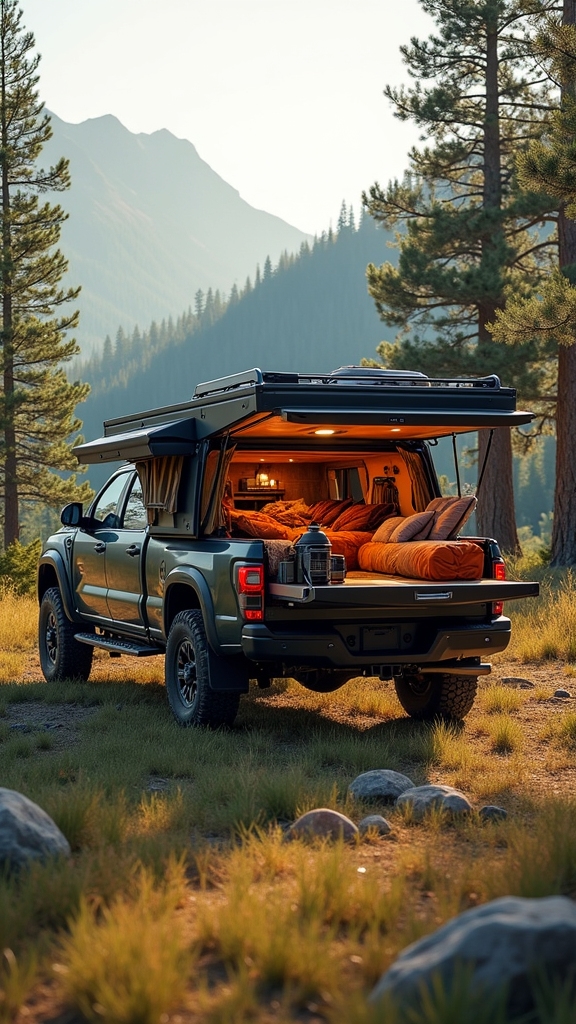
The cap you pick shapes every single night you spend in it, so don’t rush the decision. High-rise shells give you room to sit up and move around, which matters more than you’d think after a long drive.
Low-profile caps are better for stealth camping in parking lots or urban spots where you’d rather not announce yourself. Whatever you choose, confirm it locks solid, seals against rain, and fits your bed length before you hand over the money.
SEE THIS: 23+ SUV Camper Layouts That Actually Work for Families.
Essential Gear for Truck Cap Camping
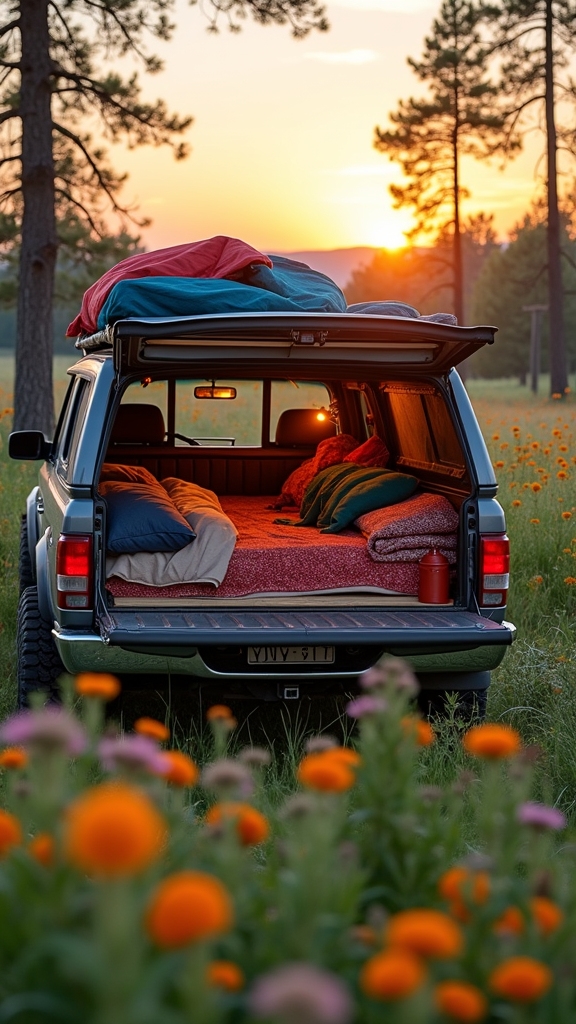
You don’t need to haul your entire house down the highway. A sleeping pad, quality sleeping bag, compact stove, and a couple of water jugs cover your core needs without eating up every inch of space.
A headlamp, multi-tool, and first aid kit round out the essentials because small problems in the backcountry have a way of becoming big ones fast. Keep the kit lean and you’ll spend less time managing gear and more time actually being outside.
SEE THIS: Essential Outdoor Travel Needs: A Mom’s Family Packing Guide.
Creating a Comfortable Sleeping Area
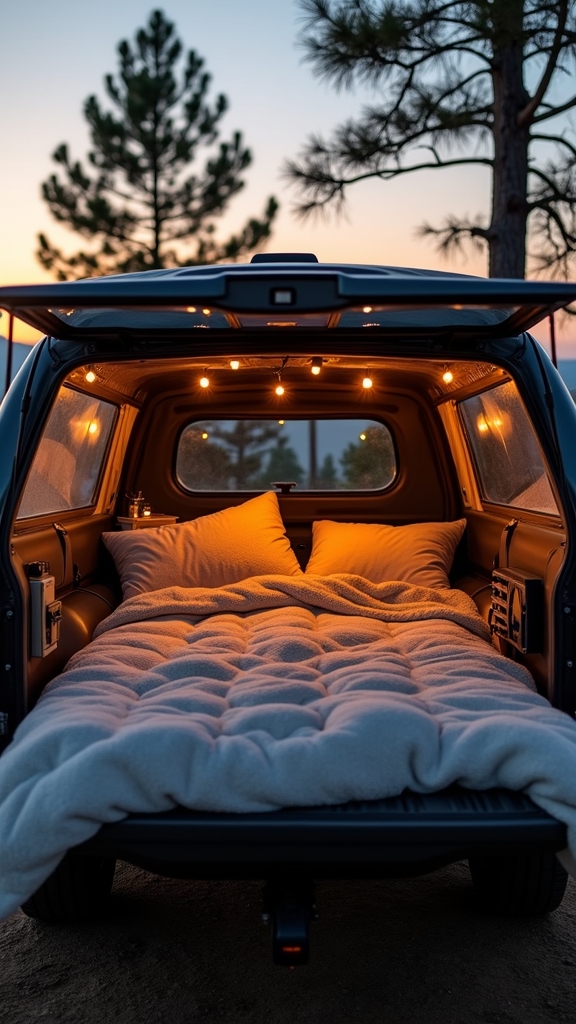
Sleep is the whole ballgame, and everything else in your setup should support it. A plywood platform with storage drawers underneath solves two problems at once and uses space you’d otherwise waste.
Top it with a quality foam topper rather than an inflatable pad that slowly deflates by 3 a.m. Wool blankets beat synthetic ones for temperature regulation, and they don’t make that horrible swishing noise every time you roll over.
SEE THIS: Make-Ahead Lake Snacks Perfect for a Weekend Getaway.
Organizing Your Camping Gear Efficiently
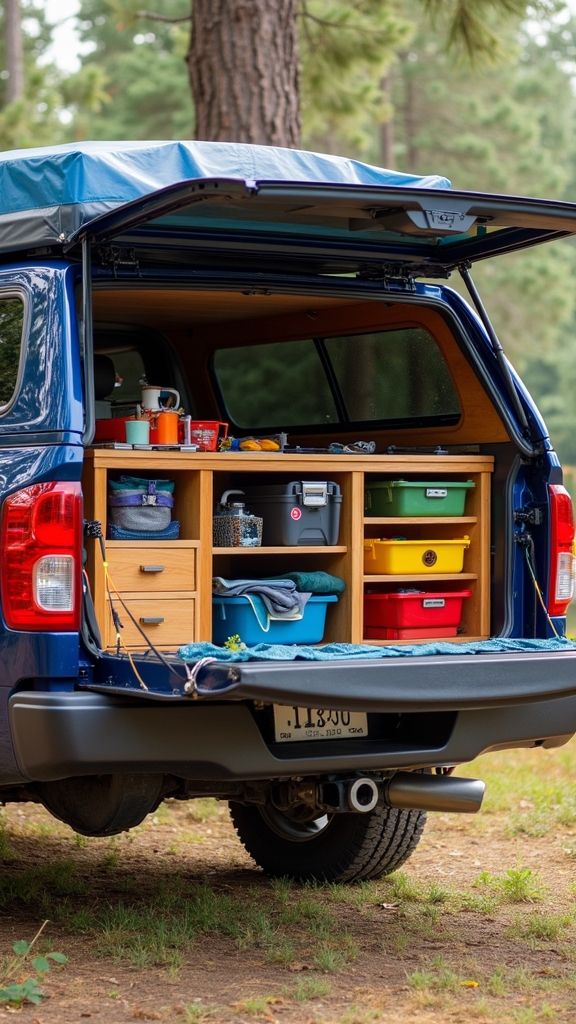
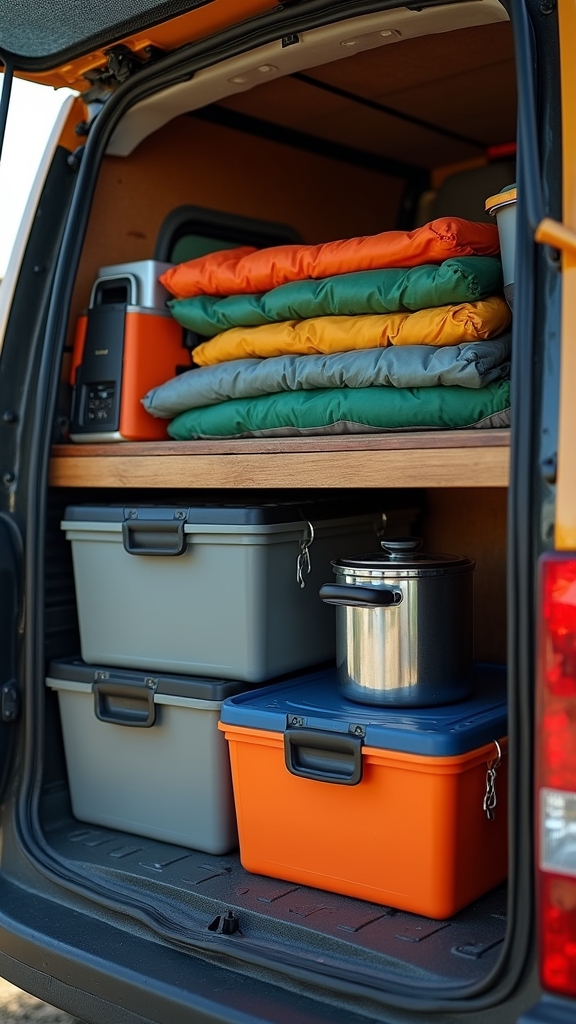
The real test of any storage system is whether you can find your headlamp at midnight without dumping everything out. Group your gear into clear bins by category: cooking, clothing, and camp tools each get their own dedicated spot.
A place for everything means you spend your evenings outside instead of reorganizing your truck bed by flashlight. When your setup is intuitive, the whole trip feels calmer.
SEE THIS: 20+ Genius Beach Hacks Every Mom Should Know Before Summer.
Utilizing Vertical Space for Storage
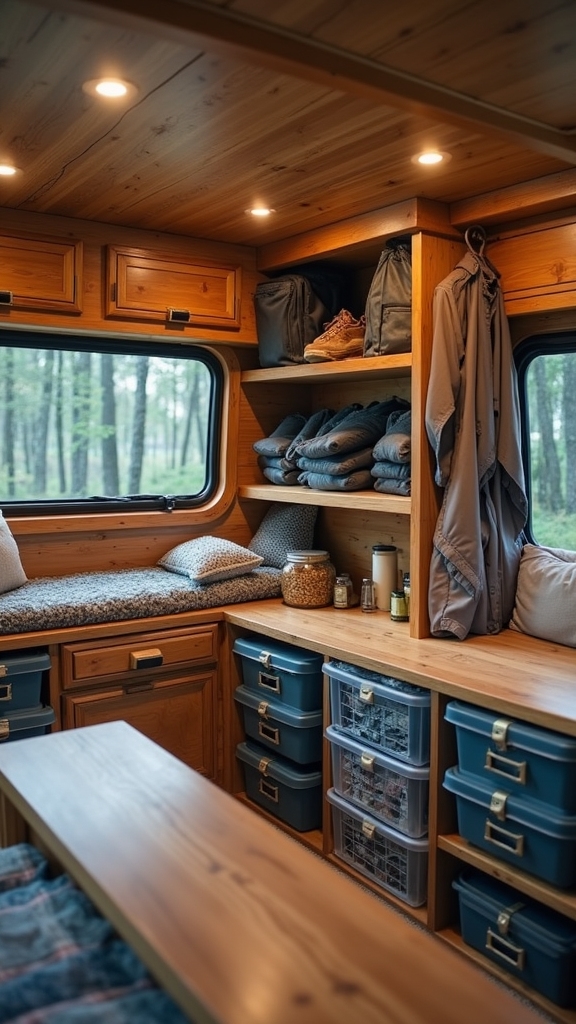
Floor space in a truck bed is precious, and vertical space is almost always wasted. Hanging organizers mounted to the cap walls and bungee nets near the ceiling handle lighter items like jackets, hats, and stuff sacks without cutting into your living area.
Think of the walls as free real estate that most people completely ignore. Using them well is usually what separates a cramped setup from one that actually breathes.
SEE THIS: Best Amazon Beach Essentials for Women in 2025.
Setting Up a Portable Kitchen
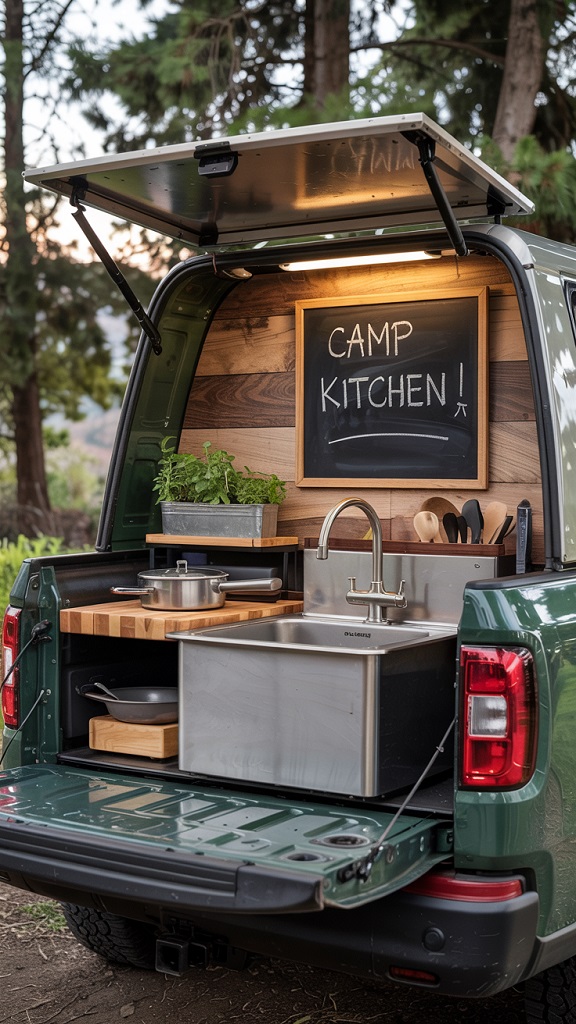
A folding table, a single-burner propane stove, and a collapsible bin for washing dishes will take you further than any elaborate camp kitchen setup. Keep a dedicated bag for spices, oil, and utensils so nothing migrates into your sleeping gear.
Cooking just outside the tailgate under your cap overhang gives you a natural covered workspace when the weather turns. Hot food at camp, even something as basic as lentil soup, changes the whole mood of an evening.
Incorporating a Dining Space Inside Your Cap
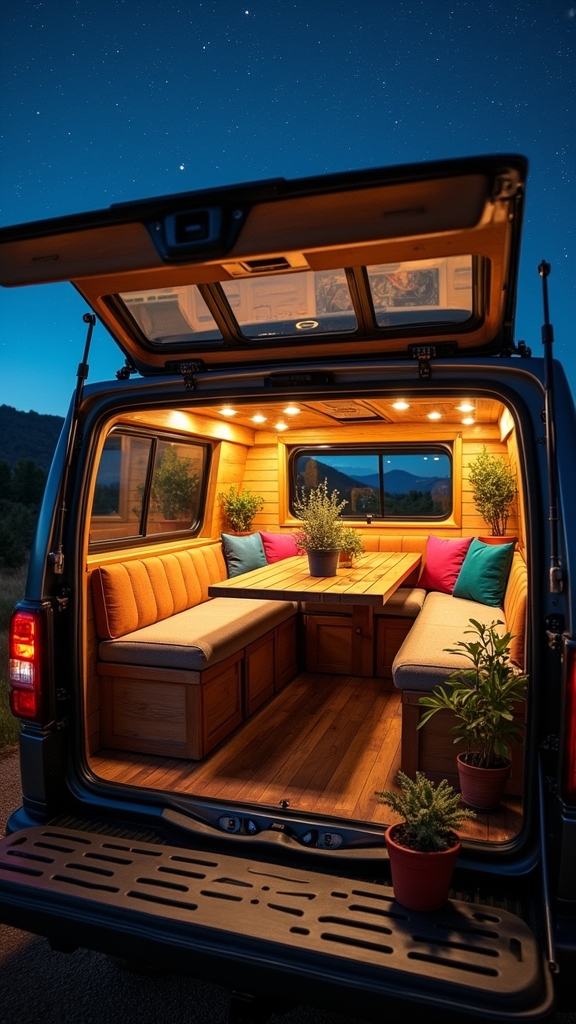
You don’t need a built-in dinette to eat comfortably inside your rig. A folding lap desk or a flat-topped storage bin does the job on rainy days when eating outside isn’t worth the fight.
Eating inside keeps the bugs off your food and makes a simple bowl of pasta feel genuinely cozy when it’s cold and dark out. It’s a small thing that makes a real difference in how livable the space feels.
Lighting Solutions for Nighttime Adventures
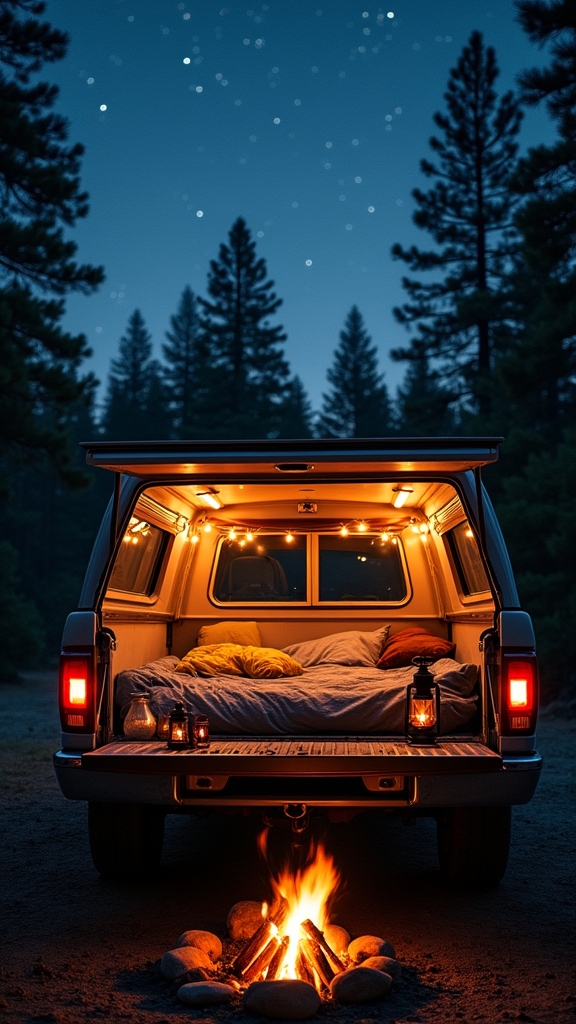
Good lighting changes how an evening feels inside a small space. Magnetic LED bars stuck to your cap ceiling cast warm, even light without requiring any wiring or drilling.
Battery-powered string lights add ambiance and are easy to run off a USB power bank. Decent lighting means you can read, cook, or write in your journal without straining your eyes or killing your phone battery.
Utilizing a Rooftop Tent for Extra Space
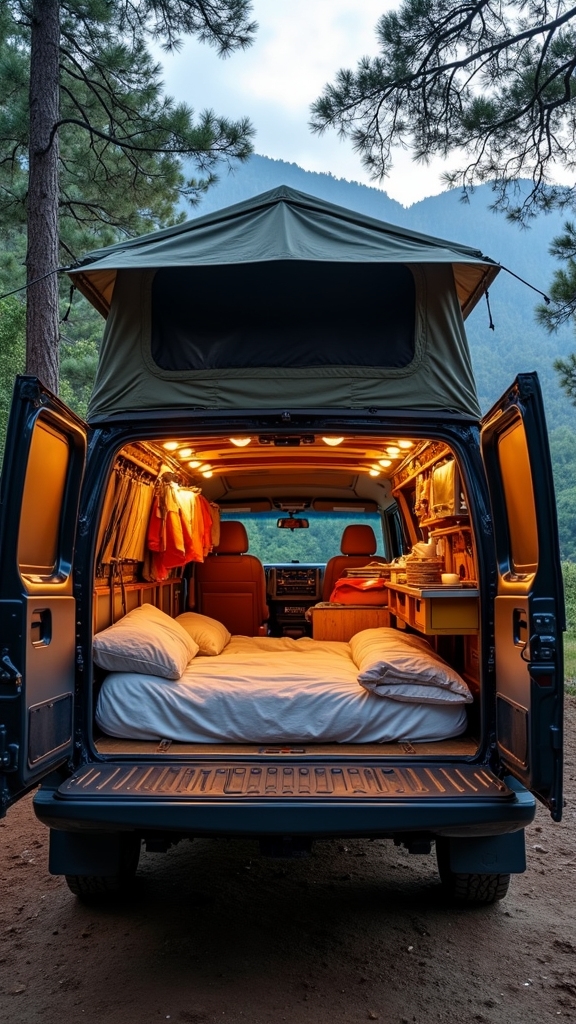
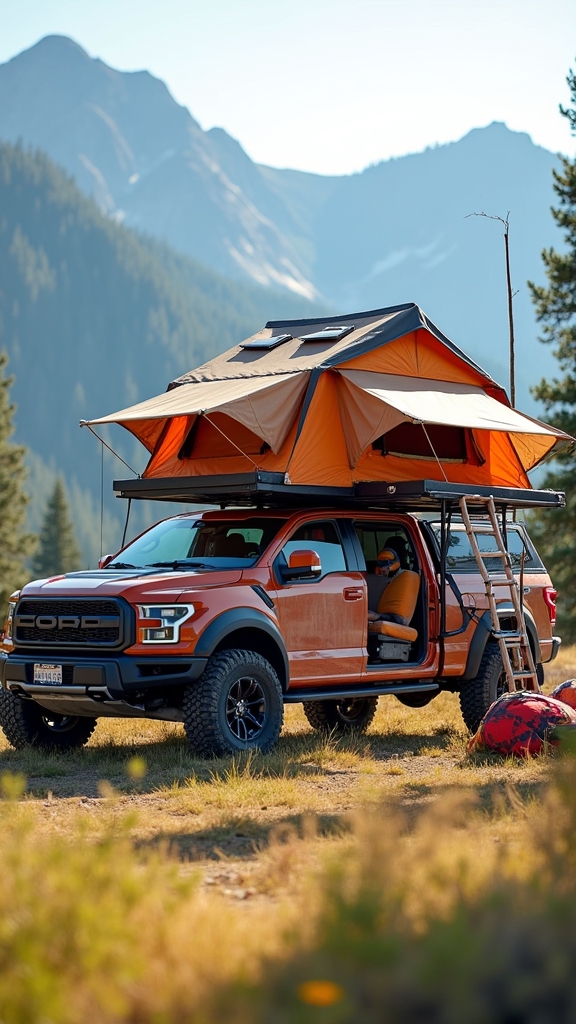
If you occasionally camp with a friend or simply want more sleeping room, a rooftop tent adds a real bed above the cab without surrendering your truck bed storage.
Your cap space stays intact for gear, a sitting area, or a full kitchen setup, and the tent handles sleeping. It’s an investment, but it genuinely expands what your rig can do for longer trips. The two setups complement each other better than most people expect before they try it.
Setting Up a Hammock for Relaxation
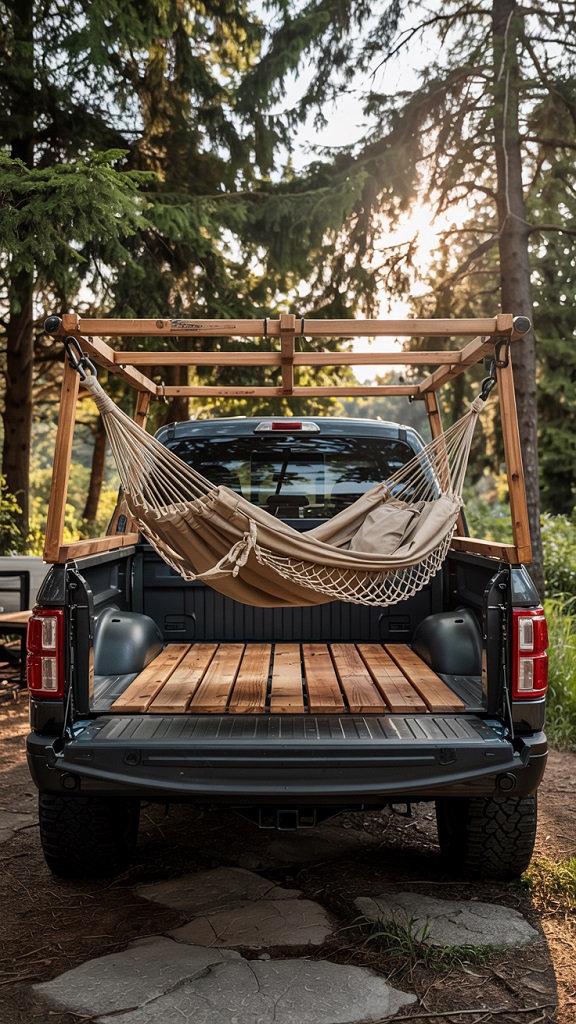
A hammock between two trees costs almost nothing in pack weight and pays back that investment every single afternoon. It’s the best place to decompress after a long hike, read for an hour, or just watch light move through the tree canopy above you.
Most hammocks compress down to the size of a softball, so finding room in your bin system is never an issue. It might be the one piece of gear that does the least practical work and brings the most actual joy.
Using Multi-Functional Furniture
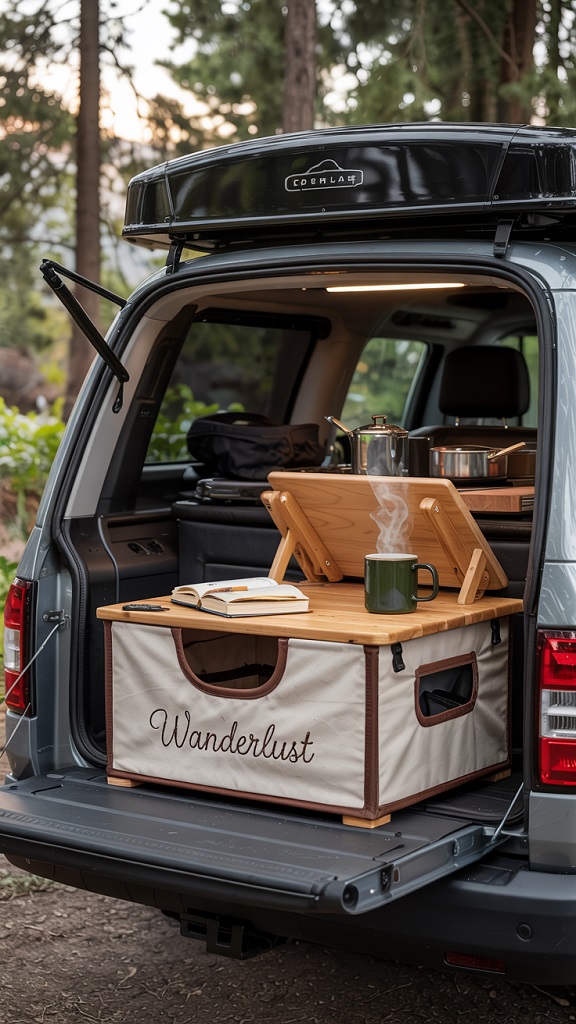
Every piece of gear that serves only one purpose is a piece you should question bringing. A storage cube that doubles as a seat, a cooler with a flat lid that works as a prep surface, a folding table that handles cooking and journaling equally well: these are the things that make a small space feel intentional rather than cramped.
Multi-use pieces reduce the total item count without reducing your comfort. That’s the trade-off worth chasing in any truck bed build.
Insulation Tips for Year-Round Camping
Reflectix cut to fit your cap windows does real work in both directions: it blocks radiant heat in summer and holds warmth in on cold nights. A small rug or foam floor tiles make a surprising difference when you’re stepping out of your sleeping bag onto bare metal at 5 a.m.
Custom insulated window covers made from foam board and fabric take an afternoon to build and last for years. Getting the insulation right is what makes shoulder-season camping comfortable instead of just survivable.
Ventilation Ideas for Fresh Air Flow
Condensation is the quiet enemy of every truck cap camper, and ventilation is the only real fix. Cracking a window on the opposite side from the wind creates enough cross-flow to keep moisture from building up overnight.
Rain guards let you leave windows open even in light rain, which extends the conditions you can comfortably camp in. A roof vent fan is worth the installation cost if you camp regularly in humid or hot weather.
Adding Personal Touches to Your Setup
A space that feels like yours is easier to relax in, and it doesn’t take much to get there. A favorite mug, a small plant in a spill-proof container, a soft throw blanket in a color you actually like: none of it adds real weight but all of it shifts the feeling of the space.
String lights running off a USB battery make any truck bed feel warmer and less utilitarian after dark. The goal isn’t decoration for its own sake; it’s building a space you genuinely look forward to coming back to.
Outdoor Gear: What to Bring and How to Store It
Chairs, a hammock, trekking poles, fishing gear: these are the things that make camp feel like camp, but they need a home that isn’t the middle of your sleeping platform. Roof racks and mounted holders inside the cap handle longer items without sacrificing your living space.
The rule worth sticking to is simple: if you didn’t use it on your last two trips, it doesn’t earn a spot on this one. Clutter in a small space costs you more than just square footage.
Creating a Cozy Reading Nook
Stack a couple of firm pillows into one corner of your sleeping platform, clip a small reading light to the cap wall above them, and you have a legitimate nook that costs almost nothing. A Kindle saves space over physical books but either works fine in a compact setup.
After a long day of hiking or driving, having a quiet corner to settle into makes the evening feel complete. It’s the kind of small intentional detail that separates a truck bed from a real living space.
Tips for Weatherproofing Your Truck Cap
Check every seal on your shell before a trip, not during one. Run your hand along the window edges and door frame after a hose-down in your driveway and you’ll find the leaks before a rainstorm does it for you.
Weather stripping is cheap and takes twenty minutes to replace, and a small tarp rigged over the tailgate creates a dry covered zone when it’s really coming down. A wet sleeping bag at 10 p.m. in the backcountry is a miserable problem that’s almost always preventable.
DIY Projects for Customizing Your Cap
A custom sleeping platform with hidden drawers underneath is the single best upgrade most truck campers never get around to building, and it’s genuinely not that hard. Small shelves screwed into the cap walls give your kitchen supplies a fixed home instead of sliding around in a bin every time you corner.
The satisfaction of sleeping in a space you actually built to fit your needs is something store-bought setups rarely deliver. Women who build their own rigs tend to camp more confidently because they know exactly how everything works.
Incorporating Nature-Friendly Practices
Leave No Trace isn’t a suggestion worth skipping over, it’s the baseline that keeps the places you love accessible. Pack out everything you brought in, use biodegradable soap well away from water sources, and camp on established surfaces whenever possible.
Truck cap camping puts you closer to wild places than most setups, which means the responsibility to protect them lands squarely on you. The next person who pulls into that spot deserves to find it the way you wish you had.
Planning Your Campsite Layout
Before you unload anything, spend five minutes walking the site and deciding where each element goes. Figure out where you’ll cook, which direction your tailgate faces, and whether your parking position gives you the view or the shade you actually want.
Good campsite planning means you move things once instead of three times as the evening goes on. That extra five minutes at the start buys you a lot of relaxed time at the end.
Safety Tips for Solo Female Campers
Tell someone your campsite name, your check-in schedule, and your planned route before you leave the driveway. Lock your cap when you’re sleeping and keep your keys somewhere you can grab them without fumbling in the dark.
Trust your read on a spot: if something feels off when you pull in, it costs nothing to drive to the next one. Peace of mind isn’t a luxury when you’re out alone, it’s the thing that lets you actually enjoy why you came.
Finding the Perfect Campsite
Apps like iOverlander and Campendium show you real reviews from people who’ve actually parked where you’re considering, which beats guessing every time. Look for flat ground, a natural buffer from neighboring campers, decent shade, and ideally a view worth waking up for.
Reading trip reports from other women travelers adds a layer of context that generic campground listings never provide. A little research the night before means you spend less time circling and more time set up and settled.
Meal Prep Ideas for Truck Cap Camping
Prep your vegetables, marinate your proteins, and portion out your dry goods at home before you ever leave the driveway. Overnight oats, rice packs, canned soups, and lentils are reliable staples that work on a single-burner stove without a lot of cleanup.
The smaller your camp kitchen, the more you benefit from having thought through your meals in advance. Eating well out there isn’t hard; it just requires a bit of planning before the trip, not during it.
Staying Connected: Tech Tips for Campers
Download your offline maps, playlists, and podcasts before you lose signal because service disappears faster than you expect on the routes worth driving. A quality power bank or a small solar panel keeps your phone charged and a USB fan running through warm nights.
Knowing your power situation before dark is basic camp management that most people only learn after getting caught once. Being prepared doesn’t mean being tethered; it means you control the situation instead of it controlling you.
Building a Community With Other Campers
Online groups built around truck camping and overlanding are surprisingly practical and generous with real information. People share campsite coordinates, gear reviews from actual use, and the kind of hard-won safety knowledge that doesn’t show up in any product listing.
Local meetups are worth attending at least once because the conversations around an actual fire go deeper than any comment thread ever will. There’s a capable, welcoming community out here, and finding your corner of it makes every trip a little richer.