Decorating four walls and completely ignoring the one overhead is a missed opportunity, because the ceiling shapes a room’s mood more than almost any other surface. Dark ceilings make a space feel intimate and enveloping; mirrored ceilings make the room feel twice as large.
The ideas here range from a single coat of moody paint to custom hand-painted murals, so there’s something workable for every budget. Start with one, live with it, and you’ll likely find yourself eyeing the rest of the list.

Embrace Moody Hues for Tranquility
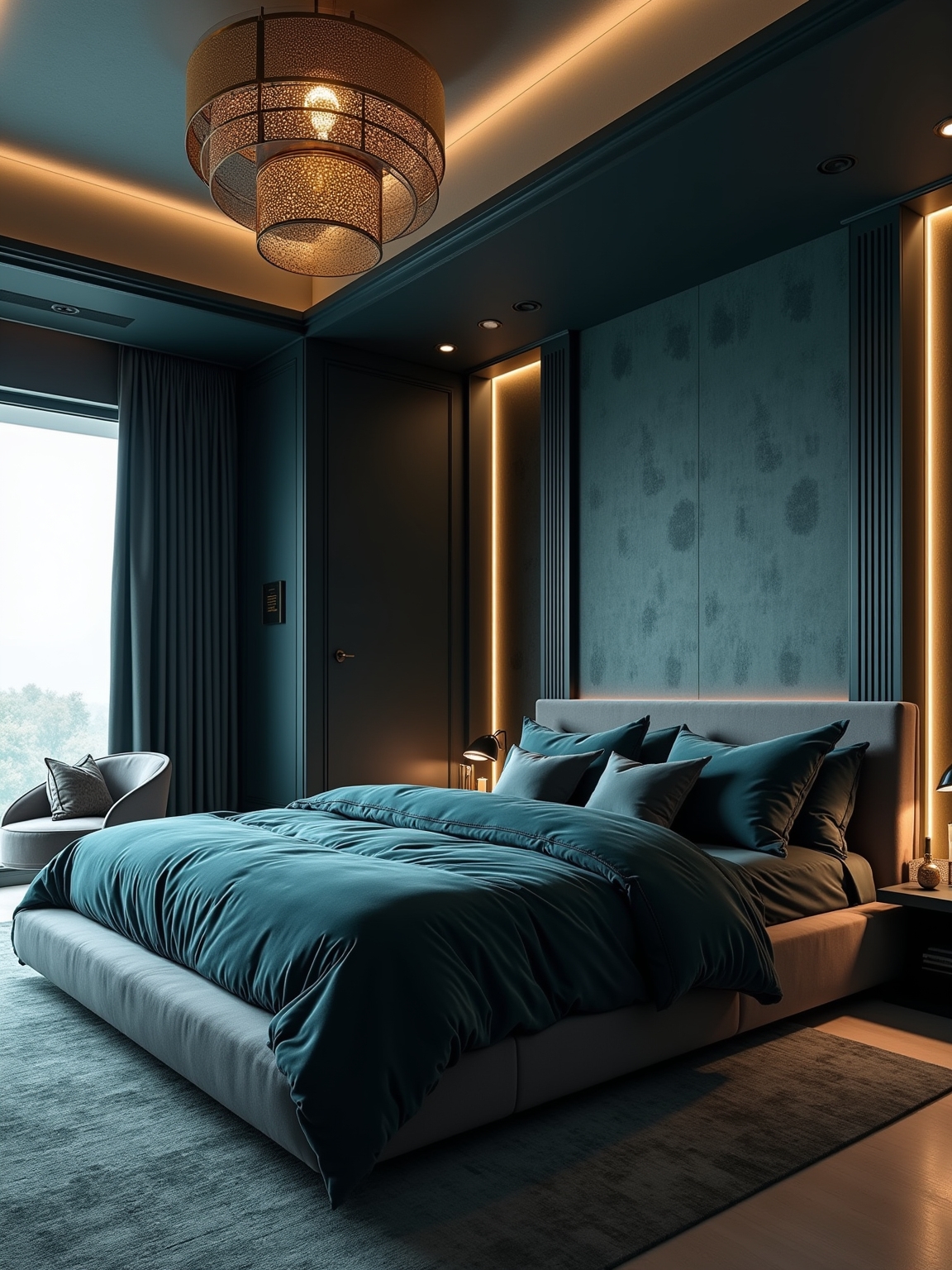
Deep plums, burgundy, and forest green do something overhead that they can’t quite do on a wall. They wrap the room around you, pulling the ceiling down just enough to feel cocooned rather than cavernous.
These shades absorb excess light, which quiets the visual noise that keeps your brain running after midnight. Pair them with natural textures like rattan or linen, and the whole room starts to feel like somewhere you actually want to sleep.
SEE THIS: Old Hollywood Bedroom Decor: 18 Glamorous Chic Retro Ideas to Try.
Harmonize With Tones From the Same Family

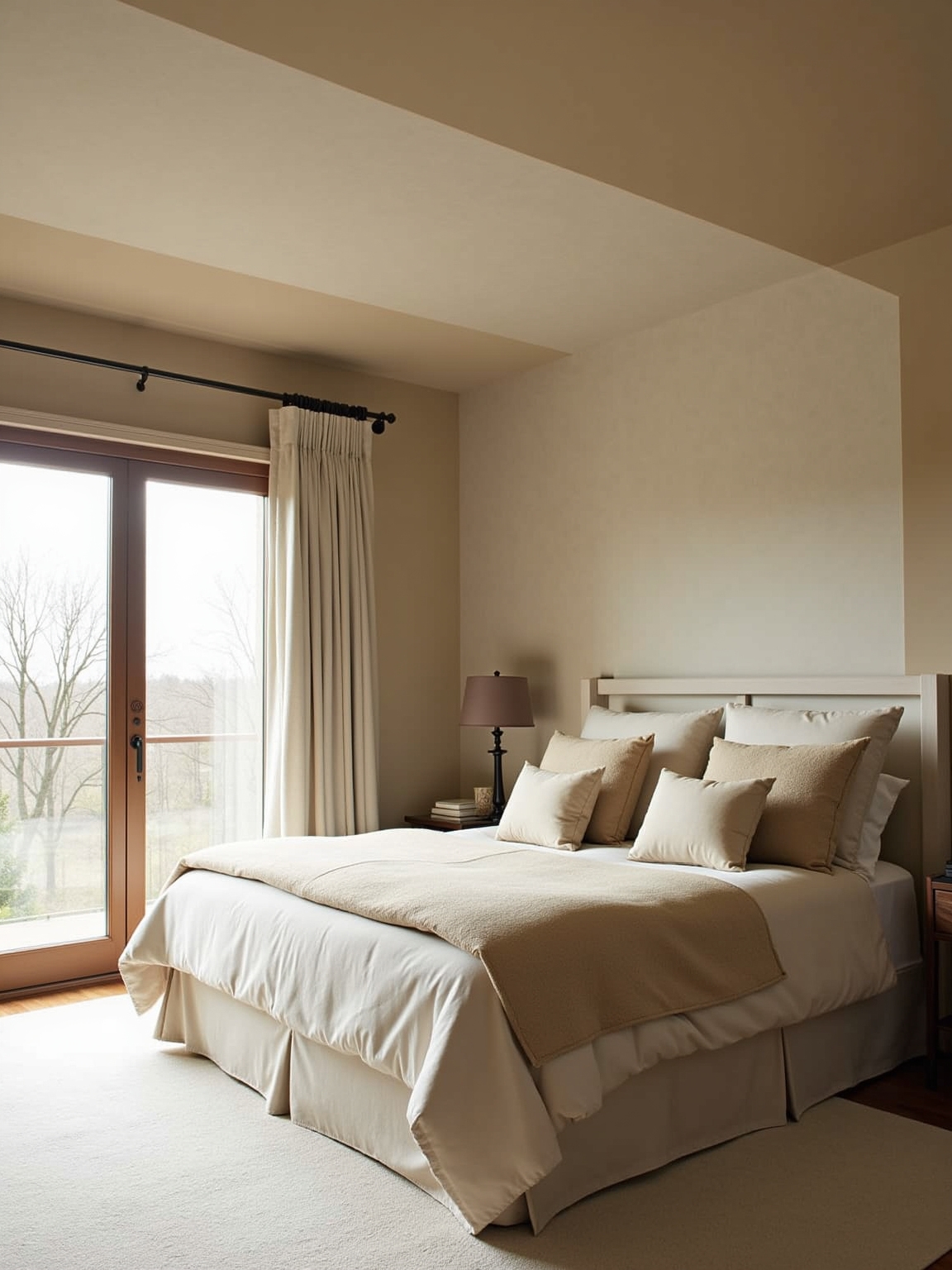
A bedroom where every hue belongs to the same color family just feels right, even if you can’t explain why. The trick is keeping the ceiling tone a shade or two lighter or deeper than the walls rather than jumping to a completely different color.
Blues and soft greens work especially well because they naturally slow the nervous system down. Bring in a third variation through your bedding or curtains and the whole room reads as intentional without looking overdone.
SEE THIS: 20 Bedroom Refresh Ideas: Neutral Palettes With Dimension.
Reverse the Light-Dark Rule for Drama


The conventional wisdom says keep ceilings light and walls dark, and for decades most bedrooms have played it safe. Breaking that rule by going darker overhead than on the walls is one of the fastest ways to give a room real personality.
Light furniture and pale textiles pop dramatically against a deep ceiling, creating contrast that feels curated rather than accidental. Add a mirror or two on the walls to bounce light back up, and the room stays bright without losing that moody quality.
SEE THIS: 19 Seaside-Inspired Bedroom Refresh Ideas You’ll Love.
Calming Blues and Teals for Serenity

Teal sits at the crossroads of blue and green, and that combination is hard to beat for a bedroom ceiling. Blue lowers blood pressure; green soothes mental fatigue. Together overhead, they create an atmosphere that’s genuinely restful rather than just aesthetically pleasant.
Ground the ceiling color with warm neutrals on the walls and soft whites in the bedding, and the contrast keeps the room from tipping cold.
SEE THIS: 18 Easy DIY Statement Headboard Wall Hacks for a Fresh Bedroom Look.
Bold Color Accents Draw the Eye Upward
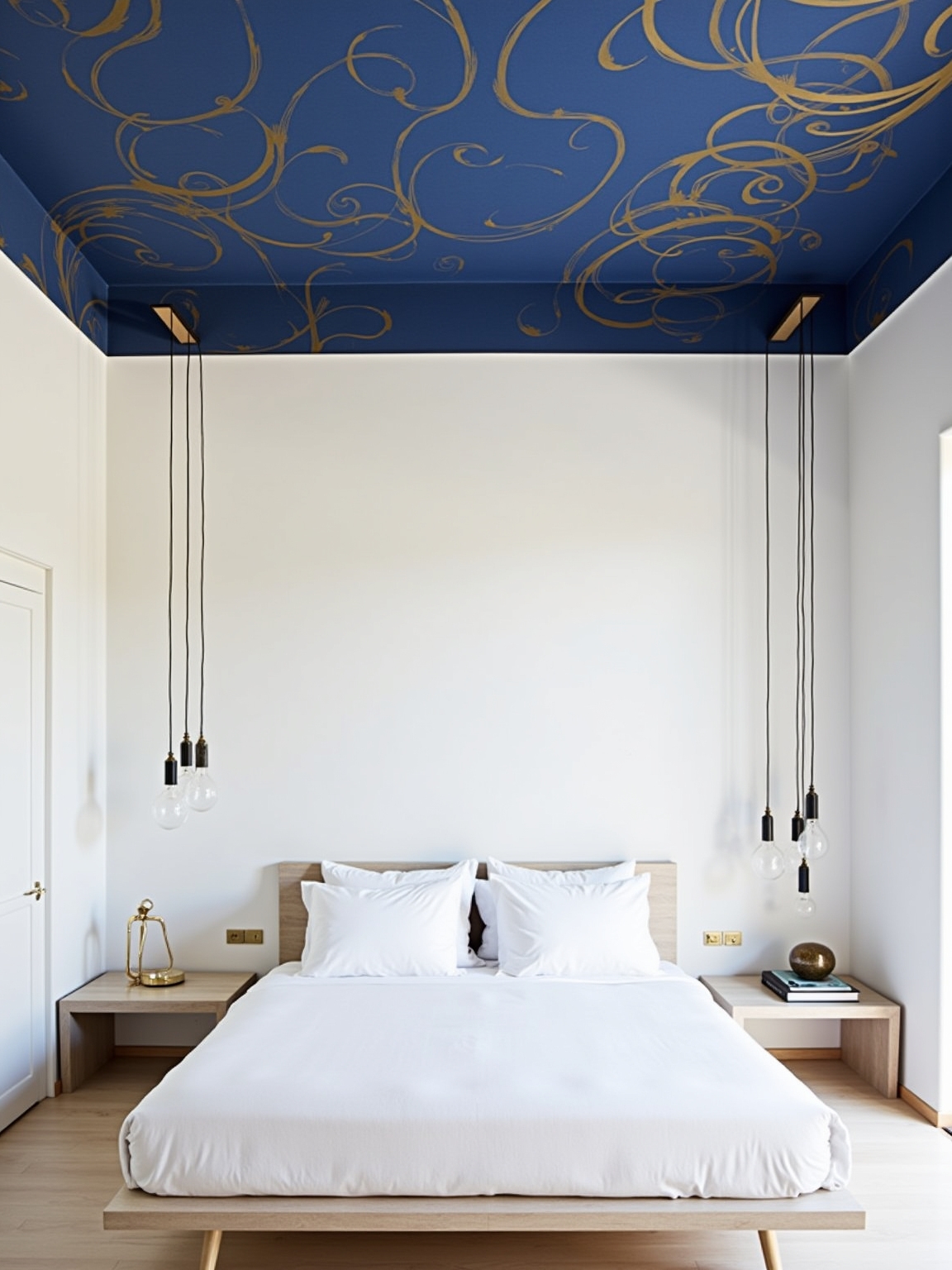
A ceiling painted in a rich jewel tone or warm terracotta stops people in their tracks, which is exactly the point. The eye naturally travels upward when there’s something worth looking at, and that vertical movement makes the room feel taller.
Coordinate the ceiling color with accent pieces or trim rather than trying to match it perfectly to the walls. The slight contrast between surfaces is what creates the framing effect that makes everything below it look more considered.
Add Whimsy With Ceiling Wallpaper

Wallpaper on the ceiling sounds intimidating until you actually do it, and then you wonder why you waited. Delicate florals, geometric prints, and botanical patterns all work beautifully overhead because you see them from a distance that softens any visual busyness.
The ceiling becomes the focal point of the room without competing with furniture or art on the walls. Choose a pattern that picks up at least one color already present in the room and it will feel like it was always meant to be there.
Elevate Character With Textural Finishes
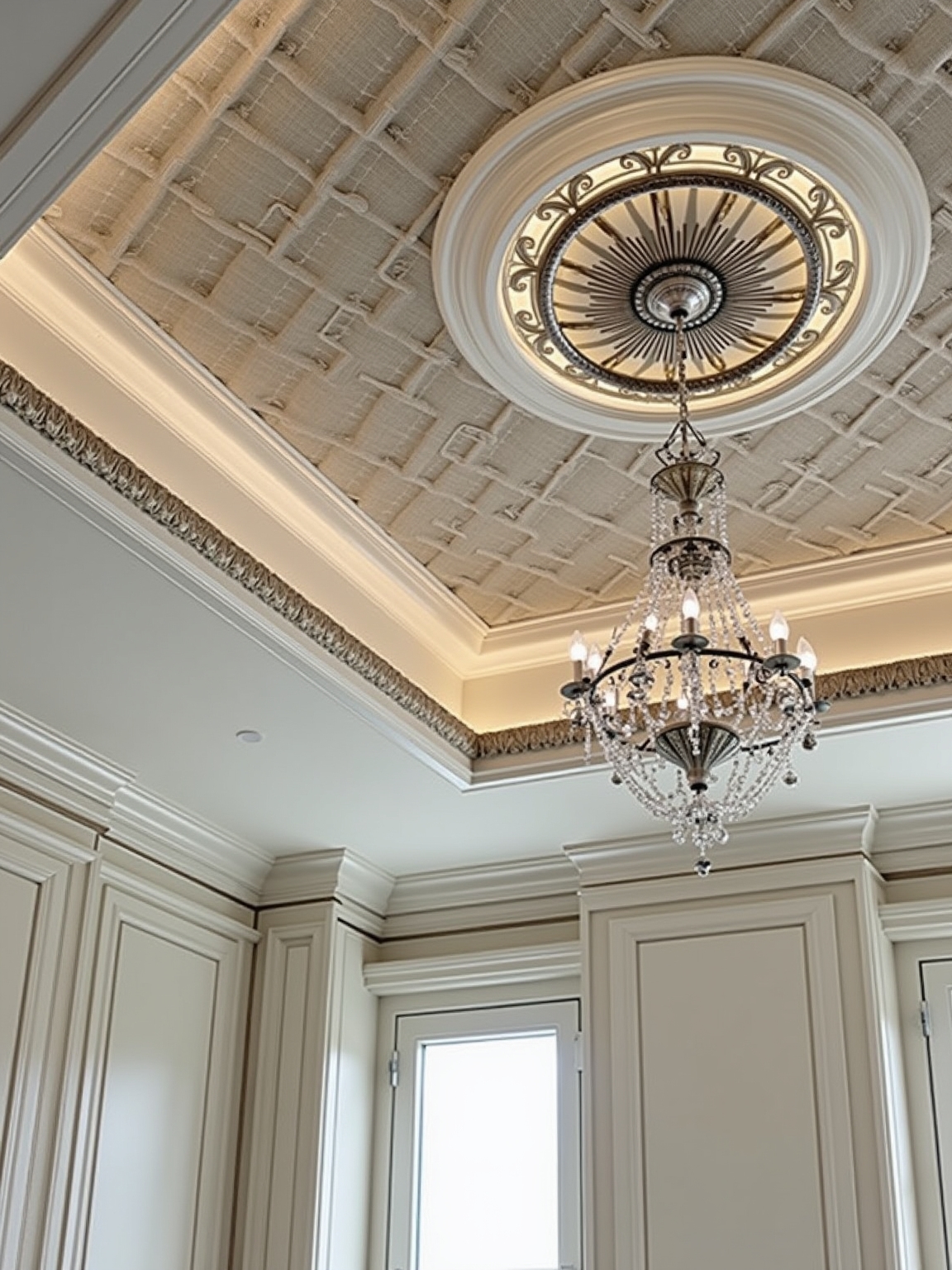
Paint alone rarely tells the whole story on a ceiling. Stucco adds a rustic, tactile quality; Venetian plaster brings a quiet elegance that shifts under different lighting throughout the day.
Limewash creates an organic, slightly weathered look that suits both modern and traditional rooms surprisingly well. The real power of texture comes from combining it with varied materials elsewhere in the room, where the contrast between surfaces creates genuine visual richness.
Introduce Wood Paneling for Depth
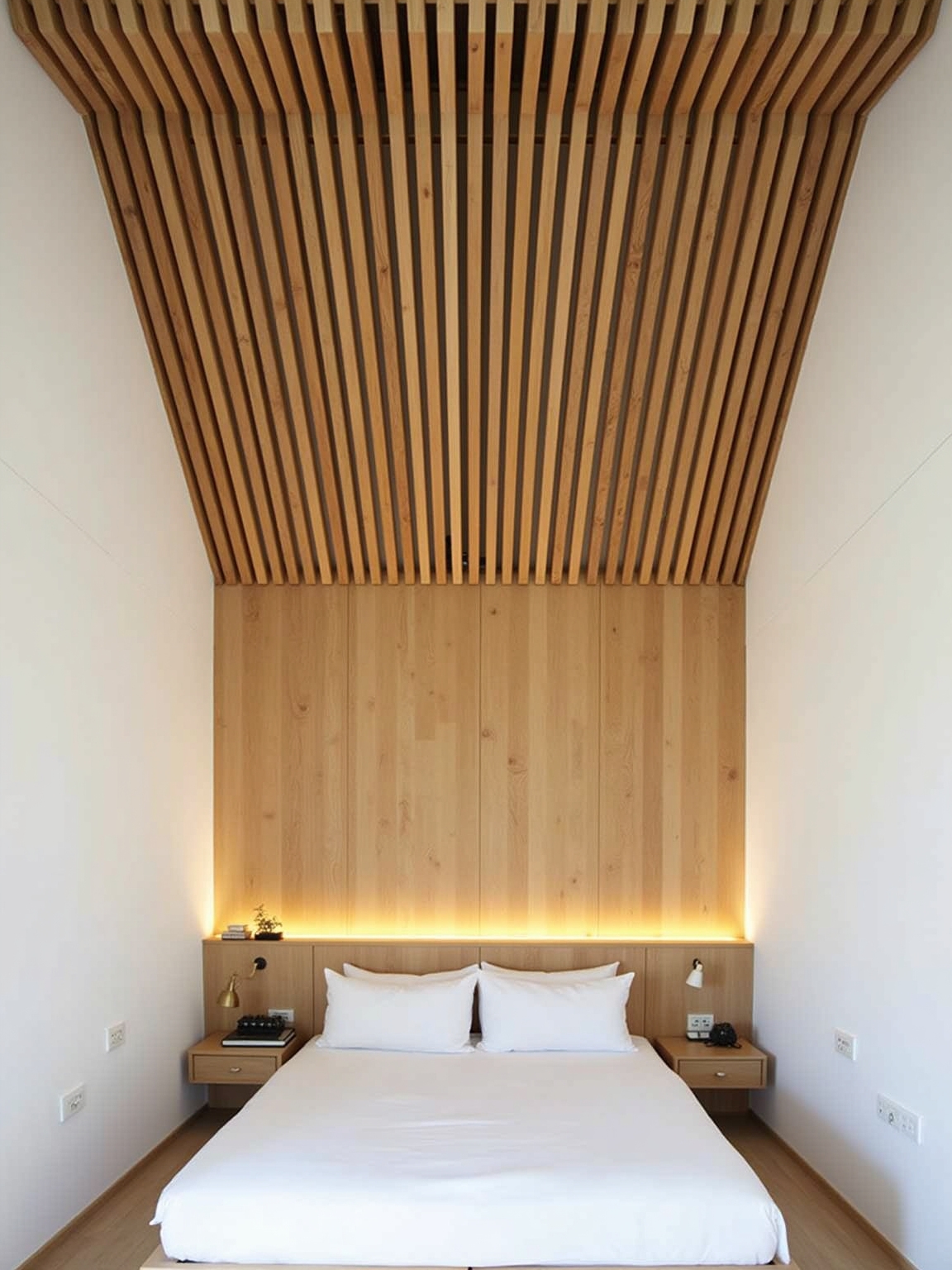
Few materials warm a bedroom ceiling the way wood does, and solid paneling brings both visual and physical depth to a space that paint simply can’t replicate. The natural grain introduces organic movement, so the ceiling never feels flat or static no matter what light it’s under.
Choose a tone that aligns with your existing furniture rather than fighting it, whether that’s a pale Scandinavian ash or a richer walnut stain. Beyond aesthetics, wood panels offer modest insulation and help regulate humidity, which matters more in a sleeping space than most people realize.
Faux or Real Beams for Architectural Interest
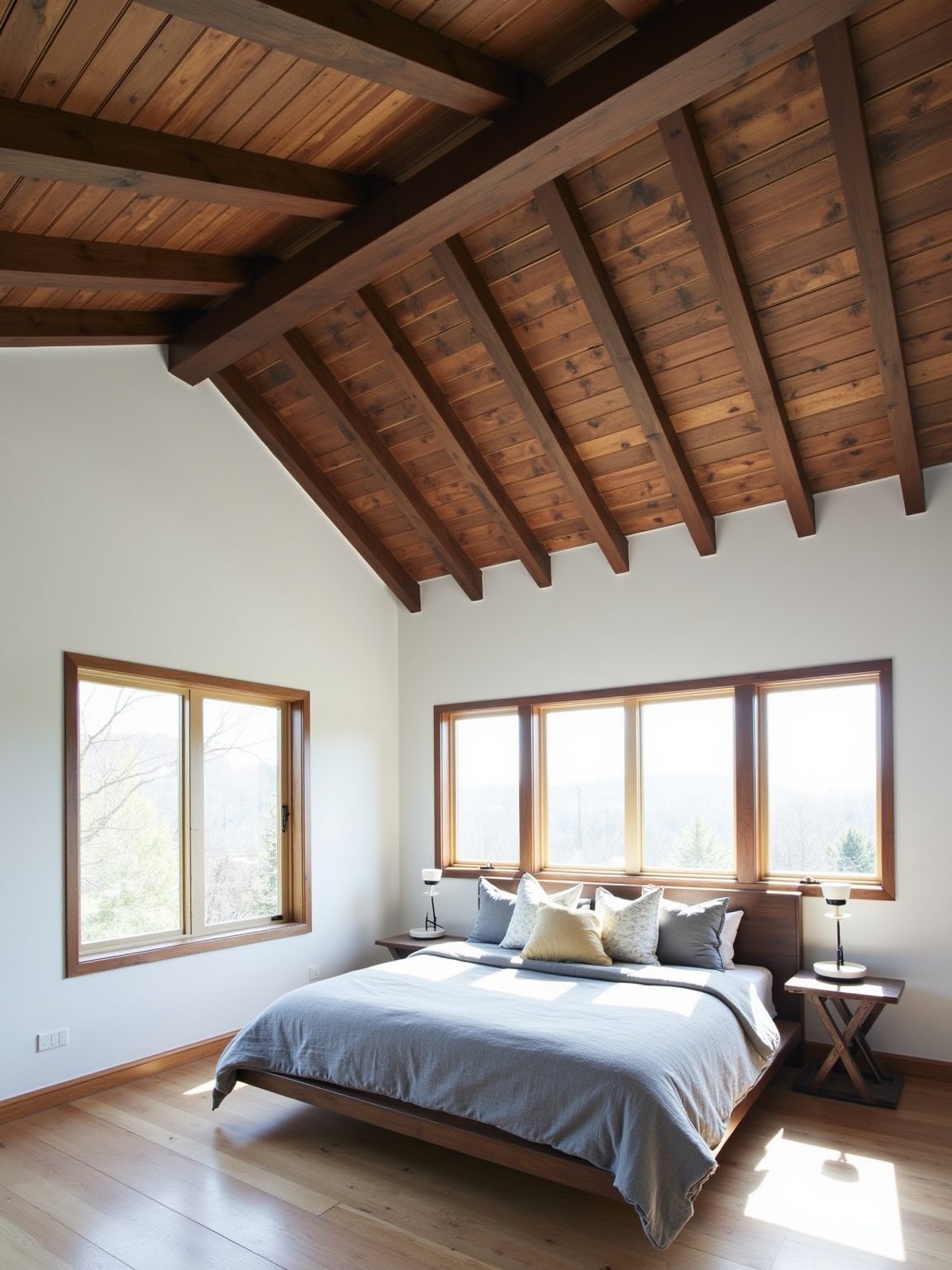
Exposed beams overhead change the entire character of a bedroom, giving it a structural quality that most modern construction lacks. Faux wood beams install quickly, weigh almost nothing, and can be stained to look remarkably close to the real thing at a fraction of the cost.
Real timber beams carry an authenticity that’s hard to argue with, especially in older homes where the bones already point in that direction. Either way, the key is spacing them so they feel purposeful rather than decorative, as if they’re actually holding something up.
Continuity With Wood Planked Ceilings
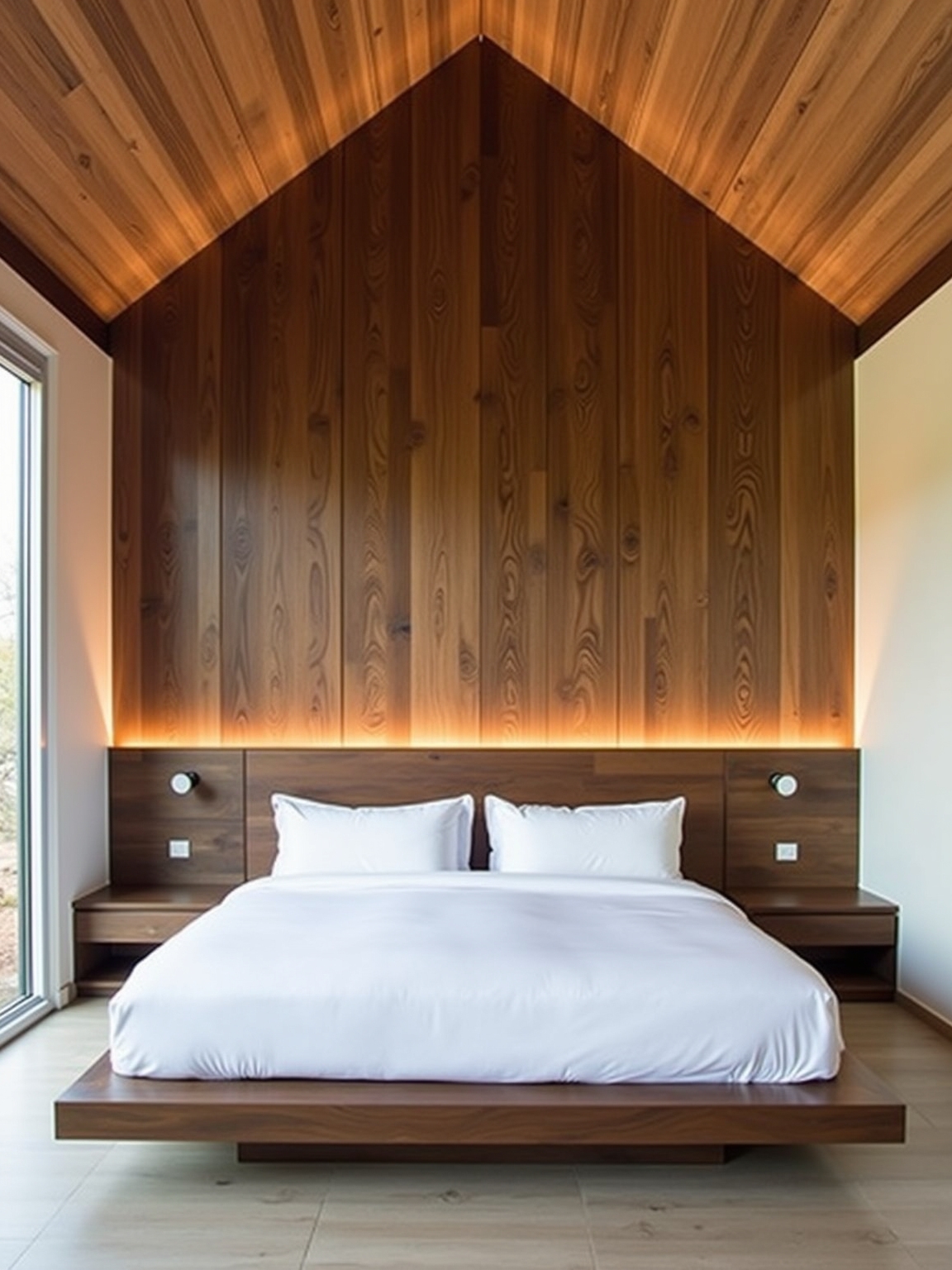
A planked ceiling works best when it continues a conversation already happening in the room below. Matching the plank stain to your flooring or a dominant furniture tone creates a visual thread that ties the whole space together.
Light-toned planks keep the room feeling open while still adding warmth; darker stains pull the ceiling down in a way that feels intentional rather than oppressive. The horizontal lines of the planks also add a subtle rhythm overhead that painted ceilings simply don’t have.
Beadboard Elegance for Cohesion
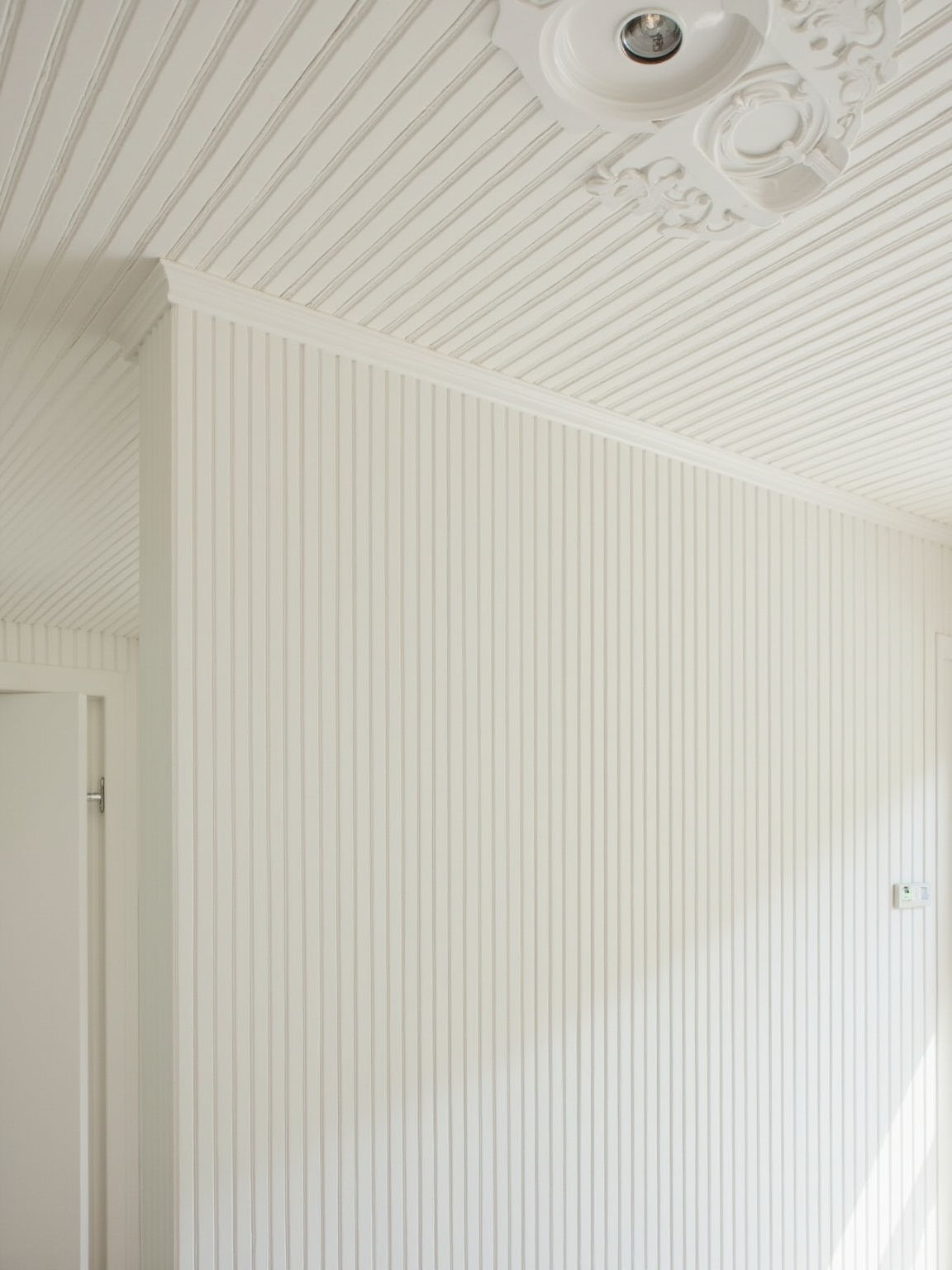
Beadboard gets underestimated because it’s so associated with cottage bathrooms, but overhead it reads as something else entirely. The linear texture adds depth without demanding attention, and the slight shadow play across its grooves shifts subtly as daylight moves through the room.
It installs directly over existing drywall, making it one of the more practical ceiling upgrades you can tackle over a weekend. It holds paint well, cleans easily, and handles humidity better than most people expect from a wood product.
Wood Finishes to Reflect Flooring Tones
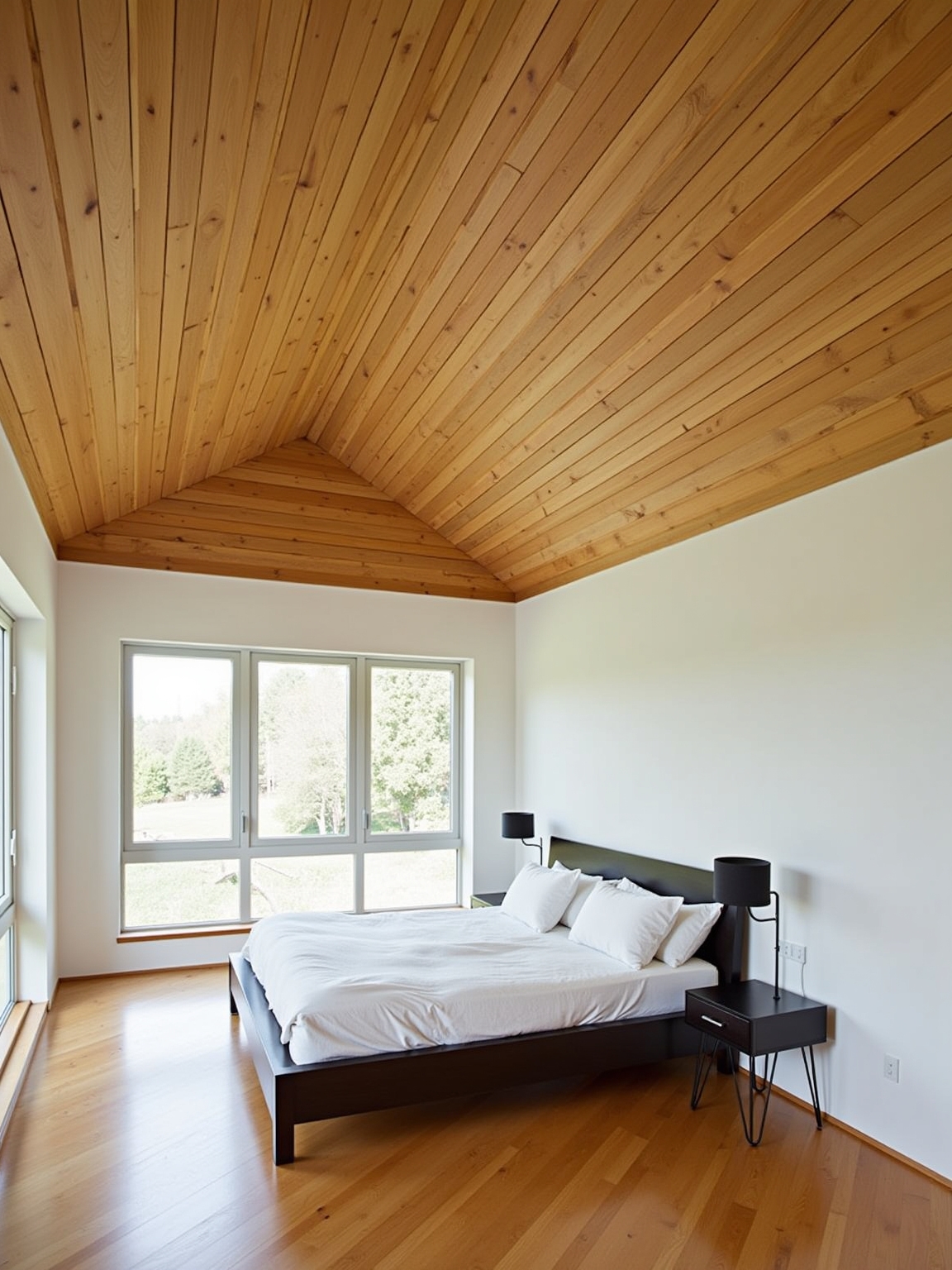
When the ceiling and floor share the same wood tones, the room feels designed rather than assembled. Start with your dominant floor tone and work from there, selecting ceiling or beam finishes that sit within the same warm or cool range.
Keeping the palette to two or three related tones prevents the room from feeling chaotic or overly busy. Repeating those finishes in smaller doses across furniture and trim pulls every element into the same visual conversation.
Align Ceiling Treatments With Architecture

The bones of the room should guide the ceiling treatment, not fight it. A vaulted ceiling wants to be seen, so painting it a soft contrasting tone rather than flat white draws the eye up into the space where it belongs.
Tray ceilings in modern rooms respond well to recessed lighting that highlights the stepped geometry. The fixture you choose matters too; a chandelier scaled too small for a high ceiling looks lost, while an oversized pendant in a low-ceilinged room feels oppressive.
Extend Walls With Wrapped Ceiling Designs
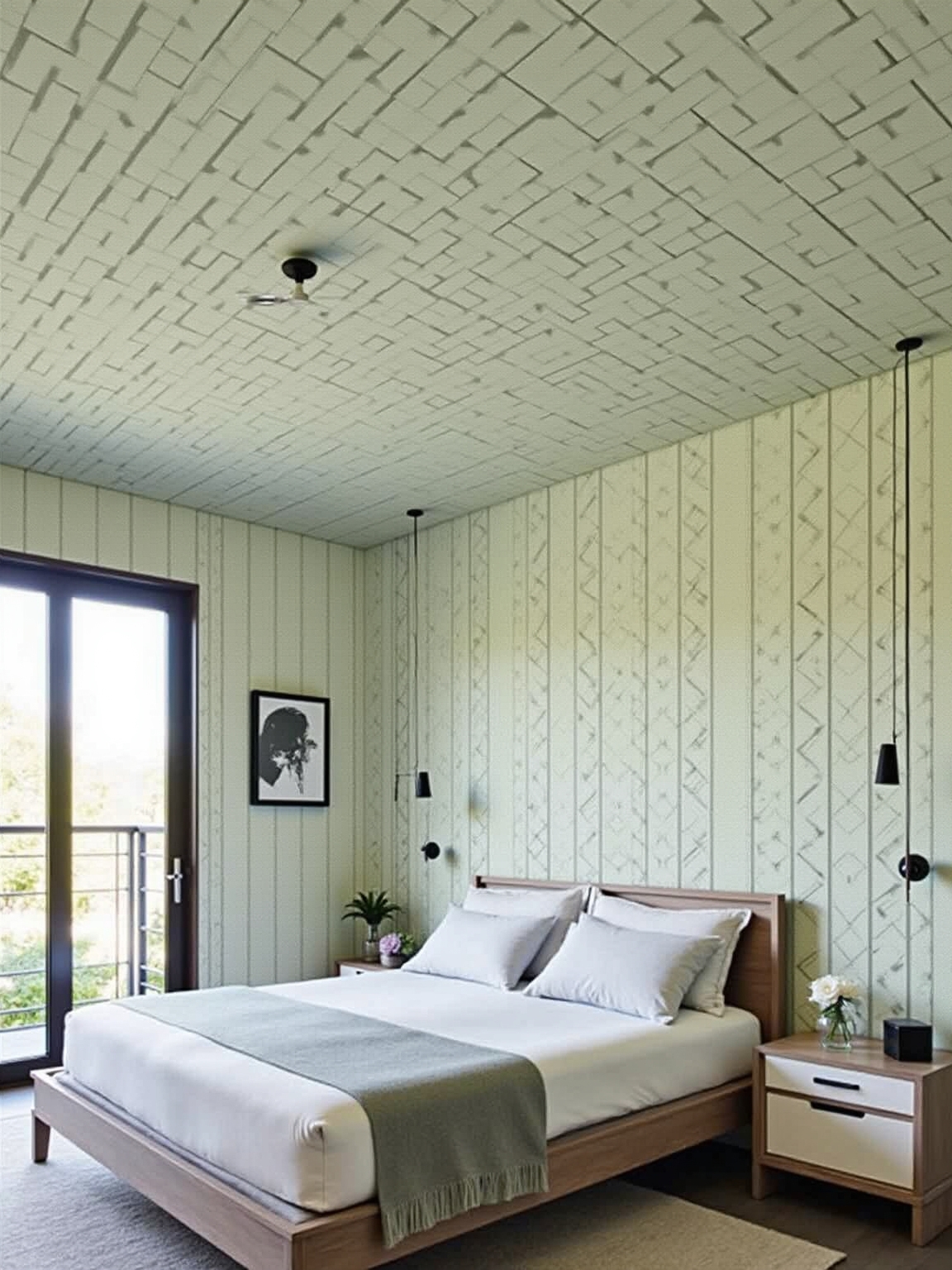
Taking your wall material and continuing it onto the ceiling removes the visual boundary between the two surfaces. Grasscloth, textured wallpaper, and wood paneling all translate well overhead, especially in smaller rooms where the uninterrupted surface makes the space feel larger than it is.
The effect is subtle rather than dramatic, but it adds a layer of craftsmanship that people notice even if they can’t immediately identify why the room feels so polished. Rooms treated this way tend to feel quieter, with none of the visual choppiness that comes from abrupt transitions between surfaces.
Amplify Light Using Mirrors on Ceilings

Ceiling mirrors get a bad reputation because of their associations with a certain era of design that most of us would rather forget. Used correctly, though, a well-placed mirror overhead does something no light fixture can: it pulls daylight into parts of the room that would otherwise stay dim.
Frameless panels work best because they disappear into the ceiling rather than announcing themselves. Position them to reflect a window or strong light source and the result is a room that feels genuinely brighter without adding a single extra bulb.
Personalize With Custom Paint Choices
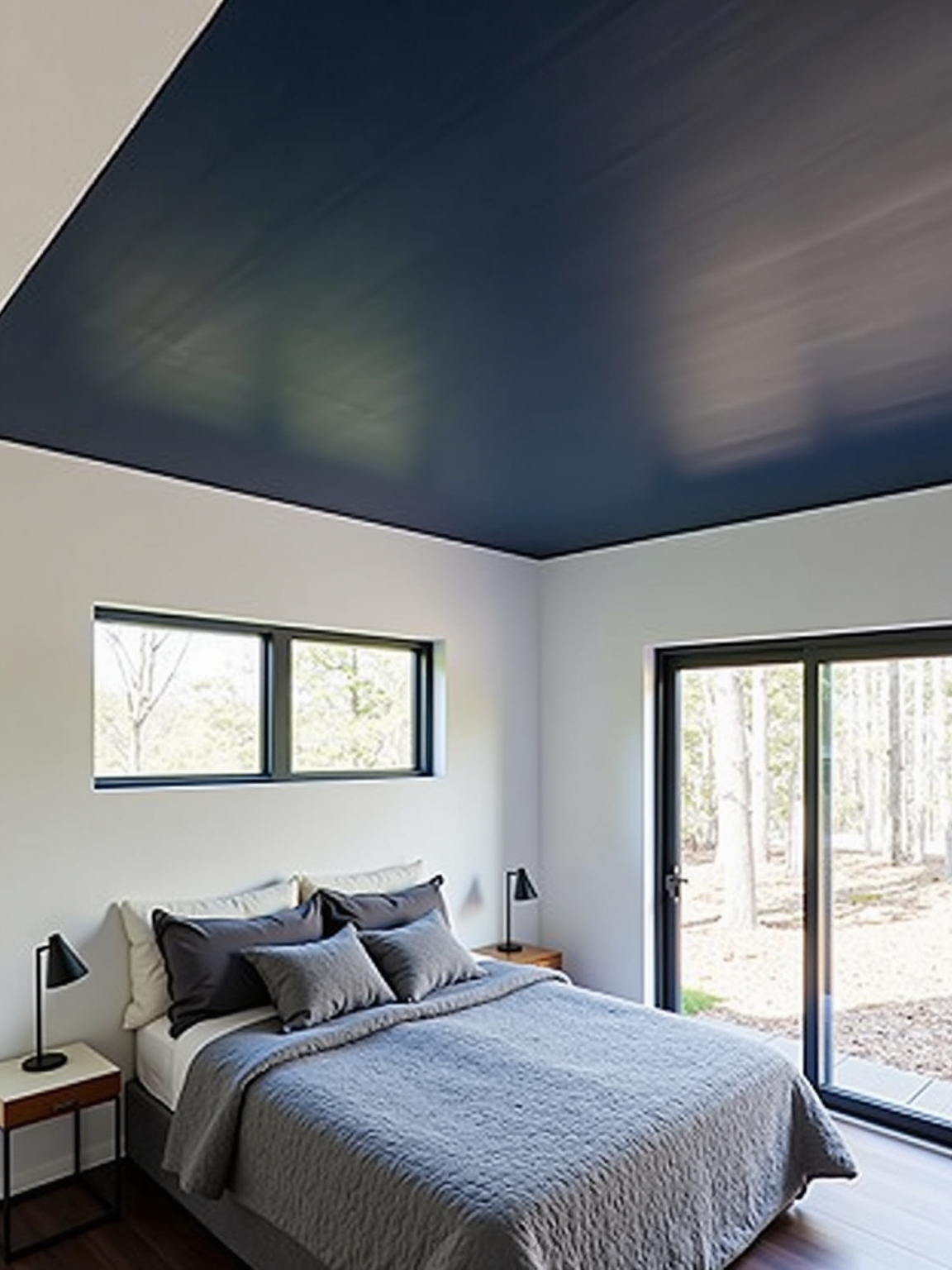
A bedroom ceiling doesn’t have to follow anyone else’s rules. Blue tones calm; greens ground; terracotta warms; deep jewel tones create drama that shifts after dark when artificial light changes how color reads.
Layering a custom tinted paint over a textured surface gives you a finish that can’t be replicated from any chip at the paint counter. The ceiling is the one surface in the room nobody else has an opinion about, which makes it exactly the right place to take a real creative risk.
Incorporate High Gloss for Depth
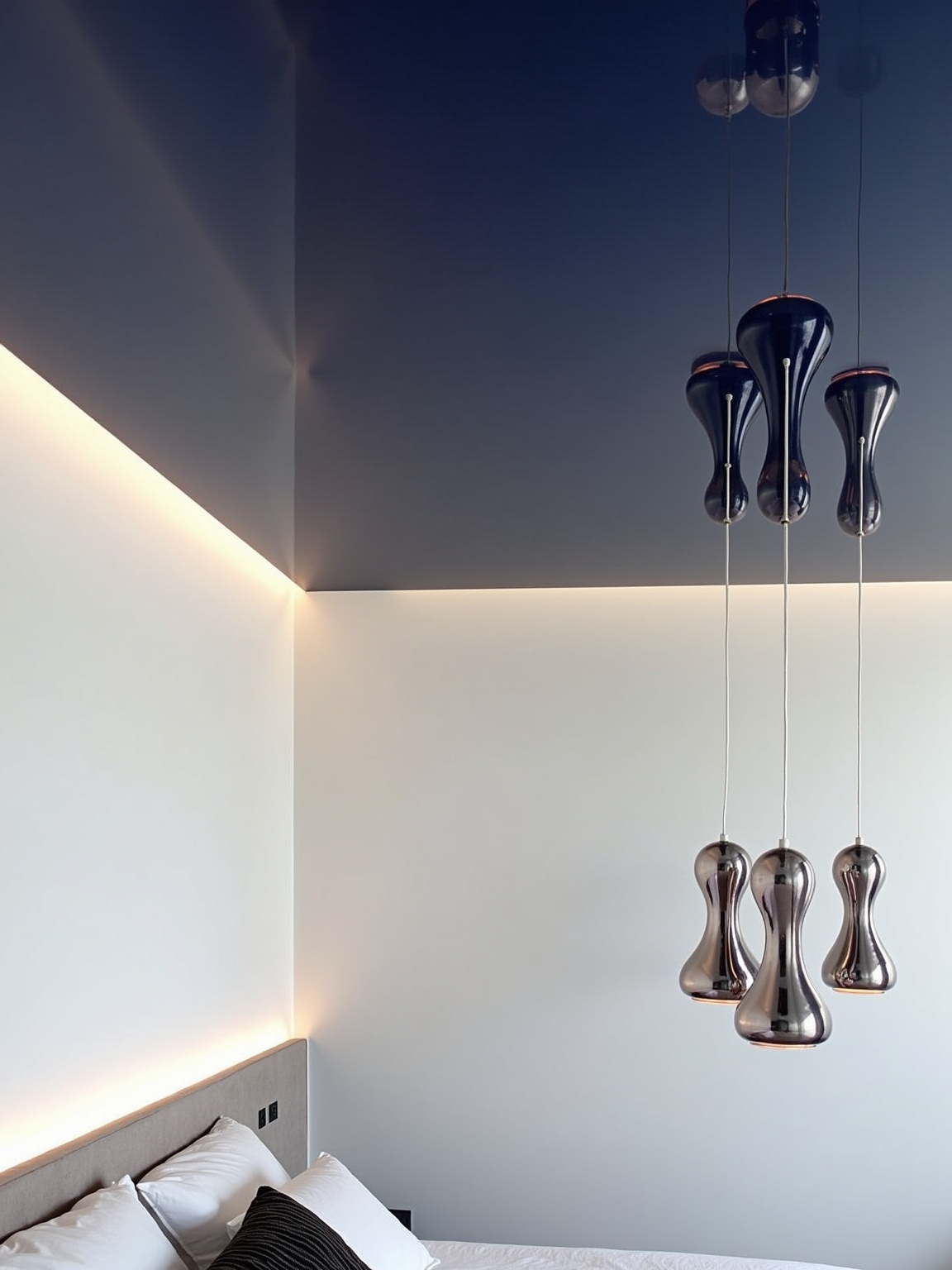
A glossy ceiling finish works like a soft mirror, bouncing light back into the room from every angle. In smaller bedrooms especially, that reflectivity makes the space feel significantly more open without changing a single wall or piece of furniture.
The sheen also creates contrast against matte walls, giving the ceiling a distinct presence rather than letting it disappear into the background. Maintenance is straightforward: glossy surfaces wipe clean far more easily than flat finishes, which tend to hold onto dust and scuff marks over time.
Framed Contrasting Ceiling Colors
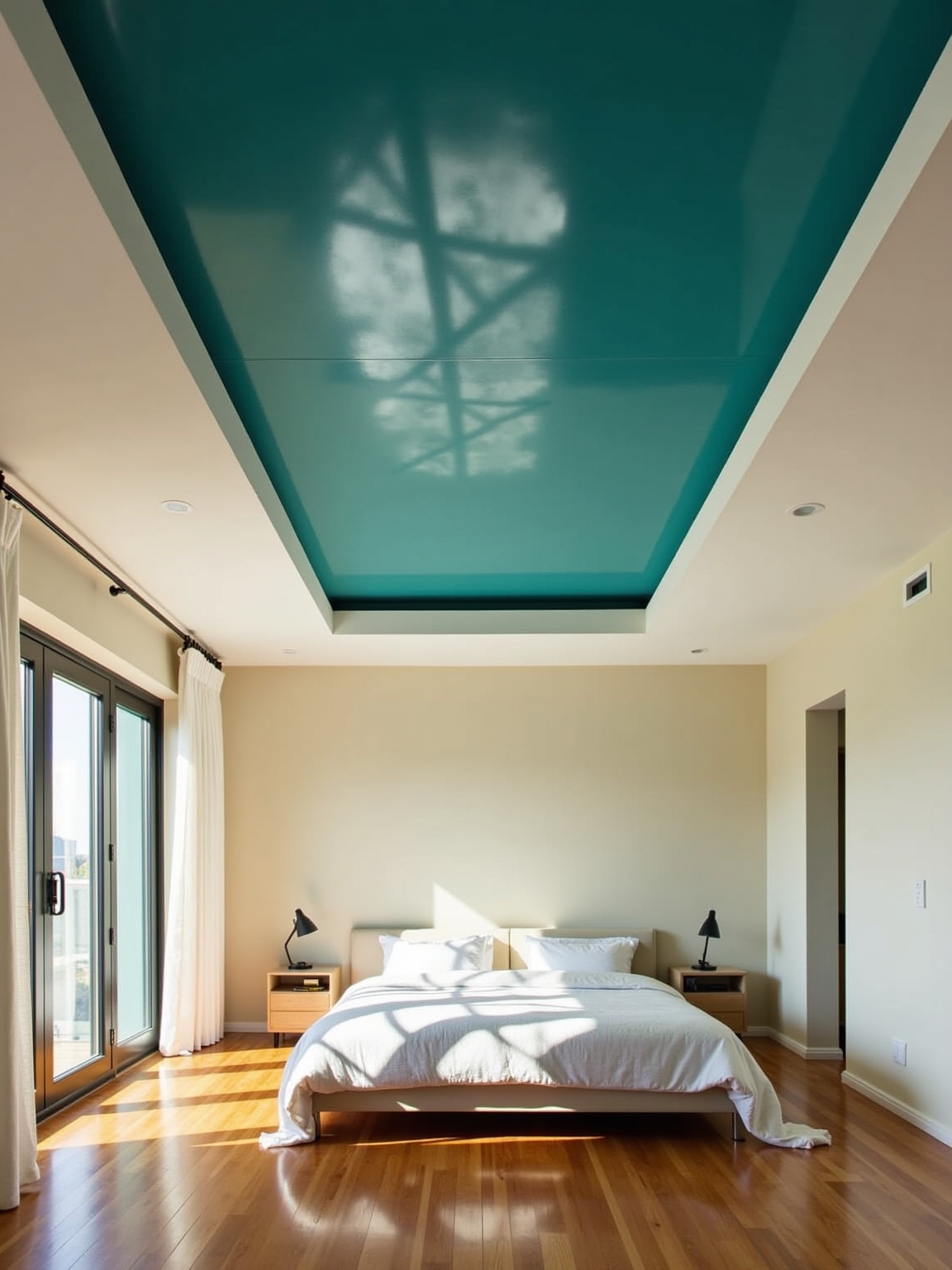
Painting a contrasting color within a bordered section of ceiling draws attention to the overhead architecture without committing to a full-coverage treatment.
Crown molding and ceiling beams create natural frames for this technique; if your room lacks them, a carefully applied painted border with painter’s tape achieves a similar effect.
Complementary colors add energy, while analogous combinations keep things cohesive and calm. Sharp, clean edges make the difference between this looking intentional and looking unfinished, so take your time with the prep work before touching a brush.
Family Narratives in Ceiling Designs
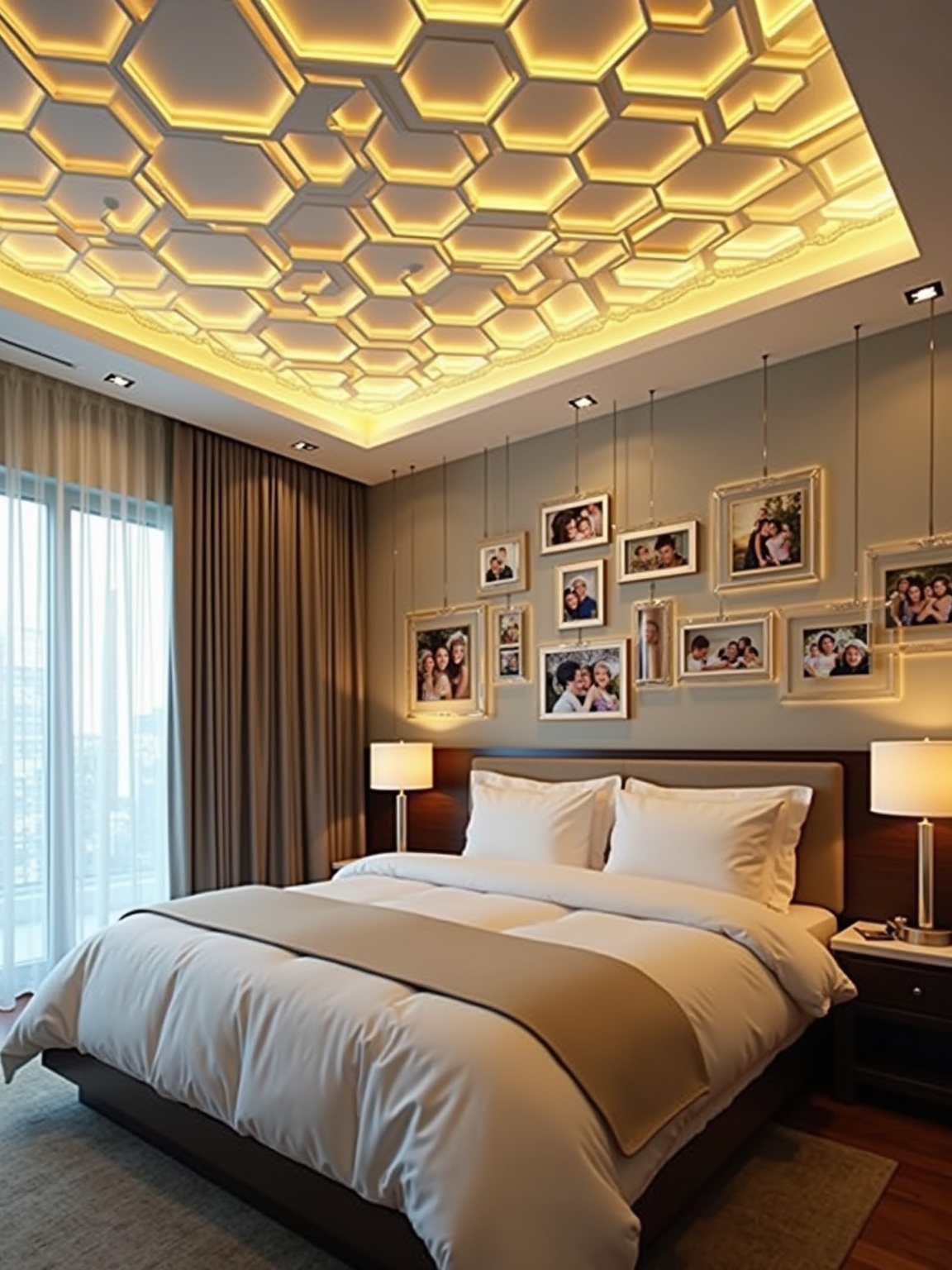
A ceiling can hold a family tree, a constellation map marking a meaningful night, or a mural depicting a place that shaped who you are. Custom painted designs have a quality that digitally printed panels can’t quite match, though prints have improved dramatically and are far more accessible for most budgets.
The ceiling is the last thing you see before falling asleep and the first thing you register when you wake, which makes it surprisingly powerful real estate for something personal. A room that tells your story feels different from one that simply looks good.
Use Glossy Finishes for Style
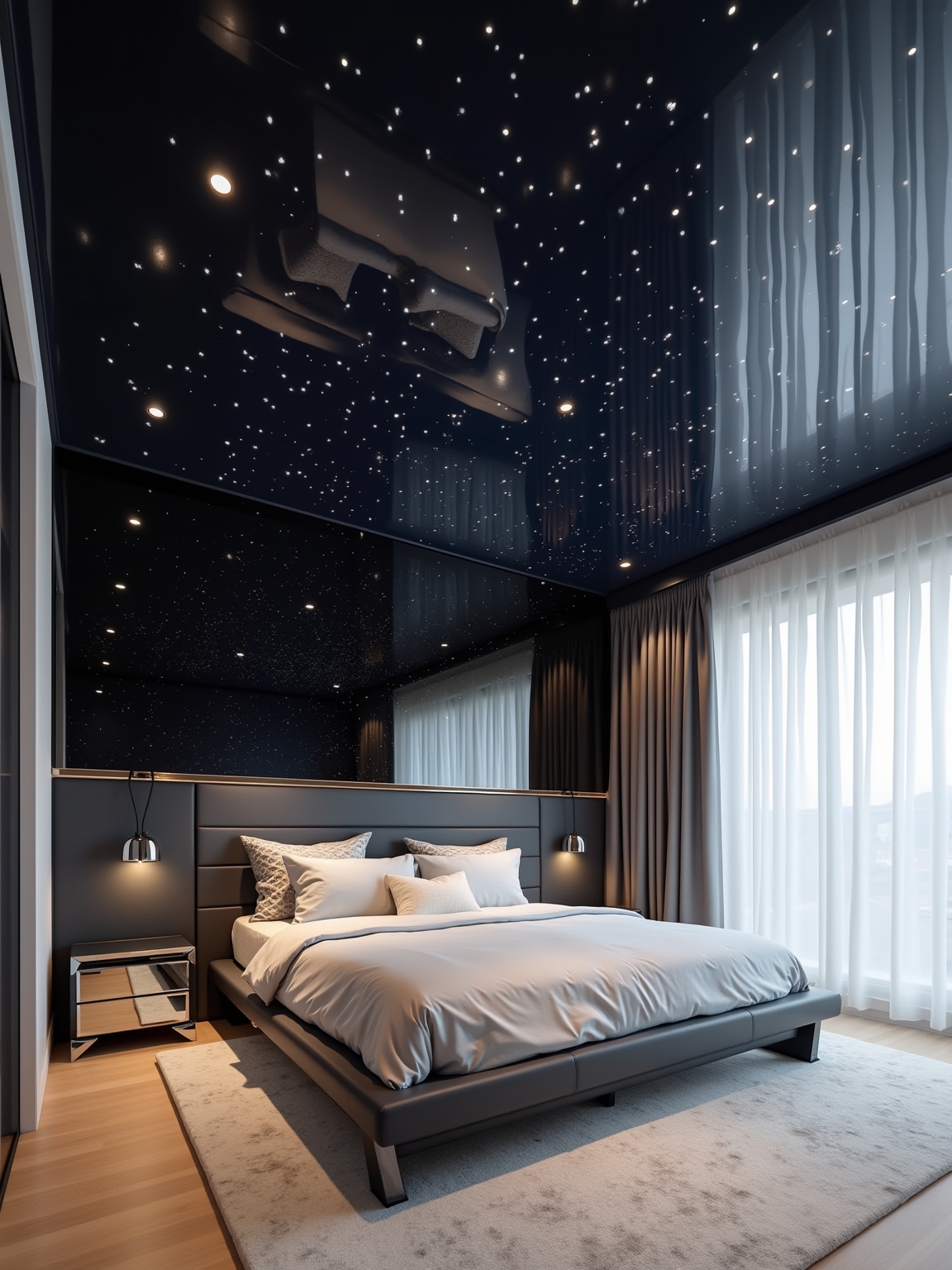
Where high gloss adds practical reflectivity, a style-forward gloss treatment is about surface presence and finish quality. The mirror-like sheen of a well-applied lacquer or gloss paint transforms an ordinary ceiling into something that reads as deliberate and refined.
It pairs especially well with clean-lined, modern furniture where the sleek overhead finish reinforces the room’s overall aesthetic rather than competing with it. The effect shifts throughout the day, too, looking different under morning light than it does under a warm lamp at night, which keeps the room feeling dynamic.
Layer Textures for Multidimensional Impact

Texture layering works because it engages the senses in ways that color alone cannot. Start with a neutral base on the ceiling, perhaps a limewashed plaster or lightly textured paint, and let the contrast with smoother wall surfaces do the heavy lifting.
Bring tactile variety into the room through velvet headboards, woven rugs, and bouclé cushions, letting each material play off the others. The ceiling texture anchors the whole composition overhead, giving the eye somewhere to land that feels considered rather than accidental.