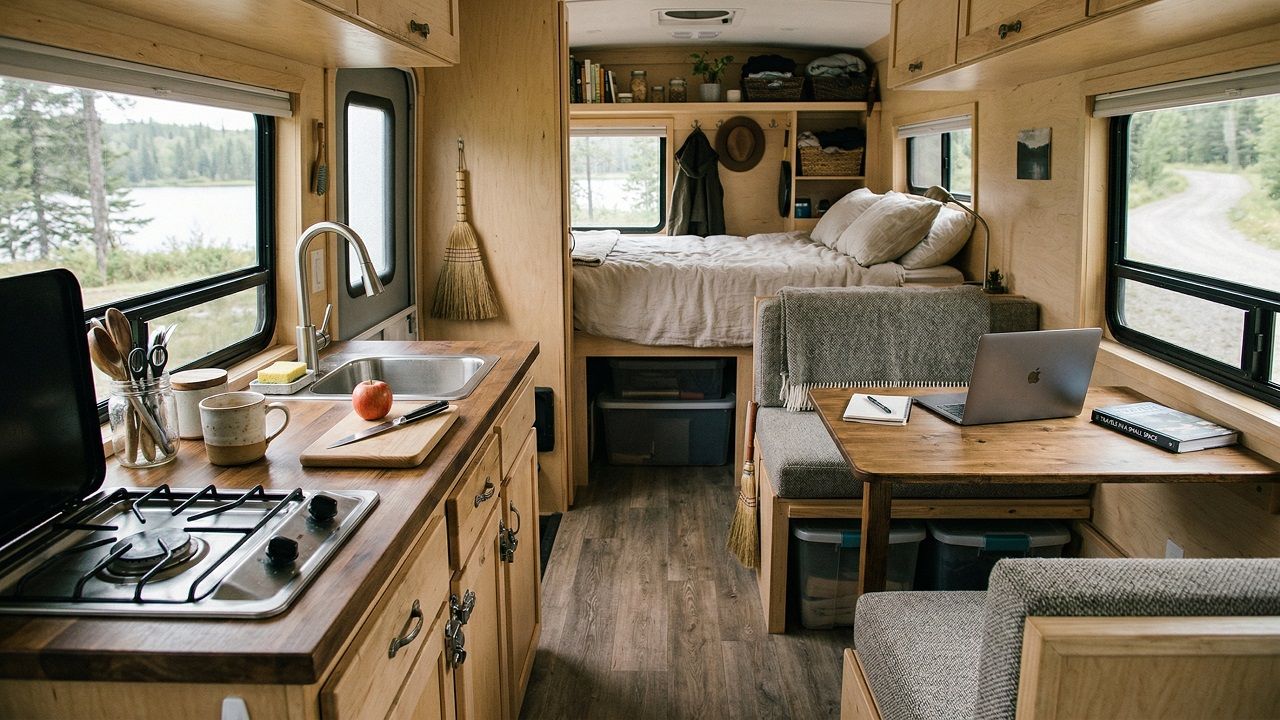
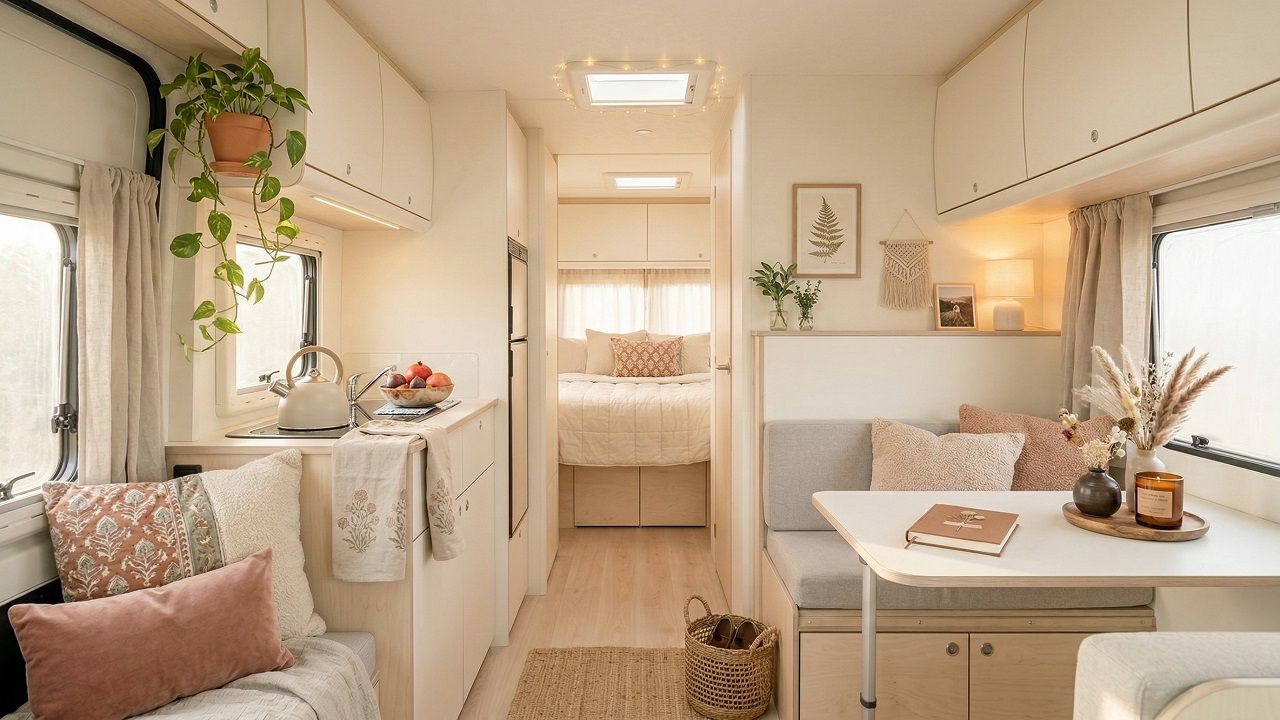
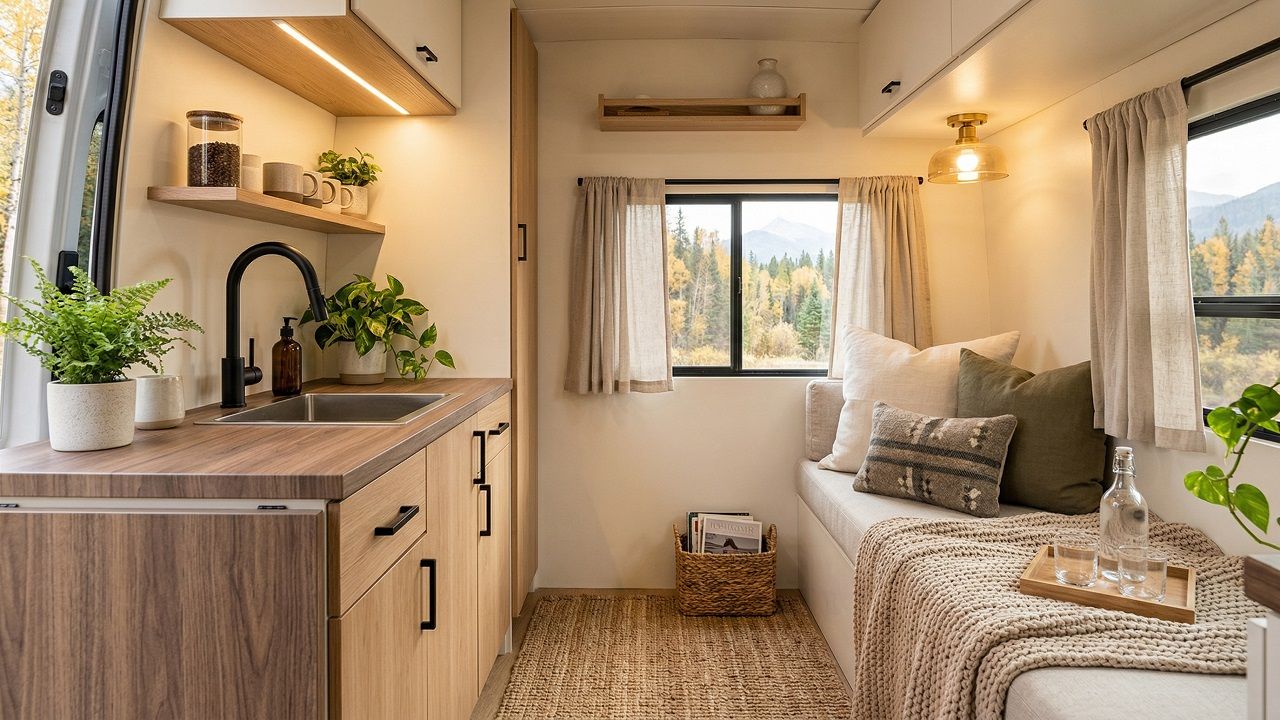
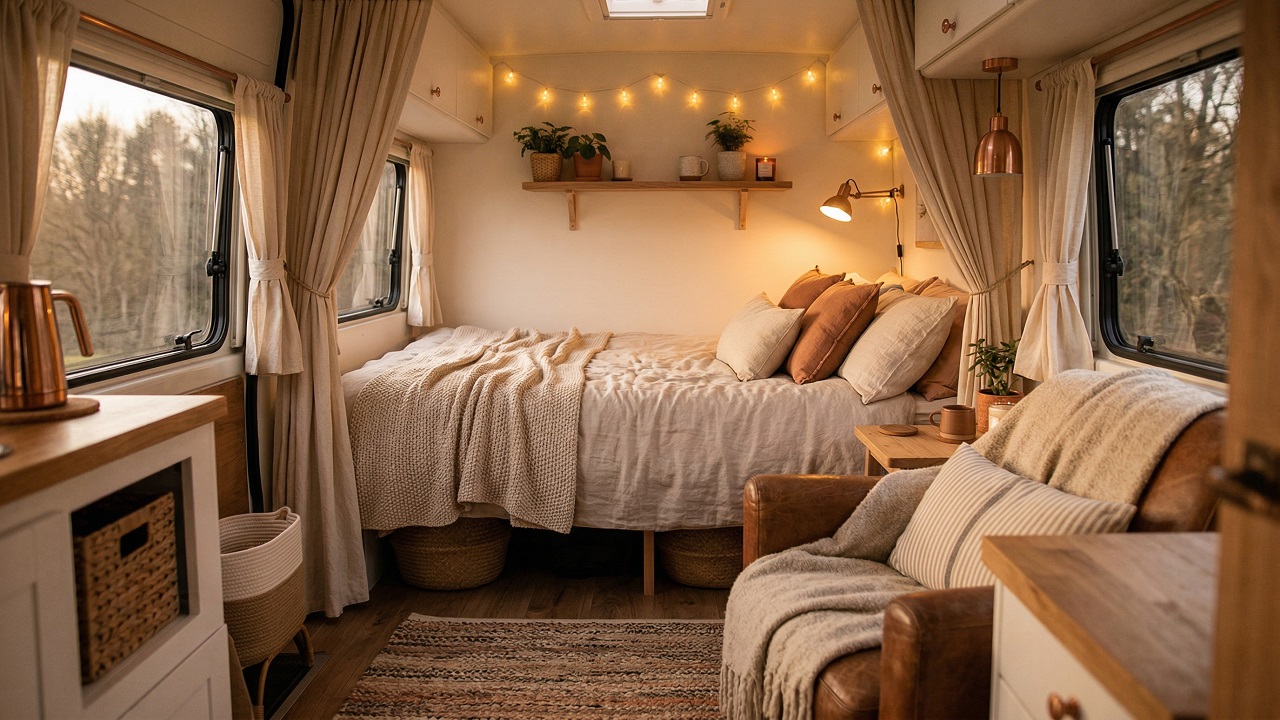
Living in your camper full-time is a completely different experience than weekend trips. It’s not just about making it look nice—it has to actually work for your daily life. You’re cooking here, resting here, working here, and trying to keep everything from feeling cramped or chaotic.
What looks good on Pinterest doesn’t always hold up when you’re living in it every single day. You start noticing what’s uncomfortable, what’s hard to clean, and what just doesn’t make sense long-term.
The goal isn’t perfection. It’s creating a space that feels functional, comfortable, and easy to live in without constant effort.
If you want a camper interior that actually supports your real life—not just looks good for photos—these are the layouts and ideas that truly work.
Why Full-Time RV Living Needs a Different Approach
Daily Use vs Occasional Trips
When you’re living in your camper full-time, everything gets used constantly. It’s not a weekend setup anymore—it’s your everyday life. That means your camper interior has to support real routines, not just look good for a short stay.
More Wear and Tear
Things break down faster when you’re using them every day. Fabrics, surfaces, and furniture all need to hold up. Choosing durable camper materials makes a huge difference in how your RV interior design holds up long-term.
The Need for Efficiency
You don’t have extra space to waste. Every item and every corner needs to serve a purpose. A more functional camper setup helps your day run smoother and keeps your small camper living from feeling overwhelming.
Layouts That Actually Work for Everyday Living
Keep Walkways Open
If you’re constantly squeezing past furniture, it gets old fast. Clear pathways make your camper layout feel easier to live in and less stressful day to day.
Create Defined Zones
Even in a small space, it helps to separate areas for sleeping, relaxing, and working. These simple living zones make your full-time RV living setup feel more structured and comfortable.
Avoid Wasted Space
Every inch matters. Corners, under-seats, and awkward gaps can all be used better. A smart space-saving camper layout helps your tiny camper interior work harder without feeling crowded.
SEE THIS: Minimalist Camper Interiors for Women Who Want Less Clutter (and More Calm).
Multi-Use Furniture That Makes Full-Time Life Easier
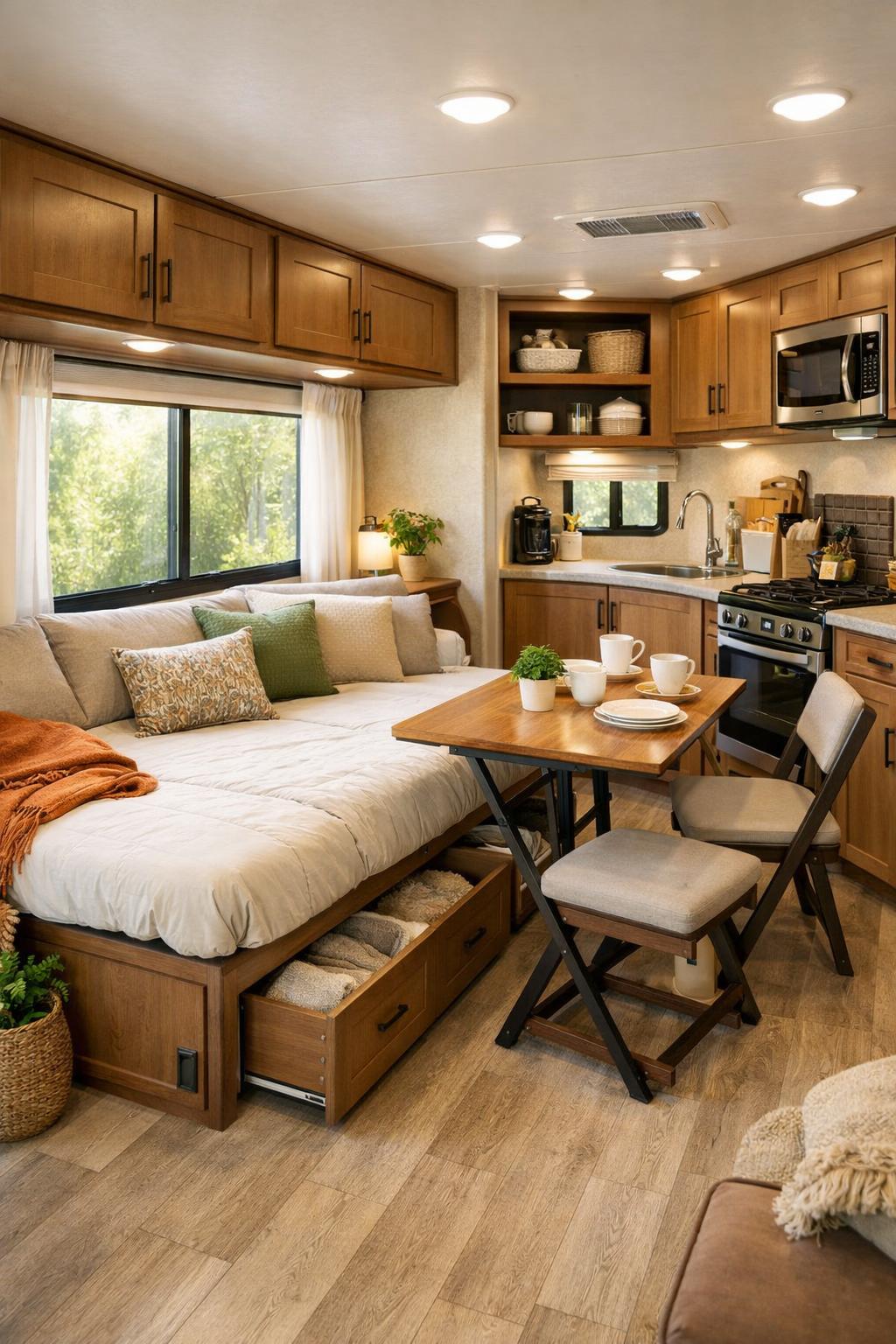
When you live full-time in an RV, every piece of furniture really has to pull its weight. Multi-functional furniture just makes sense when space is at a premium.
Convertible sofas are honestly a lifesaver. You can fold them out for guests, and most have storage under the cushions—toss in bedding, off-season clothes, or whatever clutter you want out of sight.
Dinette benches aren’t just for eating. The seats usually lift up, hiding storage for kitchen gear or pet stuff, and by day, you can turn them into a desk or craft nook.
Ottomans with storage add extra seating and stash space without eating up your floor plan. They’re perfect for stowing books, chargers, or those random odds and ends you never know where to put.
A fold-down table on the wall is a total game-changer. Flip it up for meals or work, then drop it out of the way when you’re done—super handy for prepping food or squeezing in some laptop time.
SEE THIS: Cozy Camper Interior Ideas That Feel Like a Weekend Escape Every Day.
Storage Systems That Keep Daily Life Organized
Smart storage keeps your RV from turning into a disaster zone. You need storage that actually fits your routine, or you’ll just end up frustrated.
Overhead cabinets are ideal for stuff you don’t need daily—seasonal clothes, that awkward blender, or extra bedding. Shelf dividers help keep stacks from toppling mid-drive, which, trust me, you’ll appreciate.
Under-bed storage is the real MVP for big, bulky things. Rolling bins or drawers make it easy to grab what you need. Stash shoes, off-season gear, tools, or even extra pantry items down there.
- Shoes and boots
- Off-season clothing
- Tools and repair supplies
- Extra pantry items
Mount baskets on cabinet doors to snag those last few inches of space. Tension rods hold stuff in place in cabinets or your fridge while you roll down the highway.
Clear containers let you spot what you need without digging. Slap some labels on bins so everyone knows where things go. Wall hooks and magnetic strips work wonders for freeing up drawers—especially for utensils and tools.
SEE THIS: Budget Camper Interior Ideas That Look Surprisingly Expensive.
Durable Materials That Can Handle Real Life
Living in your RV full-time means your materials get put through the wringer. Vinyl flooring is hard to beat—spills, muddy shoes, and water just aren’t a big deal, and clean-up’s a breeze.
For walls and surfaces, here are a few options that actually hold up:
- Bamboo – lightweight, eco-friendly, and surprisingly tough
- Marine-grade plywood – doesn’t mind a little moisture
- Luxury vinyl planks – has that wood look, but no warping nightmares
- Cork flooring – soft underfoot and naturally resists funk
For countertops, pick laminate or solid surface. They shrug off stains and handle daily use without looking trashed after a month.
Lighting That Works Day And Night
Good lighting really makes or breaks the vibe. You’ll want different options for different times—nobody wants to cook dinner in a cave or read by harsh overheads.
Swap out those clunky old fixtures for modern LEDs. They sip power and last forever. Wall sconces are perfect by the bed or couch—just enough light for a book or some late-night scrolling.
Swing arm lights are a small-space miracle because you can point them wherever you need. They don’t hog space and let you dial in the brightness.
Try layering your lighting:
- Ceiling lights for big, general brightness
- Task lights for cooking or working
- Accent lights for a cozy, mellow mood at night
During the day, natural light is a total mood booster. Leave your curtains open and let that sun pour in. At night, dimmer switches help set the vibe—bright for chores, soft for winding down.
Plug-in sconces are a no-brainer if you want to avoid messing with wiring. You can move them around as you figure out what works best.
Functional Camper Kitchen Setups That Actually Work
Your RV kitchen needs to handle real meals, not just microwave dinners. The trick is picking what fits your style and space.
Smart Kitchen Essentials:
- Two-burner stove (or a portable one if you need flexibility)
- Small sink with a cover—boom, instant counter space
- Mini-fridge tucked under the counter
- Magnetic knife strips to keep drawers uncluttered
Counter space is always tight. Fold-out cutting boards or covers for your sink and stove help you squeeze out every inch.
Vertical storage is a life hack. Hang mugs and utensils from hooks under cabinets. Stackable pantry containers keep food in sight and easy to grab.
Having a portable stove gives you options—cook outside on a nice day, or add a burner when you’re making a bigger meal.
Comfortable Sleeping Areas For Long-Term Living
When your RV is your home, your bed really matters. A decent mattress changes everything—waking up sore is no way to start the day.
Top sleep upgrades:
- Swap the factory mattress for a memory foam or hybrid one
- Use soft, breathable sheets that actually fit (those weird RV sizes are a pain)
- Hang blackout curtains for privacy and early-morning light control
Think about your sleep style—side sleepers need more cushion, back sleepers usually want something firmer.
Keep your sleeping area tidy by using under-bed storage. Lift-up frames or rolling drawers make it easy to stash extra clothes and gear.
How To Keep Your Camper Livable (Not Just Clean)
Livable means you can actually relax, not just that everything looks tidy. Give everything a home or you’ll spend half your time moving stuff from one spot to another.
Simple daily habits help a ton:
- Clear counters before bed
- Wash and put away dishes after meals
- Take out the trash before it piles up
Good airflow makes a bigger difference than you’d think. Crack a window while cooking, and use fans to keep things fresh. A composting toilet can cut down on water use and simplify things if you’re parked for a while.
Set up systems that don’t fall apart when you’re tired. If tidying up takes more than ten minutes, it’s probably time to rethink your setup.
The Full-Time RV Setup That Works (Simple Formula)
A good full-time setup starts with three zones: sleep, cook, and relax.
Your camper remodel or van conversion should try to keep these areas separate when possible.
Think about your daily routine. Where do you picture eating breakfast? Where do you actually want to work or just flop down and unwind?
The best vanlife layouts put the stuff you grab most often within arm’s reach, which just feels right.
Key areas to focus on:
- Bedroom – You want enough space to sit up in bed.
- Kitchen – Counter space really matters for meal prep.
- Storage – Use cabinets and drawers you’ll actually open and fill.
- Living area – Find seating that feels comfortable and works for more than one thing.
Your van layout ideas don’t have to be fancy. Start with what matters most to you and build from there—it doesn’t need to be perfect.