You’ve probably seen Japandi bedrooms all over Pinterest and Instagram, but there’s a reason this style has staying power beyond just looking good in photos.
When you strip away the design jargon, what you’re really getting is a bedroom that helps you actually sleep better and wake up less stressed. These 17 examples demonstrate that combining Japanese minimalism with Scandinavian warmth isn’t just trendy.

Contents
- 1 Minimalist Platform Bed With Natural Wood Frame
- 2 Low-Profile Furniture for Serene Sleep
- 3 Neutral Palette With Warm Earth Tones
- 4 Natural Fiber Textiles & Organic Bedding
- 5 Gentle Ambient Light With Paper Lanterns
- 6 Built-In Storage for Clutter-Free Design
- 7 Handcrafted Wooden Nightstands
- 8 Meditation Corner With Floor Cushions
- 9 Large Windows & Flowing Light
- 10 Wabi-Sabi Elements of Imperfection
- 11 Bamboo and Rattan Accents
- 12 Hygge-Inspired Reading Nook
- 13 Multi-Functional Guest Room Design
- 14 Indoor Plants & Nature Within
- 15 Artisan Pottery & Handmade Decor
- 16 Tatami-Inspired Floors With Natural Rugs
- 17 Balanced Asymmetry in Arrangement
Minimalist Platform Bed With Natural Wood Frame


Platform beds made from solid wood do something that metal frames and upholstered headboards can’t: they get better with age instead of looking dated after five years. The construction is dead simple, usually pine or maple with a slatted base that lets your mattress breathe so you’re not waking up damp in summer.
You’ll notice most of these beds sit lower to the ground than standard American frames, which sounds like a small detail until you realize how much calmer a room feels when the furniture isn’t looming at eye level. The wood itself, left mostly natural with just a clear finish, picks up character over time instead of showing wear.
SEE THIS: 23 Cozy Boho Bedrooms Inspired by Desert Vibes.
Low-Profile Furniture for Serene Sleep

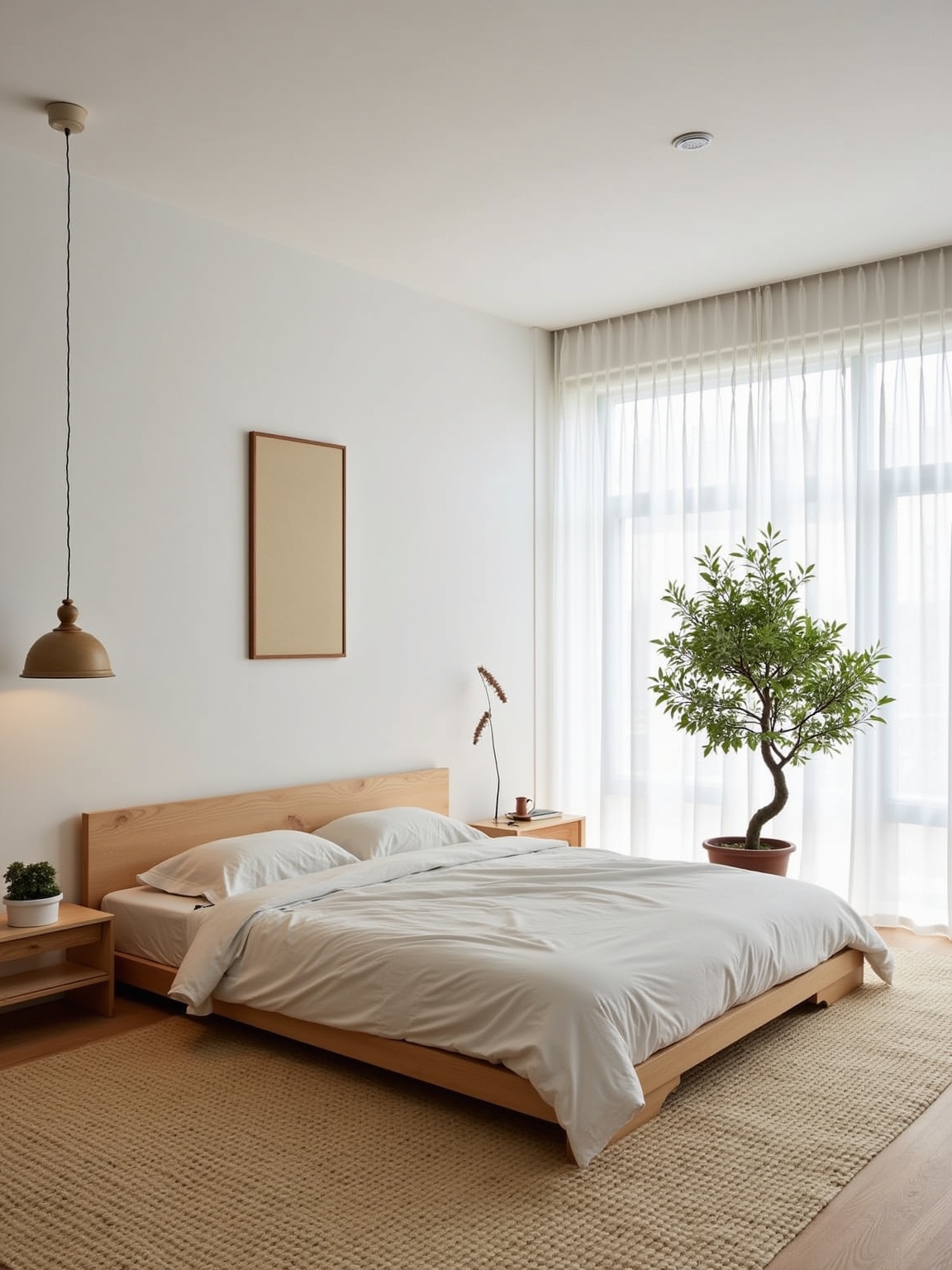
Once you commit to a low bed, everything else in the room needs to follow that same horizontal line or the whole effect falls apart. Floating nightstands mounted to the wall keep the floor clear, which matters more for your mental state than you’d think when you’re not tripping over furniture legs in the dark.
I always tell people to look for pieces that serve double duty, like a bench at the foot of the bed that handles your morning routine and holds extra blankets without turning into a clothes pile. The upholstery should be linen or cotton in colors that don’t demand attention, because your bedroom shouldn’t feel like it’s trying to start a conversation every time you walk in.
SEE THIS: 19 Japandi Living Room Designs That Feel Serene & Warm.
Neutral Palette With Warm Earth Tones


The color scheme here isn’t about playing it safe, it’s about building a foundation that won’t exhaust your eyes after a long day. Start with soft white on the walls, then layer in beige and taupe through your bedding and larger furniture pieces.
The warm browns and terracotta come in through smaller accents like throw pillows or a ceramic vase, giving the room enough variation that it doesn’t feel sterile. Muted greens work surprisingly well as accent colors because they read as natural rather than decorative, especially if you’re bringing in actual plants.
SEE THIS: 21 Vintage Glam Living Room Ideas With Cozy Luxury.
Natural Fiber Textiles & Organic Bedding

Linen sheets feel rough the first time you wash them, but give them six months and they become the kind of bedding you actually look forward to climbing into. Cotton and wool share that same quality of improving with use instead of breaking down, plus they regulate temperature better than anything synthetic.
Going organic isn’t just environmental virtue signaling here, it actually matters when you’re spending eight hours with your face pressed into fabric that might be treated with formaldehyde or flame retardants. Layering different textures keeps the neutral color scheme from reading as bland, so mix your smooth cotton duvet with a chunky wool throw and rougher linen pillowcases.
SEE THIS: 21 Creepy Carnival Bedroom Ideas for Spooky Season.
Gentle Ambient Light With Paper Lanterns

Overhead LED fixtures in bedrooms are basically sleep destroyers, blasting blue-spectrum light that tells your brain it’s noon when you’re trying to wind down. Paper lanterns diffuse light in a way that feels more like candlelight, warm and soft without defined shadows that create visual tension.
The rice paper or washi versions bring in Japanese craft tradition without feeling like you’re trying too hard to theme your bedroom. Modern versions often combine the traditional paper with brushed brass or matte black fixtures that keep things from skewing too rustic.
SEE THIS: 20 Gothic Romance Bedroom Styles That Feel Spooky Yet Chic.
Built-In Storage for Clutter-Free Design

Here’s what nobody tells you about minimalist bedrooms: they only work if you have somewhere to put all your stuff. Floor-to-ceiling storage that blends with your wall color essentially disappears, giving you tons of capacity without the visual weight of a bulky dresser.
The concealed cabinet approach means you can shove things behind closed doors and maintain that clean aesthetic without actually being a minimalist in your daily life. Every built-in should serve a specific purpose, whether that’s housing your off-season clothes or keeping your collection of unread books from piling up on the nightstand.
Handcrafted Wooden Nightstands

A nightstand you can pick up at a big box store for sixty bucks will look exactly like what it is, but something made by an actual woodworker carries a different energy into your space. The natural grain in walnut or ash becomes the visual interest instead of needing hardware or decorative details to justify its existence.
Rounded edges matter more than they should, both for safety when you’re stumbling around in the dark and for the psychological softness they bring to a room full of right angles. Matte finishes show fingerprints and water rings, which sounds like a downside until you accept that furniture should look lived-with rather than showroom perfect.
Meditation Corner With Floor Cushions

Your bedroom can handle more than just sleeping if you set up a small zone for sitting quietly without the distraction of screens. Floor cushions in linen or cotton give you a place to actually sit that isn’t your bed, which helps maintain that mental separation between rest and other activities.
Keep it simple with a low stool for tea or a journal, maybe a candle if you’re into that, and some kind of small storage box so the space doesn’t collect clutter. The point isn’t to become a meditation expert, it’s to have a designated spot that gives your brain permission to slow down.
Large Windows & Flowing Light

Natural light does more for your circadian rhythm than any smart bulb or sunrise alarm clock, so maximize whatever window access you’ve got. Floor-to-ceiling glass obviously isn’t an option for most people, but you can work with what you have by keeping window treatments minimal and furniture away from blocking light paths.
The connection between inside and outside becomes physical rather than theoretical when you can see trees or sky from your bed. Morning light hits different when it’s real sunlight instead of artificial wake-up routines.
Wabi-Sabi Elements of Imperfection

Perfect symmetry and flawless finishes make bedrooms feel like hotel rooms, impressive but not particularly yours. Asymmetrical arrangements feel intentional when you commit to them fully rather than hedging with matched pairs of everything.
Weathered wood with visible grain and knots tells a story that smooth veneered particle board never will. Handmade ceramics with slight irregularities and textiles that show their weave bring character that factory-perfect items actively work against.
Bamboo and Rattan Accents
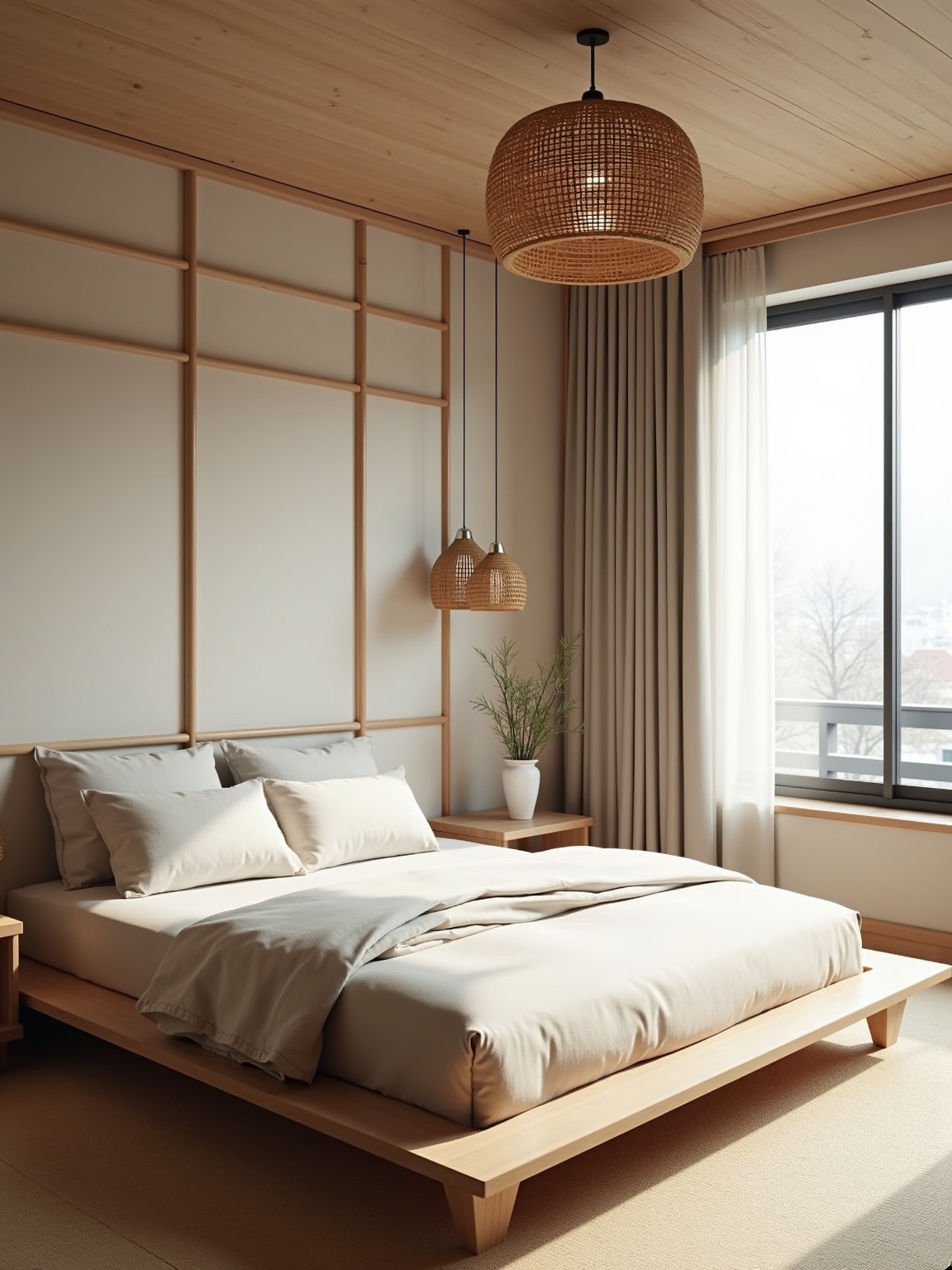
Bamboo and rattan solve the problem of how to add warmth without introducing visual noise or competing textures. A bamboo bed frame gives you durability without the visual weight of solid hardwood, keeping that light, airy feeling intact.
Rattan lampshades create subtle shadow patterns on walls and ceilings that change throughout the day as light shifts. Both materials age gracefully and bring in textural variety without breaking the natural material palette.
Hygge-Inspired Reading Nook

A reading corner works when it’s clearly defined as separate from your sleeping space, even if that just means a comfortable chair positioned near a window. Layer wool throws and chunky knits over linen cushions to create actual physical coziness rather than just the appearance of it.
Lighting should come from a dedicated reading lamp positioned to eliminate shadows on your page, not ambient overhead fixtures that make you squint. Candles add atmosphere if you’re into that hygge lifestyle, though honestly a good book and proper task lighting do most of the heavy lifting.
Multi-Functional Guest Room Design

Guest rooms sit empty most of the year, so design them to pull double duty as workspace or creative studio when you’re not hosting visitors. Platform beds with built-in storage keep guest bedding and towels accessible without requiring a dedicated linen closet.
Shoji screens can divide the space when needed without the permanence of walls, letting you reconfigure based on whether you need privacy or openness. Adjustable lighting through dimmers or multiple light sources lets the room shift from focused work mode to relaxed hosting depending on what you need that week.
Indoor Plants & Nature Within

Plants aren’t just decoration; they’re functional elements that clean your air and give you something living to tend that isn’t demanding. The stress relief component is real, not placebo, especially if you choose low-maintenance varieties that won’t guilt you when you forget to water for a week.
Sleep quality improves when you’re breathing cleaner air, and the presence of greenery creates psychological calm that blank walls can’t match. Start with one or two plants rather than trying to create an indoor jungle, because dead plants are worse for your mental state than no plants at all.
Artisan Pottery & Handmade Decor

Handcrafted pieces bring texture and visual interest without the manufactured perfection that makes spaces feel generic. Ceramic vases with organic, slightly irregular forms show the maker’s hand in a way that factory ceramics deliberately avoid.
Small woodwork items, rattan details, and bamboo accents layer in tactile richness that invites touch rather than just visual appreciation. Each sustainable, handmade element serves the dual purpose of honoring imperfection while creating the warmth that makes bedrooms feel personal.
Tatami-Inspired Floors With Natural Rugs

Light oak or bamboo flooring gives you the natural material aesthetic without the maintenance nightmares of darker woods that show every scuff and scratch. Natural fiber rugs in jute, sisal, or wool add softness underfoot while maintaining the organic material story running through the rest of the room.
Stick with neutral colors like beige, cream, and muted green so the rug grounds the space rather than demanding attention. The tactile experience of walking barefoot on natural materials first thing in the morning beats cold tile or synthetic carpet.
Balanced Asymmetry in Arrangement
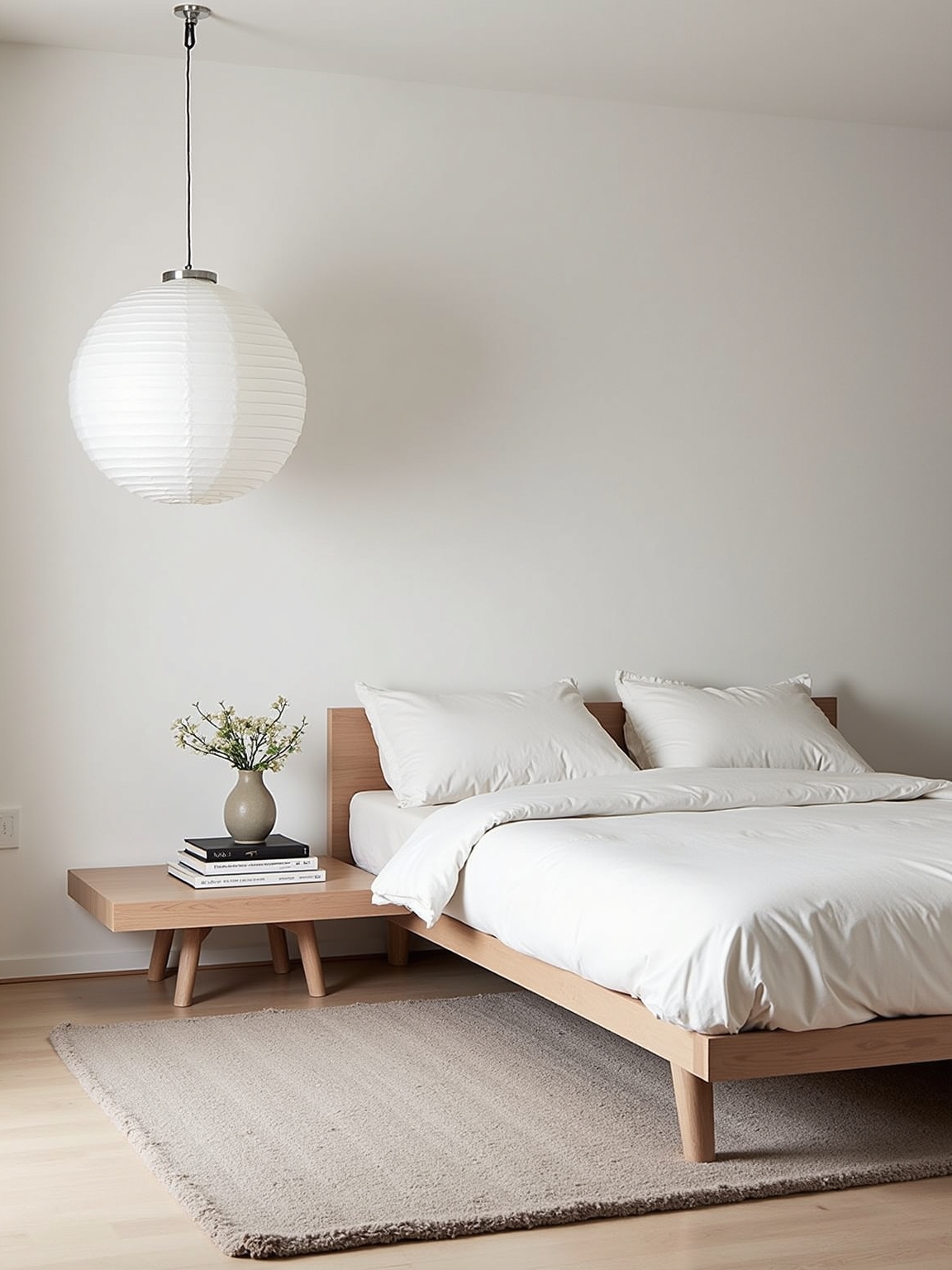
Breaking symmetry on purpose creates visual interest that perfect mirror-image arrangements never achieve, but you have to commit to it fully or it just looks like you couldn’t afford matching nightstands. Position your bed slightly off-center, then balance it with a single nightstand on one side and maybe a simple stool or small plant stand on the other.
The arrangement should feel intentional rather than accidental, guided by function and visual weight rather than rigid rules about matching pairs. This approach honors both Japanese appreciation for asymmetry and Scandinavian practicality without trying to split the difference.
Conclusion
Building a Japandi bedroom isn’t about following a checklist of trendy items; it’s about understanding why certain choices reduce stress while others add to it. Research backs up what these rooms demonstrate: visual clutter directly raises cortisol levels, so every element you remove is actively working to calm your nervous system.
The wooden accents, natural textiles, and carefully chosen plants function like ingredients in a recipe that produces better sleep and lower ambient stress. Real luxury shows up in the quiet moments when you realize your bedroom has become a place that actively supports rest instead of just housing your stuff.