What this is: A system for building one porch setup that carries you from early fall through Thanksgiving and straight into Christmas — with quick swaps instead of full teardowns.
Who it’s for: Anyone tired of buying, hauling, and dismantling an entirely new porch three times a year.
Why read it: You’ll learn which pieces to buy once, which to swap seasonally, and the exact ten-minute changeovers that take your porch from harvest to holiday without starting over.
Here’s the ritual almost everyone signs up for without realizing it. You spend a Saturday in September building a gorgeous fall porch. Six weeks later you tear the whole thing down for Thanksgiving.
A few weeks after that, you dismantle it again and haul out a completely separate bin of Christmas decorations. Three builds, three teardowns, three storage headaches — for a stretch of the calendar that’s really just one long cozy season.
There’s a much smarter way to do this, and once you see it you can’t unsee it.
The trick is to build your porch on a neutral, season-agnostic base and treat the actual holidays as accent layers you swap in and out. Same anchors, same footprint, ten-minute changeovers.
Decorate once, restyle twice, and get your autumn Saturdays back. Here’s exactly how it works.
Build a Neutral Base That Belongs to No Single Season
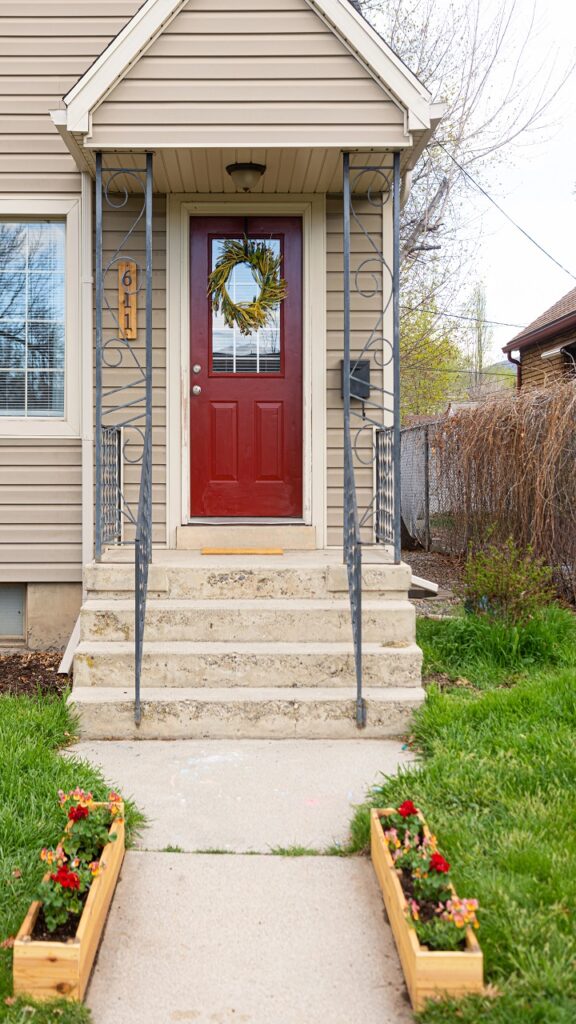
The whole system hinges on one idea: separate the pieces that say “structure” from the pieces that say “holiday.” Your structural layer.
The stuff that stays put from September through December — should be things that read as simply cozy rather than specifically autumnal or festive.
A pair of large planters or urns, a tall leaner or lantern for height, a layered natural-fiber doormat, a couple of warm light sources, maybe a rocking chair with a throw. None of those things belong to fall or Christmas; they belong to welcome.
The reason this works is perceptual: your eye reads a porch’s structure — its heights, its symmetry, its lighting — as the permanent part, and the seasonal props as temporary decoration sitting on top.
So when you swap the props, the porch still feels intentional because the bones never moved. Build that neutral base in materials like amber glass, aged metal, and natural wood that flatter every season, and you’ve done the hard part exactly once. Everything after this is just accessorizing.
Early Fall: Layer On the Harvest Props

With the base in place, early fall is your first accent layer, and it’s the easy one. Into and around those neutral planters go the classic autumn props: pumpkins in varied sizes, a mum or some pet-safe asters, dried grasses, a few gourds, maybe a hay bale as a riser.
The leaner wears a fall sentiment; the doormat gets a seasonal topper. Warm, layered, done.
The key is to keep these seasonal additions tuck-able rather than built-in — nestled into the base rather than structurally part of it — so you can lift them out later without disturbing the bones.
Think of the pumpkins and mums as guests, not residents. A cluster of velvet or terracotta pumpkins that you can pick up and move in one armful is the whole idea. When early fall gives way to Thanksgiving, these are the only things that change.
The Fall-to-Thanksgiving Swap in Under Ten Minutes
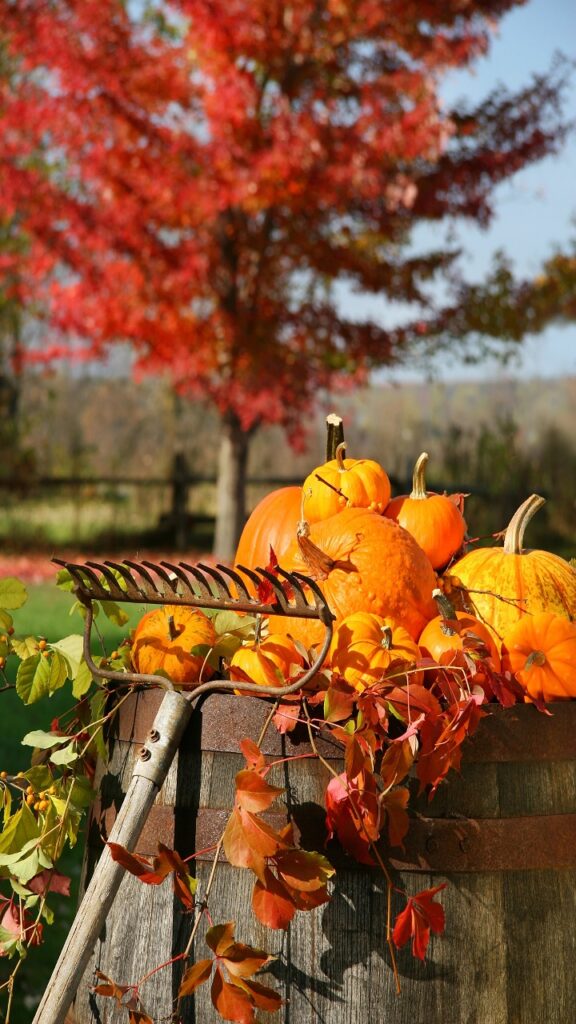
Here’s where the system starts paying you back. Going from a general fall porch to a Thanksgiving one isn’t a teardown at all — it’s a deepening.
Pull the brightest orange pumpkins and swap in deeper, richer tones: burgundy, cream, and white pumpkins, more dried wheat and grasses, a few extra gourds.
Change the leaner sentiment from “Hello Fall” to something gratitude-themed, and refresh the mum if it’s looking tired. That’s genuinely the entire swap.
Because you’re working within the same palette and the same base, the porch reads as a natural progression rather than a new production.
I time this one to take a single trip out to the porch with a small bin — pull a few things, add a few things, adjust, done.
For the full warm-and-gathered feeling, the same logic that drives cozy Thanksgiving decorations indoors applies right at the front door. Ten minutes, and your porch just crossed a holiday.
The Thanksgiving-to-Christmas Swap Using the Same Anchors

This is the changeover people assume requires starting from scratch, and it absolutely doesn’t.
Your planters, lanterns, leaner, and doormat all stay exactly where they are. You pull the pumpkins and gourds, and in their place go evergreen.
Fresh or faux garland draped over the planters, a wreath on the door, a few sphere ornaments or birch logs where the pumpkins were, and a red or plaid ribbon for a hit of holiday color. The neutral base you built in September is now quietly doing Christmas.
If you go with fresh greenery, here’s a genuinely useful detail: a fresh evergreen wreath can last up to eight weeks outdoors on a covered porch, since the cool outdoor air keeps it hydrated far longer than a warm indoor room would.
That means one wreath bought in early December easily carries you through the holidays. Swap the leaner to a winter sentiment, add warm string light to the lanterns you already have, and you’ve slid from elegant Christmas porch decor into full rustic holiday territory without buying a single structural piece.
The Pieces Worth Buying Once and Buying Well
The economics of this system reward spending a little more on the permanent layer, because those pieces work three seasons a year for years on end.
This is where I’d put real money: a pair of substantial planters or urns, a quality leaner or a good pair of lanterns, and a heavy natural-fiber base mat.
Cost-per-use on a $60 planter that’s out for four straight months every year is basically nothing, while a flimsy seasonal piece you replace annually quietly costs more over time.
Designer Emily Henderson frames the sustainable version of this perfectly — buy one really high-quality, versatile item per year that you’ll keep no matter what, and let the cheap disposable stuff cycle out.
Apply that to your porch and within two or three years you own a complete, beautiful neutral base, and all you ever buy again is the occasional bag of pumpkins or a fresh wreath.
It’s the same fall-to-winter transition logic that makes the indoors effortless, pointed at your front door. Buy the bones once; rent the seasons cheaply.
The Storage-and-Swap System That Keeps It Painless
The thing that quietly wrecks a three-season system is disorganized storage — if the Christmas ribbon is buried in a bin under the summer wreaths, you’ll dread every swap.
So the storage is the system. Use three clearly labeled bins: one for fall accents (pumpkins, gourds, fall leaner insert), one for Thanksgiving deepeners (deeper-toned pumpkins, wheat, gratitude sentiment), and one for Christmas (garland, ornaments, ribbon, winter sentiment). The neutral base never gets stored — it lives on the porch year-round.
A few habits make the swaps frictionless. Keep a running note of what’s in each bin so you’re not excavating to remember. Store the leaner inserts flat together so they don’t warp.
Clean and fully dry anything before it goes into a bin so you’re not unpacking a musty pumpkin next year.
And when you pull a seasonal layer, put it straight into its bin rather than a “deal with later” pile — future you will be so grateful. Pair a few affordable DIY pieces with the system and even a small porch transitions like a pro.
Why This Beats Starting Over Every Time
Beyond the obvious time and money savings, there’s a quieter payoff: a porch built this way simply looks more cohesive.
Because the structure never changes, your fall, Thanksgiving, and Christmas porches all share a family resemblance — they look like chapters of one story rather than three unrelated productions.
That consistency is exactly what makes a home’s exterior feel considered rather than slapped together.
It’s also just more sustainable, and less exhausting. You’re not hauling three complete sets of decor in and out, not buying disposable pieces you’ll toss in January, not losing a weekend to each holiday.
Build the bones once, keep three tidy bins, and let the seasons roll through your porch instead of demanding you rebuild it. Your coziest season should feel like a pleasure, not a part-time job — and this is how you get there.